
1235 Battery Aluminum Foil
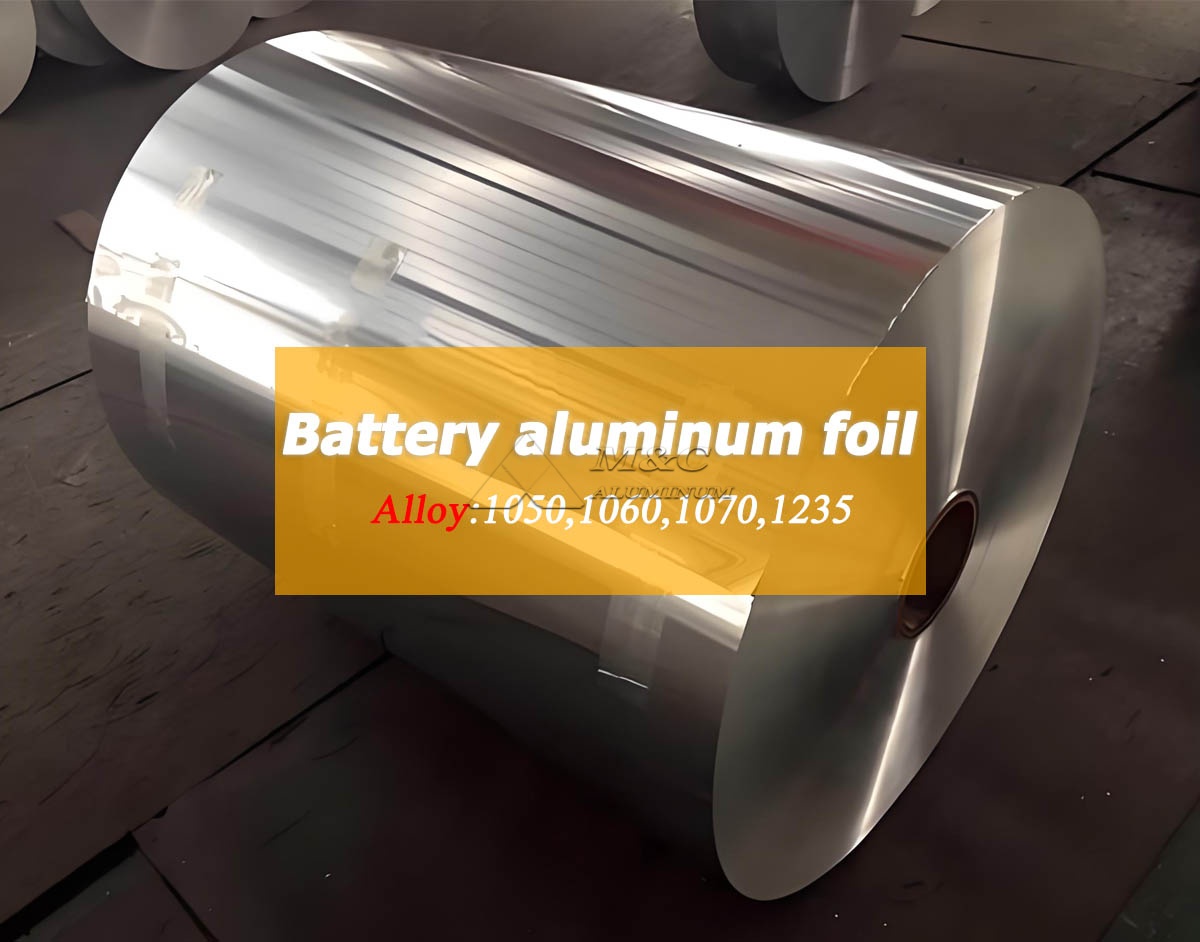
As a manufacturer of battery-grade aluminum products, we produce 1235 battery aluminum foil for lithium-ion battery cathode current collector applications. This alloy is widely selected for its high aluminum purity, stable electrical conductivity, light weight, good workability, and suitability for thin-gauge rolling.
Battery aluminum foil is a functional component rather than a simple packaging material. It carries the cathode active material, supports electron transfer within the electrode, and contributes to the consistency of coating, calendaring, slitting, and cell assembly. For this reason, the quality requirements for 1235 aluminum foil are significantly stricter than those for ordinary industrial aluminum foil.
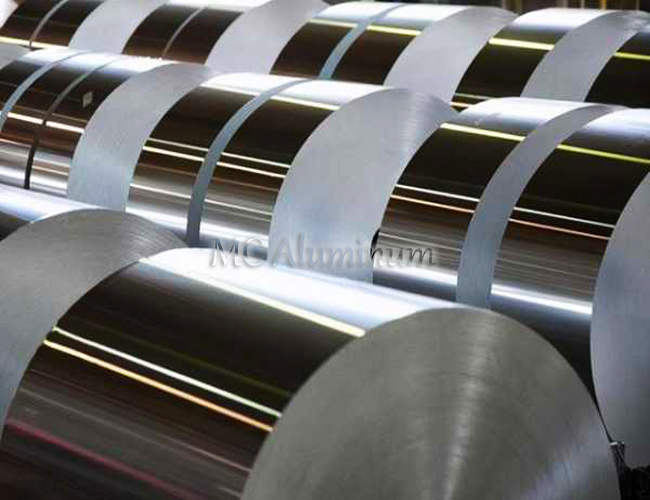
Our production process is designed to control thickness, flatness, surface cleanliness, mechanical properties, edge condition, and coil geometry. We supply 1235 battery aluminum foil in coil form for battery electrode manufacturers, carbon coating processors, and lithium-ion battery material companies.
What Is 1235 Battery Aluminum Foil?
1235 aluminum foil is a high-purity aluminum foil with a minimum aluminum content of 99.35 percent. The remaining composition consists of tightly controlled trace elements, mainly silicon and iron. In battery manufacturing, 1235 aluminum foil is commonly used as the cathode current collector for lithium-ion cells.
The cathode current collector does not directly store energy. Its primary function is to collect and transmit electrical current from the cathode active material to the external circuit. It must therefore maintain reliable conductivity while providing sufficient bonding performance for electrode slurry coating.
Compared with conventional aluminum foil used in food, household, or insulation applications, lithium-ion battery foil requires better surface uniformity and lower contamination risk. Fine defects, residual rolling oil, uneven oxide layers, edge cracks, or poor coil flatness may affect coating quality and electrode processing efficiency.
As a 1235 battery aluminum foil manufacturer, we produce foil with controlled metallurgical structure and stable coil-to-coil performance for continuous electrode manufacturing lines.
Why 1235 Aluminum Foil Is Used for Battery Cathodes
1235 aluminum foil combines conductivity, formability, and low density. It is suitable for high-speed coating and subsequent calendaring processes when manufactured with appropriate surface and mechanical controls.
Key advantages include:
High aluminum purity for stable electrical conductivity.
Low density that helps reduce inactive material weight in battery cells.
Good ductility and flexibility for thin-gauge processing.
Consistent surface condition for aqueous and solvent-based cathode coating systems.
Suitable mechanical strength after rolling and annealing.
Good compatibility with carbon coating and conductive coating treatments.
Reliable slitting performance with controlled burr and edge quality.
For lithium-ion battery cathodes, aluminum foil is generally preferred because aluminum remains stable at the operating potential of typical cathode materials. It is widely used with lithium iron phosphate, nickel manganese cobalt oxide, lithium nickel cobalt aluminum oxide, lithium cobalt oxide, and other cathode systems.
Technical Parameters of 1235 Battery Aluminum Foil
The following parameters represent common manufacturing ranges for battery-grade 1235 aluminum foil. Final specifications are confirmed according to the electrode design, coating process, equipment capability, and customer inspection standard.
| Parameter | Typical Specification | Notes |
|---|---|---|
| Alloy | AA 1235 | High-purity aluminum alloy |
| Aluminum content | Minimum 99.35% | Balance includes controlled Si and Fe |
| Temper | O, H18, H19, or customized | Selected based on coating and calendaring requirements |
| Thickness | 0.010 mm to 0.020 mm | Common battery grades include 12 um, 15 um, 16 um, and 20 um |
| Thickness tolerance | Customized by thickness and width | Controlled through precision rolling and inspection |
| Width | 100 mm to 1,800 mm | Slit coils available to customer specification |
| Coil inner diameter | 150 mm, 300 mm, 400 mm, 500 mm, or customized | Matched to unwinding equipment |
| Coil outer diameter | Customized | Based on safe transportation and line capacity |
| Surface condition | Clean, smooth, oil-controlled | No visible scratches, pinholes, stains, or inclusions |
| Surface treatment | Mill finish, carbon coated, or customized | Carbon coating available for improved adhesion and conductivity |
| Tensile strength | According to temper and thickness | Controlled for coating and rolling operations |
| Elongation | According to temper and thickness | Important for handling and processing stability |
| Edge condition | Trimmed or slit edge | Burr and edge crack control available |
| Packaging | Export seaworthy packaging | Moisture protection and edge protection included |
Manufacturing Process and Quality Control
Our battery foil manufacturing begins with controlled aluminum melt preparation and alloy composition management. The material is cast, hot rolled when applicable, cold rolled through multiple reduction stages, annealed according to the required temper, slit to width, and inspected before packing.
For 1235 battery aluminum foil, every process stage affects final electrode performance. We focus on the following control points.
Alloy Composition Control
Stable aluminum purity and controlled trace element content support consistent rolling behavior and electrical properties. Our melt treatment and composition analysis procedures are used to maintain batch consistency before rolling.
Precision Thickness Control
Battery foil thickness directly influences electrode weight, energy density, and coating stability. We use precision rolling controls to maintain thickness consistency across the foil width and throughout the coil length. Thickness inspection is performed during production and final quality release.
Surface Cleanliness
Surface cleanliness is essential for cathode slurry adhesion. Excessive rolling oil, dust, metal particles, stains, or handling contamination can reduce coating uniformity. We maintain controlled cleaning, annealing, inspection, and packaging procedures to minimize surface contamination.
Flatness and Shape
Poor flatness can cause wrinkles, coating variation, web guiding problems, and tension instability during high-speed processing. Our shape control procedures are designed to reduce wave defects, center buckles, edge waves, and telescoping risks.
Slitting and Edge Quality
Battery foil is often converted into narrow strips for specific electrode widths. Controlled slitting is important to reduce burrs, edge cracks, loose winding, and width variation. We provide slit battery foil coils with widths, coil directions, and winding requirements matched to customer equipment.
Surface Options for Lithium-Ion Battery Foil
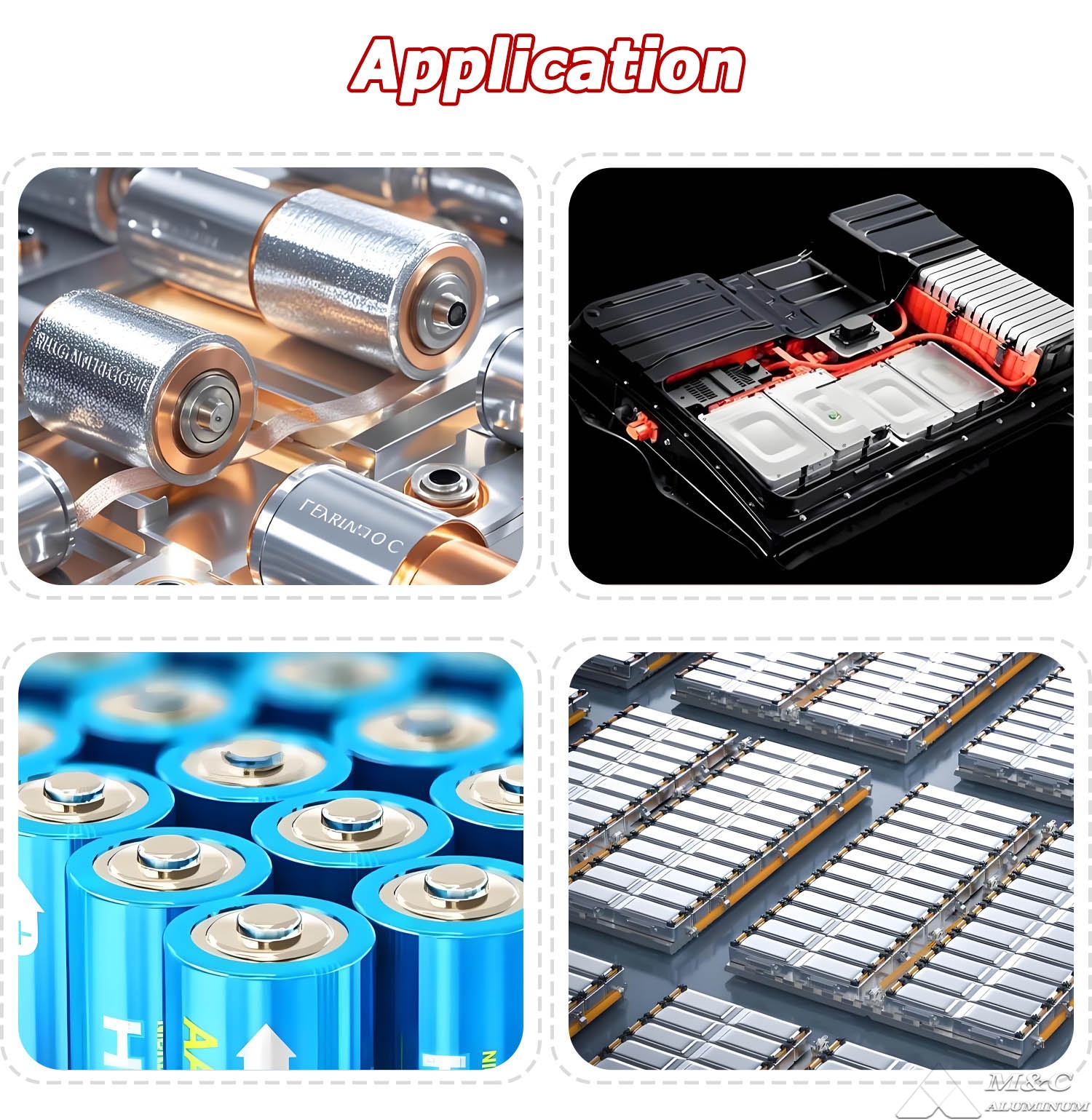
We supply standard mill-finish 1235 aluminum foil and coated aluminum foil options for battery electrode production. The suitable surface depends on the cathode material, slurry formulation, coating method, and target cell performance.
Mill-Finish Battery Aluminum Foil
Mill-finish foil is commonly used by cathode manufacturers that apply their own conductive primer or directly coat active material slurry onto the aluminum substrate. It requires a uniform, clean surface with controlled wettability and no defects that may interfere with coating.
Carbon Coated Aluminum Foil
Carbon coated aluminum foil is produced by applying a conductive carbon layer to the aluminum substrate. The coating may improve adhesion between the current collector and cathode layer, reduce contact resistance, and support more consistent electrochemical performance in selected battery designs.
Carbon coating specifications can be adjusted according to coating weight, conductive carbon system, curing conditions, and customer electrode process requirements. We evaluate substrate foil quality before coating to ensure the base material provides stable flatness and surface consistency.
Applications of 1235 Battery Aluminum Foil
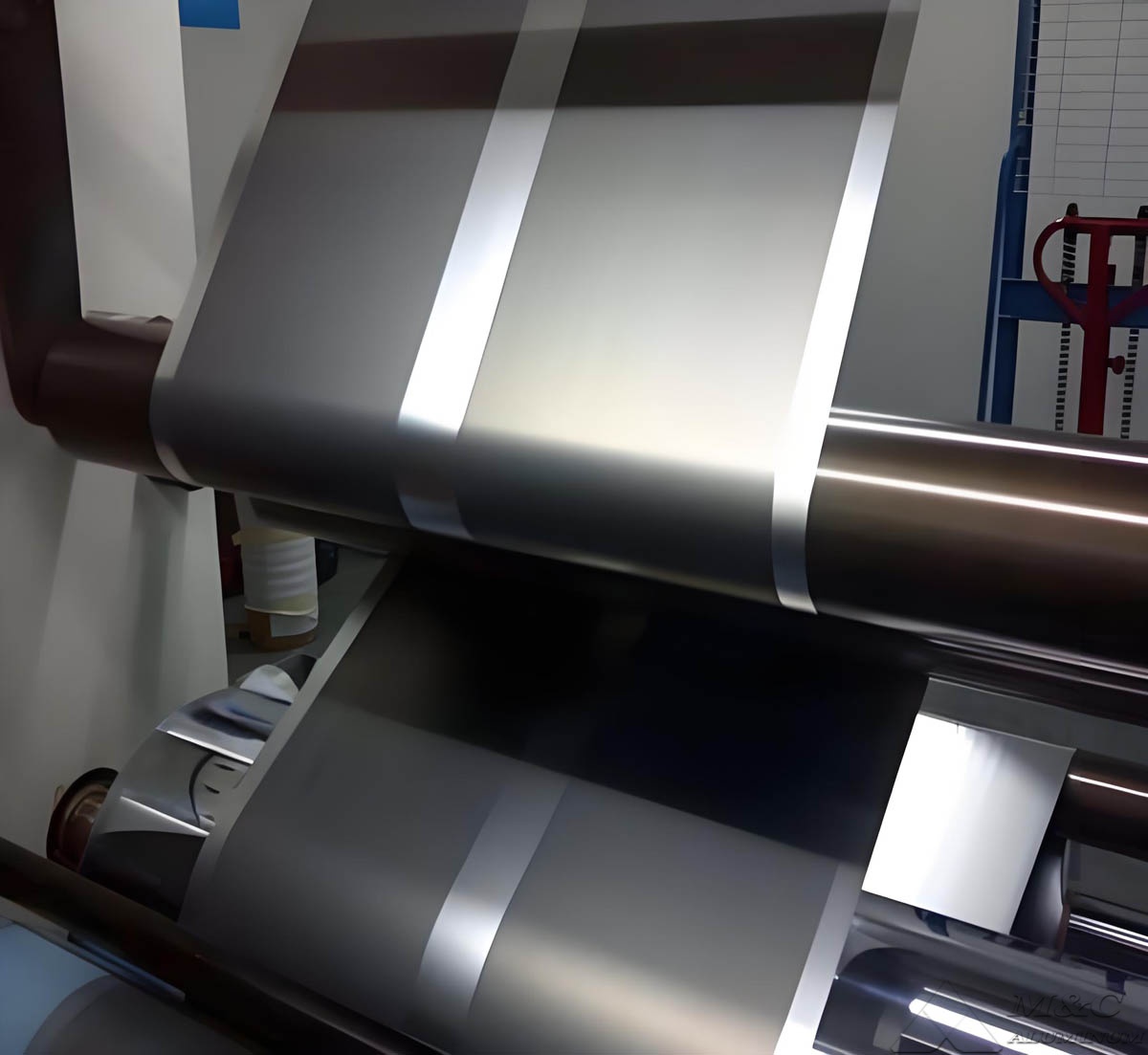
1235 battery aluminum foil is mainly used as an aluminum cathode current collector in rechargeable battery systems. Typical applications include:
Electric vehicle lithium-ion battery cells.
Energy storage system battery cells.
Consumer electronics batteries.
Power tool battery packs.
E-bike and light electric vehicle batteries.
Cylindrical, prismatic, and pouch cell production.
Lithium iron phosphate cathode electrodes.
Nickel-rich cathode electrode manufacturing.
Carbon coated current collector applications.
Different battery formats require different coil widths, thicknesses, mechanical properties, and winding specifications. For example, high-volume coating lines may require larger coils with tight flatness standards, while specialty battery applications may require narrow slit coils and specific inner diameters.
How to Select the Right 1235 Battery Foil Specification
The best 1235 aluminum foil specification should be selected based on the complete electrode process rather than thickness alone. Our technical team reviews the main production conditions before recommending a supply configuration.
Important selection factors include:
Foil thickness: Thinner foil can reduce inactive material weight, while thicker foil may provide greater handling stability and mechanical robustness.
Temper: Soft annealed foil and hard temper foil perform differently during coating, calendaring, punching, and winding. The selected temper should match the customer's production route.
Width and coil geometry: Coil width, inner diameter, outer diameter, and maximum coil weight should match unwinding equipment and line speed.
Surface requirement: Mill-finish and carbon coated aluminum foil serve different electrode designs. Surface cleanliness requirements should also be defined in advance.
Flatness requirement: Higher-speed coating operations typically require stricter web shape and winding controls.
Slitting condition: Customers should specify edge quality expectations, allowable burr direction, width tolerance, and coil winding direction.
Packaging and Export Supply
Battery aluminum foil is sensitive to moisture, dust, mechanical damage, and edge deformation during transport. We use export-oriented packaging procedures to protect the foil from production release through delivery.
Each coil can be protected with moisture-resistant wrapping, edge guards, reinforced outer layers, and wooden pallet or crate support when required. Coil labels identify alloy, temper, thickness, width, coil number, net weight, and production batch for traceability.
For international supply, we can prepare packing configurations suitable for container shipment, including loading plans that reduce coil movement and compression risk. Packaging details are adjusted according to coil size, transport route, and destination handling conditions.
Why Work Directly With a Battery Aluminum Foil Manufacturer
Direct sourcing from a 1235 battery aluminum foil manufacturer provides better control of technical communication, quality requirements, production scheduling, and traceability. We work with customers from specification confirmation through sample evaluation, mass production, final inspection, and export packing.
Our objective is to provide battery foil coils that perform consistently on electrode manufacturing lines. We support customized thickness, width, temper, coil diameter, surface treatment, and packaging requirements for lithium-ion battery applications.
For projects requiring 1235 battery aluminum foil, carbon coated aluminum foil, or customized aluminum cathode current collector coils, we can evaluate your technical specification and provide a production-oriented supply proposal.
Contact Us