
3003 Aluminum Foil For Air Conditioner Fins
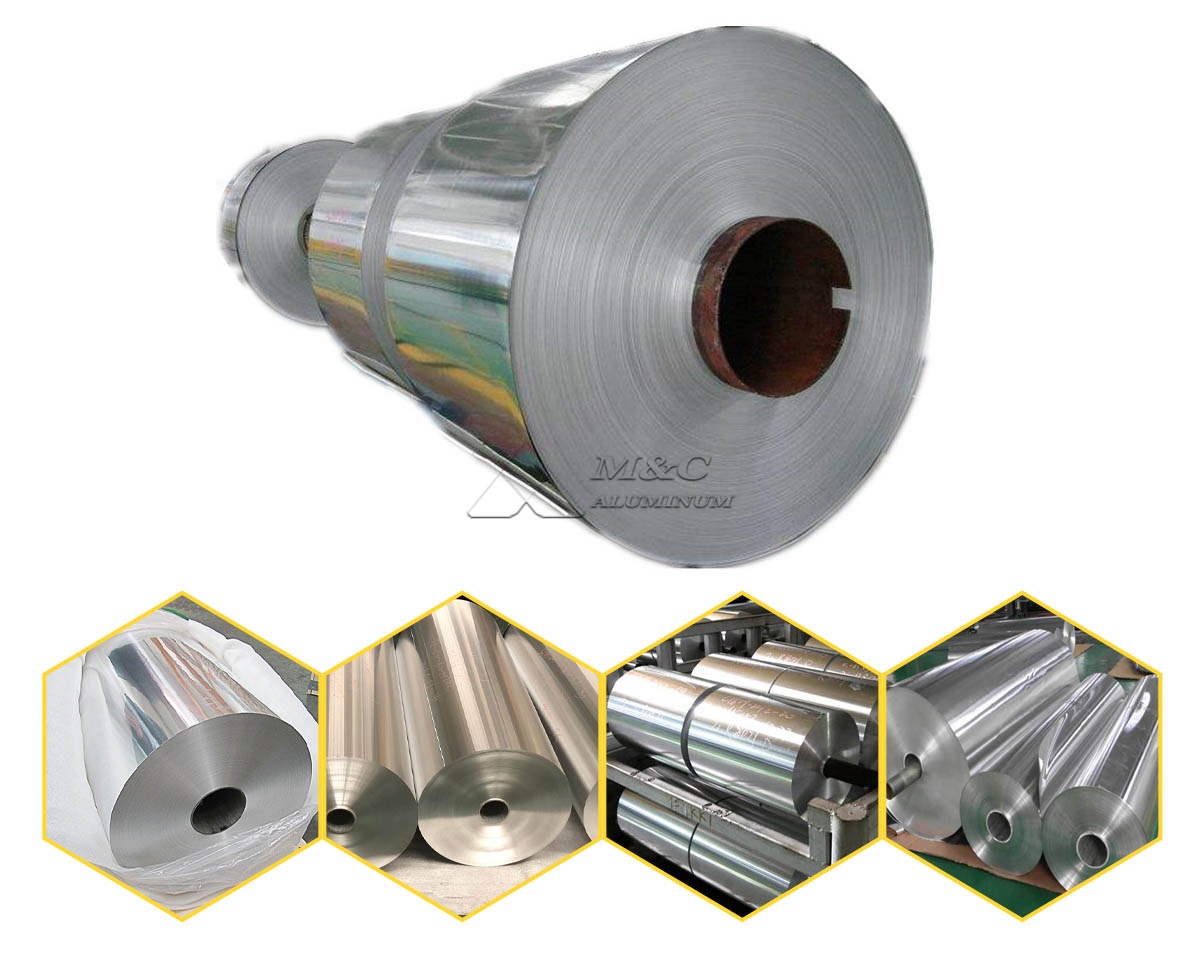
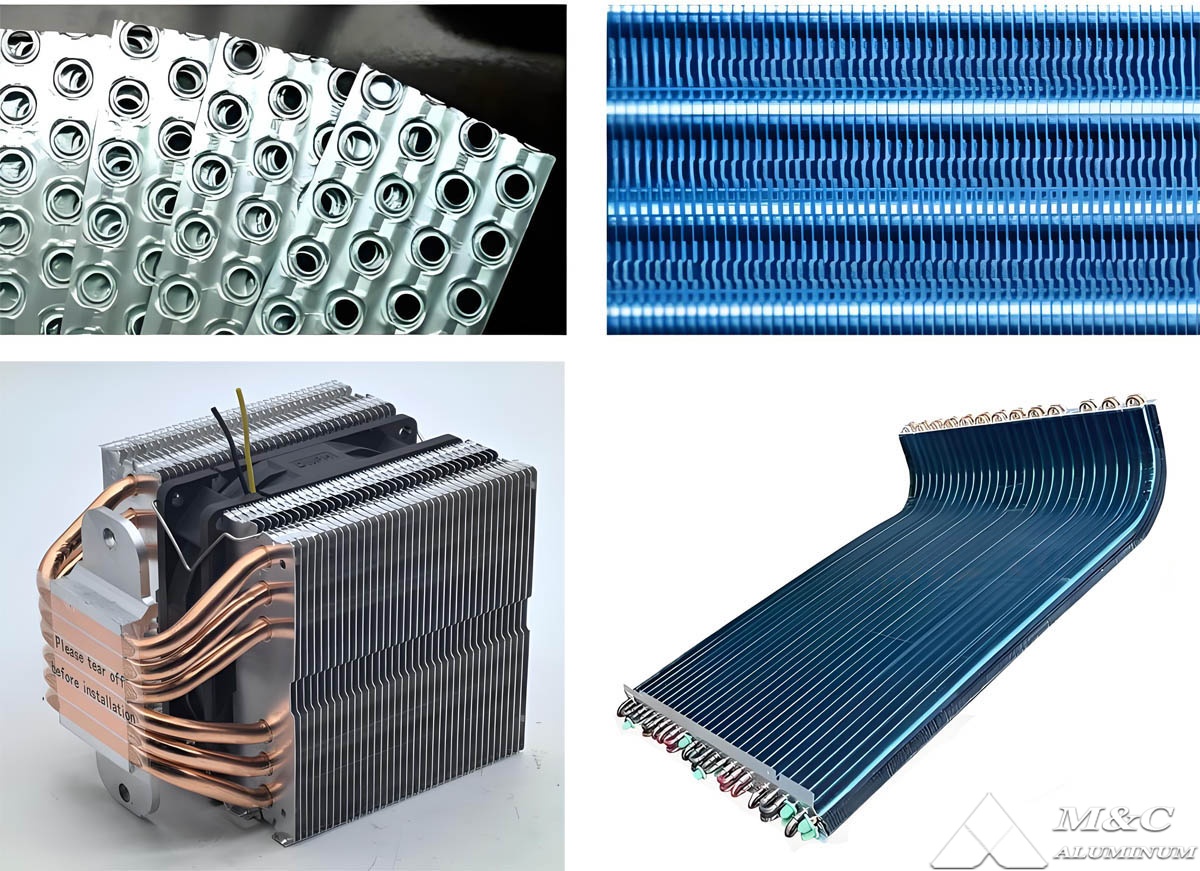
As a manufacturer of rolled aluminum products, we produce 3003 aluminum foil for air conditioner fins used in residential, commercial, and industrial heat-exchange equipment. This material is commonly processed into evaporator fins, condenser fins, radiator fins, and other thin-gauge heat-transfer components.
3003 aluminum foil combines good formability, moderate strength, corrosion resistance, and stable surface quality. When supplied with a hydrophilic coating, it can improve condensate drainage and help reduce water bridging between closely spaced fins. Our production process is designed to provide consistent thickness, flatness, mechanical properties, and coating performance for downstream fin stamping and fin-forming operations.
Why 3003 Aluminum Foil Is Used for Air Conditioner Fins
Alloy 3003 is an aluminum-manganese alloy. Its manganese content provides higher strength than commercially pure aluminum while retaining the ductility required for high-speed fin production. For air conditioner manufacturers, this balance is important because fin stock must withstand slitting, stamping, collar drawing, louver forming, and assembly without excessive cracking or deformation.
Compared with unalloyed aluminum foil, 3003 fin stock offers improved mechanical stability. This is beneficial for heat exchangers that require thin material with controlled rigidity. The alloy also has good resistance to atmospheric corrosion, making it suitable for HVAC equipment operating in humid environments.
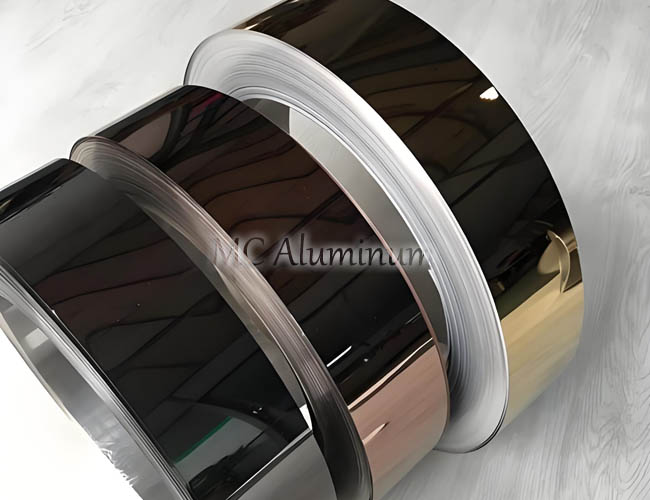
Our 3003 Aluminum Foil is manufactured for applications requiring a clean surface, reliable coil geometry, and stable processing behavior. We can supply bare aluminum foil, hydrophilic aluminum foil, and other coated foil configurations according to customer production requirements.
Key advantages of 3003 aluminum foil for air conditioner fins
Sufficient thermal conductivity: With a thermal conductivity of approximately 160–190 W/(m·K), it effectively meets the heat exchange requirements for condensers and evaporators.
Excellent formability: It offers superior plasticity in O or H22 temper, allowing for stamping, flanging, and tube expansion without cracking—ideally suited for high-speed stamping production lines.
Reliable corrosion resistance: As an aluminum-manganese (Al-Mn) rust-resistant alloy, it provides strong resistance to atmospheric and condensate corrosion, extending the service life of outdoor unit fins.
Cost-effective and lightweight: It is more affordable than copper and has a density only about one-third that of copper, aligning with the industry trend of "replacing copper with aluminum."
Main Applications of 3003 Air Conditioner Fin Foil
3003 aluminum foil for air conditioner fins is used in a range of heat-exchange systems. The final specification depends on the equipment design, operating environment, coating system, and forming method.
Typical applications include:
Evaporator fins for split air conditioners and central HVAC systems
Condenser fins for outdoor air conditioning units
Heat-exchanger fins for commercial refrigeration equipment
Fin material for dehumidifiers and heat pumps
Automotive and industrial cooling components
Refrigeration coils and finned heat-exchanger assemblies
Chemical Composition of 3003 Aluminum Alloy
3003 is primarily composed of aluminum with manganese as the main alloying element. The controlled chemical composition supports its mechanical properties, corrosion behavior, and formability during foil rolling and fin processing.
| Element | Typical Requirement for 3003 Alloy |
|---|---|
| Aluminum, Al | Balance |
| Manganese, Mn | 1.0% to 1.5% |
| Copper, Cu | 0.05% to 0.20% |
| Iron, Fe | Maximum 0.70% |
| Silicon, Si | Maximum 0.60% |
| Zinc, Zn | Maximum 0.10% |
| Other elements | As specified by applicable standards |
We control melt quality, casting conditions, homogenization, rolling reduction, and annealing parameters to maintain consistent alloy performance across production batches. Material certification can be provided based on the agreed inspection standard and order requirements.
Technical Parameters
The following table shows common supply ranges for 3003 aluminum foil used for air conditioner fin production. Final values can be adjusted according to the customer's forming process and heat-exchanger design.
| Parameter | Standard Supply Range | Notes |
|---|---|---|
| Alloy | 3003 | Aluminum-manganese alloy |
| Temper | H14, H16, H18, O | Selected according to forming requirements |
| Thickness | 0.05 mm to 0.20 mm | Common fin foil range: 0.08 mm to 0.15 mm |
| Width | 100 mm to 1,650 mm | Slit coil widths available |
| Coil inner diameter | 150 mm, 300 mm, 400 mm, 505 mm | Custom cores available upon agreement |
| Coil outer diameter | Up to 1,800 mm | Subject to coil weight and transport requirements |
| Coil weight | 500 kg to 8,000 kg | Custom coil weight available |
| Surface type | Mill finish, hydrophilic coated, epoxy coated | Determined by end-use environment |
| Tensile strength | According to temper and thickness | Controlled to customer specification |
| Elongation | According to temper and thickness | Important for stamping and collar drawing |
| Surface quality | Clean, smooth, free from harmful defects | Controlled for coating and forming |
Hydrophilic Coating for HVAC Fin Stock
Hydrophilic aluminum foil is widely used in air conditioner evaporators and condensers. The coating improves the wettability of the aluminum surface, allowing condensed water to spread into a thin film and drain more efficiently. This can help reduce water droplets, improve air passage between fins, and support stable heat-exchange performance.
Our hydrophilic aluminum foil production includes surface cleaning, chemical treatment, coating application, controlled curing, and final inspection. Coating systems can be selected according to requirements for hydrophilicity, corrosion resistance, adhesion, color, and processing performance.
| Coating Property | Typical Control Requirement |
|---|---|
| Coating type | Hydrophilic, anti-corrosion, or customized functional coating |
| Coating side | One side or two sides |
| Coating color | Blue, gold, clear, or customer-specified color |
| Coating adhesion | Suitable for fin stamping and forming |
| Hydrophilic performance | Controlled according to customer test method |
| Corrosion resistance | Evaluated according to agreed testing requirements |
| Surface wetting | Designed to support condensate drainage |
For applications with specific corrosion risks, such as coastal regions, industrial environments, or high-humidity installations, we can recommend appropriate coated Aluminium Foil For Air Conditioner systems based on the required service conditions.
Manufacturing Process
The performance of air conditioner fin foil depends not only on alloy selection but also on process control throughout manufacturing. We manufacture 3003 aluminum foil through a controlled production route that includes raw material selection, melting and casting, hot rolling, cold rolling, intermediate annealing, final rolling, slitting, coating when required, and packaging.
During cold rolling, thickness is continuously monitored to support uniformity across the coil width and length. Annealing conditions are adjusted according to the required temper, ensuring the foil has suitable strength and elongation for the customer's fin-forming equipment. For coated products, the surface preparation and curing process are closely controlled to maintain coating continuity and adhesion.
Our manufacturing team also monitors edge condition, coil tightness, camber, burr level, and surface cleanliness. These factors can affect feeding stability, die performance, and the quality of formed air conditioner fins.
Quality Control and Inspection
We conduct quality inspections during production and before shipment. Inspection items are defined by product specification, customer requirements, and applicable technical standards.
Key inspection items include:
Chemical composition verification
Thickness measurement across coil width
Width and edge quality inspection
Tensile strength and elongation testing
Surface cleanliness and visual defect inspection
Coil shape, flatness, and winding quality evaluation
Coating weight, adhesion, and appearance inspection for coated foil
Hydrophilic performance testing for hydrophilic aluminum foil
We understand that air conditioner fin manufacturers require stable material behavior during high-speed stamping. Therefore, we focus on lot-to-lot consistency and provide traceable coil identification to support production management at the customer's facility.
Packaging and Delivery
3003 aluminum foil coils are packed to protect the material from moisture, dust, handling damage, and deformation during international transportation. Standard export packing may include moisture-proof paper, plastic film, edge protection, reinforced wooden pallets, and seaworthy wooden cases where required.
Each coil can be marked with product information such as alloy, temper, dimensions, coil number, net weight, gross weight, production batch, and inspection status. Packaging methods can be adapted for container loading, customer warehouse handling, and local port conditions.
Selecting the Right 3003 Fin Foil Specification
When selecting 3003 aluminum foil for air conditioner fins, buyers should consider more than thickness and width. The required temper, tensile strength, elongation, coating type, coil weight, and surface condition should match the intended fin geometry and manufacturing method.
For example, a thin foil used for deep collar drawing may require a different temper from foil used for shallow louver forming. Similarly, evaporator fin stock may benefit from a hydrophilic coating, while condenser fins for demanding environments may require enhanced anti-corrosion performance.
As a 3003 aluminum foil manufacturer, we work with technical purchasing teams and heat-exchanger producers to define practical specifications before production. This approach helps ensure that the supplied aluminum foil is compatible with stamping, forming, coating, and assembly requirements.
Conclusion
3003 aluminum foil is a reliable material for air conditioner fins because it provides a practical combination of formability, strength, corrosion resistance, and surface quality. With appropriate temper control and optional hydrophilic coating, it can support efficient manufacturing of HVAC and refrigeration heat exchangers.
Our factory supplies 3003 air conditioner fin foil in customized thicknesses, widths, tempers, coil sizes, and surface conditions. We maintain process control from aluminum casting through final packing to provide stable material for international HVAC manufacturers and industrial heat-exchanger producers.

Contact Us