
3003 Aluminum Foil Hydrophilic Coating
As a manufacturer of rolled and coated aluminum products, we produce 3003 aluminum foil hydrophilic coating material for air-conditioning heat exchangers, refrigeration equipment, dehumidifiers, and related HVAC systems. This product combines the formability and corrosion resistance of AA 3003 alloy with a functional hydrophilic conversion coating designed to improve condensate drainage on fin surfaces.
Hydrophilic aluminum foil is primarily used in evaporator and condenser assemblies where moisture management affects thermal efficiency, cleanliness, and long-term operating reliability. Through controlled rolling, annealing, surface pretreatment, and coating application, we supply coated foil in formats matched to fin pressing and tube expansion processes.
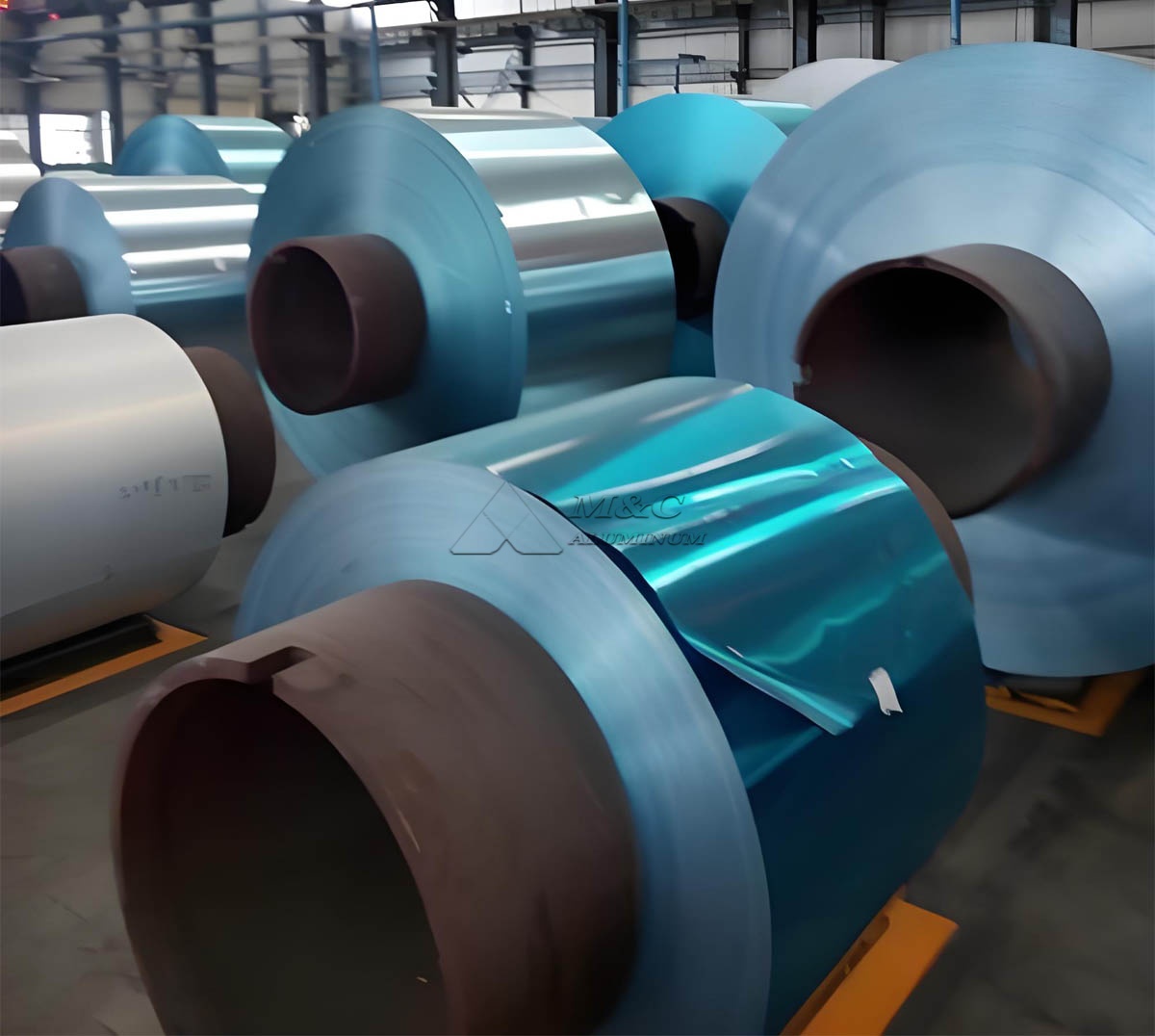
What Is 3003 Aluminum Foil Hydrophilic Coating?
3003 aluminum foil is an aluminum-manganese alloy foil with good workability, moderate strength, and stable corrosion resistance. In hydrophilic fin applications, the aluminum substrate is coated with a thin water-attracting layer. Rather than allowing condensate to remain as isolated droplets, the coating promotes the formation of a continuous water film that moves more efficiently across the fin surface.
This behavior is important in air-conditioning evaporators. Water droplets trapped between fins can obstruct airflow, create noise, reduce heat-transfer effectiveness, and increase the possibility of dust accumulation. A properly cured hydrophilic coating helps condensate drain toward the collection tray, supporting cleaner operation of the heat exchanger.
Our 3003 aluminum foil hydrophilic coating products are designed around the processing conditions of HVAC fin manufacturers. We control base metal properties and coating consistency so that the foil can withstand high-speed fin stamping, collar drawing, and assembly operations without unnecessary coating damage.
Why 3003 Alloy Is Used for Hydrophilic Fin Foil
AA 3003 contains manganese as its principal alloying element. Compared with commercially pure aluminum grades, it provides higher strength while retaining the ductility required for fin production. This balance makes 3003 aluminum foil suitable for heat exchanger components that require close fin pitches and precise forming.
Key advantages of 3003 alloy for coated HVAC foil include:
Good formability for fin pressing, louver forming, and collar drawing.
Higher strength than 1xxx aluminum foil in comparable temper conditions.
Stable performance during rolling and continuous coating operations.
Suitable corrosion resistance for typical indoor and outdoor HVAC environments.
Good thermal conductivity for heat exchanger fin applications.
Compatibility with chromate-free pretreatment and hydrophilic coating systems.
The final behavior of hydrophilic fin stock depends on more than alloy selection. Foil thickness, temper, surface cleanliness, pretreatment chemistry, coating weight, curing profile, and storage conditions all contribute to finished-product performance.
For general coil and foil requirements beyond hydrophilic materials, our Aluminum Foil manufacturing program covers multiple alloy grades, tempers, widths, and application-specific surface conditions.
Typical Technical Parameters
The following table shows common production ranges for 3003 hydrophilic aluminum foil. We confirm final specifications according to the buyer's fin design, equipment settings, and applicable technical agreement.
| Parameter | Typical Range or Requirement | Notes |
|---|---|---|
| Alloy | AA 3003 | Aluminum-manganese alloy |
| Temper | H22, H24, H26, O | Selected according to forming method |
| Foil thickness | 0.08-0.20 mm | Common HVAC fin stock range |
| Standard thickness tolerance | As agreed | Controlled by ordered gauge and width |
| Width | 200-1,300 mm | Slit coil width available |
| Coil inner diameter | 150 mm, 300 mm, 400 mm, 500 mm | Customized to processing equipment |
| Coil outer diameter | Up to approximately 1,400 mm | Subject to weight and packing requirements |
| Hydrophilic coating | One side or two sides | Selected by end-use design |
| Dry coating weight | 0.3-1.5 g/m2 per side | Adjustable according to performance target |
| Surface wettability | Water contact angle typically below 15 degrees | Tested after complete curing |
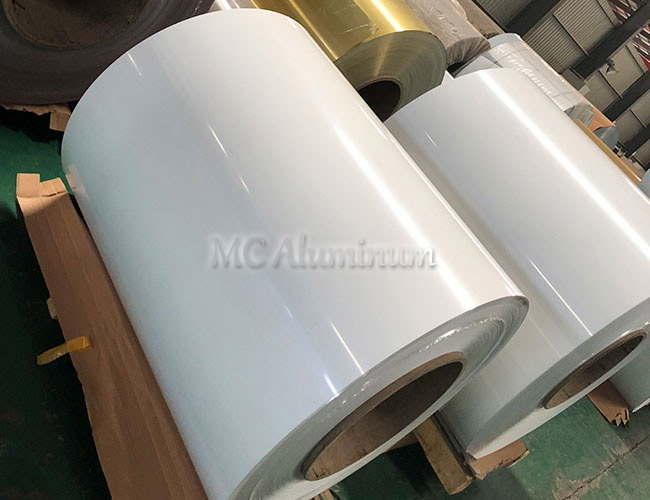
| Coating color | Blue, gold, clear, or customized | Depends on coating formulation |
| Surface quality | Clean, uniform, free of harmful defects | Inspected before shipment |
| Application | Evaporator, condenser, radiator, dehumidifier fin | HVAC and heat exchange equipment |
Manufacturing Process at Our Plant
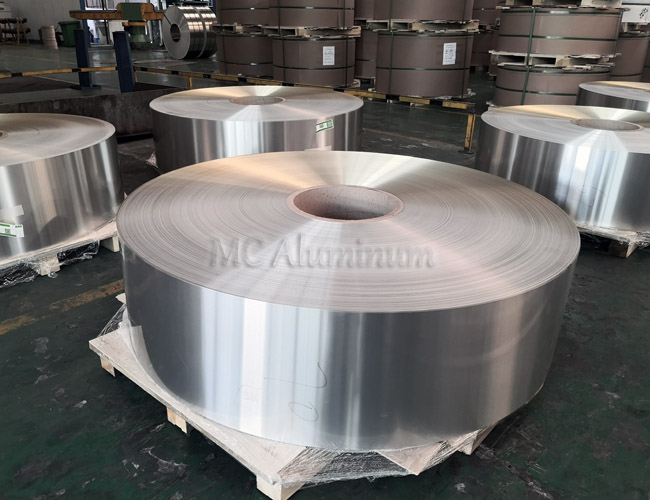
Producing coated aluminum foil for air conditioner fins requires close coordination between aluminum rolling and coil-coating operations. Our manufacturing process begins with controlled selection of 3003 aluminum coil stock. We then process the material through rolling and annealing stages to achieve the required thickness, flatness, mechanical properties, and surface condition.
1. Base Foil Rolling and Annealing
The 3003 alloy is rolled to the specified final gauge under controlled tension and thickness monitoring. Annealing is used where required to obtain the target temper. Since fin material may undergo demanding press forming, we pay particular attention to elongation, tensile behavior, and coil shape consistency.
2. Surface Cleaning and Pretreatment
Before coating, the aluminum surface is cleaned to remove residual rolling oil and contaminants. Pretreatment improves the bond between the foil and the hydrophilic layer. A clean and properly activated surface is essential for coating adhesion, corrosion resistance, and long-term wettability.
3. Hydrophilic Coating Application
We apply the hydrophilic coating through continuous coil-coating equipment. Coating formulation and dry-film weight are adjusted according to the intended operating environment. For example, equipment exposed to humid or mildly corrosive conditions may require enhanced protective performance in addition to hydrophilic drainage behavior.
4. Thermal Curing
After application, the coated aluminum foil passes through a controlled curing oven. Curing conditions influence coating crosslinking, adhesion, hardness, and hydrophilic performance. Our process controls oven temperature and line speed to maintain stable coating properties across the coil length.
5. Inspection, Slitting, and Packaging
Finished coils are inspected for thickness, width, coating appearance, adhesion, wettability, edge quality, and winding condition. After slitting, coils are packed with moisture-resistant materials and suitable edge protection to reduce transport-related damage.
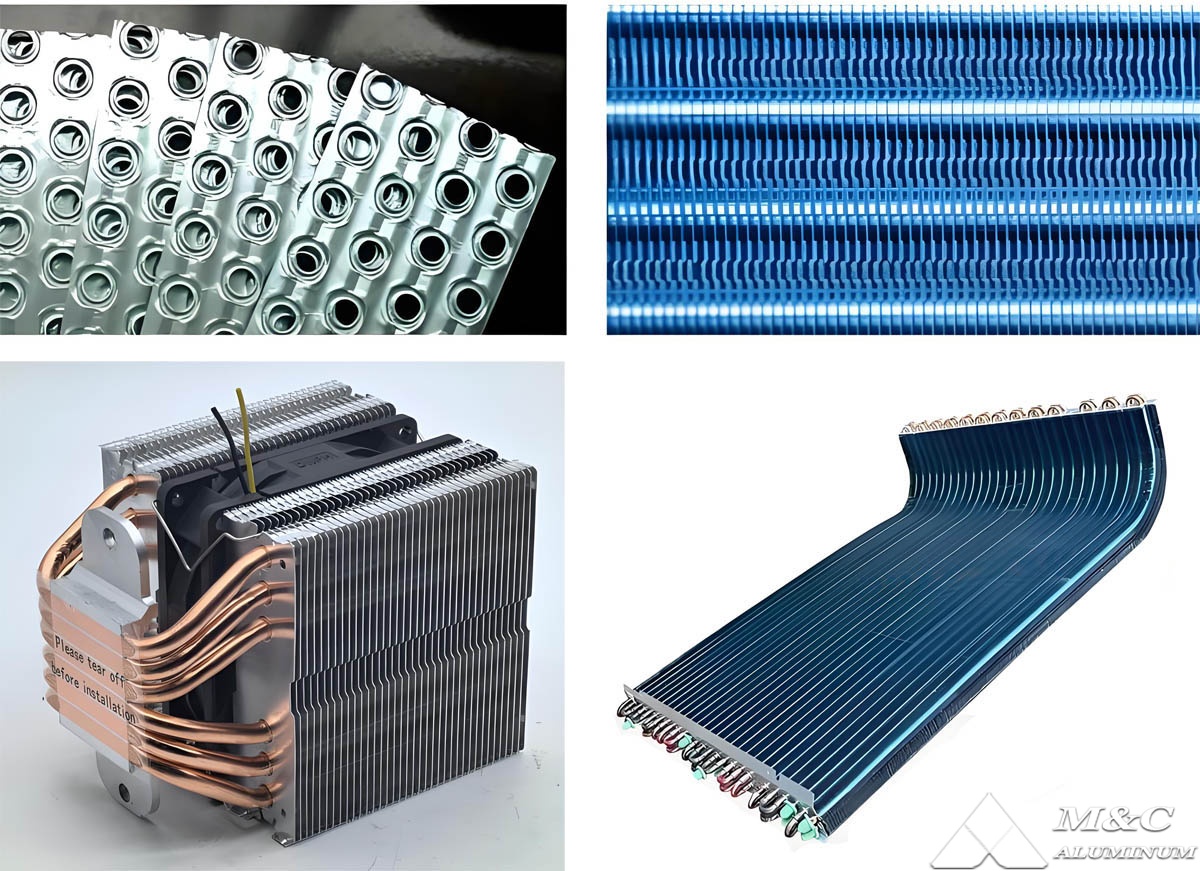
Performance Benefits in HVAC Heat Exchangers
The main purpose of a hydrophilic coating is to improve water behavior on the aluminum surface. When condensate spreads and drains more evenly, heat exchanger manufacturers can reduce the operational issues caused by retained water droplets.
Improved Condensate Drainage
The hydrophilic surface encourages water to form a thin film instead of discrete droplets. This can improve drainage between closely spaced fins and help maintain air passage efficiency.
Reduced Water Bridging
Droplets between fins may create water bridges that restrict airflow. Hydrophilic aluminum foil helps minimize this condition, which is especially relevant for evaporators operating in high-humidity environments.
Support for Cleaner Heat Exchanger Surfaces
Better drainage can reduce the retention of moisture and airborne contaminants. While maintenance requirements depend on the complete system design and operating environment, hydrophilic fin coatings can support cleaner surface conditions over time.
Corrosion Protection
Depending on the selected coating system, the coating can provide an additional protective barrier against moisture and certain atmospheric contaminants. For demanding applications, buyers may specify salt-spray resistance, alkaline resistance, or other performance evaluations based on their internal standards.
Main Applications
3003 aluminum foil with hydrophilic coating is widely processed into fins for residential, commercial, and industrial thermal management equipment. Typical uses include:
Split air conditioner indoor and outdoor units.
Window and packaged air-conditioning systems.
Refrigerators and commercial refrigeration equipment.
Heat pumps and ventilation units.
Dehumidifiers and air dryers.
Automotive auxiliary heat exchangers where specified.
Industrial cooling and temperature-control equipment.
For dedicated HVAC applications, buyers can review our Aluminium Foil For Air Conditioner range, which includes base foil and coated fin stock options developed for heat exchanger production.
Quality Control for Coated Aluminum Foil
As a 3003 aluminum foil manufacturer, we use documented inspection procedures throughout production. Material acceptance and final-release checks are aligned with the agreed specification and customer requirements.
Typical quality-control items include:
| Inspection Item | Control Purpose |
|---|---|
| Chemical composition | Verifies 3003 alloy conformity |
| Thickness measurement | Confirms gauge uniformity across the coil |
| Width and edge inspection | Ensures compatibility with fin-stamping lines |
| Tensile strength and elongation | Supports forming performance control |
| Coating weight | Confirms target coating application level |
| Water contact angle | Evaluates hydrophilic surface performance |
| Coating adhesion | Checks resistance to peeling during processing |
| Surface appearance | Identifies streaks, pinholes, scratches, and coating defects |
| Coil shape and winding | Supports smooth unwinding and stable press feeding |
We can also discuss customer-specific testing procedures when the foil will be used in specialized heat exchanger designs or demanding regional climates.
Ordering Considerations
To select the appropriate 3003 aluminum foil hydrophilic coating material, buyers should provide the intended thickness, width, temper, coil dimensions, coating side requirement, and end application. Information about fin pitch, press speed, collar depth, operating humidity, and corrosion exposure is also useful in selecting a suitable coating system.
Our technical team can manufacture 3003 aluminum foil in customized slit widths and coil weights to match downstream production efficiency. Before volume production, we recommend confirming samples or trial coils under actual fin-stamping conditions, particularly where very thin gauges, narrow fin pitches, or high-speed processing are involved.
Conclusion
3003 aluminum foil hydrophilic coating is a practical material solution for HVAC heat exchanger fins requiring good formability, effective condensate drainage, and stable coating performance. By combining controlled 3003 foil production with surface pretreatment, continuous coating, and curing control, we manufacture hydrophilic aluminum foil tailored to air conditioner and refrigeration applications.
For each project, we work from the required mechanical properties, coating characteristics, coil dimensions, and downstream processing conditions to supply material that supports consistent fin production and reliable heat exchanger performance.


Contact Us