
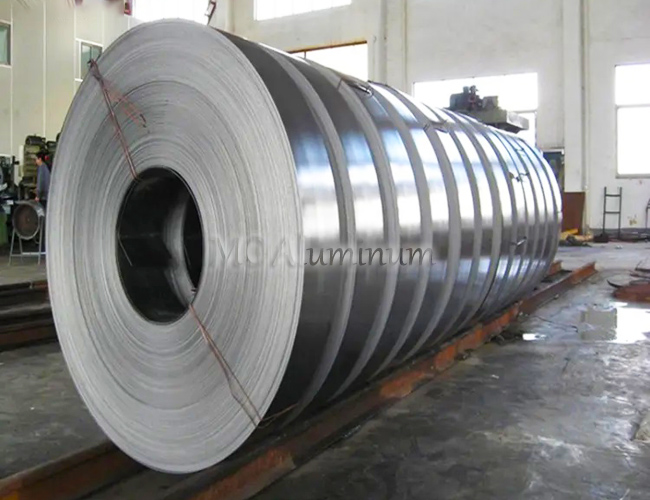
3003 Aluminum Strip for Transformer Windings
As a direct manufacturer of aluminum rolled products, we produce 3003 aluminum strip for transformer windings under controlled casting, rolling, slitting, annealing, and inspection procedures. In transformer applications, the strip material must combine stable electrical performance, reliable forming behavior, consistent thickness, and high surface quality. These requirements are not achieved by specification alone. They depend on process control throughout production.
Our 3003 alloy strip is supplied for dry-type transformers, oil-immersed transformers, reactors, and related electrical winding components. Compared with general-purpose strip, aluminum strip for transformer windings requires stricter dimensional accuracy, better edge condition, and cleaner surfaces to support insulation coating, winding uniformity, and long-term operating reliability.
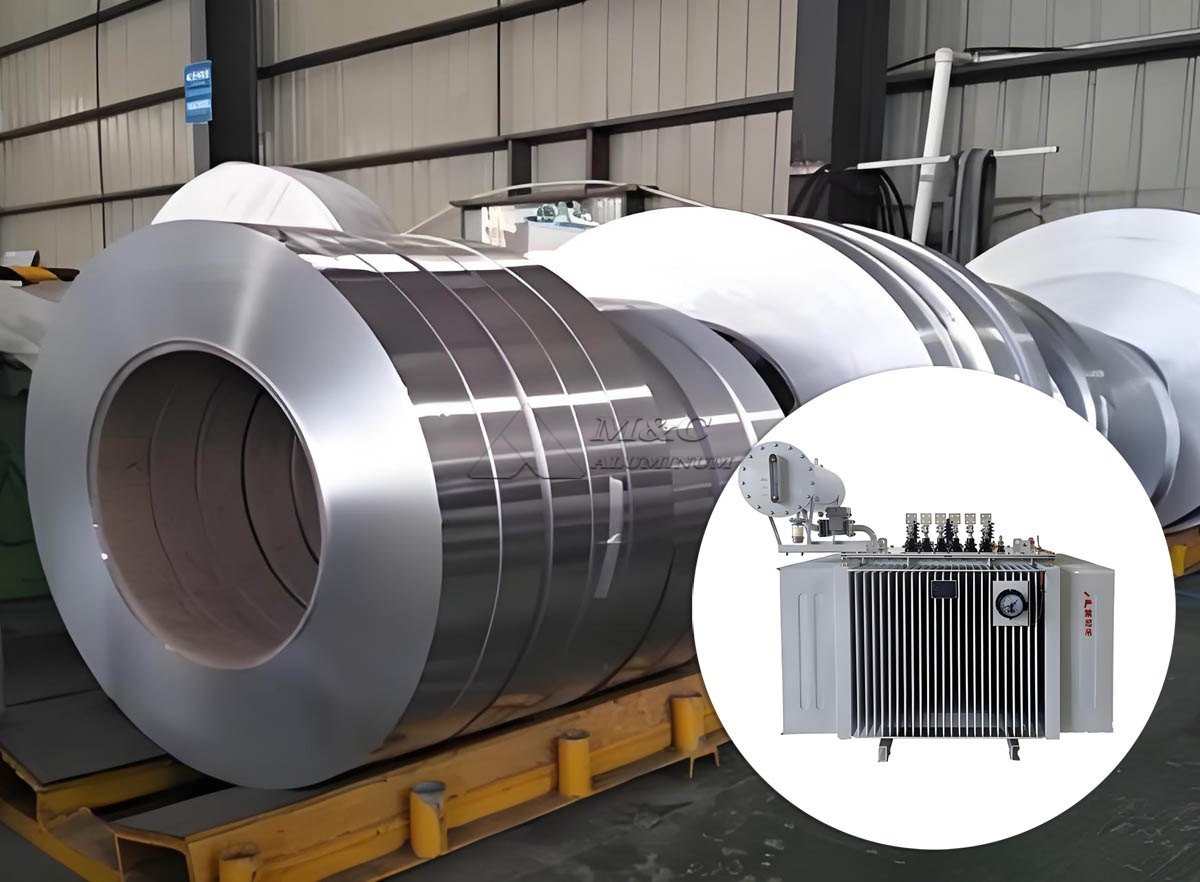
What Is 3003 Aluminum Strip for Transformer Windings
3003 is an Al-Mn series alloy with good corrosion resistance, stable formability, and balanced mechanical strength. For transformer winding use, 3003 aluminum strip is processed into narrow or wide slit coils with controlled temper, smooth edges, low burr, and stable elongation.
In practical production, this material is selected where the customer requires reliable winding performance and cost-effective conductivity in transformer coil manufacturing. The alloy is especially suitable for applications that demand:
Good winding formability without edge cracking
Uniform strip geometry for tight coil build control
Clean surfaces for insulation treatment or paper covering
Stable performance in continuous winding operations
We manufacture both standard Aluminum Strip products and application-oriented electrical grades. For customers requiring alloy-specific supply, our 3003 Aluminium strip can be produced according to winding width, temper, conductivity expectations, and edge quality requirements.
Why 3003 Alloy Is Used in Transformer Windings
Transformer manufacturers evaluate conductor materials not only by conductivity, but also by process stability during winding and assembly. In this context, 3003 aluminum strip for transformer windings offers several practical advantages.
Stable Formability
3003 alloy has good ductility and processing adaptability. During winding, the strip must tolerate repeated bending without surface damage, severe springback, or edge instability. Properly annealed 3003 strip provides uniform behavior during coil formation.
Consistent Mechanical Strength
The strip must maintain enough strength for handling, insulation wrapping, and layer stacking, while remaining soft enough for accurate winding. This balance is important in transformer coil production where excessive hardness can increase edge defects and insufficient strength can reduce processing efficiency.
Corrosion Resistance
The manganese-containing alloy system gives 3003 strip good resistance to atmospheric corrosion. This supports storage stability and helps maintain surface integrity before insulation processing or final transformer assembly.
Manufacturing Economy
Compared with copper conductors, aluminum strip offers lower density and favorable cost structure. For many transformer designs, this makes transformer aluminium strip a practical choice, especially when material consistency and dimensional precision are assured by the manufacturer.
Manufacturing Control for Transformer Winding Strip
As a factory, we control the critical stages that affect winding quality.
1. Melt and Composition Control
The alloy composition is controlled at the melting and casting stage to ensure the manganese content, impurity limits, and final metallurgical structure meet the required processing range. Consistent chemistry is the basis for stable conductivity and mechanical properties.
2. Hot Rolling and Cold Rolling
Rolling schedules are designed to achieve target thickness while maintaining flatness and minimizing internal stress variation. For transformer winding strip, thickness consistency across coil length is essential because even small deviations can affect winding height and electrical design.
3. Annealing and Temper Adjustment
The temper is selected according to winding method and end-use processing. For most transformer uses, softer tempers are preferred to support smooth forming. Controlled annealing also helps stabilize elongation and reduce residual stress.
4. Precision Slitting
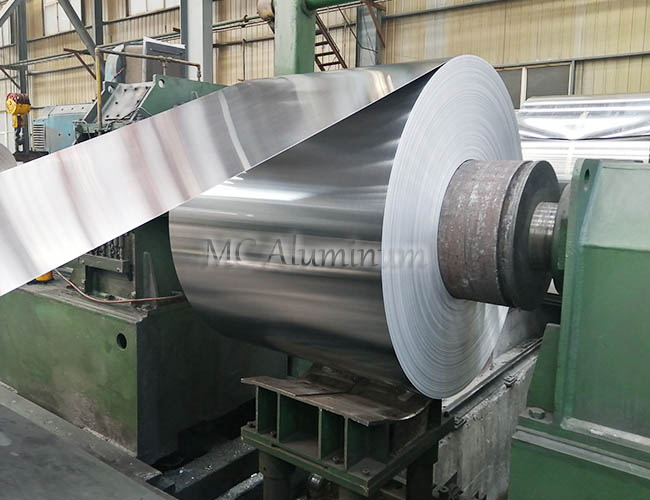
Slitting quality directly affects the usability of the strip in transformer winding lines. We use precision slitters to control width tolerance, edge burr, edge camber, and coil tightness. A stable slit edge reduces the risk of insulation damage during winding.
5. Surface Inspection and Packaging
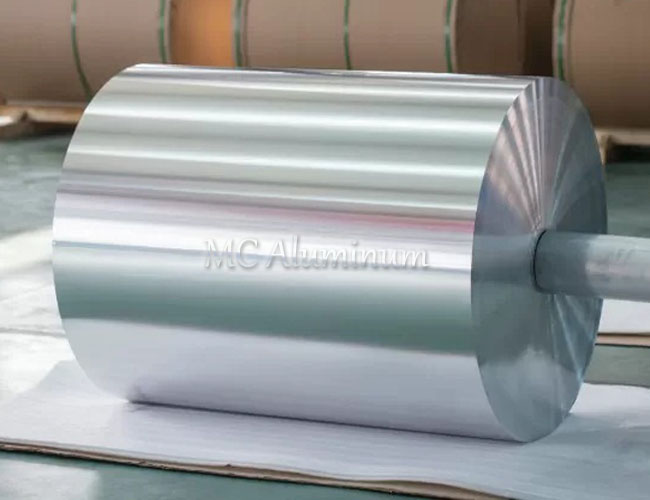
The strip surface is inspected for scratches, oil contamination, roll marks, waviness, and other defects that could interfere with insulation or downstream processing. Finished coils are packaged to reduce transport deformation and moisture exposure.
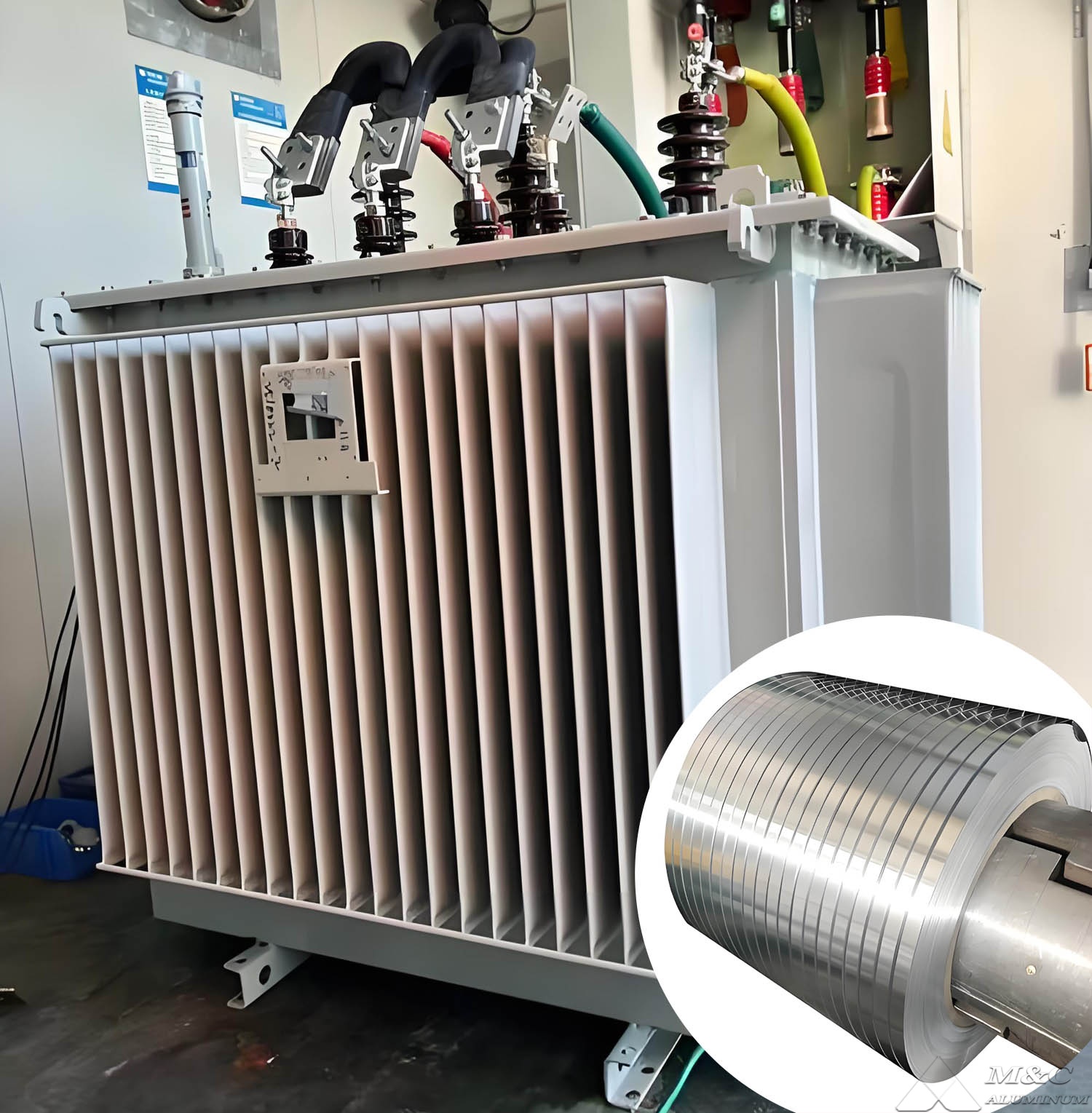
Technical Parameters of 3003 Aluminum Strip
The exact specification range depends on transformer design, winding equipment, and insulation method. The following table shows common production parameters for 3003 aluminum strip for transformer windings.
| Item | Typical Range / Requirement |
|---|---|
| Alloy | 3003 |
| Temper | O, H12, H14 |
| Thickness | 0.20 mm - 3.00 mm |
| Width | 10 mm - 1650 mm |
| Inner Diameter | 150 mm, 300 mm, 400 mm, 500 mm, custom |
| Outer Diameter | According to coil weight and line requirement |
| Thickness Tolerance | As per order and applicable standard |
| Width Tolerance | Precision slitting according to customer requirement |
| Edge Condition | Slit edge, low burr, smooth edge |
| Surface | Clean, flat, free from obvious oil stain, scratch, corrosion, and edge cracking |
| Conductivity | According to temper and customer technical requirement |
| Tensile Strength | According to temper and specification |
| Elongation | Controlled for winding process suitability |
| Coil Weight | Custom according to handling and winding equipment |
| Standard Reference | GB, ASTM, EN, or customer technical agreement |
| MOQ | 1-3 tons |
For projects requiring dedicated electrical conductor material, we also produce Transformer Aluminium Strip with close control of edge quality, temper uniformity, and winding performance.
Key Quality Requirements for Transformer Applications
For transformer manufacturers, product qualification goes beyond nominal alloy and size. The following points are usually decisive in actual use.
Thickness Uniformity
Uneven thickness can affect turns count, coil compactness, and thermal performance. We monitor rolling and inspection data to keep thickness variation within the specified range along the full coil length.
Burr and Edge Quality
Sharp burrs may damage paper insulation, enamel layers, or interlayer materials during winding. Precision slitting and edge inspection are therefore essential for every coil intended for electrical applications.
Surface Cleanliness
A clean surface supports insulation adhesion, wrapping quality, and stable electrical isolation. We control lubricant residues and handling marks to maintain surface consistency.
Flatness and Coil Shape
Poor flatness or unstable coil winding can interrupt automatic processing. We adjust rolling tension, slitting tension, and recoiling parameters to improve strip shape and coil stability.
Mechanical Consistency
Uniform tensile behavior is important for continuous winding. Excessive variation from one section of the coil to another may cause unstable feeding or deformation during the winding process.
Common Applications
Our 3003 aluminum strip for transformer windings is used in a range of electrical products, including:
Dry-type transformer winding conductors
Oil-immersed transformer coils
Distribution transformer windings
Small and medium power transformer conductors
Reactor and choke winding materials
Insulated aluminum strip for electrical coil fabrication
Different designs may require bare strip, paper-covered strip, or strip intended for subsequent insulation processing. We manufacture the base material according to the downstream fabrication route.
How We Match Production to Customer Requirements
In transformer projects, material supply must align with actual equipment and design conditions. We generally confirm the following points before production:
Required alloy and temper
Thickness and width range
Edge condition requirements
Coil inner diameter and maximum outer diameter
Coil weight limit for winding equipment
Surface cleanliness level
Conductivity or resistivity target if specified
Packaging method for export or workshop storage
This production method helps avoid mismatches between the supplied strip and the winding process. For export customers, it also reduces delays caused by repacking, width correction, or additional edge treatment.
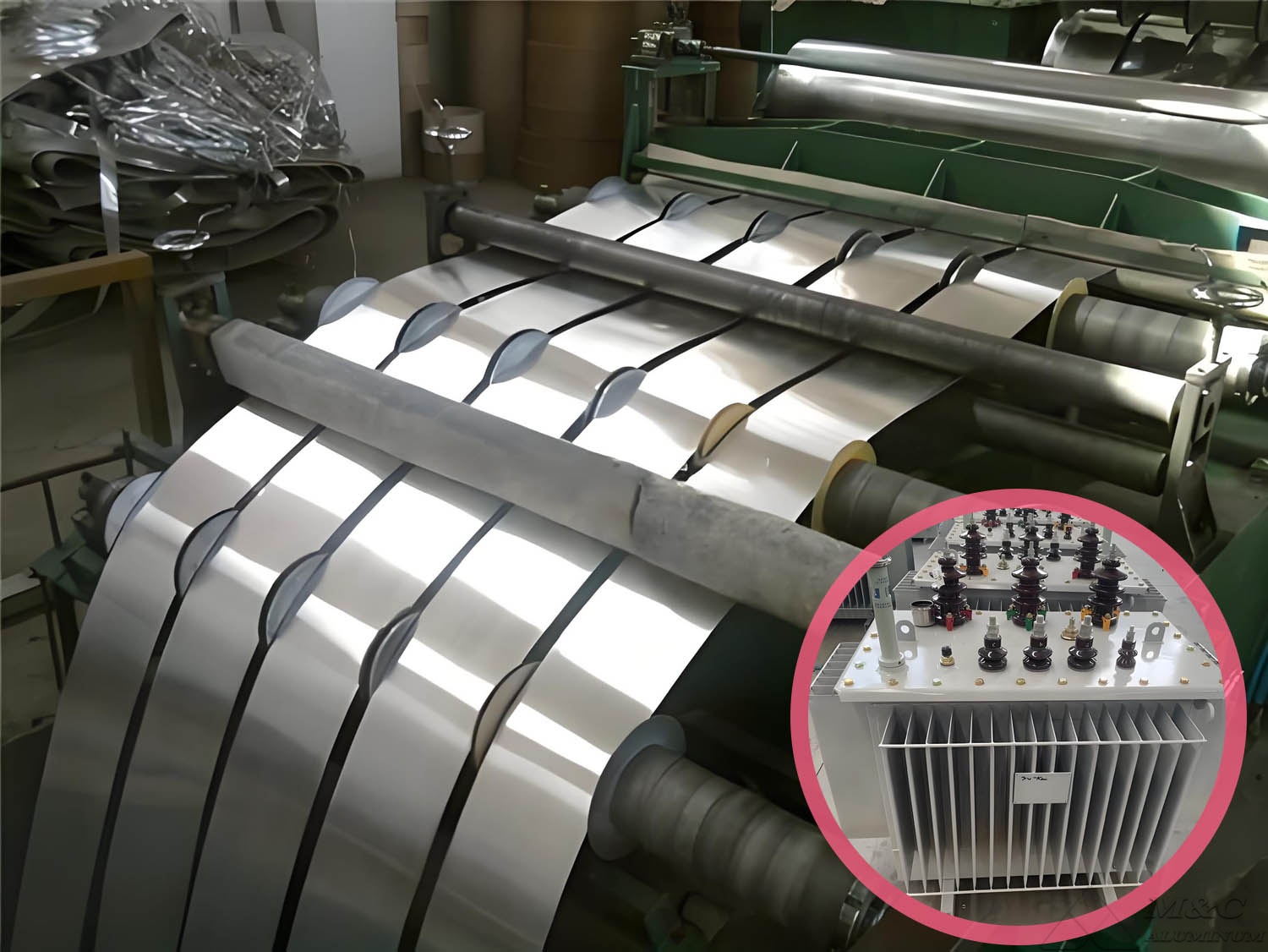
Advantages of Factory-Direct Production
As a manufacturer, we manage the full process from raw material preparation to finished slit coil delivery. This allows us to provide practical advantages for transformer producers:
Direct control over alloy composition and rolling process
Stable supply of repeat specifications
Precision slitting for narrow tolerance orders
Fast adjustment for custom width and temper requirements
Consistent quality documentation and batch traceability
Technical coordination between production and customer application teams
Factory-based production is particularly important for transformer winding strip because product performance depends on process detail. Material that appears compliant on a basic certificate may still create issues in winding if edge condition, flatness, or temper consistency is not properly controlled.
Conclusion
3003 aluminum strip for transformer windings is a practical conductor material for many electrical coil applications when it is manufactured with strict control of composition, temper, dimensions, surface quality, and slit edge condition. In transformer production, these factors directly influence winding efficiency, insulation reliability, and final product consistency.
As a producer of rolled aluminum products, we supply 3003 winding strip based on actual transformer manufacturing requirements rather than general-purpose strip standards alone. By controlling rolling, annealing, slitting, and inspection in-house, we provide material suited to stable transformer coil fabrication and export-oriented industrial use.
If you are evaluating 3003 aluminum strip, transformer winding aluminum strip, or custom transformer aluminium strip specifications, the most important starting point is to match the strip parameters to the winding process, insulation method, and dimensional tolerance required by the end product.
Contact Us