
5000-Series Aluminum Strip for Cable Armoring, 0.5 mm Thick
As an aluminum strip manufacturer, we produce 5000-series aluminum strip for cable armoring in controlled thickness, width, temper, and surface condition. For many power, control, communication, and instrumentation cables, a 0.5 mm thick aluminum strip provides a practical balance between mechanical protection, corrosion resistance, forming performance, and cable weight reduction.
Cable armoring materials must be consistent. During continuous cable production, even small variations in strip thickness, burr height, camber, or surface condition can affect wrapping stability, overlap control, welding, corrugation, or interlocking performance. For this reason, our production of 5000-series aluminum strip for cable armoring is based on coil-to-coil process control, precision slitting, and inspection records matched to engineering requirements.
Why 5000-Series Aluminum Strip Is Used for Cable Armoring
5000-series aluminum alloys are aluminum-magnesium alloys. Compared with pure aluminum grades, they offer higher strength while maintaining good ductility and corrosion resistance. Compared with steel armor, aluminum cable armor strip helps reduce cable weight and improves resistance to atmospheric and many industrial environments.
For cable armoring, 5000-series alloys are commonly selected when the cable design requires:
Improved corrosion resistance in outdoor, marine, tunnel, or humid environments
Lower cable weight compared with galvanized steel strip armor
Stable forming during helical wrapping, corrugating, or interlocking
Good fatigue resistance under handling and installation stress
Compatibility with aluminum sheath or other aluminum-based cable components
Reliable dimensional consistency for high-speed cable production lines
Among 5000-series grades, 5052 aluminum strip is one of the most frequently specified materials for cable armor because it offers a mature combination of formability, strength, and corrosion resistance. Depending on the cable design and national standard, 5005, 5754, or other 5xxx alloys may also be considered.
Product Definition: 0.5 mm Thick Aluminum Strip for Cable Armor
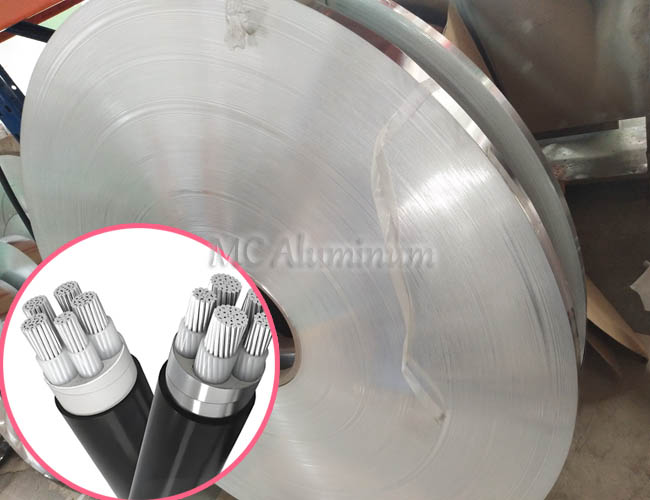
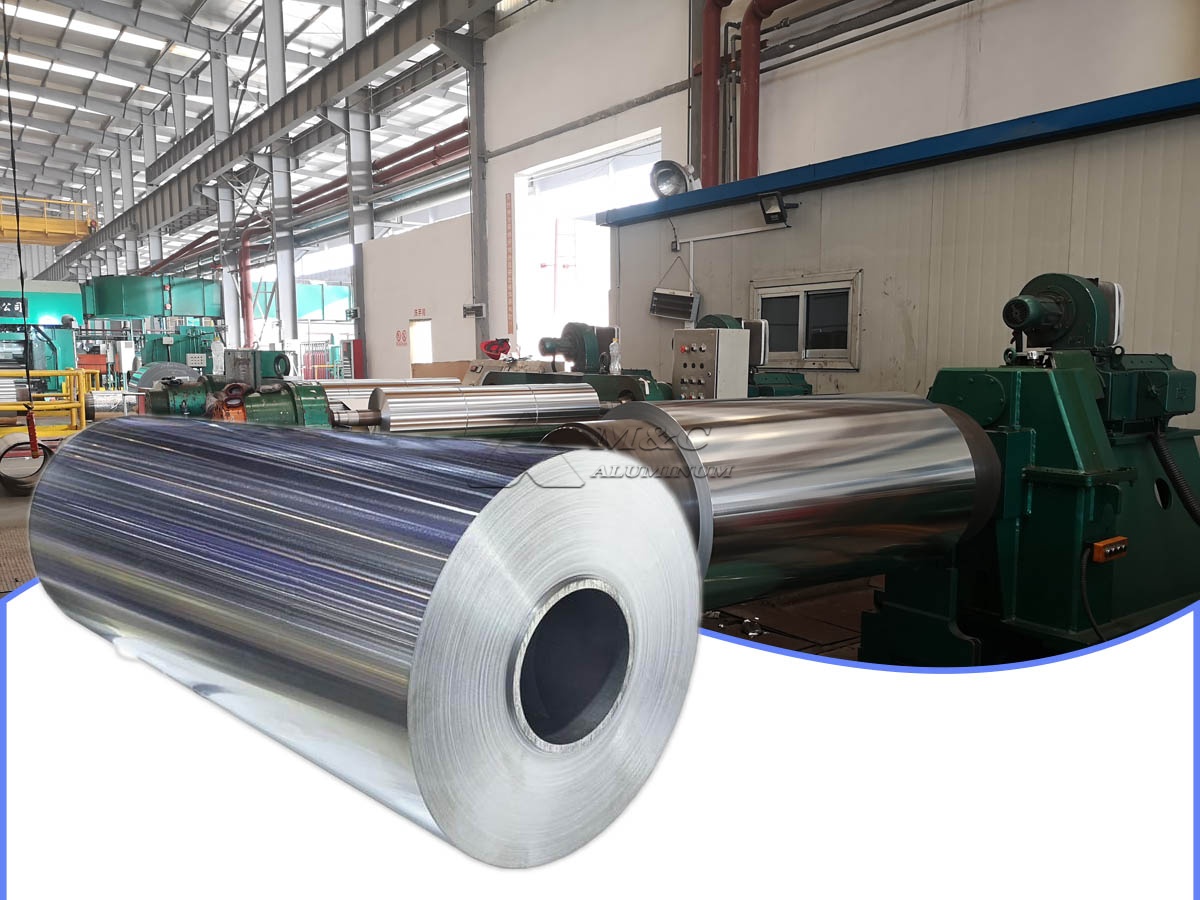
The product discussed here is a flat rolled and slit aluminum strip with a nominal thickness of 0.5 mm. It is supplied in coils for continuous feeding into cable armoring equipment. The strip can be used for single-layer helical armoring, interlocked armor, corrugated armor, or as a protective metallic layer depending on the cable construction.
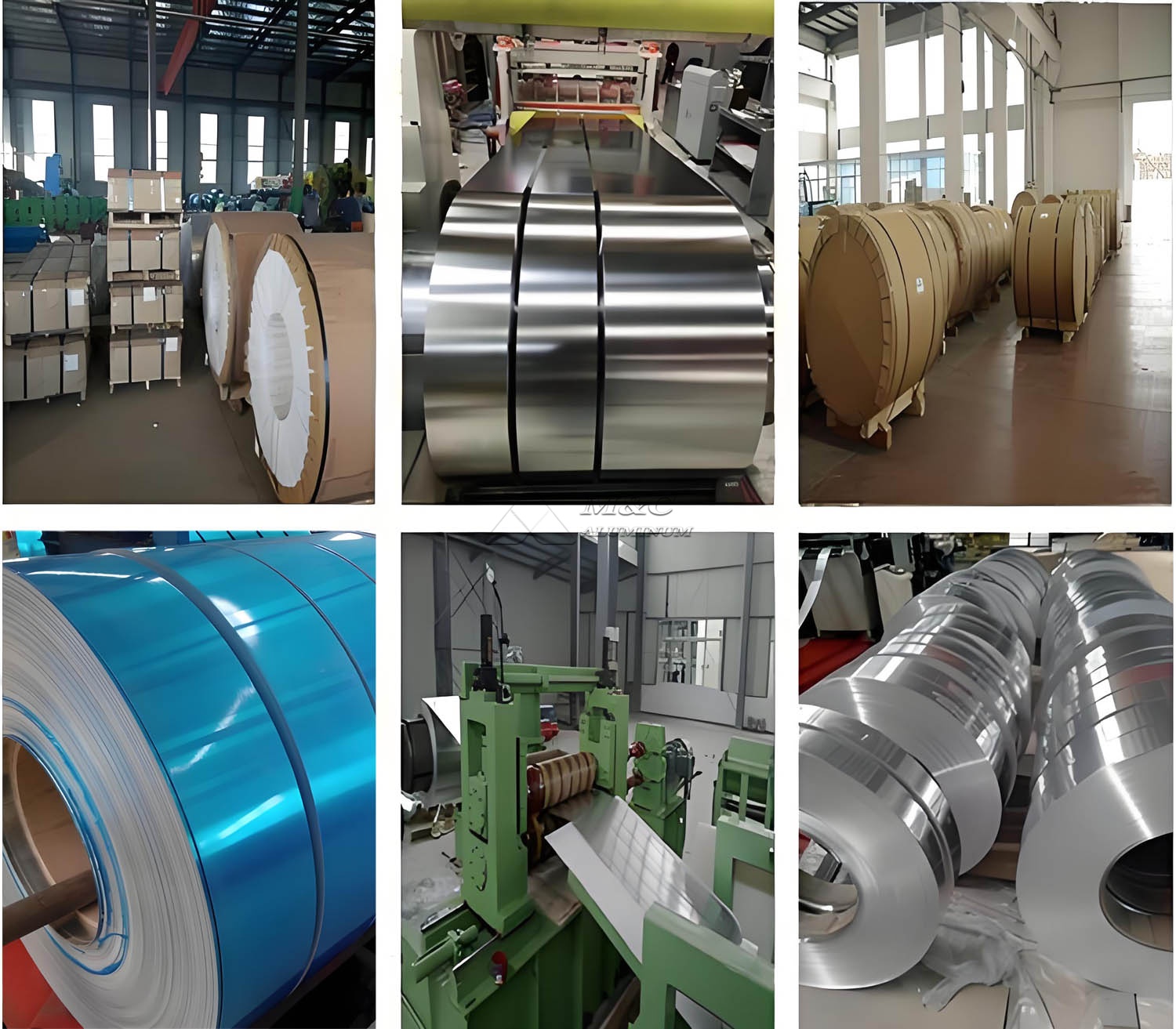
We manufacture the material from aluminum coil stock through rolling, annealing or temper control, leveling, slitting, edge conditioning, and packaging. For related product categories, customers may also review our general Aluminum Strip production range, which includes multiple alloys, tempers, and thicknesses for industrial applications.
The 0.5 mm thickness is often selected for medium protection requirements. It is thick enough to provide mechanical resistance during cable installation and service, while remaining formable for continuous wrapping around cable cores. Final suitability should always be confirmed according to cable diameter, armor structure, bending radius, installation environment, and applicable cable standards.
Typical Technical Parameters
The following table shows common manufacturing parameters for 5000-series aluminum strip for cable armoring. Exact values can be adjusted according to customer drawings, cable standards, and production line requirements.
| Item | Typical Specification |
|---|---|
| Product | 5000-series aluminum strip for cable armoring |
| Common Alloy | 5052, 5005, 5754, custom 5xxx alloy by agreement |
| Temper | O, H22, H24, H32, H34, subject to forming requirement |
| Nominal Thickness | 0.5 mm |
| Thickness Tolerance | Typically +/-0.02 mm, tighter tolerance by agreement |
| Width Range | 10 mm to 600 mm, depending on slitting capability and coil size |
| Width Tolerance | Typically +/-0.10 mm to +/-0.30 mm, based on width and order standard |
| Coil ID | 300 mm, 400 mm, 508 mm, or 610 mm |
| Coil OD | As agreed, commonly 800 mm to 1500 mm |
| Surface | Mill finish, clean surface, free from harmful oil, stain, heavy scratch, and oxidation defects |
| Edge Condition | Slit edge, deburred edge, rounded edge available by request |
| Camber | Controlled for continuous feeding and wrapping stability |
| Tensile Strength | Depends on alloy and temper, generally 145 MPa to 260 MPa for common 5xxx tempers |
| Elongation | Depends on alloy and temper, selected to meet wrapping and bending needs |
| Standard Reference | ASTM B209, EN 485, or customer technical specification |
| Packaging | Eye-to-sky or eye-to-wall coil packaging with moisture protection and export wooden pallet |
Alloy and Temper Selection
Correct alloy and temper selection is essential for cable armor performance. A strip that is too soft may deform excessively during handling or installation. A strip that is too hard may crack during forming or produce unstable wrapping behavior. Our engineering team evaluates both mechanical property requirements and downstream processing conditions before confirming production parameters.
5052 Aluminum Strip
5052 aluminum strip is widely used for cable armoring because of its magnesium content, good corrosion resistance, and moderate-to-high strength. In O temper, it has excellent formability. In H32 or H34 temper, it provides higher strength while retaining useful ductility for many armoring processes.
5005 Aluminum Strip
5005 aluminum strip may be suitable when a moderate strength level and good surface quality are required. It is often considered for applications where corrosion resistance and stable processing are more important than maximum mechanical strength.
5754 Aluminum Strip
5754 aluminum strip provides higher strength than some other 5xxx alloys and strong resistance to corrosion. It can be considered for demanding cable applications, especially where mechanical loading or environmental exposure is more severe.
For customers requiring thin gauge strip in other industrial applications, we also manufacture Thin aluminum strip with controlled flatness, surface, and coil parameters.
Manufacturing Process in Our Factory
Our 5000-series aluminum strip production begins with qualified aluminum ingot or rolling slab, depending on the production route. Chemical composition is checked to ensure that magnesium, manganese, iron, silicon, and other elements remain within the required alloy range. The material is then hot rolled and cold rolled to the target gauge, followed by heat treatment when necessary to obtain the specified temper.
For 0.5 mm aluminum strip, cold rolling control is important. Excessive rolling stress may cause poor flatness or edge wave. Insufficient process control may lead to uneven thickness across the coil width. We use process monitoring during rolling and finishing to reduce variation and improve coil stability.
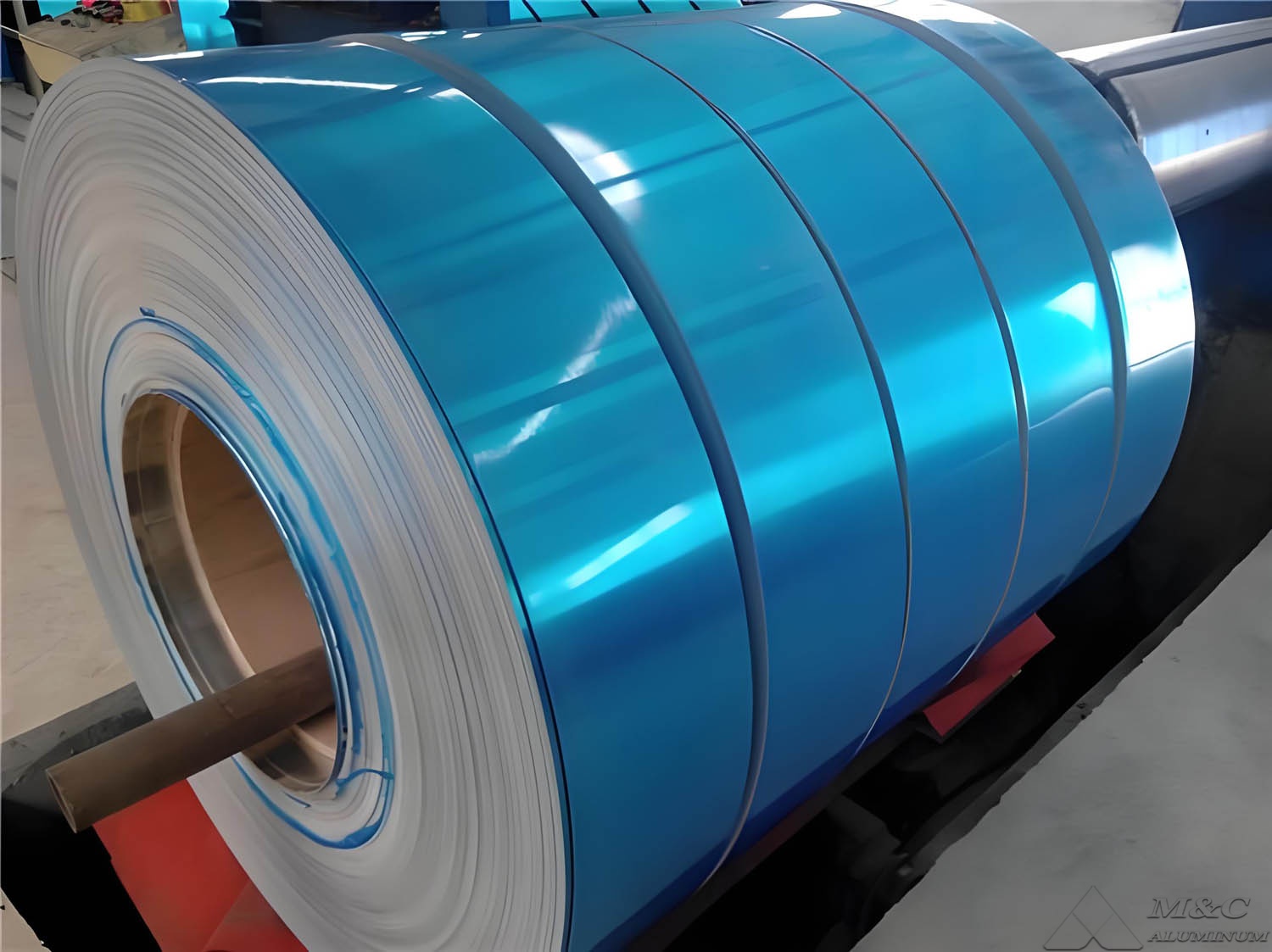
After rolling, the coil is slit to the requested width. Slitting quality directly affects cable armoring. Burrs, edge cracks, or poor winding tension may cause cable production interruptions. Our slitting lines are adjusted according to alloy, temper, thickness, and width. Knife clearance, slitting speed, tension, and recoiling alignment are controlled to keep the strip suitable for continuous cable production.
Key Quality Requirements for Cable Armoring Strip
Cable armor strip is not only a rolled metal product. It is a functional material used in a continuous cable manufacturing process. The quality requirements are therefore closely related to downstream equipment and cable performance.
Thickness Consistency
Stable thickness supports consistent armor coverage, cable diameter, and mechanical protection. For 0.5 mm thick aluminum strip, we inspect thickness across the width and along the coil length. Thickness records can be supplied according to order requirements.
Edge Quality
Edge burrs may scratch inner cable layers, damage insulation, or affect wrapping performance. We control slitting conditions and can provide deburred or rounded edges where required. Edge condition should be defined in the purchase specification if the cable design is sensitive to burr height.
Surface Cleanliness
The strip surface should be clean and suitable for cable production. Heavy oil, oxidation marks, embedded particles, or sharp surface defects are not acceptable for armoring applications. A light rolling oil condition may be agreed if it supports forming and does not interfere with downstream processing.
Flatness and Camber
Poor flatness may cause feeding instability, while excessive camber can disturb overlap consistency during helical wrapping. We control leveling and slitting tension to help maintain coil geometry suitable for armoring lines.
Mechanical Properties
The tensile strength, yield strength, and elongation must match the required forming process. For example, interlocked armor may require different elongation and hardness compared with simple helical wrapping. We can provide mechanical test results for each production batch.
Application Areas
0.5 mm 5000-series aluminum strip for cable armoring is used in a range of cable products where corrosion resistance and weight control are important. Typical applications include:
Medium-voltage and low-voltage power cables
Control cables for industrial systems
Communication and data cables requiring metallic protection
Instrumentation cables used in petrochemical or energy projects
Marine and offshore cables where corrosion resistance is required
Tunnel, rail transit, mining, and infrastructure cables
Renewable energy cables for solar and wind power systems
The final armor structure depends on the cable standard and design. Some cables use aluminum strip as a helically wrapped protective layer. Others use corrugated or interlocked aluminum armor to enhance flexibility and radial protection. We recommend confirming strip width, overlap, temper, and edge condition through production trials when introducing a new cable design.
Advantages Compared With Steel Armor Strip
Steel strip remains common in many armored cable designs, especially where high crushing resistance is required. However, aluminum strip offers several engineering advantages in suitable applications.
First, aluminum has a significantly lower density than steel. This reduces cable weight and can simplify transportation, laying, and installation. Second, 5000-series aluminum has strong corrosion resistance without relying on zinc coating. Third, aluminum strip can provide good forming performance and is compatible with cable designs that require flexibility.
The choice between aluminum armor and steel armor should be made according to mechanical protection level, installation environment, grounding requirements, electromagnetic considerations, and cost structure. As a manufacturer, our role is to provide the aluminum strip in a stable and repeatable condition so that the cable producer can meet the final cable specification.
Packaging and Export Supply
For export orders, coil packaging must protect the aluminum strip during handling, ocean shipping, and storage. We pack 0.5 mm aluminum strip coils with moisture-resistant wrapping, edge protection, inner core support, and wooden pallets or cases suitable for forklift and crane handling. Coil direction, coil ID, net weight, gross weight, alloy, temper, size, and batch number are marked clearly.
Common packaging options include eye-to-wall and eye-to-sky orientation. The most suitable method depends on coil width, coil weight, unloading method, and customer storage system. For long-distance transportation, desiccant, plastic film, kraft paper, and reinforced outer protection can be used to reduce moisture exposure.
Information Required for Quotation and Production
To provide an accurate quotation and production plan, we normally request the following information:
Alloy grade, such as 5052, 5005, or 5754
Temper, such as O, H24, H32, or H34
Thickness and tolerance, for example 0.5 mm +/-0.02 mm
Strip width and tolerance
Coil ID, coil OD, and maximum coil weight
Edge requirement, including burr limit if specified
Surface condition and oil requirement
Applicable standard or customer technical specification
Annual demand, trial order quantity, and delivery schedule
Packaging method and destination port
With these details, we can align raw material planning, rolling schedule, slitting setup, inspection method, and packaging design with the actual cable production requirement.
Conclusion
5000-series aluminum strip for cable armoring, 0.5 mm thick, is a practical material for cable manufacturers that require corrosion resistance, moderate strength, good formability, and reduced cable weight. Alloy selection, temper control, thickness accuracy, edge quality, surface cleanliness, and coil packaging all influence downstream cable production efficiency and final cable performance.
As a factory, we manufacture aluminum strip according to defined engineering specifications rather than general stock descriptions. By controlling rolling, annealing, slitting, inspection, and export packaging, we supply 0.5 mm 5000-series aluminum strip suitable for cable armoring applications in international power, communication, infrastructure, and industrial cable projects.
Contact Us