
5052 5154 Oxidized Aluminum Strip for Cable Armoring Layer
As an aluminum strip manufacturer, we produce 5052 and 5154 oxidized aluminum strip for cable armoring layer applications, including power cables, control cables, submarine cable components, and industrial cable protection systems. The cable armoring layer requires a metal strip that can be formed continuously, resist corrosion in demanding service conditions, and maintain stable mechanical properties after slitting and surface treatment. For this reason, Al-Mg alloy strips such as 5052 and 5154 are widely selected by cable manufacturers that need a balanced combination of strength, ductility, corrosion resistance, and process consistency.
Our production is based on controlled melting, hot rolling, cold rolling, annealing, precision slitting, surface cleaning, and oxidation treatment. We supply coil-to-coil processed aluminum strip for high-speed cable armoring lines, with controlled width tolerance, edge quality, surface uniformity, and coil packaging suitable for export transportation.
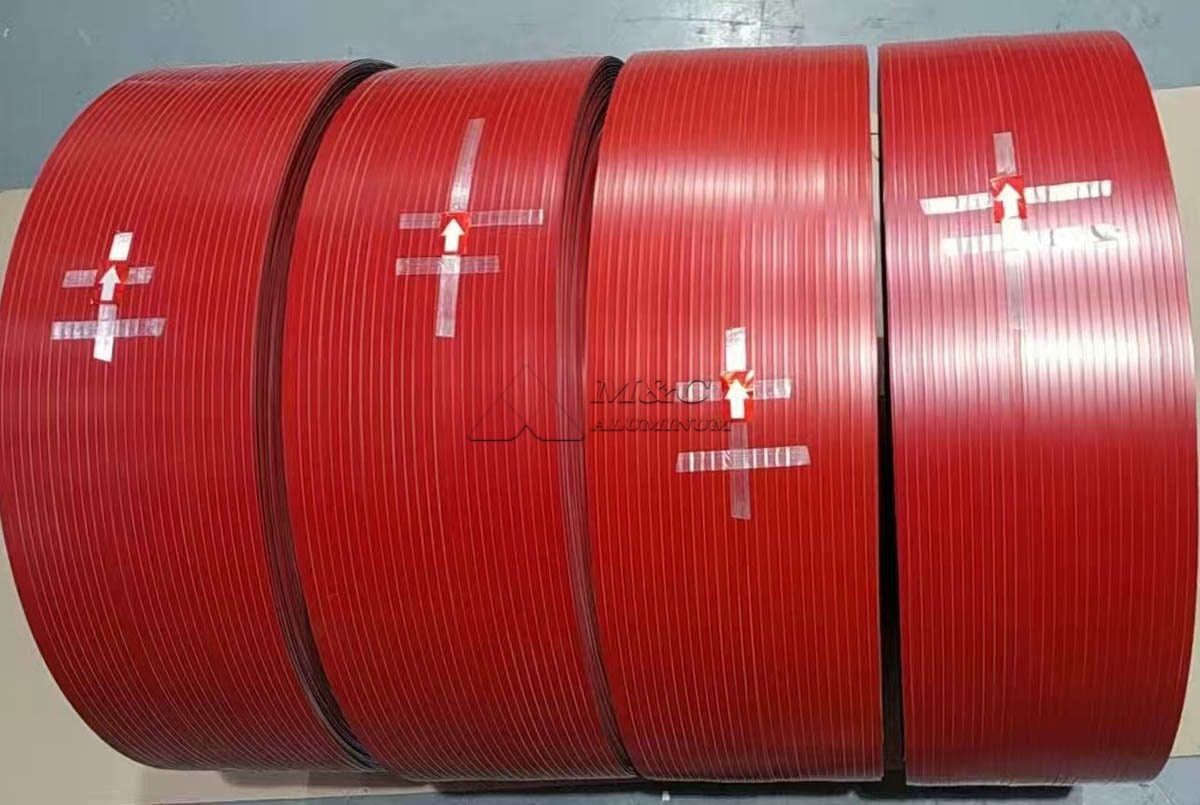
Product Overview
5052 and 5154 anodized aluminum strip are aluminum-magnesium alloy strips with a stable oxide surface. Compared with plain mill finish material, oxidized aluminum strip provides improved surface stability and better resistance to environmental corrosion. In cable armoring, the strip is usually wrapped, longitudinally applied, or formed into a protective layer around the cable core. The material must withstand bending, tension, forming pressure, and long-term exposure to humidity, salt spray, industrial atmosphere, or underground installation environments.
As a factory, we supply customized Aluminum Strip in different alloy grades, tempers, thicknesses, and widths according to the cable structure and armoring equipment requirements. For projects requiring narrow width and accurate coil winding, we can also manufacture Thin aluminum strip with strict burr control and consistent mechanical performance.
Why 5052 and 5154 Alloys Are Used for Cable Armoring
The main alloying element in 5052 and 5154 aluminum is magnesium. This composition gives the strip higher strength than pure aluminum grades while retaining good formability. For cable armoring, these properties are important because the strip must bend around the cable without cracking, while still providing mechanical protection against compression, impact, and installation stress.
5052 aluminum strip is commonly selected for general cable armoring applications where good corrosion resistance, moderate strength, and reliable formability are required. 5154 aluminum strip has a higher magnesium content and is often preferred where higher tensile strength or better performance in marine and outdoor environments is needed. Both alloys are non-heat-treatable and obtain their strength mainly through strain hardening and controlled annealing.
The oxidized surface further improves the performance of the strip by forming a more stable surface layer. Depending on the cable design, the oxide layer may assist in corrosion resistance, surface insulation, coating adhesion, or interface stability with cable bedding and sheath materials.
Main Technical Parameters
The following table shows typical production parameters. Final values can be adjusted according to customer drawings, cable standards, and armoring machine requirements.
| Item | 5052 Oxidized Aluminum Strip | 5154 Oxidized Aluminum Strip |
|---|---|---|
| Alloy | 5052 | 5154 |
| Temper | O, H22, H24, H32, H34 | O, H22, H24, H32, H34 |
| Thickness Range | 0.20 mm to 2.00 mm | 0.20 mm to 2.00 mm |
| Width Range | 10 mm to 600 mm | 10 mm to 600 mm |
| Typical Tensile Strength | 170 MPa to 260 MPa | 210 MPa to 300 MPa |
| Typical Elongation | 6% to 18%, depending on temper | 5% to 16%, depending on temper |
| Surface | Oxidized, clean, dry, uniform | Oxidized, clean, dry, uniform |
| Edge Condition | Slit edge, deburred edge available | Slit edge, deburred edge available |
| Inner Diameter | 300 mm, 400 mm, 500 mm, 508 mm | 300 mm, 400 mm, 500 mm, 508 mm |
| Coil Weight | Customized according to width | Customized according to width |
| Applicable Standards | ASTM, EN, customer specifications | ASTM, EN, customer specifications |
Surface Oxidation and Performance Benefits
The surface condition of aluminum strip directly influences cable processing and long-term service performance. In our production line, oxidation is carried out after surface cleaning and preparation to ensure uniform treatment. The objective is not only appearance improvement, but also functional stability.
A controlled oxidized surface can reduce the risk of surface staining during storage and shipment. It also improves corrosion resistance when the cable is used in humid, coastal, buried, or chemically active environments. For some cable designs, the oxide layer helps reduce direct metallic reaction with adjacent materials and improves compatibility with polymer bedding or protective coatings.
We control the oxidation process according to required film characteristics, surface color, surface roughness, and coil cleanliness. The final strip should be free from visible oil stains, heavy scratches, black spots, loose powder, and defects that may affect cable armoring operation.
Manufacturing Process in Our Factory
Our manufacturing process begins with alloy preparation and casting. Raw materials are selected according to alloy composition requirements for 5052 and 5154. Chemical composition is tested before rolling to ensure stable magnesium content and impurity control.
After casting, the material is hot rolled and cold rolled to the required intermediate thickness. Annealing is applied according to the target temper. For cable armoring applications, this step is critical because it determines tensile strength, elongation, and bending performance. If the material is too hard, it may crack during wrapping. If it is too soft, it may not provide sufficient mechanical protection or may deform during high-speed production.
Precision slitting is then performed to obtain the final width. We pay particular attention to edge burrs, camber, coil tightness, and telescoping. Poor edge quality can damage insulation layers or cause unstable feeding on cable production lines. After slitting, the strip is cleaned, oxidized, inspected, and packed in export-grade packaging.
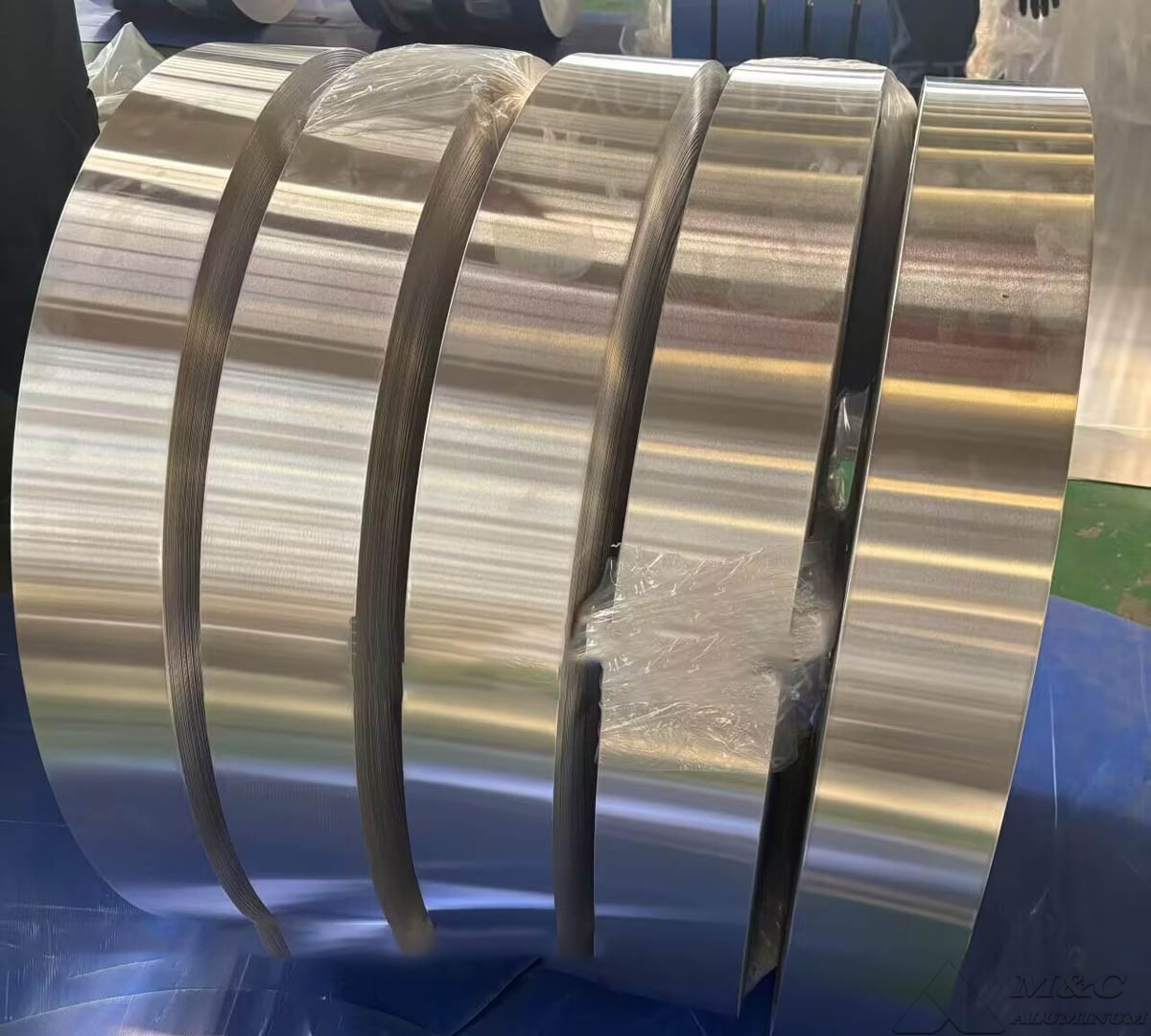
Dimensional Tolerance and Edge Quality
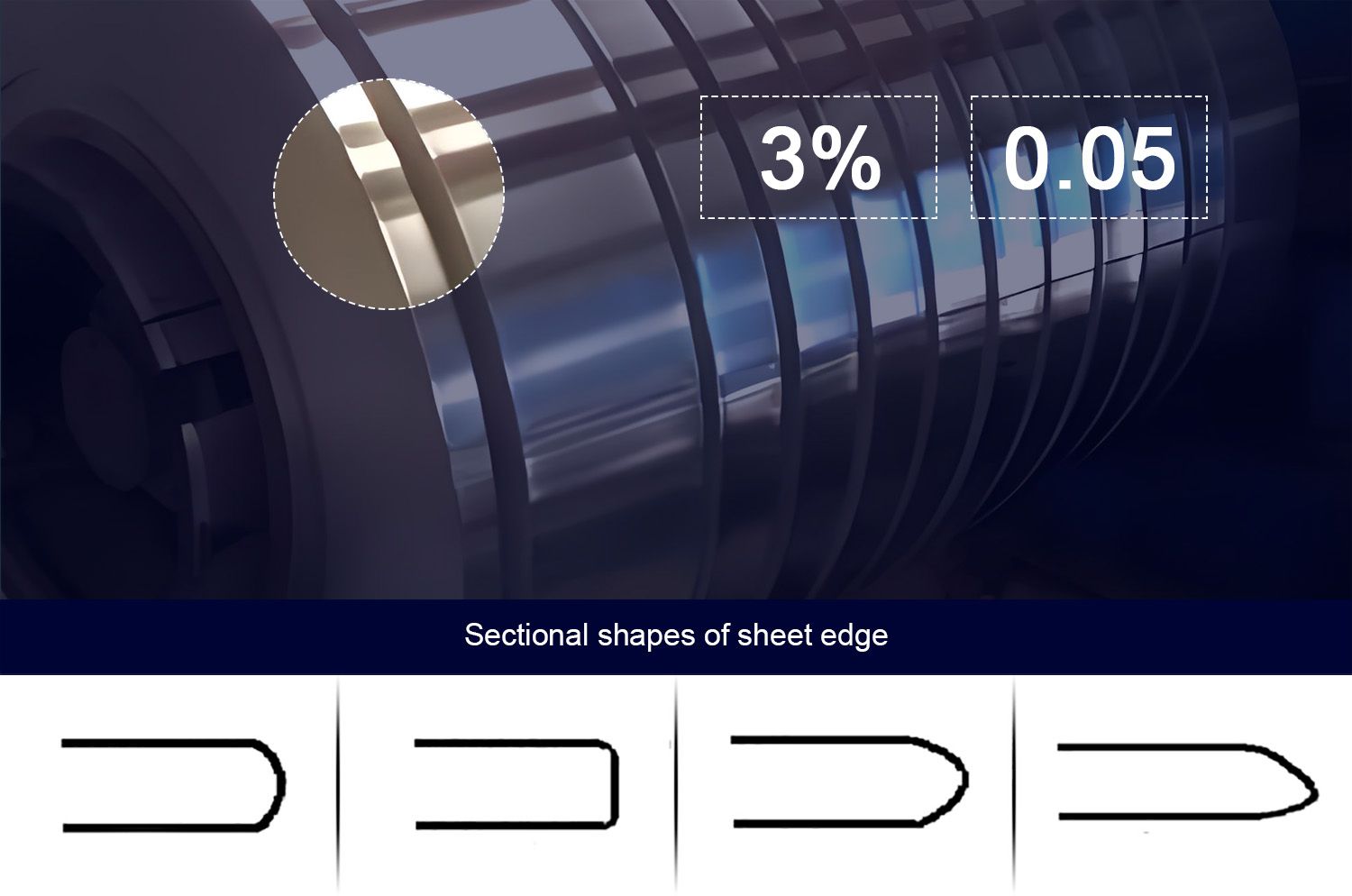
Cable armoring equipment usually runs continuously, so dimensional consistency is essential. Excessive width variation may cause uneven overlap, unstable wrapping angle, or increased material waste. Thickness deviation may affect cable diameter, mechanical protection level, and final product qualification.
Our slitting lines are configured for narrow and medium width aluminum strip. For cable armoring strip, we can provide standard slit edge or deburred edge depending on the sensitivity of the cable structure. Deburred edge is recommended when the aluminum strip is close to insulation, bedding, or other protective layers that may be damaged by sharp edges.
Camber and flatness are also controlled during production. Stable strip geometry improves feeding performance and reduces interruptions during cable manufacturing. Before shipment, coil winding condition is checked to reduce the risk of loose winding, collapsed coils, or edge deformation during transport.
Typical Applications in Cable Structures
5052 5154 oxidized aluminum strip for cable armoring layer can be used in several cable protection designs. It is suitable for power cables requiring lightweight mechanical protection, control cables used in industrial plants, communication cables exposed to outdoor environments, and marine or offshore cable components where corrosion resistance is important.
Compared with steel armoring materials, aluminum strip offers lower density and non-magnetic characteristics. This can help reduce total cable weight and limit magnetic losses in some power cable designs. Aluminum alloy strip is also easier to form, which can improve production efficiency when the cable design allows aluminum armoring.
For cables installed in tunnels, buildings, renewable energy projects, shipbuilding, rail transit, and coastal infrastructure, the combination of Al-Mg alloy and oxidized surface provides a practical balance between protection, processability, and long-term durability.
Selection Between 5052 and 5154
The choice between 5052 and 5154 depends on the required strength level, installation environment, bending radius, and cable standard. 5052 oxidized aluminum strip is suitable for many general applications where moderate strength and excellent corrosion resistance are sufficient. It is often selected when the cable manufacturer prioritizes formability and stable processing on high-speed lines.
5154 oxidized aluminum strip is recommended for more demanding applications where higher mechanical strength or improved performance in aggressive environments is required. Its higher magnesium content provides enhanced strength, but forming parameters should be matched carefully with the selected temper.
Our technical team can support alloy and temper selection according to the cable armoring method, strip thickness, required overlap, and minimum bending radius. Before mass production, we can provide trial coils for production line verification and mechanical testing.
Quality Control and Inspection
Quality control is carried out throughout production, not only at the final inspection stage. Chemical composition, thickness, width, mechanical properties, surface condition, oxide layer uniformity, edge quality, and coil condition are inspected according to production specifications.
Typical inspection items include tensile strength, elongation, thickness measurement, width measurement, surface visual inspection, burr inspection, and packing inspection. When required, we can provide mill test certificates, chemical composition reports, mechanical property reports, and surface treatment confirmation documents.
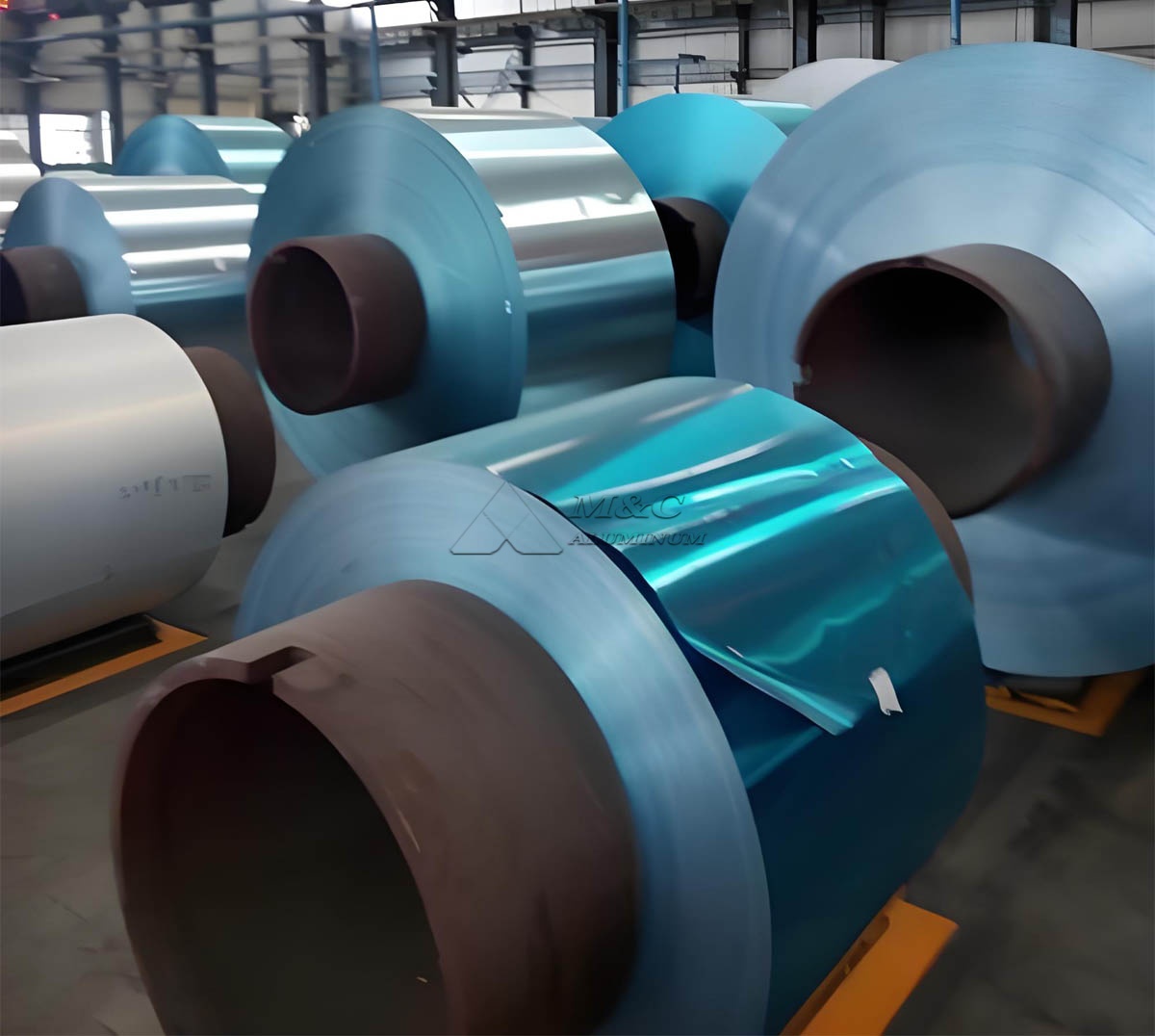
For export orders, packaging is designed to protect the oxidized aluminum strip during long-distance sea transportation. Coils are packed with moisture-resistant materials, edge protection, wooden pallets or cases, and clear labels showing alloy, temper, size, coil number, and net weight.
Ordering Information
To manufacture 5052 5154 anodized aluminum strip for cable armoring layer accurately, we recommend that customers provide alloy, temper, thickness, width, coil inner diameter, coil weight, surface requirement, edge requirement, and applicable standard. If the material will be used on a specific armoring machine, details such as feeding direction, maximum coil outer diameter, and required burr direction can also help us optimize production.
For customized projects, we can discuss mechanical property ranges, oxide surface requirements, packaging method, and inspection documents before production. This helps reduce risks during cable manufacturing and ensures that the delivered strip matches both engineering requirements and processing conditions.
Conclusion
5052 and 5154 oxidized aluminum strip are reliable materials for cable armoring layers where corrosion resistance, lightweight protection, and stable forming performance are required. As a manufacturer, we control the complete process from alloy preparation to rolling, slitting, oxidation, inspection, and export packaging. By selecting the proper alloy, temper, surface condition, and dimensional tolerance, cable manufacturers can obtain an aluminum armoring strip that performs consistently in production and in service.
We supply 5052 oxidized aluminum strip and 5154 oxidized aluminum strip according to project specifications, with attention to mechanical properties, surface uniformity, edge safety, and coil stability for international cable manufacturing applications.
Contact Us