
8011 Aluminum Foil For Air Conditioner Fins
Introduction: Why 8011 Aluminum Foil Is Used for Air Conditioner Fins
Air conditioner fins are engineered to transfer heat efficiently while resisting corrosion, maintaining formability during fin stamping, and remaining stable in long-running HVAC service. As a factory producing finstock aluminum foil, we supply 8011 aluminum foil for air conditioner fins in both bare and coated forms, including hydrophilic aluminum foil for improved drainage and reduced frosting.
In a typical heat exchanger, thin-gauge aluminum fin foil is assembled with copper or aluminum tubes. The fin material must combine consistent mechanical properties with tight thickness tolerances and a controlled surface condition. Alloy 8011 is widely selected for HVAC fin material because it offers reliable formability and strength for high-speed fin press processing, while remaining economical for large-volume production.
Product Overview: Materials, Features, and Performance
Base Alloy and Metallurgy
8011 is an Al-Fe-Si series alloy. For finstock, the alloy balance is designed to provide stable rolling behavior and predictable stamping performance. Compared with high-magnesium alloys, 8011 provides a practical combination of:
Good formability for louver and slit fin designs
Adequate strength to maintain fin geometry after forming
Stable surface quality suitable for brazing-related assembly environments and coating adhesion
Consistent coil-to-coil performance for continuous fin pressing
Two Major Application Categories for 8011 Aluminum Foil
Based on the surface treatment processes applied to the fins, 8011 aluminum foil is primarily categorized into the following two types:
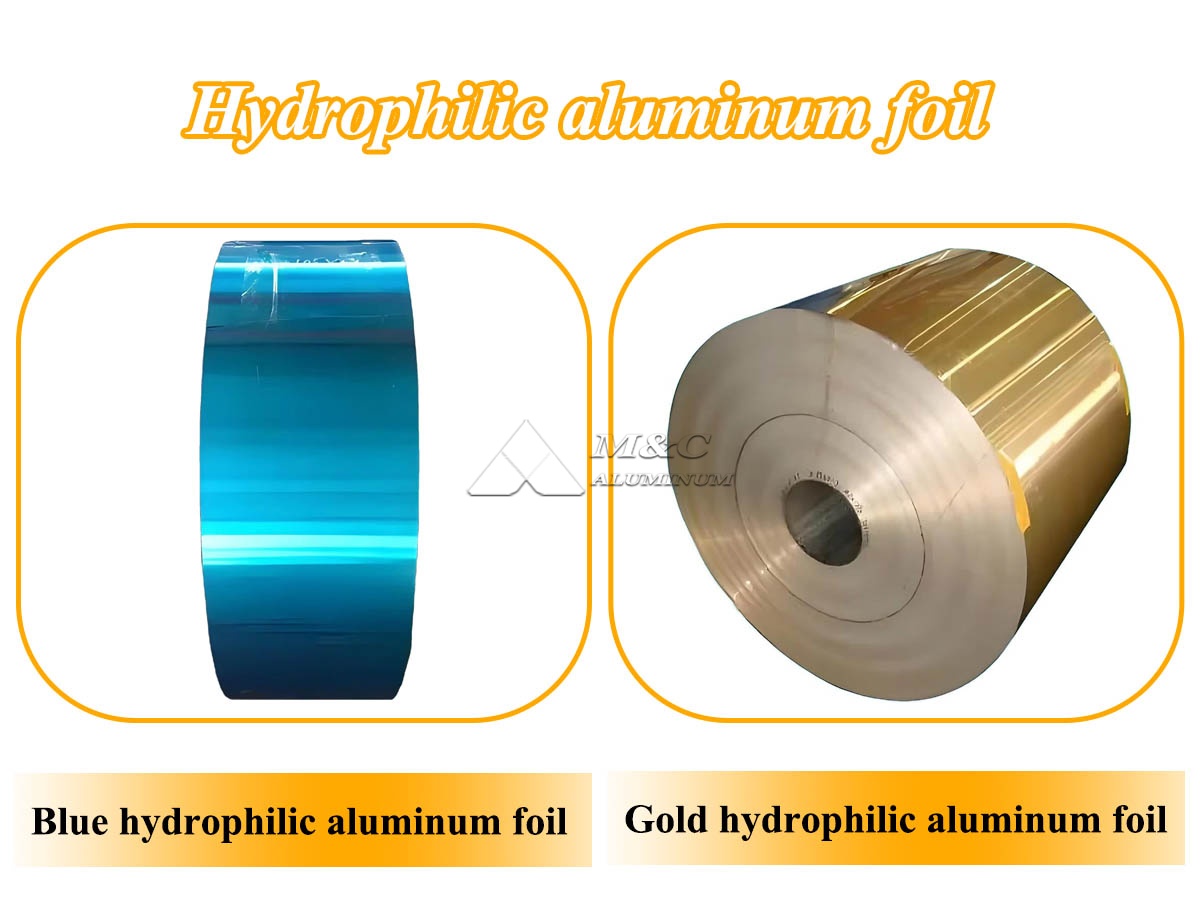
1. Hydrophilic Aluminum Foil
This is currently the most prevalent choice in air conditioner manufacturing. A hydrophilic coating is applied to the surface of the bare 8011 foil, enabling condensed water to spread rapidly and drain away, thereby preventing water droplets from forming "water bridges" between the fins that could obstruct airflow.
Advantages: Significantly improves cooling and heating efficiency, reduces noise levels, and lowers energy consumption.
2. Bare Aluminum Foil
This type undergoes no surface coating treatment and is directly stamped into shape.
Advantages: Lower cost.
Disadvantages: Prone to the formation of oxides (manifesting as a "white powder" residue); the retention of water droplets may lead to increased airflow resistance. It is primarily utilized in entry-level models or specific industrial heat radiators.

Technical Specifications (Typical Supply Range)
The final specification is confirmed by customer drawings and forming conditions. Below is our typical supply capability for 8011 finstock foil.
| Item | Typical Range / Option | Notes |
|---|---|---|
| Alloy | 8011 | Fin material for HVAC heat exchangers |
| Temper | O, H22, H24, H26 (as agreed) | Selected to match fin press and fin geometry |
| Thickness | 0.08 to 0.20 mm | Common fin gauges depend on fin design |
| Width | 100 to 1500 mm | Slit coil supply available |
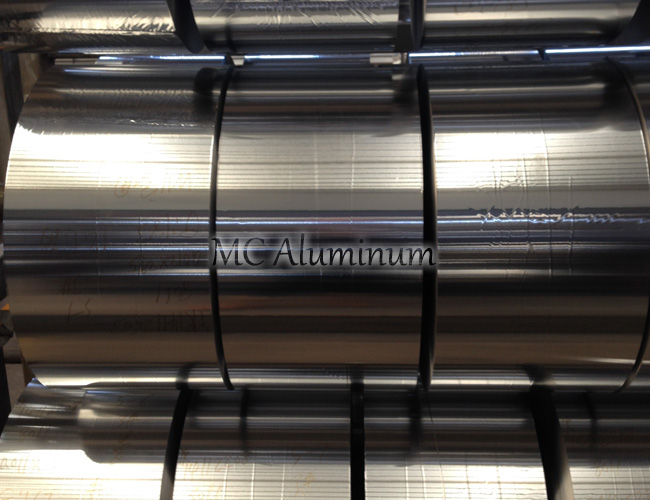
| Coil ID | 150, 300, 400, 500 mm | Per customer decoiler standard |
| Coil OD | Up to 1600 mm (typical) | Depends on thickness and weight |
| Coil weight | 1 to 8 tons (typical) | Customized for logistics and line changeover |
| Surface | Bare, or hydrophilic coated | Coating system per customer requirement |
| Coating thickness | As specified (typical microns level) | Controlled by coating process and QC |
| Surface tension (coated) | As specified | Ensures wetting and drainage performance |
| Pinholes | Controlled by inspection criteria | Especially important at thin gauges |
| Edge condition | Mill edge or trimmed | For safe handling and stable slitting |
| Packaging | Export seaworthy | Moisture barrier, corner protection, palletized |
Note: Mechanical properties and coating performance targets are finalized per agreed standard and application testing (fin forming, salt spray if required, and adhesion tests).
Performance Advantages of 8011 Aluminum Foil for Air-Conditioner Fins
1.High strength and high elongation: During gauge reduction (e.g., to below 0.09 mm), 8011 aluminum foil can still maintain high tensile strength, enabling it to withstand the complex stretching involved in fin stamping/forming.
2.Excellent corrosion resistance: With added alloying elements, 8011 exhibits outstanding stability in the humid, alternating hot-and-cold operating environment of air conditioners, extending the service life of condensers and evaporators.
3.Good surface wettability: The surface of 8011 aluminum foil is clean and smooth, making it well-suited for subsequent application of hydrophilic coatings or anti-corrosion coatings.
4.Superior thermal conductivity: Aluminum has good heat-transfer capability, allowing heat to be transferred to the air quickly and improving the operating efficiency of air-conditioner heat exchangers.
5.Lightweight advantage: Aluminum foil has low density and light weight, effectively reducing the overall weight of air-conditioning units and improving transportation and installation efficiency.
Manufacturing Capabilities: Rolling, Slitting, and Coating
As a manufacturer, we control the key production stages that determine finstock stability.
Precision Rolling and Gauge Control
Finstock requires tight thickness consistency across the coil length and width. Our rolling process focuses on:
Automated gauge control for stable thickness
Flatness management to reduce waviness and camber
Surface defect control (scratches, roll marks) suitable for fin stamping
Slitting and Edge Quality
Many HVAC customers require narrow slit coils to match fin press feed widths. We provide:
Multi-knife slitting with burr control targets
Stable edge quality to reduce breakage and improve feeding
Coil ID and winding direction matched to customer equipment
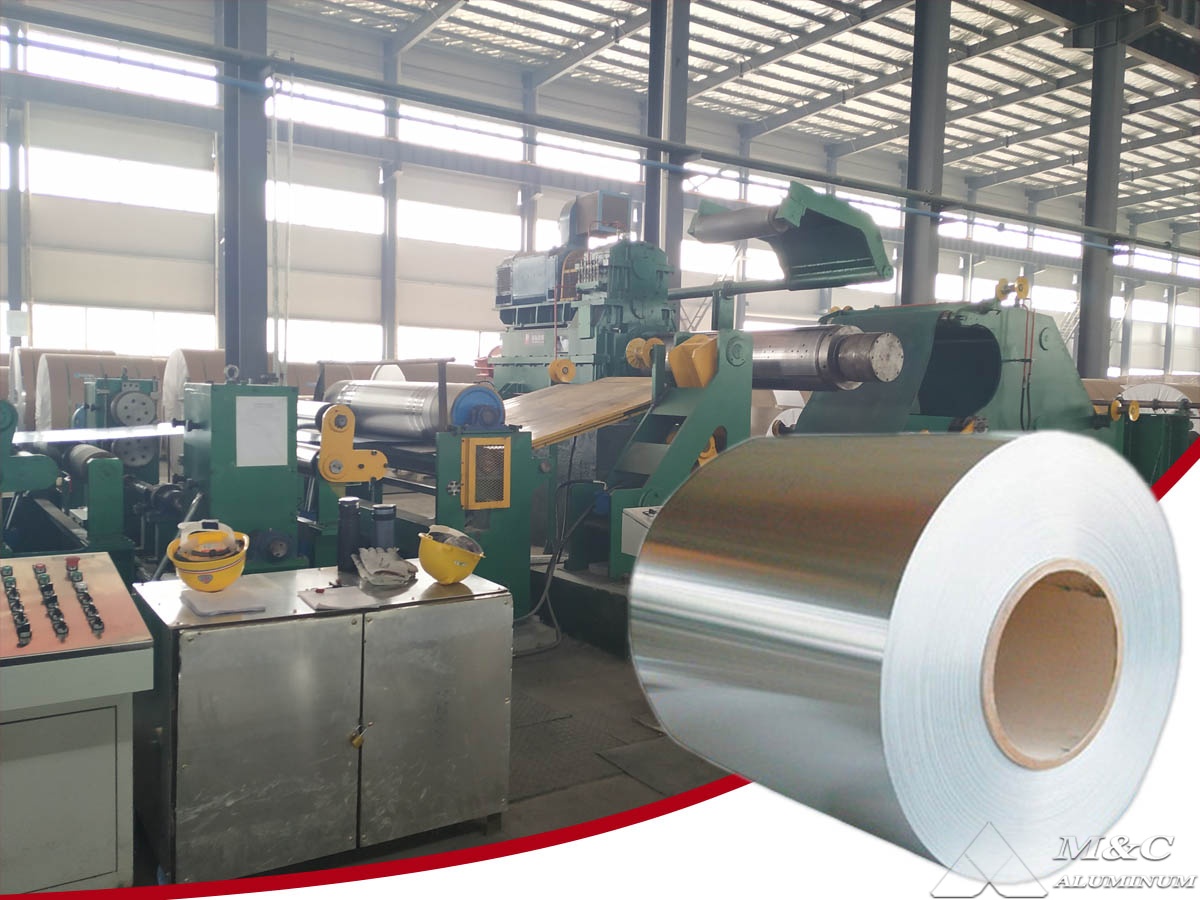
Hydrophilic Coating Process (Optional)
For hydrophilic finstock, we run controlled coating application and curing to ensure:
Uniform coating weight and appearance
Adhesion stability after forming
Consistent wetting behavior and durability in condensate environments
Application Scenarios and Target Industries
Our 8011 aluminum foil for air conditioner fins is supplied to manufacturers producing:
Residential split air conditioners (indoor and outdoor units)
Commercial HVAC systems
Heat pump heat exchangers
Fan coil units and air handling equipment
Refrigeration condensers and evaporators
Typical users include HVAC OEMs, heat exchanger core manufacturers, and fin press stamping plants that require stable finstock foil supply and consistent forming behavior.
Comparison: 8011 vs Other Common Finstock Alloys
Alloy choice depends on fin design, press speed, and corrosion requirements. Below is a practical comparison used in finstock selection.
| Alloy | Relative Strength | Formability in Fin Press | Typical Use Notes |
|---|---|---|---|
| 8011 | Medium | High | Balanced cost and performance, widely used for AC fin foil |
| 1100/1200 | Lower | Very high | Excellent formability, but lower strength; may be used for simpler fin designs |
| 3003 | Medium to higher | High | Often used where higher strength is desired; cost may be higher; used in some heat exchanger designs |
| 3102 | Medium | High | Used in finstock systems depending on customer standards; often paired with specific brazing systems |
In many high-volume HVAC programs, 8011 finstock foil is selected because it provides reliable forming across common fin geometries while maintaining stable coil processing behavior.
Conclusion: Stable Supply, Technical Support, and Long-Term Cooperation
As a dedicated manufacturer of 8011 finstock foil, we focus on repeatability, traceability, and process control rather than short-term variability. For air conditioner fin applications, we provide both bare and hydrophilic aluminum foil for AC fins, supported by defined QC plans and documentation.
For ongoing projects, we support customers with:
Consistent batch-to-batch performance for fin press stability
Technical review of temper and thickness selection based on fin geometry
Trial coil supply for qualification and line setup
Export packaging and logistics coordination for long-term supply programs
If you share your fin drawing, target thickness, temper preference, and coating requirements, our engineering team can propose a stable 8011 aluminum foil specification and a supply plan suited for continuous production.
Contact Us