
8011 Aluminum Foil for Cable Shielding
As an aluminum foil manufacturer, we produce 8011 aluminum foil for cable shielding with controlled chemical composition, stable mechanical properties, precise thickness tolerance, and clean surface quality. Cable shielding requires aluminum foil that can support electromagnetic interference protection, moisture resistance, signal stability, and efficient wrapping during high-speed cable manufacturing. For this application, 8011 aluminum foil is widely used in communication cables, coaxial cables, data cables, instrumentation cables, control cables, and other cable structures that require reliable shielding performance.
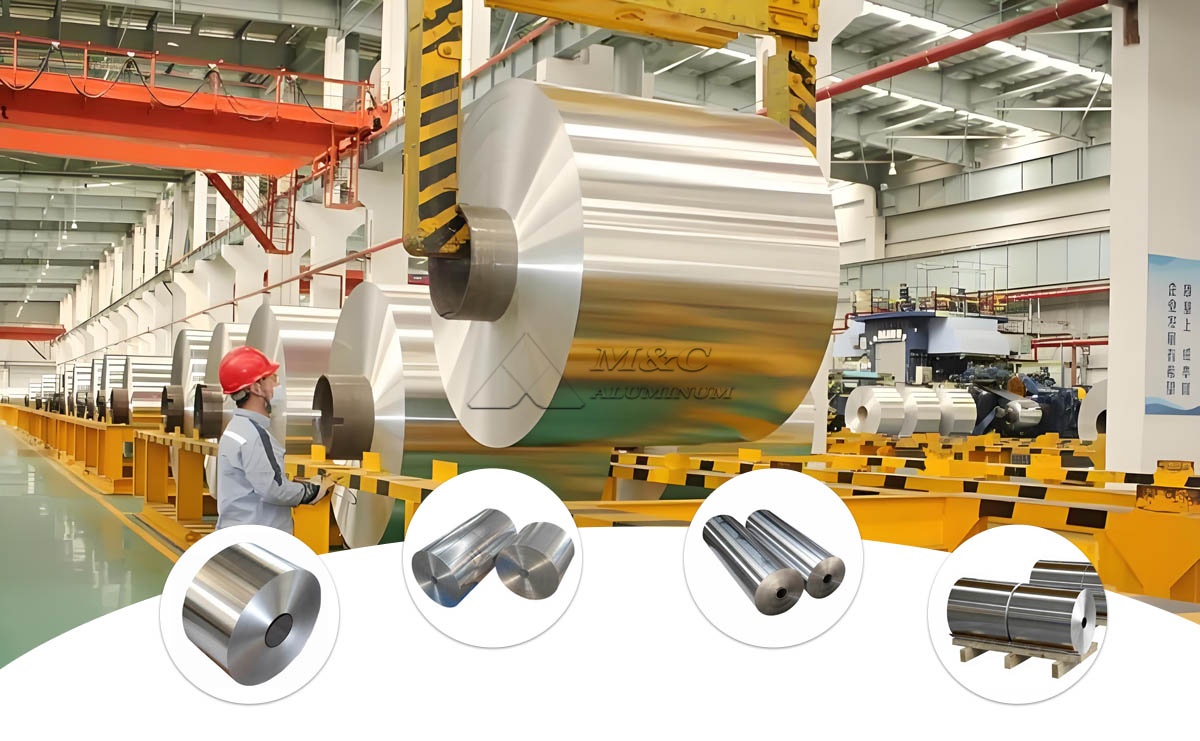
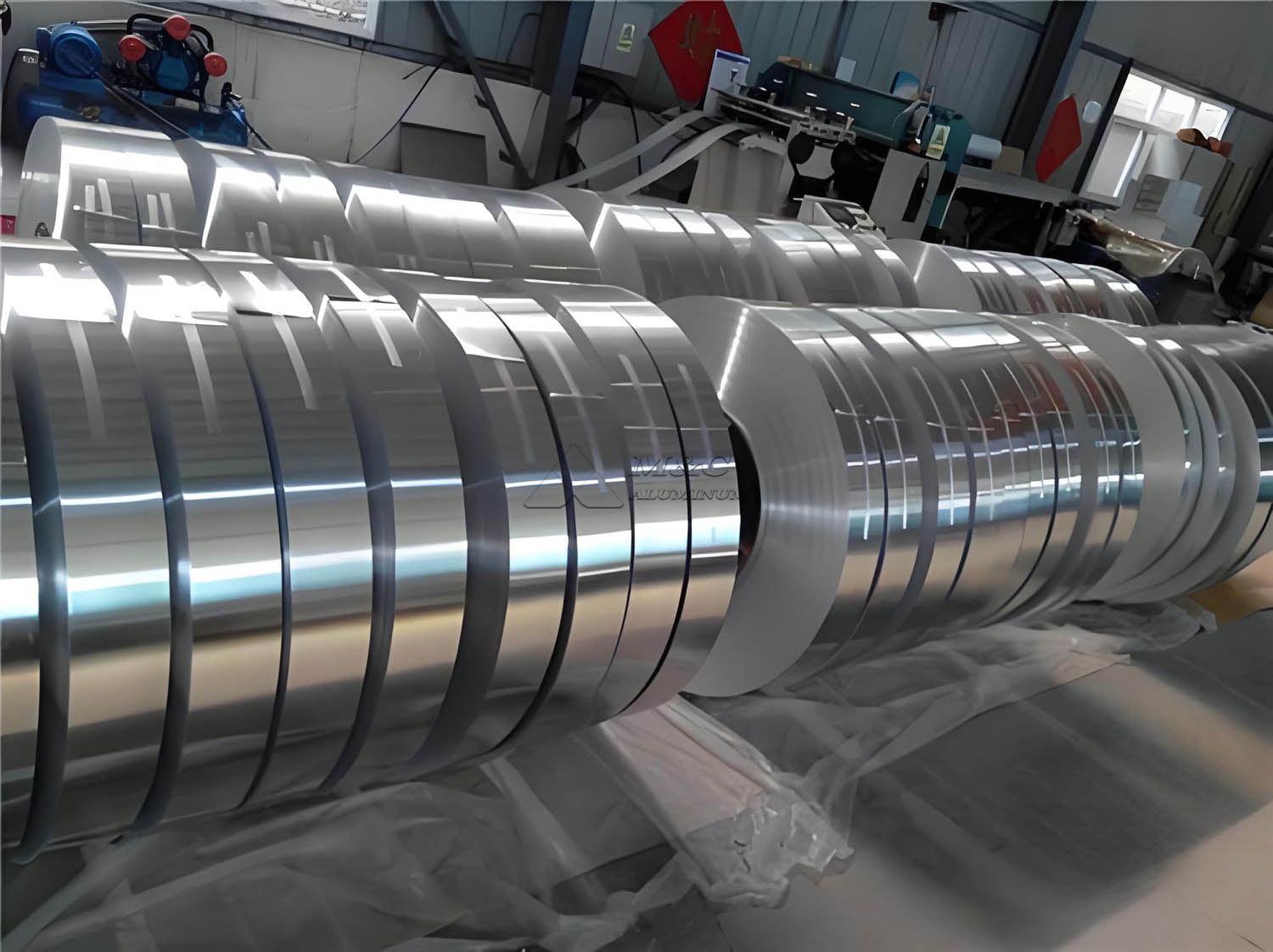
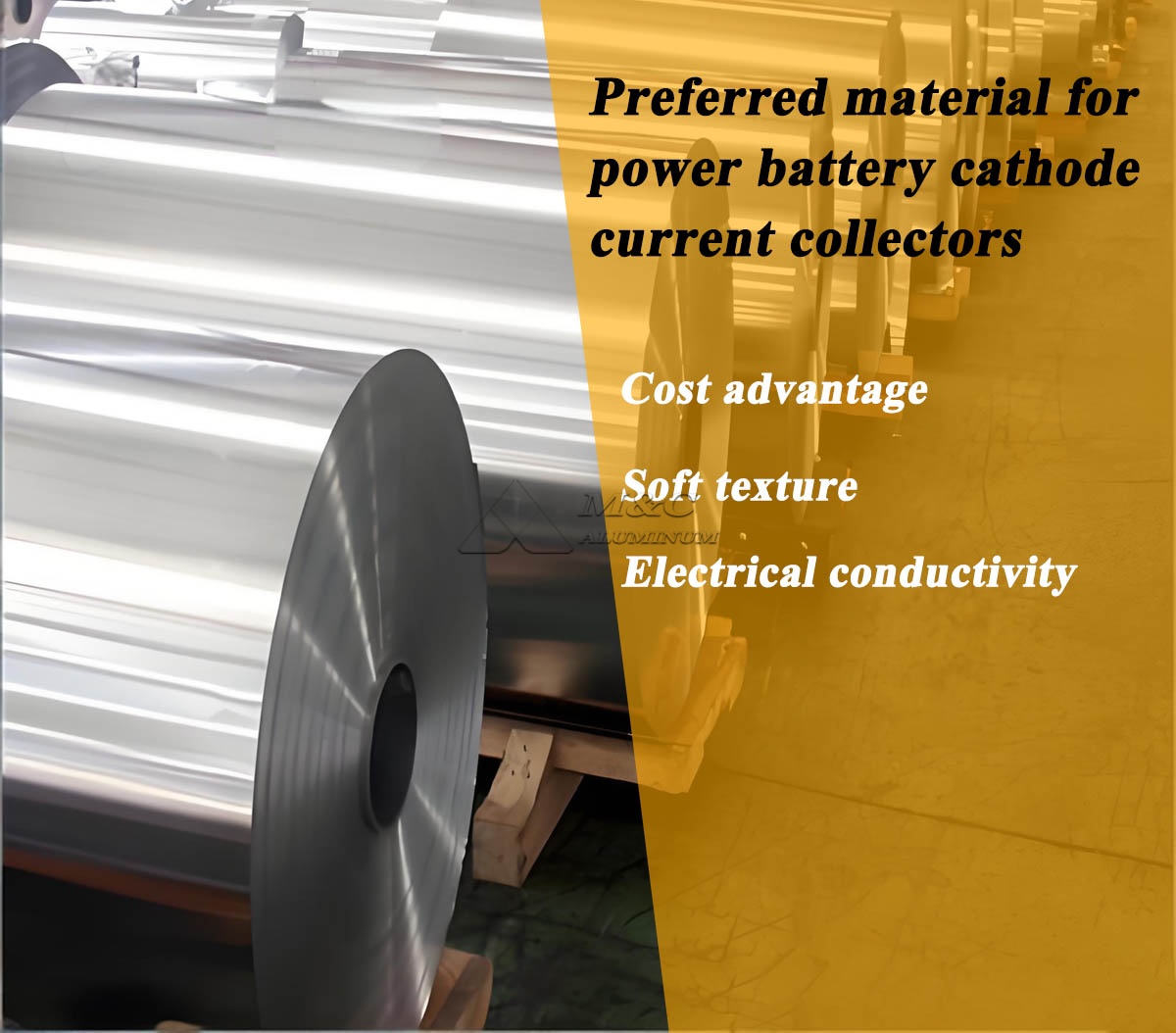
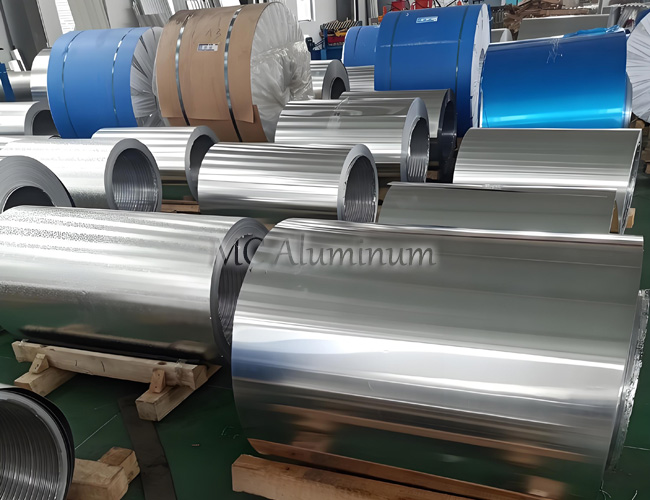
MC Aluminum supplies aluminum foil in jumbo rolls, slit rolls, and customized coil widths according to cable production requirements. Through melting, casting, rolling, annealing, surface inspection, slitting, and packaging control, we focus on producing cable shielding aluminum foil with consistent flatness, low pinhole level, suitable elongation, and good compatibility with lamination and wrapping processes.
Why 8011 Aluminum Foil Is Used for Cable Shielding
8011 aluminum foil belongs to the Al-Fe-Si alloy series. Compared with pure aluminum grades, 8011 offers a practical balance of strength, formability, and processing stability. In cable shielding, the foil may be used as bare aluminum foil, laminated aluminum polyester tape, aluminum Mylar tape, or aluminum foil combined with other insulation layers. The foil must be thin enough for flexible wrapping while maintaining sufficient mechanical strength for continuous cable production.
The main function of 8011 aluminum foil for cable shielding is to form a conductive barrier around the cable core. This barrier helps reduce electromagnetic interference and radio frequency interference. In data transmission and communication applications, shielding stability directly affects signal integrity. The aluminum foil layer can also improve moisture resistance and provide a uniform base for cable tape structures.
As a factory, we produce 8011 Aluminum Foil with strict control of thickness, temper, surface condition, edge quality, and roll tension. These factors are important because cable manufacturers often run foil at high speed through laminating, slitting, taping, and wrapping equipment. A stable foil roll reduces breakage, wrinkling, telescoping, and production stoppage.
Typical Applications in Cable Manufacturing
8011 aluminum foil is suitable for multiple cable shielding and wrapping applications. It is commonly used in the following cable products:
Coaxial cables for television, broadband, and signal transmission.
LAN cables, data cables, and communication cables.
Instrumentation cables and control cables.
Power cables requiring auxiliary shielding layers.
Automotive cables and electronic wiring harnesses.
Aluminum polyester tape and aluminum plastic composite tape.
Moisture barrier tape for cable construction.
For cable manufacturers, the selection of foil thickness, width, temper, and lamination form should be based on the cable design, wrapping speed, shielding requirement, bending radius, and subsequent extrusion process. Our technical team supports specification confirmation according to production line conditions and final cable application.
Main Technical Parameters
The following table lists common technical parameters for 8011 aluminum foil for cable shielding. Customized specifications can be manufactured after technical evaluation.
| Item | Typical Specification |
|---|---|
| Alloy | 8011 |
| Temper | O, H18, H22, H24, customized upon request |
| Thickness | 0.006 mm to 0.080 mm |
| Common Thickness for Cable Shielding | 0.009 mm, 0.012 mm, 0.015 mm, 0.020 mm, 0.025 mm, 0.030 mm |
| Width | 20 mm to 1600 mm, slit width available |
| Inner Diameter | 76 mm, 152 mm, or according to customer equipment |
| Outer Diameter | Customized according to roll weight and handling conditions |
| Surface | Bright one side or double bright according to rolling route |
| Edge Condition | Slit edge, free from serious burrs and cracks |
| Pinhole Control | According to thickness and customer standard |
| Core Material | Steel core, aluminum core, paper core, or customized |
| Packaging | Export wooden case, moisture-proof packaging, anti-collision protection |
| Main Use | Cable shielding, aluminum polyester tape, wrapping tape, moisture barrier tape |
Chemical Composition Reference
8011 aluminum foil has controlled Fe and Si content to provide stable processing behavior. The following composition is for reference and may be adjusted within applicable standards and order requirements.
| Element | Content, % |
|---|---|
| Si | 0.50 to 0.90 |
| Fe | 0.60 to 1.00 |
| Cu | Max 0.10 |
| Mn | Max 0.20 |
| Mg | Max 0.05 |
| Zn | Max 0.10 |
| Ti | Max 0.08 |
| Al | Balance |
Chemical composition is checked during production to ensure alloy consistency. For cable shielding foil, stable composition contributes to rolling performance, annealing response, tensile strength, elongation, and surface quality.
Mechanical Properties and Temper Selection
The temper of 8011 aluminum foil should be selected according to the cable processing method. Soft temper foil has better flexibility and elongation, which is suitable for wrapping and lamination applications that require good formability. Hard or semi-hard temper foil provides higher tensile strength and better dimensional stability, which can be useful in certain tape structures.
| Temper | Typical Feature | Common Cable Use |
|---|---|---|
| O | Soft, high flexibility, good elongation | Wrapping foil, laminated tape, flexible cable shielding |
| H22 | Partially hardened, balanced strength and formability | Composite cable tape, medium-speed wrapping |
| H24 | Higher strength than H22, stable shape | Cable shielding tape requiring improved rigidity |
| H18 | Hard temper, high tensile strength | Special tape applications requiring strong foil support |
Mechanical properties depend on foil thickness, annealing process, and final application. When customers provide tensile strength, elongation, or winding requirements, we can match production parameters accordingly.
Surface Quality Requirements for Cable Shielding Foil
Surface quality is one of the main control points in cable shielding aluminum foil production. The foil surface should be clean, flat, and free from defects that may affect lamination, conductivity, or wrapping stability. Oil stains, heavy rolling marks, corrosion, severe wrinkles, holes, edge cracks, and inclusions can reduce production efficiency or final cable performance.
During manufacturing, our quality control team inspects the foil surface at rolling, annealing, slitting, and final packing stages. For laminated cable tape, surface cleanliness is especially important because poor surface condition may weaken bonding with polyester film or other polymer materials. For bare shielding foil, uniform surface condition supports stable electrical contact and consistent winding behavior.
Thickness Tolerance and Width Accuracy
Cable shielding applications often require thin aluminum foil with narrow width tolerance. Small deviations in thickness may influence shielding effect, roll length, tape stiffness, and production cost. Width accuracy is also important because cable tape must fit the wrapping equipment and overlap design.
Our production process uses precision rolling mills and automatic gauge control to maintain thickness consistency. During slitting, blade condition, winding tension, and edge trimming are controlled to reduce burrs and edge cracks. Proper roll hardness and winding profile help prevent telescoping, loose coils, and deformation during transport.
For narrow slit rolls, we recommend customers confirm the following details before ordering:
Required foil thickness and tolerance.
Slit width and width tolerance.
Roll outer diameter or roll weight.
Core inner diameter and core material.
Temper and mechanical property requirements.
Bare foil or laminated structure requirements.
Packaging method for sea transport or air transport.
Production Process in Our Factory
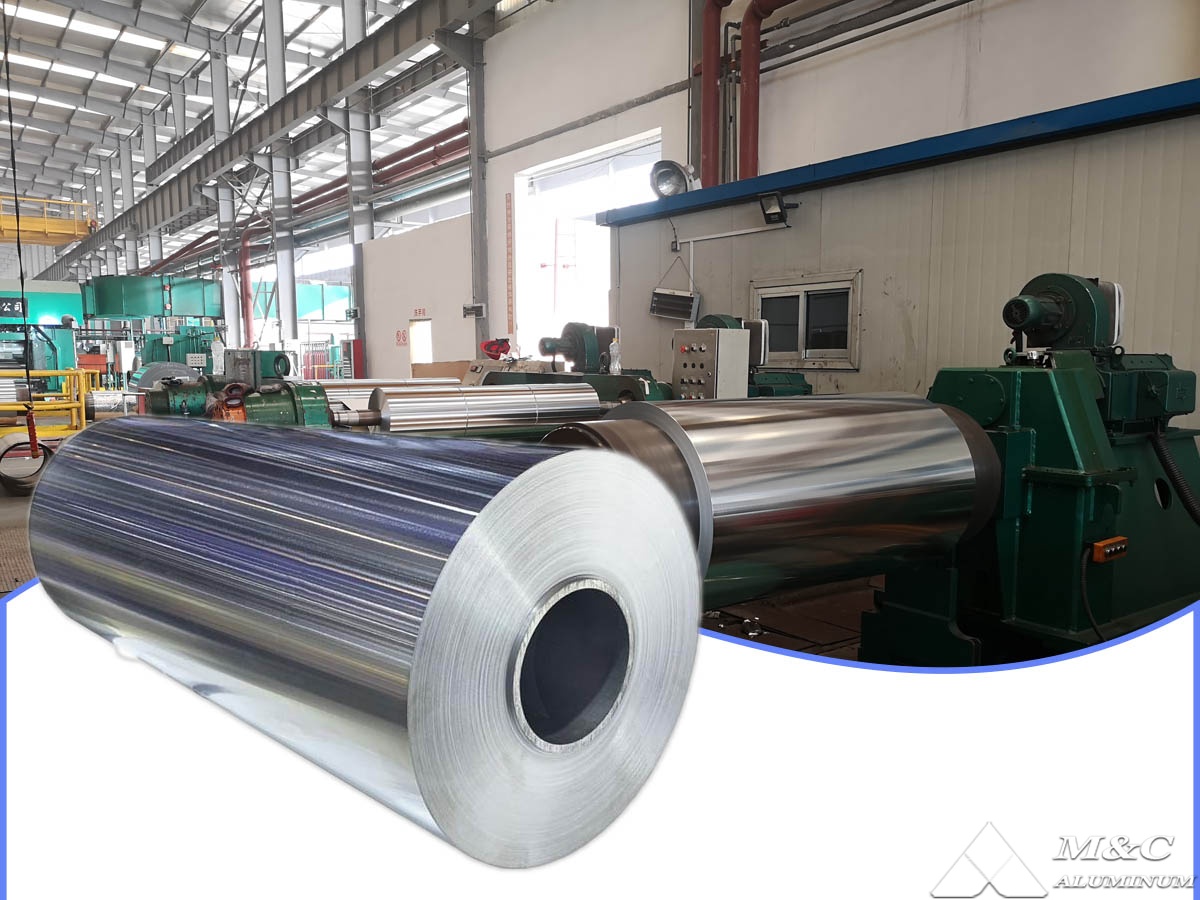
As a manufacturer, we control the main production stages from raw material to finished foil roll. The process typically includes melting and casting, homogenization when required, hot rolling or cold rolling route selection, intermediate annealing, foil rolling, final annealing, surface inspection, slitting, rewinding, and packaging.
Each production stage influences final foil quality. Rolling reduction affects thickness accuracy and surface finish. Annealing controls temper, elongation, and flexibility. Slitting determines edge quality and final roll performance. Packaging protects the foil from moisture, impact, and oxidation during international transportation.
For customers requiring related foil products, our factory also supplies general Aluminum Foil in different alloy grades, tempers, and widths for industrial, packaging, and technical applications.
Quality Control for Cable Shielding Aluminum Foil
We apply process inspection and final inspection before shipment. Quality control items include:
Alloy verification and chemical composition testing.
Thickness measurement and tolerance inspection.
Width measurement after slitting.
Surface quality inspection under proper lighting.
Mechanical property testing according to order requirements.
Pinhole inspection for thin foil specifications.
Edge quality and burr inspection.
Roll appearance, winding tightness, and telescoping check.
Packing inspection before loading.
Inspection records can be supplied with the shipment when required. For engineering projects and long-term cable production programs, we can keep stable production parameters to improve batch-to-batch consistency.
Packaging and Export Delivery
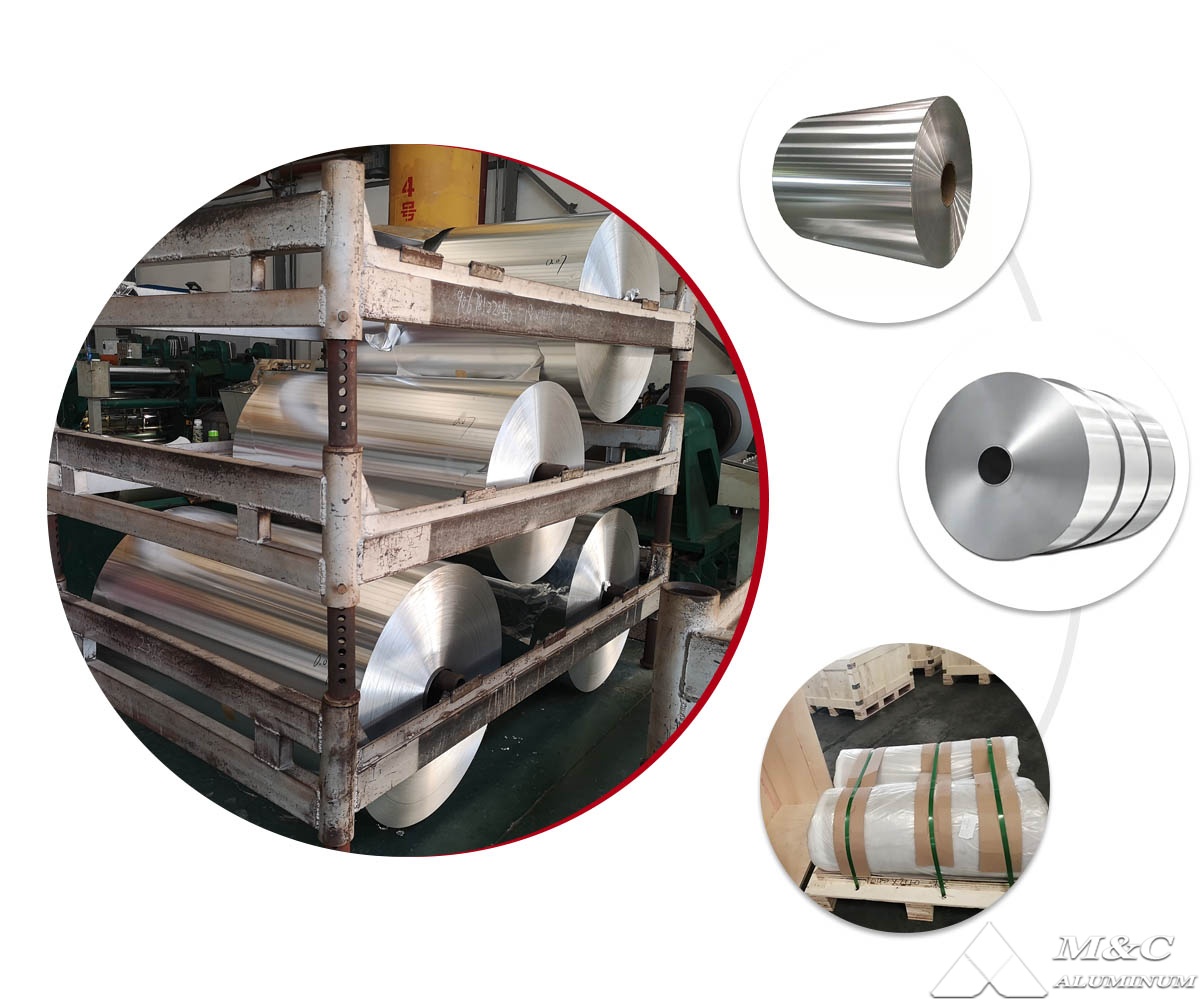
Cable shielding aluminum foil is sensitive to moisture, pressure, and mechanical damage. For export orders, we use moisture-proof film, desiccant when required, edge protection, sturdy wooden cases, and clear shipping marks. Rolls are fixed to reduce movement during transport. For slit rolls, additional separation and protection can be used to prevent edge damage.
Before packaging, rolls are checked for appearance, label information, and specification consistency. Labels normally include alloy, temper, thickness, width, roll number, net weight, gross weight, and production batch. This helps customers trace the material during cable production.
How to Select 8011 Aluminum Foil for Cable Shielding
The correct specification depends on the cable design and production process. For high-speed wrapping, foil flexibility, roll tension, and edge smoothness are particularly important. For shielding performance, foil continuity, thickness uniformity, and overlap design should be considered. For laminated aluminum polyester tape, bonding strength and surface cleanliness must be confirmed.
Customers are encouraged to provide cable type, foil thickness, required width, temper, roll diameter, lamination condition, and application environment. Based on these details, we can recommend a suitable production specification and supply trial rolls for production line testing before regular orders.
Conclusion
8011 aluminum foil for cable shielding is a practical and widely used material for cable shielding tape, aluminum polyester tape, and moisture barrier structures. Its combination of formability, process stability, clean surface, and controlled mechanical performance makes it suitable for modern cable manufacturing.
As a factory manufacturer, we focus on stable alloy control, precision rolling, reliable slitting, strict inspection, and export-safe packaging. By supplying 8011 aluminum foil in customized thickness, width, temper, and roll size, we support cable manufacturers in achieving consistent shielding performance and efficient production.
Contact Us