
8011 Aluminum Foil Specifications And Properties
Introduction: why 8011 aluminum foil is widely specified
As an aluminum foil manufacturer, we supply 8011 aluminum foil because it balances formability, barrier performance, and process stability across large-volume converting lines. In many packaging and technical laminations, the foil must provide consistent gauge, low pinhole rate, predictable mechanical response after annealing, and reliable surface cleanliness for printing, coating, or adhesive bonding.
8011 is an Al-Fe-Si series alloy. Compared with high-purity foils, the controlled Fe and Si additions improve strength at a given gauge and contribute to stable rolling behavior. This is why 8011 aluminum foil is commonly specified for household foil, food packaging, container stock, pharmaceutical and blister laminate structures (where suitable), and various insulation and heat-related applications.
For buyers evaluating supply, the discussion should start from specifications and measurable properties: chemical limits, temper, thickness tolerance, surface quality, and defect control. The sections below summarize how we manufacture 8011 aluminum foil and what parameters we can guarantee.
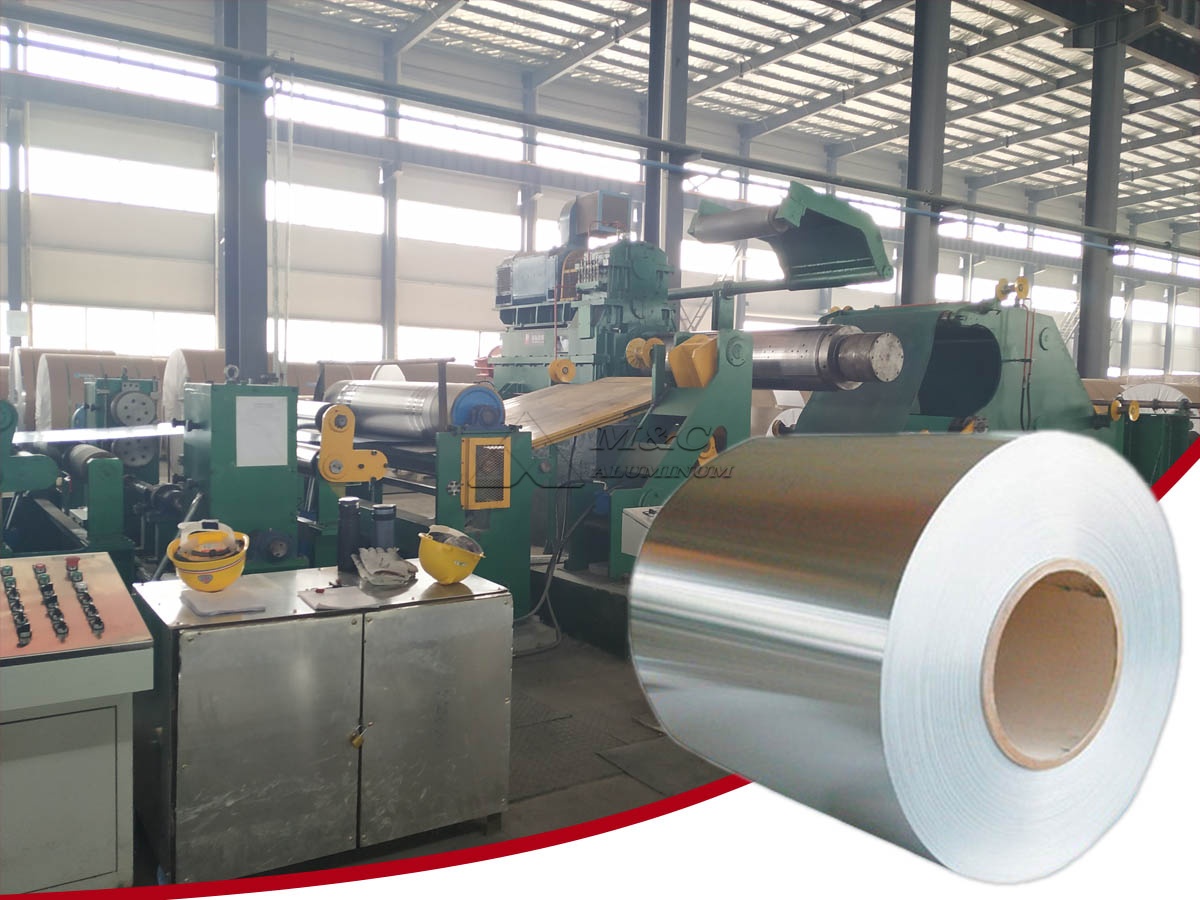
Alloy overview and key performance characteristics
Material and metallurgical characteristics
8011 aluminum foil is based on aluminum with controlled Fe and Si. During rolling and subsequent thermal treatments, these elements influence intermetallic particle distribution. From a production perspective, this affects:
Rolling stability and achievable thin gauges with low break rate
Strength levels in hard tempers (H18, H19) for high-speed converting
Elongation and deep-draw behavior in soft temper (O) for container and forming applications
Surface integrity and pinhole tendency at low thickness
Key Advantages of 8011 Aluminum Foil
1.Extremely high barrier performance: Offers excellent resistance to moisture and oxidation, provides light shielding, and effectively blocks air and microorganisms, helping maintain the quality of pharmaceuticals and foods.
2.Outstanding mechanical properties: Features high tensile strength as well as strong resistance to bursting, puncture, and tearing. It can withstand impacts and pressure during transportation and is suitable for high-speed packaging lines.
3.Safe and hygienic: Clean surface, non-toxic and odorless, meeting stringent hygiene standards for food and pharmaceutical packaging.
4.Excellent adaptability for processing and printing: Uniform surface appearance with no mottling, good flatness, and no pinholes—ideal for subsequent processes such as lamination, printing, and adhesive coating.
5.Good flexibility: Easy to process into various shapes and sizes, with good easy-tear performance for convenient use.
8011 aluminum foil specifications (technical parameters)
The following table lists typical manufacturing ranges and the specification items we can control and certify. Final values depend on thickness, temper, and the applicable standard or customer specification.
| Item | Typical specification / range | Notes (factory control focus) |
|---|---|---|
| Alloy | 8011 | Al-Fe-Si series |
| Temper options | O, H14, H16, H18, H19 | Selection based on forming vs. stiffness |
| Thickness | 0.006 mm to 0.200 mm | Common: 0.009-0.030 mm packaging; 0.040-0.120 mm container |
| Width | 100 mm to 1600 mm | Wider widths subject to line capability |
| Inner diameter (ID) | 76 mm, 152 mm | Other IDs on request |
| Outer diameter (OD) | per coil weight and thickness | Optimized for slitting and converting |
| Coil weight | per request | Typical export packaging supported |
| Surface finish | single side bright or double side bright (as applicable) | Depending on rolling and application |
| Surface cleanliness | controlled residual oil and low contamination | Critical for printing, coating, and laminating |
| Roughness (Ra) | per customer requirement | Adjusted via rolling schedule |
| Pinhole level | controlled by gauge and inspection criteria | Stricter for thin gauges and barrier laminates |
| Thickness tolerance | per standard and customer agreement | Verified by online and offline measurement |
| Mechanical properties | per temper and thickness | Tensile, elongation reported per test plan |
| Standards supported | ASTM, EN, JIS, GB (by request) | Supplied with MTC/COA |
| Packaging | seaworthy export packing | Moisture barrier + edge protection |
For pharmaceutical lidding or cold-form related structures, the required pinhole limits, surface cleanliness, and adhesion performance are usually more stringent. In such cases, we align testing plans with the converter and the final packaging validation protocol.
Manufacturing capabilities: how we produce stable 8011 foil
As a factory, our production route is designed to ensure coil-to-coil repeatability.
1) Melt, composition control, and casting
We control chemical composition and inclusion cleanliness starting from molten metal treatment. Alloying is adjusted to meet 8011 targets and to support rolling stability. Casting parameters are set to reduce segregation and minimize defect sources that can later manifest as pinholes or streaks.
2) Hot rolling and cold rolling schedule
After hot rolling to intermediate gauges, cold rolling is performed in multiple passes to reach final thickness. The rolling schedule is engineered for:
Gauge accuracy and flatness control
Surface finish management
Break resistance at thin gauges
Consistent edge quality for high-speed slitting
3) Annealing and temper control
Temper is achieved by controlled annealing (for O temper) or by the degree of cold work (for H tempers). For 8011-O aluminum foil, we control annealing temperature and time to deliver stable elongation and forming behavior, which is important for container and wrap applications.
If your specification calls for soft temper supply, we can reference our 8011-O Aluminum Foil capability and confirm the target mechanical window based on thickness and forming method.
4) Slitting, rewinding, and edge management
Slitting is a critical step for downstream process yield. We maintain:
Stable tension control to avoid telescoping and soft edges
Clean, burr-controlled edges
Splice and coil end management aligned with customer converting requirements
Customization options (what we can tailor)
Because end-use requirements vary significantly, we support customization in the following areas:
Temper selection: O for forming and folding; H14-H19 for stiffness and high-speed lines
Gauge and tolerance windows: optimized for barrier vs. cost and yield
Surface condition: brightness, roughness targets, controlled residual rolling oil
Coil dimensions: ID, OD, coil weight to match customer unwinders
Slit widths and edge requirements: narrow reels for packaging converters or wider master coils
Export packaging: pallet type, moisture barrier, desiccant, container loading plan
When customers require special surface preparation for printing or coating, we confirm compatibility through sample trials and define measurable acceptance criteria before mass production.
Application scenarios and target industries
8011 aluminum foil is specified across multiple sectors. Typical scenarios include:
Food and household packaging
Household foil, food wrap, barbecue and baking uses
Food container stock and semi-rigid lids (depending on gauge and temper)
Laminated food packaging where foil serves as the barrier layer
Key requirements: stable gauge, cleanliness, controlled pinholes, and consistent temper.
Pharmaceutical and medical packaging
Lidding and blister-related laminate structures (application-dependent)
Barrier layers in medical packaging laminations
Key requirements: stricter surface cleanliness, lower defect acceptance, and validated performance in the customer conversion process.
Insulation and industrial laminations
HVAC duct insulation facings
Building insulation laminates and vapor barriers
Cable wrap and industrial barrier applications
Key requirements: bond strength in laminates, stiffness at target gauge, and corrosion resistance as part of the full laminate design.
Heat transfer related products
While dedicated heat exchanger fins often use specialized finstock alloys, 8011 foil can be used in certain heat-related facings, shields, and laminated structures. For projects in HVAC, we review forming requirements and corrosion environment to confirm alloy and temper suitability.
Comparison with other common aluminum foil alloys
Selecting the correct alloy should be driven by performance requirements, not only by availability.
8011 vs. 1235 aluminum foil
Composition: 1235 is closer to high-purity aluminum, generally offering excellent ductility and good barrier behavior.
Strength: 8011 typically provides higher strength at comparable gauges and tempers due to alloying additions.
Use case: 1235 is often selected for general packaging and lamination where very high ductility is preferred; 8011 is selected when better strength and process stability are needed.
8011 vs. 8079 aluminum foil
Barrier and defect control: 8079 is frequently used for demanding pharmaceutical packaging and thin gauges, depending on the specification.
Mechanical balance: 8011 offers a strong balance for broad packaging use; 8079 may be preferred where stricter pinhole control or specific property windows are required.
8011 vs. 8021 aluminum foil
Pharmaceutical focus: 8021 is commonly used for pharma blister and related applications, depending on customer validation.
Selection logic: if the end product requires pharma-oriented performance and customer-approved validation, 8021 or 8079 may be evaluated; for general packaging and container applications, 8011 remains a mainstream choice.
8011 vs. 3003 aluminum foil
Alloy family: 3003 is an Al-Mn alloy, typically used where higher strength and certain forming characteristics are needed.
Typical positioning: 3003 is common in finstock and some technical applications; 8011 is more universal for packaging foils and containers.
In practice, we support alloy comparison by matching your converting process and final performance requirements with lab data and trial production results.
Conclusion: stable supply, technical support, and long-term cooperation
As a manufacturer of 8011 aluminum foil, our priority is consistent, auditable quality and predictable supply performance. We maintain controlled production routes for thickness accuracy, surface cleanliness, temper stability, and defect management, and we provide traceability and documentation aligned with international purchasing requirements.
For new projects, we support specification review, sampling, and process matching to help converters lock in temper, gauge, and coil configuration. For long-term programs, we stabilize supply through consistent raw material control, disciplined inspection plans, and agreed change management. If you share your application, converting method, and target standards, we can recommend a practical 8011 aluminum foil specification and supply plan suitable for sustained production.
Contact Us