
Aluminum Strip for Transformer Winding China Manufacturer
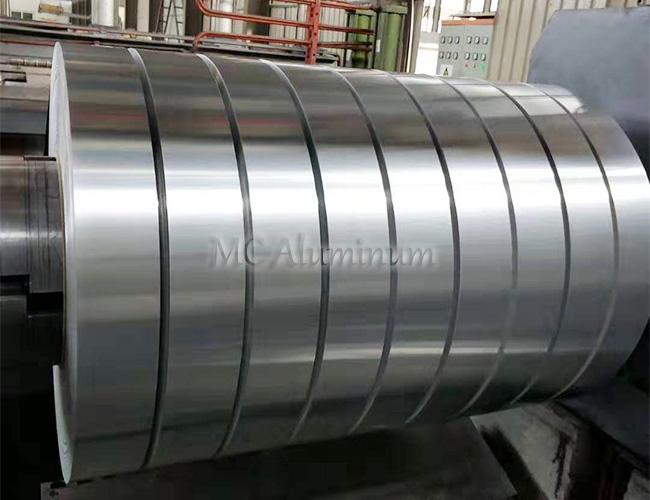
As a China manufacturer of aluminum strip for transformer winding, we produce precision slit aluminum strip for oil-immersed transformers, dry-type transformers, reactors, and other electrical winding applications. Our production focuses on stable conductivity, accurate width tolerance, smooth edges, clean surfaces, and reliable coil packaging for international shipment.
Transformer winding material is not a general-purpose aluminum strip. It must support continuous electrical operation, mechanical winding stress, insulation compatibility, and long service life inside transformer assemblies. For this reason, we control the process from aluminum coil selection, rolling, annealing, slitting, edge treatment, inspection, and export packing. Our factory supplies Transformer Aluminium Strip in common electrical grades such as 1050, 1060, 1070, and 1350, with O temper and customized dimensions according to transformer design drawings.
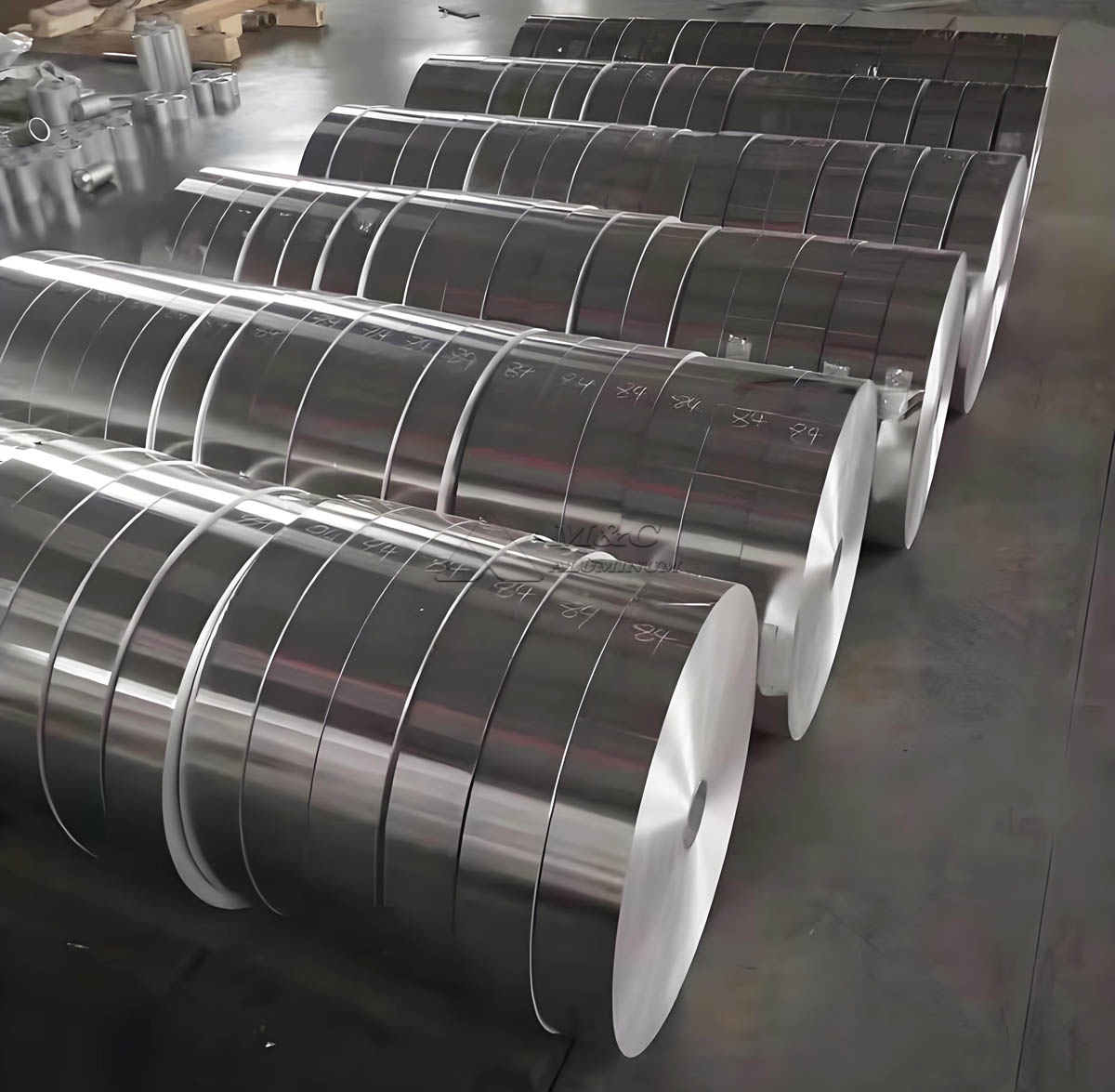
Manufacturer Focus for Transformer Winding Strip
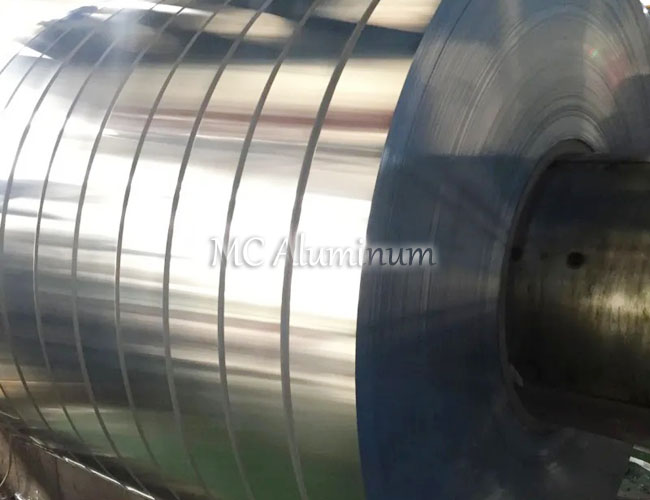
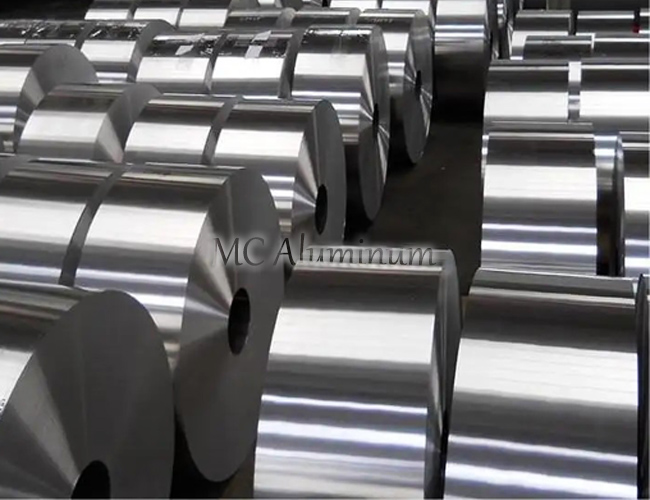
We manufacture aluminum strip in coil form for transformer winding manufacturers who require consistent material behavior during high-speed or semi-automatic winding. The strip must unwind smoothly, remain flat, and avoid edge burrs that may damage insulation paper or film. In transformer production, even small deviations in strip thickness, width, edge quality, or surface cleanliness can influence winding density, insulation reliability, and final electrical performance.
Our production system is designed for B2B supply to transformer factories, electrical equipment manufacturers, and industrial users. We do not position ourselves as a trading intermediary. The material is produced and inspected in our plant before shipment. This allows us to provide direct communication on technical requirements, coil inner diameter, outer diameter limits, winding direction, packaging method, and tolerance control.
For customers who need other slit aluminum materials, our factory also manufactures general Aluminum Strip for industrial applications. However, transformer winding strip is controlled under more specific requirements due to its electrical use.
Main Alloys for Aluminum Transformer Strip
The most widely used aluminum alloys for transformer winding are 1050, 1060, 1070, and 1350. These grades are selected because of their high aluminum purity, good electrical conductivity, stable formability, and economical processing performance.
1050 aluminum strip is commonly used for distribution transformer winding where moderate conductivity and good workability are required. 1060 aluminum strip provides slightly higher aluminum content and is widely accepted in many transformer factories. 1070 aluminum strip offers higher purity and higher electrical conductivity. 1350 aluminum strip is a recognized electrical conductor alloy used in many winding and conductor applications where conductivity is a key specification.
The final alloy selection depends on transformer capacity, loss requirement, design standard, temperature rise target, insulation structure, and purchasing specification. We can produce according to customer drawings or provide standard production ranges for evaluation.
Technical Parameters
The following table shows our typical manufacturing range for aluminum strip for transformer winding. Final specifications can be adjusted after technical confirmation.
| Item | Typical Specification |
|---|---|
| Product | Aluminum strip for transformer winding |
| Alloy | 1050, 1060, 1070, 1350 |
| Temper | O, soft annealed |
| Thickness | 0.20 mm to 3.00 mm, customized |
| Width | 10 mm to 1600 mm, customized by slitting |
| Electrical conductivity | Typically 60 percent IACS and above, depending on alloy |
| Surface | Bright, clean, oil-free or light-oiled as required |
| Edge condition | Slit edge, deburred edge available on request |
| Inner diameter | 150 mm, 300 mm, 400 mm, 500 mm, or customized |
| Coil weight | According to strip width, thickness, and customer handling limit |
| Width tolerance | Controlled according to order requirement |
| Thickness tolerance | Controlled according to applicable standard or agreement |
| Packaging | Moisture-proof paper, plastic film, wooden pallet or wooden case |
| Application | Transformer winding, reactor winding, electrical coil winding |
| MOQ | 1-3 tons |
Production Process and Quality Control
Our aluminum strip for transformer winding is produced from selected aluminum coils. Incoming material is checked for alloy grade, thickness, surface condition, and mechanical suitability. After rolling and annealing, the coil is slit to the required width with controlled tension. The slitting process is important because the strip edge directly contacts insulation materials during transformer winding.
After slitting, we inspect coil surface, edge burr, width tolerance, flatness, and coil tightness. The material should not have serious scratches, stains, oxidation marks, edge waves, telescoping, or loose winding. For electrical applications, cleanliness is especially important. Dust, excessive oil, or metal particles may affect insulation safety, so we maintain strict workshop handling and packing procedures.
Annealing is another key process. Transformer aluminum strip normally uses soft temper to support bending and winding without cracking. The annealing cycle must provide uniform softness across the coil, while maintaining stable dimensional performance. We monitor the annealing process according to alloy, thickness, coil weight, and customer requirements.
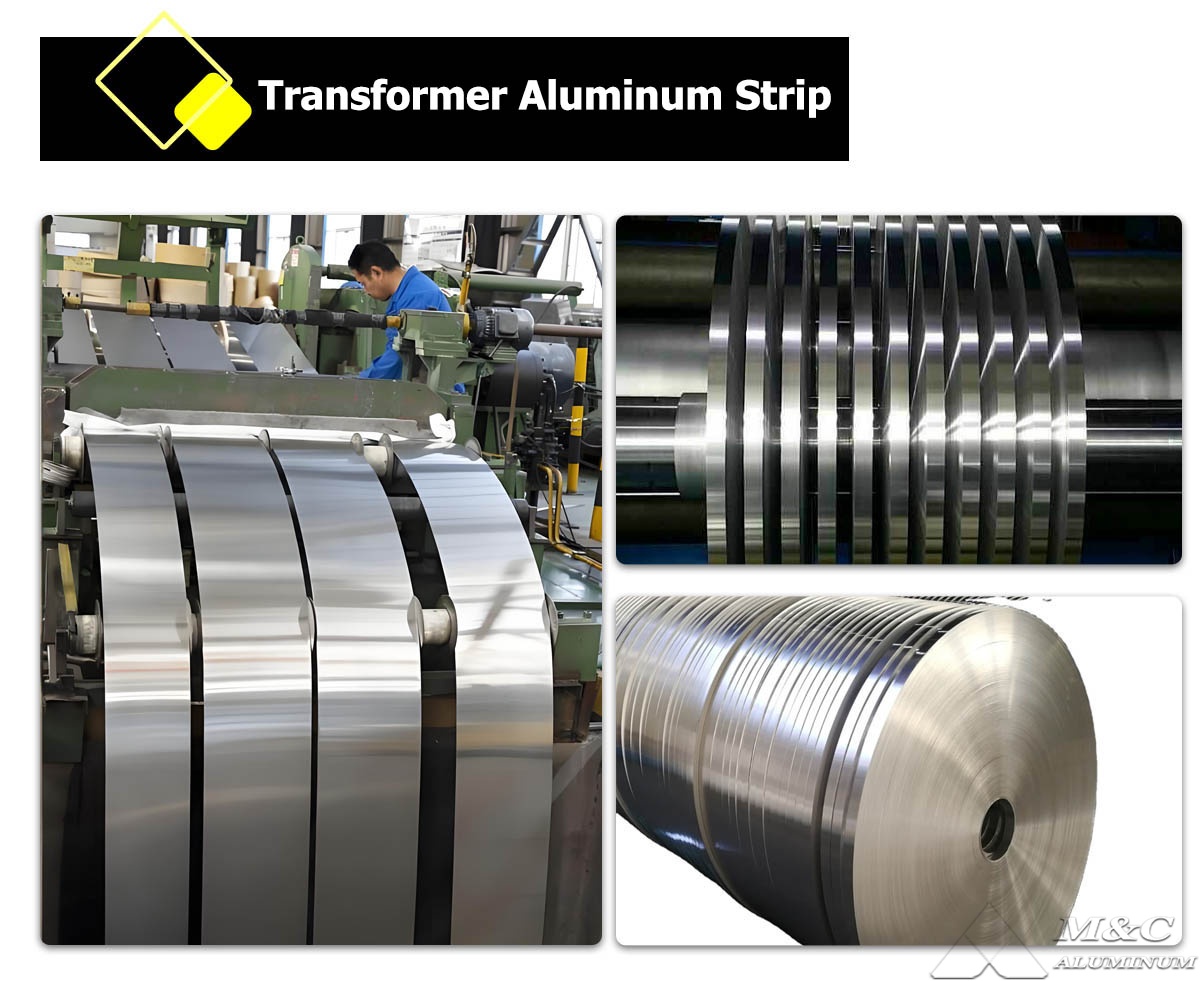
Surface and Edge Requirements
Transformer winding strip should have a clean and smooth surface. Minor rolling marks may be acceptable if they do not affect winding or insulation contact, but defects such as deep scratches, black spots, corrosion, burr particles, and oil contamination must be avoided. In our factory inspection, surface quality is checked throughout production and before packing.
Edge quality is also critical. A sharp burr can cut or weaken insulation paper, Nomex paper, polyester film, or other insulation layers. Depending on customer requirements, we can control burr height and provide improved edge treatment. For high-reliability transformer winding, customers usually specify strict edge conditions, especially when the winding speed is high or the insulation layer is thin.
Flatness is another practical concern. If the strip has waves or camber, it may not wind evenly, resulting in poor coil alignment and reduced production efficiency. We control slitting tension and coil handling to reduce deformation during processing.
Why Aluminum Strip Is Used in Transformer Winding
Aluminum strip is widely used as a transformer winding conductor because it provides a favorable balance of conductivity, weight, cost, and processability. Compared with copper, aluminum has lower density, which can reduce conductor weight in many designs. With proper cross-sectional area and winding structure, aluminum strip can meet electrical performance requirements for a wide range of distribution and power transformers.
Aluminum winding strip also has good thermal conductivity, which supports heat transfer inside transformer windings. When combined with suitable insulation design and cooling medium, it can help maintain stable operating temperature. The soft temper makes it suitable for layered winding and foil winding processes.
In many transformer designs, aluminum strip is supplied in relatively wide coil form for foil winding. The conductor width, thickness, and insulation arrangement are calculated by the transformer engineer. Therefore, our role as a manufacturer is to provide material that matches the drawing precisely and performs consistently during winding.
Custom Dimensions for Transformer Manufacturers
Transformer factories often require different aluminum strip sizes for different voltage ratings, capacities, and winding structures. We manufacture customized widths and thicknesses rather than limiting supply to fixed stock sizes. Before production, we confirm alloy, temper, thickness, width, tolerance, coil inner diameter, maximum outer diameter, coil weight, surface requirement, and packing method.
For export orders, coil dimensions must also match the customer's equipment and material handling system. Some customers require small coils for manual handling, while others prefer larger coils for continuous production. We can adjust coil weight within practical production limits to support efficient winding operations.
If the customer has a technical standard, test method, or drawing note, we review it before order confirmation. This helps avoid misunderstandings in conductivity, tolerance, edge quality, and packaging requirements.
Packing for Export Shipment
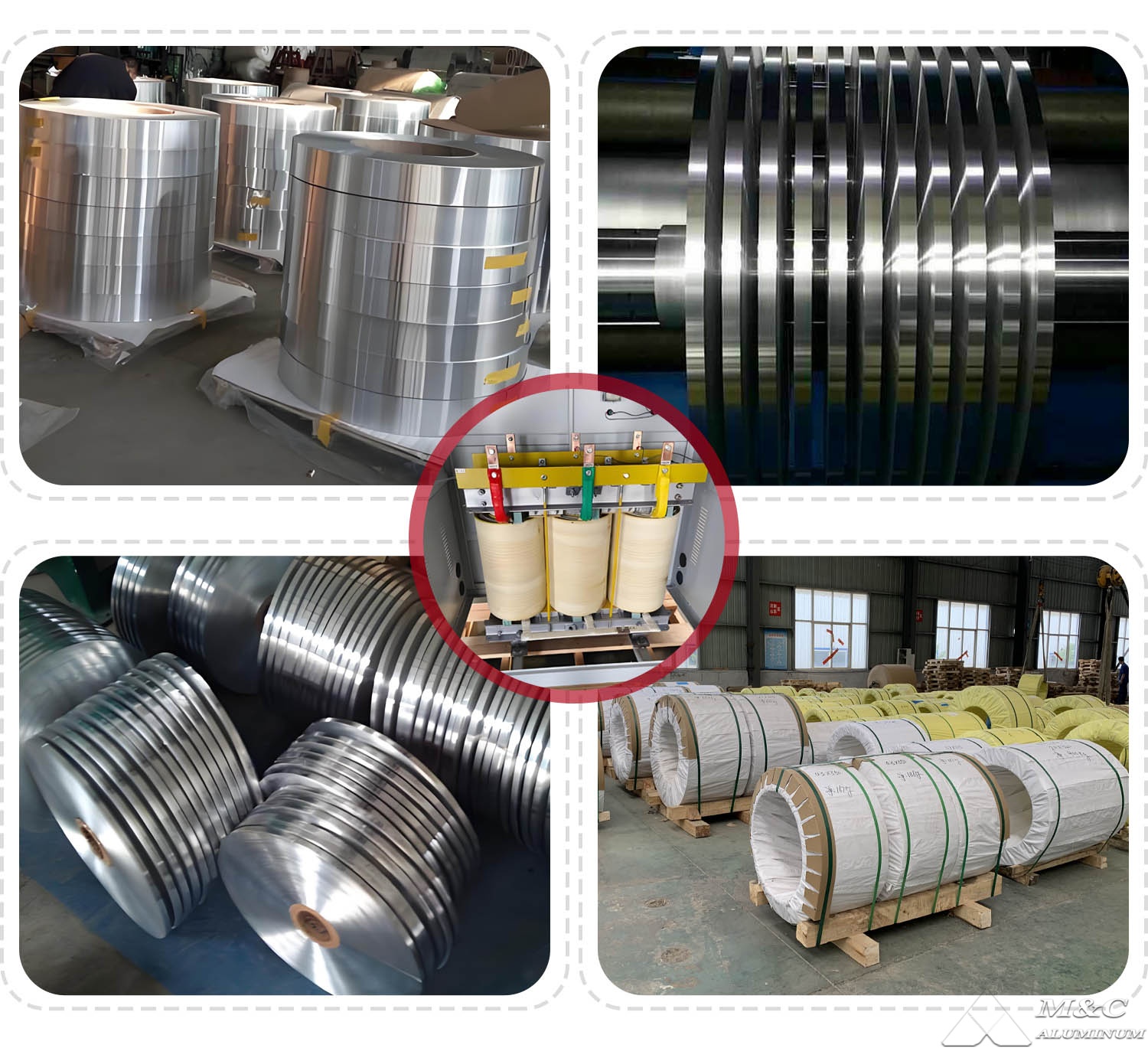
Aluminum strip for transformer winding must be protected from moisture, impact, and deformation during transportation. After final inspection, coils are wrapped with protective film and moisture-proof material. The outer packaging can be wooden pallet, wooden case, or reinforced export package depending on coil size and shipping method.
Each package is marked with product name, alloy, temper, size, coil number, net weight, gross weight, and order information. For sea shipment, moisture protection is important because aluminum surfaces may be affected by condensation during long-distance transport. We use stable packaging structures to reduce coil movement and edge damage.
Information Needed for Quotation
To prepare an accurate quotation for aluminum strip for transformer winding, please provide the following information:
Alloy, such as 1050, 1060, 1070, or 1350
Temper, usually O temper for winding
Thickness and width
Required tolerance, if specified
Coil inner diameter and maximum outer diameter
Maximum coil weight or preferred coil weight
Surface requirement and edge requirement
Annual or batch quantity
Destination port or delivery term
Any applicable technical standard or drawing
With these details, our engineering and production teams can evaluate feasibility, production schedule, and packaging method. If the specification is still under development, we can discuss common manufacturing ranges used by transformer winding customers.
Factory Supply for International Transformer Projects
As a China aluminum strip manufacturer, we supply transformer winding strip to customers who require consistent quality, stable lead time, and direct technical coordination with the production source. Our manufacturing approach is practical and specification-driven. We focus on the parameters that matter in transformer production: conductivity, dimensional accuracy, annealing uniformity, clean surface, smooth edge, and safe export packaging.
Aluminum strip for transformer winding is a critical conductor material. Its quality affects winding efficiency, insulation protection, electrical losses, and long-term transformer reliability. By controlling production in our own factory, we are able to support customized transformer projects with traceable material and clear inspection standards.
If you are selecting a manufacturer for 1050, 1060, 1070, or 1350 aluminum strip for transformer winding, we can review your technical requirements and provide a production solution based on your transformer design and manufacturing process.
Contact Us