
EV Battery Aluminum Foil
EV battery aluminum foil is a critical current collector material used in lithium-ion battery cathodes. As an aluminum foil manufacturer, we produce battery grade aluminum foil for electric vehicle battery cells, energy storage batteries, and high-performance lithium-ion battery applications. Our production process is designed to provide stable thickness, clean surfaces, uniform mechanical properties, and consistent coil quality for downstream coating and cell manufacturing.
In a lithium-ion battery, aluminum foil functions as the cathode current collector. It supports the active coating layer, transfers electrical current, and contributes to the consistency of electrode production. Because EV battery cells operate under demanding conditions, the aluminum foil used for cathodes must meet strict requirements for surface condition, pinhole control, conductivity, flatness, and dimensional accuracy.
What Is EV Battery Aluminum Foil?
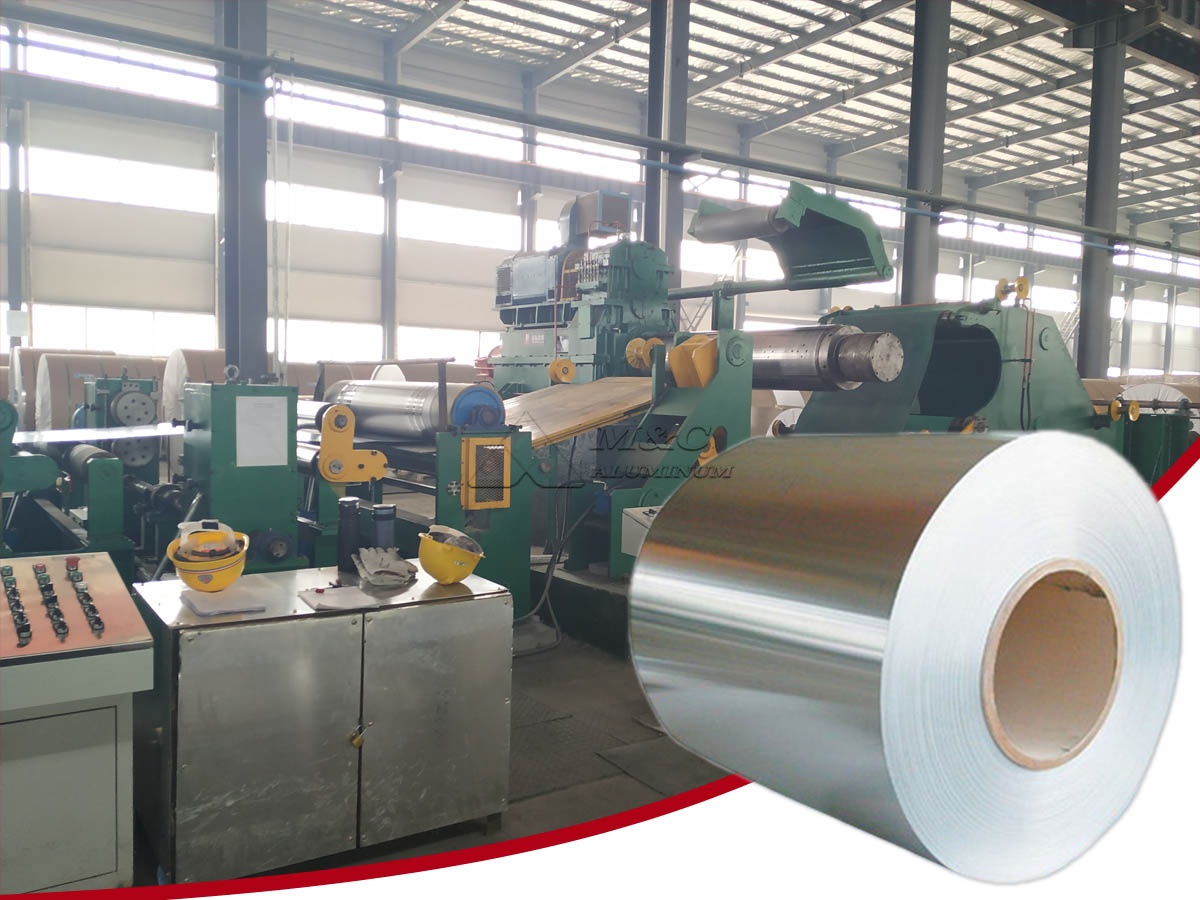
EV battery aluminum foil is ultra-thin rolled aluminum foil manufactured for use as a cathode current collector in rechargeable lithium-ion batteries. It is typically made from high-purity aluminum alloys such as 1235, 1050, 1060, 1070, and 1100 series aluminum, depending on the cell design and customer specification.
Unlike general-purpose household or packaging foil, battery cathode aluminum foil must be suitable for electrode slurry coating, drying, calendaring, slitting, and winding or stacking operations. The foil surface needs to allow stable adhesion between the cathode coating and the aluminum substrate. At the same time, it must remain free from defects that could affect coating uniformity, electrical performance, or battery safety.
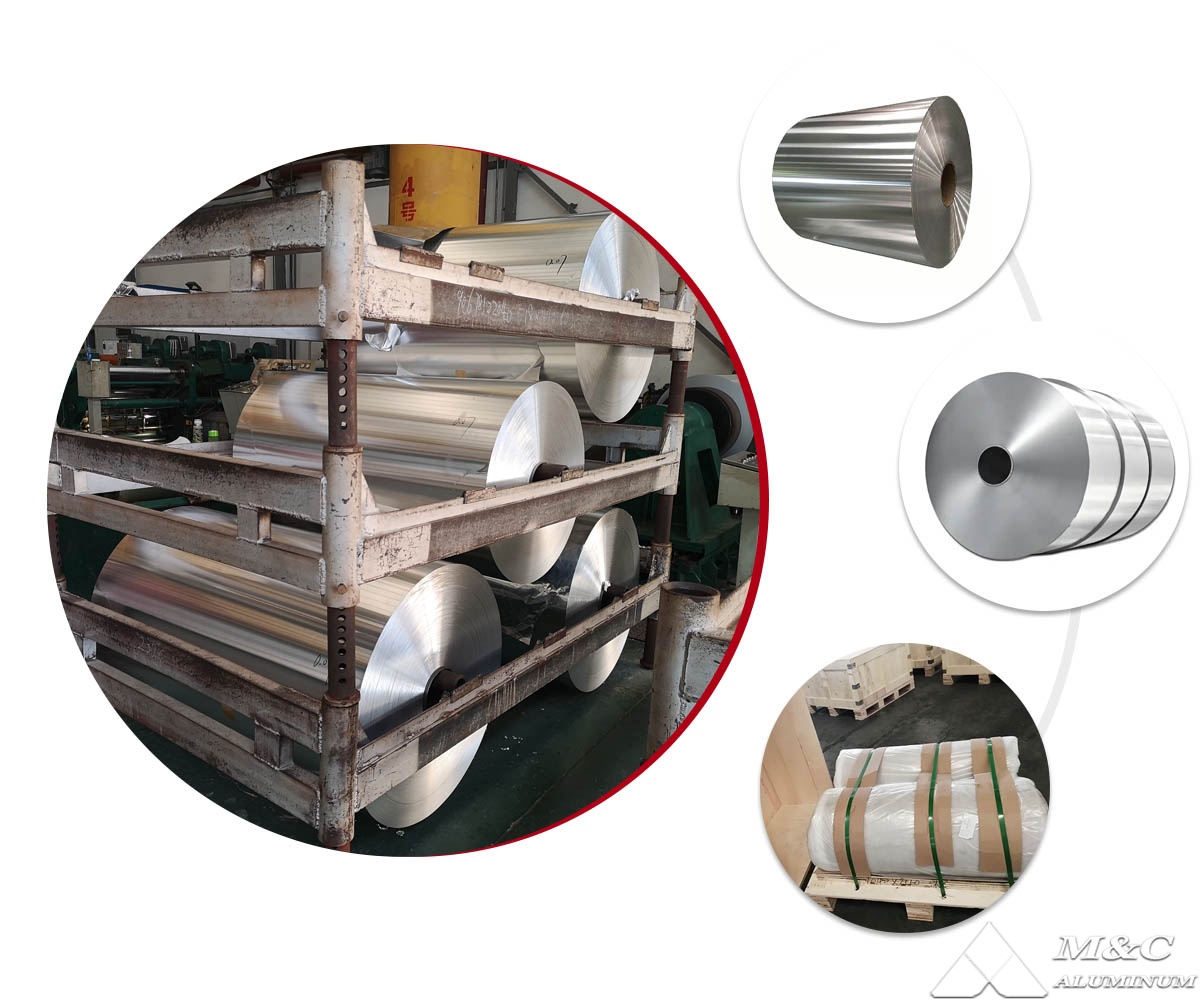
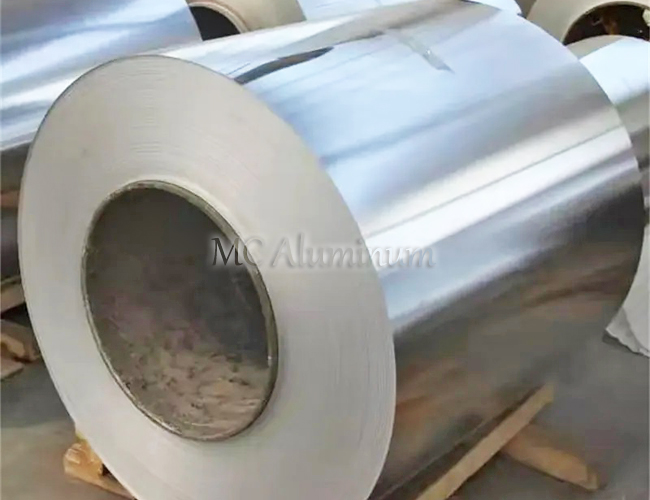
Our EV battery aluminum foil is supplied in coil form for automated electrode manufacturing lines. We control production from aluminum ingot selection through melting, casting, hot rolling, cold rolling, intermediate annealing, foil rolling, slitting, inspection, and export packaging.
Role of Aluminum Foil in Lithium-Ion EV Batteries
In most lithium-ion battery designs, copper foil is used as the anode current collector, while aluminum foil is used as the cathode current collector. Aluminum is selected because it offers low density, good electrical conductivity, corrosion resistance within the cathode operating voltage range, and excellent processability.
The main functions of battery aluminum foil include:
Carrying electrons between the cathode active material and the external circuit.
Providing a stable substrate for cathode coating materials.
Supporting automated coating, calendering, slitting, and cell assembly processes.
Helping maintain electrode dimensional stability during manufacturing.
Reducing the total weight of the battery system compared with heavier metallic substrates.
For electric vehicle battery manufacturers, foil consistency is essential. Variations in thickness, surface roughness, tensile strength, or coil shape can influence coating weight, electrode density, production yield, and final cell performance. For this reason, our factory applies process control at each rolling and finishing stage.
Common Alloys for Battery Cathode Aluminum Foil
Different battery manufacturers select aluminum alloy grades based on electrode design, thickness requirements, coating technology, and mechanical property targets. The most common grades are commercially pure aluminum alloys with high aluminum content.
| Alloy | Typical Aluminum Content | Main Characteristics | Typical Battery Application |
|---|---|---|---|
| 1235 aluminum foil | 99.35% minimum | Good formability, stable rolling performance, widely used for thin foil | Standard lithium-ion cathode current collectors |
| 1070 aluminum foil | 99.70% minimum | High electrical conductivity and excellent corrosion resistance | High-conductivity battery electrode applications |
| 1060 aluminum foil | 99.60% minimum | Good ductility and consistent processing performance | Cathode foil for EV and energy storage cells |
| 1050 aluminum foil | 99.50% minimum | Good workability and reliable surface quality | General battery current collector production |
| 1100 aluminum foil | 99.00% minimum | Good forming capability and mature supply availability | Selected cathode and industrial battery designs |
We can recommend an appropriate alloy based on the required foil thickness, temper, coating line speed, cathode chemistry, and final application. For high-volume EV battery projects, material qualification should include trials on the customer's electrode coating and cell assembly equipment.
Technical Parameters of EV Battery Aluminum Foil
Battery grade aluminum foil is generally supplied in thin gauges. The final specification depends on the battery cell structure, energy density target, and electrode manufacturing method.
| Parameter | Typical Range or Option | Notes |
|---|---|---|
| Alloy | 1235, 1050, 1060, 1070, 1100 | Selected according to conductivity and process requirements |
| Thickness | 0.010 mm to 0.020 mm | Common EV battery grades include 12 um, 15 um, and 16 um |
| Width | 100 mm to 1,500 mm | Custom slitting widths available |
| Temper | O, H14, H18 | O temper is commonly used where higher flexibility is required |
| Coil inner diameter | 150 mm, 300 mm, 500 mm, or customized | Compatible with customer coating and slitting equipment |
| Coil outer diameter | According to weight and transport requirements | Controlled to suit unwinding equipment |
| Surface condition | Clean, oil-controlled, defect-controlled | Suitable for cathode slurry coating |
| Pinhole control | According to thickness and agreed inspection standard | Important for thin foil quality evaluation |
| Tensile strength | Customized by alloy and temper | Controlled for coating and winding stability |
| Elongation | Customized by alloy and temper | Supports downstream forming and handling |
| Edge quality | Burr-controlled, clean slit edges | Helps reduce breaks during high-speed processing |
The values above are typical references. Final technical parameters should be confirmed through the purchase specification, sample approval, and agreed inspection standard.
Key Quality Requirements for Battery Grade Aluminum Foil
As a manufacturer of aluminum foil current collector materials, we understand that EV battery aluminum foil is evaluated not only by chemical composition but also by its behavior during electrode production. The following quality factors are particularly important.
Thickness Uniformity
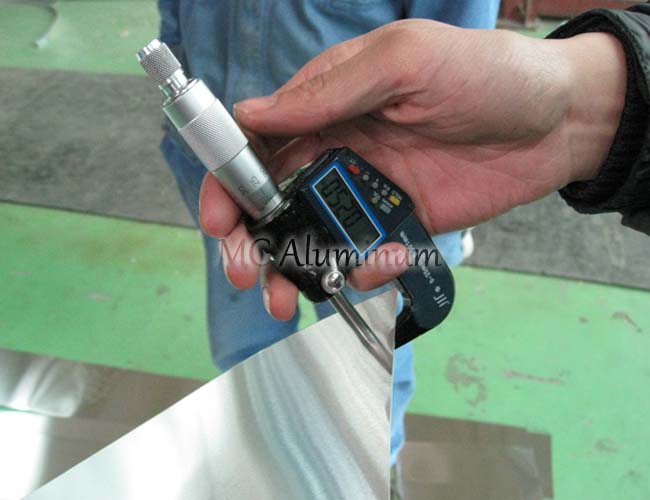
Stable thickness across the coil width and throughout the coil length supports consistent cathode coating weight. Thickness variation can affect the amount of active material applied to the electrode and may lead to uneven cell performance. Our rolling process uses online thickness monitoring and controlled rolling schedules to maintain dimensional consistency.
Surface Cleanliness and Wettability
The foil surface must be suitable for water-based or solvent-based cathode slurry coating. Excessive rolling oil residue, contamination, scratches, or surface irregularities may reduce coating adhesion. We manage rolling lubrication, annealing conditions, and surface inspection to provide clean battery aluminum foil suitable for downstream coating operations.
Mechanical Stability
During electrode manufacturing, aluminum foil is exposed to tension during unwinding, coating, drying, calendaring, slitting, and winding. Appropriate tensile strength and elongation help prevent foil breaks, wrinkling, and edge cracking. Mechanical properties are adjusted through alloy selection, reduction schedules, and annealing control.
Flatness and Coil Shape
Poor flatness can create coating defects and unstable web handling. We monitor crown, camber, edge wave, center buckle, telescoping, and coil tightness. Proper coil geometry is important for high-speed automated battery electrode lines.
Pinhole and Defect Control
Thin aluminum foil may develop pinholes or rolling-related defects if production control is insufficient. For battery applications, defect control is important because localized irregularities can affect coating integrity and electrode reliability. Our inspection process includes visual checks, dimensional inspection, and quality verification according to the agreed specification.
Our Manufacturing Process for EV Battery Aluminum Foil
We manufacture lithium-ion battery aluminum foil through a controlled rolling and finishing process. The production route is tailored to thin-gauge, high-consistency foil requirements.
Raw material preparation: We select qualified aluminum raw materials and control chemical composition for the specified alloy grade.
Melting and casting: Aluminum is melted, refined, and cast into rolling stock under controlled process conditions.
Hot rolling: The cast material is hot rolled to reduce thickness and establish a suitable structure for subsequent cold rolling.
Cold rolling: Multiple rolling passes progressively reduce the strip to the required foil gauge while controlling thickness profile and surface quality.
Annealing: Intermediate or final annealing is applied when required to achieve the specified temper, strength, elongation, and residual oil condition.
Foil rolling and finishing: Final rolling produces the required ultra-thin aluminum foil thickness and surface condition.
Slitting and recoiling: Wide coils are slit into customer-specified widths with controlled edge quality and coil winding tension.
Inspection and packaging: Finished coils are inspected, protected with moisture-resistant packaging, and prepared for international transport.
Our factory can support trial orders, qualification samples, and regular production supply for EV battery material projects. For long-term programs, we work with customers to define key control items such as thickness tolerance, width tolerance, coil weight, surface requirements, mechanical properties, and packaging method.
Packaging and Export Supply
Battery cathode aluminum foil must be protected from moisture, dust, mechanical impact, and edge damage during storage and transportation. We use export-oriented packaging methods that may include protective wrapping, moisture barriers, reinforced outer protection, palletized loading, and clear coil identification.
Each coil can be marked with essential traceability information, including alloy, thickness, width, temper, coil number, net weight, production batch, and inspection status. This helps battery manufacturers manage incoming material inspection and production traceability.
Why Work Directly With Our Aluminum Foil Factory?
Working directly with a battery aluminum foil manufacturer provides clearer technical communication and more effective control of product specifications. Our engineering and production teams can review the intended application before production and recommend suitable alloy, temper, gauge, width, and coil configuration.
We focus on practical manufacturing capabilities rather than generic material descriptions. For EV battery aluminum foil, this means controlling the factors that matter on electrode lines: thickness consistency, clean surfaces, stable mechanical properties, uniform coil shape, controlled edges, and reliable packaging.
Request a Specification for EV Battery Aluminum Foil
When requesting a quotation or technical review, please provide the required alloy, thickness, width, temper, coil inner diameter, coil weight, application type, and relevant inspection requirements. If the foil will be used for lithium-ion cathode current collectors, it is also helpful to specify the coating process and any surface cleanliness or mechanical property targets.
As an aluminum foil factory, we can supply EV battery aluminum foil in customized coil dimensions for battery electrode manufacturers, EV battery producers, and energy storage system suppliers. Our technical team can support material selection and sample evaluation for your battery current collector project.
Contact Us