
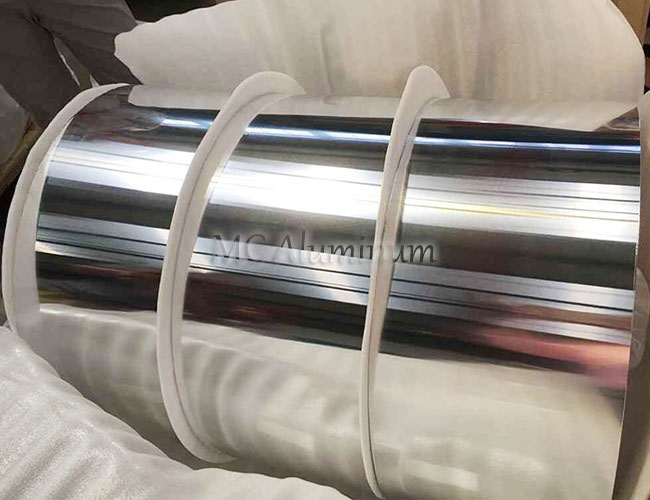
Non-Magnetic Cable Armored Aluminum Strip for Single Core Cables
Single core power cables used in transmission, distribution, industrial plants, and infrastructure projects require an armor material that provides mechanical protection without creating unacceptable magnetic losses. For this application, non-magnetic cable armored aluminum strip is an effective solution. It combines low density, corrosion resistance, controlled formability, and non-magnetic behavior suitable for AC single core cable designs.
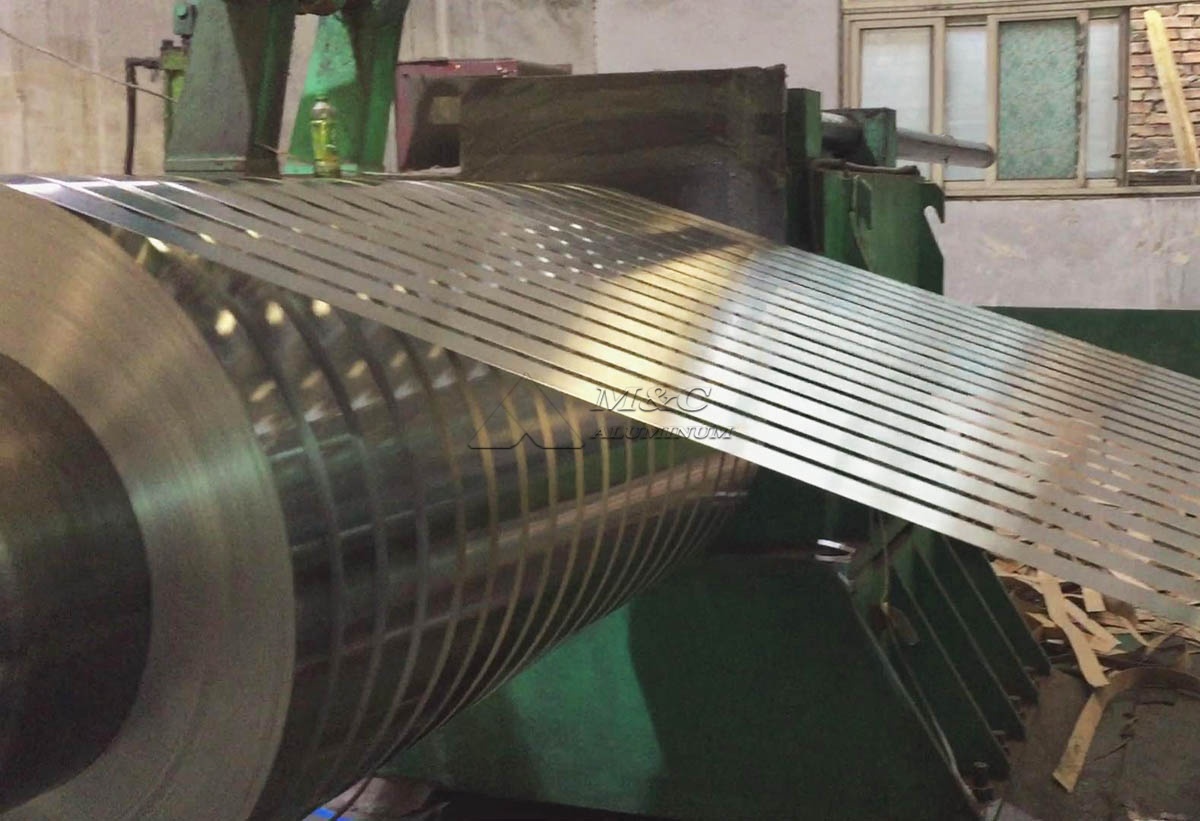
As an aluminum strip manufacturer, we produce cable armor aluminum strip in controlled alloy, temper, thickness, edge condition, and coil configuration. Our manufacturing process is designed to support stable downstream armoring operations, including continuous strip feeding, helical wrapping, and cable sheathing production. Each order can be produced according to the dimensional and mechanical requirements of the cable manufacturer or project specification.
Why Non-Magnetic Armor Is Required for Single Core Cables
In AC single core cables, alternating current flowing through the conductor generates a changing magnetic field around the cable. If the armor uses ferromagnetic steel materials, the magnetic field can induce eddy currents and magnetic hysteresis losses in the armor layer. These effects may increase cable operating losses and produce localized heating.
Non-magnetic aluminum alloy strip avoids this issue because aluminum does not exhibit ferromagnetic behavior. When properly selected and applied, aluminum cable armor helps maintain the electrical performance expected from a single core cable system while providing protection against external mechanical forces.
The main functions of an aluminum strip armor layer include:
Providing mechanical protection during installation and service.
Improving resistance to crushing, impact, and handling damage.
Supporting cable geometry and sheath integrity.
Maintaining non-magnetic performance for AC single core cable applications.
Reducing overall cable weight compared with steel-armored constructions.
Offering good corrosion resistance in suitable service environments.
For cable manufacturers producing medium-voltage and high-voltage single core cables, armor material selection should be evaluated together with conductor design, insulation system, bedding layer, outer sheath, installation method, and applicable cable standard.
Aluminum Alloys for Cable Armoring
The most common alloy selection for non-magnetic cable armored aluminum strip depends on the required balance between tensile strength, elongation, bending performance, corrosion resistance, and processing stability. We commonly manufacture 3003 aluminum strip for cable-related applications because it offers reliable formability and moderate strength through manganese alloying.
The 3003 alloy belongs to the aluminum-manganese series. It has better strength than commercially pure aluminum while retaining practical flexibility for armoring operations. For projects requiring alloy verification, dimensional consistency, or special surface conditions, we manufacture to the agreed technical specification and provide mill test documentation when requested.
Our 3003 Aluminium strip can be supplied in suitable tempers for customers producing non-magnetic cable armor components. The final temper should be selected according to strip thickness, wrapping equipment, overlap design, and required finished cable performance.
Other aluminum grades may also be considered when specified by the customer, but alloy substitution should not be made without reviewing the target mechanical properties and the cable design standard.
Typical Technical Parameters
The following table shows typical production ranges for cable armored aluminum strip. Actual values are subject to the alloy, temper, product dimensions, and approved purchase specification.
| Parameter | Typical Range or Requirement | Notes |
|---|---|---|
| Alloy | 3003, 1060, 1050, or agreed alloy | 3003 is commonly selected for improved strength and formability |
| Temper | O, H14, H16, or as specified | Temper is matched to armoring and bending requirements |
| Thickness | 0.20 mm to 3.00 mm | Custom thicknesses available by agreement |
| Width | 10 mm to 1,500 mm | Slit widths supplied for cable armoring lines |
| Coil inner diameter | 150 mm, 300 mm, 405 mm, 508 mm, or customized | Selected according to uncoiling equipment |
| Coil outer diameter | According to coil weight and transport limits | Controlled to suit customer handling systems |
| Tensile strength | According to alloy and temper | Verified against the agreed specification |
| Elongation | According to alloy and temper | Important for continuous wrapping performance |
| Surface | Mill finish, clean, dry, oil-controlled | No harmful defects affecting armoring operations |
| Edge condition | Slit edge, deburred edge, or rounded edge | Selected to reduce sheath damage and feeding issues |
| Magnetic property | Non-magnetic | Aluminum alloy material is non-ferromagnetic |
| Packaging | Eye to wall or eye to sky | Export packing available for sea freight |
Manufacturing Control for Cable Armor Aluminum Strip
The performance of aluminum strip for cable armoring depends not only on chemical composition but also on rolling and slitting control. As a factory, we manage the production sequence from raw material selection through rolling, annealing where required, precision slitting, inspection, and packaging.
Chemical Composition and Alloy Identification
We verify the alloy grade before production and maintain material identification throughout the manufacturing process. For 3003 alloy, manganese is the principal alloying element, contributing to improved strength compared with pure aluminum grades. Chemical composition control is important because inconsistent alloy input can lead to variations in mechanical properties and forming behavior.
Thickness and Width Accuracy
Uniform thickness is essential for stable tension during continuous armoring. Excessive thickness variation can affect overlap control, strip feeding, and the appearance of the finished cable. We use rolling and inspection procedures to control thickness across the strip width and along the coil length.
Width tolerance is also important. Cable manufacturers normally require consistent slit width so that the armor layer achieves the intended coverage and overlap. Our slitting lines are configured to produce narrow and medium-width coils with controlled edges and stable coil winding.
Surface and Edge Quality
The strip surface should be clean and free from defects that may interfere with cable manufacturing. Deep scratches, edge cracks, heavy burrs, embedded particles, and excessive rolling oil can create downstream problems. Depending on the armoring method, sharp edges may damage the bedding layer or outer sheath during cable movement and bending.
We inspect surface appearance and edge condition before packing. For projects with stricter requirements, we can discuss burr direction, edge rounding, surface cleanliness, and allowable defect criteria during technical confirmation.
Selecting the Right Temper
Temper selection is a practical decision based on the cable structure and armoring equipment. Softer tempers provide better forming performance and may be preferred where the strip must wrap tightly around a cable core with limited risk of cracking. Harder tempers provide higher strength but require suitable bending radii and process control.
For example, an O temper aluminum strip offers high ductility and is suitable for applications requiring significant deformation during wrapping. H14 or H16 material can provide increased mechanical strength while maintaining workable formability for many cable armor designs. The best choice depends on the thickness, cable diameter, wrapping pitch, tension setting, and final mechanical performance required by the customer.
Before volume production, we recommend confirming the alloy and temper through a production trial on the customer's armoring line. This helps verify feeding behavior, overlap stability, bend performance, and compatibility with the selected bedding and sheath materials.
Quality Inspection and Documentation
Our quality control process for non-magnetic cable armored aluminum strip includes inspection of dimensions, surface condition, coil winding, and mechanical properties according to the order requirements. Where required, we can provide relevant material documentation for shipment review.
Typical inspection items include:
Alloy grade confirmation.
Thickness measurement at defined positions.
Width measurement and slit edge inspection.
Tensile strength and elongation testing.
Surface cleanliness and visible defect evaluation.
Coil weight, inner diameter, outer diameter, and winding direction verification.
Packaging inspection before shipment.
The non-magnetic characteristic of aluminum is inherent to the material class. However, customers requiring specific verification should clearly state the acceptance method, sample quantity, and reporting requirements in the purchase specification.
Packaging for Export Cable Strip Coils
Cable armor strip coils must arrive in stable condition because coil damage can interrupt high-speed processing. We use packaging methods designed to protect the coil edges, prevent moisture exposure, and support safe loading and unloading.
Typical export packing includes protective inner wrapping, moisture-resistant paper or film, edge protection, steel or plastic strapping as appropriate, wooden pallets or frames, and clear product identification labels. Coil orientation is arranged according to customer preference and container loading conditions.
For long-distance sea transportation, we recommend confirming maximum coil weight, allowable outer diameter, pallet dimensions, container loading method, and destination climate conditions before finalizing the packing plan.
Applications of Non-Magnetic Aluminum Armor Strip
Our cable armored aluminum strip is manufactured for cable producers serving a range of power and industrial markets, including:
Medium-voltage single core power cables.
High-voltage single core cable systems where non-magnetic armor is specified.
Underground power distribution cables.
Utility and renewable energy cable projects.
Industrial power cables for plants, tunnels, and infrastructure facilities.
Cable constructions requiring reduced armor weight.
In addition to cable armor material, our broader Aluminum Strip production capability supports customized slit coils for electrical, insulation, stamping, and industrial processing applications.
Ordering Information for Cable Manufacturers
To produce the correct non-magnetic cable armored aluminum strip, we recommend providing complete technical information during inquiry. This reduces approval time and helps ensure the delivered coils match the armoring line and finished cable design.
Please specify the alloy, temper, thickness, width, width tolerance, edge condition, coil inner diameter, maximum coil weight, winding direction, packaging method, applicable standard, and required inspection documents. If the material will be used for a project with defined cable performance requirements, the relevant technical specification should also be shared for review.
As a manufacturer, we focus on supplying consistent aluminum strip coils that support stable cable armoring production. By controlling alloy selection, dimensional accuracy, surface quality, mechanical properties, and export packaging, we help cable manufacturers source non-magnetic armor material suited to single core cable applications.


Contact Us