
Properties of Aluminum Strip Used in Armored Cables
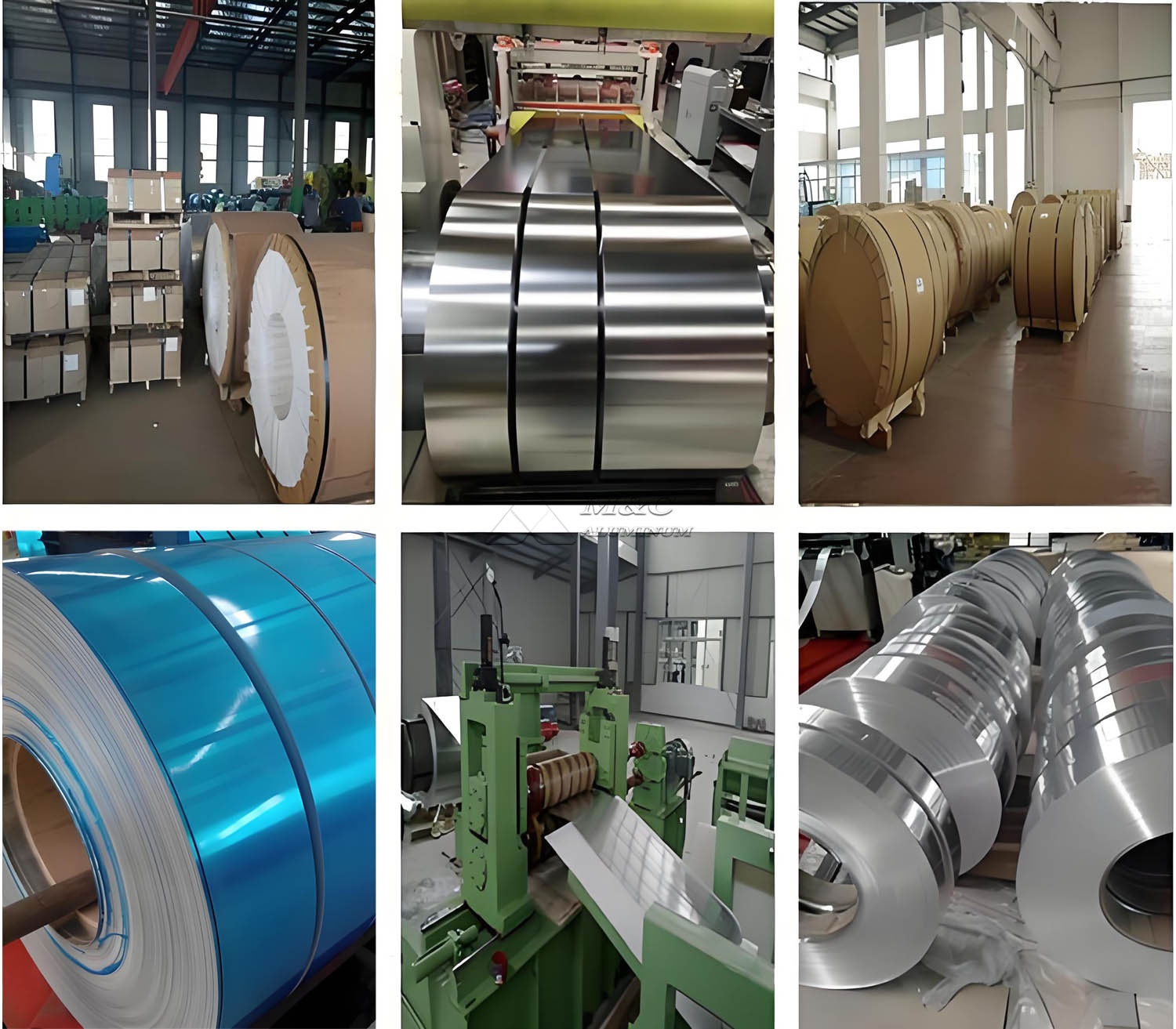
As an aluminum strip manufacturer, we produce slit aluminum strip coils for cable applications where consistent mechanical performance, controlled dimensions, and stable surface quality are essential. In armored cable construction, aluminum strip is commonly used as a metallic protective layer around insulated cable cores or bedding layers. It contributes to mechanical protection, corrosion resistance, and efficient cable handling while maintaining a lower overall cable weight than steel-based armor systems.
The performance of an aluminum strip for armored cables depends on more than its nominal thickness. Alloy composition, temper, tensile properties, edge condition, flatness, surface cleanliness, and coil winding quality all influence the armoring process and the finished cable's reliability. This article outlines the principal properties that cable manufacturers should evaluate when sourcing aluminum armor tape and slit aluminum strip coils.
Function of Aluminum Strip in Armored Cable Construction
Armored cables are designed for installations where cables may be exposed to impact, compression, moisture, underground conditions, industrial environments, or mechanical stress during pulling and service. The armor layer helps protect the cable construction from external damage.
Aluminum strip is particularly suitable for certain medium-voltage, low-voltage, control, and power cable designs. Compared with steel tape, aluminum armor tape provides lower density, good atmospheric corrosion resistance, and easier forming around the cable assembly. It can also be advantageous where a non-magnetic material is required or where cable weight must be reduced for transportation and installation.
Depending on the cable design and relevant standard, the strip may be helically wound with a specified overlap around the cable bedding. For this reason, stable strip width, controlled thickness, burr-free edges, and adequate ductility are critical. A strip that cracks during winding, telescopes during unwinding, or has excessive edge burrs can affect both production efficiency and cable integrity.
Key Material Properties for Cable Armouring Strip
Mechanical Strength and Ductility
The aluminum strip must provide sufficient strength to resist handling damage and external compression after installation. At the same time, it must retain enough elongation to follow the cable circumference during spiral wrapping without edge cracking or splitting.
This balance is achieved through appropriate alloy and temper selection. A harder temper improves resistance to deformation but may reduce forming tolerance. A softer temper provides better bendability but may not supply the required protection for the intended cable design. Our production process controls annealing and rolling reduction to achieve the mechanical range agreed for each armoured cable aluminum strip order.
Corrosion Resistance
Cable armor may be exposed to moisture, soil, salt-laden air, or industrial atmospheres. Aluminum naturally forms a stable oxide film that provides useful resistance to general atmospheric corrosion. This makes aluminum strip a practical choice for cable constructions that require a lightweight metallic protective layer.
However, corrosion performance must be evaluated in relation to the full cable system. Contact with dissimilar metals, water ingress, aggressive soil chemistry, and damaged outer sheaths can affect long-term service behavior. For demanding environments, cable manufacturers should define the complete armor, sheath, and installation requirements before selecting the alloy.
Formability and Bend Performance
During cable manufacturing, aluminum armor tape is formed continuously around a moving cable core. The strip must bend uniformly without transverse cracking, localized creasing, or unstable springback. Good formability is influenced by alloy chemistry, temper, grain structure, surface quality, and edge profile.
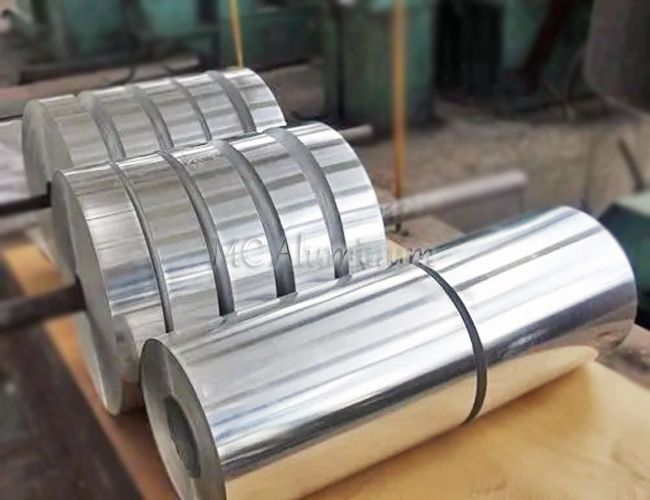
We inspect the rolling condition and slit edge quality of each aluminum strip coil to support stable armoring machine operation. For narrow strips, winding tension and coil alignment are also important because they directly affect strip tracking and overlap consistency during cable production.
Thickness and Width Accuracy
Dimensional consistency is a central requirement for aluminum strip used in armored cables. Thickness variation can alter the protective performance of the armor layer, while width variation may affect overlap, material consumption, and finished cable diameter.
Our slit strip production uses controlled gauge rolling and precision slitting to maintain the agreed tolerances. For cable manufacturers, it is important to specify both nominal dimensions and allowable deviations rather than relying only on a general thickness range.
Edge Condition and Burr Control
Edges are often overlooked when evaluating aluminum strip for armored cables. In practice, poor edges can create operational and product-quality problems. Excessive burrs can damage insulation or bedding layers, interfere with smooth winding, and increase the risk of handling injuries. Edge wave, camber, and knife marks may also reduce wrapping consistency.
We produce cable armouring strip with controlled slit edges appropriate to the customer's winding method. Where required, we can define burr direction, edge appearance, and edge-quality acceptance criteria in the technical agreement.
Common Alloys and Tempers
The alloy selection should be matched to the mechanical and environmental requirements of the cable design. Commercially pure aluminum grades provide excellent conductivity and formability, while manganese-containing alloys provide improved strength. The following table shows common reference options for aluminum strip coils used in cable-related applications.
| Alloy | Typical Temper | Main Characteristics | Typical Use Consideration |
|---|---|---|---|
| 1050 | O, H14 | High aluminum content, good formability, good corrosion resistance | Suitable where forming performance is the primary requirement |
| 1060 | O, H14 | Good ductility, stable processing performance, low strength | Used for applications requiring easy wrapping and light protection |
| 1100 | O, H14 | Good corrosion resistance and workability | Suitable for general-purpose aluminum tape requirements |
| 3003 | H12, H14, H16 | Higher strength than 1xxx series, good forming ability | Common option for aluminum strip for armored cables |
| 3004 | H14, H16 | Improved strength with good corrosion resistance | Considered for cable designs requiring greater mechanical performance |
| 5052 | H32, H34 | Higher strength and good marine-atmosphere corrosion resistance | Used when higher strength or more demanding environmental resistance is specified |
Among these grades, 3003 Aluminium strip is frequently selected for cable armor applications because it offers a useful balance between strength, ductility, and corrosion resistance. The final selection should always be confirmed against the applicable cable standard, armor design, and required test criteria.
Typical Technical Parameters
The actual specification of aluminum strip for armored cables varies according to cable diameter, armor construction, winding equipment, and applicable standards. The table below provides typical factory supply parameters for reference. Final values are subject to the purchase specification and technical agreement.
| Parameter | Typical Range or Requirement | Importance in Cable Manufacturing |
|---|---|---|
| Alloy | 1050, 1060, 1100, 3003, 3004, 5052 | Determines strength, formability, and corrosion performance |
| Temper | O, H12, H14, H16, H32, H34 | Balances bendability with mechanical protection |
| Thickness | 0.20 mm to 1.20 mm | Influences armor strength, cable weight, and forming behavior |
| Width | 10 mm to 150 mm | Selected according to cable diameter and overlap design |
| Thickness tolerance | As agreed, commonly tightly controlled for narrow strip | Supports uniform armor coverage and material efficiency |
| Width tolerance | As agreed by slitting specification | Helps maintain stable spiral winding and overlap |
| Coil inner diameter | 150 mm, 200 mm, 300 mm, 400 mm, or customized | Must match the cable armoring machine decoiler |
| Coil outer diameter | Customized to handling and equipment limits | Affects line runtime and safe material handling |
| Surface condition | Clean, dry, free from oil accumulation, scratches, and oxidation defects | Prevents processing issues and protects cable layers |
| Edge condition | Deburred, controlled slit edge, no harmful sharp defects | Reduces risk of insulation damage and winding instability |
| Coil winding | Tight, uniform, non-telescoped | Supports smooth unwinding at cable production speed |
Surface Quality Requirements
The surface of aluminum armor tape should be clean and consistent. Minor rolling marks that do not affect use may be acceptable, but severe scratches, dents, oxide inclusions, edge cracks, oil residue, or embedded foreign material should be avoided.
Surface cleanliness is especially important when the strip is applied directly over polymeric bedding or insulation-related layers. Contaminants may affect handling, create localized pressure points, or complicate downstream processing. As a manufacturer, we use process controls for rolling lubricant management, surface inspection, slitting, and packaging to reduce these risks.
For customers requiring specific surface conditions, we can supply Aluminum Strip with defined surface acceptance standards, coil orientation, and protective packaging requirements.
Flatness, Camber, and Coil Quality
A technically suitable alloy can still perform poorly if the strip geometry is unstable. Flatness and camber influence how the strip enters the armoring head and how evenly it wraps around the cable. Excessive crossbow, edge wave, center buckle, or lateral curvature can cause tracking problems and irregular overlap.
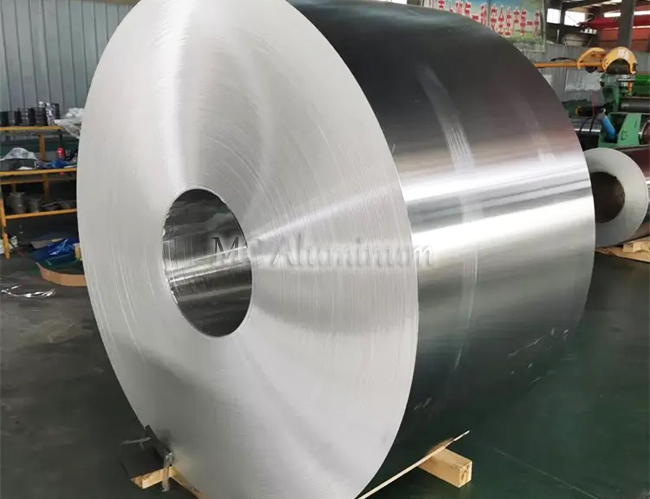
Coil quality is equally important. Loose winding, telescoping, damaged coil edges, or inconsistent tension may interrupt production and increase scrap. We control coil build during recoiling and inspect the finished coils before packing. For high-speed cable armoring lines, customers should provide information on decoiler type, maximum coil weight, coil eye direction, and required coil dimensions when placing an order.
Quality Control in Our Manufacturing Process
Our aluminum strip manufacturing process includes raw material selection, rolling, annealing where required, precision slitting, recoiling, inspection, and protective packing. Quality control is performed at relevant stages to verify dimensions and appearance before shipment.
Typical inspection items include:
Chemical composition verification for the specified alloy.
Thickness measurement across the strip width and along the coil length.
Width measurement and slit-edge inspection.
Tensile strength and elongation testing when required.
Surface inspection for scratches, stains, oxide defects, and oil residue.
Coil winding inspection for tightness, telescoping, and edge alignment.
Packing verification to protect coils during export transportation.
Where customers require material certificates, we can provide documentation aligned with the agreed order requirements. For critical cable projects, pre-production samples and additional testing can also be arranged before full-scale supply.
Selecting the Right Aluminum Strip Specification
When sourcing aluminum strip for armored cables, cable manufacturers should provide complete application information rather than only specifying alloy and thickness. The most useful details include cable type, cable diameter, number of armor layers, required overlap, installation environment, applicable standard, target mechanical properties, coil dimensions, and packaging method.
A suitable specification should balance protective performance with forming efficiency. Selecting an unnecessarily hard temper may increase cracking risk, while selecting an excessively soft material may reduce resistance to damage. Likewise, overly wide tolerance limits can affect armor consistency even when the average strip dimensions appear acceptable.
Conclusion
Aluminum strip used in armored cables must combine reliable mechanical properties, corrosion resistance, forming performance, dimensional accuracy, clean surface quality, and stable coil geometry. Alloy and temper selection are important, but successful cable armoring also depends on controlled slitting, burr-free edges, uniform winding, and application-specific tolerances.
As a manufacturer of aluminum strip coils, we produce materials according to the processing requirements of cable factories and the technical demands of their armored cable designs. By defining the full material specification in advance, cable manufacturers can improve armoring efficiency, reduce processing interruptions, and achieve a more consistent protective cable structure.

Contact Us