
1050 Aluminum Strip for Transformer Applications
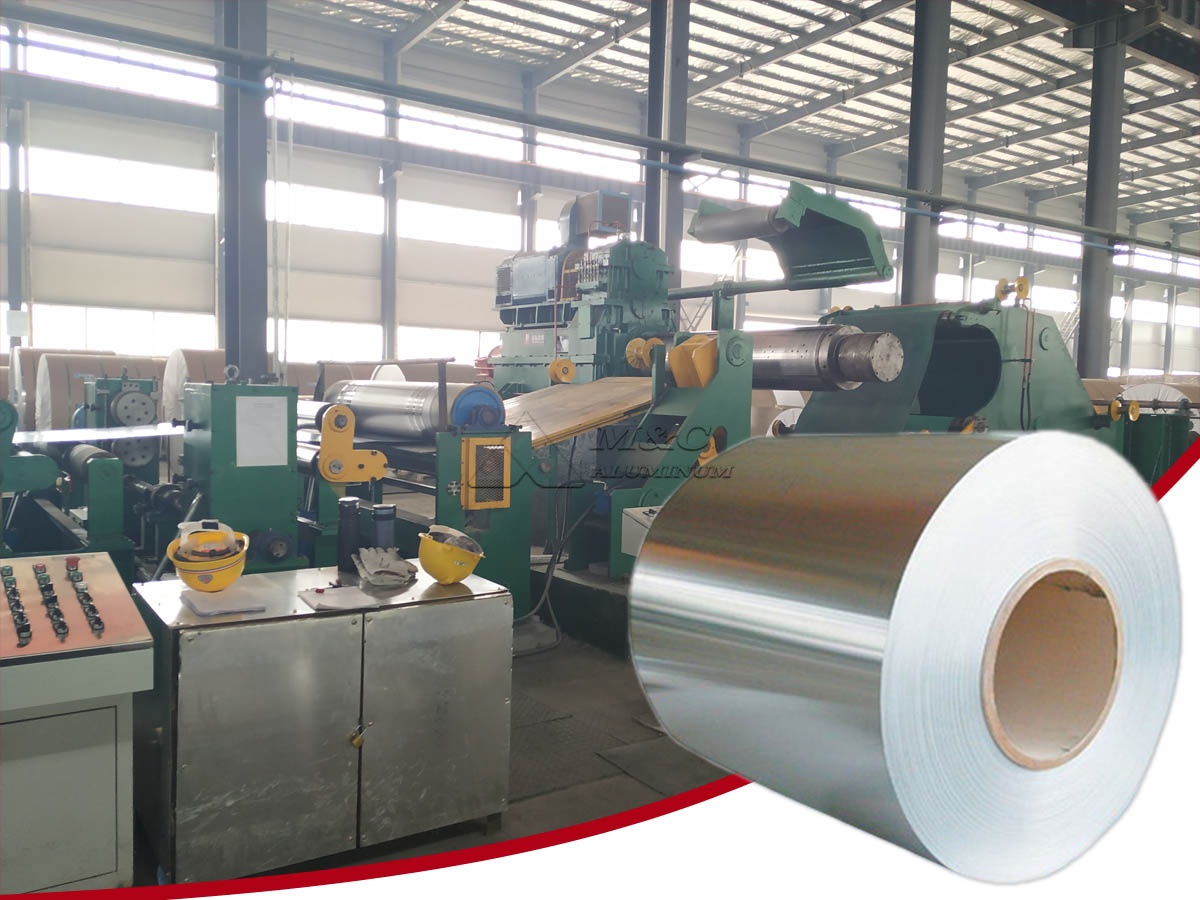
As a manufacturing plant focused on rolled aluminum products, we produce 1050 aluminum strip for transformer applications with close control of conductivity, thickness tolerance, edge quality, and coil consistency. In transformer winding, the strip material must combine high electrical conductivity with stable forming behavior and a clean surface. For this reason, 1050 aluminum strip remains one of the standard choices for dry-type transformers, oil-immersed transformers, reactors, and related electrical equipment.
Our production is organized around the practical needs of transformer manufacturers. This means not only supplying chemical composition within specification, but also maintaining uniform annealing, dependable elongation, burr-free slitting, and coil winding quality suitable for high-speed downstream processing. Whether the strip is used for foil winding or strip winding, dimensional stability directly affects the efficiency and reliability of the finished transformer.
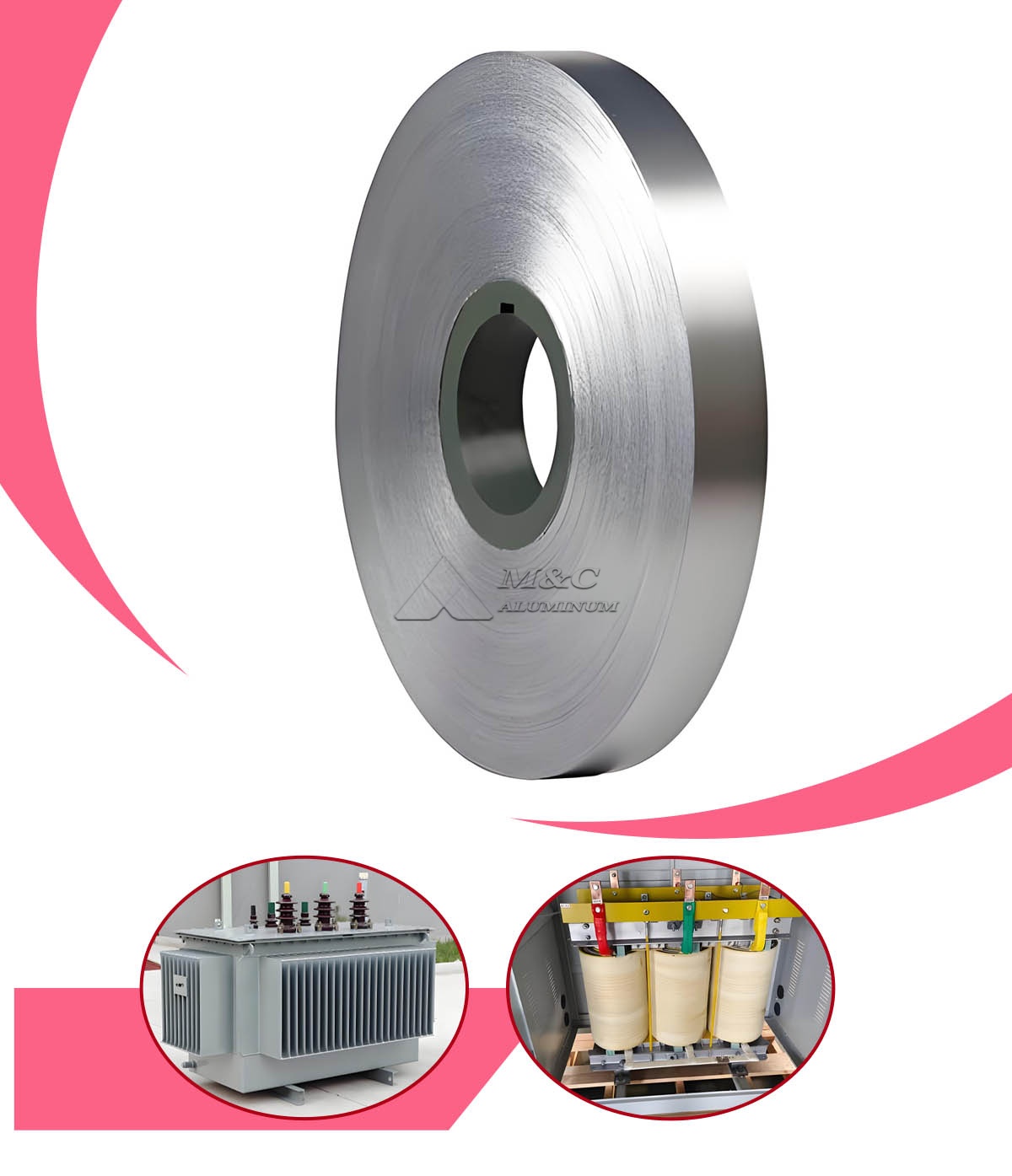
Why 1050 Aluminum Strip Is Used in Transformers
1050 is a commercially pure aluminum alloy with a minimum aluminum content of 99.5 percent. Its main technical advantage in transformer applications is its combination of good electrical conductivity, low density, and excellent workability. Compared with heavier conductive materials, aluminum can reduce winding weight while maintaining practical electrical performance for many transformer designs.
For winding conductors, the material must perform consistently during bending, layering, insulation wrapping, and coil forming. 1050 aluminum strip has a soft temper range that supports these processes well. In addition, the oxide layer on aluminum is stable, and the material shows good compatibility with common insulation systems used in electrical manufacturing.
From a production standpoint, transformer customers generally require the following:
Stable conductivity from coil to coil
Tight thickness and width tolerance
Smooth, clean surface without oil stain or scratch concentration
Flat strip profile for even winding
Rounded or controlled edges to reduce insulation damage risk
Reliable mechanical properties after annealing
These are exactly the points we control during casting, rolling, annealing, slitting, and final inspection.
Our Manufacturing Approach for Transformer Aluminum Strip
We manufacture Transformer Aluminium Strip from selected base material and process it through dedicated rolling and slitting procedures. For transformer use, the strip is not treated as a general-purpose commodity. Instead, each order is reviewed according to winding method, final conductor dimensions, insulation system, and transformer type.
During production, we pay particular attention to:
1. Conductivity Control
Electrical conductivity is one of the most important indexes for transformer winding material. Through control of purity, thermal treatment, and process stability, we supply 1050 aluminum strip with conductivity suitable for electrical applications.
2. Edge Quality
Poor edge condition can damage insulation paper, polyester film, or enamel layers during winding. Our slitting process is designed to reduce burr height and keep the edge profile uniform.
3. Thickness Uniformity
Uneven thickness can lead to unstable winding tension and dimensional deviations in the coil pack. We maintain strict rolling control and inspect thickness across the strip width and along the coil length.
4. Annealing Consistency
Transformer strip often requires soft temper to support forming without cracking. Our annealing process is controlled to deliver consistent elongation and bendability.
5. Surface Cleanliness
A clean surface is necessary for insulation application and winding quality. We monitor rolling oil residue, stain, dent, scratch, and waviness to keep the strip suitable for electrical production lines.
Technical Parameters of 1050 Aluminum Strip for Transformer Applications
The following table shows the common technical range we manufacture. Specific values can be adjusted according to customer drawings and transformer design requirements.
| Item | Specification |
|---|---|
| Alloy | 1050 |
| Aluminum Content | >= 99.5% |
| Common Tempers | O, H111 |
| Thickness Range | 0.2 mm - 3.0 mm |
| Width Range | 10 mm - 1600 mm |
| Coil Inner Diameter | 150 mm, 300 mm, 400 mm, 500 mm |
| Coil Outer Diameter | As per order requirement |
| Electrical Conductivity | Typically >= 60% IACS, subject to temper and test method |
| Tensile Strength | Approx. 60 - 95 MPa, depending on temper |
| Elongation | Typically >= 20% in soft temper, depending on gauge |
| Surface | Smooth, clean, no serious scratches, oil stain, corrosion, or edge crack |
| Edge Condition | Slit edge or rounded edge as required |
| Thickness Tolerance | According to order specification and applicable standards |
| Width Tolerance | According to slitting specification |
| Standard Reference | GB, ASTM, EN, or customer technical agreement |
| Packaging | Export seaworthy wooden pallet or eye-to-wall, eye-to-sky coil packing |
Chemical Composition Reference
For transformer applications, purity and composition stability are essential. Typical composition of 1050 alloy is shown below.
| Element | Content |
|---|---|
| Al | >= 99.50% |
| Si | <= 0.25% |
| Fe | <= 0.40% |
| Cu | <= 0.05% |
| Mn | <= 0.05% |
| Mg | <= 0.05% |
| Zn | <= 0.05% |
| Ti | <= 0.03% |
| Others, each | <= 0.03% |
| Others, total | <= 0.10% |
Performance Requirements in Transformer Winding
In actual transformer production, material selection is driven by winding performance rather than alloy name alone. A suitable 1050 aluminum strip must perform reliably in several key stages.
Winding Stability
The strip should run smoothly on automatic or semi-automatic winding equipment. Stable flatness and controlled coil build help maintain uniform winding tension.
Insulation Compatibility
The surface should be free from defects that may interfere with kraft paper wrapping, film lamination, or other insulation treatments. Edge smoothness is especially important when the conductor is insulated during high-speed processing.
Thermal and Electrical Reliability
Transformer winding conductors are expected to operate under electrical load and thermal cycling. Material uniformity contributes to predictable resistance values and stable long-term service.
Fabrication Efficiency
A coil with consistent dimensions and mechanical properties reduces machine adjustment time, material loss, and downstream quality variation. For manufacturers of dry-type transformers and oil transformers, this has direct value in production control.
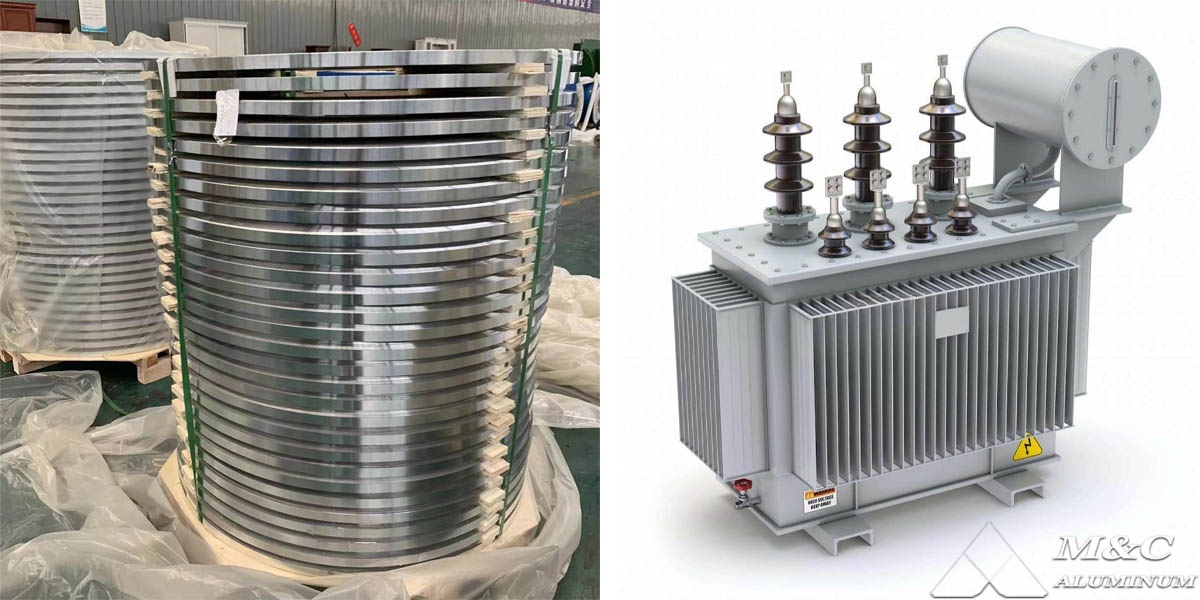
Typical Product Forms We Supply
As a factory, we manufacture 1050 transformer material in several forms depending on end use:
Slit coil for transformer winding
Soft temper narrow strip for insulated conductor production
Precision Aluminum Strip with controlled tolerance
Round edge strip for sensitive insulation systems
Thin gauge strip for compact electrical winding structures
The final product form depends on conductor cross-section, current design, insulation thickness, and customer processing route. We can produce narrow widths for specialized winding lines as well as wider mother coils for in-house slitting by transformer manufacturers.
Quality Control in Our Plant
To ensure that each coil of 1050 aluminum strip meets transformer application requirements, we implement process-based quality control instead of relying only on final sampling.
Raw Material Verification
We verify alloy chemistry before rolling production. This is the foundation for conductivity and forming performance.
Online Gauge Monitoring
Thickness is monitored during rolling to reduce variation and maintain dimensional consistency.
Annealing Record Control
For O temper material, furnace parameters and cycle records are tracked to maintain stable softness and elongation.
Slitting Inspection
Width, burr, edge profile, telescoping, and coil tightness are checked after slitting.
Final Testing
According to order requirements, we can provide inspection items such as:
Chemical composition
Mechanical properties
Electrical conductivity
Dimensional inspection
Surface inspection
Coil weight and packing verification
Applications of 1050 Aluminum Strip in Transformer Manufacturing
1050 aluminum strip is commonly used in:
Dry-type transformer windings
Oil-immersed transformer windings
Distribution transformer conductors
Reactor and inductor windings
Insulated aluminum conductor production
Electrical coil winding components
For many transformer designs, the balance of conductivity, formability, and weight makes 1050 a practical and efficient material. The exact specification should always be selected according to current load, temperature rise requirement, insulation design, and equipment process.
Ordering Considerations for International Buyers
When sourcing 1050 aluminum strip for transformer applications, buyers should define more than alloy and thickness. To avoid mismatch between material and production line, we recommend confirming the following points before production:
| Order Item | Recommendation |
|---|---|
| Alloy and Temper | Confirm 1050 O or required temper |
| Thickness and Width | State nominal size and tolerance requirement |
| Edge Condition | Slit edge or round edge |
| Conductivity Requirement | Specify minimum target or reference standard |
| Coil Weight | Match unwinding equipment capacity |
| Coil ID and OD | Confirm with winding machine setup |
| Surface Requirement | Define cleanliness and defect limits |
| Packaging | Export packing, moisture protection, pallet requirement |
| Test Documents | MTC, conductivity report, dimensional report if required |
Clear technical communication at the order stage helps us align manufacturing parameters with the actual transformer process used by the customer.
Conclusion
As a manufacturer of 1050 aluminum strip, we understand that transformer applications require more than basic alloy supply. The material must deliver conductivity, soft temper performance, accurate dimensions, clean surface condition, and stable winding behavior in real production conditions. Our factory focuses on these practical requirements through controlled rolling, annealing, slitting, and inspection.
For transformer manufacturers, a qualified 1050 aluminum strip supports both electrical performance and processing efficiency. When the alloy purity, dimensional tolerance, edge quality, and coil consistency are properly controlled, the strip can be integrated smoothly into modern transformer winding operations.
Contact Us