
1050 1060 1070 1350 Aluminum Strip for Transformer
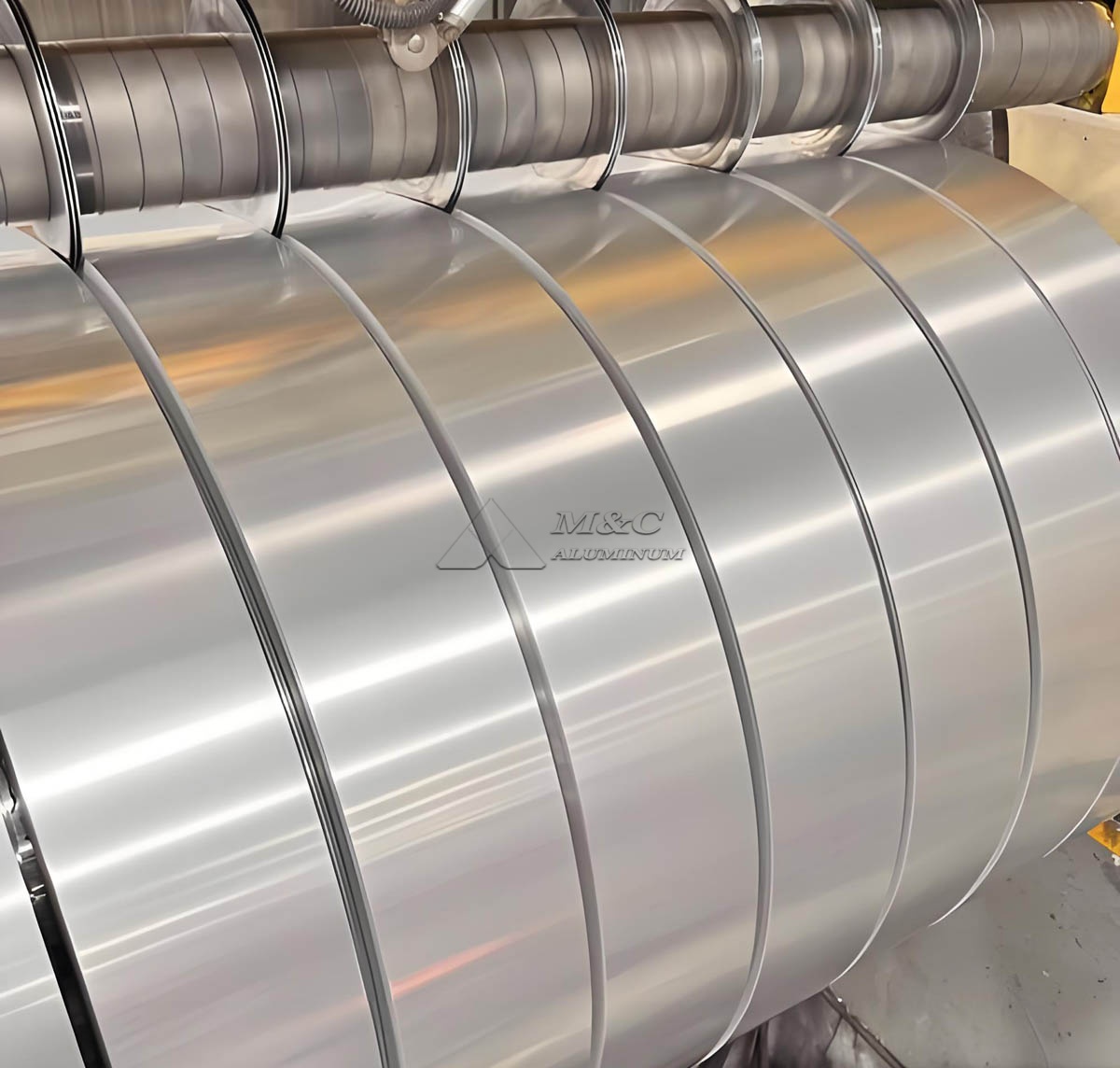
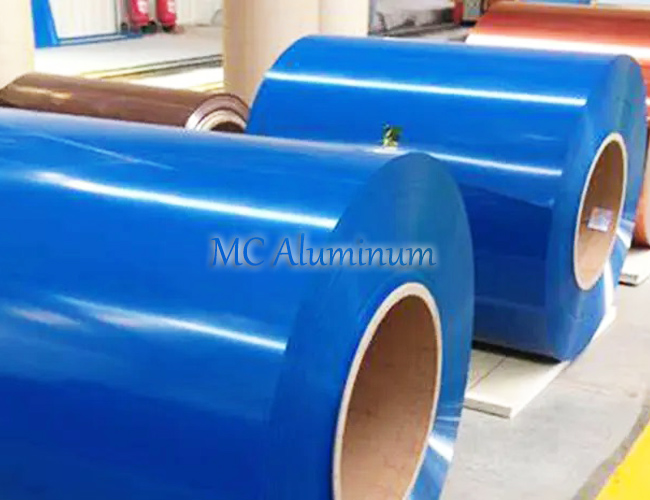
As a manufacturer of aluminum strip products, we produce 1050 aluminum strip for transformer, 1060 aluminum strip, 1070 aluminum strip, and 1350 aluminum strip for electrical and transformer winding applications. These alloys are widely used in dry-type transformers, oil-immersed transformers, reactors, stabilizers, and related electrical equipment because they combine high electrical conductivity, low density, good formability, and reliable processing performance.
Our production is focused on controlled metallurgy, precision rolling, accurate slitting, and stable coil quality. For transformer applications, the consistency of conductivity, surface condition, burr control, edge quality, and dimensional tolerance is more important than simple nominal composition. We manufacture transformer aluminum strip to meet these practical requirements in industrial winding operations.
Aluminum Strip Grades Used for Transformers
The most common pure aluminum grades for transformer strip are 1050, 1060, 1070, and 1350. All belong to the commercially pure aluminum family, but they differ slightly in aluminum content, conductivity level, and application focus.
1050 aluminum strip is used where good conductivity and formability are required with economical material selection.
1060 aluminum strip is one of the most widely used grades for transformer winding due to its balanced conductivity, mechanical properties, and stable processing behavior.
1070 aluminum strip provides higher purity and improved conductivity, making it suitable for more demanding electrical applications.
1350 aluminum strip is an EC grade aluminum material widely recognized for electrical conductor applications and is often specified for transformer and busbar production.
In transformer winding, the strip must perform consistently during edgewise winding or layer winding, remain free from harmful surface defects, and maintain uniform thickness across the entire coil length. Our manufacturing process is designed around these requirements.
Why Aluminum Strip Is Used for Transformer Windings
Compared with copper, aluminum offers a lower density and a more favorable cost structure. For many transformer designs, aluminum strip is an efficient conductor material when the cross-section is properly engineered. In practical production, aluminum strip for transformer winding offers several advantages:
High electrical conductivity
Light weight for easier handling and reduced equipment mass
Good bending and winding performance
Stable supply for industrial-scale transformer manufacturing
Clean surface suitable for insulation coating or direct winding processes
Aluminum resources are abundant and its price is far lower than copper, significantly reducing the overall cost of transformers.
A dense oxide film easily forms on the surface, ensuring high long-term operational reliability.
The key is not only alloy selection, but also proper control of temper, flatness, edge condition, and elongation. Poorly slit strip can create winding defects, insulation damage, or dimensional instability in the finished transformer coil. As a factory, we pay particular attention to these processing details.
Chemical Composition and Technical Parameters
Below are the typical parameters for our 1050 1060 1070 1350 aluminum strip for transformer production. Exact values may be adjusted according to customer standards, temper requirements, and final application.
Chemical Composition Reference
| Alloy | Al Min. % | Main Control Elements |
|---|---|---|
| 1050 | 99.50 | Si, Fe controlled within standard limits |
| 1060 | 99.60 | Si, Fe controlled within standard limits |
| 1070 | 99.70 | Very low impurity content |
| 1350 | 99.50 | EC grade, controlled for electrical conductivity |
Product Specification Range
| Item | Typical Range |
|---|---|
| Product form | Coil strip, slit strip |
| Thickness | 0.20 mm - 3.00 mm |
| Width | 10 mm - 1600 mm |
| Inner diameter | 150 mm, 300 mm, 400 mm, 500 mm, customized |
| Outer diameter | According to coil weight and line capacity |
| Temper | O, H12, H14, customized |
| Edge condition | Mill edge, slit edge, burr-controlled edge |
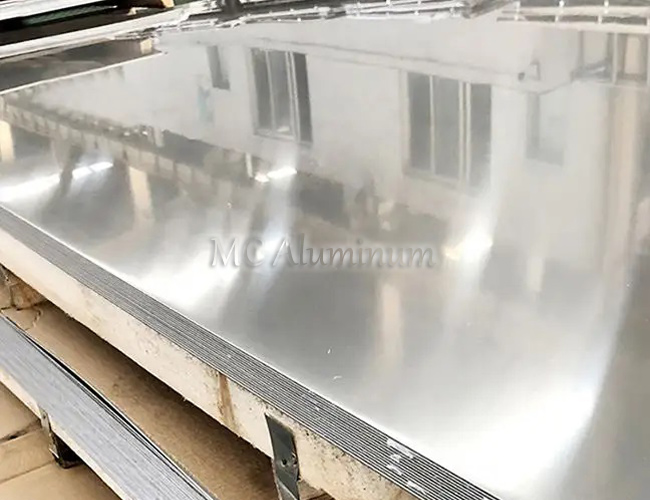
| Surface | Clean, smooth, free from oil excess, cracks, and severe marks |
Mechanical and Electrical Reference
| Alloy | Common Temper | Conductivity Reference | Application Characteristics |
|---|---|---|---|
| 1050 | O | Good | General transformer winding |
| 1060 | O | Very good | Widely used for transformer strip |
| 1070 | O | High | Higher conductivity requirement |
| 1350 | O | Excellent | Electrical conductor and transformer use |
Dimensional Tolerance Control
| Parameter | Control Focus |
|---|---|
| Thickness tolerance | Uniform across width and along length |
| Width tolerance | Accurate slitting for winding stability |
| Burr height | Strictly controlled to protect insulation |
| Camber | Minimized for automatic winding lines |
| Coil tightness | Uniform for safe unwinding |
Manufacturing Process for Transformer Aluminum Strip
We manufacture aluminum strip manufacturer products through an integrated process from raw material inspection to finished slit coil packing. For transformer applications, production stability is essential.
1. Melting and composition control
The chemical composition of each alloy is controlled according to applicable standards and customer requirements. Purity and impurity control directly influence conductivity and forming performance.
2. Rolling process
Hot rolling and cold rolling are managed to obtain the required gauge accuracy and metallurgical structure. During rolling, we monitor thickness profile, flatness, and surface condition.
3. Annealing
For transformer winding, O temper is commonly required to provide sufficient softness, ductility, and winding performance. Annealing parameters are controlled to ensure uniform mechanical properties throughout the coil.
4. Precision slitting
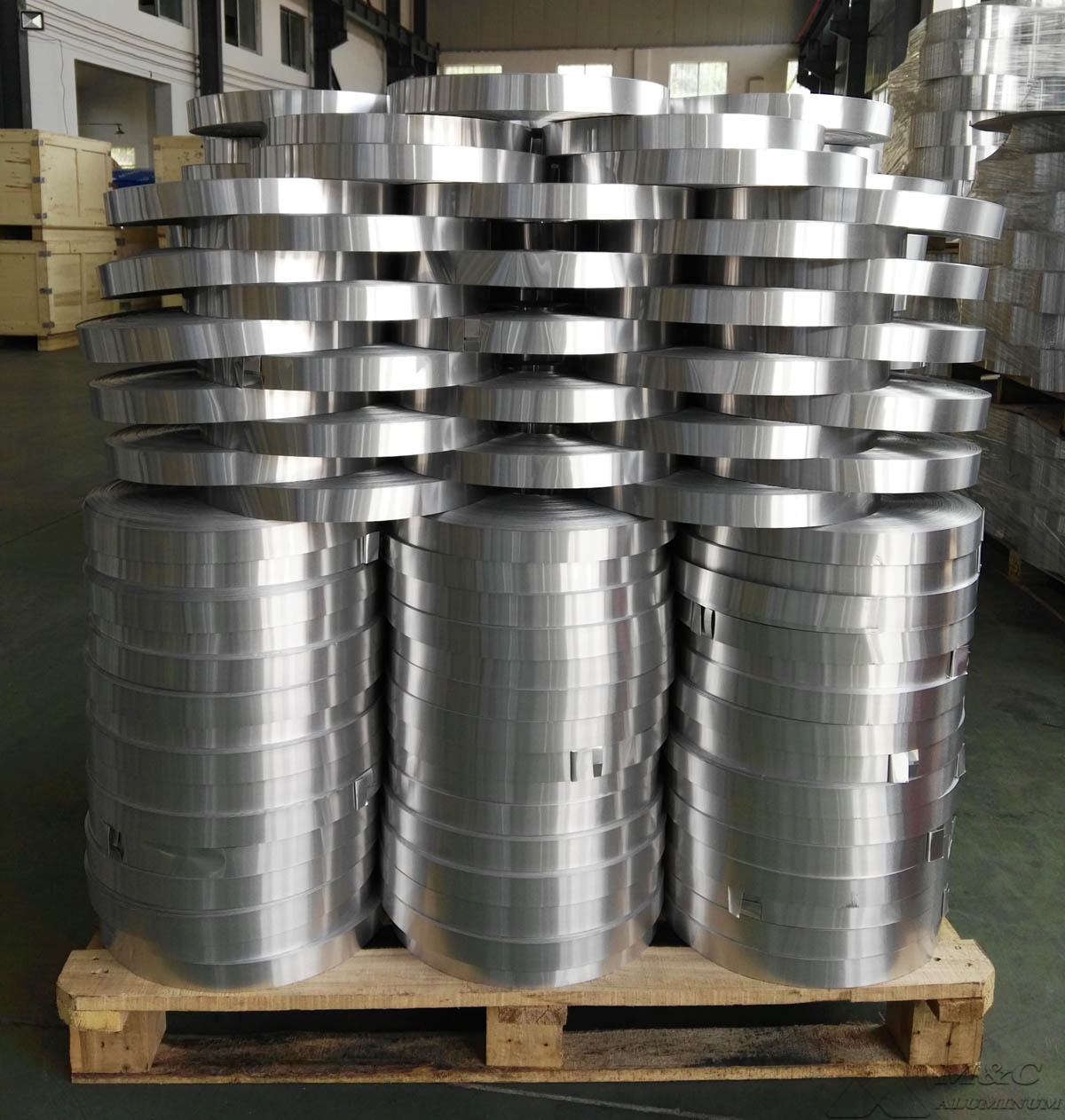
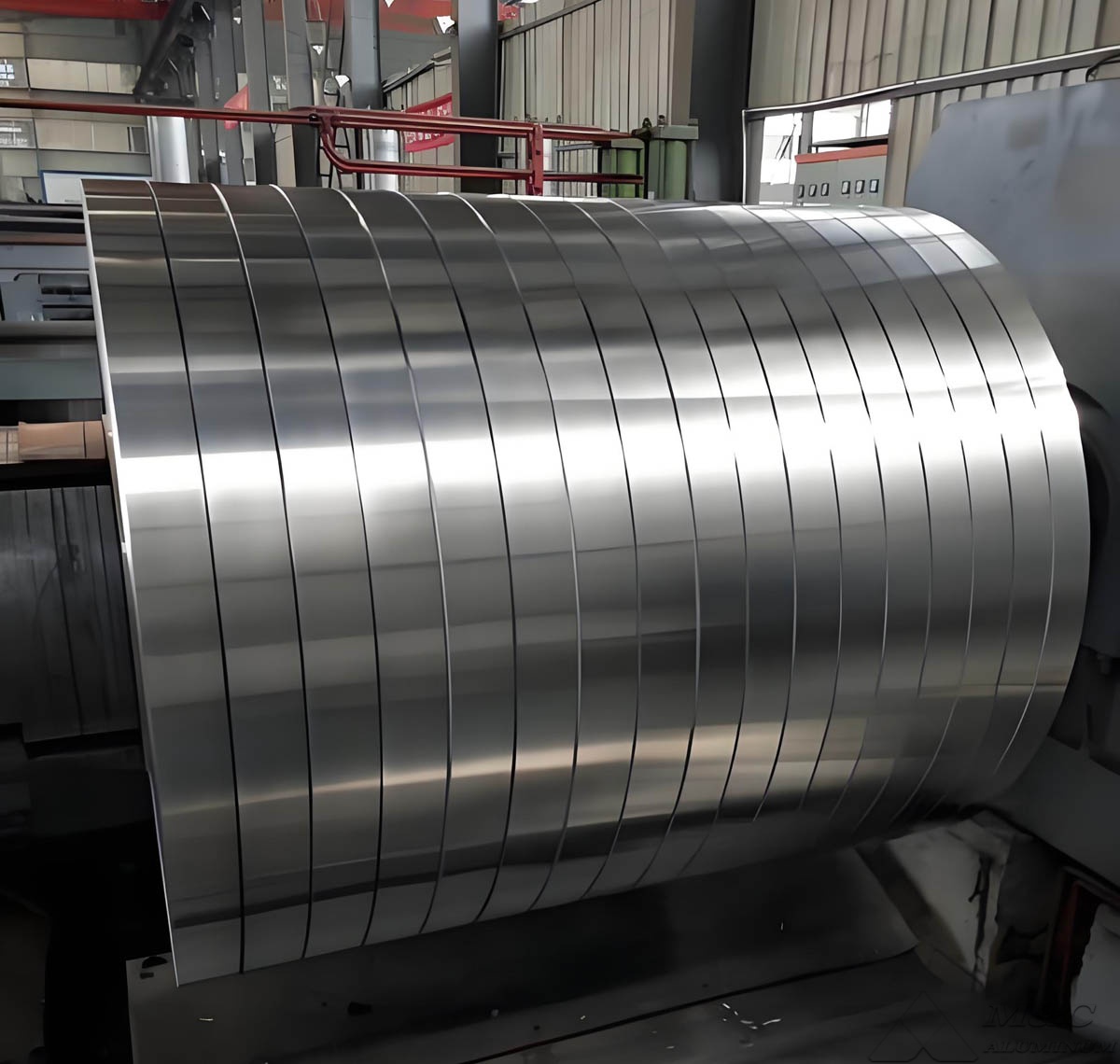
Slitting is one of the most critical stages for transformer aluminum strip. We control width accuracy, burr height, edge smoothness, and recoil quality to support high-speed winding equipment and reduce insulation risk.
5. Inspection and packing
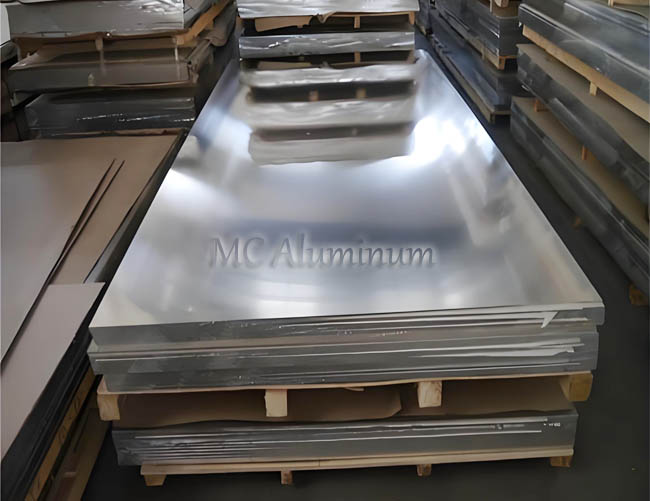
Finished coils are inspected for dimensions, appearance, conductivity-related properties, and coil build quality. Packing is arranged to protect the strip from moisture, edge damage, and deformation during international transport.
Key Quality Requirements for Transformer Use
In actual transformer production, the strip is expected to unwind smoothly, wind evenly, and maintain electrical and mechanical consistency. Based on manufacturing experience, the most important quality points are as follows.
Conductivity stability
Electrical performance must remain consistent from coil to coil. This is especially important for large-volume transformer manufacturers who require predictable design values and stable temperature rise behavior.
Surface cleanliness
The surface should be clean and uniform, without defects that may affect insulation application or winding integrity. We control rolling oil residues and surface scratches during finishing.
Edge quality and low burr
Burr control is essential for aluminum strip for transformer winding. Excessive burr can damage insulating paper, enamel layers, or interlayer insulation during winding and operation.
Flatness and camber control
Good flatness helps maintain stable tension in automatic winding lines. Low camber supports precise layer alignment and reduces process interruptions.
Soft temper and elongation
Transformer strip must have suitable softness for bending and forming without cracking. This is particularly important for narrow-width strip and compact winding structures.
Typical Applications
Our 1050 1060 1070 1350 aluminum strip products are used in a range of electrical systems, including:
Dry-type transformer windings
Oil-immersed transformer windings
Distribution transformer coils
Power transformer conductor strip
Reactor and inductor windings
Electrical conductor components
Busbar-related fabricated parts in selected designs
Among these grades, 1060 aluminum strip and 1350 aluminum strip are frequently specified for electrical applications due to their conductivity and mature processing performance. 1070 aluminum strip is often selected when a higher purity conductor is preferred. 1050 aluminum strip for transformer remains a practical solution for many standard designs.
How We Select the Right Alloy for Customer Requirements
As a factory, we do not treat all transformer strip orders as identical. We match alloy, temper, and dimensional control to the winding method and end-use conditions.
For standard transformer winding with balanced cost and performance, 1060 is often recommended.
For higher conductivity targets, 1070 or 1350 may be more suitable.
For conventional applications with good forming demand, 1050 remains a reliable option.
For customers requiring narrow slit strip with tight burr limits, we focus on slitting configuration and annealing consistency in addition to alloy choice.
We usually confirm the following technical points before production:
Alloy and standard
Thickness and width
Temper condition
Conductivity or resistivity requirement
Edge and burr specification
Coil weight and inner diameter
Surface and packing requirements
Our Manufacturing Advantages
As a direct producer of transformer aluminum strip, we control the process from rolling to slitting and final inspection. This manufacturing model allows us to respond more effectively to technical requirements than a non-producing trader.
Our production advantages include:
Stable raw material and alloy control
Precision rolling for uniform thickness
Burr-controlled slitting lines
O temper processing for transformer winding
Support for customized width combinations
Export packing suitable for long-distance shipment
Batch traceability and routine inspection records
Conclusion
1050 1060 1070 1350 Aluminum Strip for Transformer is a specialized product category in which conductivity, edge quality, dimensional precision, and soft temper performance must work together. In transformer manufacturing, these details directly affect winding efficiency, insulation safety, and service reliability.
As a manufacturer, we supply 1050 aluminum strip for transformer, 1060 aluminum strip, 1070 aluminum strip, and 1350 aluminum strip in coil and slit strip form according to actual industrial requirements. By combining controlled metallurgy, precision rolling, and strict slitting quality, we provide aluminum strip suitable for modern transformer winding production and international engineering supply chains.
For technical inquiry, it is helpful to provide alloy, temper, thickness, width, conductivity target, edge condition, and intended application so that production parameters can be matched accurately.
Contact Us