
1060 Battery Aluminum Foil
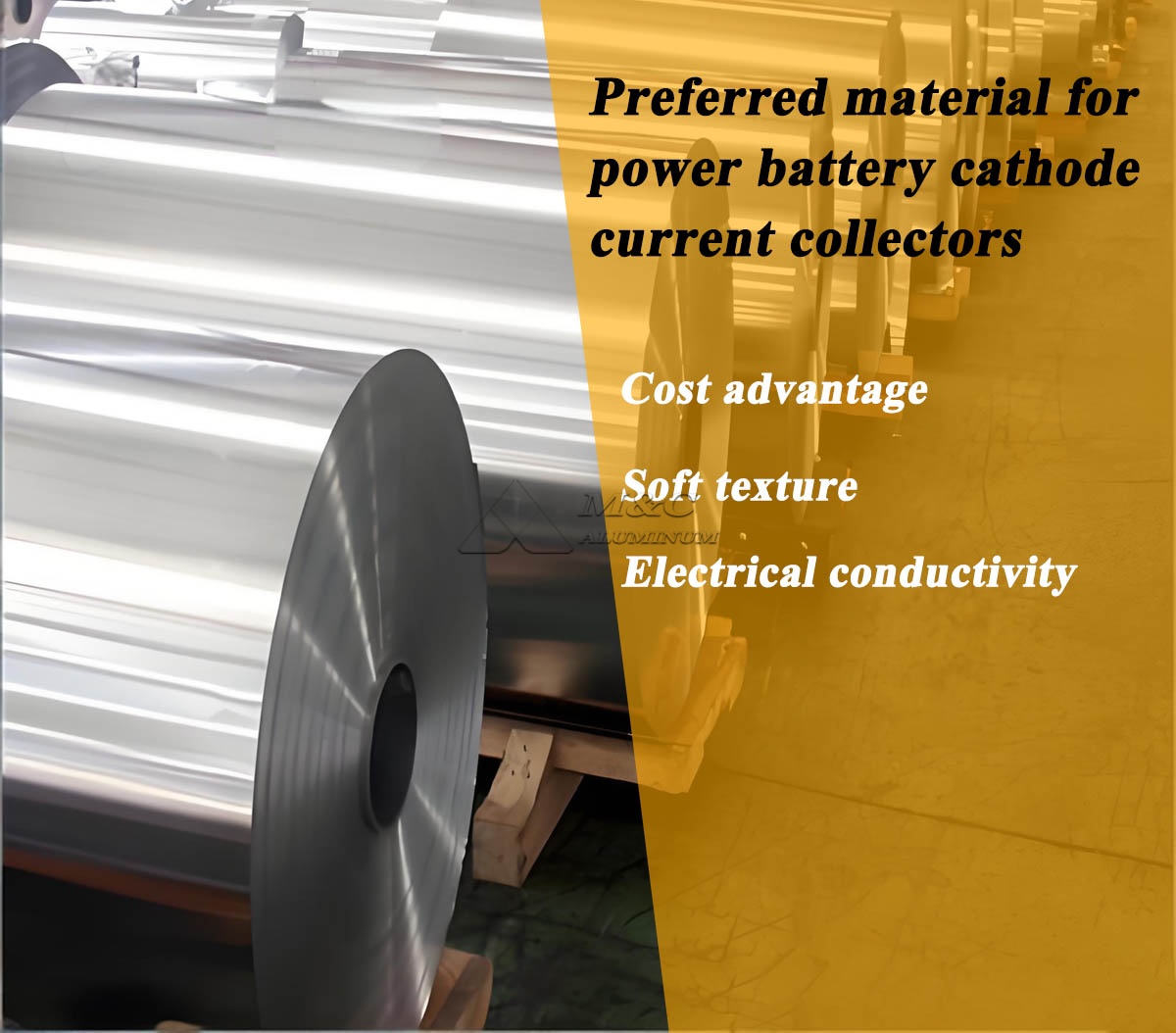
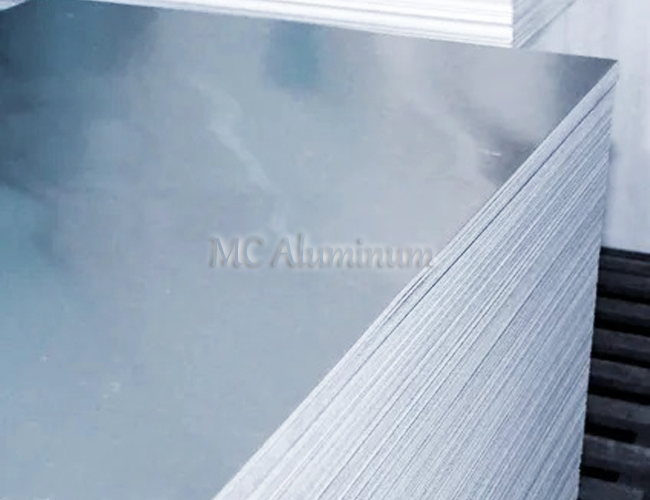
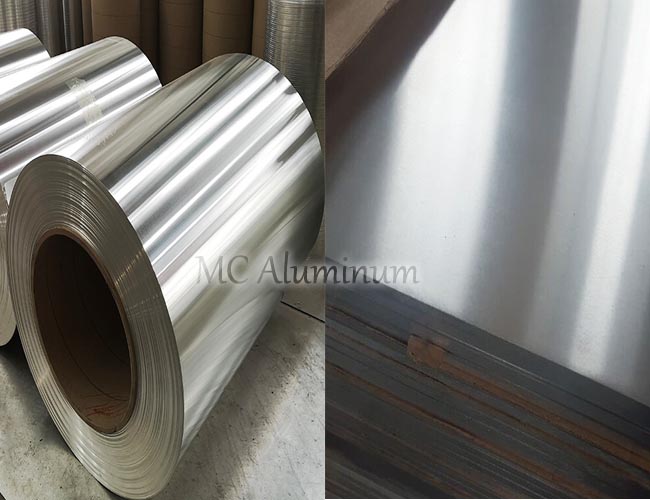
As a manufacturer of battery-grade aluminum materials, we produce 1060 battery aluminum foil for lithium-ion battery cathode current collectors. This alloy is widely selected for its high aluminum purity, stable electrical conductivity, good formability, and compatibility with cathode coating processes.
Battery aluminum foil is a critical component in electrode manufacturing. It acts as the current collector for cathode active materials such as lithium iron phosphate, lithium cobalt oxide, nickel manganese cobalt oxide, and nickel cobalt aluminum oxide. Consistent foil thickness, surface cleanliness, mechanical strength, and coil winding quality directly affect electrode coating uniformity and battery production efficiency.
Our 1060 aluminum foil is manufactured through controlled melting, casting, hot rolling, cold rolling, intermediate annealing, finish rolling, slitting, and inspection. We supply bare aluminum foil and can also provide carbon coated aluminum foil for battery applications requiring improved adhesion, lower contact resistance, or enhanced coating performance.
What Is 1060 Battery Aluminum Foil?
1060 aluminum foil is a commercially pure aluminum product with a minimum aluminum content of 99.60 percent. Compared with alloyed aluminum grades, 1060 aluminum offers high electrical conductivity, good corrosion resistance, and reliable processing performance. These properties make it suitable for use as a cathode current collector in rechargeable lithium-ion cells.
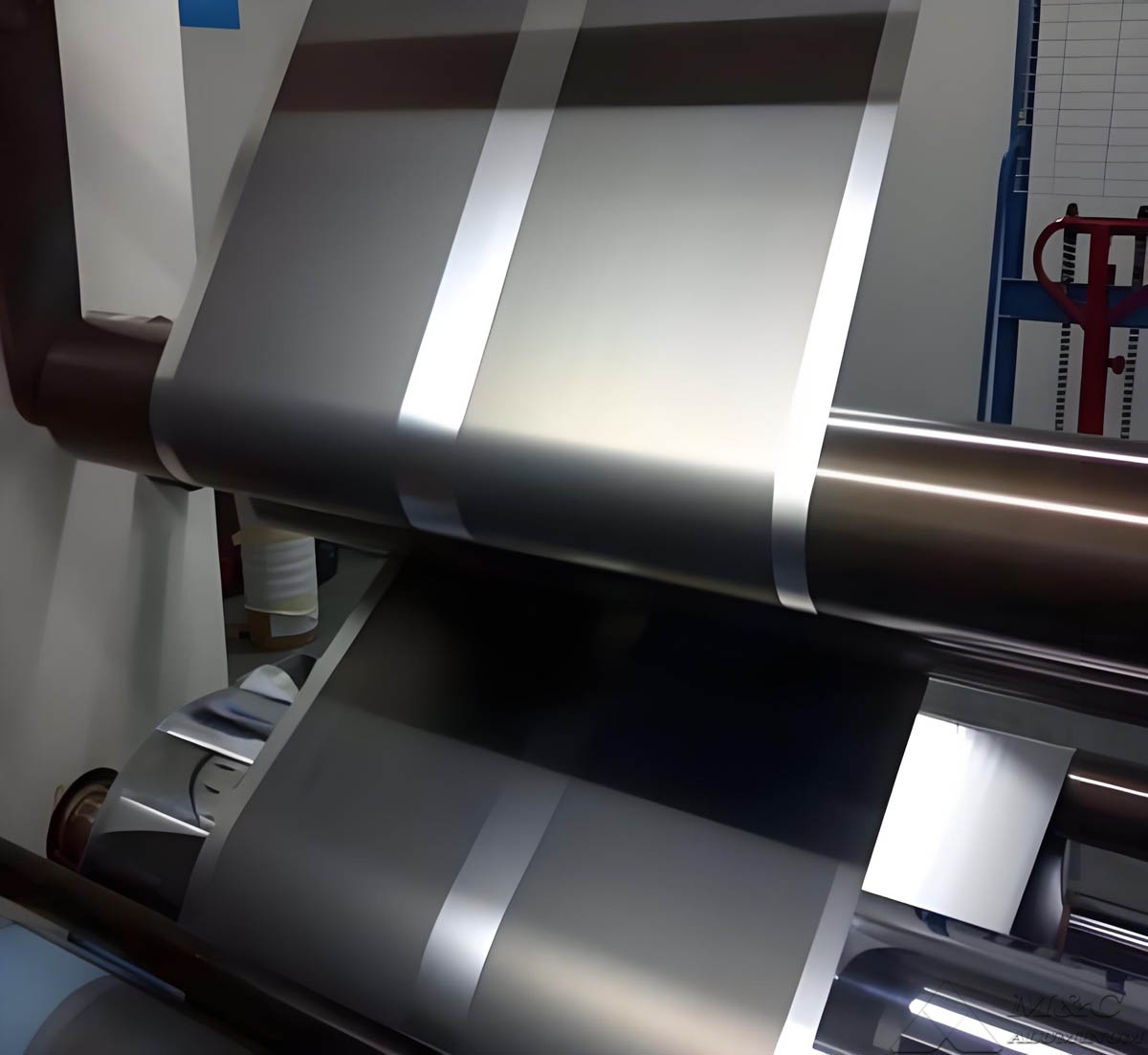
In battery manufacturing, the aluminum foil is coated with a slurry containing active material, conductive carbon, binder, and solvent. After drying and calendaring, the coated foil becomes the positive electrode. The foil must therefore maintain a clean and uniform surface, stable dimensions, and adequate tensile properties throughout the coating and winding process.
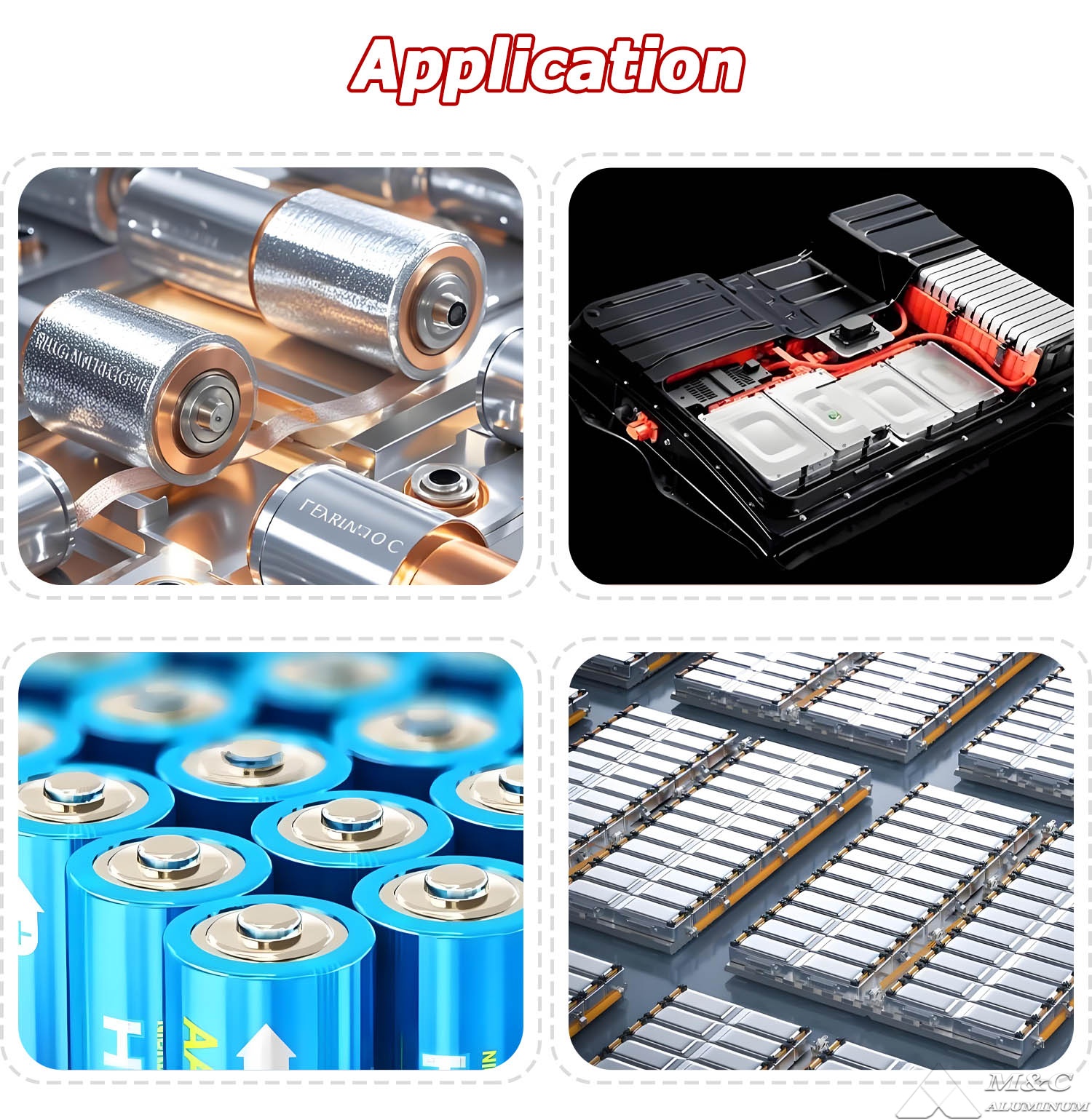
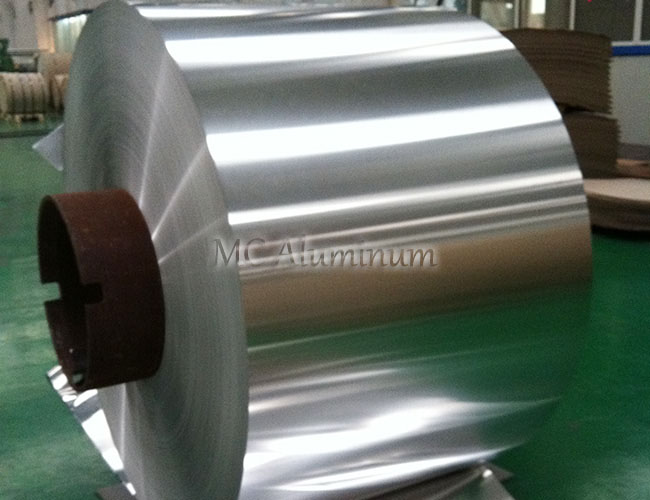
Battery aluminum foil is commonly used in cylindrical, prismatic, pouch, and power battery cells. It can be supplied in different thicknesses and widths according to electrode design, coating equipment, and battery production requirements.
Main Features of 1060 Aluminum Foil for Batteries
Our battery grade 1060 aluminum foil is produced with attention to electrode processing requirements rather than general packaging foil standards. Key characteristics include:
High aluminum purity for stable electrical conductivity.
Uniform thickness across the coil width.
Clean, oil-controlled surface suitable for water-based and solvent-based cathode slurries.
Good tensile strength and elongation for coating, calendaring, slitting, and winding.
Flat coil profile with controlled edge quality.
Low pinhole level for thin-gauge battery aluminum foil.
Reliable coil winding tension to support high-speed electrode coating lines.
Compatibility with bare foil and carbon coating surface treatments.
The final foil specification should be selected according to the battery cell design, cathode chemistry, coating weight, and downstream processing conditions.
Typical Technical Parameters
The following table shows commonly supplied parameters for 1060 battery aluminum foil. Actual values can be adjusted based on thickness, temper, width, and customer technical agreement.
| Item | Typical Specification | Notes |
|---|---|---|
| Alloy | 1060 | Minimum 99.60 percent aluminum |
| Product form | Rolled aluminum foil coil | Bare foil or coated foil available |
| Typical thickness | 0.012 mm to 0.030 mm | 0.015 mm, 0.016 mm, 0.020 mm commonly requested |
| Thickness tolerance | According to agreed gauge and width | Controlled through finish rolling and inspection |
| Typical width | 100 mm to 1,500 mm | Slit width available for specific electrode lines |
| Coil inner diameter | 150 mm, 300 mm, 400 mm, 500 mm | Customized according to equipment requirements |
| Coil outer diameter | According to coil weight and transport requirements | Controlled for safe unwinding |
| Temper | H14, H16, H18, or customized | H18 is commonly used for battery foil |
| Tensile strength | According to thickness and temper | Confirmed by mill test inspection |
| Elongation | According to thickness and temper | Important for slitting and winding performance |
| Surface condition | Clean, smooth, oil-controlled | No visible scratches, stains, or rolling defects |
| Edge condition | Mill edge or slit edge | Burr control available by process agreement |
| Electrical conductivity | High conductivity characteristic of 1060 aluminum | Suitable for cathode current collection |
| Surface treatment | Bare aluminum or carbon coated | Selected according to electrode process |
Manufacturing Process for Battery Grade Aluminum Foil
Producing 1060 battery aluminum foil requires stable control across the full manufacturing route. As a factory, we manage the key production stages from raw material preparation to final coil packaging.
First, high-purity aluminum is melted and cast into rolling slabs. Chemical composition is controlled to ensure the 1060 grade meets the required aluminum content and impurity limits. The slabs are then hot rolled to reduce thickness and establish a consistent structure for subsequent cold rolling.
After hot rolling, the material undergoes multiple cold rolling passes. Thickness reduction is carefully controlled through rolling force, tension, lubrication, and automatic gauge measurement. Intermediate annealing may be used to restore workability before final rolling. The foil is then finish rolled to the required gauge and temper.
For battery applications, surface control is especially important. Excess rolling oil, particulate contamination, scratches, edge cracks, and uneven flatness can affect cathode coating quality. Our production process includes surface inspection, thickness monitoring, slit edge inspection, and coil winding checks before packing.
Surface Quality and Coating Compatibility
The surface of lithium ion battery aluminum foil must support stable slurry coating and electrode adhesion. A surface that is excessively oily may reduce wetting and bonding performance. A surface with contamination, dents, or scratches can lead to coating defects, local resistance variation, or electrode rejection.
Our 1060 aluminum foil is supplied with a controlled surface condition suitable for conventional cathode electrode production. For customers using specialized high-loading cathode formulations or advanced coating systems, we can discuss surface roughness, residual oil level, wettability, and carbon coating requirements.
Carbon coated aluminum foil is increasingly used where improved interface performance is required. The conductive carbon layer can improve adhesion between the active material coating and aluminum substrate, reduce contact resistance, and support more uniform electrode performance.
Quality Control for 1060 Battery Aluminum Foil
Battery foil quality cannot be evaluated by thickness alone. We inspect multiple factors that influence downstream coating and cell assembly performance. Our quality control procedures can include incoming material verification, online gauge monitoring, surface inspection, mechanical testing, and final coil review.
Key inspection items include:
| Inspection Item | Control Purpose |
|---|---|
| Chemical composition | Verifies conformity with 1060 aluminum alloy requirements |
| Thickness measurement | Supports uniform electrode coating and stable cell design |
| Width measurement | Ensures compatibility with slitting and coating equipment |
| Surface inspection | Identifies scratches, stains, dents, oil marks, and contamination |
| Flatness and shape | Reduces coating and winding issues |
| Tensile strength and elongation | Confirms suitability for processing operations |
| Edge burr inspection | Helps prevent electrode defects and separator damage |
| Pinhole inspection | Important for thin battery aluminum foil gauges |
| Coil winding quality | Supports smooth unwinding on automated production lines |
| Packaging inspection | Protects foil from moisture, dust, impact, and deformation during shipment |
We provide mill test documentation based on the agreed supply specification. For projects with additional quality requirements, inspection methods and acceptance criteria can be confirmed before mass production.
Applications of 1060 Battery Aluminum Foil
1060 battery aluminum foil is primarily used as the positive electrode current collector in rechargeable battery systems. Its high conductivity and processing stability support efficient current transmission between the cathode active material and external battery terminals.
Typical applications include:
Lithium iron phosphate battery cells.
Nickel manganese cobalt battery cells.
Lithium cobalt oxide battery cells.
Nickel cobalt aluminum battery cells.
Cylindrical lithium-ion batteries.
Prismatic power batteries.
Pouch cells.
Energy storage battery systems.
Electric vehicle battery modules.
Consumer electronics batteries.
How to Select the Right 1060 Aluminum Foil Specification
Selecting the appropriate 1060 battery aluminum foil requires consideration of both battery design and electrode manufacturing conditions. Thickness is one of the most important factors. Thinner foil can reduce inactive material weight and improve energy density, while thicker foil may provide higher mechanical robustness and easier handling in some electrode processes.
Width should match the coating line and slitting plan. Customers should also specify coil inner diameter, maximum coil weight, winding direction, joint requirements, and packaging method. These details help ensure that the foil can be loaded directly onto the production line with minimal preparation.
Temper selection should be coordinated with coating, calendaring, and winding conditions. H18 temper is often selected for its strength and dimensional stability, but the best temper depends on the required processing window. For coated foil, customers should also define carbon coating thickness, surface resistance targets, coating coverage, and adhesion requirements.
Before placing a production order, we recommend confirming the following information:
Alloy and intended battery application.
Foil thickness and tolerance.
Width and width tolerance.
Temper and mechanical property requirements.
Coil inner diameter, outer diameter, and maximum coil weight.
Surface condition and allowable residual oil level.
Edge burr and pinhole requirements.
Bare foil or carbon coated aluminum foil requirement.
Packaging, labeling, and export documentation requirements.
Factory Supply and Export Packaging
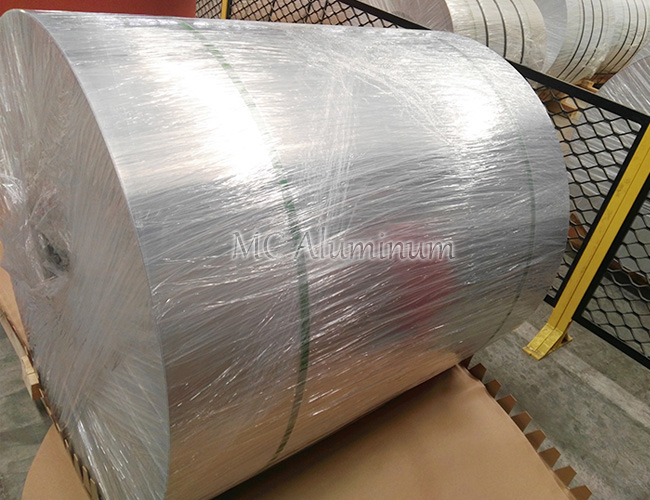
As a 1060 battery aluminum foil manufacturer, we supply coils according to agreed technical specifications and export packaging standards. Each coil is protected with suitable inner wrapping, moisture-resistant materials, edge protection, and reinforced outer packaging to reduce the risk of transit damage.
For export orders, coil identification can include alloy, thickness, width, temper, coil number, net weight, and production batch information. This supports traceability during warehouse handling, electrode production, and quality review.
Conclusion
1060 battery aluminum foil is a dependable cathode current collector material for lithium-ion battery production. Its high aluminum purity, electrical conductivity, formability, and coating compatibility make it suitable for a wide range of battery cell designs. By controlling alloy composition, thickness, surface condition, edge quality, and coil winding, we manufacture battery grade aluminum foil that supports stable electrode processing and efficient battery production.
Contact Us