
3003 Aluminum Foil for Heat Exchanger
As an aluminum foil manufacturer, we produce 3003 aluminum foil for heat exchanger applications with controlled chemistry, stable mechanical properties, and consistent coil quality. This product is widely used for heat exchanger fins, air conditioner fins, evaporators, condensers, ventilation systems, automotive heat exchangers, and industrial cooling equipment. For engineering buyers, the key requirements are not only alloy designation and price, but also thickness tolerance, surface cleanliness, pinhole control, coil flatness, wettability, corrosion resistance, and processing stability during high-speed fin forming.
Our factory supplies 3003 Aluminum Foil in plain, degreased, coated, and hydrophilic treated conditions according to customer production requirements. The foil can be delivered in O, H22, H24, and other tempers, depending on fin design, forming depth, and heat transfer structure.
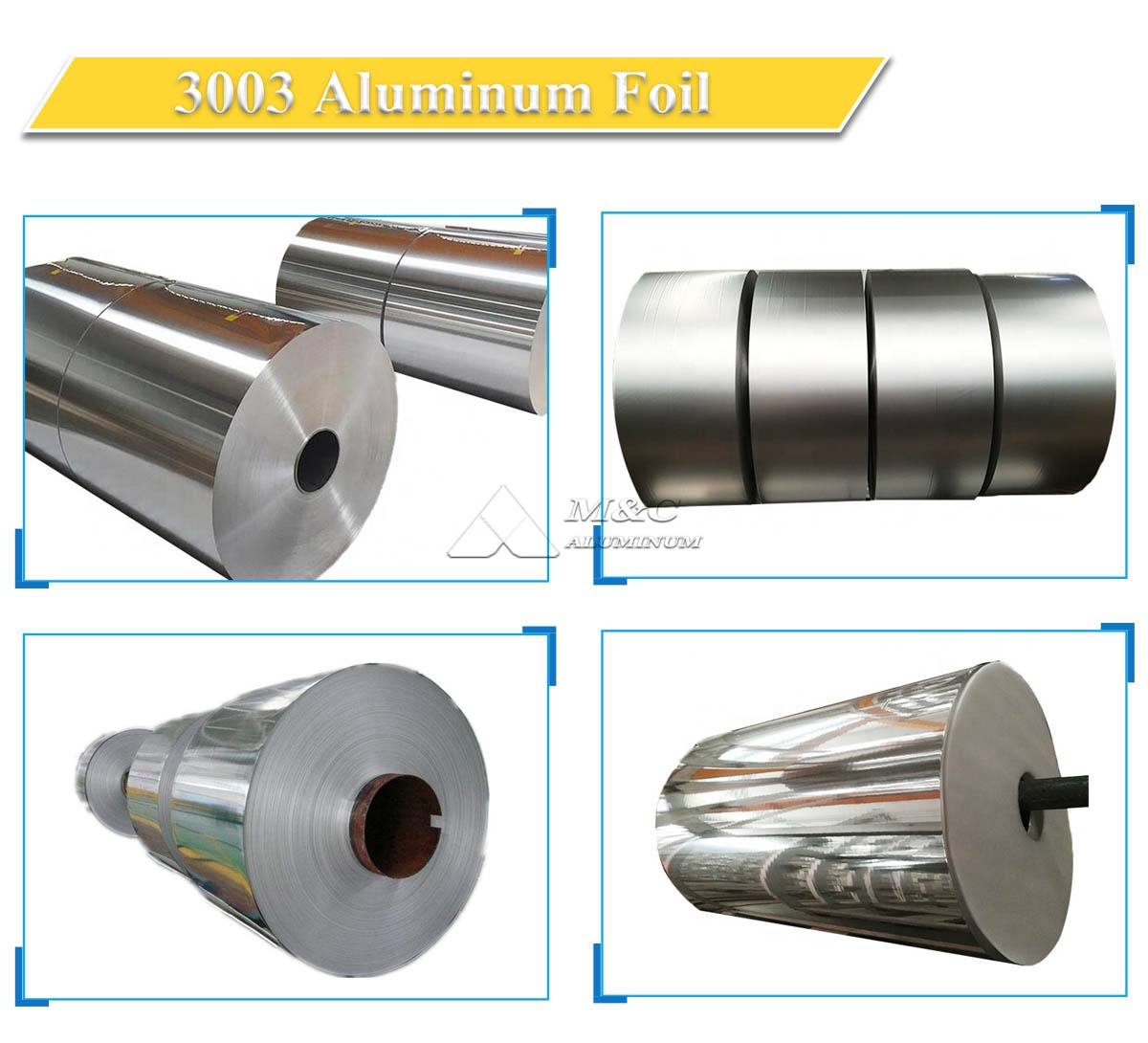
Why 3003 Aluminum Foil Is Used in Heat Exchangers
3003 aluminum alloy is an Al-Mn series alloy with manganese as the main alloying element. Compared with pure aluminum foil such as 1100 aluminum foil, 3003 aluminum foil provides higher strength while maintaining good formability, thermal conductivity, and corrosion resistance. This balance makes it suitable for thin fin stock used in heat exchangers.
In heat exchanger production, foil must pass through stamping, corrugating, slitting, louver forming, and stacking processes without edge cracking, surface peeling, or excessive deformation. 3003 aluminum foil offers reliable ductility and moderate strength, allowing the fin to maintain shape after forming. It also performs well in humid environments, especially when hydrophilic coating or anti-corrosion coating is applied.
For air conditioning and refrigeration equipment, the fins must transfer heat efficiently while allowing condensate water to spread and drain smoothly. A uniform surface and stable coating adhesion help reduce water bridge formation and air flow resistance. This is one reason why 3003 aluminum foil for heat exchanger fins is widely specified by HVAC manufacturers and thermal system suppliers.
Factory Production and Quality Control
We manufacture heat exchanger aluminum foil from selected aluminum ingots and master alloys through melting, casting, hot rolling or continuous casting, cold rolling, intermediate annealing, foil rolling, slitting, surface treatment, and final inspection. Each process is controlled to reduce thickness deviation, oil residue, black spots, scratches, and roll marks.
For heat exchanger fin stock, a clean surface is essential. Oil residue or uneven surface roughness may affect coating adhesion, brazing compatibility, hydrophilic performance, or stamping quality. Our production line uses controlled rolling oil, filtration, annealing atmosphere, and degreasing processes to support stable downstream processing.
We inspect each production batch for chemical composition, tensile strength, elongation, thickness tolerance, width tolerance, surface quality, wettability when applicable, and coil geometry. Coils are packed with moisture-proof protection and reinforced export packaging to reduce oxidation and edge damage during sea transportation.
Typical Technical Parameters
The following table shows common specifications for 3003 aluminum foil for heat exchangers. Final parameters can be adjusted according to customer drawings, coating requirements, and production equipment.
| Item | Typical Specification |
|---|---|
| Alloy | 3003 |
| Temper | O, H22, H24, H26, custom temper available |
| Thickness | 0.03 mm to 0.20 mm |
| Width | 100 mm to 1600 mm |
| Inner Diameter | 76 mm, 152 mm, or according to requirement |
| Outer Diameter | 400 mm to 1200 mm, subject to coil weight |
| Surface | Plain, degreased, hydrophilic coated, anti-corrosion coated |
| Coating Color | Blue, gold, clear, or customized |
| Tensile Strength | Typically 110 MPa to 190 MPa, depending on temper |
| Elongation | Typically 1 percent to 20 percent, depending on thickness and temper |
| Thickness Tolerance | Controlled according to order specification and applicable standards |
| Edge Condition | Slit edge, burr controlled |
| Application | Heat exchanger fins, HVAC fins, evaporator fins, condenser fins |
| Standard Reference | ASTM, EN, GB, or customer technical standard |
Chemical Composition of 3003 Aluminum Foil
Chemical composition stability is important for strength, formability, corrosion resistance, and coating performance. Our laboratory monitors alloy elements before casting and during production.
| Element | Content Range, percent |
|---|---|
| Si | 0.60 max |
| Fe | 0.70 max |
| Cu | 0.05 to 0.20 |
| Mn | 1.00 to 1.50 |
| Zn | 0.10 max |
| Other, each | 0.05 max |
| Other, total | 0.15 max |
| Al | Balance |
The manganese content improves mechanical strength and corrosion resistance while maintaining good processing performance. For fin stock, uniform composition also helps ensure consistent rolling behavior and stable temper after annealing.
Mechanical Properties and Forming Performance
Different heat exchanger designs require different tempers. Soft temper 3003-O aluminum foil is suitable for applications requiring excellent ductility and deep forming. H22 and H24 tempers provide higher strength and are commonly used when fins must maintain rigidity after louver punching or corrugation.
During fin production, foil is often processed at high speed. If tensile strength is too low, the fin may deform or collapse. If strength is too high or elongation is insufficient, cracking may occur at louvers or sharp bends. Our factory adjusts rolling reduction, annealing temperature, and process route to match the required balance between strength and elongation.
For customers producing air conditioner heat exchangers, we can also provide Aluminium Foil For Air Conditioner with hydrophilic surface treatment. This helps improve condensate drainage and supports stable heat exchange performance in humid operating conditions.
Surface Requirements for Heat Exchanger Foil
Surface quality directly affects heat exchanger production efficiency and finished unit reliability. The foil surface should be clean, flat, and free from defects that may interfere with forming or coating. Common controlled defects include oil stains, black spots, white spots, wrinkles, scratches, bright lines, dark lines, holes, and edge burrs.
For hydrophilic 3003 aluminum foil, coating uniformity is critical. A stable hydrophilic coating allows water to spread into a thin film instead of forming large droplets. This reduces air resistance, improves heat exchange efficiency, and helps prevent noise caused by retained condensate water.
For anti-corrosion coated foil, the coating should resist moisture, salt spray, and chemical exposure according to the application environment. This is especially important for coastal regions, industrial ventilation systems, and heat exchangers exposed to aggressive air conditions.
Main Applications
3003 aluminum foil for heat exchanger production is used in a wide range of thermal transfer equipment. Typical applications include residential air conditioners, commercial HVAC systems, refrigeration evaporators, condensers, automotive radiators, charge air coolers, ventilation heat recovery units, and industrial cooling systems.
In HVAC applications, thin aluminum fins increase the contact area between air and the tube surface. The material must support precise louver geometry, stable fin spacing, and reliable assembly. In refrigeration equipment, corrosion resistance and surface cleanliness are particularly important because moisture, frost, and cleaning agents may contact the fin surface over long service periods.
Automotive and industrial heat exchangers often require higher dimensional precision and strict coil consistency. Uneven thickness or poor flatness can cause unstable fin pitch, poor assembly efficiency, or reduced heat transfer performance. As a factory supplier, we focus on batch-to-batch stability for long-term production orders.
Plain Foil, Hydrophilic Foil, and Coated Foil
We supply several types of 3003 aluminum foil for heat exchanger manufacturers. Plain aluminum foil is generally used when the customer performs coating or surface treatment in its own plant. Degreased foil is suitable for direct coating or bonding processes that require lower surface residue.
Hydrophilic aluminum foil is commonly used in air conditioners and evaporators. It improves water spreading and drainage, which helps maintain air flow through the fins. Anti-corrosion coated foil is selected when the heat exchanger operates in a humid, salty, or chemically active environment.
The selection should be based on equipment design, operating environment, fin forming process, coating life requirement, and cost target. Our technical team can review thickness, temper, coating type, and coil specification before mass production to reduce trial risks.
Coil Slitting and Packaging
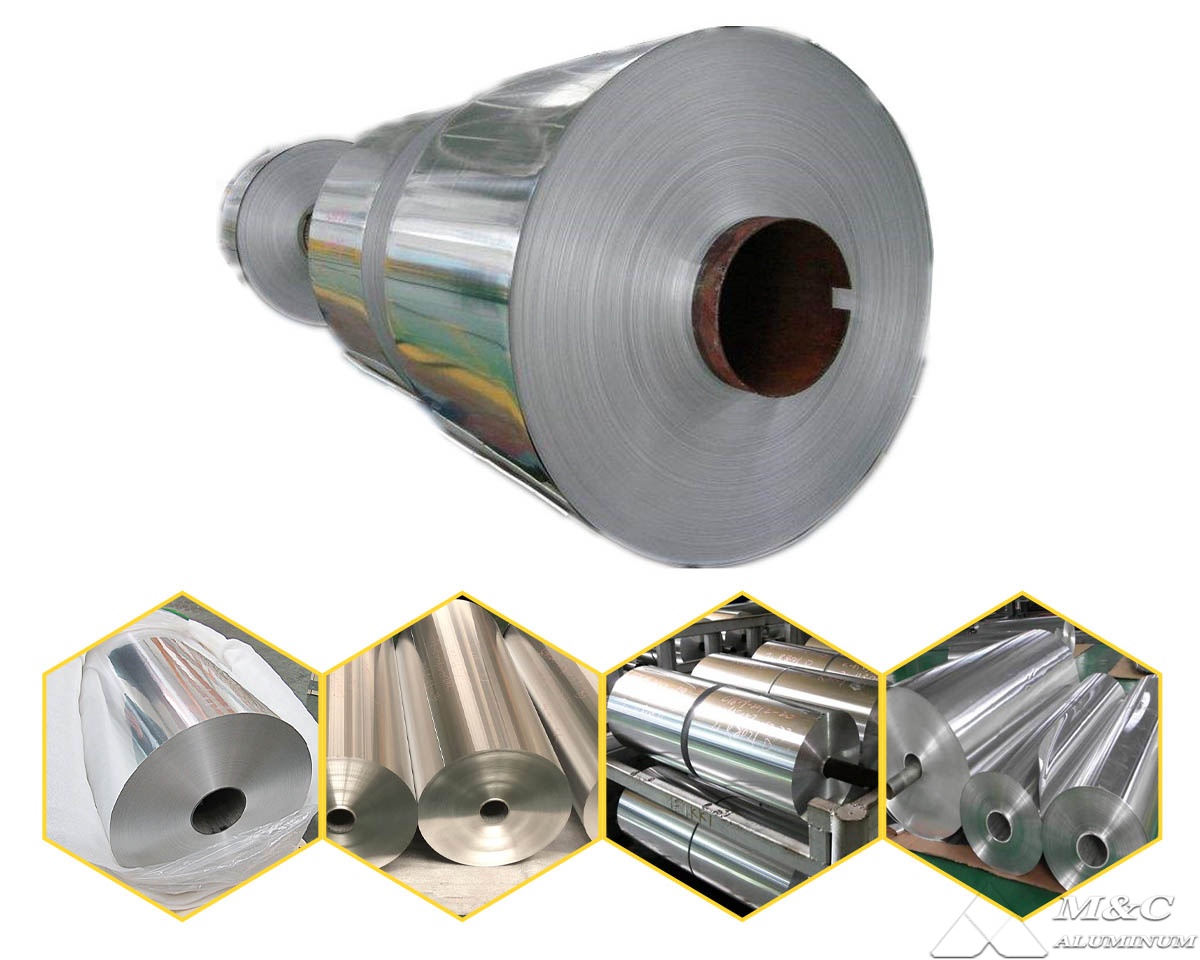
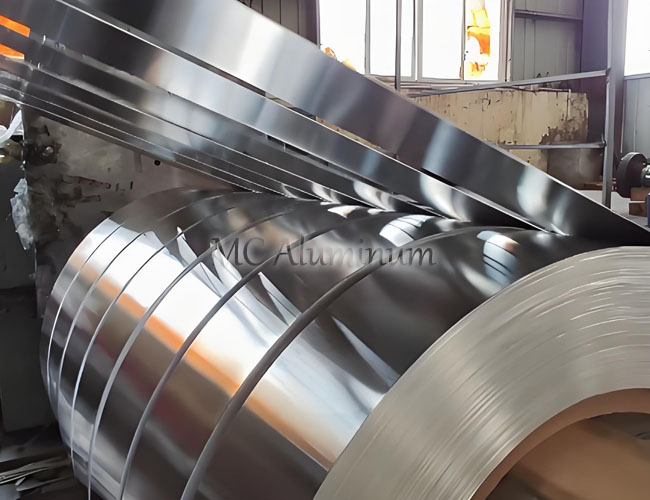
Heat exchanger manufacturers usually require narrow coils with precise width and clean edges. Our slitting process controls burr height, telescoping, loose winding, and edge wave. Proper tension control during slitting and rewinding is essential for smooth feeding in fin presses.
Packaging is designed for export transportation. Coils are wrapped with moisture-proof film, protected by edge guards, fixed on wooden pallets or wooden cases, and marked with alloy, temper, thickness, width, coil number, net weight, gross weight, and batch number. For long-distance sea shipment, anti-moisture packaging helps reduce oxidation risk.
How to Specify 3003 Aluminum Foil for Heat Exchanger Orders
To prepare an accurate quotation and production plan, buyers should provide alloy, temper, thickness, width, inner diameter, outer diameter or coil weight, surface type, coating requirement, mechanical property target, and applicable standard. If the foil will be used for high-speed fin forming, it is useful to provide fin type, punching speed, louver design, and any previous material problems.
For coated foil, please specify coating color, hydrophilic angle requirement, corrosion resistance requirement, adhesion test method, and service environment. For strict projects, samples can be produced for trial before full batch manufacturing.
Manufacturer Support for International Buyers
As a direct aluminum foil manufacturer, we support OEM and engineering buyers with stable production capacity, technical documentation, and export packaging. Mill test certificates can be provided with each shipment. Third-party inspection can be arranged when required by the buyer or project specification.
Our goal is to supply 3003 aluminum foil for heat exchanger applications with consistent quality rather than short-term substitution. Stable raw material control, rolling accuracy, annealing process management, and final inspection are the foundation of reliable fin stock. For customers producing HVAC systems, refrigeration equipment, and industrial heat exchangers, we provide customized coil specifications to match actual production lines.
Conclusion
3003 aluminum foil for heat exchanger fins offers a practical combination of formability, strength, corrosion resistance, and heat transfer performance. It is suitable for plain fin stock, hydrophilic coated fins, anti-corrosion fins, evaporators, condensers, and air conditioning heat exchangers. By controlling alloy composition, rolling precision, surface cleanliness, coating quality, and packaging, our factory supplies aluminum foil that supports efficient downstream production and stable finished heat exchanger performance.
Contact Us