
5052, 5154, and 5154A Aluminum Armoring Strips for Submarine Cables
As an aluminum rolling and slitting manufacturer, we produce 5052, 5154, and 5154A aluminum armoring strips for submarine cables used in offshore power transmission, subsea telecom networks, marine engineering, and coastal infrastructure. These alloys belong to the Al-Mg non-heat-treatable series and are selected where corrosion resistance, formability, fatigue performance, and stable mechanical properties are required in a marine environment.
Submarine cable armoring is not a general packaging application. The strip must wind smoothly around the cable core, maintain consistent tension during armoring, resist edge cracking, and provide long-term protection against mechanical stress and seawater exposure. For this reason, our production control covers alloy chemistry, rolling temper, strip flatness, edge quality, surface condition, coil winding, and export packaging.
Why aluminum armoring strips are used in submarine cables
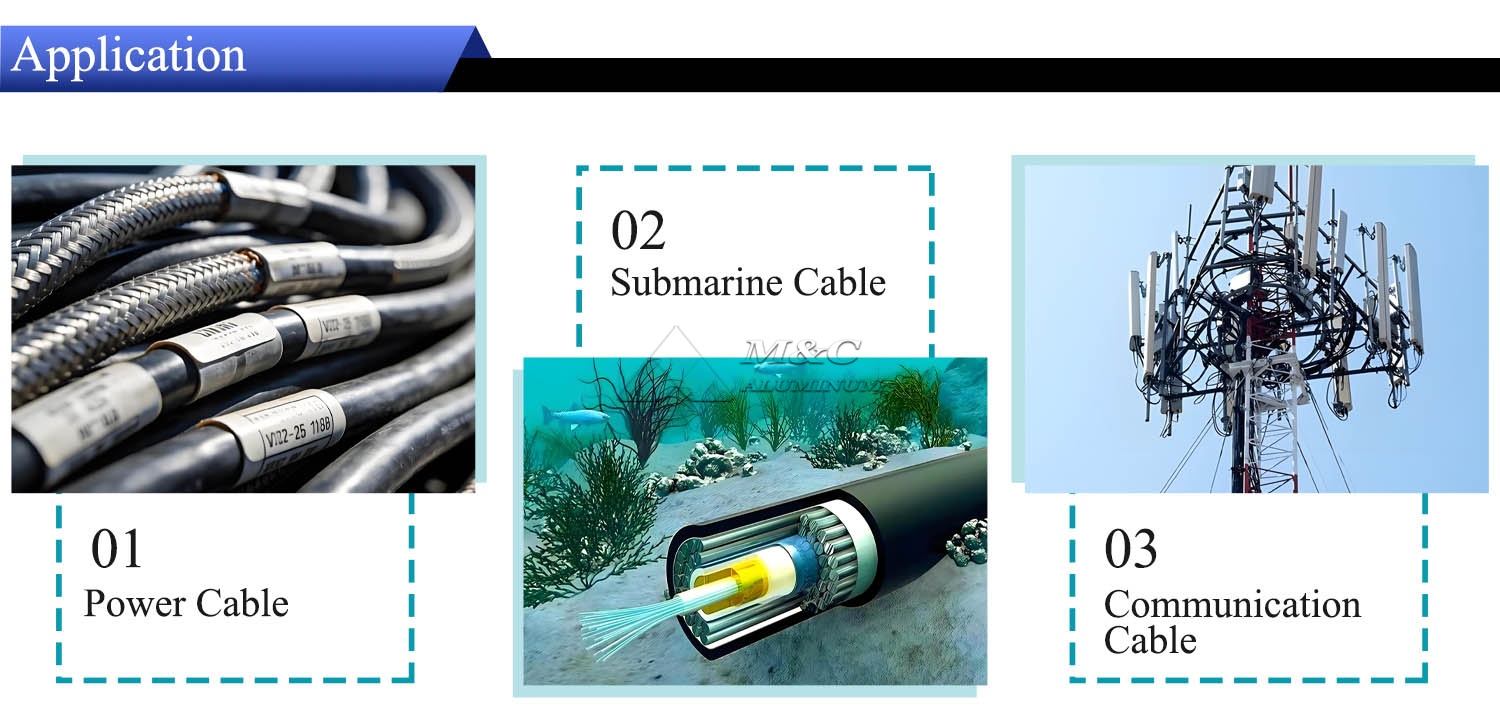
Traditional submarine cables often use galvanized steel wire or steel tape when maximum tensile strength is the primary requirement. However, aluminum armoring strips are increasingly specified in cable designs where lower weight, non-magnetic behavior, corrosion resistance, and ease of processing are important. Compared with ferrous armoring materials, marine grade aluminum strip can help reduce total cable weight and simplify handling during manufacturing, transportation, and installation.
For certain power cables, signal cables, dynamic cables, and special offshore cables, aluminum armoring also provides a balance between mechanical protection and electrical compatibility. The non-magnetic nature of aluminum is valuable where electromagnetic loss, induced heating, or magnetic interference must be considered. In addition, aluminum alloys 5052, 5154, and 5154A offer good resistance to seawater atmosphere and many industrial marine environments.
Our factory supplies aluminum strip products for different industrial uses, and the armoring grades are produced with tighter attention to coil continuity, width tolerance, and edge performance. For buyers comparing specifications across different applications, our broader Aluminum Strip capability supports customized alloy, temper, thickness, width, and coil requirements.
Alloy selection: 5052, 5154, and 5154A
The three alloys are all aluminum-magnesium materials, but their magnesium level and minor alloying elements give them different performance characteristics. The correct choice depends on cable design, armoring machine requirements, expected bending radius, tensile load, and service environment.
5052 aluminum armoring strip
5052 aluminum strip is widely used where good corrosion resistance and excellent forming behavior are required. It has moderate strength, reliable ductility, and stable performance after cold rolling and annealing. For submarine cable aluminum strip, 5052 is often selected when the cable design needs smooth wrapping, consistent lap formation, and reduced risk of cracking during continuous armoring.
5154 aluminum armoring strip
5154 aluminum strip generally provides higher magnesium content than 5052, giving it higher strength while maintaining good marine corrosion resistance. It is suitable for cable structures requiring stronger mechanical protection than 5052 can provide, while still retaining good manufacturability in strip form. This alloy is frequently considered for offshore and marine engineering products.
5154A aluminum armoring strip
5154A aluminum strip is a closely related Al-Mg alloy with controlled composition for marine applications. It combines good strength, corrosion resistance, and weldability in relevant fabricated structures. In cable armoring, 5154A is often specified when engineering standards or customer drawings call for a particular EN alloy designation and consistent mechanical behavior.
Typical chemical composition
The following values are typical reference ranges for alloy selection. Final chemical composition is controlled according to the applicable standard and purchase specification, such as EN, ASTM, or customer technical requirements.
| Alloy | Mg | Mn | Cr | Si | Fe | Cu | Zn | Al |
|---|---|---|---|---|---|---|---|---|
| 5052 | 2.2-2.8 | Max 0.10 | 0.15-0.35 | Max 0.25 | Max 0.40 | Max 0.10 | Max 0.10 | Balance |
| 5154 | 3.1-3.9 | Max 0.10 | 0.15-0.35 | Max 0.25 | Max 0.40 | Max 0.10 | Max 0.20 | Balance |
| 5154A | 3.1-3.9 | 0.10-0.50 | Max 0.25 | Max 0.50 | Max 0.50 | Max 0.10 | Max 0.20 | Balance |
Mechanical and dimensional parameters
Our aluminum armoring strips are produced in tempers selected to match the cable armoring process. O temper provides maximum ductility, while H22, H24, and H26 tempers provide higher strength with controlled work hardening. The following table lists common manufacturing ranges. We can adjust the specification after reviewing the cable drawing, armoring method, and required test standard.
| Item | Typical range or option | Notes |
|---|---|---|
| Alloys | 5052, 5154, 5154A | Marine grade Al-Mg alloys |
| Temper | O, H22, H24, H26, H32 | Selected according to bending and strength requirements |
| Thickness | 0.30-3.00 mm | Other thicknesses can be evaluated by order quantity |
| Width | 8-80 mm | Slit width according to cable design |
| Coil ID | 300 mm, 400 mm, 508 mm | Customized core available |
| Coil OD | Up to customer handling limit | Controlled for stable unwinding |
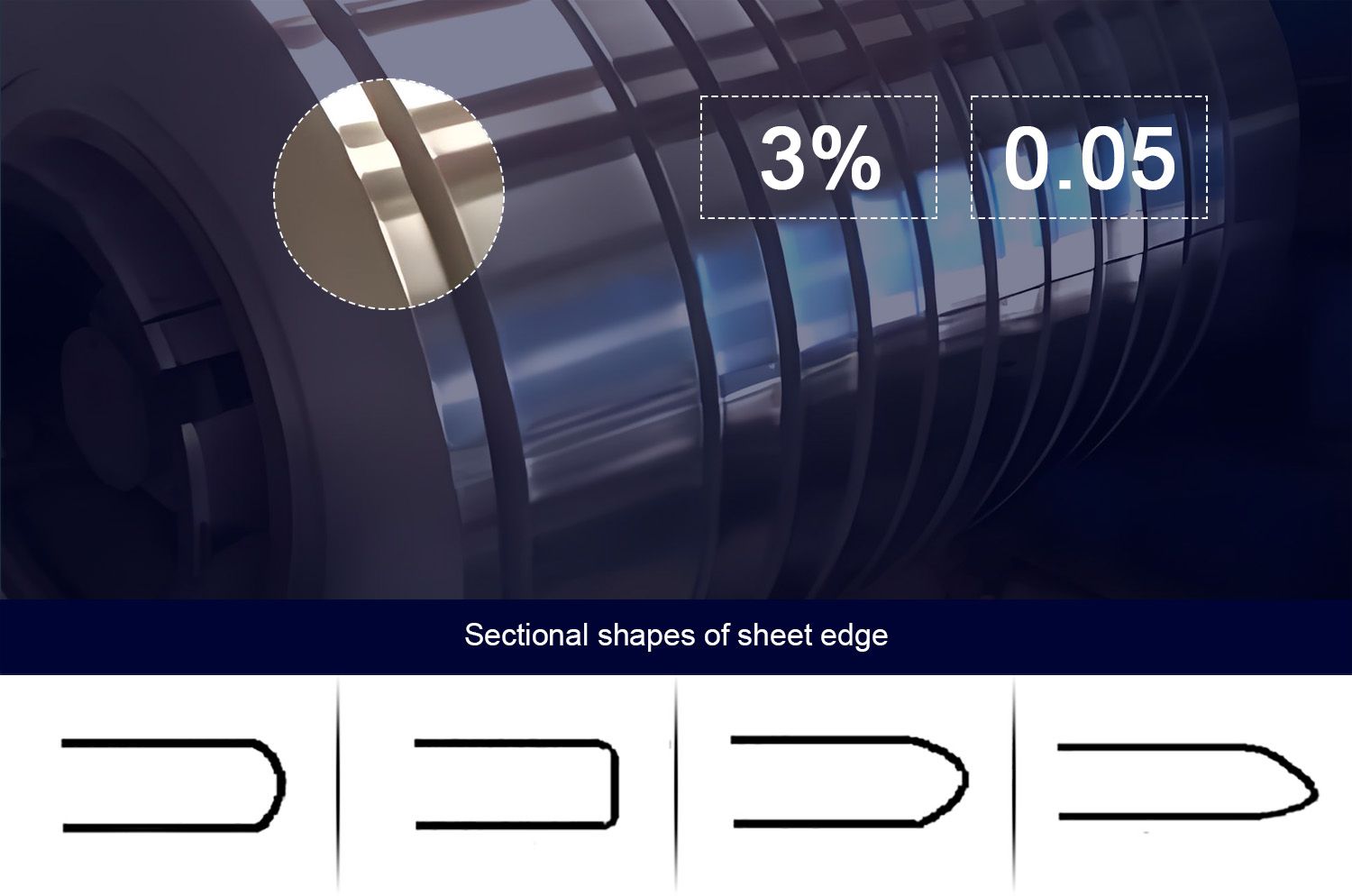
| Edge type | Slit edge, deburred edge, rounded edge | Edge condition agreed before production |
| Surface | Mill finish, clean and dry | Free from harmful oil, cracks, and severe scratches |
| Width tolerance | Typically +/-0.05 to +/-0.20 mm | Depends on width and thickness |
| Thickness tolerance | According to standard or contract | Measured across coil and lot |
| Camber | Controlled for armoring stability | Typical requirement agreed per meter length |
Typical mechanical properties
Mechanical properties vary with temper, thickness, standard, and final processing route. The values below are practical factory reference ranges for preliminary engineering selection and are not a substitute for the final material certificate.
| Alloy and temper | Tensile strength, MPa | Yield strength, MPa | Elongation, percent | Typical use in armoring |
|---|---|---|---|---|
| 5052 O | 170-215 | 65-95 | 12-22 | High ductility, tight forming |
| 5052 H24 | 230-280 | 160-210 | 4-10 | Balanced strength and formability |
| 5154 O | 210-255 | 85-120 | 14-24 | Marine cable designs needing ductility |
| 5154 H24 | 260-320 | 180-240 | 5-12 | Higher strength armoring strip |
| 5154A O | 210-260 | 85-125 | 14-24 | Controlled marine alloy applications |
| 5154A H24 | 260-320 | 180-245 | 5-12 | Strength with stable wrapping behavior |
Manufacturing process in our factory
We manufacture submarine cable aluminum strip from controlled aluminum alloy input through melting, casting, rolling, heat treatment, slitting, and final inspection. Each stage affects the final behavior of the strip on the armoring line.
First, alloy chemistry is controlled during melting and casting. Magnesium and other alloying elements are measured to meet the agreed standard, because chemical deviation can influence strength, corrosion resistance, and forming performance. After casting, the slab or coil is homogenized as required to improve structure uniformity.
The material is then hot rolled and cold rolled to the specified gauge. Rolling reduction is arranged according to final temper, thickness, and mechanical property targets. Intermediate or final annealing is applied when the order requires O temper or a controlled H temper. This route is important for 5052 aluminum strip and 5154A aluminum strip because excessive work hardening may cause poor bending behavior during cable armoring.
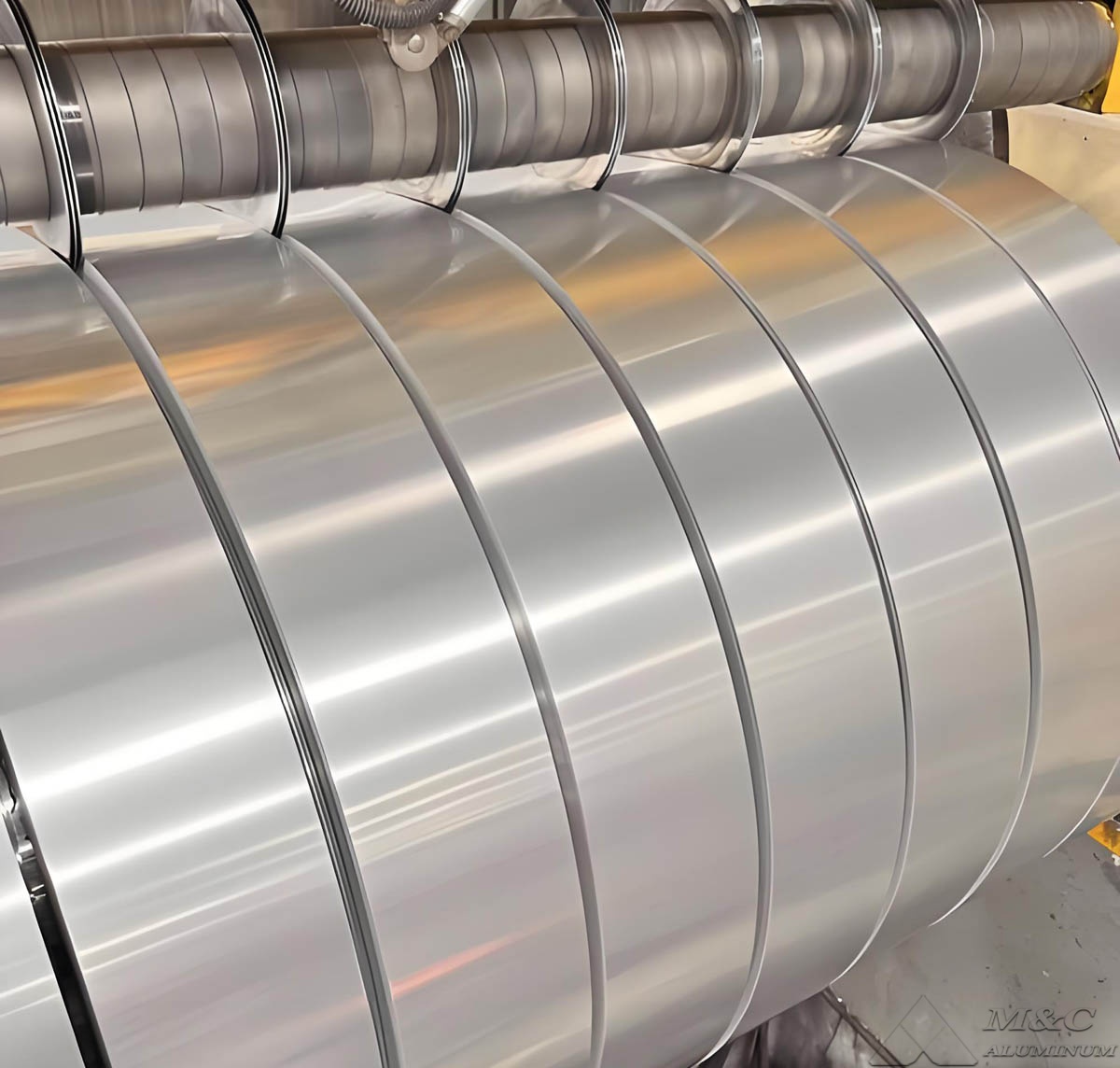
After rolling, the coil is precision slit to the required width. Edge quality is one of the most important control points. Sharp burrs, edge waves, cracks, or heavy slitting marks can damage cable layers or lead to strip breakage under armoring tension. For demanding orders, we can provide deburred or rounded edge options to improve process reliability.
Quality control for submarine cable aluminum strip
Cable manufacturers require stable strip behavior from the first meter to the last meter of each coil. Our quality inspection is designed around this requirement. We inspect both material properties and practical coil usability before shipment.
Key inspection items include chemical composition, tensile properties, thickness, width, camber, burr height, surface condition, coil winding, and identification. The strip surface should be clean, dry, and suitable for contact with cable bedding, water blocking tape, polymer layers, or protective compounds as defined by the cable design.
| Inspection item | Factory control method | Purpose |
|---|---|---|
| Chemical composition | Spectrometer analysis | Confirms alloy grade and marine performance basis |
| Tensile test | Sampling by lot and temper | Verifies strength and elongation |
| Thickness measurement | Micrometer or online gauge | Maintains cable diameter consistency |
| Width measurement | Precision measuring tools | Ensures stable overlap and armoring geometry |
| Edge inspection | Visual and burr measurement | Reduces risk of cable layer damage |
| Surface inspection | Visual inspection under light | Prevents defects affecting winding or bonding |
| Coil winding check | Sidewall and telescoping inspection | Supports smooth payoff on armoring equipment |
| Packaging check | Moisture protection and label review | Protects export shipments and traceability |
Surface and edge requirements
For aluminum tape for armored cables, surface and edge quality are often as important as tensile strength. A strip with correct mechanical values may still be unsuitable if it has poor coil shape or rough edges. Our slitting lines are adjusted according to alloy temper and thickness to reduce burr formation and maintain clean edges.
Common customer requirements include no cracks, no delamination, no severe scratches, no heavy oil stain, no corrosion, and no loose winding. Slight rolling marks may be acceptable if they do not affect cable manufacturing, but visible defects that may cut adjacent layers or disturb armoring tension must be avoided.
For high-speed armoring lines, we recommend confirming trial coil dimensions before bulk order production. This allows both sides to verify unwinding, strip tension, overlap, bending radius, and edge performance under actual manufacturing conditions.
Packaging and export handling
Submarine cable armoring strip is often shipped over long distances, so packaging must protect against moisture, mechanical impact, and coil deformation. We pack coils with moisture barrier material, protective wrapping, edge guards, wooden pallets or wooden cases, and clear labels. Coil eye direction, coil ID, net weight, gross weight, alloy, temper, size, heat number, and batch number can be marked according to customer requirements.
For sea freight, we pay particular attention to anti-moisture protection. Although 5052, 5154, and 5154A have good corrosion resistance, improper storage during transportation can still cause water stain or surface oxidation. We recommend storing coils in a dry warehouse and allowing the material to acclimate before opening the package in humid environments.
Information required for quotation and production
To manufacture the correct aluminum armoring strips for submarine cables, we need clear technical information at the inquiry stage. The most important items are alloy, temper, thickness, width, coil ID, coil weight, edge type, tolerance requirements, applicable standard, annual demand, and any special surface or packing requirement. If the cable design has bending radius, armoring angle, or tensile load requirements, these details are also useful for selecting the proper temper.
For new projects, we can produce trial coils before mass production. This is especially useful when changing from steel armoring to aluminum armoring, or when optimizing between 5052, 5154, and 5154A aluminum strip. Trial production helps confirm the balance between strength, ductility, coil handling, and final cable performance.
Conclusion
5052, 5154, and 5154A aluminum armoring strips are practical materials for submarine cables requiring marine corrosion resistance, controlled weight, non-magnetic performance, and reliable forming during continuous armoring. As a manufacturer, our focus is not only on supplying the correct alloy, but also on producing stable strip geometry, clean surfaces, controlled mechanical properties, and export-ready coils.
By selecting the proper alloy and temper, cable manufacturers can achieve consistent armoring performance and long-term protection for subsea applications. Our factory supports customized production of marine grade aluminum strip for submarine cable projects according to international standards, customer drawings, and project-specific technical requirements.
Contact Us