
5154A H22 Aluminum Strip for Cable Armoring
As an aluminum rolling and slitting manufacturer, we produce 5154A H22 aluminum strip for cable armoring applications where stable mechanical performance, corrosion resistance, and reliable winding behavior are required. Cable armoring materials must protect the cable core during installation and service while maintaining suitable flexibility for forming, wrapping, and handling. For this reason, alloy selection, temper control, strip thickness accuracy, edge quality, and coil packaging are all important manufacturing factors.
5154A is an aluminum-magnesium alloy with good corrosion resistance and higher strength than commercially pure aluminum grades. In H22 temper, the strip is strain hardened and partially annealed to provide a balanced combination of strength and formability. This makes 5154A H22 aluminum strip suitable for medium and low voltage power cables, communication cables, control cables, and other armored cable structures that require lightweight metallic protection.
Our Manufacturing Position
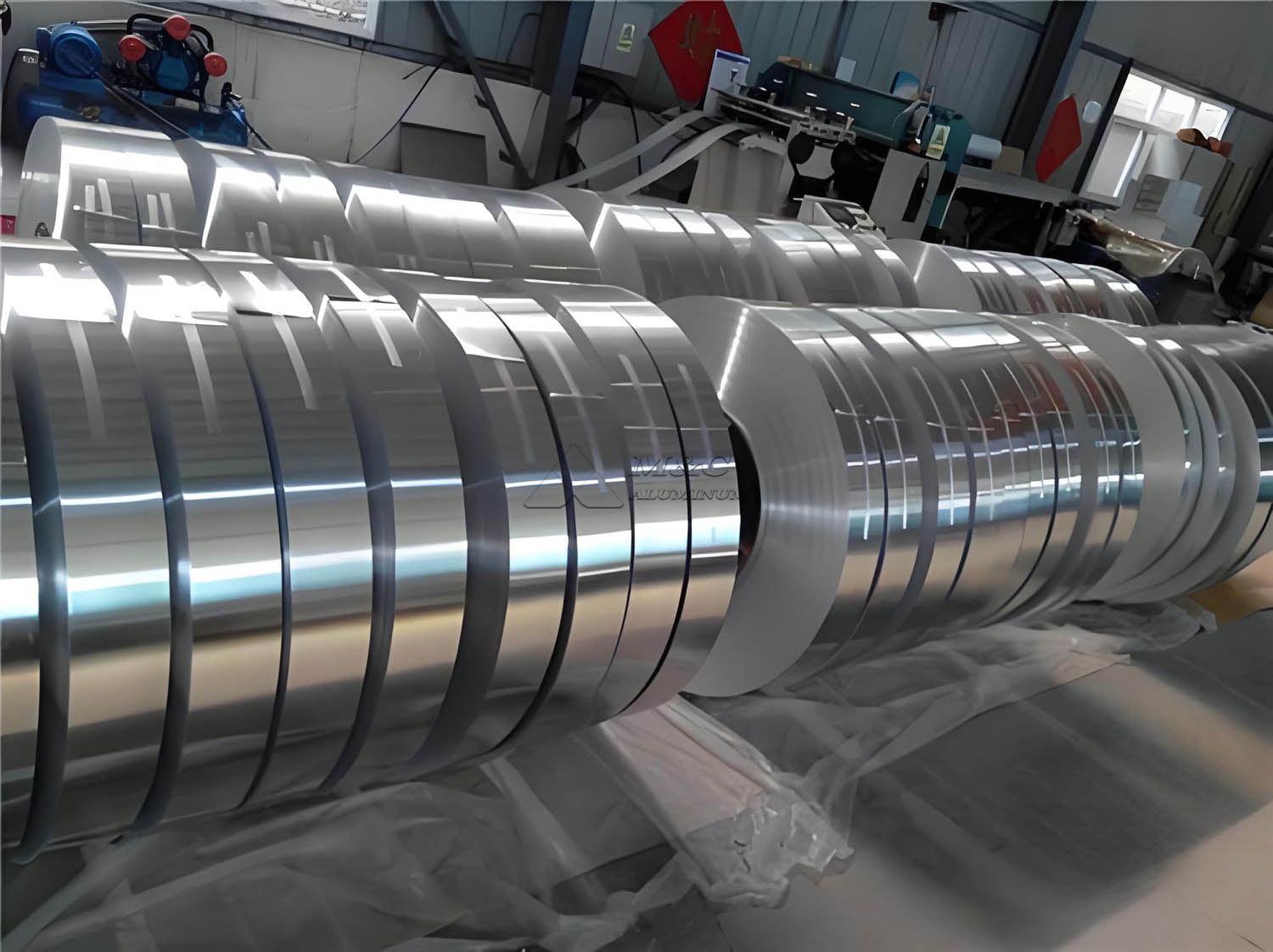
We manufacture aluminum strip from controlled raw material selection, rolling, annealing, tension leveling, precision slitting, inspection, and export packaging. The product is not sourced from random market stock. Each coil is produced according to confirmed technical requirements, including alloy, temper, thickness, width, coil inner diameter, maximum coil weight, edge condition, surface requirement, and applicable standard.
For cable producers, consistent strip behavior is essential. A cable armoring aluminum strip that is too soft may deform during high-speed wrapping. A strip that is too hard may crack, spring back excessively, or create unstable forming. Our production control focuses on uniform mechanical properties along the full coil length and across the strip width, so the material can run steadily on armoring lines.
Why 5154A H22 Is Used for Cable Armoring
5154A aluminum strip belongs to the Al-Mg alloy family. Magnesium improves strength and contributes to corrosion resistance, especially in atmospheric and industrial environments. Compared with 1050 or 1060 aluminum strip, 5154A offers higher tensile strength while retaining the low density and good workability of aluminum. Compared with steel armoring, aluminum strip reduces cable weight and supports easier handling during transportation and installation.
The H22 temper is important for cable armoring because it provides moderate hardness. It is not fully soft like O temper, and it is not as hard as H18. This controlled temper helps the strip maintain shape after forming while still allowing smooth wrapping around the cable core. For applications that need reliable mechanical protection without excessive cable weight, EN AW-5154A aluminum strip is a practical material choice.
Typical Technical Parameters
The following parameters are typical values for 5154A H22 aluminum strip for cable armoring. Final specifications can be adjusted according to customer drawings, cable design, and applicable standards.
| Item | Typical Specification |
|---|---|
| Product | 5154A H22 aluminum strip for cable armoring |
| Alloy | 5154A, EN AW-5154A, AlMg3.5 type alloy |
| Temper | H22 |
| Thickness range | 0.20 mm to 2.00 mm, customized by order |
| Width range | 10 mm to 600 mm, precision slit |
| Thickness tolerance | According to EN 485, ASTM B209, or agreed tolerance |
| Width tolerance | Typically +/-0.05 mm to +/-0.30 mm depending on width |
| Coil inner diameter | 150 mm, 300 mm, 400 mm, 500 mm, or customized |
| Coil outer diameter | According to coil weight and packing requirement |
| Surface | Mill finish, clean, dry, free from harmful oil stains |
| Edge condition | Slit edge, deburred edge available on request |
| Application | Power cable armoring, control cable armoring, communication cable protection |
Typical Chemical Composition
Chemical composition is controlled during raw material procurement and verified according to the relevant standard. The table below shows typical composition ranges for reference. Exact limits should be based on the purchase standard or technical agreement.
| Element | Typical Content, Percent |
|---|---|
| Si | Max 0.40 |
| Fe | Max 0.50 |
| Cu | Max 0.10 |
| Mn | Max 0.50 |
| Mg | 3.1 to 3.9 |
| Cr | Max 0.25 |
| Zn | Max 0.20 |
| Ti | Max 0.20 |
| Al | Balance |
Typical Mechanical Properties
Mechanical properties are critical for armored cable aluminum strip. We test representative samples from production coils to confirm that the material meets the required temper condition.
| Property | Typical Value for H22 Temper |
|---|---|
| Tensile strength | 200 MPa to 260 MPa |
| Yield strength | Min 90 MPa, subject to standard and thickness |
| Elongation | Typically 6 percent to 12 percent depending on thickness |
| Hardness | Controlled according to customer requirement |
| Formability | Suitable for cable armoring and wrapping operations |
These values are for general engineering reference. For formal supply, we provide mill test certificates showing actual measured results for the delivered batch.
Production Process and Quality Control
Our production process begins with aluminum alloy input inspection. Chemical composition, surface condition, and rolling schedule are checked before further processing. The strip is then rolled to the required gauge with intermediate processing as needed. Temper control for H22 is achieved through a combination of cold working and partial annealing, allowing the final strip to reach the required strength and ductility range.
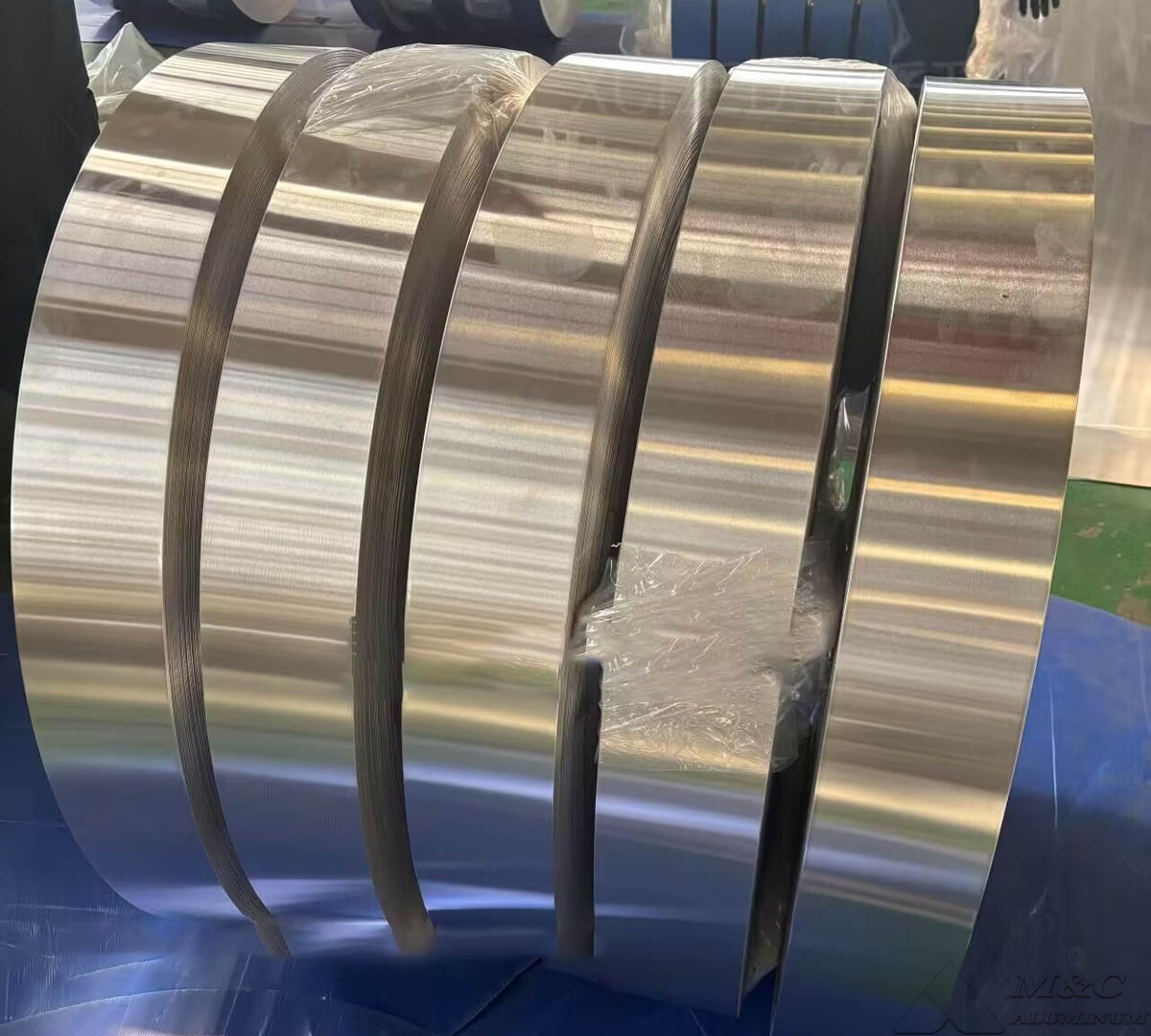
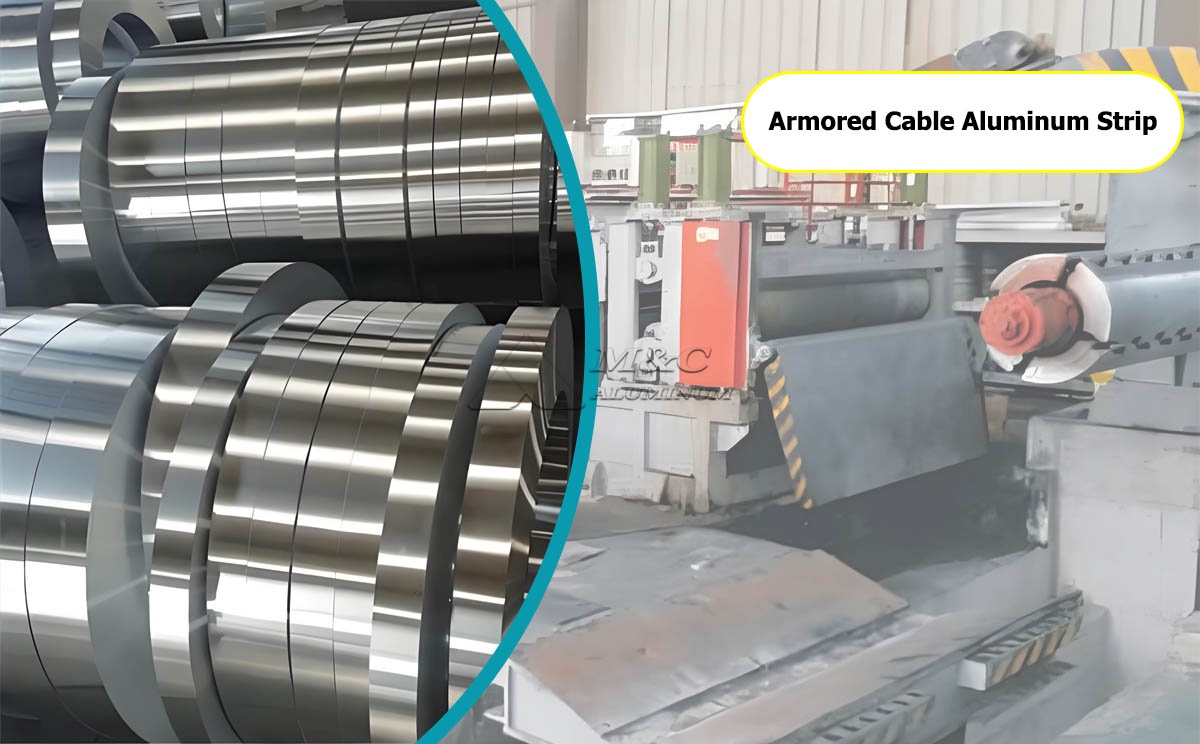
After rolling and tempering, the material is slit to the ordered width. Precision slitting is a key step for aluminum strip for cable armoring. Poor slitting can create burrs, camber, uneven edges, or unstable coil winding, all of which may affect cable production efficiency. We control knife clearance, strip tension, and recoiling alignment to obtain straight edges and compact coils.
During inspection, we check thickness, width, burr height, surface quality, mechanical properties, and coil appearance. For customers with high-speed armoring lines, we can pay special attention to coil tightness, telescoping control, and edge consistency. This helps reduce line interruptions caused by strip feeding problems.
Surface and Edge Requirements
The surface of 5154A H22 aluminum strip should be clean and suitable for direct use in cable manufacturing. Normal mill finish is acceptable for most cable armoring applications. The surface should be free from severe scratches, stains, corrosion marks, laminations, and other defects that may affect processing or performance.
Edge quality is equally important. Slit edge is commonly supplied, but deburred or rounded edge treatment can be discussed when the cable design or production equipment requires lower burr levels. Burr control helps protect insulation layers and improves operator safety during handling. We recommend that customers specify maximum burr height if the cable construction has strict requirements.
Application in Armored Cable Manufacturing
In armored cable production, aluminum strip is usually applied as a protective layer around the cable core. It can help improve mechanical protection against impact, compression, and installation stress. Because aluminum is lighter than steel, the finished cable can have reduced weight, which is useful for long-distance installation, vertical laying, and projects where easier handling is required.
5154A H22 aluminum strip is suitable for many cable structures, including power cables, control cables, instrumentation cables, communication cables, and special industrial cables. The strip can be used in single layer or designed structures according to the cable standard. Its corrosion resistance makes it suitable for indoor and outdoor service conditions, especially where moisture and atmospheric exposure must be considered.
For cable manufacturers, the most important performance is often not a single laboratory value, but stable processing behavior. Uniform thickness, consistent hardness, low burr, and neat coil winding allow the strip to feed smoothly during continuous production. This is why we control the full manufacturing route rather than only inspecting finished coils.
Packaging for Export and Cable Plant Storage
Export packaging is designed to protect aluminum magnesium strip from moisture, impact, and coil deformation. Coils are normally wrapped with moisture-resistant material, fixed on wooden pallets or in wooden cases, and protected with edge guards. For narrow strip, multiple coils can be packed vertically or horizontally according to handling conditions and customer preference.
Each package is identified with product name, alloy, temper, size, net weight, gross weight, batch number, and production reference. When required, we provide packing lists, mill test certificates, certificates of origin, and other export documents. Proper labeling helps cable plants manage incoming material and trace production batches.
Ordering Information
To produce 5154A H22 aluminum strip for cable armoring accurately, we recommend that customers provide the following details when requesting a quotation:
| Required Information | Example |
|---|---|
| Alloy and temper | 5154A H22 |
| Thickness and width | 0.50 mm x 35 mm |
| Quantity | 10 metric tons |
| Coil inner diameter | 300 mm |
| Maximum coil weight | 500 kg per coil |
| Edge requirement | Slit edge or deburred edge |
| Surface requirement | Mill finish, clean and dry |
| Standard | EN 485, ASTM B209, or customer specification |
| Packaging | Export wooden pallet or wooden case |
Clear technical information allows us to select the correct production route and avoid unnecessary adjustments after manufacturing. If the material will be used on an existing armoring line, details such as line speed, forming method, and previous material performance can also help us recommend suitable tolerance and coil parameters.
Factory Supply Advantages
As a manufacturer, we focus on stable batch production rather than short-term trading. Our role is to supply aluminum strip that meets engineering requirements and supports predictable cable production. For repeated orders, we can maintain consistent production records, coil parameters, and inspection standards, which is important for cable plants with long-term projects.
We also support customized width combinations to improve material utilization. For large orders, slitting plans can be optimized to reduce scrap and improve delivery efficiency. This is especially valuable for cable manufacturers that use several strip widths across different cable models.
Conclusion
5154A H22 aluminum strip for cable armoring combines moderate strength, good corrosion resistance, lightweight performance, and reliable formability. When produced with controlled rolling, tempering, slitting, and packaging, it provides stable performance for armored cable manufacturing. As a factory, we supply cable armoring aluminum strip according to confirmed technical specifications, with attention to mechanical properties, dimensional tolerance, edge quality, coil condition, and export protection.

Contact Us