
5052 Aluminum Alloy Is the Best Choice for Freshwater Boats
Aluminum plate, as a lightweight and high-strength material, is widely used in shipbuilding and lightweight vessel design. However, when facing different water environments-seawater and freshwater, the requirements for aluminum plate selection vary significantly.
Compared with seawater environments, freshwater environments are far less corrosive to vessel materials. Therefore, when selecting aluminum plates for freshwater vessels, greater emphasis is placed on cost efficiency and overall value. Common aluminum alloys used in freshwater applications include 5052 aluminum plate, which has become one of the most popular choices.
Introduction to 5052 Marine Aluminum
5052 belongs to the Al-Mg (5000 series) aluminum alloy family, with magnesium as its primary alloying element. Unlike heat-treatable alloys, 5052 achieves its strength through cold working rather than heat treatment.
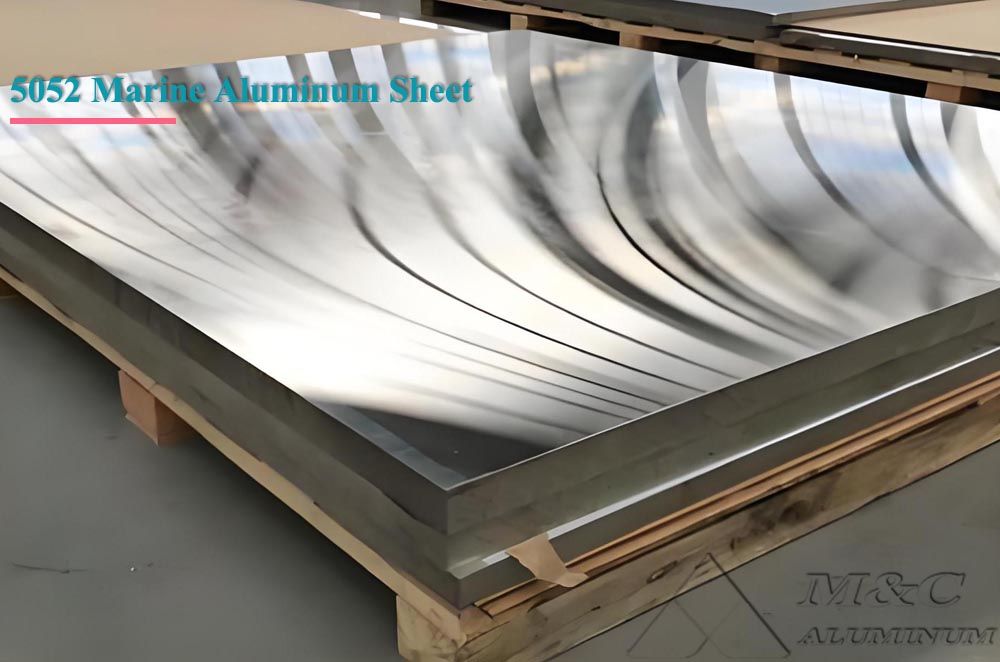
5052 marine aluminum plate offers excellent corrosion resistance, good weldability, and outstanding formability. Compared with 6061 or 6063 alloys, 5052 demonstrates superior corrosion resistance and strength, particularly in humid freshwater environments, where it shows exceptional long-term stability.
In shipbuilding, 5052 aluminum is commonly supplied in H32 or H34 temper, indicating strain-hardened and partially annealed conditions (semi-hard to hard temper). This temper provides a balanced combination of good formability and moderate strength, with tensile strength reaching 230-280 MPa and yield strength higher than that of pure aluminum and many other aluminum alloys.
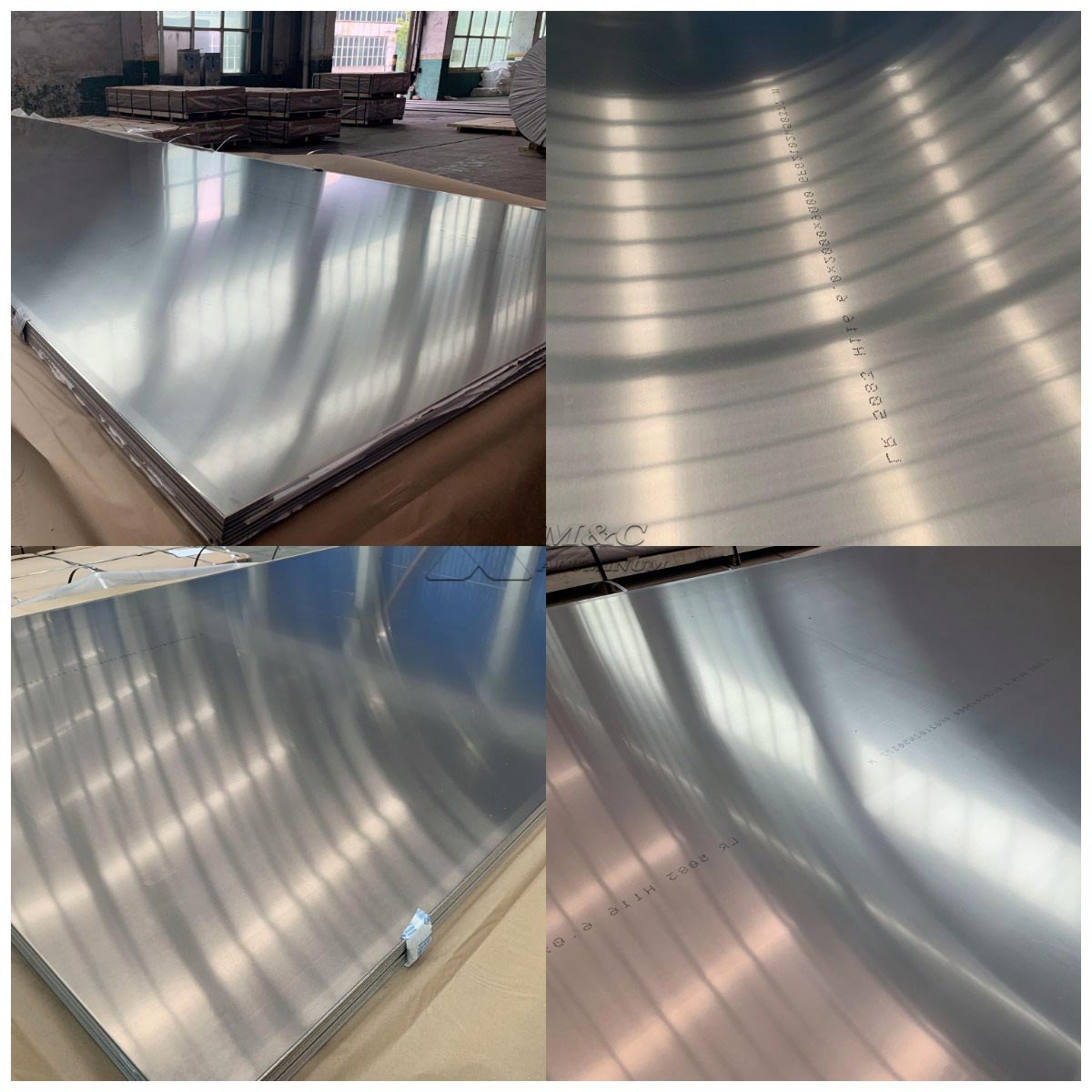
For freshwater vessels, the specifications of 5052 marine aluminum plates are determined by hull structure and application requirements. Typical thickness ranges from 3.0 mm to 50 mm, widths from 1000 mm to 3100 mm, and lengths can be customized up to 13,000 mm.
Core Advantages of 5052 Marine Aluminum Plate
(1) Excellent Corrosion Resistance
In freshwater environments, materials are exposed to moisture, ultraviolet radiation, and microorganisms. The natural aluminum oxide layer on the surface of 5052 aluminum alloy effectively blocks corrosive media. Even after long-term exposure to freshwater, it maintains stable performance. Compared with stainless steel, 5052 offers lower corrosion-related costs with reliable performance.
(2) Good Machinability
This alloy features excellent cold-working and welding performance. It is easy to fabricate complex hull components through stamping, bending, and forming processes, and it supports TIG and MIG welding, ensuring reliable weld quality.
(3) Superior Weldability
5052 aluminum alloy exhibits minimal welding deformation and cracking, making it an ideal material for ship structural welding. Whether manual or automated welding is used, it ensures strong and well-sealed joints, suitable for critical components such as hull frames, bulkheads, and pipelines.
(4) Lightweight and High Efficiency
Compared with traditional steel, 5052 aluminum has only one-third the density of steel. This significantly reduces vessel weight, improves fuel efficiency, and enhances cruising speed, making it a key material in modern freshwater vessel design.
(5) Excellent Fatigue Resistance
5052 aluminum alloy offers high fatigue strength. Under continuous dynamic loads, it is less prone to fatigue cracking than many other aluminum grades, ensuring structural integrity and long service life for vessels.
(6) Outstanding Cost Effectiveness
5052 aluminum alloy is considerably more affordable than stainless steel and some high-end aluminum alloys (such as 6061), while still delivering sufficient performance advantages. This makes it an ideal choice for budget-sensitive projects.
Common Specifications of 5052 Marine Aluminum Plate
| Alloy | 5052 |
| Temper | O, H32, H34 |
| Thickness | 3.0-50.0 mm |
| Width | ≤ 2600 mm |
| Length | ≤ 12000 mm |
| Surface Treatment | Mill finish / Anodized / Coated |
| Tensile Strength | ≥ 170 MPa (H32, reference) |
| Yield Strength | ≥ 110 MPa (H32, reference) |
| Elongation | ≥ 12% |
| Density | 2.68 g/cm³ |
| Typical Applications | Freshwater vessel hulls, decks, bulkheads, structural components |
| MOQ | 1-3 tons |
Applications of 5052 Marine Aluminum in Freshwater Boats
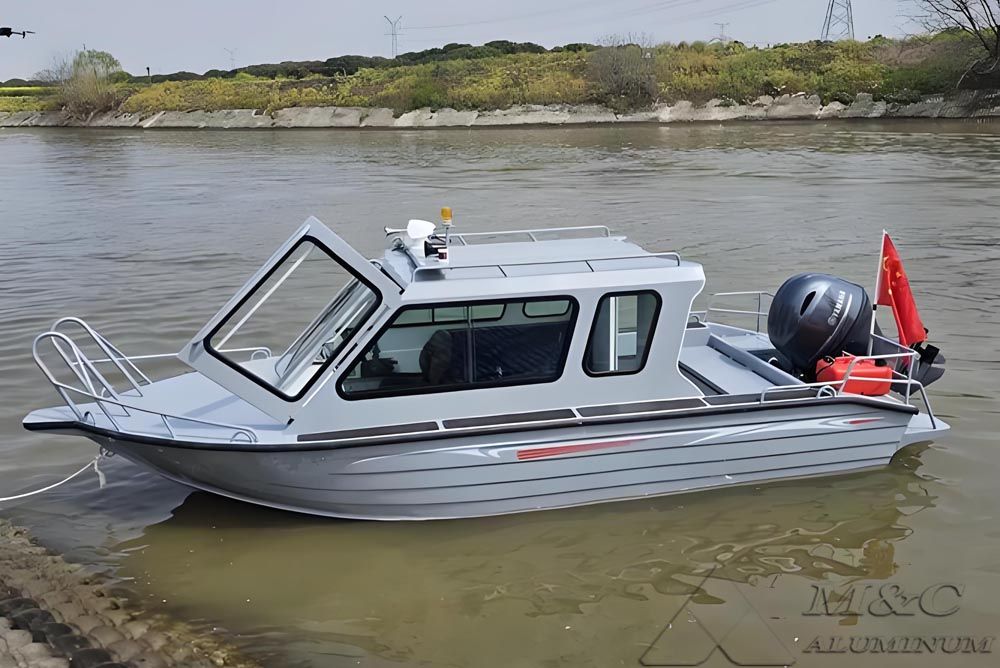
Main Hull Structures: Hulls, decks, and frames for small patrol boats, official vessels, sightseeing boats, and fishing boats.
Superstructures: Cabins, wheelhouses, roofs-utilizing lightweight properties to lower the vessel's center of gravity.
Interior Fittings: Bulkheads, flooring, furniture, storage cabinets, benefiting from easy processing and aesthetic appearance.
Peripheral Components: Fender systems, railings, ladders, fuel tanks, and more.
Comparison with Other Materials
| Material Type | Applicable Environment | Advantages | Limitations |
| 5052 Aluminum Alloy | Freshwater | Good corrosion resistance, easy processing, low cost, lightweight | Lower corrosion resistance than 5083 in high-salinity or harsh seawater environments |
| 5083 Aluminum Alloy | Seawater | Higher strength and excellent seawater corrosion resistance; widely used in yachts and naval vessels | Higher cost and more difficult processing |
| Carbon Steel Plate | Freshwater / Seawater | High strength, low initial cost | Heavy weight, prone to corrosion, requires additional protection (painting, cathodic protection) |
Conclusion
For freshwater vessels, such as small leisure boats, inland patrol boats, and lake cruise ships-5052-H32 aluminum alloy is a highly suitable and widely used material, offering an excellent balance of performance and cost efficiency.
If a vessel requires extremely high strength, long-term maintenance-free performance, or occasional operation in near-sea environments, higher-performance aluminum alloys such as 5083-H116 may be a better option.
If you need this content adapted for SEO optimization, product pages, or localized markets, I can refine it further according to your target audience.
Contact Us