
5052 Vs 6061 Aluminum Sheet For Welding
Introduction: Why 5052 and 6061 Are Common Welding Choices
In fabrication shops that weld aluminum sheet into tanks, enclosures, brackets, marine structures, and transportation panels, two grades are requested repeatedly: 5052 and 6061. As a manufacturer of rolled aluminum products, we supply both alloys in sheet and plate formats and support customers with alloy selection based on welding method, service environment, and required mechanical performance.
The practical question behind most inquiries is not only whether an alloy can be welded, but what happens after welding: how much strength is retained in the heat affected zone, how the joint behaves in corrosion, and how stable the final dimensions and surface quality remain through forming and joining.
This article explains 5052 vs 6061 aluminum sheet for welding from a factory perspective, focusing on material behavior, typical specifications, manufacturing controls, and application driven selection.
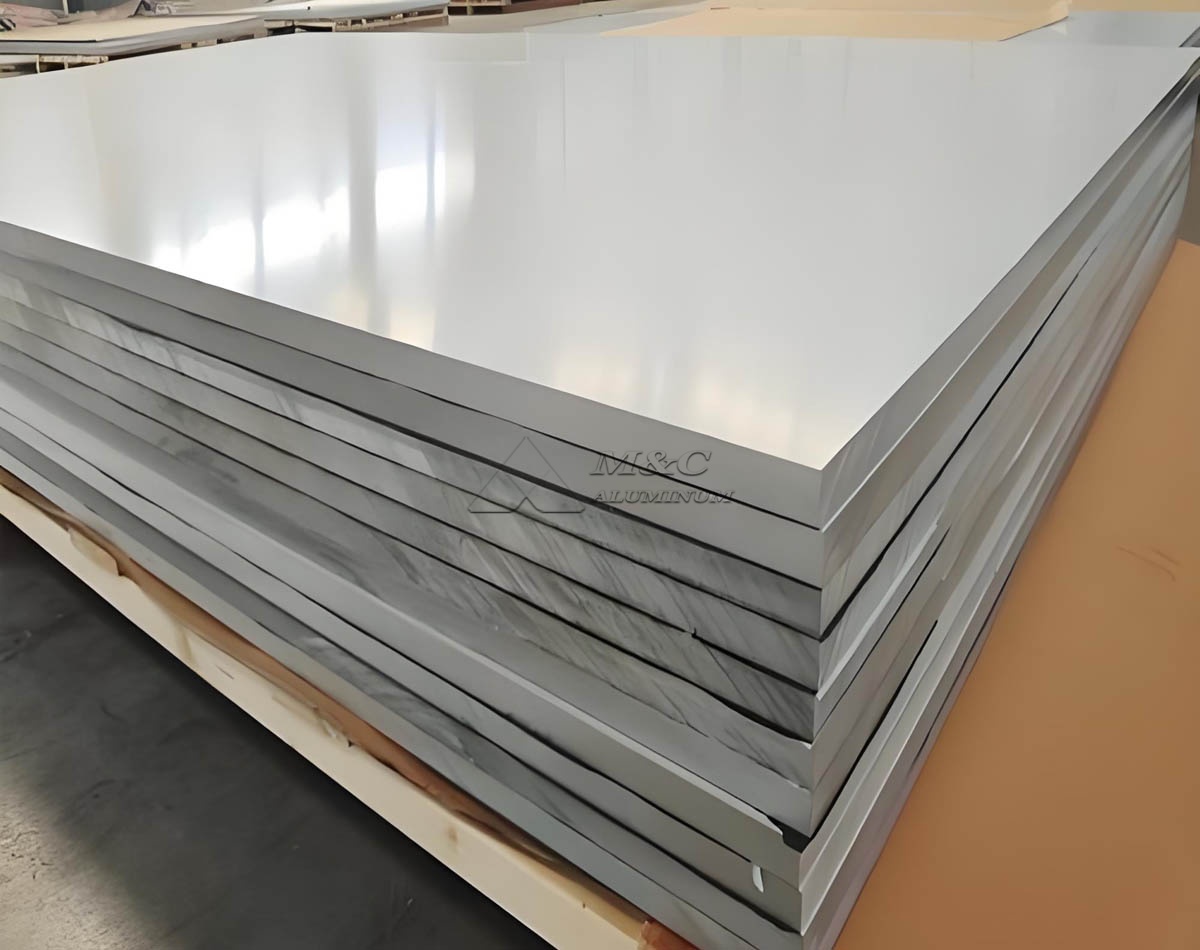
Material Overview and Weldability Fundamentals
5052 aluminum sheet for welding (Al-Mg)
5052 is a non heat treatable aluminum magnesium alloy. Strength is primarily achieved through solid solution strengthening and strain hardening (H tempers). In welding, 5052 typically retains a higher percentage of its base metal properties than heat treatable alloys, because there is no precipitation hardening system to be degraded by welding heat.
Key weldability characteristics:
Stable arc behavior with common processes (GMAW/MIG, GTAW/TIG).
Good resistance to hot cracking when correct filler is selected.
Excellent corrosion performance, especially in marine and industrial atmospheres.
6061 aluminum sheet welding (Al-Mg-Si, heat treatable)
6061 is a heat treatable alloy strengthened by Mg2Si precipitation. In T6/T651 conditions, it offers higher yield and tensile strength than 5052 H32/H34, which is why it is widely used for structural components. However, during welding the precipitation hardened temper in the heat affected zone softens substantially.
Key weldability characteristics:
Good overall weldability with TIG and MIG when proper preparation and parameters are applied.
Noticeable post weld softening in the HAZ for T6/T651.
Post weld heat treatment can restore strength in some designs, but it is not always practical for large assemblies.
Typical Specifications and Performance Parameters
The table below summarizes common supply ranges and practical engineering properties used in welding selection. Values vary by thickness, temper, and applicable standard; we confirm with mill test certificates and can provide customer specific property targets.
Technical Parameters (typical)
| Item | 5052 Aluminum Sheet | 6061 Aluminum Sheet |
|---|---|---|
| Alloy series | 5xxx (Al-Mg) | 6xxx (Al-Mg-Si) |
| Common tempers for sheet | H32, H34, O | T6, T651, O |
| Weldability (TIG/MIG) | Excellent | Good |
| HAZ strength loss after welding | Low to moderate (depends on H temper) | Moderate to high in T6/T651 |
| Typical tensile strength (sheet, reference) | 210 to 260 MPa (H32/H34) | 260 to 310 MPa (T6) |
| Typical yield strength (sheet, reference) | 130 to 200 MPa (H32/H34) | 240 to 275 MPa (T6) |
| Elongation (reference) | Higher in O, moderate in H32/H34 | Moderate in T6, higher in O |
| Corrosion resistance | Very good, marine suitable | Good, but less than 5xxx in chloride exposure |
| Formability | Very good (especially O and H32) | Good (better in O than T6) |
| Common filler selection (general guidance) | ER5356 often used; consult design | ER4043 or ER5356 depending on requirements |
| Typical product standards | ASTM B209, EN 485 | ASTM B209, EN 485 |
| Typical thickness we produce (sheet/plate) | 0.2 to 200 mm (by product form) | 0.2 to 200 mm (by product form) |
Note: Filler selection depends on service temperature, anodizing requirements, strength targets, and crack sensitivity. For welded assemblies exposed to seawater or deicing salts, corrosion matching and stress corrosion considerations should be reviewed jointly with the fabrication design.
How Welding Changes Properties: Practical Selection Points
Strength retention around the weld
5052: If supplied in H32/H34, localized annealing in the HAZ reduces strain hardening near the joint, but the overall change is typically more predictable and less severe than precipitation hardened 6061-T6.
6061: In T6/T651, the HAZ commonly drops toward an O temper level adjacent to the weld. When designs rely on T6 strength at the joint, either joint geometry must compensate or post weld heat treatment must be considered.
Corrosion behavior in welded structures
5052 is widely chosen for welded sheet parts in chloride environments due to strong general corrosion resistance.
6061 performs well in many outdoor conditions, but for marine immersion or frequent salt exposure, 5xxx alloys are often preferred.
Distortion and fabrication stability
Distortion is influenced by thickness, joint design, restraint, and heat input rather than alloy alone. In practice:
5052 is frequently used when significant forming is required before welding.
6061 is chosen when machining and structural stiffness are primary, accepting that weld areas may soften unless compensated.
Manufacturing Capabilities: From Melt Control to Flatness
As a factory, we control critical variables that impact aluminum sheet weldability and consistency across lots.
Our production scope for welded-fabrication sheet
Alloy production and rolling for 5052 and 6061 in common tempers.
Thickness control suited to laser cutting, bending, and welding.
Surface options for fabrication: mill finish, one side protective film, or customer specified packing.
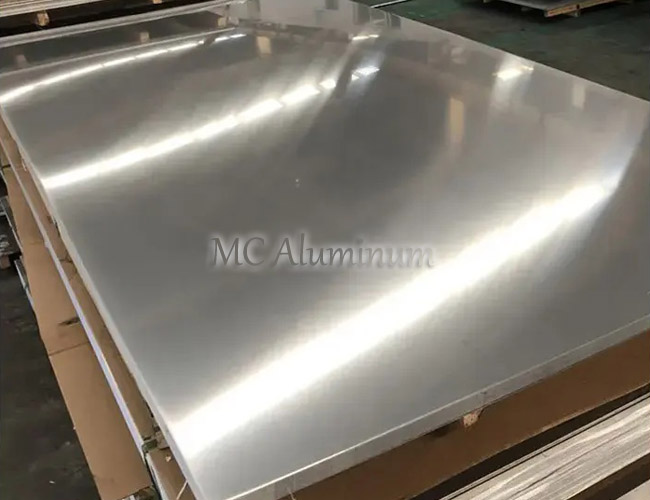
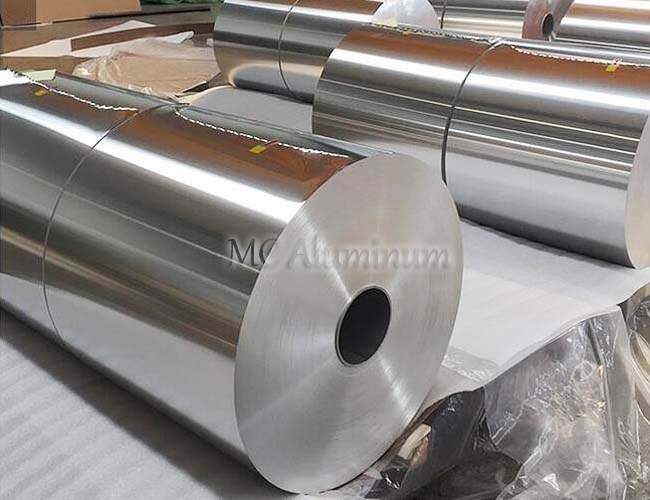
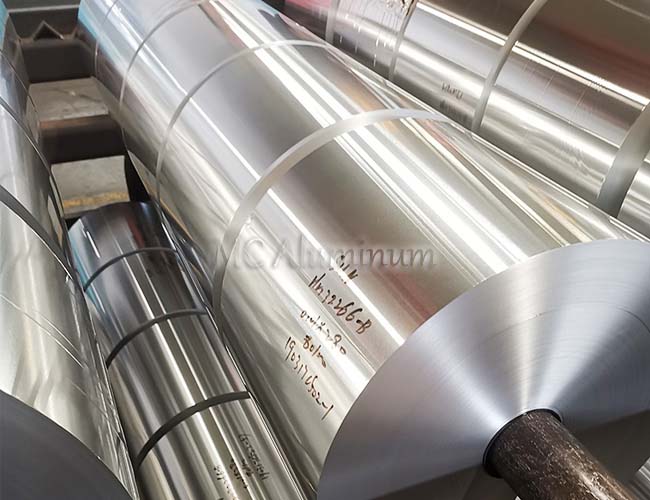
Coil and sheet supply, including cut to length and leveling for flatness requirements.
For customers evaluating 5052 vs 6061 aluminum sheet for welding, we typically confirm target thickness, forming radius, welding process (TIG/MIG), and service environment, then recommend a suitable temper and inspection plan.
Quality control and traceability
To support consistent welding performance, we implement:
Incoming chemical verification and in-process composition control.
Mechanical property testing per batch and temper.
Dimensional checks: thickness tolerance, width, length, squareness.
Flatness and residual stress monitoring based on product type.
Surface inspection for scratches, edge cracking risk, and inclusion related defects.
We provide MTCs (Mill Test Certificates) aligned with relevant standards such as ASTM B209 and EN 485, and we maintain heat and lot traceability through packing and labeling.
Standards and customization options
Common customization items requested for welded fabrication:
Temper selection (5052-O for deep forming, 5052-H32 for balanced strength, 6061-O for forming then heat treat, 6061-T6 for structural parts).
Thickness and tolerance targets for automated welding fixtures.
Protective film for cosmetic panels.
Edge condition (trimmed, slitted) to match cutting methods.
Application Scenarios and Target Industries
When 5052 is typically selected
Marine and coastal equipment: hatches, covers, small tanks, boat components, and brackets where corrosion resistance is critical.
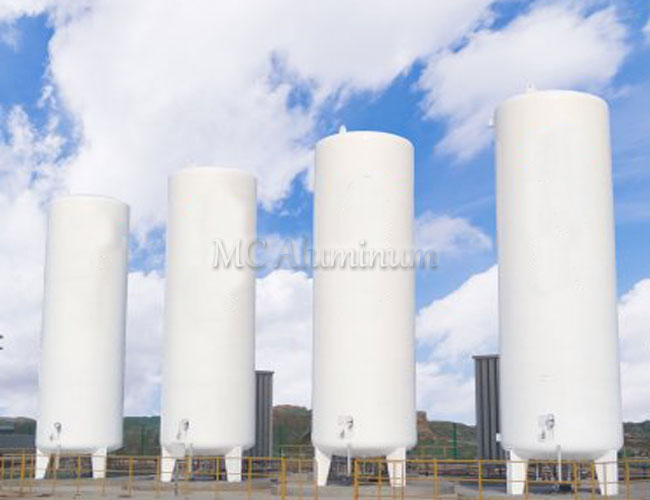
Fuel and fluid handling (non-pressurized to moderate): sheet metal tanks and reservoirs when forming and weldability are priorities.
Enclosures and housings: electronics and industrial cabinets requiring bending and welding with stable surface quality.
Transportation interiors: panels and trim where moderate strength and good forming are required.
When 6061 is typically selected
Structural frames and brackets: welded supports and base structures where higher strength away from welds is beneficial.
Machined-and-welded assemblies: parts requiring machining accuracy in thicker plate sections combined with weldments.
General industrial fixtures: frames, jigs, and equipment bases where corrosion exposure is not severe or is controlled by coating.
5052 vs 6061 Aluminum Sheet for Welding: Direct Comparison
Decision matrix (engineering oriented)
Choose 5052 aluminum sheet for welding when:
Corrosion resistance, especially chloride exposure, is a primary requirement.
The part requires significant forming before welding.
Post weld mechanical performance must be consistent without heat treatment.
Choose 6061 aluminum sheet welding when:
Higher base metal strength and stiffness are needed for the overall design.
The assembly design can tolerate HAZ softening, or joint design compensates.
Post weld heat treatment is feasible, or welds are located away from critical load paths.
Notes on filler and finishing
Filler choice impacts crack sensitivity, joint strength, and appearance after anodizing. For example, ER4043 is often used with 6061 to reduce crack sensitivity and improve weld fluidity, while ER5356 is used where higher as-welded strength and better color match in some finishing routes are desired. Final selection should consider service temperature and corrosion conditions.
Comparison With Other Alloys Used in Welded Sheet
Customers also consider alternatives depending on the environment and strength targets:
5083 aluminum sheet: higher strength than 5052 with excellent marine corrosion resistance; widely used for marine structures and pressure related applications where permitted by design codes.
5754: similar family to 5052, often selected for automotive and general fabrication with good corrosion resistance.
3003: very good formability but lower strength; suitable for light duty welded fabrications where corrosion is not aggressive.
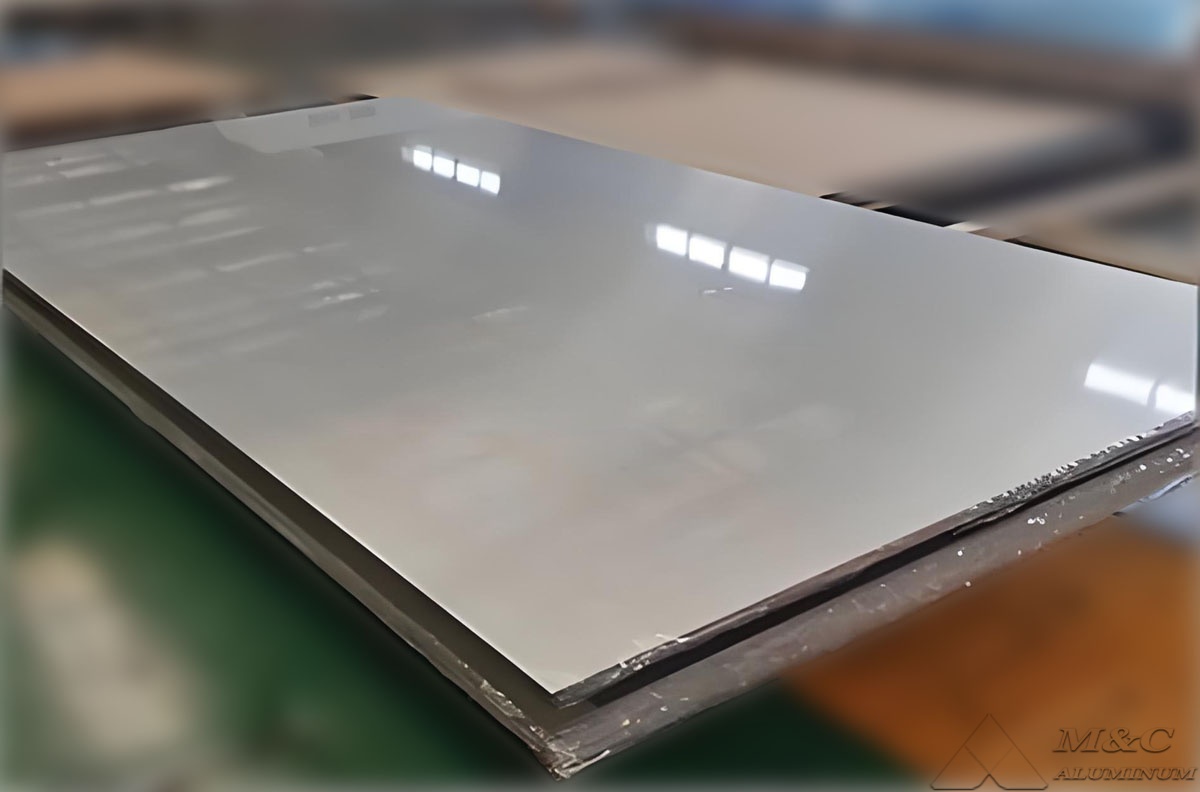
In practice, the selection is rarely only about tensile strength. It is about total fabrication cost and risk: rework rate due to distortion, weld appearance, corrosion claims, and the ability to maintain stable performance across batches.
Conclusion: Stable Supply, Technical Support, and Long-Term Cooperation
Selecting between 5052 vs 6061 aluminum sheet for welding should be based on how the welded joint will perform in its real service environment, not only on base metal strength. 5052 generally provides strong corrosion resistance and predictable post weld properties for formed sheet weldments, while 6061 provides higher structural strength but requires careful consideration of HAZ softening and any post weld treatment strategy.
As a manufacturer, we support customers with stable production scheduling, consistent chemistry and temper control, and documentation aligned with international standards. For ongoing projects, we can align thickness tolerances, flatness targets, surface protection, and packaging to your cutting, forming, and welding workflow, and we can assist in establishing a long-term supply plan with lot-to-lot consistency and technical feedback from production.
Contact Us