
8079 Aluminum Foil For Flexible Packaging
Introduction: Why 8079 Aluminum Foil Is Used in Flexible Packaging
Flexible packaging increasingly relies on high barrier structures to protect products from oxygen, water vapor, light, and aroma loss. As a manufacturer of aluminum foil, we supply 8079 aluminum foil for flexible packaging where consistent pinhole control, stable temper, and reliable lamination performance are required.
Compared with general-purpose foil grades, 8079 alloy is widely selected for demanding flexible packaging such as pharmaceutical sachets, stick packs, strip packs, and high barrier pouches. In these applications, aluminum foil functions as the primary barrier layer and must perform consistently during converting processes such as lamination, printing, slitting, and pouch forming.
Alloy and Material Overview
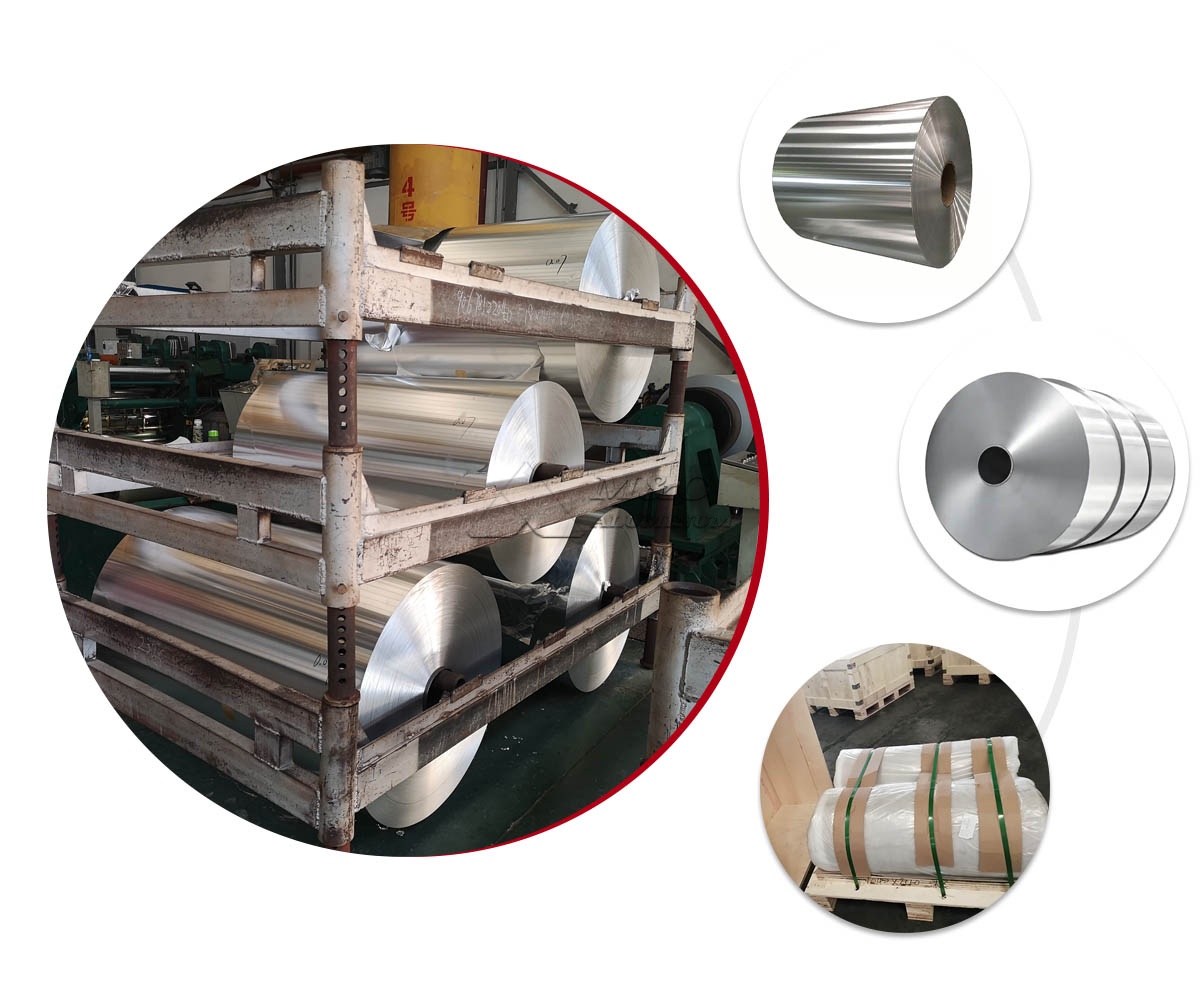
8079 aluminum foil is an Al-Fe-Si series alloy. In foil gauges, its value is typically realized through a combination of:
Stable microstructure that supports low pinhole incidence at thin thicknesses.
Good strength potential in H18 and related tempers for packaging converting.
Good compatibility with common lamination systems (solvent-based, solvent-free, and water-based adhesives depending on structure design).
As a rolling factory, we control raw material selection, melt quality, hot rolling, cold rolling, intermediate annealing, final rolling, and slitting. This end-to-end control is essential for producing high barrier aluminum foil that performs reliably on customer converting lines.
Features of 8079 Aluminum Foil for Flexible Packaging
1. Excellent Barrier Properties: Offers extremely high barrier properties against water vapor, oxygen, and light, effectively preventing moisture absorption, oxidation, and deterioration of the contents.
2. High Mechanical Strength and Ductility: Compared to other aluminum foils, 8079 has higher strength and is less prone to breakage during lamination or stamping, making it suitable for complex deep-drawing packaging (such as PTP pharmaceutical foil and cold stamping).
3. High and Low Temperature Resistance: Maintains shape stability at both high and low temperatures, ranging from -73℃ to 371℃, suitable for high-temperature sterilization and freezing.
4. Environmentally Friendly and Safe: The surface undergoes a cleaning process, meeting the non-toxic and odorless hygiene standards for food and pharmaceutical packaging.
5. Excellent Printability: High flatness and uniform color result in outstanding visual effects for both sophisticated brand printing and laser anti-counterfeiting treatment.
Product Features for Flexible Packaging
High Barrier Performance
Aluminum foil provides near-total barrier to gases and light when the structure and thickness are properly selected. For flexible packaging, barrier performance is not only a function of alloy, but also of:
Thickness stability and gauge uniformity.
Pinhole level control.
Surface cleanliness and wetting behavior for lamination and coating.
Pinhole Control at Thin Gauges
Flexible packaging often uses thin foil to reduce weight and improve forming. Thin gauges demand strict process control to manage inclusions, surface defects, and rolling stability. Our 8079 foil production is designed to minimize pinholes and ensure suitability for high barrier laminates.
Stable Temper and Mechanical Consistency
Converting operations such as slitting, lamination, and pouch making require consistent mechanical properties. We supply packaging tempers commonly used for flexible packaging foil, with verified property stability across coil length.
Surface Quality for Printing and Laminating
Surface condition impacts adhesive anchorage and printing outcomes. We offer controlled surface finish and cleanliness, with optional specifications for one-side bright or double-side bright depending on customer converting requirements.
Typical Specifications and Technical Parameters
The following table summarizes typical supply ranges for 8079 aluminum foil for flexible packaging. Final values are defined by customer specification and application validation.
| Item | Typical Range / Option | Notes |
|---|---|---|
| Alloy | 8079 | Al-Fe-Si series |
| Temper | O, H18, H19, H22 (by agreement) | Selected based on forming and converting needs |
| Thickness | 0.006 mm to 0.030 mm | Common flexible packaging gauges typically 0.006 to 0.020 mm |
| Width | 200 mm to 1600 mm | Slit to customer requirement |
| Inner core ID | 76 mm, 152 mm | Others by agreement |
| Surface finish | Single-side bright, double-side bright | Defined by rolling and final pass conditions |
| Pinhole control | As per packaging requirement | Verified by inspection method and acceptance criteria |
| Tensile strength | By temper and thickness | Reported per agreed standard |
| Elongation | By temper and thickness | Relevant for forming and crack resistance |
| Surface cleanliness | Controlled | Suitable for lamination and printing |
| Packaging | Export seaworthy | Moisture protection and edge protection |
Manufacturing Capabilities
Rolling and Gauge Control
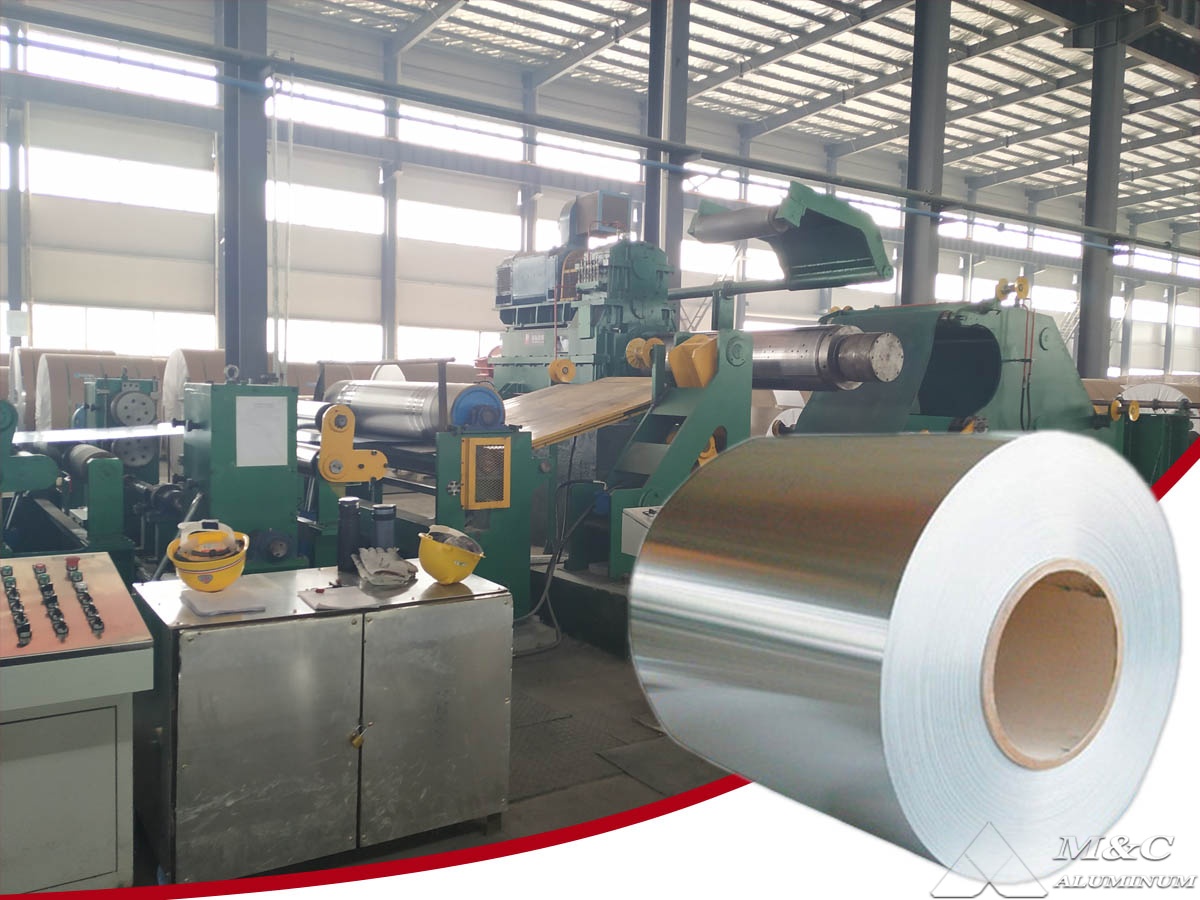
We manufacture foil through controlled rolling schedules designed for tight thickness tolerances and stable flatness. For flexible packaging foil, gauge accuracy is critical because it affects barrier performance, yield, and converting stability.
Key capability elements include:
Automatic gauge control during cold rolling.
Controlled intermediate annealing for property tuning.
Final rolling practices tailored for packaging surface requirements.
Slitting and Rewinding
Flexible packaging converters often require multiple slit widths and specific roll build characteristics. We provide:
Precision slitting with burr control.
Tension-controlled rewinding to reduce telescoping and edge damage.
Coil identification and traceability by heat and lot.
Coating and Surface Options (by Agreement)
Depending on customer needs, foil can be supplied as bare foil intended for lamination, or with specific surface requirements compatible with customer coating systems. For specialized applications, we coordinate technical requirements for adhesion, seal compatibility, and downstream converting.
Quality Control, Standards, and Traceability
As a manufacturer supplying international customers, we implement process and final inspections aligned with typical aluminum foil standards and packaging expectations.
Incoming and Melt Control
Raw material control to limit inclusions and maintain alloy chemistry.
Melt treatment and filtration practices to support thin gauge performance.
In-Process Control
Thickness measurement and profile monitoring.
Surface inspection during rolling and after final pass.
Flatness and winding quality checks.
Final Inspection and Documentation
We provide documentation and test reporting according to contract requirements, commonly including:
Coil data: thickness, width, net weight, ID, OD.
Mechanical property reports when specified.
Surface and pinhole inspection results per agreed methods.
Traceability records connecting finished coils to production lots.
Compliance and Standards
We can supply to commonly referenced aluminum foil standards used in international trade. Standard selection depends on the destination market and application. We confirm compliance items during technical and commercial review to ensure the foil fits the converter and end-use requirements.
Customization Options for Flexible Packaging Foil
Flexible packaging structures vary widely, so customization is often essential. We support customization in:
Thickness and tolerance targets for specific barrier and cost requirements.
Temper selection matched to pouch forming or sachet folding performance.
Width, slit pattern, and roll length aligned with converter equipment.
Surface finish selection to support printing or adhesive anchorage.
Packaging method for container loading, humidity control, and long-distance transport.
For projects requiring process optimization, we support trial orders and technical feedback loops to finalize the most stable specification.
Application Scenarios and Target Industries
Pharmaceutical Flexible Packaging
8079 foil is commonly used as a barrier layer in:
Sachets and stick packs for powders and granules.
Strip packs and unit dose packaging.
Laminates requiring strong barrier to moisture and oxygen.
In these applications, consistent pinhole control and lamination performance are priorities.
Food and Beverage Ingredients
High barrier pouches for:
Coffee, tea, and aroma-sensitive powders.
Seasonings, additives, and dehydrated ingredients.
The foil layer helps preserve aroma and reduce oxidation, while supporting shelf-life requirements.
Personal Care and Household Products
Foil laminates for:
Sample sachets and single-use packs.
Chemical-sensitive products where barrier and light protection are required.
Industrial Flexible Packaging
Where barrier performance is required to protect sensitive materials from humidity and contamination, aluminum foil laminates are often specified.
Comparison with Other Common Foil Alloys
Selecting the right alloy depends on thickness, converting process, and performance targets. Below is a practical comparison often used in flexible packaging discussions.
8079 vs 8011 Aluminum Foil
8079 is often selected for thinner gauges and applications where pinhole risk must be minimized through process design.
8011 is widely used and economical for many packaging applications, especially at moderate gauges.
In many converter specifications, both grades may be technically acceptable, but 8079 is frequently chosen where thinner gauge stability or specific mechanical consistency is required.
8079 vs 1235 Aluminum Foil
1235 is very high in aluminum content and is commonly used in general packaging and household foil. In flexible packaging, it may be used in certain laminate structures.
8079 is more commonly considered for demanding flexible packaging where mechanical performance and pinhole control at thin gauges are critical.
8079 vs 8021 Aluminum Foil
8021 is also used for pharmaceutical and high barrier packaging in some markets.
8079 is a frequent alternative depending on customer qualification, thickness, and converting method.
Final alloy selection should be confirmed through converter trials and end-use validation, especially for pharmaceutical packaging.
Conclusion: Stable Factory Supply and Technical Support
As a dedicated aluminum foil manufacturer, we supply 8079 aluminum foil for flexible packaging with controlled thickness, stable temper, and process consistency suitable for lamination, printing, and high-speed converting. We support customers with specification confirmation, trial sampling, and continuous quality feedback to ensure performance stability in mass production.
For long-term programs, we prioritize stable lead times, lot traceability, and technical coordination between our rolling process and your converting requirements. We welcome cooperation with flexible packaging converters and brand supply chains seeking dependable flexible packaging foil and consistent manufacturing support.

Contact Us