
A1060 H24 0.7mm Aluminum Strip Is Used in Transformers
As a manufacturing factory focused on aluminum strip production, we supply A1060 H24 0.7mm aluminum strip for transformer applications where conductivity, dimensional stability, and surface consistency are critical. In transformer winding production, material selection directly affects processing efficiency, insulation performance, and final electrical behavior. For this reason, 1060 aluminum strip remains one of the common choices for dry-type transformers, oil-immersed transformers, and related electrical equipment.
A1060 H24 aluminum strip combines high aluminum purity with a work-hardened temper that provides suitable strength while maintaining good forming performance. In the 0.7mm thickness range, the strip is especially suitable for transformer winding conductors that require controlled thickness tolerance, smooth edges, and reliable coil quality.
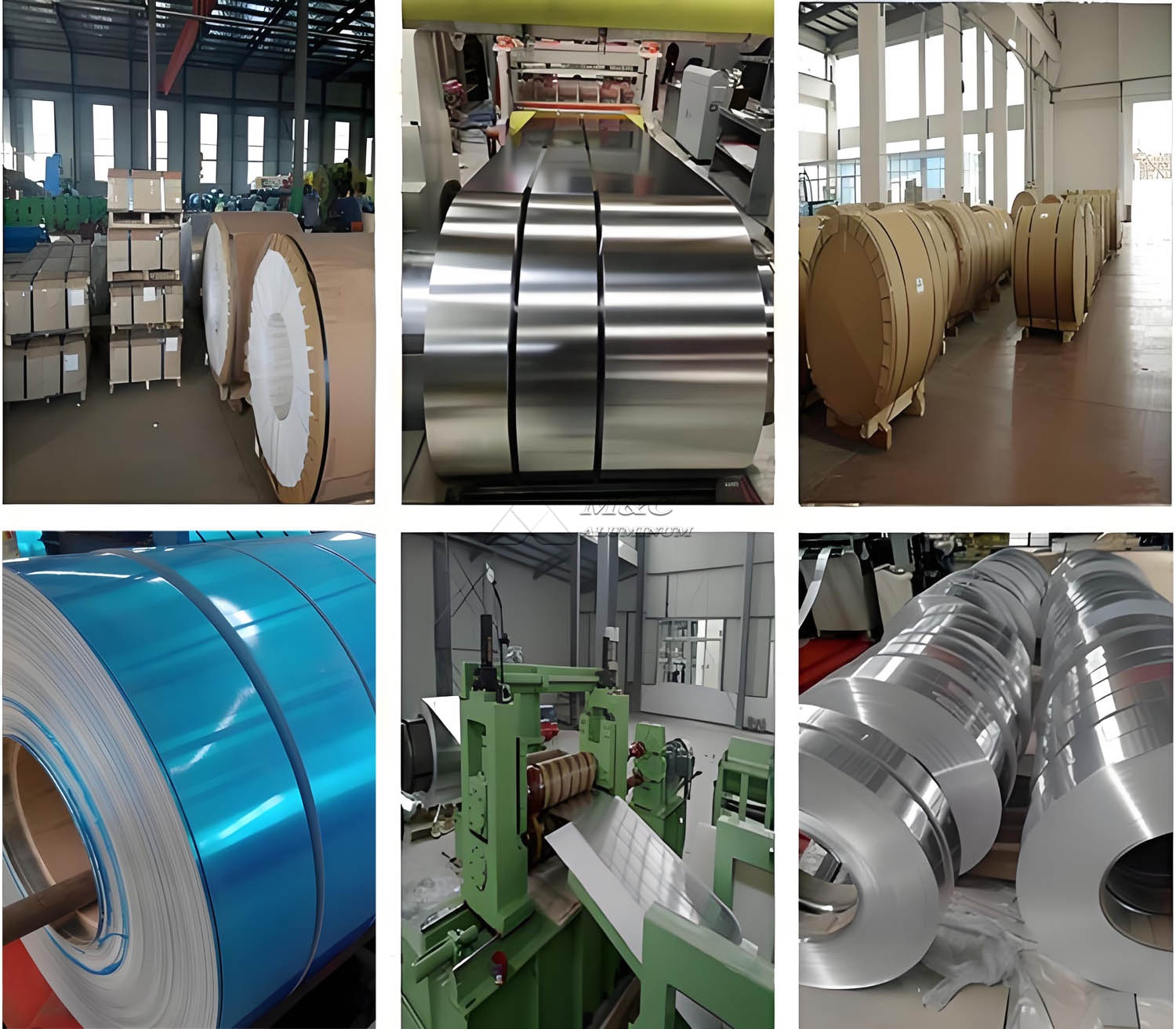
Why A1060 H24 0.7mm aluminum strip is used in transformers
From the manufacturer perspective, transformer aluminum strip must meet a set of practical production requirements rather than only basic alloy standards. The strip needs to unwind smoothly, maintain flatness during slitting and winding, and present a clean surface that supports insulation coating or paper wrapping processes.
A1060 aluminum is an industrial pure aluminum alloy with high aluminum content. This gives it strong electrical conductivity and good corrosion resistance. When processed into H24 temper, the strip obtains moderate hardness and better mechanical stability than fully soft temper, which helps control deformation during transformer winding.
For 0.7mm aluminum strip used in transformers, the main advantages include:
High electrical conductivity suitable for transformer winding applications
Stable thickness and width accuracy during continuous processing
Good elongation for bending and winding operations
Clean surface and low defect rate for electrical insulation compatibility
Lower density than copper, helping reduce total winding weight
Reliable edge quality after slitting, which is important for safe and efficient transformer manufacturing
In our production practice, the 0.7mm thickness is widely requested because it offers a practical balance between current carrying capability, forming behavior, and manufacturing efficiency.
Alloy and temper characteristics
A1060 belongs to the 1xxx series aluminum alloys. This family is known for high purity and excellent conductivity. In transformer applications, conductivity is one of the primary reasons buyers select 1060 aluminum strip instead of higher-strength alloy grades.
The H24 temper means the material has been strain hardened and partially annealed. Compared with O temper, H24 offers improved shape retention and handling performance. Compared with harder tempers, it still retains sufficient ductility for winding and forming. This is why many transformer producers specify A1060 H24 aluminum strip for medium-thickness conductor strip.
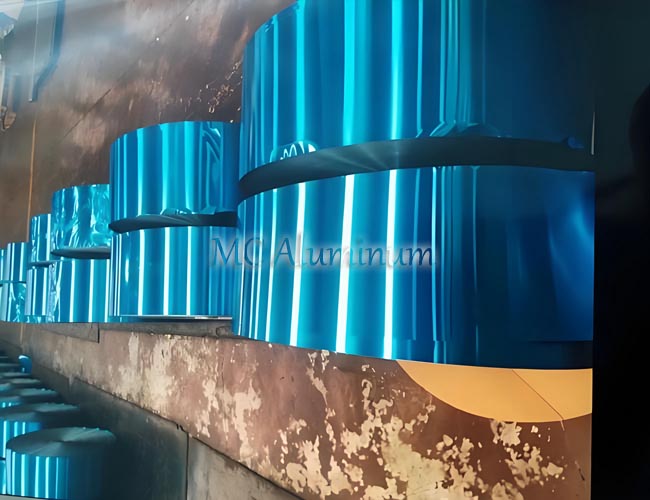
When we manufacture Transformer Aluminium Strip, we control rolling reduction, intermediate annealing, finishing passes, and slitting conditions to match transformer winding requirements. For customers requiring narrower tolerances or special edge conditions, we adjust process parameters during final conversion.
Typical technical parameters of A1060 H24 0.7mm aluminum strip
The following table shows typical technical parameters for A1060 H24 0.7mm aluminum strip used in transformers. Actual values can be adjusted according to customer standards, transformer design, and winding process requirements.
| Item | Typical Specification |
|---|---|
| Alloy | A1060 |
| Temper | H24 |
| Thickness | 0.7 mm |
| Width range | 10 mm - 1650 mm |
| Thickness tolerance | According to agreed standard or customer drawing |
| Width tolerance | According to slitting requirement |
| Core inner diameter | 150 mm, 300 mm, 400 mm, 500 mm or as required |
| Coil outer diameter | Customized according to packing and processing needs |
| Aluminum purity | 99.6 percent minimum |
| Electrical conductivity | Typically high for 1xxx series aluminum |
| Tensile strength | Approx. 95 - 135 MPa |
| Elongation | Typically 4 percent minimum, depending on specification |
| Surface condition | Smooth, clean, free from oil stains, burrs, cracks, and obvious roll marks |
| Edge condition | Slit edge or deburred edge as required |
| Standard applications | Transformer winding, electrical conductors, reactor winding |
| Packaging | Export seaworthy wooden pallet or wooden case |
Manufacturing process and quality control
As a factory manufacturer, we control the full process from raw material selection to final slitting and packaging. For transformer aluminum strip, process consistency is especially important because small surface or dimensional defects can create problems during winding and insulation treatment.
Our typical manufacturing process includes:
Raw material melting and casting
Hot rolling
Cold rolling to target gauge
Intermediate heat treatment if required
Final rolling to achieve H24 temper
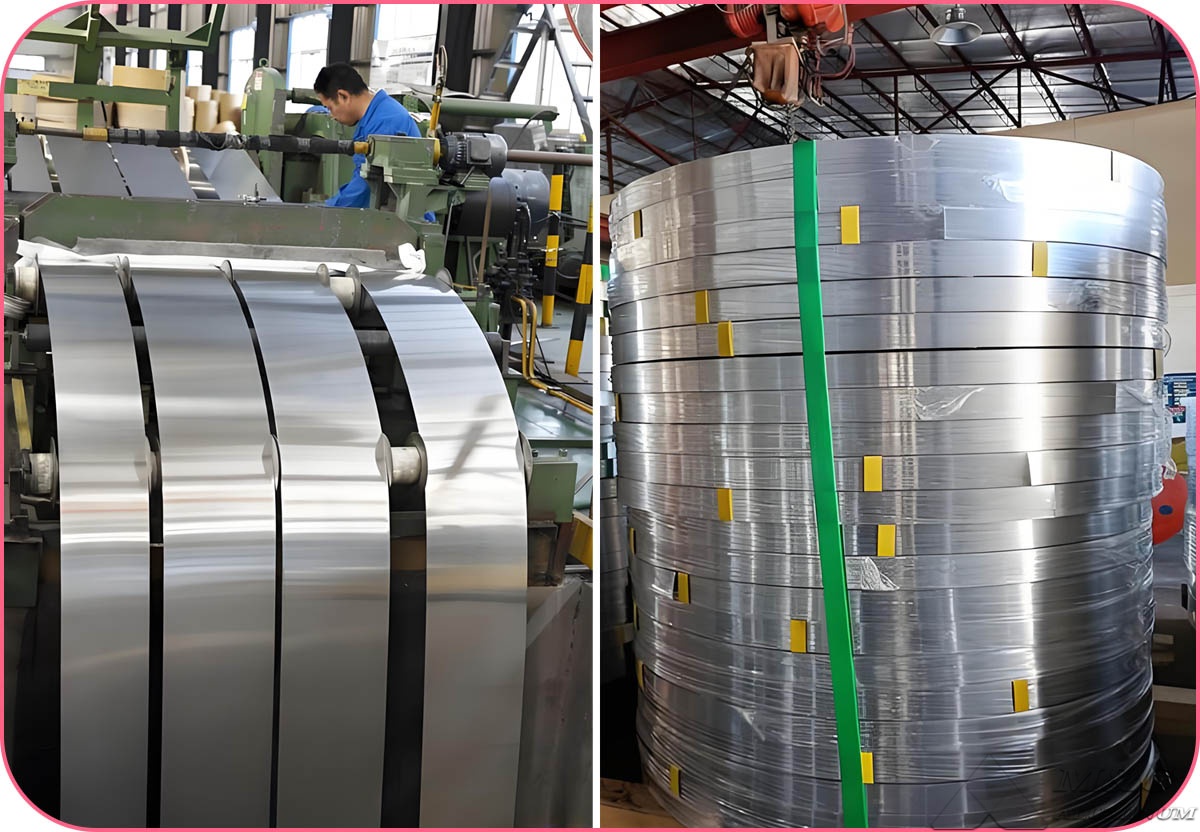
Precision slitting to customer width
Surface inspection and dimensional inspection
Coil packing for export and workshop use
For A1060 H24 0.7mm aluminum strip, we pay close attention to the following points:
Thickness consistency
Transformer winding requires predictable conductor dimensions. We use rolling and inspection controls to keep thickness stable across the strip width and along the coil length.
Surface cleanliness
A clean surface helps during insulation wrapping, varnishing, and coil assembly. We inspect for scratches, oil residue, edge damage, and other defects that may affect downstream processing.
Edge quality
Poor slit edges can cause insulation damage or unstable winding. Our slitting lines are configured to reduce burr formation and support neat coil build-up.
Coil tightness and flatness
Loose coils or poor flatness affect unwinding and automatic production. We control winding tension to deliver coils suitable for industrial transformer manufacturing lines.
Performance advantages in transformer applications
In transformer production, conductor material must support both electrical and mechanical requirements. A1060 H24 0.7mm aluminum strip performs well in several key areas.
Good electrical conductivity
The high purity of 1060 aluminum gives it favorable conductivity for transformer windings. This supports efficient current transmission and makes the alloy suitable for electrical equipment manufacturing.
Suitable forming performance
Although H24 is not fully soft, it still provides adequate ductility for winding, bending, and forming. This is important in transformer coil production where repeated shaping operations are common.
Stable processing behavior
Uniform mechanical properties help reduce variation during automatic winding. In practice, this can improve production consistency and reduce material waste.
Lightweight alternative to copper
Aluminum has lower density than copper. For many transformer designs, this helps reduce overall weight while maintaining functional electrical performance when the conductor section is designed accordingly.
Corrosion resistance
1060 aluminum has good natural corrosion resistance, which supports storage, processing, and service life in appropriate operating environments.
Common uses in transformer manufacturing
A1060 H24 0.7mm aluminum strip is mainly used in the electrical field, especially where the strip is converted into winding conductors. Typical uses include:
Dry-type transformer winding
Oil-immersed transformer winding
Low-voltage and medium-voltage transformer conductors
Reactor winding material
Electrical coils and related inductive components
In many projects, customers purchase slit material in exact widths to reduce additional processing in their own workshops. Our Thin aluminum strip production capability is designed for such precision applications, especially where narrow width and stable gauge are required.
Key purchasing considerations for buyers
For international B2B buyers, selecting aluminum strip for transformers should not be limited to alloy and thickness alone. The following factors should be confirmed before order placement:
Width and tolerance requirements
Transformer designs often require customized widths. Buyers should specify nominal width, tolerance range, and whether edge deburring is needed.
Mechanical property range
Different winding methods may require different hardness levels within H24 temper. It is advisable to confirm tensile strength and elongation targets based on actual processing conditions.
Surface and edge standards
For transformer insulation safety, the acceptable level of scratches, burrs, and oil residue should be clearly defined in the technical agreement.
Coil size and packing
Coil weight, inner diameter, and export packaging all affect receiving efficiency and workshop handling. We usually confirm these details with customers before production.
Test documents
For export orders, mill test certificates, dimensional reports, and packing lists are commonly required. When requested, we provide documentation according to the order specification.
How we support transformer aluminum strip production
As a direct manufacturer of Aluminum Strip, we do not position this product as a generic commodity. Transformer aluminum strip is a precision industrial material, and production must be matched to actual electrical application requirements. Our factory supports custom thickness, width slitting, coil weight control, and export packaging for transformer manufacturers, electrical equipment plants, and industrial material importers.
For A1060 H24 0.7mm aluminum strip, our production focus is on three practical points: conductivity-oriented alloy purity, stable H24 temper control, and precise slitting quality. These factors are central to transformer winding performance and downstream manufacturing efficiency.
Conclusion
A1060 H24 0.7mm aluminum strip is used in transformers because it offers a practical combination of high conductivity, good formability, moderate mechanical strength, and dependable processing performance. In transformer winding applications, these properties support efficient production and stable product quality.
From a manufacturing standpoint, the value of 1060 aluminum strip lies not only in the alloy itself, but also in precise control of thickness, temper, surface, and edge condition. For buyers sourcing transformer aluminum strip for industrial use, detailed specification confirmation and process consistency are essential.
As a factory manufacturer, we produce A1060 H24 0.7mm aluminum strip according to transformer application requirements, with attention to dimensional accuracy, slit edge quality, coil stability, and export-ready supply standards.
Contact Us