
Aluminum Foil Alloy Types for Battery Applications
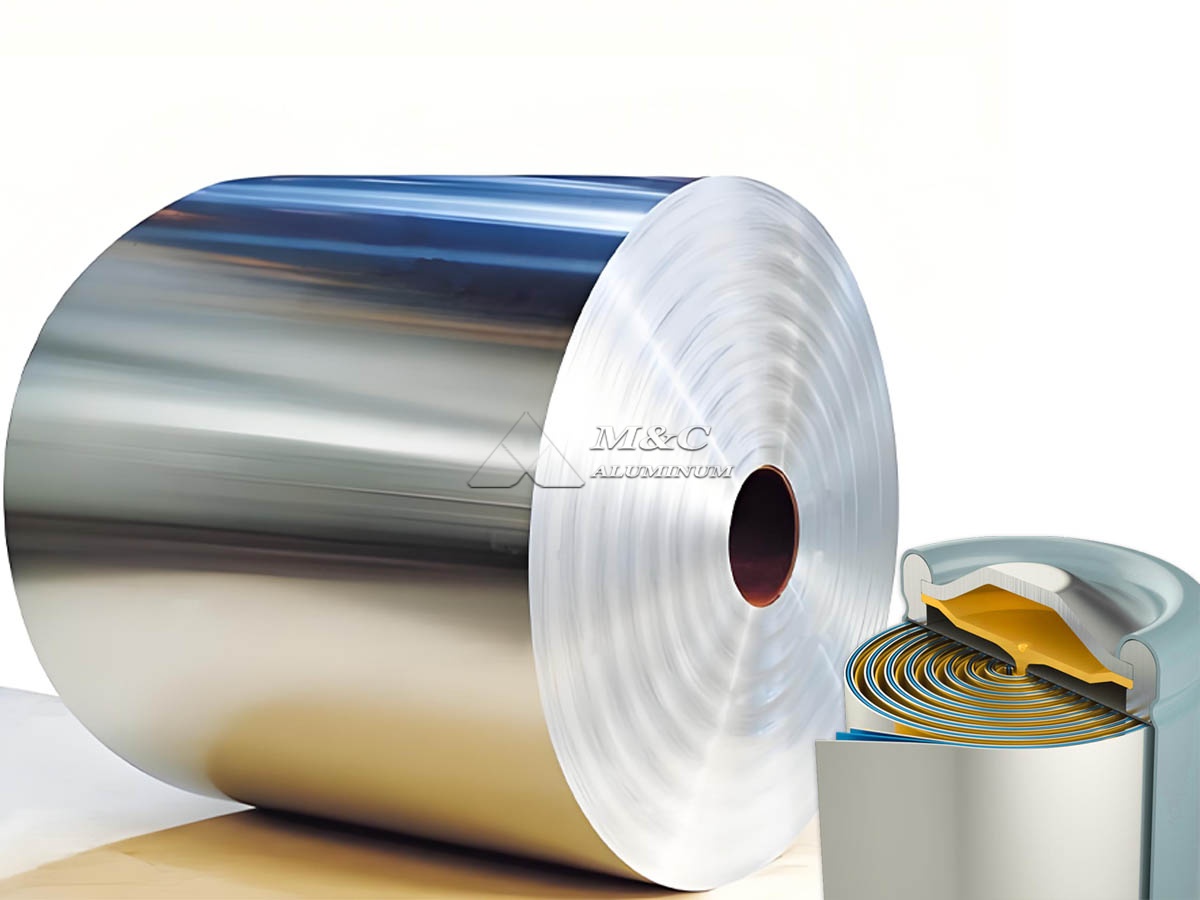
As an aluminum foil manufacturer, we produce battery aluminum foil for lithium-ion battery electrodes, carbon-coated current collectors, and flexible battery packaging structures. Alloy selection is a fundamental part of battery foil design because chemical composition, temper, thickness tolerance, surface cleanliness, and pinhole control directly affect cell processing and long-term battery performance.
Battery applications do not use one universal aluminum foil alloy. High-purity 1xxx aluminum alloys are primarily used as cathode current collectors because they provide high electrical conductivity, low density, good rolling performance, and reliable compatibility with cathode coating processes. Higher-strength 3xxx and 8xxx alloys are more commonly considered for battery packaging foil, tab materials, or specific structural applications where mechanical strength and barrier performance are required.
The Role of Aluminum Foil in Battery Manufacturing
In lithium-ion batteries, aluminum foil is mainly used as the positive electrode current collector. During electrode production, the cathode slurry is coated onto one or both sides of the foil. The aluminum foil then collects and transfers electrical current between the active cathode material and the external circuit.
For this application, battery aluminum foil must combine several properties:
High electrical conductivity for efficient current collection.
Uniform thickness for stable electrode coating weight.
Clean, oil-controlled surfaces for reliable slurry adhesion.
Good tensile strength and elongation for continuous coating, calendering, and slitting.
Low pinhole levels to reduce the risk of localized defects.
Stable flatness and edge quality for high-speed electrode processing.
In pouch cells, aluminum alloy foil is also used as part of multilayer packaging laminate. This foil serves as a moisture and gas barrier between polymer sealing layers, protecting the electrochemical system from external contamination.
Main Aluminum Foil Alloy Types for Battery Applications
The following alloys are among the most relevant grades for battery aluminum foil production. The final selection depends on whether the foil will be used for cathode current collection, carbon coating, flexible packaging, or another battery component.
| Alloy | Aluminum Content and Key Elements | Typical Battery Application | Main Advantages | Common Temper |
|---|---|---|---|---|
| 1235 | Minimum 99.35% Al | Cathode current collector | High conductivity, good ductility, excellent rolling capability | O, H18, H19 |
| 1060 | Minimum 99.60% Al | Cathode current collector | High purity, stable conductivity, clean surface quality | O, H18, H19 |
| 1070 | Minimum 99.70% Al | Premium cathode current collector | Very high electrical conductivity and forming performance | O, H18, H19 |
| 1100 | Minimum 99.00% Al, controlled Cu | Battery current collector and specialty foil | Good corrosion resistance and processability | O, H18, H19 |
| 1145 | Minimum 99.45% Al | Current collector foil | High conductivity and low impurity content | O, H18, H19 |
| 3003 | Al-Mn alloy | Selected battery structural and packaging uses | Higher strength than 1xxx alloys | H14, H16, H18 |
| 8021 | Al-Fe-Si alloy | Lithium battery pouch packaging foil | Good strength, deep drawing performance, low pinhole tendency | O, H22, H24 |
| 8079 | Al-Fe-Si alloy | Flexible battery packaging foil | High barrier performance and good flexibility | O, H22, H24 |
1235 Aluminum Foil for Cathode Current Collectors
1235 aluminum foil is one of the most widely specified grades for lithium-ion battery cathode current collectors. Its high aluminum content supports good electrical conductivity, while its composition allows stable processing through casting, cold rolling, intermediate annealing, final rolling, slitting, and surface inspection.
We manufacture 1235 Aluminum Foil with controlled thickness tolerance, uniform mechanical properties, and surface conditions suitable for electrode coating. For battery customers, consistency between coils is especially important. Variations in thickness, surface oil, or flatness can influence coating uniformity and may reduce production efficiency on automated electrode lines.
Typical 1235 battery foil is supplied in hard temper, such as H18 or H19, because the electrode coating process generally requires sufficient web strength. The exact temper must be coordinated with coating speed, foil thickness, tension settings, and the downstream calendering process.
1060 and 1070 Aluminum Foil for High-Conductivity Requirements
1060 and 1070 aluminum foil grades provide higher aluminum purity than 1235 alloy. They are often selected when customers place particular emphasis on electrical conductivity, chemical cleanliness, and stable electrochemical performance.
1070 aluminum foil has very low alloying-element content. This makes it suitable for battery cathode foil where a high-purity current collector is required. Its soft annealed condition provides excellent formability, while hard tempers provide the tensile strength needed for roll-to-roll electrode manufacturing.
Although high-purity alloys offer conductivity benefits, alloy selection should not be based on purity alone. Battery producers must also evaluate foil thickness capability, mechanical strength, surface roughness, residual rolling oil, and compatibility with conductive coatings or cathode slurry formulations.
1100 and 1145 Aluminum Foil in Battery Processing
1100 and 1145 aluminum alloys are also used for aluminum foil products that require a balance of conductivity, processability, and stable supply specifications. Compared with ultra-high-purity aluminum grades, 1100 contains a controlled amount of copper and other elements. It remains a practical choice for certain current collector applications where the specified conductivity and mechanical properties are achieved.
1145 aluminum foil is another high-purity option for battery current collectors. It is valued for its electrical conductivity and ability to achieve thin gauges with stable rolling quality. As a manufacturer, we recommend confirming the customer's electrode design requirements before finalizing the alloy, especially where foil thickness is below 15 micrometers.
8021 and 8079 Alloys for Battery Pouch Foil
Not all battery aluminum foil is used as an electrode current collector. Lithium polymer batteries and pouch cells require flexible packaging materials with excellent barrier properties. In these structures, 8021 and 8079 aluminum foil are widely used as the metallic barrier layer in aluminum-plastic laminate.
8021 and 8079 are 8xxx series alloys containing iron and silicon. Compared with 1xxx aluminum foil, they generally provide improved strength and resistance to pinhole formation at thin gauges. These properties are important for pouch battery packaging, where the foil must withstand forming operations while maintaining a reliable barrier against moisture and oxygen.
For pouch foil applications, the aluminum foil is normally laminated with polymer films and sealing layers. The foil surface must therefore meet strict requirements for cleanliness, wettability, thickness consistency, and adhesion compatibility. Our production control includes online surface inspection, pinhole monitoring, edge trimming, and final coil testing according to the agreed technical specification.
Carbon-Coated Aluminum Foil and Base Alloy Selection
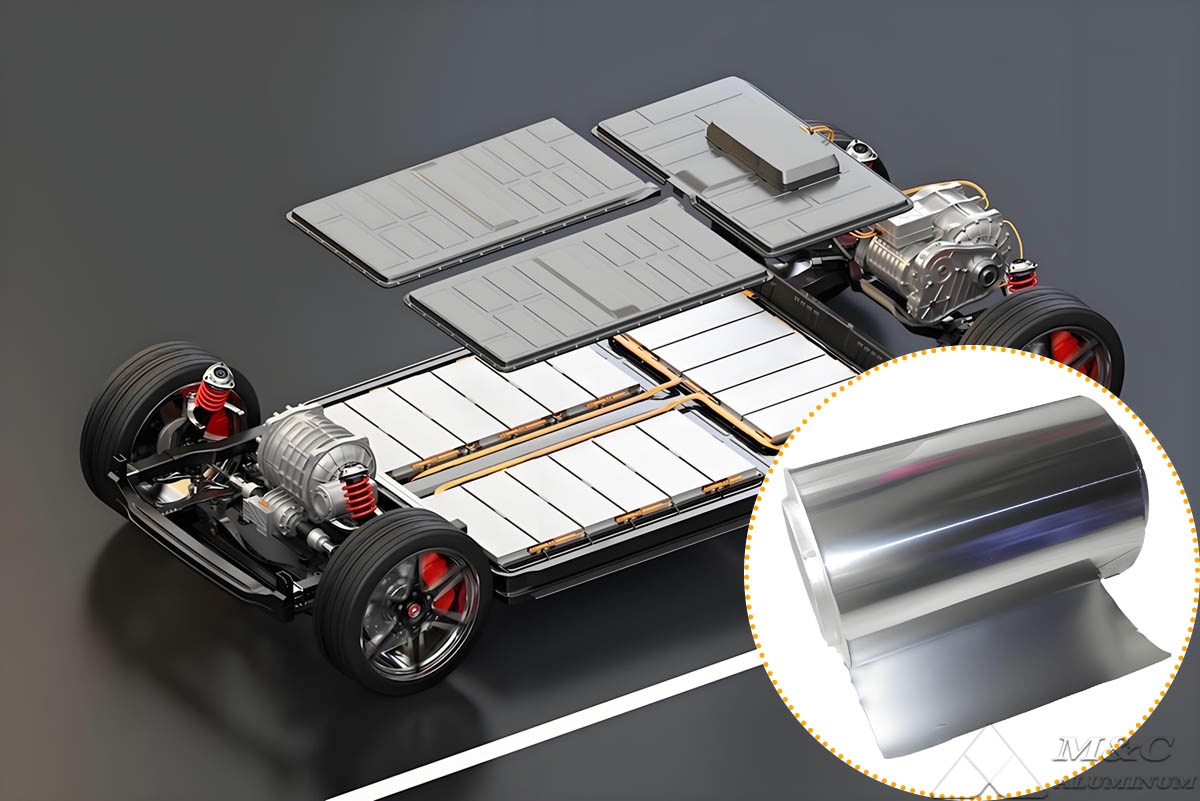
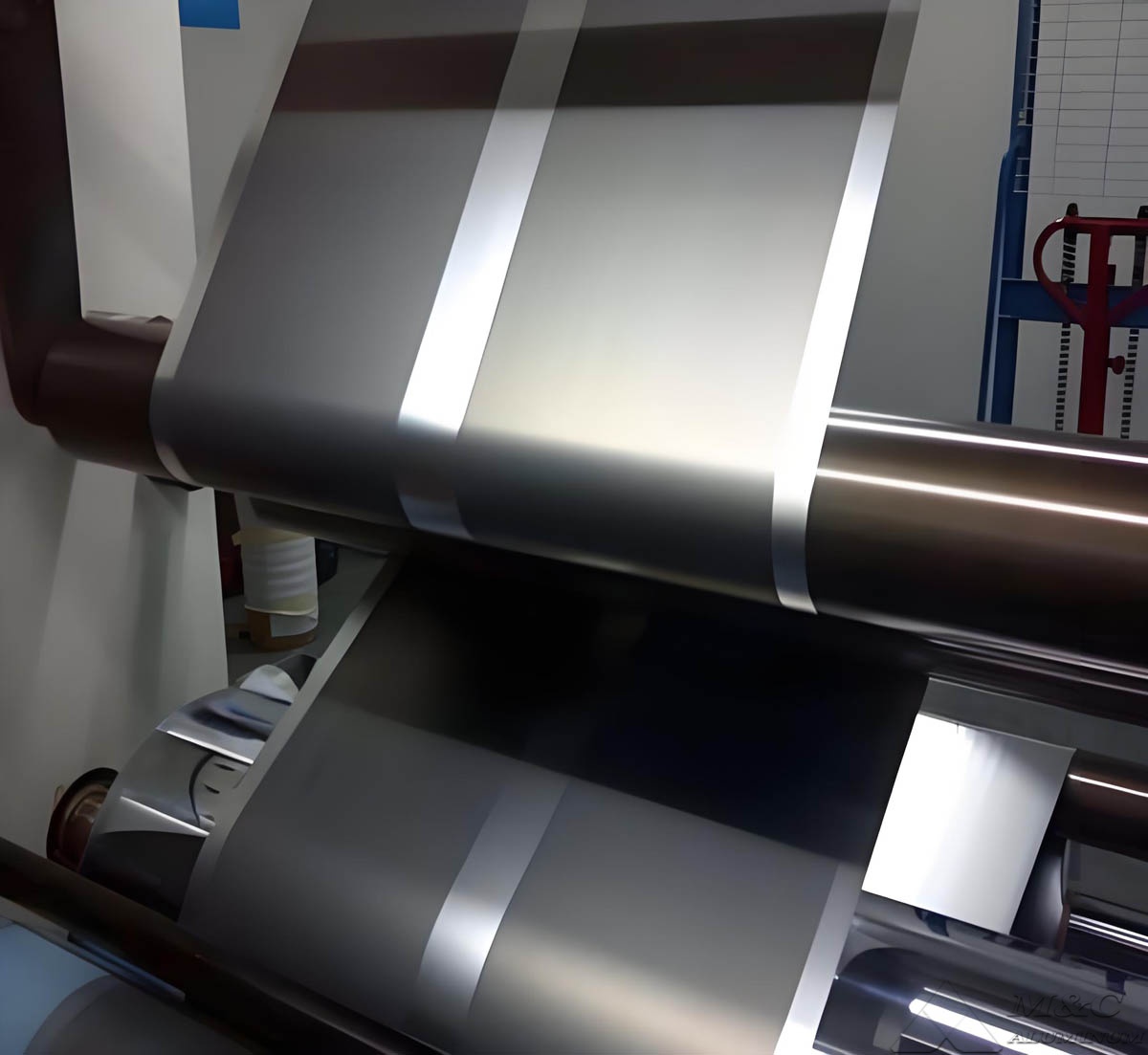
Carbon-coated aluminum foil is produced by applying a conductive carbon layer to the aluminum foil surface. This layer can improve the interface between the current collector and electrode coating, reduce contact resistance, and support more uniform current distribution. It is commonly used for lithium iron phosphate batteries, high-power cells, and electrode systems requiring improved adhesion characteristics.
The base foil for carbon coating is usually 1235, 1060, or 1070 aluminum foil. The base material must have stable surface quality because defects in the underlying foil can affect coating continuity. Important controls include surface tension, residual oil level, roughness, tensile strength, and coil flatness.
Technical Parameters for Battery Aluminum Foil
The following table shows typical manufacturing ranges. Final values should be confirmed according to the battery design, coating line capability, and applicable customer standard.
| Parameter | Cathode Current Collector Foil | Carbon-Coated Aluminum Foil | Pouch Packaging Aluminum Foil |
|---|---|---|---|
| Typical alloy | 1235, 1060, 1070, 1100, 1145 | 1235, 1060, 1070 | 8021, 8079 |
| Typical thickness | 10 to 20 micrometers | 12 to 20 micrometers | 30 to 50 micrometers |
| Typical width | 100 to 1,650 mm | 100 to 1,500 mm | 100 to 1,300 mm |
| Temper | H18, H19, O | H18, H19 | O, H22, H24 |
| Surface requirement | Clean, uniform, low residual oil | Clean base foil with uniform carbon layer | Clean, pinhole-controlled, lamination-ready |
| Key performance focus | Conductivity and coating uniformity | Adhesion and interface resistance | Barrier performance and formability |
| Coil inner diameter | 150 mm, 300 mm, 505 mm, or customized | 150 mm, 300 mm, 505 mm, or customized | 150 mm, 300 mm, 505 mm, or customized |
Performance Advantages of Aluminum Foil for Batteries
1. Excellent Electrical Conductivity: Offers high electrical conductivity, enabling efficient current transmission and reducing internal resistance losses within the battery.
2. Lightweight: The low density of aluminum helps reduce the overall weight of the battery, thereby increasing its energy density.
3. Good Ductility: Easily rolled, slit, and processed, making it well-suited for high-speed continuous production and electrode manufacturing.
4. Stable Chemical Properties: Exhibits strong corrosion resistance, making it suitable for the specific electrochemical environment inside a battery.
5. Uniform Thickness: Precision rolling ensures dimensional stability, which facilitates consistent electrode coating and uniform battery structure.
6. Superior Surface Quality: A smooth, clean surface enhances the adhesion and uniformity of the active material coating.
7. Excellent Process Adaptability: Highly versatile for various applications, including as a positive electrode current collector for lithium-ion batteries, power batteries, and energy storage batteries.
How We Control Quality in Battery Aluminum Foil Production
Battery foil requires tighter process control than general-purpose Aluminum Foil. Our manufacturing process begins with alloy chemistry control and continues through melting, casting, hot rolling where applicable, cold rolling, annealing, final rolling, slitting, inspection, and packaging.
Key quality controls include:
Chemical composition verification for each production batch.
Thickness measurement across the foil width and throughout the coil length.
Tensile strength and elongation testing by temper requirement.
Surface cleanliness and residual oil evaluation.
Pinhole inspection for thin foil and packaging foil applications.
Edge quality inspection after slitting.
Flatness and coil winding control for stable unwinding on coating lines.
Protective export packaging to prevent oxidation, moisture exposure, and mechanical damage.
For battery manufacturers, qualification should include trial coating and cell-level evaluation. Foil properties must be matched with the cathode material, binder system, coating weight, drying profile, calendering pressure, and cell format.
Selecting the Right Alloy for Your Battery Foil Project
For standard lithium-ion cathode current collectors, 1235, 1060, and 1070 aluminum foil are the principal choices. 1235 offers an effective balance of conductivity, availability, and rolling performance. 1060 and 1070 are suitable where higher purity and conductivity are required. For carbon-coated foil, the same high-purity 1xxx series alloys are normally selected as the substrate.
For flexible pouch battery packaging, 8021 and 8079 aluminum foil are generally more appropriate because they offer the strength, flexibility, and pinhole resistance required for laminated barrier structures. The correct alloy should always be selected according to the component function rather than by thickness alone.
As a battery aluminum foil manufacturer, we supply alloy-based specifications tailored to electrode current collectors, carbon-coated aluminum foil, and pouch cell packaging requirements. Technical confirmation should include alloy, temper, thickness, width, surface condition, mechanical properties, coil dimensions, and inspection standards before mass production.



Contact Us