
1100 Aluminum Foil for HVAC Heat Exchangers
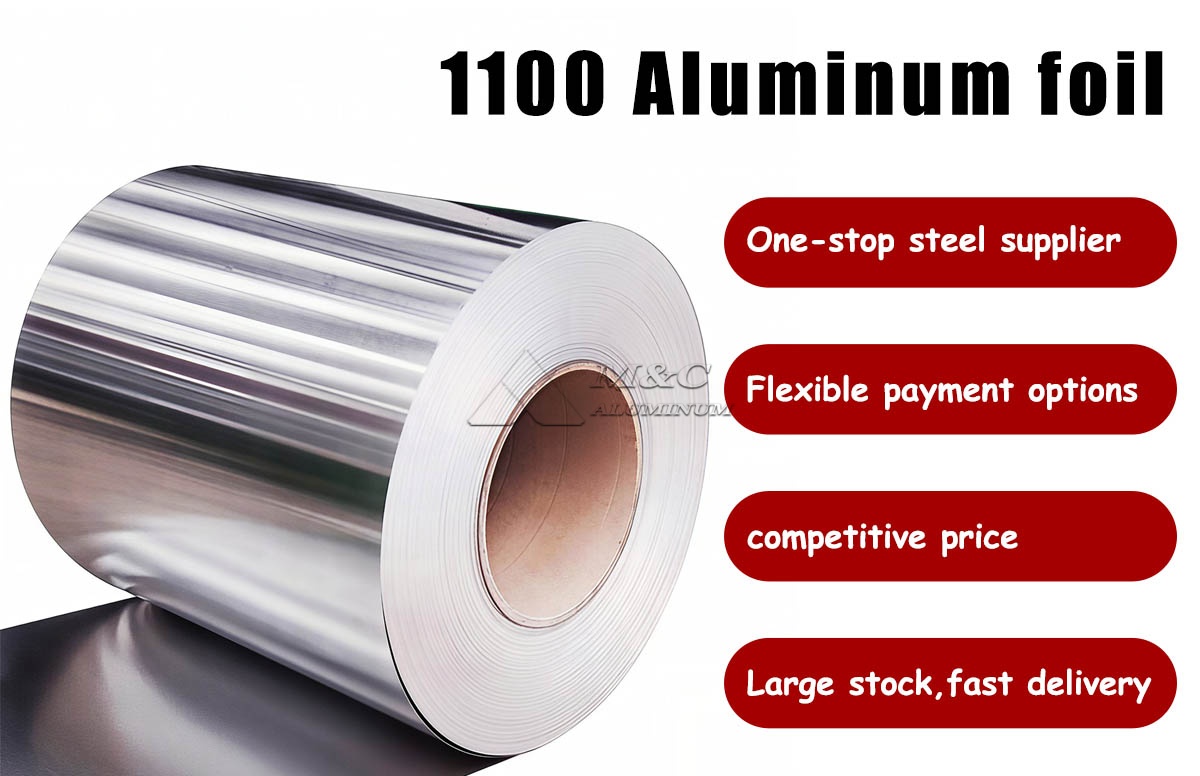
As a manufacturer of aluminum foil for HVAC applications, we produce 1100 aluminum foil designed for heat exchanger fin stock, including evaporator fins, condenser fins, radiator components, and air conditioning coil assemblies. The performance of aluminum foil in a heat exchanger depends not only on alloy selection, but also on gauge consistency, surface cleanliness, temper control, coating adhesion, and forming behavior.
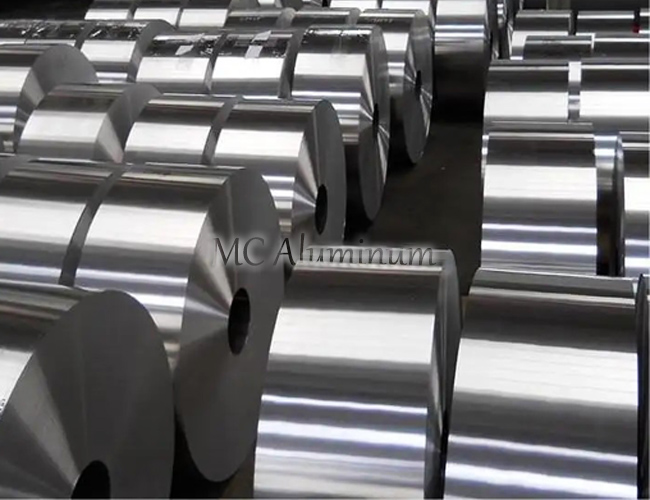
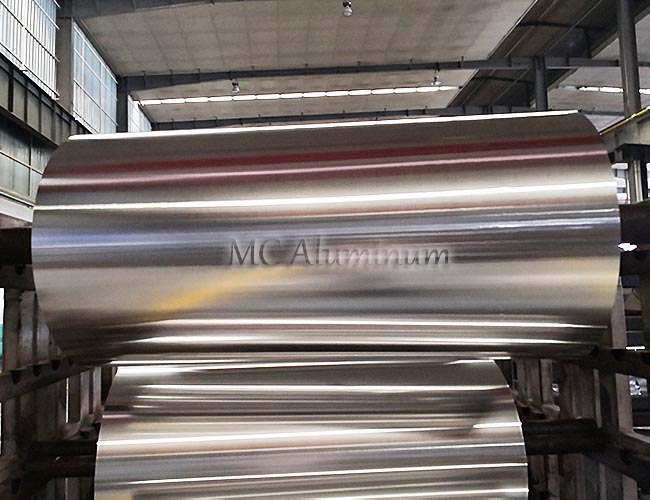
1100 aluminum foil is a commercially pure aluminum material with high aluminum content and reliable workability. It is widely selected for HVAC heat exchangers where good thermal conductivity, corrosion resistance, and stable processing characteristics are required. Our production process is controlled from aluminum melting and casting through rolling, annealing, slitting, inspection, and export packing, allowing us to supply material suitable for continuous fin stamping and high-speed heat exchanger manufacturing.
Why 1100 Aluminum Foil Is Used in HVAC Heat Exchangers
HVAC heat exchangers transfer heat through a combination of tubes and thin aluminum fins. The fins increase the heat transfer area and must be formed precisely into louvered, corrugated, or plate-fin structures. For this purpose, the foil must have a uniform thickness profile, controlled mechanical properties, and a surface that supports clean processing.
1100 aluminum foil contains a minimum of 99.0 percent aluminum. Its relatively simple alloy composition gives it good ductility and stable formability, especially in soft and semi-hard tempers. During fin production, the foil can be stamped, expanded, corrugated, and louvered with a low risk of cracking when the appropriate temper and thickness are selected.
The alloy also provides good resistance to atmospheric corrosion. In air conditioner and refrigeration systems, moisture, condensate, and operating temperature changes can affect the service environment. For applications requiring enhanced condensate drainage and corrosion protection, 1100 aluminum foil can be supplied with hydrophilic, epoxy, or other functional surface coatings.
Our 1100 Aluminum Foil is manufactured for customers that require dependable incoming material for HVAC coil production, including requirements for narrow slit widths, controlled coil geometry, and coating-ready surfaces.
Main Advantages of 1100 Aluminum Foil
High thermal conductivity
Aluminum is widely used in heat transfer equipment because it conducts heat efficiently while remaining lightweight. 1100 alloy has a high aluminum content, supporting effective heat flow between refrigerant tubes and surrounding air through the fin structure.
Good formability for fin stamping
Heat exchanger fins often include complex geometries, such as louvers, collars, bridges, and wave patterns. Our 1100 aluminum foil is produced with controlled temper and elongation to support these forming operations. This helps reduce edge cracking, splitting, and deformation during progressive-die stamping.
Stable thickness and flatness
Thickness variation can influence fin pitch, collar quality, louver formation, and final coil assembly. We use controlled rolling and inspection procedures to maintain stable gauge performance across the coil width and length. Proper flatness and controlled coil set also support efficient feeding on automated fin press lines.
Excellent coating compatibility
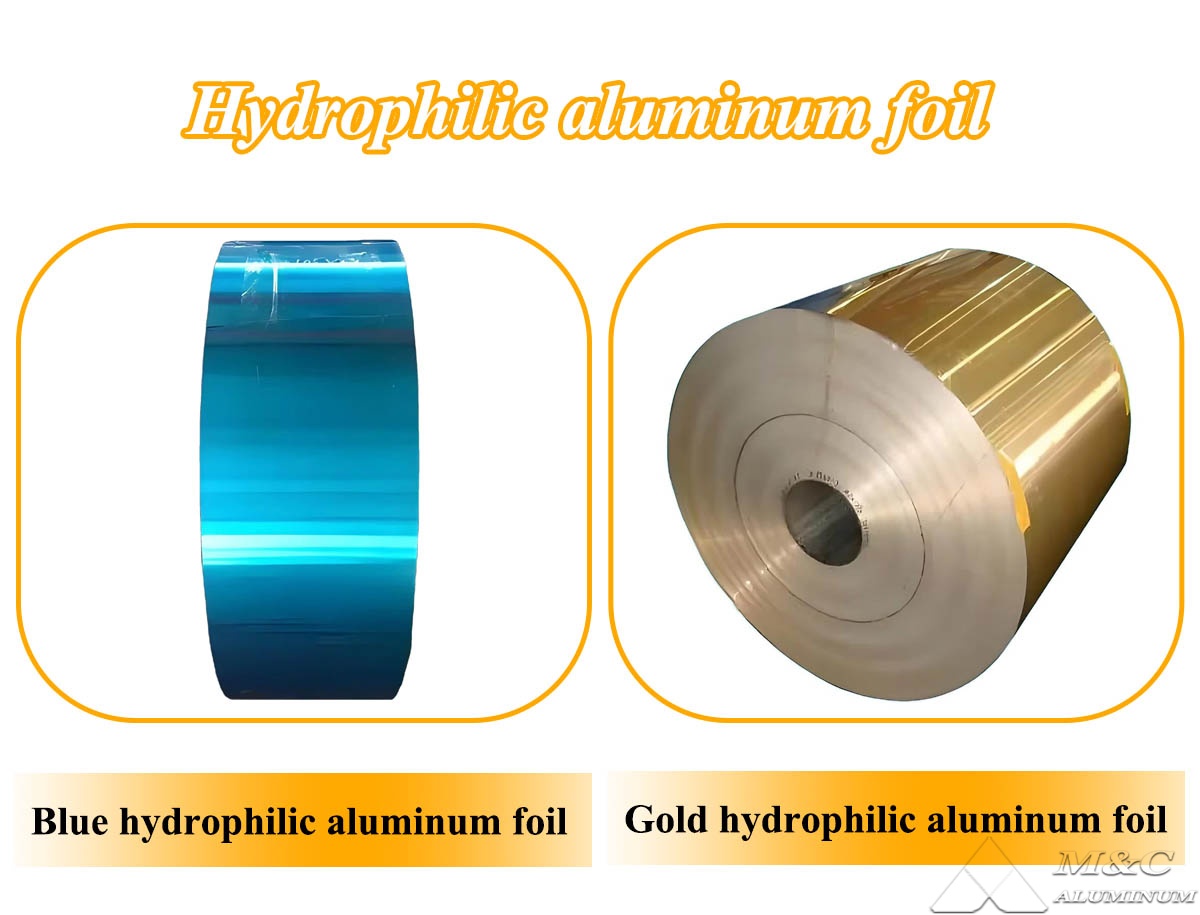
Bare foil is suitable for standard HVAC fins, while coated foil can provide additional functional properties. 1100 aluminum foil accepts hydrophilic coatings effectively when surface pretreatment and coating conditions are properly controlled. Hydrophilic aluminum foil helps condensate spread and drain more evenly, which can reduce water bridging and support cleaner air flow across evaporator coils.
Corrosion resistance
The natural oxide film on aluminum offers basic corrosion resistance in normal atmospheric conditions. For demanding air conditioning environments, such as coastal regions, industrial locations, or high-humidity installations, additional protective coatings may be specified based on the equipment design and required corrosion test standard.
Technical Parameters of 1100 Aluminum Foil for HVAC
The following ranges represent common manufacturing specifications. Final dimensions, temper, surface treatment, and testing requirements can be adjusted according to the heat exchanger design and fin press conditions.
| Parameter | Typical Specification | Notes |
|---|---|---|
| Alloy | AA 1100 | Commercially pure aluminum alloy |
| Aluminum content | 99.0% minimum | In accordance with 1100 alloy requirements |
| Temper | O, H14, H16, H18, H19 | Selected according to forming requirements |
| Thickness | 0.08-0.20 mm | Common HVAC fin stock range |
| Width | 100-1,250 mm | Slit width available on request |
| Coil inner diameter | 150 mm, 300 mm, 400 mm, 500 mm | Customized to equipment requirements |
| Coil outer diameter | Up to 1,400 mm | Subject to foil thickness and coil weight |
| Coil weight | 100-3,000 kg | Available according to handling capability |
| Surface | Mill finish, degreased, coated | Bare or functional coated options |
| Coating type | Hydrophilic, epoxy, anti-corrosion | Determined by application conditions |
| Tensile strength | Approx. 70-160 MPa | Depends on temper and thickness |
| Elongation | Approx. 1-25% | Depends on temper and test method |
| Surface quality | Clean, smooth, oil-controlled | Free from defects affecting processing |
Manufacturing Process and Quality Control
Our factory controls 1100 aluminum foil production through a defined process route. We begin with qualified primary aluminum and alloying control, followed by melting, casting, hot rolling where applicable, cold rolling, intermediate annealing, final rolling, slitting, and packing. Each stage is managed to maintain consistent physical properties and surface condition.
For HVAC heat exchanger foil, surface cleanliness is particularly important. Excessive rolling oil residue, scratches, pinholes, dents, edge damage, or uneven coating can interfere with fin stamping and subsequent assembly. We inspect foil appearance, thickness, width, coil shape, mechanical properties, and surface condition before shipment.
For coated products, additional controls are applied to coating weight, curing condition, adhesion, wettability, and visual uniformity. Hydrophilic performance may be evaluated through water contact behavior or specified customer test procedures. If customers require salt spray testing, alkali resistance, boiling water resistance, or cross-hatch adhesion testing, these requirements can be incorporated into the production and inspection plan.
Bare, Hydrophilic, and Coated HVAC Aluminum Foil
The right foil surface depends on the operating environment and the intended function of the heat exchanger.
Bare 1100 aluminum foil is typically used where standard corrosion resistance and straightforward fin processing are sufficient. It is an economical choice for conventional HVAC coil designs.
Hydrophilic aluminum foil is mainly used for evaporator fins. Its coating improves water spreading and drainage during cooling operation. By reducing retained water droplets between fins, hydrophilic foil can help maintain air passage efficiency and reduce the possibility of water carryover.
Anti-corrosion coated aluminum foil is intended for more demanding conditions. Coating systems may be selected for enhanced resistance to salt, moisture, chemicals, or industrial contaminants. The coating type should be matched to the final application, expected climate, and heat exchanger manufacturer's performance specification.
For broader coil and fin material requirements, our Aluminium Foil For Air Conditioner range includes options for different HVAC equipment designs and processing conditions.
Selecting the Correct Temper and Thickness
Selecting the right temper is essential because fin production requires a balance between strength and formability. Soft O temper foil provides high ductility and is appropriate for applications involving deeper drawing or complex forming. H14 and H16 tempers offer increased strength while retaining good workability for many standard fin designs. Harder tempers may be selected where higher rigidity is required, provided the stamping process is compatible with the reduced elongation.
Thickness should be chosen based on fin geometry, fin pitch, press capability, heat transfer requirements, and cost targets. Thinner aluminum foil can reduce material consumption and component weight, but it requires tighter process control during rolling, slitting, and stamping. Thicker foil may offer improved handling strength and rigidity for certain industrial or commercial heat exchanger assemblies.
Before volume production, we recommend confirming the foil specification through trial stamping. This allows the customer to verify collar height, louver quality, burr control, springback, and die compatibility under actual production conditions.
Typical Applications
Our 1100 aluminum foil for HVAC heat exchangers is used in a range of heat transfer products, including:
Residential air conditioner evaporator and condenser fins.
Commercial HVAC coil assemblies.
Refrigeration equipment heat exchanger fins.
Dehumidifier and heat pump coil components.
Automotive and industrial cooling equipment.
Ventilation and air treatment equipment.
General-purpose aluminum fin stock for stamped heat exchangers.
Packaging and Export Supply
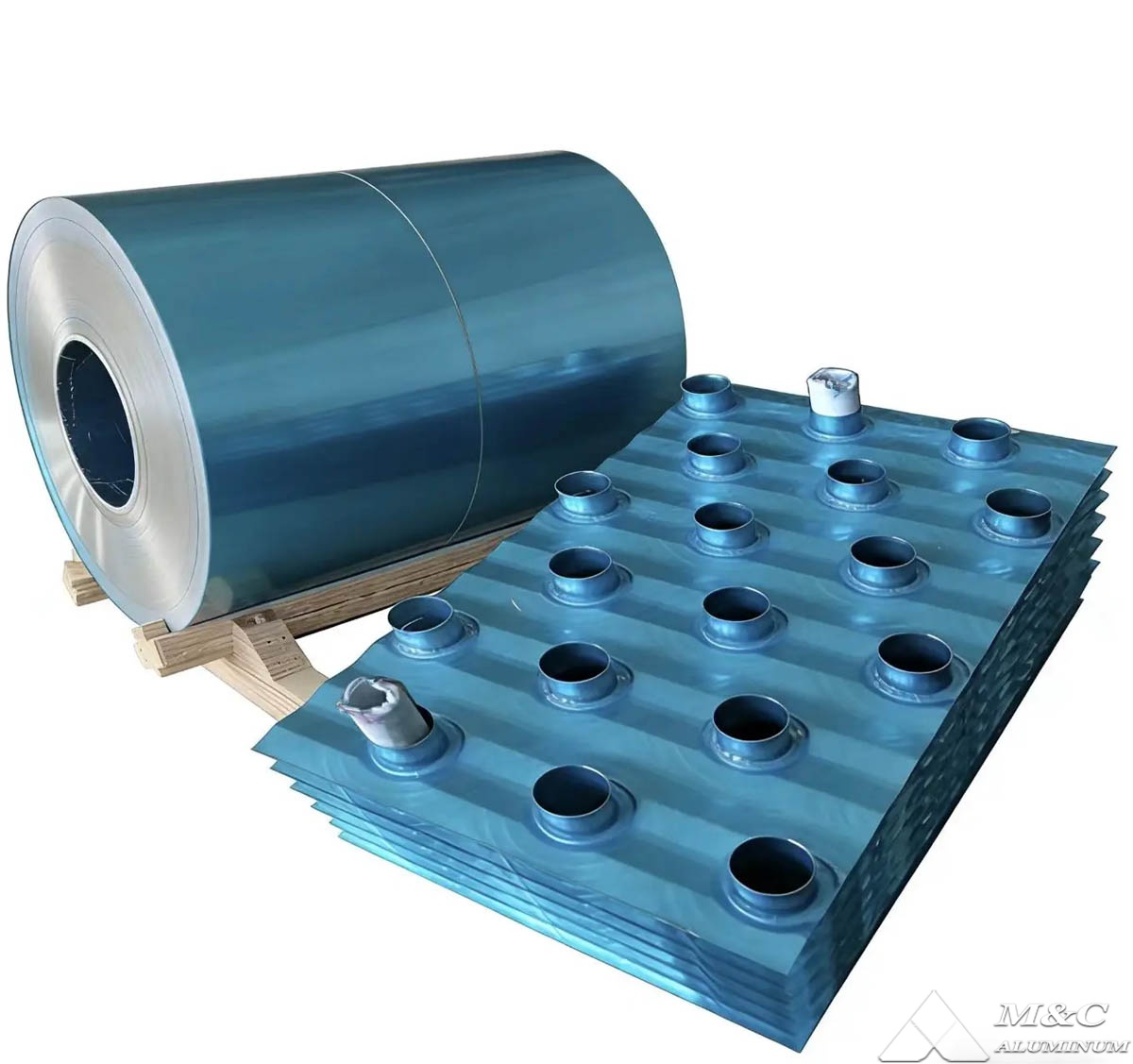
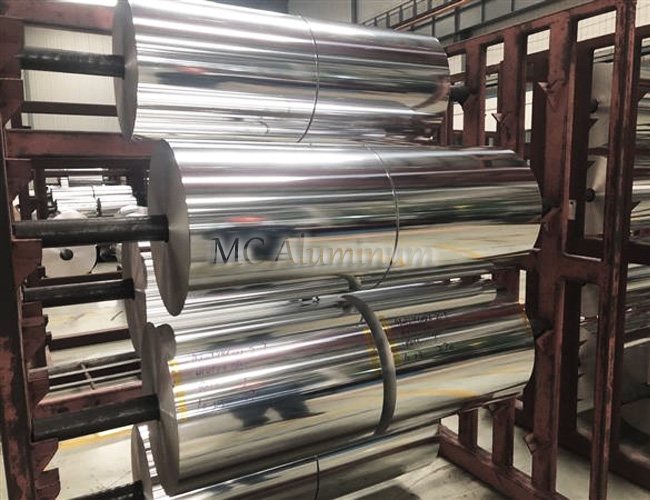
We pack HVAC aluminum foil coils to protect the material against moisture, dust, transit damage, and edge deformation. Standard export packing may include moisture-proof paper, plastic film, protective edge materials, wooden pallets, and reinforced outer packaging. Coil labels can include alloy, temper, dimensions, coil weight, batch number, and customer reference information.
As a factory supplier, we can arrange production according to agreed technical specifications and delivery schedules. For export orders, documentation can be prepared according to commercial requirements, including packing lists, certificates of analysis, inspection reports, and other documents requested in the purchase order.
Conclusion
1100 aluminum foil is a practical material for HVAC heat exchangers because it combines good thermal conductivity, corrosion resistance, formability, and coating compatibility. For reliable fin production, the most important factors are consistent thickness, appropriate temper, clean surface quality, accurate slitting, and stable coil shape.
We manufacture 1100 aluminum foil for HVAC heat exchanger applications in bare, hydrophilic, and coated configurations. By matching the foil specification to the fin design, stamping process, and service environment, heat exchanger manufacturers can obtain material that supports stable production and consistent finished-coil performance.
Contact Us