
Aluminum Foil for Lithium-Ion Battery Manufacturing
Lithium-ion battery manufacturing requires stable, clean, and precisely controlled materials at every stage of electrode production. Aluminum foil is the standard current collector material for the cathode side of most lithium-ion batteries, including cells used in electric vehicles, energy storage systems, consumer electronics, power tools, and industrial equipment.
As an aluminum foil manufacturer, we produce battery aluminum foil with controlled thickness, surface condition, mechanical properties, and coil geometry. Our production process is designed to support cathode coating, calendaring, slitting, winding, and cell assembly operations. The foil must provide reliable electrical conductivity while maintaining consistent adhesion with active cathode materials and conductive coatings.
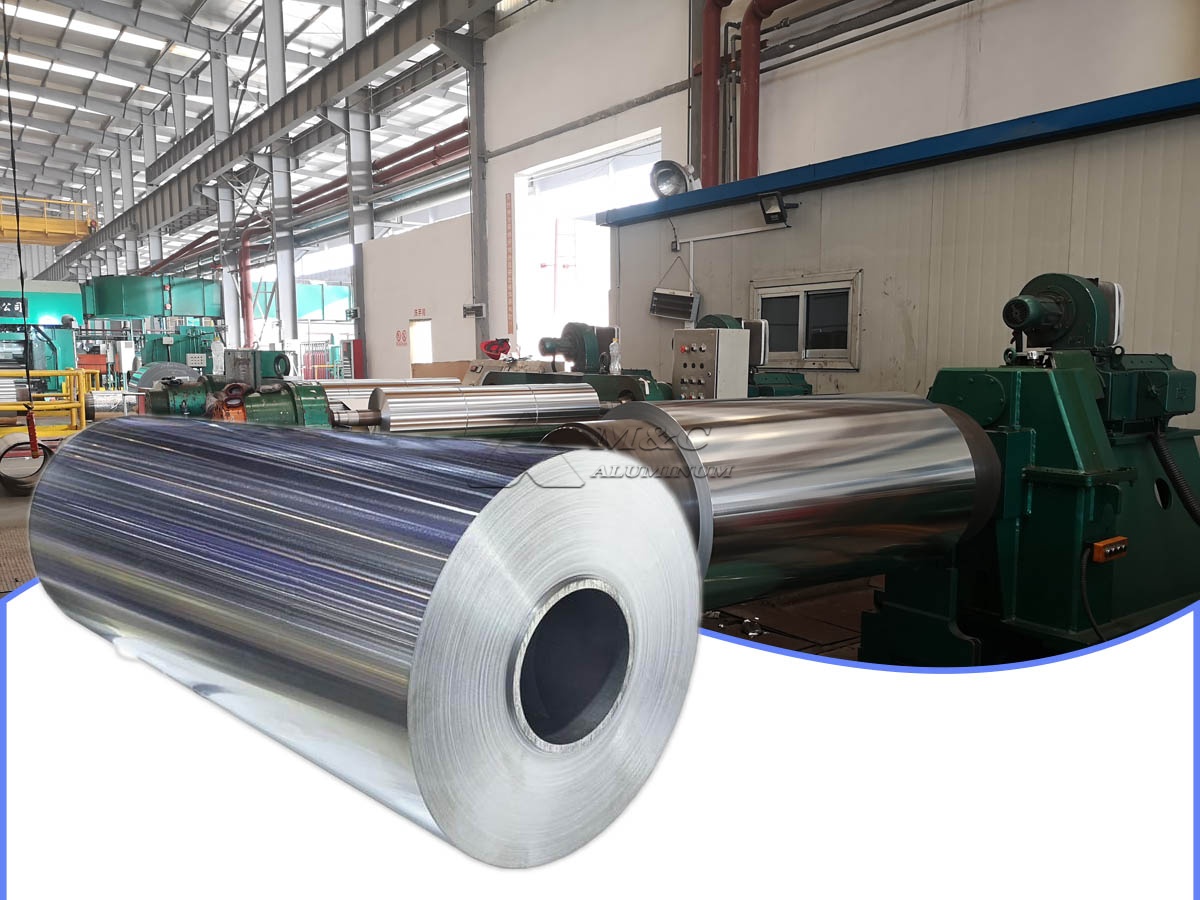
Role of Aluminum Foil in Lithium-Ion Batteries
In a lithium-ion battery, the cathode current collector transfers electrons between the cathode active material and the external circuit. Aluminum foil is widely selected for this function because it has good electrical conductivity, low density, corrosion resistance in typical cathode operating conditions, and suitable processability for high-speed electrode coating lines.
The battery aluminum foil is coated with a cathode slurry that commonly contains active materials such as lithium iron phosphate, lithium nickel manganese cobalt oxide, lithium nickel cobalt aluminum oxide, or lithium manganese oxide. The slurry also includes conductive additives and polymer binders. After coating and drying, the electrode is compressed, slit, and assembled into cylindrical, prismatic, or pouch cells.
For this application, aluminum foil for lithium-ion battery manufacturing must have more than a nominal thickness specification. Surface cleanliness, pinhole control, burr management, tensile consistency, flatness, and coil winding quality all influence electrode production efficiency and final battery performance.
Performance Advantages of Battery Aluminum Foil
1. High Electrical and Thermal Conductivity
Aluminum foil exhibits excellent electrical conductivity (≥62% IACS), efficiently collecting micro-currents generated by the cathode active material while reducing internal resistance and heat generation; simultaneously, its good thermal conductivity facilitates rapid heat dissipation during battery operation.
2. Lightweight and High Strength; Enhanced Energy Density
With a density of only 2.7 g/cm³—significantly lower than that of copper—aluminum foil used as a cathode current collector effectively reduces the battery's overall weight, contributing substantially to higher gravimetric energy density.
3. Excellent Resistance to Electrolyte Corrosion
Aluminum foil rapidly forms a dense aluminum oxide (Al₂O₃) passivation layer upon contact with the electrolyte. This layer ensures chemical stability at high potentials, providing long-term resistance to electrolyte corrosion and preventing dissolution.
4. Good Processability and Coating Performance
Battery-grade aluminum foil possesses excellent ductility and flexibility, enabling it to withstand processing steps such as coating, calendering, and slitting. Furthermore, surface treatments (such as corona treatment) yield high surface wetting tension (dyne level ≥32 mN/m), ensuring uniform coating of the cathode slurry and strong adhesion.
5. High Purity and Surface Cleanliness
Battery-grade aluminum foil is subject to strict controls regarding impurity content and surface defects (e.g., production in cleanrooms). High purity prevents electrochemical reactions involving impurities and avoids micro-short circuits and self-discharge, thereby ensuring a long cycle life and high safety for the battery.
Common Alloys for Battery Aluminum Foil
The most commonly used alloy for cathode current collector foil is AA 1235 aluminum foil. This alloy offers a practical balance of purity, conductivity, rolling performance, and cost control. Depending on the cell design and customer process requirements, AA 1050, AA 1060, and AA 1070 aluminum foil may also be used.
Higher-purity aluminum grades can provide improved conductivity, while alloy selection must also consider strength, elongation, rolling behavior, and the intended thickness. Our technical team evaluates the end use, coating method, and downstream processing conditions before confirming the recommended alloy and temper.
Typical Alloy Selection
| Alloy | Typical Aluminum Content | Common Battery Use | Main Characteristics |
|---|---|---|---|
| AA 1235 | Minimum 99.35% | Standard cathode current collector | Good conductivity, stable rolling performance, widely used |
| AA 1050 | Minimum 99.50% | Cathode foil for selected cell designs | High aluminum purity and good formability |
| AA 1060 | Minimum 99.60% | Battery and electronic foil applications | Good electrical conductivity and ductility |
| AA 1070 | Minimum 99.70% | High-purity current collector applications | High conductivity and clean surface potential |
Technical Parameters of Battery Grade Aluminum Foil
The required specifications for lithium-ion battery aluminum foil vary according to cell chemistry, coating equipment, electrode design, and product format. We supply foil based on agreed technical specifications and can adapt coil dimensions for customer slitting and coating lines.
| Parameter | Typical Range or Requirement | Notes |
|---|---|---|
| Alloy | AA 1235, AA 1050, AA 1060, AA 1070 | Selected according to conductivity and process requirements |
| Temper | O, H18, or customized temper | Temper is matched to coating and winding conditions |
| Thickness | 10 to 20 microns | Common grades include 12, 15, 16, and 20 microns |
| Thickness tolerance | As agreed in technical specification | Controlled across coil width and length |
| Width | 100 to 1,650 mm | Supplied in jumbo rolls or slit coils |
| Coil inner diameter | 150 mm, 300 mm, 400 mm, 500 mm, or customized | Matched to customer equipment |
| Coil outer diameter | According to weight and handling limits | Controlled for safe transport and processing |
| Surface condition | Clean, smooth, oil-controlled | Free from defects that affect coating quality |
| Pinhole level | Controlled according to thickness and application | Important for thin foil reliability |
| Edge quality | Burr-controlled, no major edge cracks | Suitable for slitting and electrode winding |
| Tensile strength and elongation | Customized by alloy, temper, and thickness | Verified through mechanical testing |
Surface Quality Requirements for Cathode Current Collectors
The surface of battery grade aluminum foil directly affects the coating process. A uniform surface supports stable slurry wetting and helps achieve consistent coating weight. Excess rolling oil, oxide contamination, embedded particles, scratches, dents, and local thickness variation can create coating defects or reduce adhesion between the foil and cathode layer.
Our manufacturing process includes surface inspection and process control during casting, hot rolling where applicable, cold rolling, intermediate annealing, final rolling, slitting, and packing. We pay particular attention to the following factors:
Surface cleanliness and controlled residual rolling oil.
Uniform surface appearance across the full coil width.
Reduced scratches, roll marks, dents, and edge damage.
Stable thickness profile for consistent electrode loading.
Controlled pinhole occurrence for thin-gauge aluminum foil.
Clean, burr-controlled slit edges.
Proper coil tension to prevent telescoping and wrinkles.
For customers using water-based cathode slurry systems, surface condition is especially important. For solvent-based coating processes, the foil must also maintain a stable interface with the binder system after drying and calendaring. We can align surface and packaging requirements with the customer's electrode manufacturing process.
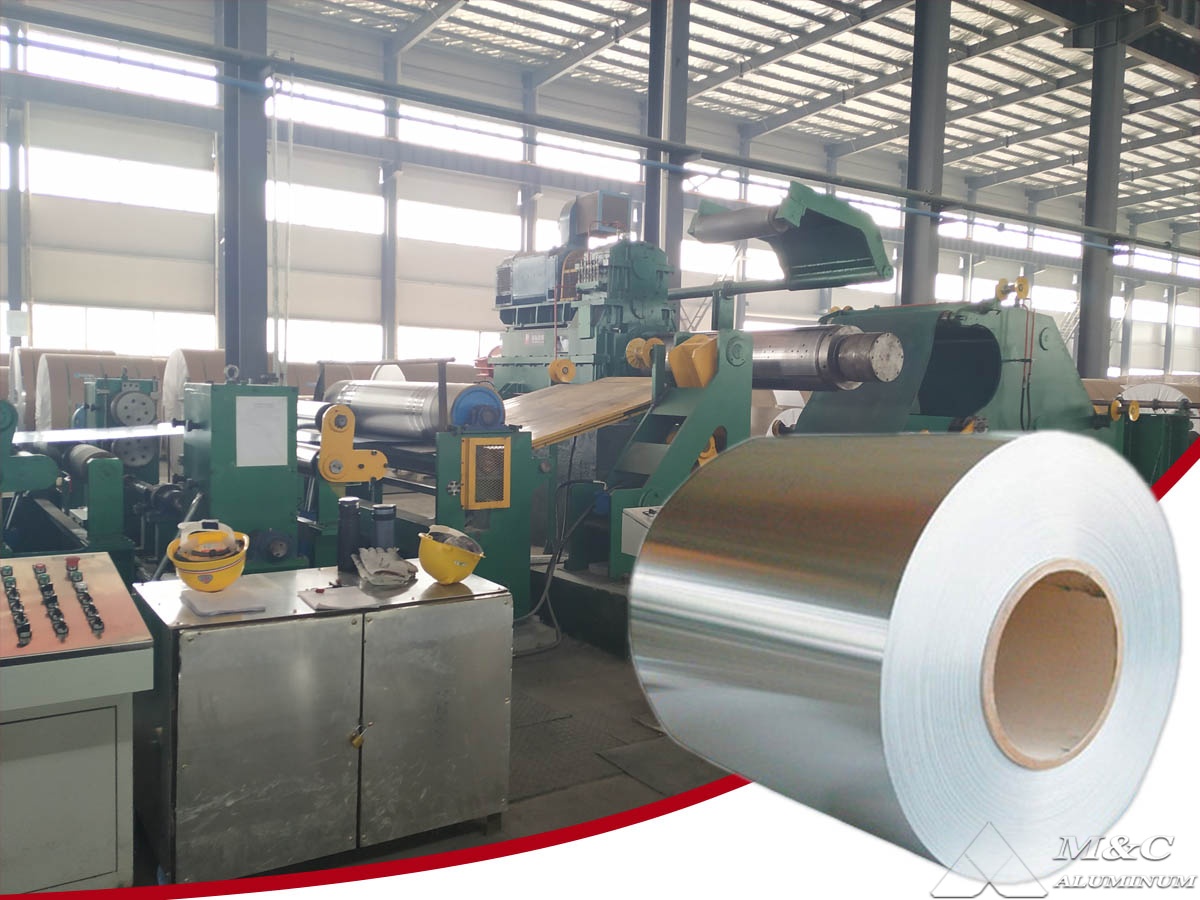
Manufacturing Process for Lithium-Ion Battery Aluminum Foil
Our aluminum foil production begins with controlled aluminum melt preparation and casting. The cast material is processed through rolling stages to gradually reduce thickness while maintaining metallurgical consistency. Intermediate annealing may be used to restore ductility and obtain the required temper before final rolling.
After final rolling, the foil is inspected, slit to the specified width, and rewound under controlled tension. Battery aluminum foil requires careful handling throughout the process because thin gauges are sensitive to edge damage, tension variation, and surface contamination.
The main manufacturing stages include:
Raw material preparation and alloy composition control.
Casting and homogenization of aluminum stock.
Hot rolling or direct processing based on production route.
Cold rolling to intermediate and final foil thickness.
Annealing for temper and mechanical property adjustment.
Final rolling with thickness and surface control.
Slitting, rewinding, coil inspection, and protective packaging.
As a factory supplier, we maintain production traceability from material batch to finished coil. This helps customers manage incoming inspection, production records, and quality documentation for battery manufacturing programs.
Quality Control and Testing
Battery manufacturers and electrode producers require consistent material data. Our quality control system includes routine checks during production and final inspection before shipment. Test items are selected according to the approved purchase specification.
Typical inspection items include thickness measurement, width measurement, coil weight, surface appearance, edge condition, mechanical properties, pinhole inspection, residual oil evaluation where required, and winding quality. We can also provide mill test certificates and dimensional records for each shipment batch.
Thickness control is critical because it affects cathode coating weight, volumetric energy density, and electrode consistency. Even small variations may influence coating gap settings and the amount of active material applied to the foil. Width and edge quality are also important for customers performing precision slitting before cell assembly.
Slitting, Packaging, and Delivery Considerations
Aluminum foil for battery cathodes may be supplied as jumbo rolls for customer-side slitting or as narrow slit coils for direct use on coating and winding lines. The preferred format depends on the customer's equipment layout, material handling system, and production capacity.
We package battery aluminum foil to reduce the risk of moisture exposure, dust contamination, mechanical damage, and coil deformation during export transportation. Standard protection may include protective wrapping, moisture-barrier materials, edge protection, wooden pallets, and reinforced export packing. Packaging dimensions and coil orientation are confirmed according to container loading and customer handling requirements.
For export orders, we can provide commercial documents, packing lists, certificates of origin where applicable, mill test certificates, and coil identification labels. Each coil can be marked with alloy, temper, thickness, width, net weight, batch number, and production reference.
How to Specify Aluminum Foil for Lithium-Ion Battery Manufacturing
To receive an accurate technical proposal, buyers should provide the intended battery application, alloy preference, thickness, width, temper, coil dimensions, surface requirements, and expected annual or monthly quantity. It is also useful to clarify whether the foil will be used directly for cathode coating or will undergo additional slitting, laminating, etching, or surface treatment.
As a manufacturer of aluminum foil for lithium-ion battery manufacturing, we work with customers to define a practical specification that supports stable electrode processing. The objective is not only to supply aluminum foil at the required dimensions, but also to provide consistent cathode current collector material for long-term battery production.

Contact Us