
Aluminum Strip for Oil Immersed Transformer
Oil immersed transformers require conductor materials with stable electrical performance, precise dimensional control, and dependable process consistency. As a manufacturer of Aluminum Strip, we produce aluminum strip for oil immersed transformer windings under controlled rolling, slitting, annealing, and inspection procedures to meet the practical requirements of transformer coil production.
Our transformer aluminum strip is designed for low-voltage and medium-voltage winding applications where conductivity, surface cleanliness, edge quality, and elongation directly affect winding efficiency and finished transformer reliability. In production, we focus on uniform mechanical properties across the full coil length, because winding stability depends not only on nominal alloy and temper, but also on consistency from one meter to the next.
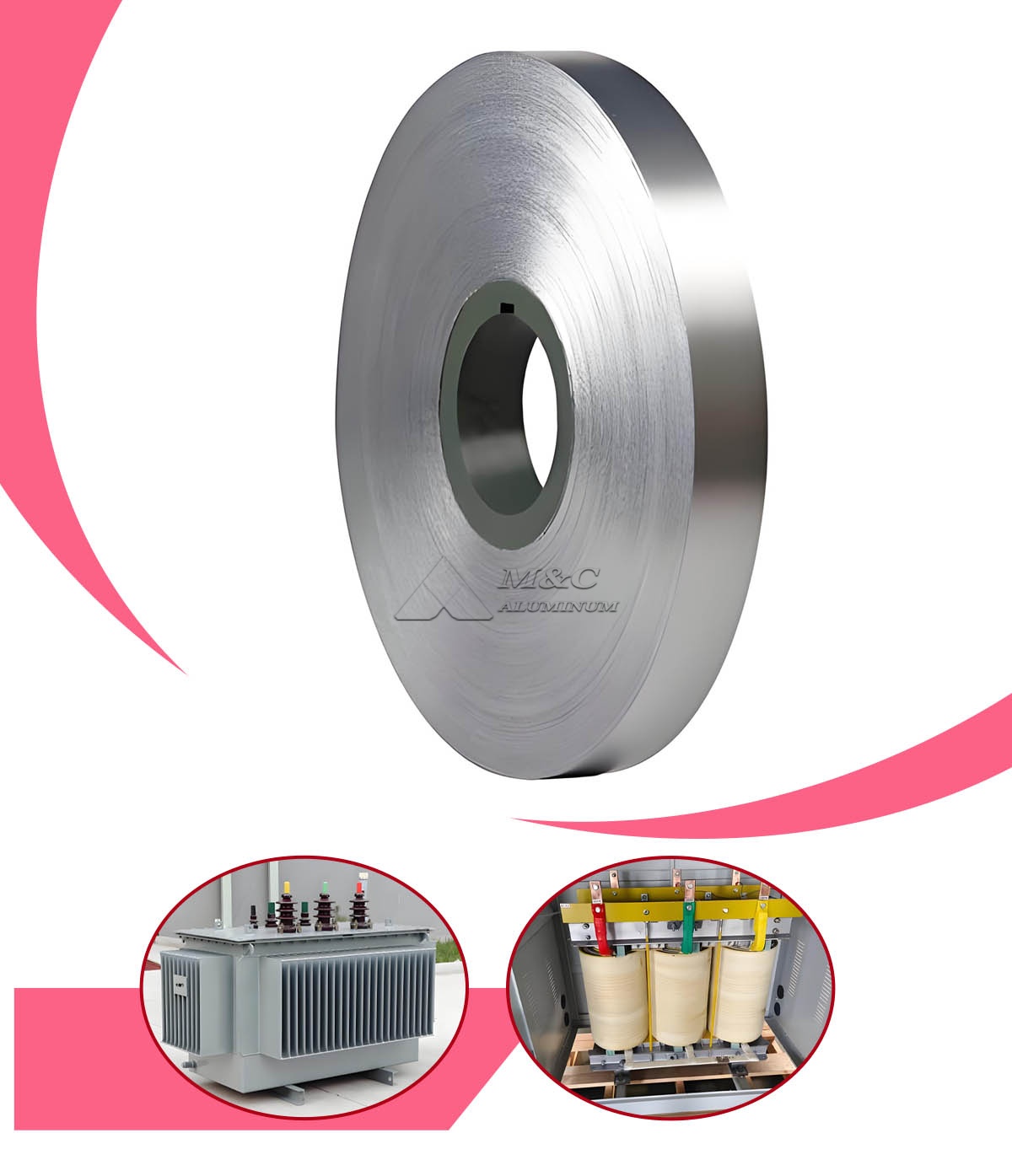
What is aluminum strip for oil immersed transformer
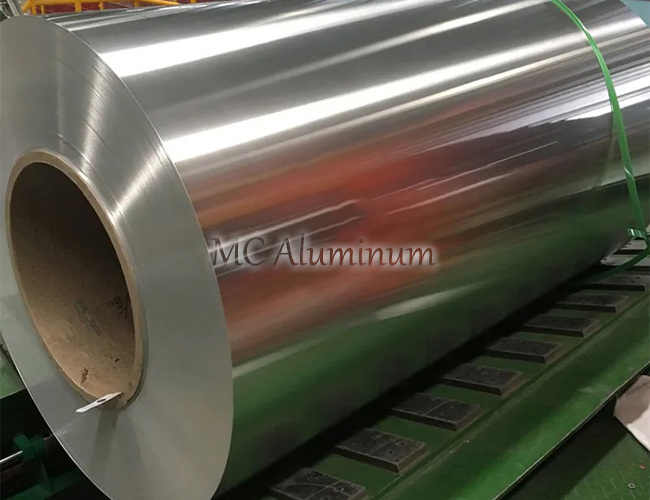
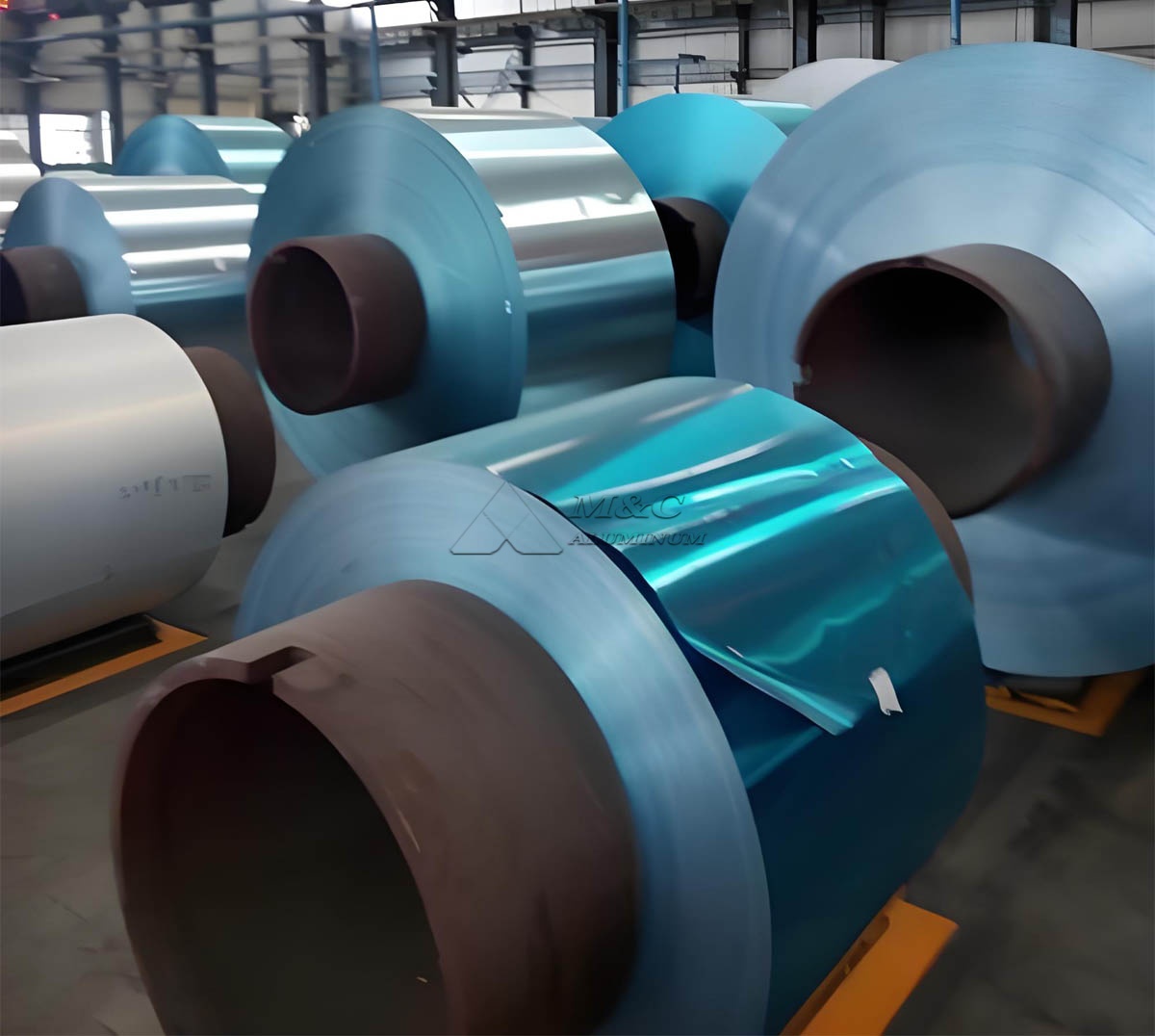
Aluminum strip for oil immersed transformer is a rolled and slit electrical-grade aluminum product used as conductor material in transformer windings. Compared with conventional industrial strip, this product places stricter demands on conductivity, burr control, flatness, edge condition, and annealing performance. The strip must unwind smoothly, maintain stable width and thickness, and tolerate repeated bending during coil winding without cracking.
In oil immersed transformer manufacturing, the winding conductor operates within an insulation and oil cooling system. For this reason, the conductor material must support efficient current transmission while maintaining dimensional integrity during winding, drying, assembly, and service. A well-made transformer aluminium strip helps improve winding compactness, reduce local defects, and support long-term electrical performance.
We manufacture this product mainly in high-purity aluminum grades such as 1060 and 1070, which are widely used for transformer winding due to their high conductivity and good formability. According to customer processing requirements, we supply the strip in fully annealed tempers suitable for continuous winding.
Main manufacturing focus from our factory
As a direct manufacturer, we control the key stages that determine whether the strip is suitable for transformer use:
Melting and casting control for chemical composition stability
Hot rolling and cold rolling for thickness accuracy
Precision slitting for width consistency and low burr edges
Annealing for soft temper and stable elongation
Surface inspection for oil, scratch, dent, and contamination control
Electrical property testing for conductivity verification
Coil packaging designed for export and workshop handling
This production approach is essential for Transformer Aluminium Strip, because transformer manufacturers need material that can enter winding lines directly with minimal adjustment.
Typical technical parameters
The exact specification depends on transformer design, winding equipment, and conductor cross-section requirements. Below are common supply ranges from our factory.
| Item | Typical Range / Value |
|---|---|
| Product name | Aluminum strip for oil immersed transformer |
| Common alloys | 1060, 1070, 1350 |
| Temper | O |
| Thickness | 0.20 mm - 3.50 mm |
| Width | 10 mm - 160 mm |
| Inner diameter | 150 mm, 300 mm, 400 mm, 500 mm |
| Outer diameter | According to weight and winding requirement |
| Conductivity | Typically >= 61.0% IACS, depending on alloy |
| Surface condition | Clean, smooth, free from major scratches and oil contamination |
| Edge condition | Slit edge, low burr |
| Thickness tolerance | According to agreed standard and application requirement |
| Width tolerance | According to agreed slitting specification |
| Coil weight | Customized |
| Standard application | Transformer winding conductor |
| Packaging | Export seaworthy wooden pallet or wooden case |
| MOQ | 1-3 tons |
For some winding structures, we also manufacture narrower and thinner specifications when the transformer design requires compact conductor dimensions. Material selection should be based on actual current load, temperature rise target, insulation system, and winding process capability.
Why 1060 and 1070 aluminum strip are commonly used
The most frequently requested grades for oil immersed transformer applications are 1060 aluminum strip and 1070 aluminum strip. These alloys provide the combination of conductivity and processability required for electrical winding use.
1. High electrical conductivity
Transformer winding conductors must limit electrical losses. High-purity aluminum grades offer good conductivity, which supports efficient current transmission in properly designed winding systems.
2. Good ductility in annealed temper
During winding, the strip is bent continuously and must remain free from edge cracking or surface fracture. Fully annealed material provides the flexibility required for stable forming.
3. Reliable dimensional processing
These alloys respond well to rolling and slitting, allowing tighter control of thickness, width, flatness, and edge quality.
4. Industrial practicality
For many transformer manufacturers, aluminum winding strip offers a practical balance between electrical performance, weight, and manufacturing cost.
In some projects, customers also compare pure aluminum grades with 3003 Aluminium strip for related industrial strip applications, but for transformer winding conductors, high-conductivity grades such as 1060 and 1070 are generally the preferred choice.
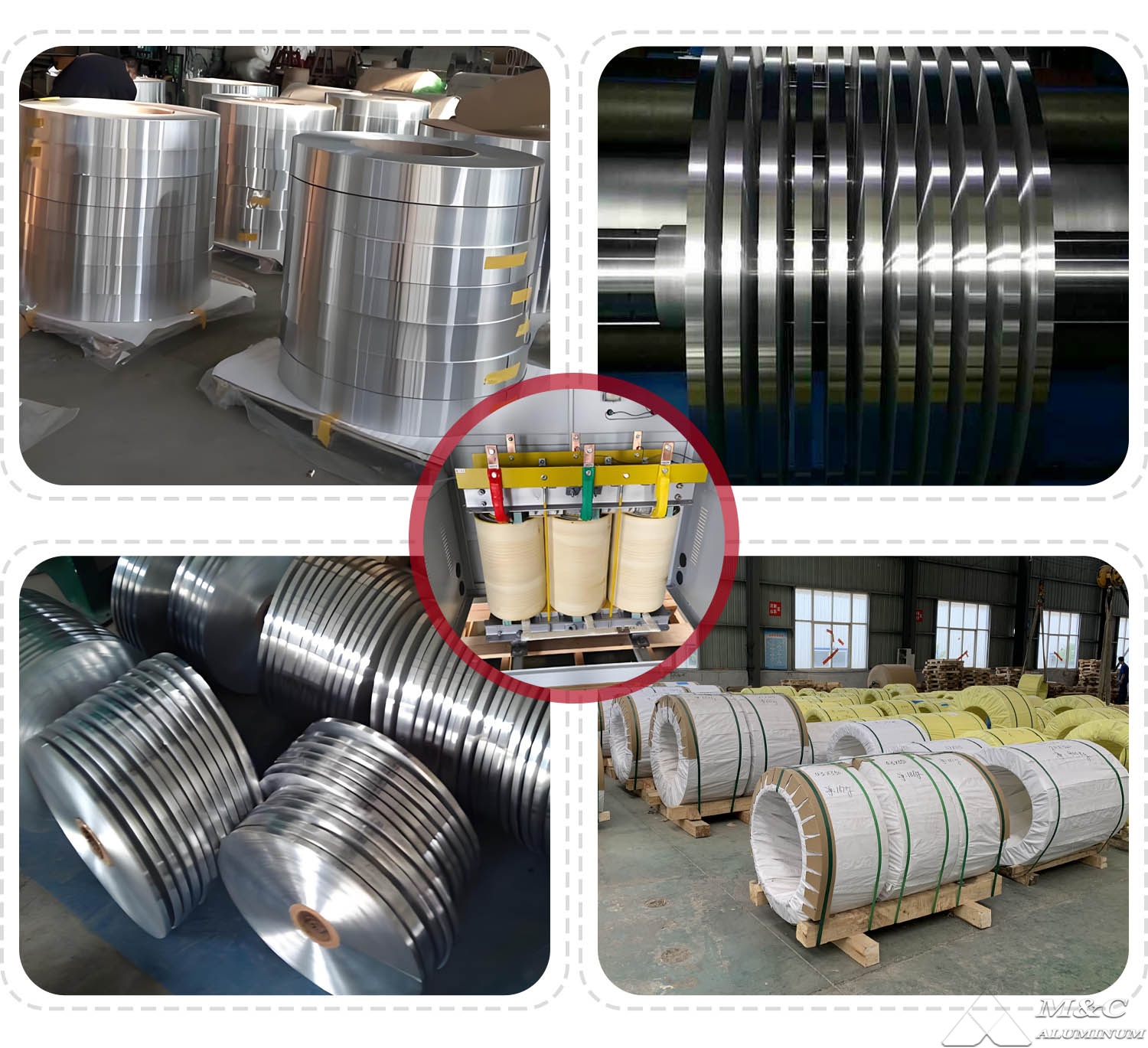
Key quality requirements for transformer winding strip
From a manufacturing standpoint, transformer aluminum strip is not judged by alloy designation alone. The actual winding performance depends on several practical quality indicators.
Conductivity stability
Electrical performance must remain consistent across the full coil. Variation in chemical composition or thermal treatment can reduce conductivity uniformity and affect the winding result.
Precise thickness and width control
Winding layers must be compact and regular. Excess thickness deviation may influence conductor cross-section, insulation matching, and winding geometry. Width tolerance is equally important for coil alignment.
Edge quality and low burr
Poor edge condition can damage insulation paper or coating during winding. We therefore pay close attention to slitting tool condition and post-slitting inspection to keep edge burr within controlled limits.
Good flatness and coil winding quality
The strip must feed smoothly without strong camber, wave, or telescoping problems. Good coil build improves handling efficiency on the customer's winding line.
Clean surface
A transformer winding conductor should have a clean and uniform surface. Visible contamination, heavy rolling marks, scratches, or embedded particles may interfere with further processing.
Soft and uniform annealing
Annealing must deliver the required softness without excessive property variation. Non-uniform hardness can lead to unstable winding tension and local forming defects.
Our manufacturing process
We produce aluminum strip for oil immersed transformer through a controlled sequence designed for electrical-grade applications.
Raw material selection
We begin with qualified base material and verify chemistry according to the target alloy. High-purity input is essential for conductivity-oriented production.
Rolling
Hot rolled feedstock is further processed by cold rolling to achieve the specified thickness. During this stage, we monitor gauge control carefully to maintain profile consistency.
Slitting
After rolling, the strip is slit to the required width. Tool setup, line speed, and tension are adjusted according to strip thickness and final edge requirement.
Annealing
The slit strip is annealed to O temper. Time and temperature are managed to achieve the required softness, elongation, and conductivity characteristics.
Inspection and testing
We inspect dimensions, appearance, coil condition, and relevant physical properties before shipment. When required, we also provide conductivity and mechanical test reports.
Packaging
For export supply, we use moisture-protected and impact-resistant packing suitable for long-distance transportation. Proper packaging is especially important for maintaining edge condition and coil shape.
Applications in oil immersed transformer production
Our aluminum strip is mainly used in the following areas:
Low-voltage winding conductors
Medium-capacity transformer coil winding
Layer winding and foil-type winding structures
Distribution transformer manufacturing
Energy equipment requiring electrical-grade aluminum conductors
In oil immersed transformer construction, conductor quality affects winding compactness, heat dissipation path, insulation coordination, and operating stability. For that reason, many customers evaluate strip quality not only by laboratory data, but also by winding performance, scrap rate, and consistency during batch production.
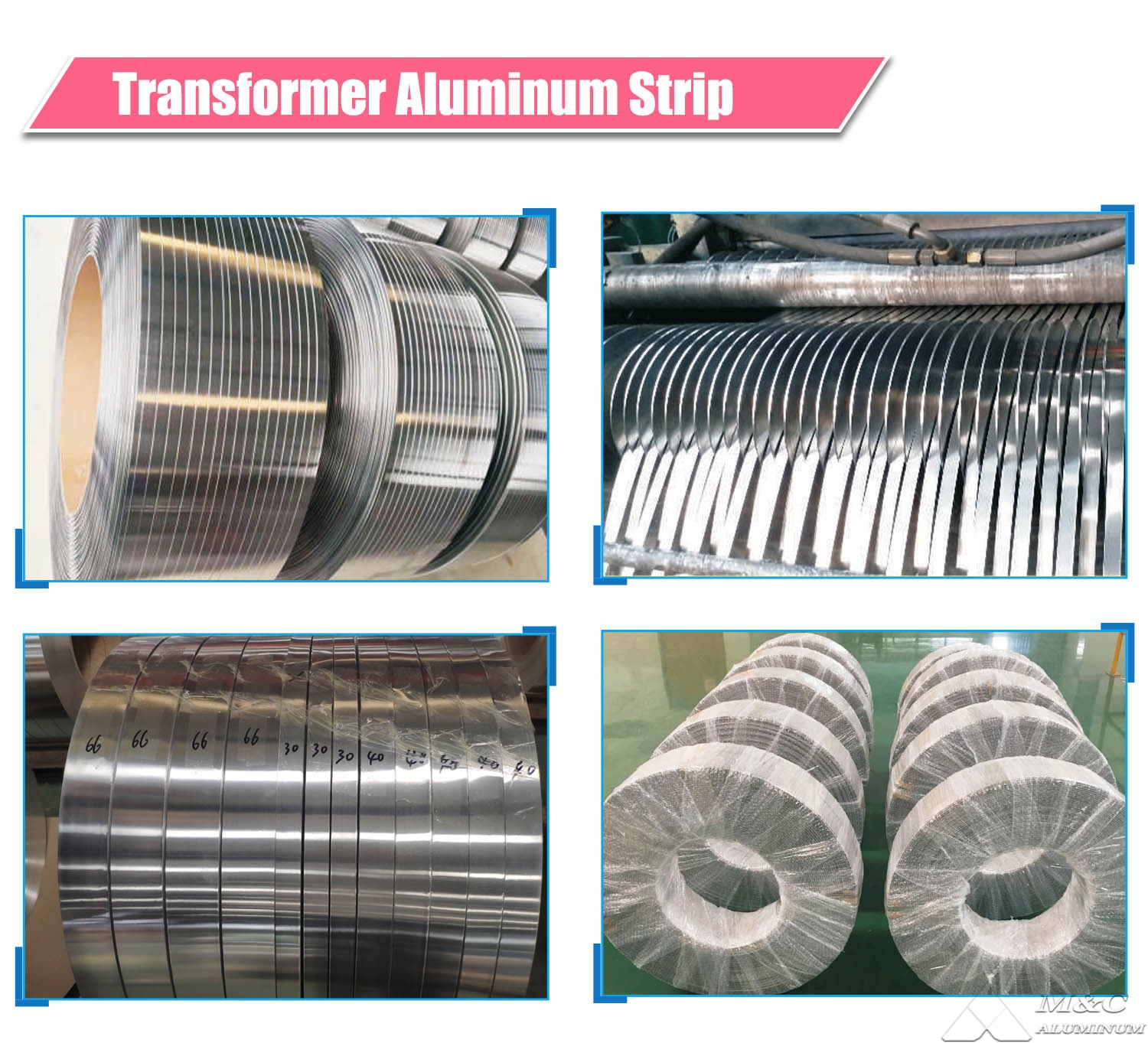
How we support transformer manufacturers
As a factory, we work from the actual needs of transformer production rather than generic stock supply. When confirming an order, we usually review the following points with the customer:
Alloy and conductivity target
Thickness and width combination
Required temper and elongation
Acceptable burr level and edge condition
Coil weight and coil dimensions for winding equipment
Surface quality requirements
Packaging method for sea freight or inland transport
Testing documents required for incoming material approval
This communication helps reduce mismatch between purchased material and workshop use. For transformer plants, the most efficient supply is not simply material that meets a basic grade standard, but material that performs consistently on the winding line.
Conclusion
Aluminum strip for oil immersed transformer is a specialized electrical conductor material that requires careful control of conductivity, thickness tolerance, width accuracy, edge quality, flatness, and annealed condition. As a manufacturer, we produce transformer aluminium strip with a focus on stable winding performance and batch-to-batch consistency.
For transformer winding applications, properly manufactured 1060, 1070, and related electrical-grade aluminum strip can provide reliable conductivity, good formability, and efficient processing. By controlling rolling, slitting, annealing, inspection, and packaging in-house, we help transformer manufacturers obtain conductor material suitable for practical production requirements rather than nominal specification alone.
If your project has specific requirements for winding size, conductivity, burr control, or coil configuration, production can be arranged according to the transformer design and the operating conditions of your winding equipment.
Contact Us