
Aluminum Strip Armor vs. Steel Strip Armor: How to Choose the Right Armoring Material for Power Cables
Power cable armor is designed to protect the cable core from mechanical damage during installation and service. In industrial plants, utility networks, underground routes, and infrastructure projects, the armoring material must withstand crushing force, impact, pulling stress, and environmental exposure without compromising electrical performance.
As a manufacturer of rolled and slit aluminum products, we supply aluminum strip coils for cable armoring applications where low weight, corrosion resistance, and non-magnetic performance are required. The selection between aluminum strip armor and steel strip armor should not be based on material cost alone. Cable type, conductor configuration, installation environment, fault-current requirements, and applicable standards must all be considered.
This article explains the principal differences between aluminum armored cable and steel armored cable constructions and provides a practical method for selecting the appropriate cable armoring material.
What Is Strip Armor in Power Cables?
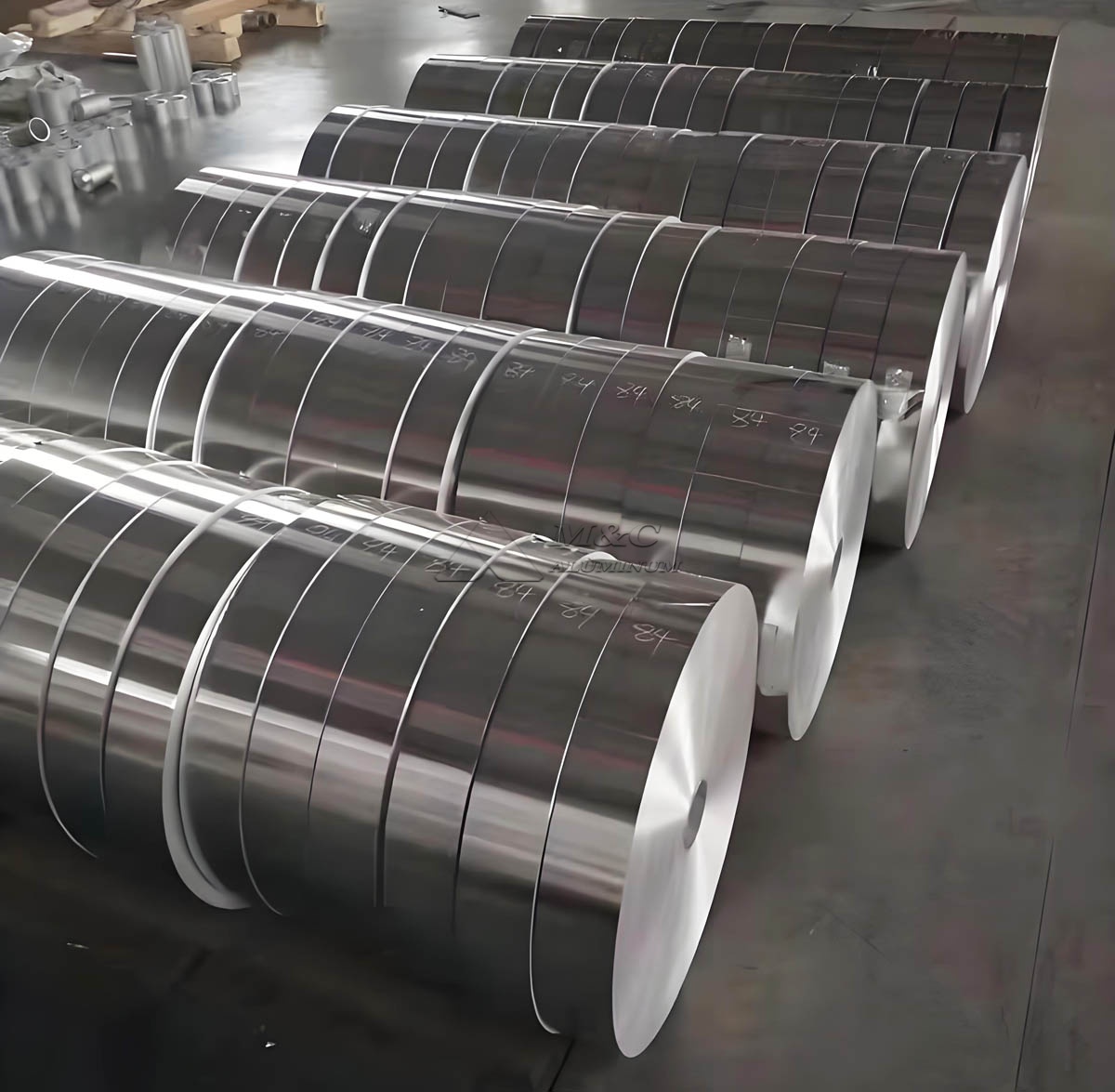
Strip armor consists of flat metal strips helically applied around a cable bedding layer or inner sheath. It creates a protective mechanical layer between the insulated cable cores and the outer sheath. Depending on the cable design, the armor may also provide an earth continuity path.
Steel strip armor is commonly used for multicore power cables. Aluminum strip armor is frequently selected for single-core AC power cables because aluminum is non-magnetic. This distinction is important: magnetic steel armor around a single-core AC cable can be subject to induced eddy currents and magnetic losses, which may lead to excessive heating.
The armoring layer is normally combined with PVC, PE, XLPE, or LSZH outer sheathing selected for the installation environment. The metal strip itself must have stable dimensions, controlled edge condition, consistent mechanical properties, and suitable surface quality for high-speed cable armoring equipment.
Aluminum Strip Armor and Steel Strip Armor Compared
The fundamental difference is that aluminum is non-magnetic, lightweight, and naturally corrosion resistant, while steel provides significantly higher mechanical strength and impact resistance. Neither material is universally better. The correct choice depends on the cable's electrical design and expected mechanical duty.
| Property | Aluminum Strip Armor | Steel Strip Armor |
|---|---|---|
| Magnetic behavior | Non-magnetic | Magnetic unless special non-magnetic grades are used |
| Density | Approx. 2.70 g/cm3 | Approx. 7.85 g/cm3 |
| Relative cable weight | Low | High |
| Tensile strength | Moderate, alloy dependent | High |
| Resistance to crushing and impact | Good for suitable applications | Excellent for heavy-duty applications |
| Corrosion resistance | Good natural resistance; improved with proper alloy and sheath design | Requires galvanizing, coating, or additional corrosion protection |
| Suitability for single-core AC cables | Generally preferred | Usually not recommended due to induced losses |
| Suitability for multicore cables | Suitable where weight and corrosion resistance matter | Widely used, especially for mechanical protection |
| Electrical conductivity | High | Lower than aluminum |
| Typical supply form | Slit coils with controlled burr and camber | Galvanized or coated steel strip coils |
Why Aluminum Strip Armor Is Used for Single-Core AC Cables
For single-core AC cables, the alternating magnetic field generated by the conductor extends beyond the insulation and metallic layers. If a ferromagnetic steel strip armor surrounds the cable, the steel can concentrate magnetic flux and increase eddy-current losses. This may raise armor temperature and reduce the cable's current-carrying capacity.
Aluminum strip armor avoids this issue because it is non-magnetic. Although aluminum is electrically conductive, its non-ferromagnetic behavior makes it the preferred armoring material for many single-core medium-voltage and high-voltage AC cable designs.
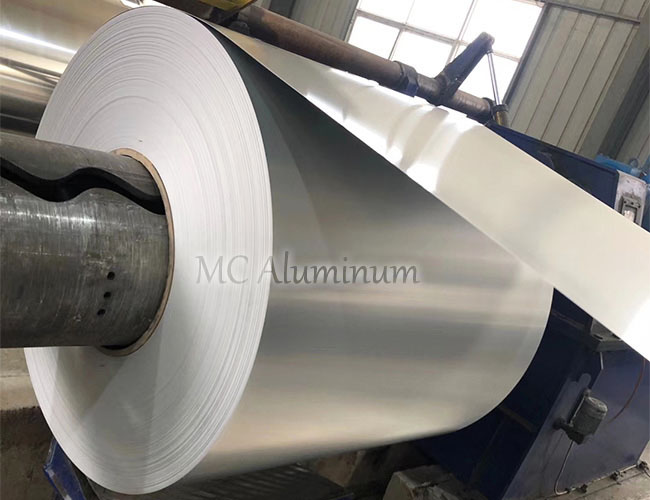
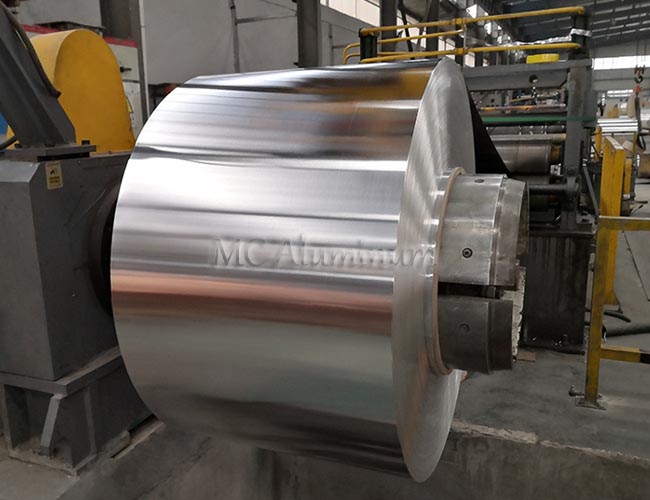
In our production process, aluminum strip for cable applications is rolled and slit with close control of thickness tolerance, strip width, edge burr, coil build, and surface cleanliness. These factors are essential because armor strip must feed consistently through the cabling line without damaging bedding layers or causing irregular overlap.
For buyers evaluating raw material options, our Aluminum Strip range can be produced in application-oriented widths and coil formats to support cable armoring operations.
Why Steel Strip Armor Remains the Standard for Many Multicore Cables
Steel strip armor remains a practical and established choice for multicore power cables installed in demanding locations. Its high strength gives the cable improved protection against external pressure, impact, construction damage, and certain rodent risks. Steel armored cable is commonly used in underground distribution, industrial facilities, tunnels, commercial buildings, and direct-buried installations.
For multicore cables, the magnetic effects associated with steel armor are substantially lower than in single-core AC constructions because the phase conductors are grouped together and their magnetic fields partially cancel. This makes steel strip armor suitable for many three-core and four-core power cable designs.
However, steel must be protected against corrosion. Galvanized steel strip is commonly used, but aggressive coastal, chemical, wet-soil, or highly saline conditions may require further consideration of the outer sheath, bedding system, coatings, and cable route design.
Technical Parameters for Cable Armor Strip Selection
Final dimensions must be defined according to the cable design, conductor size, applicable standard, and customer specification. The following table shows typical evaluation parameters rather than a universal product specification.
| Parameter | Aluminum Strip Armor | Steel Strip Armor | Selection Consideration |
|---|---|---|---|
| Typical thickness range | 0.20 to 1.00 mm | 0.20 to 1.50 mm | Determined by cable diameter, required protection, and standard |
| Typical strip width range | 10 to 100 mm | 10 to 100 mm | Selected to achieve correct helical coverage and overlap |
| Material condition | H14, H16, H18, or specified temper | Cold rolled, galvanized, or coated condition | Must balance forming capability and mechanical performance |
| Tensile strength | Approx. 90 to 220 MPa, depending on alloy and temper | Approx. 270 to 550 MPa, depending on grade | Steel is preferred where severe mechanical loads are expected |
| Elongation | Approx. 2 to 15 percent | Approx. 10 to 25 percent | Adequate ductility helps avoid cracking during armoring |
| Surface requirement | Clean, dry, smooth, controlled edge condition | Uniform coating, clean surface, controlled edge condition | Prevents sheath damage and unstable armoring operation |
| Coil inner diameter | Commonly 300, 400, or 500 mm | Commonly 300, 400, or 500 mm | Must match the cable manufacturer's payoff equipment |
Key Selection Factors for Cable Manufacturers and Project Engineers
1. Cable Core Configuration
This is the first decision point. For single-core AC power cables, aluminum strip armor is normally the appropriate option because it prevents the magnetic losses associated with ferromagnetic steel armor. For multicore cables, both aluminum and steel may be considered, with steel often selected where stronger mechanical protection is needed.
2. Mechanical Protection Requirement
Steel strip armor provides superior resistance to crush loads, impact, and external abuse. It is generally suitable for direct burial, industrial sites, construction areas, and locations where cables may be exposed to mechanical hazards.
Aluminum strip armor is suitable when the required protection level is moderate and weight reduction is important. Cable designers should evaluate installation method, burial depth, protective ducts, soil condition, and possible external loads before finalizing the armor type.
3. Weight and Installation Efficiency
Aluminum has approximately one-third the density of steel. Replacing steel armor with aluminum armor can substantially reduce the total cable weight, particularly on long cable runs and large cable diameters. Lower cable weight can simplify transportation, handling, drum loading, and pulling operations.
This benefit can be significant for offshore structures, elevated cable trays, renewable-energy installations, and projects where installation equipment has limited lifting capacity.
4. Corrosion Environment
Aluminum forms a natural oxide film that provides useful resistance in many atmospheric and general industrial environments. However, aluminum can be affected by galvanic corrosion if it contacts incompatible metals in the presence of moisture. Proper bedding, sheathing, jointing, and termination design are therefore important.
Steel requires protective treatment, usually galvanizing, to resist corrosion. In highly corrosive environments, engineers should evaluate the complete cable system rather than the armor alone. Outer-sheath material, moisture barriers, cable glands, grounding components, and installation conditions all influence service life.
5. Earthing and Fault-Current Performance
Armor may be required to carry earth-fault current, but this should never be assumed without calculation. The fault-current capability of aluminum strip armor and steel strip armor depends on cross-sectional area, conductivity, duration of the fault, temperature rise, bonding arrangement, and relevant electrical standards.
Aluminum has higher electrical conductivity than steel, but aluminum armor may not always provide sufficient earth continuity capacity on its own. In many cable designs, a separate copper earth conductor, concentric conductor, metallic screen, or bonding system is used. We recommend confirming the fault-current duty with the cable designer before selecting strip dimensions and alloy.
Manufacturing Considerations for Aluminum Armor Strip
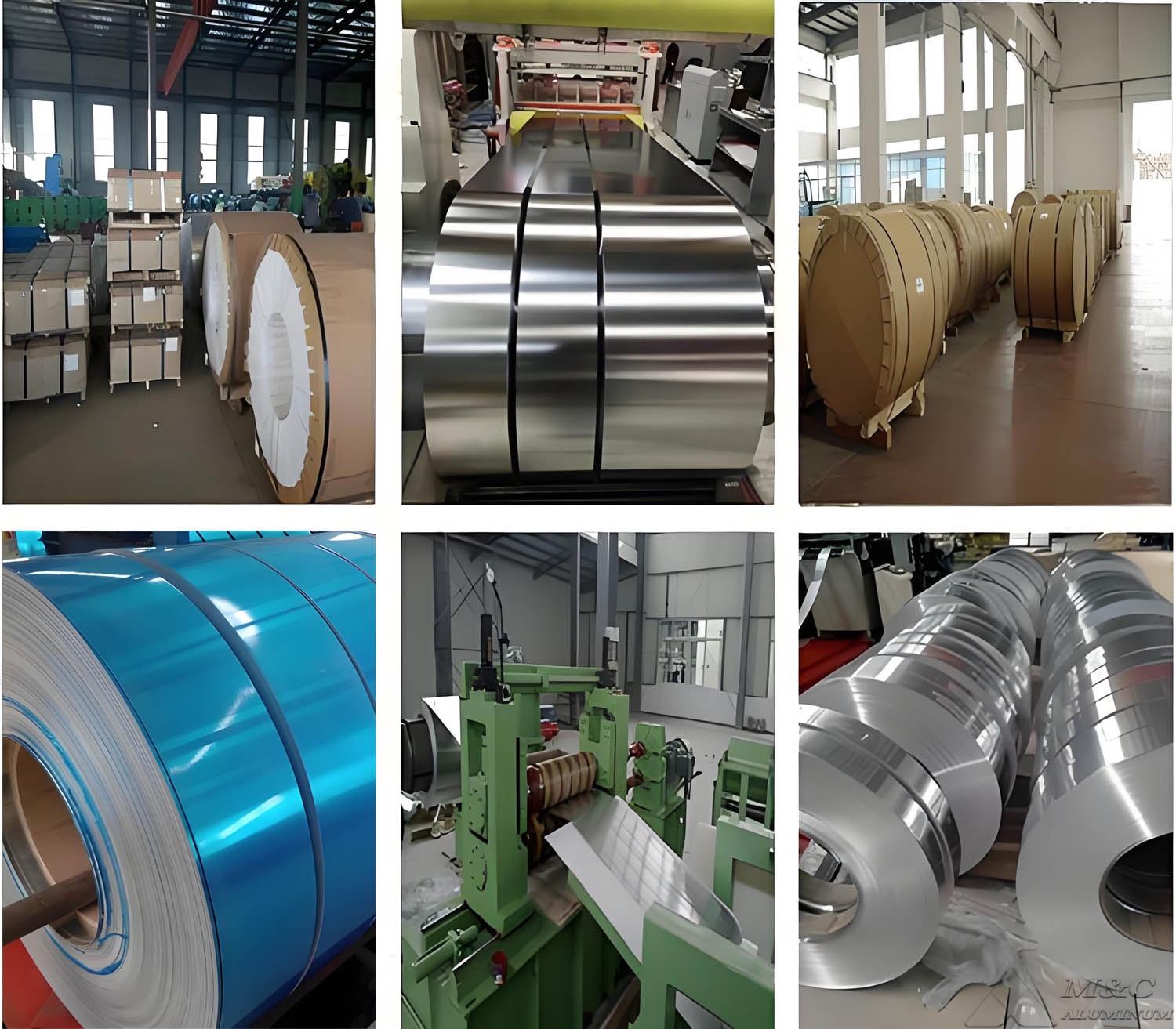
For cable armor strip, dimensional consistency is as important as alloy selection. Uneven thickness, excessive burr, edge cracking, poor flatness, or unstable coil winding can interrupt the armoring process and affect cable quality.
Our manufacturing controls for aluminum strip include:
Thickness and width inspection during rolling and slitting.
Burr control to protect cable bedding and outer sheath materials.
Camber and flatness control for stable helical application.
Coil tension management for smooth payoff on cable armoring machines.
Surface inspection to reduce oil residue, scratches, and handling damage.
Packaging selected to protect coils from moisture and deformation during export transport.
For applications requiring corrosion resistance and formability, alloy selection should be coordinated with the cable manufacturer's process requirements. While 1xxx series aluminum offers high conductivity and good formability, 3xxx series products can provide improved strength in certain designs. For example, 3003 Aluminium strip may be considered where the cable construction requires a balance between corrosion resistance and higher mechanical strength.
Recommended Selection Guide
Choose aluminum strip armor when the cable is a single-core AC design, when magnetic losses must be avoided, when reduced cable weight is beneficial, or when corrosion resistance is a primary concern. It is particularly suitable for medium-voltage single-core circuits, cable tray routes, long pulling lengths, and installations with weight limitations.
Choose steel strip armor when the cable is multicore and requires high mechanical protection against crushing, impact, and installation damage. Galvanized steel strip armor is often appropriate for direct-buried multicore power cables and heavy-duty industrial installations, provided that corrosion protection is properly addressed.
Conclusion
The choice between aluminum strip armor and steel strip armor is a cable engineering decision that must account for electrical behavior, mechanical duty, environmental conditions, and applicable standards. Aluminum provides non-magnetic performance, lower weight, and strong corrosion resistance, making it the preferred armoring material for many single-core AC power cables. Steel offers greater mechanical strength and remains a reliable solution for multicore cables exposed to demanding installation conditions.
As a strip manufacturer, we recommend defining the cable type, strip dimensions, alloy or steel grade, temper, edge condition, coil size, and required quality controls before placing an armor strip order. This approach helps ensure stable cable production and reliable long-term field performance.
Contact Us