
Aluminum Strip for Communication Cables
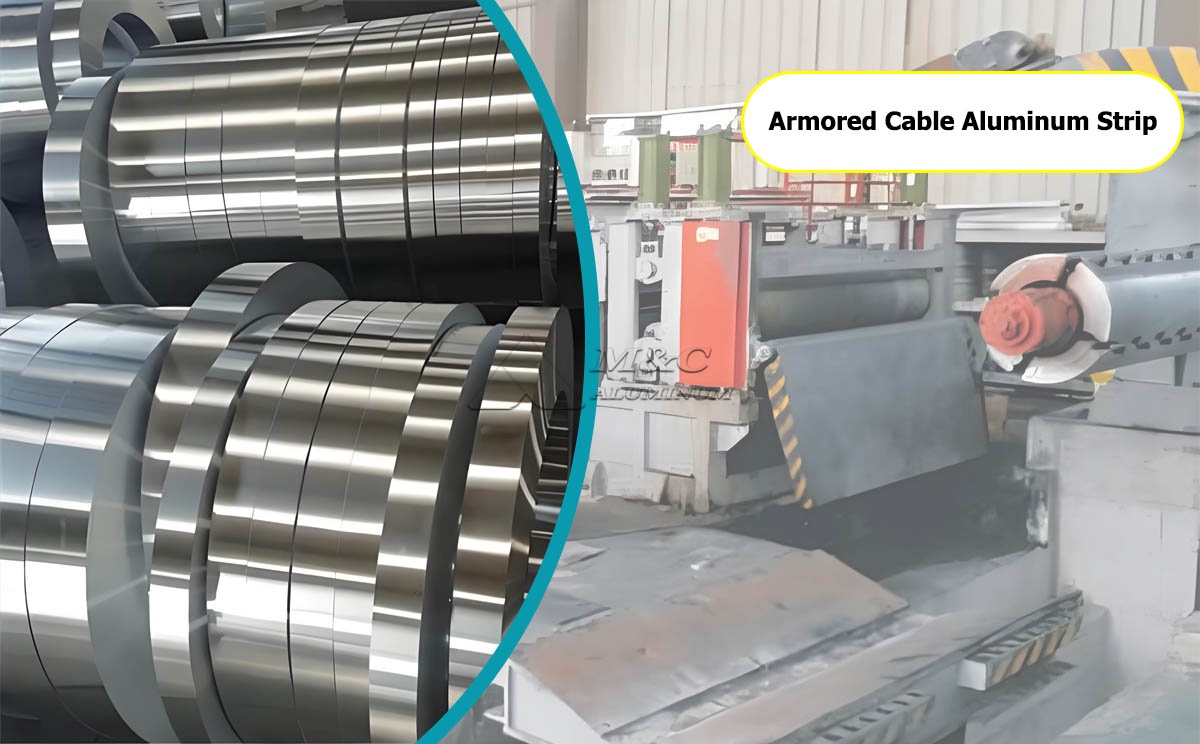
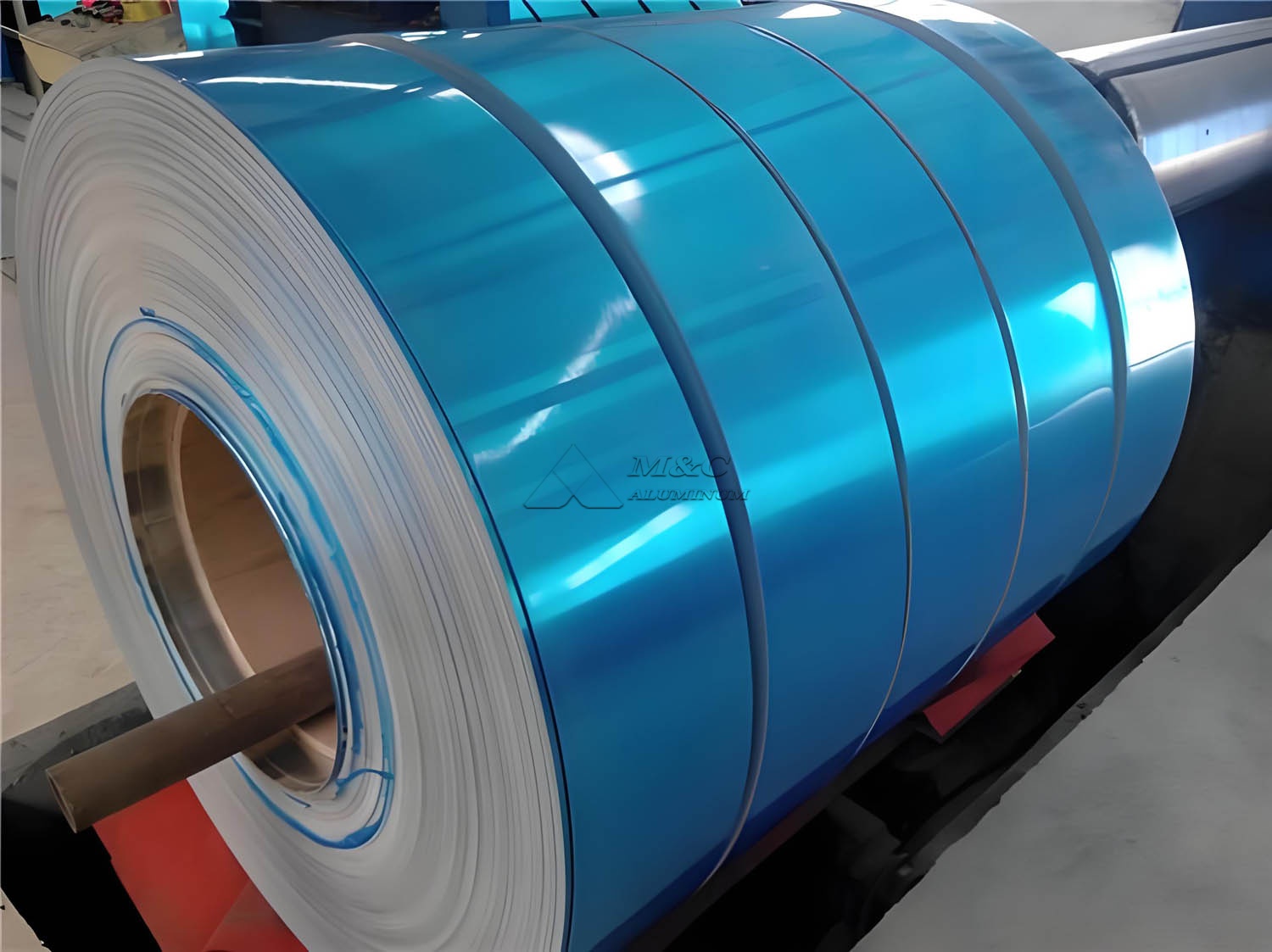
As an aluminum strip manufacturer, we produce aluminum strip for communication cables for cable factories, optical fiber cable plants, and related engineering projects. In modern communication cable structures, aluminum strip is commonly used for shielding, moisture protection, armoring, and mechanical reinforcement. The material must be stable in thickness, clean on the surface, accurate in width, and suitable for high speed cable forming lines.
Our production focuses on controlled rolling, precision slitting, surface cleaning, coil stability, and batch traceability. For cable manufacturers, these details directly affect wrapping performance, bonding quality, corrosion resistance, and long term cable reliability. This article explains the main material choices, technical parameters, manufacturing process, inspection items, and purchasing considerations for cable aluminum strip.
Function of Aluminum Strip in Communication Cables
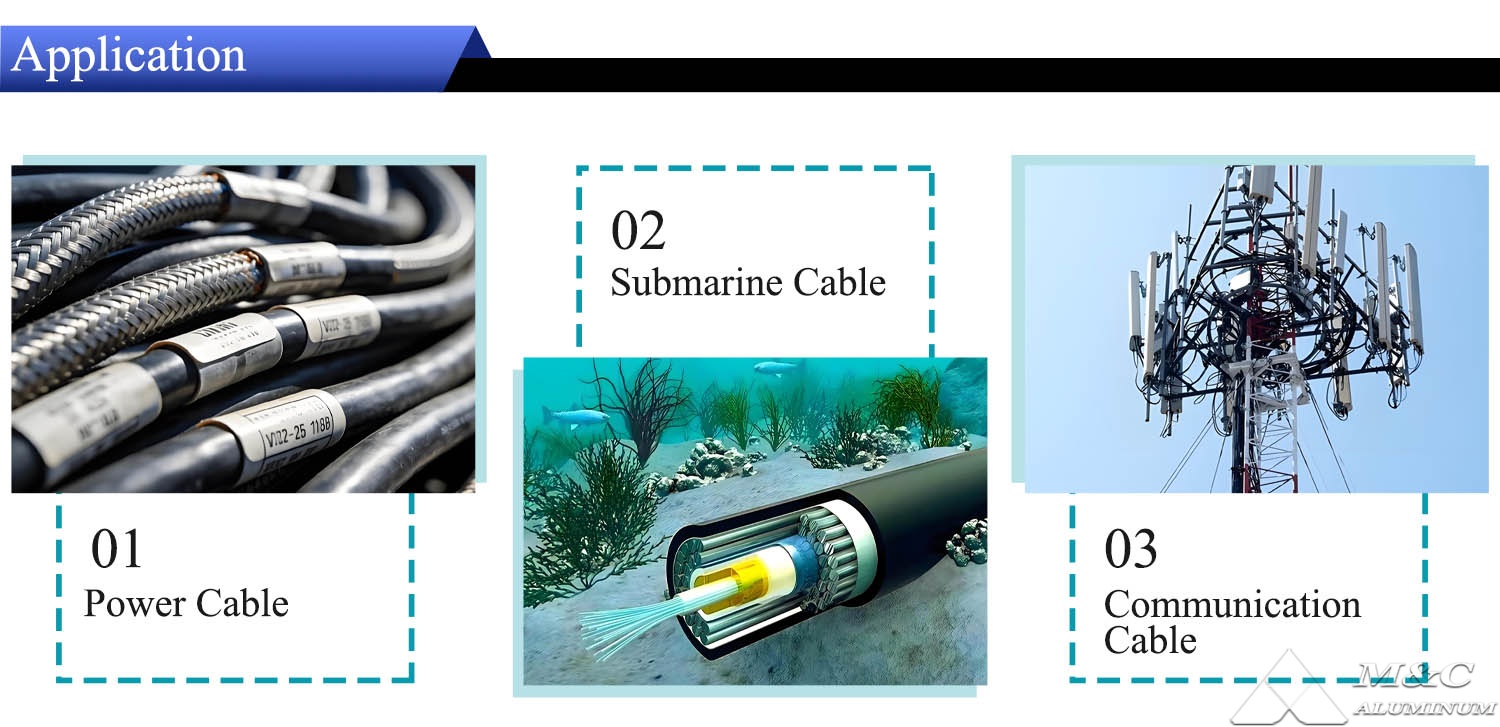
Communication cables may include coaxial cables, data cables, optical fiber cables, control communication cables, and armored signal cables. Depending on cable design, aluminum strip or aluminum tape can perform one or more of the following functions:
Electromagnetic shielding to reduce external signal interference.
Moisture barrier when combined with suitable polymer coating or laminated layers.
Mechanical protection for cable cores during installation and service.
Longitudinal or helical wrapping support in armored cable structures.
Corrosion resistant layer in outdoor and underground cable applications.
Aluminum has a favorable balance of conductivity, corrosion resistance, formability, and weight. Compared with heavier metallic materials, aluminum strip helps cable manufacturers control total cable weight while maintaining reliable protection. For communication cable lines installed in buildings, ducts, aerial systems, or buried environments, selecting the correct aluminum strip specification is essential.
Recommended Alloys for Cable Aluminum Strip
Different communication cable structures require different mechanical and forming properties. As a factory, we normally recommend alloy selection according to cable type, forming process, and service environment.
1050 and 1060 aluminum strip are widely used where high purity, good conductivity, and excellent formability are required. These alloys are suitable for shielding layers, wrapping layers, and moisture barrier applications. 1100 aluminum strip has similar characteristics and is also used in many cable designs.
3003 aluminum strip provides higher strength than pure aluminum alloys while maintaining good corrosion resistance and processability. For cable plants requiring improved mechanical performance, 3003 Aluminium strip can be a practical choice. 5052 aluminum strip offers higher strength and good corrosion resistance, especially for more demanding armored or outdoor cable structures, but its forming requirements should be reviewed before mass production.
For very narrow or light gauge cable structures, our Thin aluminum strip production line supports stable slitting and coil winding for automatic cable equipment.
Technical Parameters
The following table shows common production ranges for aluminum strip for communication cables. Final specifications can be adjusted according to drawings, cable standards, and customer processing equipment.
| Item | Common Specification | Notes |
|---|---|---|
| Alloy | 1050, 1060, 1100, 3003, 5052 | Selected according to shielding, wrapping, or armor function |
| Temper | O, H12, H14, H16, H18 | Soft temper for deep forming, hard temper for higher strength |
| Thickness | 0.08 mm to 1.20 mm | Typical cable shielding and armoring range |
| Width | 10 mm to 1200 mm | Precision slitting available for narrow cable strip |
| Width tolerance | +/-0.05 mm to +/-0.50 mm | Depends on width and thickness |
| Thickness tolerance | According to EN, ASTM, or customer specification | Controlled by rolling and online measurement |
| Coil inner diameter | 76 mm, 150 mm, 300 mm, 400 mm, 500 mm | Matched with cable production equipment |
| Coil outer diameter | 600 mm to 1600 mm | Based on coil weight and packing method |
| Coil weight | 50 kg to 3000 kg | Small coils or jumbo coils available |
| Surface | Mill finish, degreased, coated, or laminated on request | Free from oil spots, heavy scratches, and oxidation stains |
| Edge condition | Slit edge, deburred edge available | Low burr level for stable wrapping |
| Typical tensile strength | 60 MPa to 220 MPa | Varies by alloy and temper |
| Typical elongation | 1 percent to 35 percent | Varies by alloy, temper, and thickness |
| Standards | ASTM B209, EN 485, GB/T 3880, customer standards | Third party inspection can be arranged |
Manufacturing Process in Our Factory
Our production of aluminum strip for communication cables follows a controlled route from raw material to packed coil. The purpose is to reduce dimensional fluctuation, surface defects, and unstable unwinding during cable manufacturing.
1. Raw Material Selection
We start with aluminum ingots or qualified cast coils according to the required alloy. Chemical composition is checked to ensure the strip meets the target standard. For cable applications, impurity control is important because it affects conductivity, corrosion resistance, and rolling stability.
2. Hot Rolling or Continuous Casting Route
Depending on alloy, thickness, and order quantity, the material may be produced through hot rolling or continuous casting and rolling. The selected route must provide suitable internal structure and surface quality. For high purity 1050 and 1060 aluminum strip, stable casting and controlled rolling are critical for consistent forming behavior.
3. Cold Rolling and Thickness Control
Cold rolling reduces the strip to the required thickness. During this stage, rolling reduction, strip tension, flatness, and surface condition are closely controlled. For communication cable manufacturers, thickness consistency helps maintain uniform cable diameter and stable wrapping overlap.
4. Annealing and Temper Adjustment
Annealing is used to obtain the required temper, especially for O temper and medium hard tempers. Soft aluminum strip is easier to form and wrap without cracking. Harder tempers are used where higher strength and shape retention are required. Furnace temperature, holding time, and cooling method are recorded for traceability.
5. Precision Slitting
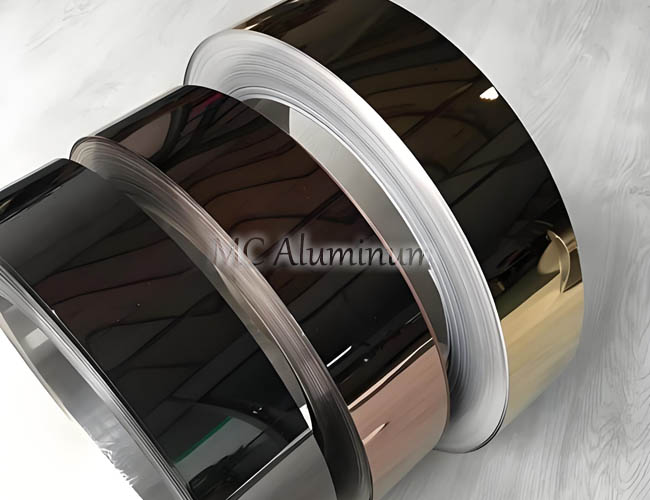
After rolling and annealing, the coil is slit to the final width. Slitting quality is a major concern for cable aluminum strip. Excessive burrs may damage insulation layers, affect wrapping quality, or cause problems on high speed lines. We use suitable tooling clearance and regular blade maintenance to control edge quality.
6. Surface Cleaning and Optional Treatment
Depending on customer requirements, the strip can be supplied with a clean mill finish, light anti-oxidation protection, or further surface treatment. For applications requiring bonding with polymer layers, the surface condition should be discussed in advance. Cleanliness, roughness, and oil residue can influence lamination or adhesive performance.
7. Coil Winding and Packaging
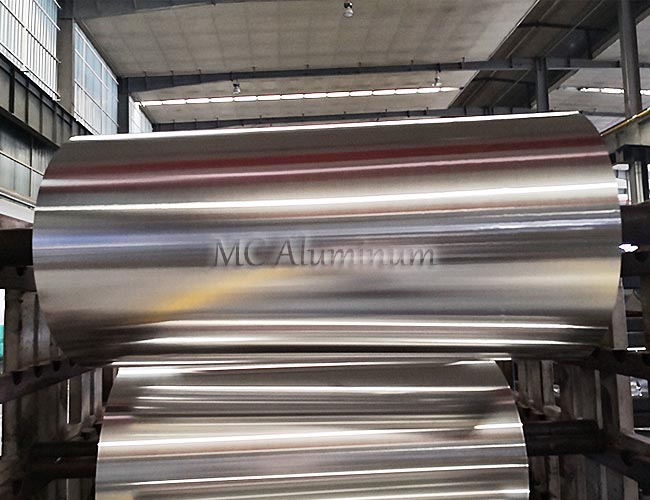
Stable coil winding is necessary for automatic cable production. Loose winding, telescoping, or edge damage can interrupt unwinding. We package coils with moisture proof materials, edge protectors, wooden pallets or wooden cases, and clear labels showing alloy, temper, size, coil number, weight, and production batch.
Quality Requirements for Communication Cable Use
Cable factories usually run continuous production lines. A small defect in the aluminum strip can lead to downtime, cable rejection, or inconsistent final performance. Our inspection focuses on the following items.
Dimensional Accuracy
Thickness and width are measured during production and final inspection. For narrow strips, width tolerance and edge straightness are especially important. Stable dimensions help ensure uniform lap width during longitudinal or helical wrapping.
Surface Quality
The surface should be clean and free from serious scratches, black spots, corrosion, oil stains, holes, wrinkles, and pressure marks. Minor rolling marks may be acceptable if they do not affect cable processing or service performance. For coated or laminated cable materials, surface cleanliness must be controlled more strictly.
Mechanical Properties
Tensile strength and elongation are tested according to the required standard. If the strip is too hard, it may crack during forming. If it is too soft, it may deform during unwinding or fail to provide the required mechanical protection. Therefore, temper selection should match cable structure and equipment condition.
Edge Quality
Edge burr level, edge wave, cracks, and slitting marks are checked. Smooth edges are important when the strip contacts insulation, sheath, or cable cores. For high speed wrapping, poor edge quality can cause strip breakage or uneven overlap.
Coil Performance
Coil alignment, winding tension, inner diameter, outer diameter, and joint condition are checked before shipment. We can discuss maximum allowable joints per coil according to cable production requirements.
Application Forms in Communication Cable Structures
Aluminum strip can be used in several forms in communication cable production.
For shielding applications, thin aluminum strip or aluminum tape is wrapped around the cable core to reduce electromagnetic interference. In some cable designs, aluminum is combined with plastic film to form an aluminum plastic composite tape.
For moisture barrier applications, aluminum strip helps block water vapor and improves cable durability in outdoor or underground environments. Correct overlap and bonding are important for this function.
For armoring applications, aluminum strip provides mechanical protection while keeping cable weight lower than steel armor. It is often used where moderate strength, corrosion resistance, and easy handling are required.
For optical fiber communication cables, aluminum strip may be used as part of the protective layer to improve moisture resistance and mechanical stability. Material cleanliness and edge quality are especially important because optical cable production lines require stable and continuous operation.
How to Select Aluminum Strip for a Cable Project
When selecting aluminum strip for communication cables, the following information should be confirmed before production:
Cable type and application environment.
Required alloy and temper, or target mechanical properties.
Strip thickness, width, and tolerance.
Coil inner diameter, outer diameter, and maximum coil weight.
Surface requirement, such as mill finish, degreased surface, coated surface, or laminated material.
Edge requirement, including burr control and deburring.
Applicable standard and inspection documents.
Packing method and sea transportation conditions.
If the cable design is new, trial coils are recommended before bulk production. Trial production helps confirm wrapping performance, bonding behavior, equipment compatibility, and final cable test results.
Factory Supply and Documentation
As a manufacturer, we supply aluminum strip for communication cables with batch control and production records. Each shipment can be supported by a mill test certificate, packing list, specification sheet, and inspection data if required. For export orders, we use seaworthy packaging suitable for long distance transportation and warehouse handling.
We can produce both standard cable aluminum strip and customized specifications according to engineering drawings. Our team reviews the required alloy, temper, tolerance, surface, and packaging method before order confirmation to reduce the risk of mismatch during cable production.
Conclusion
Aluminum strip for communication cables is not only a metal wrapping material. It influences shielding performance, moisture protection, cable strength, processing stability, and long term service reliability. From alloy selection to slitting accuracy and coil packaging, each manufacturing step should be controlled according to cable industry requirements.
As an aluminum strip manufacturer, we focus on consistent quality, practical specifications, and stable export supply for communication cable producers. By selecting the correct alloy, temper, thickness, surface condition, and coil format, cable manufacturers can improve production efficiency and obtain reliable cable performance in demanding communication networks.
Contact Us