
Battery Aluminum Foil for Pouch Cells
As a battery aluminum foil manufacturer, we produce rolled aluminum foil for pouch cell cathode current collectors. Our battery aluminum foil for pouch cells is engineered for stable slurry coating, controlled electrical resistance, consistent thickness, and reliable performance in high-speed lithium-ion battery manufacturing lines.
Pouch cells are widely used in consumer electronics, electric vehicles, energy storage systems, medical devices, and industrial battery packs. Compared with rigid cylindrical or prismatic cell formats, pouch cells require carefully controlled electrode materials to maintain dimensional consistency and coating quality throughout lamination, stacking, electrolyte filling, and sealing operations. The aluminum foil used as the cathode current collector has a direct influence on electrode conductivity, coating adhesion, internal resistance, and cell yield.
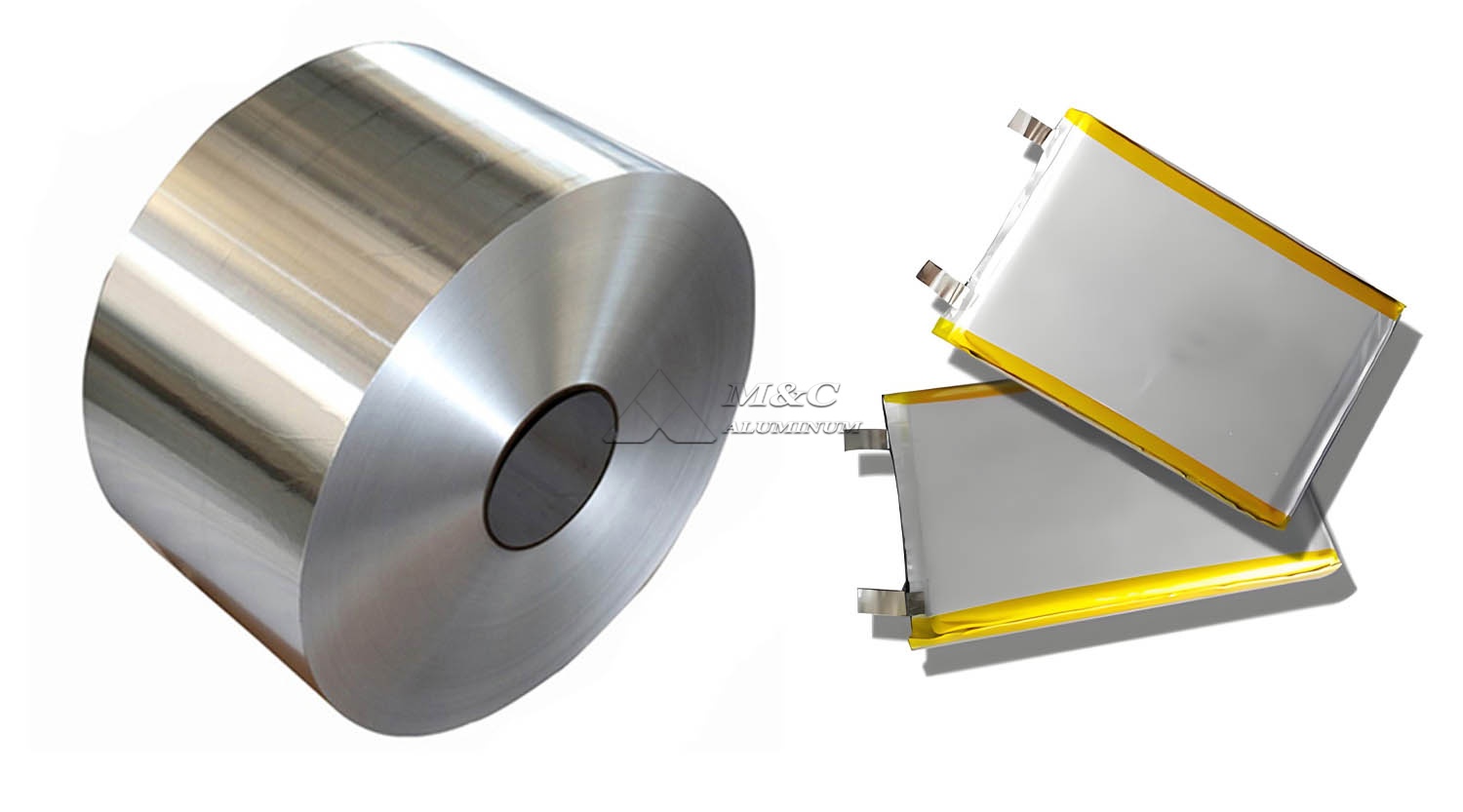
The Role of Aluminum Foil in Pouch Cells
In lithium-ion pouch cells, aluminum foil is normally used as the positive electrode current collector. It supports the cathode active material layer, such as lithium iron phosphate, lithium nickel manganese cobalt oxide, lithium nickel cobalt aluminum oxide, or lithium manganese oxide. The foil conducts electrons from the cathode coating to the cell tab and external circuit.
Battery aluminum foil must combine adequate conductivity with a clean and uniform surface. The cathode slurry is commonly applied through slot-die, comma-bar, gravure, or other precision coating methods. If the foil surface contains excessive rolling oil, particles, scratches, edge defects, or thickness variation, the coating layer may become uneven. This can lead to reduced adhesion, localized resistance differences, poor calendering behavior, or electrode defects during cell assembly.
It is important to distinguish battery aluminum foil from aluminum-plastic laminate used for pouch cell outer packaging. Battery cathode foil is an internal current collector, while pouch laminate is the external flexible enclosure material. Our production focus is electrode-grade aluminum foil for battery manufacturing.
Material Selection for Pouch Cell Cathode Foil
We manufacture battery foil in selected aluminum grades according to the customer's cathode chemistry, coating process, thickness target, and mechanical handling conditions. High-purity aluminum grades are commonly selected because they offer reliable electrical conductivity, stable rolling behavior, and good compatibility with cathode coating systems.
For many lithium-ion battery applications, 1235 Aluminum Foil is a practical option due to its high aluminum content, favorable conductivity, and suitability for thin-gauge rolling. We can also evaluate 1100, 1060, 1070, and other appropriate alloys where specific mechanical or process requirements apply.
The final material selection should consider the complete electrode process, including slurry formulation, coating weight, drying temperature, compaction ratio, tab welding requirements, and the intended cell operating environment. Our technical team reviews these factors with customers before confirming production specifications.
Typical Technical Parameters
The following table shows commonly supplied ranges for battery aluminum foil for pouch cells. Final values are defined by the approved technical agreement, inspection standard, and application requirements.
| Parameter | Typical Range or Requirement | Notes |
|---|---|---|
| Alloy | 1235, 1100, 1060, 1070 | Selected according to conductivity and process needs |
| Temper | O, H14, H18 | O temper is common for electrode coating applications |
| Thickness | 10 to 20 microns | 12, 15, 16, and 20 microns are frequently specified |
| Width | 100 to 1,500 mm | Slit width can be supplied for coating equipment |
| Thickness tolerance | As agreed by specification | Controlled by gauge capability and target thickness |
| Surface condition | Clean, uniform, oil-controlled | Suitable for cathode slurry coating |
| Electrical conductivity | High conductivity aluminum base | Verified according to customer requirements |
| Tensile strength | Based on alloy and temper | Matched to winding, coating, and handling conditions |
| Elongation | Based on alloy and temper | Important for processing stability |
| Pinhole control | Controlled for thin-gauge foil | Requirements depend on thickness and application |
| Coil inner diameter | 150 mm, 300 mm, 500 mm, or customized | Compatible with customer equipment |
| Coil outer diameter | Customized | Determined by line loading and logistics requirements |
Surface Quality and Coating Compatibility
Surface condition is one of the most critical quality factors for pouch cell aluminum foil. Our manufacturing process controls rolling, annealing, cleaning, slitting, and packing conditions to reduce the risk of surface contamination and handling damage.
For uncoated battery aluminum foil, customers generally require a uniform metallic surface with low residual rolling oil and no defects that could affect slurry wetting. The foil must allow the cathode slurry to spread evenly and maintain stable coating weight across the web. Consistent surface energy supports better contact between the aluminum substrate and conductive binder system.
For applications requiring improved interfacial performance, we also supply carbon coated aluminum foil. A conductive carbon layer can improve the contact interface between the current collector and cathode active material. This may help reduce contact resistance, improve coating adhesion, and support more stable electrode performance, depending on the cathode formulation and cell design.
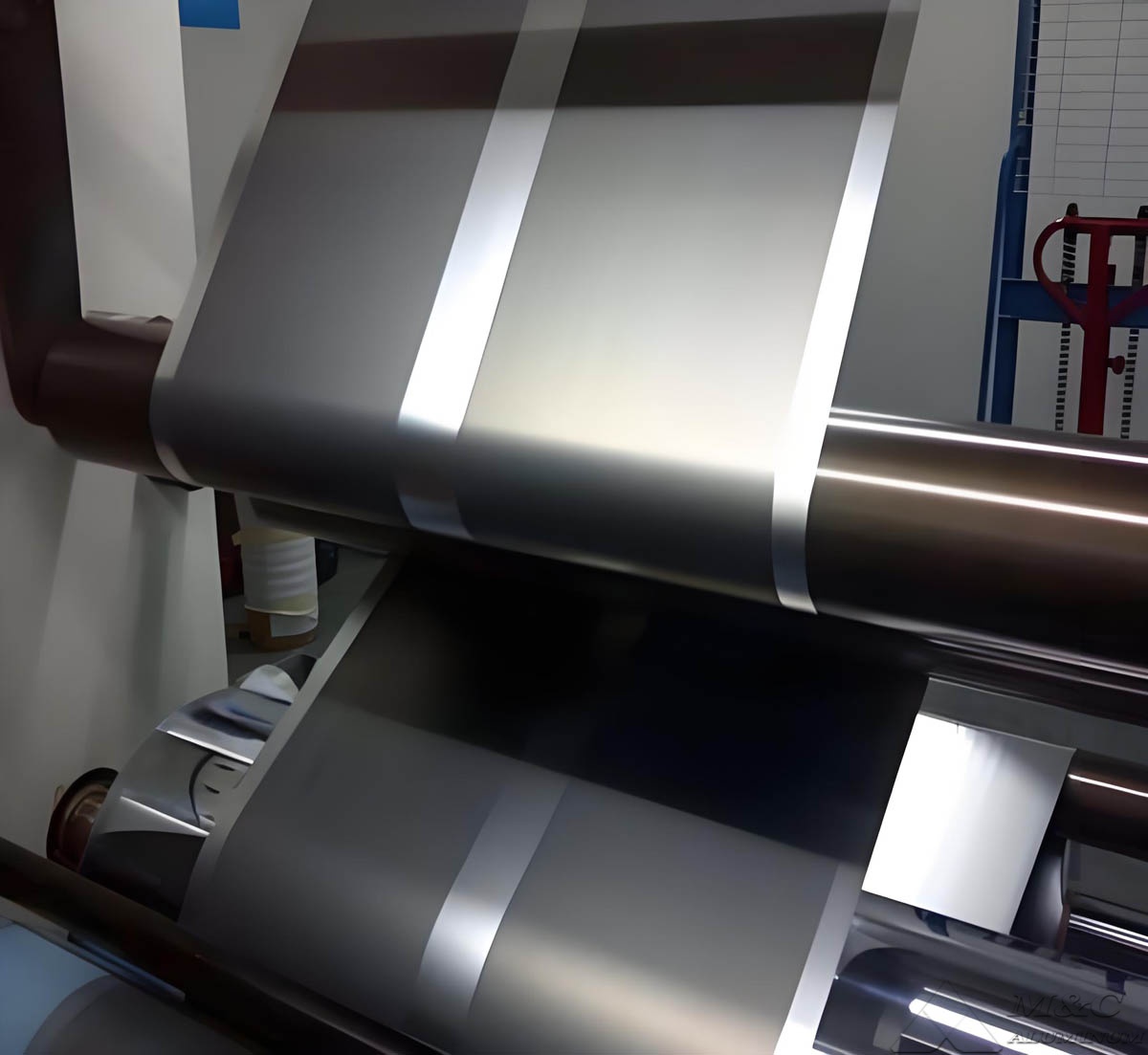
Carbon coating specifications are developed based on coating side, coating weight, thickness increase, resistance target, adhesion requirement, and cathode process conditions. Single-side and double-side carbon coating can be considered where appropriate. We verify coating uniformity and surface condition before shipment.
Manufacturing Process at Our Factory
Our battery aluminum foil production begins with controlled aluminum feedstock selection. The material is processed through rolling stages to reach the required foil gauge while maintaining stable flatness and thickness consistency. Annealing is used where needed to achieve the required temper and remove rolling oil to the specified level.
After rolling and annealing, the foil is inspected for thickness, width, surface quality, mechanical properties, and coil geometry. Slitting is performed with controlled tension and blade settings to obtain clean edges and stable coil winding. Proper edge quality is important because burrs, telescoping, loose winding, or uneven tension can interrupt high-speed electrode coating operations.
Our quality control process may include the following checks:
Incoming material verification and alloy identification.
Online thickness monitoring during rolling.
Surface inspection for scratches, stains, particles, and rolling marks.
Residual oil evaluation when required for coating applications.
Tensile strength and elongation testing by temper and thickness.
Width, edge quality, coil diameter, and winding tension inspection.
Final packaging inspection before export shipment.
As an Aluminum Foil manufacturer, we provide production traceability by coil and batch. This helps customers align incoming material records with electrode coating results and battery quality documentation.
Why Thickness Consistency Matters
Pouch cell electrode manufacturing requires accurate control of both foil thickness and coating loading. If the aluminum substrate thickness varies excessively, the coating gap and final electrode density may change across the coil. These variations can affect active material distribution, electrode resistance, compaction behavior, and capacity consistency.
Thin-gauge foil also requires stable mechanical properties. During unwinding, coating, drying, calendering, slitting, stacking, and tab welding, the foil must remain dimensionally stable. Excessively soft material may wrinkle under tension, while overly hard foil may be less tolerant of process stress. We therefore match temper and mechanical property ranges to the customer's line conditions.
Packaging and Delivery Requirements
Battery aluminum foil is packed to protect the surface from moisture, dust, impact, and deformation during transport. We use protective wrapping, edge protection, supported coil packing, and export-grade wooden pallets or cases according to shipment method and customer requirements.
Each coil can be labeled with relevant identification details, including alloy, temper, thickness, width, coil number, net weight, batch number, and production date. For customers operating controlled battery material warehouses, we can align packing details with their receiving and traceability procedures.
Technical Support for Pouch Cell Manufacturers
The best battery aluminum foil specification is not defined by thickness alone. It must be matched to cathode chemistry, slurry formulation, coating method, electrode loading, calendering pressure, cell design, and quality targets. Our factory works with pouch cell manufacturers, electrode producers, and battery material processors to establish suitable aluminum foil parameters before volume production.
We can provide samples for coating trials, confirm dimensional and mechanical specifications, and support adjustment of coil width, temper, surface condition, and carbon coating requirements. For customers developing high-energy-density, power-oriented, or long-cycle-life pouch cells, early material validation helps reduce process variation and improve production stability.
Conclusion
Battery aluminum foil for pouch cells is a functional current collector material that must deliver consistent conductivity, surface cleanliness, coating compatibility, and mechanical reliability. Through controlled rolling, annealing, slitting, inspection, and protective packing, we manufacture pouch cell aluminum foil tailored to cathode electrode production.
Whether the requirement is standard uncoated cathode foil or carbon coated aluminum foil, our factory can produce specifications aligned with pouch cell coating and assembly processes. A clearly defined technical agreement covering alloy, temper, thickness, width, surface condition, and coil format is the basis for reliable long-term supply.
Contact Us