
Battery Aluminum Foil Surface Treatment
As a battery aluminum foil manufacturer, we produce and process aluminum foil used as cathode current collectors for lithium ion batteries, sodium ion batteries, supercapacitors, and related energy storage applications. Surface treatment is a critical production stage because the foil surface directly affects electrode coating quality, electrical contact resistance, electrolyte compatibility, and long-term cell consistency.
Battery aluminum foil surface treatment is not limited to cleaning. Depending on the battery chemistry, electrode formulation, coating method, and final performance target, it may include degreasing, surface activation, roughness control, chemical conversion, conductive carbon coating, and drying. Our manufacturing process is designed to provide stable surface properties across the full coil length while maintaining foil flatness, thickness tolerance, and mechanical integrity.
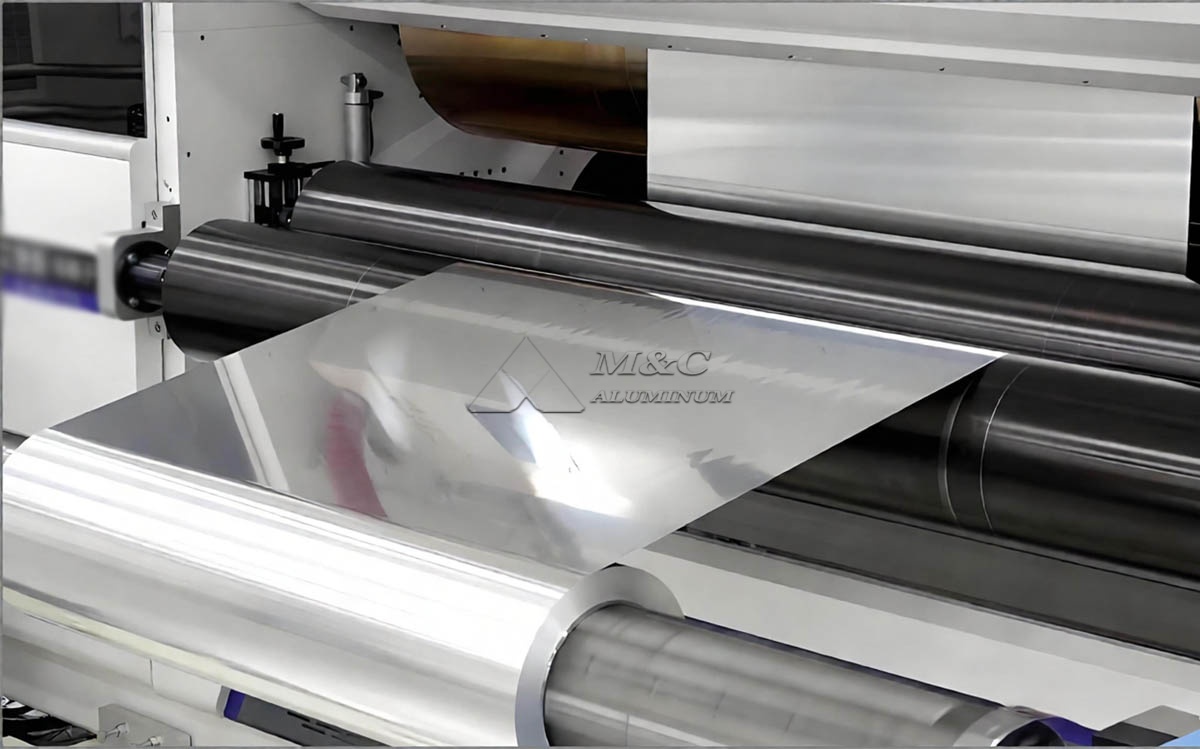
Role of Aluminum Foil in Battery Electrodes
In most lithium ion battery designs, aluminum foil is used as the positive electrode current collector. It supports the cathode active material coating and conducts electrons between the electrode layer and the external circuit. Common cathode systems include lithium iron phosphate, nickel manganese cobalt oxide, nickel cobalt aluminum oxide, lithium manganese oxide, and sodium ion cathode materials.
The base foil must have controlled chemical composition, low surface contamination, uniform thickness, and suitable tensile properties. However, untreated foil may not always provide sufficient adhesion or low enough interface resistance for high-performance electrode production. Surface treatment helps optimize the interface between aluminum foil and the active material slurry.
Our Aluminum Foil production program includes battery-grade foil with surface conditions specified for bare current collectors, coated current collectors, and customized electrode manufacturing processes.
Why Battery Aluminum Foil Surface Treatment Is Important
The surface of rolled aluminum foil can contain residual rolling oil, fine aluminum powder, natural oxide film, moisture, and trace contaminants introduced during handling. Even when these residues are present at low levels, they can affect slurry wetting and binder anchorage during cathode coating.
Proper battery aluminum foil surface treatment provides the following functional benefits:
Improved adhesion between the current collector and cathode coating layer.
More uniform slurry wetting during gravure, slot die, comma bar, or transfer coating.
Reduced interfacial contact resistance between foil and active material.
Better electrode flexibility during calendering, slitting, and winding.
Lower risk of coating peeling, cracking, or delamination.
More stable electrical performance during repeated charge and discharge cycles.
Improved compatibility with high-speed automated electrode coating lines.
For applications requiring high energy density or high power output, conductive coated aluminum foil can also help reduce polarization and improve electron transfer across the cathode interface.
Main Types of Surface Treatment
1. Degreasing and Surface Cleaning
Degreasing is the foundation of battery current collector foil processing. During foil rolling, lubricants are necessary to maintain rolling stability and surface quality. Before electrode coating or carbon coating, residual oil must be reduced to a controlled level.
We use thermal degreasing and controlled annealing processes to remove rolling oil while maintaining required temper and mechanical properties. The treatment atmosphere, heating curve, coil tension, and residence time are carefully managed to avoid discoloration, excessive oxidation, or waviness.
A clean surface improves slurry coating uniformity and reduces the possibility of local adhesion defects. For battery manufacturers using water-based cathode slurry, surface cleanliness is especially important because wetting behavior can influence coating continuity and drying quality.
2. Surface Activation
Surface activation modifies the surface energy of aluminum foil to improve bonding with conductive agents, binders, and active materials. Typical activation methods include corona treatment, plasma treatment, and controlled chemical treatment.
Corona and plasma treatment can increase surface energy without significantly changing foil thickness. These processes are useful when the electrode manufacturer requires improved coating wetting but does not require a separate conductive layer. Surface activation must be uniform across the foil width, particularly for wide battery electrode rolls used in automated coating equipment.
In our production control, treated foil is evaluated for surface tension, coating response, and visual uniformity. Since activated surfaces can gradually lose activity during storage, packaging conditions and delivery time should be considered when defining treatment specifications.
3. Roughness Control
Aluminum foil roughness affects both mechanical interlocking and electrical contact with the electrode layer. A surface that is too smooth may offer insufficient binder anchoring in some slurry systems. A surface that is too rough can create uneven coating thickness, increased local resistance, or excessive active material consumption.
We control roughness through rolling parameters, work roll condition, cleaning process, and final surface treatment. The required roughness depends on foil thickness, active material particle size, binder type, and coating loading. For battery applications, stable and repeatable roughness is generally more important than simply increasing roughness.
4. Carbon Coating
Carbon coating is one of the most important advanced treatments for battery aluminum foil. A thin conductive carbon layer is applied to one or both sides of the foil. The coating may contain conductive carbon black, graphite, carbon nanotubes, graphene-related materials, or proprietary conductive additives dispersed in a compatible binder system.
Carbon coated aluminum foil can reduce interface resistance between the metal current collector and cathode material. It can also improve adhesion, suppress localized corrosion under certain operating conditions, and provide a more uniform conductive network across the electrode interface.
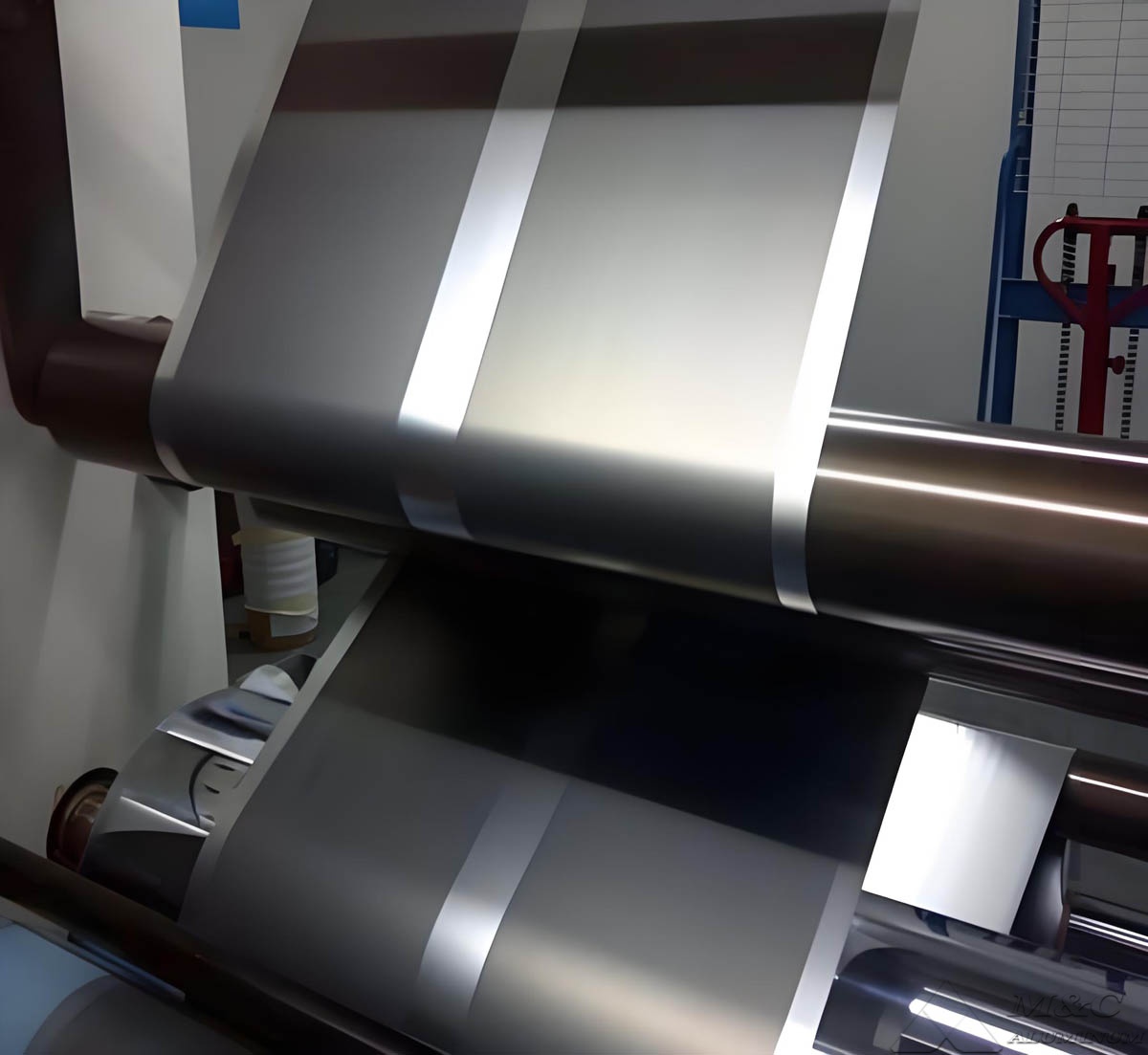
Our carbon coating process is designed to achieve consistent coat weight, smooth appearance, stable resistance, and reliable adhesion. For double-sided cathode manufacturing, coating may be applied on both foil surfaces. Single-sided coated foil can also be supplied where the electrode design requires different surface functions.
5. Chemical Conversion and Protective Treatment
Certain battery designs may require controlled chemical conversion or protective treatment to improve corrosion resistance, surface stability, or compatibility with specialized coating systems. These treatments must be selected carefully because excessive conversion film thickness can increase electrical resistance.
As a manufacturer, we evaluate conversion treatment according to the final battery system rather than applying a standard process to every foil grade. The treatment must remain compatible with conductive coatings, cathode slurry solvents, binder chemistry, drying temperature, and electrolyte environment.
Technical Parameters for Treated Battery Aluminum Foil
The following table shows typical technical ranges for battery aluminum foil surface treatment. Final values are confirmed according to customer drawings, electrode design, and battery performance requirements.
| Parameter | Typical Range | Control Purpose |
|---|---|---|
| Base alloy | 1070, 1100, 1235, 3003 | Balance conductivity, strength, and processability |
| Foil thickness | 10 to 20 microns | Match electrode design and energy density target |
| Foil width | 100 to 1,600 mm | Suit coating, slitting, and cell production lines |
| Temper | O, H14, H18, customized | Control elongation and handling performance |
| Surface roughness Ra | 0.10 to 0.50 microns | Support coating adhesion and uniformity |
| Residual rolling oil | Customized low-residue specification | Improve slurry wetting and coating quality |
| Surface tension after activation | Typically 38 dynes/cm or above | Enhance coating wettability |
| Carbon coating thickness | 0.5 to 3.0 microns per side | Reduce interface resistance and improve adhesion |
| Carbon coat weight | 0.1 to 1.0 g/m2 per side | Control conductivity and electrode mass balance |
| Surface resistance | Defined by coating formulation | Verify conductive coating consistency |
| Adhesion performance | No visible peeling after specified test | Confirm coating integrity during processing |
Manufacturing Process Control
Our battery aluminum foil manufacturing process begins with alloy selection and melt quality control. After casting, hot rolling, cold rolling, intermediate annealing, and final foil rolling, the material enters surface preparation and treatment stages. Each stage is controlled to maintain coil stability and prevent surface damage.
Key process controls include:
Chemical composition verification for the selected aluminum alloy.
Thickness measurement across coil width and throughout coil length.
Pinholes, scratches, oil spots, and edge defect inspection.
Controlled degreasing and annealing to reduce rolling oil residue.
Surface activation or carbon coating under stable line speed and tension.
Online visual inspection for streaks, coating voids, and contamination.
Sampling tests for roughness, coat weight, adhesion, and electrical resistance.
Moisture-resistant packaging to protect treated foil during transportation and storage.
For higher-strength battery foil requirements, 3003 Aluminum Foil can be considered when the electrode design requires improved mechanical performance while retaining suitable formability and processing stability.
Quality Inspection for Carbon Coated Aluminum Foil
Carbon-coated current collector foil requires additional inspection beyond normal foil dimensional checks. We test coating uniformity by visual inspection, gravimetric coat weight measurement, and surface resistance verification. Adhesion testing is performed according to the agreed internal method or customer-specified procedure.
We also monitor coating appearance for issues such as bare spots, agglomerates, edge accumulation, streaking, cracking, and powder loss. These defects can interfere with cathode slurry coating and create variations in the final electrode.
For export supply, coil identification, inspection records, packaging labels, and product certificates can be provided according to purchase order requirements. Coil dimensions, core size, winding direction, and joint restrictions should be confirmed before production.
Selection Considerations for Battery Manufacturers
When selecting battery aluminum foil surface treatment, customers should define the cathode chemistry, slurry formulation, coating method, electrode loading, calendering pressure, and target cell performance. A carbon coating that performs well with one binder system may require adjustment for another system.
Important selection questions include:
Is bare aluminum foil sufficient, or is conductive carbon coating required?
Is the slurry water-based or solvent-based?
Is one-side or two-side treatment needed?
What are the required foil thickness and width tolerances?
What electrical resistance target is required after coating?
What adhesion level is necessary after calendering and cycling?
What packaging and storage period will apply before electrode coating?
We work with battery material producers and electrode manufacturers to align the foil surface treatment with their processing conditions. This approach helps ensure that the aluminum current collector performs consistently from coating through final cell assembly.
Conclusion
Battery aluminum foil surface treatment is a controlled manufacturing process that directly influences electrode adhesion, conductivity, coating stability, and battery production efficiency. From degreasing and surface activation to roughness control and carbon coating, each treatment should be matched to the intended cathode system and manufacturing method.
As a battery aluminum foil manufacturer, we supply treated and untreated current collector foil with customized dimensions, surface specifications, and inspection requirements. By combining stable base foil production with controlled surface treatment, we support reliable electrode manufacturing for modern energy storage applications.
Contact Us