
Lithium Battery Aluminum Foil
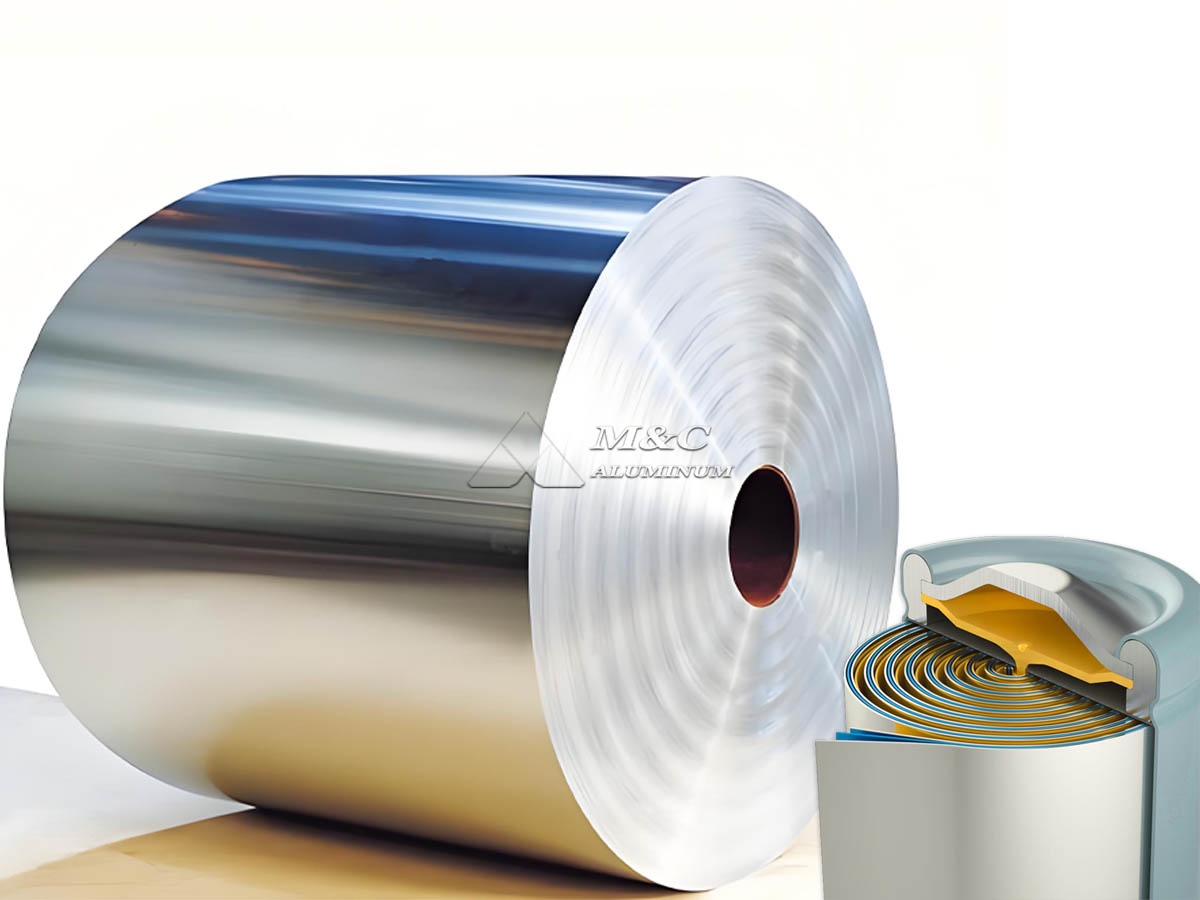
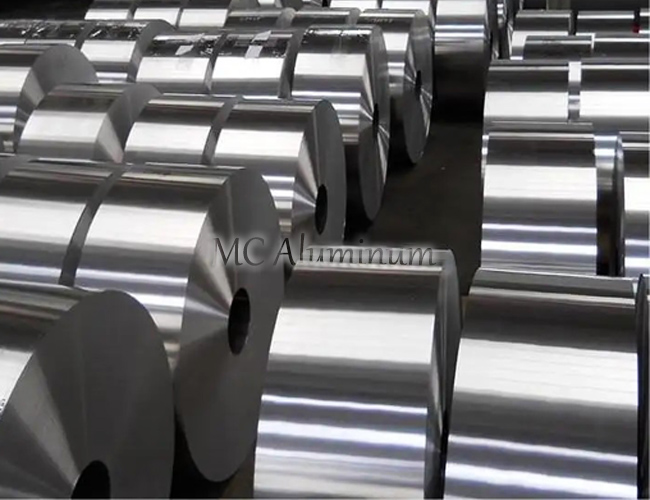
Lithium battery aluminum foil is a critical current collector material used in rechargeable lithium-ion batteries. It supports the cathode active material, conducts electrons during charging and discharging, and contributes to the consistency of cell manufacturing. As a specialized aluminum foil manufacturer, we produce battery aluminum foil with controlled alloy composition, thickness tolerance, surface cleanliness, mechanical properties, and coil quality for battery electrode production.
Our lithium battery aluminum foil is supplied for applications including electric vehicle batteries, energy storage systems, consumer electronics batteries, power tools, and industrial lithium-ion cells. We manufacture both bare aluminum foil and carbon coated aluminum foil according to customer processing requirements.
What Is Lithium Battery Aluminum Foil?
Lithium battery aluminum foil, also called aluminum cathode current collector foil, is a thin rolled aluminum product used on the positive electrode side of lithium-ion batteries. During electrode manufacturing, cathode slurry containing active materials, conductive additives, and binders is coated onto the foil surface. After drying, calendering, slitting, and cell assembly, the aluminum foil provides an electrically conductive substrate for the cathode.
Aluminum is used for the cathode current collector because it offers low density, good electrical conductivity, practical corrosion resistance within the cathode operating voltage range, and reliable processability. Compared with many alternative conductive substrates, aluminum foil can be rolled to very thin gauges while maintaining a consistent surface suitable for high-speed coating lines.
The quality of battery aluminum foil directly affects coating adhesion, electrode uniformity, internal resistance, cell capacity consistency, and production yield. For this reason, lithium battery manufacturers require tighter quality control than conventional packaging or household foil applications.
Main Alloys for Battery Aluminum Foil
We select aluminum alloy grades according to foil thickness, cathode chemistry, coating process, and downstream forming requirements. The most commonly specified alloys are 1235 and 1060 aluminum foil.
1235 aluminum foil: A high-purity aluminum alloy with good ductility and stable rolling performance. It is widely used for thin battery aluminum foil and standard cathode current collector applications.
1060 aluminum foil: This commercially pure aluminum grade provides excellent conductivity, corrosion resistance, and formability. It is suitable for battery electrode substrates requiring stable mechanical properties.
1100 aluminum foil: This alloy may be selected for specific battery designs that require good workability and dependable processing performance.
For most lithium-ion battery cathode applications, the selected alloy must have a controlled temper and a surface condition compatible with aqueous or solvent-based cathode slurry coating.
Advantages of Battery Aluminum Foil
1. High electrical conductivity: Effectively reduces internal battery resistance, enhancing charge-discharge efficiency and energy output.
2. Ultra-thin and lightweight: Helps increase battery energy density, enabling lighter and more compact battery designs.
3. Excellent surface quality: Clean, flat surface with uniform coating, enhancing the adhesion of cathode materials.
4. High dimensional precision: Tight thickness tolerance and stable form, suitable for high-speed automated production lines.
5. Good mechanical properties: Excellent strength and elongation; resistant to breakage or wrinkling, meeting the demands of high-speed calendering and winding processes.
6. Low pinhole rate: Effectively reduces the risk of leakage and short circuits, improving battery safety and consistency.
7. Excellent corrosion resistance: Remains stable in electrolyte environments, extending battery cycle life.
Technical Parameters of Our Battery Aluminum Foil
The following table presents typical production ranges. Final specifications can be adjusted based on the battery cell design, electrode coating equipment, and customer quality standard.
| Parameter | Typical Specification | Notes |
|---|---|---|
| Alloy | 1235, 1060, 1100 | Selected according to application requirements |
| Temper | O, H18 | O temper is commonly used for electrode coating |
| Thickness | 10 to 30 microns | Common gauges include 12, 15, 16, 18, and 20 microns |
| Thickness tolerance | As agreed specification | Controlled through rolling and inspection processes |
| Width | 100 to 1,650 mm | Slit widths available for electrode production lines |
| Coil inner diameter | 150 mm, 300 mm, 400 mm, 500 mm | Custom core sizes available |
| Coil outer diameter | Up to 1,200 mm | Subject to foil gauge and coil weight |
| Surface type | Bare, single-side coated, double-side coated | Carbon coating available |
| Surface quality | Clean, flat, oil-controlled | No holes, pinholes, wrinkles, or edge damage beyond agreed limits |
| Tensile strength | According to alloy and temper | Verified for stable downstream handling |
| Elongation | According to alloy and temper | Important for coating and winding operations |
| Electrical conductivity | High conductivity aluminum substrate | Suitable for cathode current collection |
Manufacturing Process and Quality Control
As a battery aluminum foil factory, we control each production stage from aluminum input material to finished coil inspection. Our manufacturing process is designed to support the stringent requirements of battery electrode coating and slitting.
1. Raw Material Selection
We begin with qualified aluminum slabs or feedstock with controlled chemical composition. High-purity aluminum content and stable alloy chemistry are important for conductivity, rolling behavior, and final foil consistency.
2. Hot Rolling and Cold Rolling
The aluminum material is processed through rolling stages to reduce thickness progressively. Accurate rolling force control, strip tension management, and flatness control are essential for producing thin lithium battery aluminum foil. Our process focuses on uniform thickness across the coil width and along the coil length.
3. Intermediate Annealing
Annealing removes work hardening generated during rolling and restores the required ductility. The annealing cycle is controlled to achieve the specified temper, whether customers require soft O temper foil for electrode coating or harder foil for particular processing conditions.
4. Final Rolling and Surface Control
At final gauge, battery aluminum foil requires careful management of surface condition. Excess rolling oil, embedded particles, scratches, and uneven roughness can interfere with cathode slurry coating. We monitor surface cleanliness and visual appearance to provide a stable substrate for downstream electrode production.
5. Slitting and Coil Packaging
Finished master coils can be slit to customer-specified widths. During slitting, we control burrs, edge cracks, telescoping, and winding tension. Coils are protected with moisture-resistant packaging and suitable internal and external supports to reduce transportation damage.
Carbon Coated Aluminum Foil for Lithium Batteries
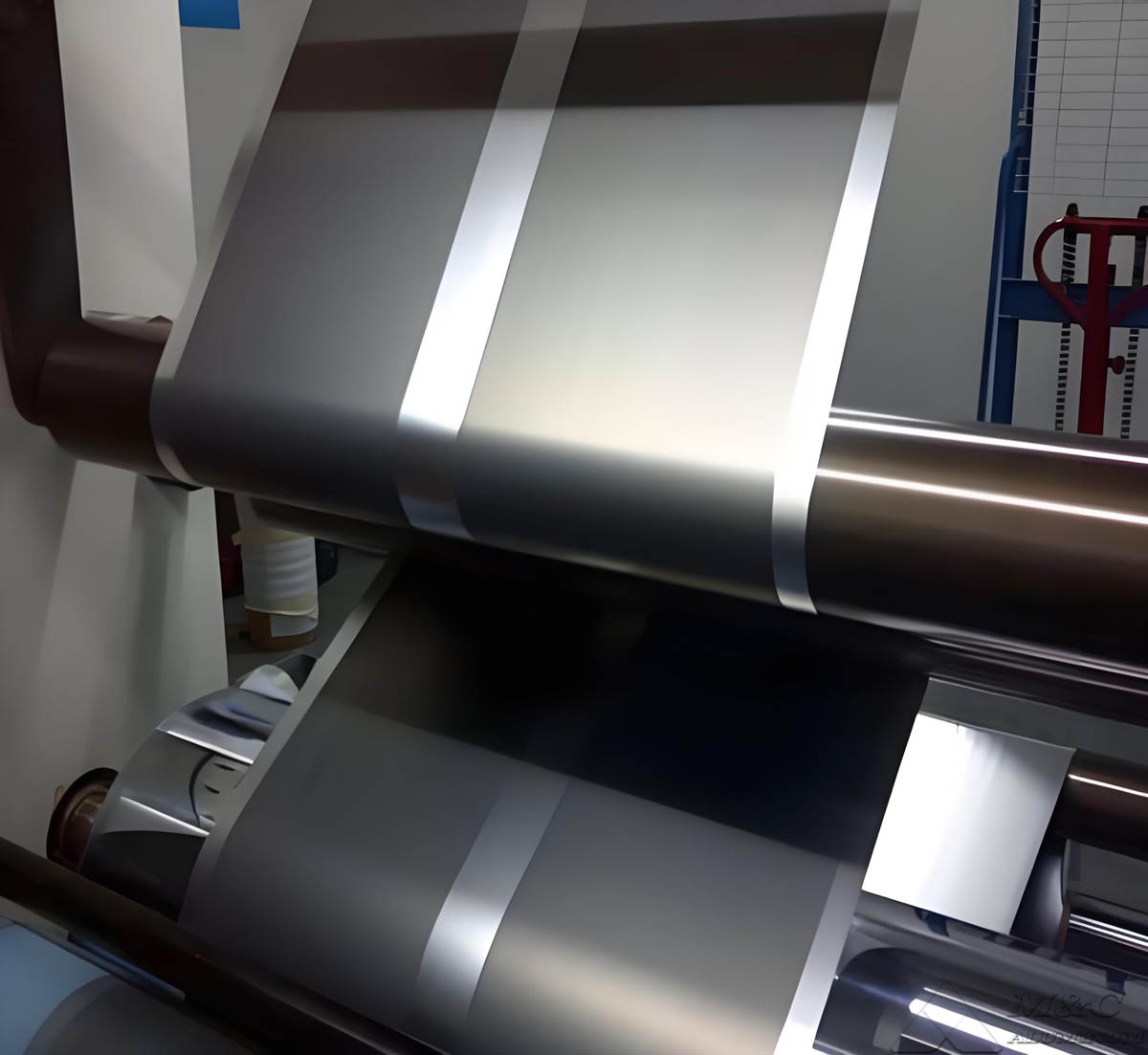
Carbon coated aluminum foil is an advanced version of conventional battery aluminum foil. A conductive carbon layer is applied to one or both sides of the aluminum substrate. This coating can improve interfacial conductivity between the cathode active material and the current collector while supporting more uniform slurry adhesion.
Our carbon coated aluminum foil is manufactured for lithium-ion battery cathode applications where electrode design requires lower contact resistance and improved coating performance. The carbon layer can be supplied in controlled coating weights and coating configurations based on the electrode formulation and production process.
Key potential advantages of carbon coated aluminum foil include:
Improved contact between active material and aluminum current collector.
Reduced interface resistance in the cathode structure.
More consistent electrode coating adhesion.
Better suitability for high-rate battery designs.
Support for stable electrode manufacturing performance.
The required carbon coating thickness, conductivity, adhesion, and surface energy should be confirmed with the battery manufacturer before production. We recommend evaluation through pilot coating trials before full-volume supply.
Key Quality Requirements for Aluminum Cathode Current Collectors
Battery manufacturers commonly evaluate aluminum cathode current collector foil using a combination of dimensional, mechanical, surface, and coil-related criteria.
Thickness Uniformity
Consistent thickness supports uniform coating weight and stable electrode density. Large thickness variation can affect slurry loading and calendering performance. We use process monitoring and inspection procedures to maintain the agreed thickness range throughout each coil.
Surface Cleanliness
The foil surface must be suitable for cathode slurry application. Residual oil, dust, oxidation marks, and foreign particles can reduce adhesion or create coating defects. We apply controlled cleaning and handling practices to minimize contamination risk.
Flatness and Winding Quality
Poor flatness may cause wrinkles, coating skips, or unstable web handling on high-speed lines. Proper coil winding also prevents telescoping and uneven tension during unwinding. Our finished coils are inspected for flatness, edge quality, and winding condition before shipment.
Mechanical Properties
Tensile strength and elongation must match the requirements of coating, drying, calendering, slitting, winding, and cell assembly. A stable temper helps customers maintain efficient electrode production with fewer web breaks.
Applications of Lithium Battery Aluminum Foil
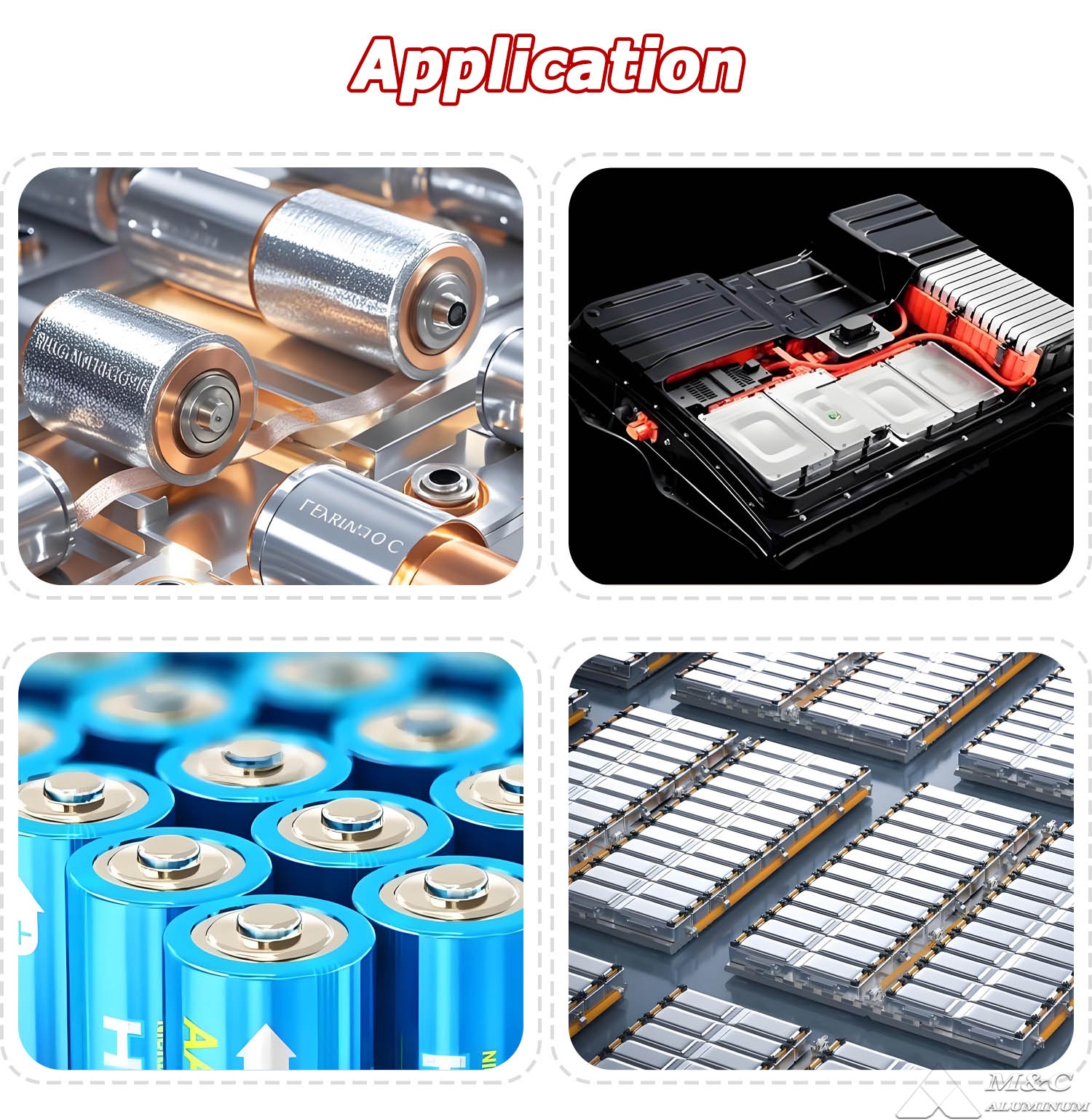
Our battery aluminum foil is used primarily as the positive electrode current collector in lithium-ion battery systems. Typical application areas include:
Electric vehicle battery cells and battery packs.
Energy storage batteries for residential, commercial, and grid-scale systems.
Consumer electronics batteries for phones, tablets, notebooks, and wearable devices.
Lithium batteries for power tools and industrial equipment.
Two-wheel vehicle batteries and light electric mobility systems.
Lithium-ion cells using LFP, NCM, NCA, LCO, and other cathode material systems.
How to Specify Battery Aluminum Foil for Purchase
To provide an accurate quotation and production plan, we recommend that buyers confirm the following information:
Alloy and temper, such as 1235-O or 1060-O.
Required foil thickness and acceptable tolerance.
Coil width, coil weight, inner diameter, and maximum outer diameter.
Bare foil or carbon coated aluminum foil requirement.
One-side or two-side carbon coating configuration.
Surface cleanliness, roughness, and coating compatibility requirements.
Inspection standard, test method, and documentation requirements.
Packaging method, shipping destination, and order quantity.
For new projects, sample evaluation is recommended before mass production. This allows the battery manufacturer to verify coating adhesion, web handling, electrical performance, and compatibility with its electrode manufacturing process.
Our Manufacturing Supply Approach
We manufacture lithium battery aluminum foil for customers that require stable material quality, repeatable coil performance, and technical communication throughout the supply cycle. Our production team can support customized thickness, width, coil geometry, alloy selection, temper control, and carbon coating requirements.
Each order is managed with attention to agreed technical specifications, inspection requirements, protective packaging, and traceability. For battery-grade aluminum foil, consistency is not only a material requirement but also a production requirement. Our objective is to provide aluminum cathode current collector foil that integrates reliably into modern lithium battery electrode manufacturing lines.
Contact Us