
Cost of 4x8 Marine Grade Aluminum Sheet
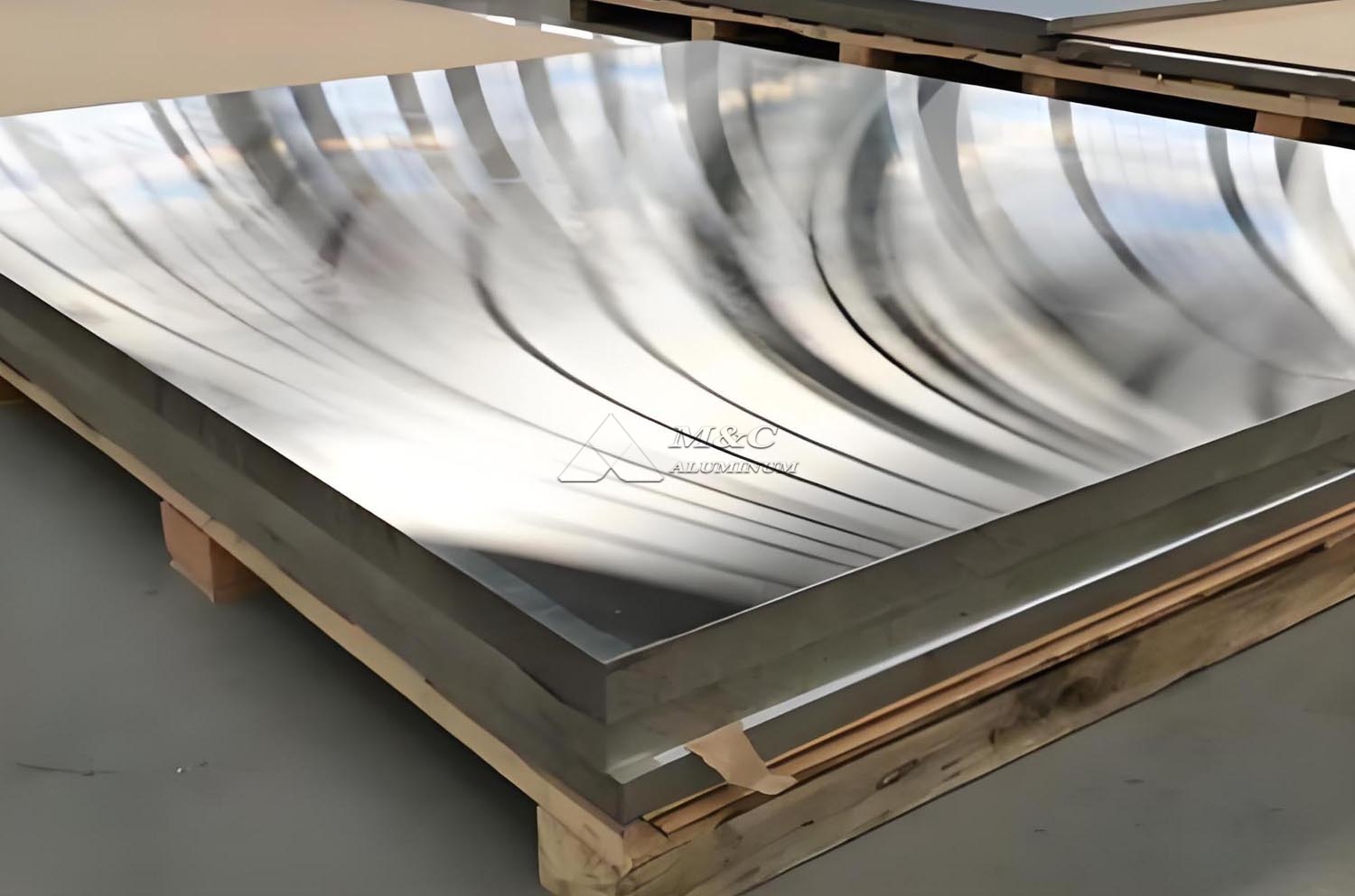
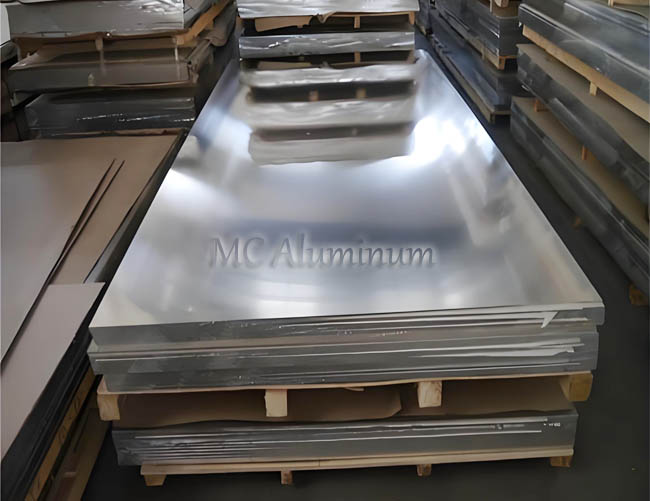
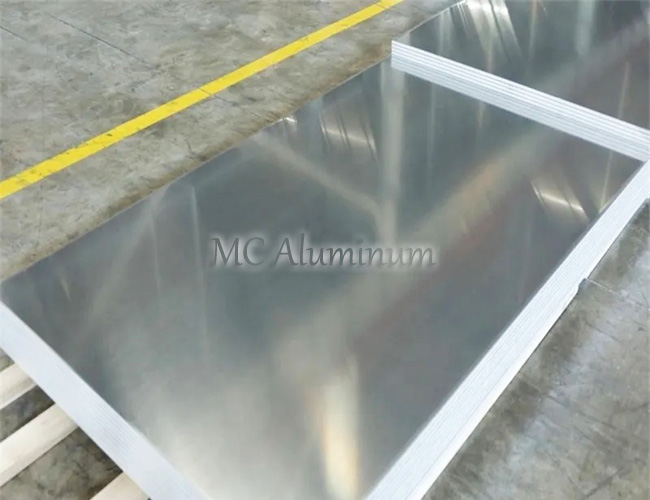
The cost of a 4x8 marine grade aluminum sheet depends on more than the published aluminum market price. As a marine aluminum sheet manufacturer, we calculate each quotation according to alloy composition, sheet thickness, temper, surface condition, testing requirements, processing scope, order quantity, and delivery terms.
A 4x8 sheet measures 4 ft x 8 ft, equivalent to 1,219 x 2,438 mm. This format is widely used in boatbuilding, ship repair, offshore access systems, dock equipment, truck bodies, and corrosion-resistant fabrication. However, two sheets with the same 4x8 dimensions can have significantly different costs when the alloy or technical specification changes.
This guide explains how factory pricing for marine grade aluminum sheet is established and what buyers should provide when requesting a reliable quotation.
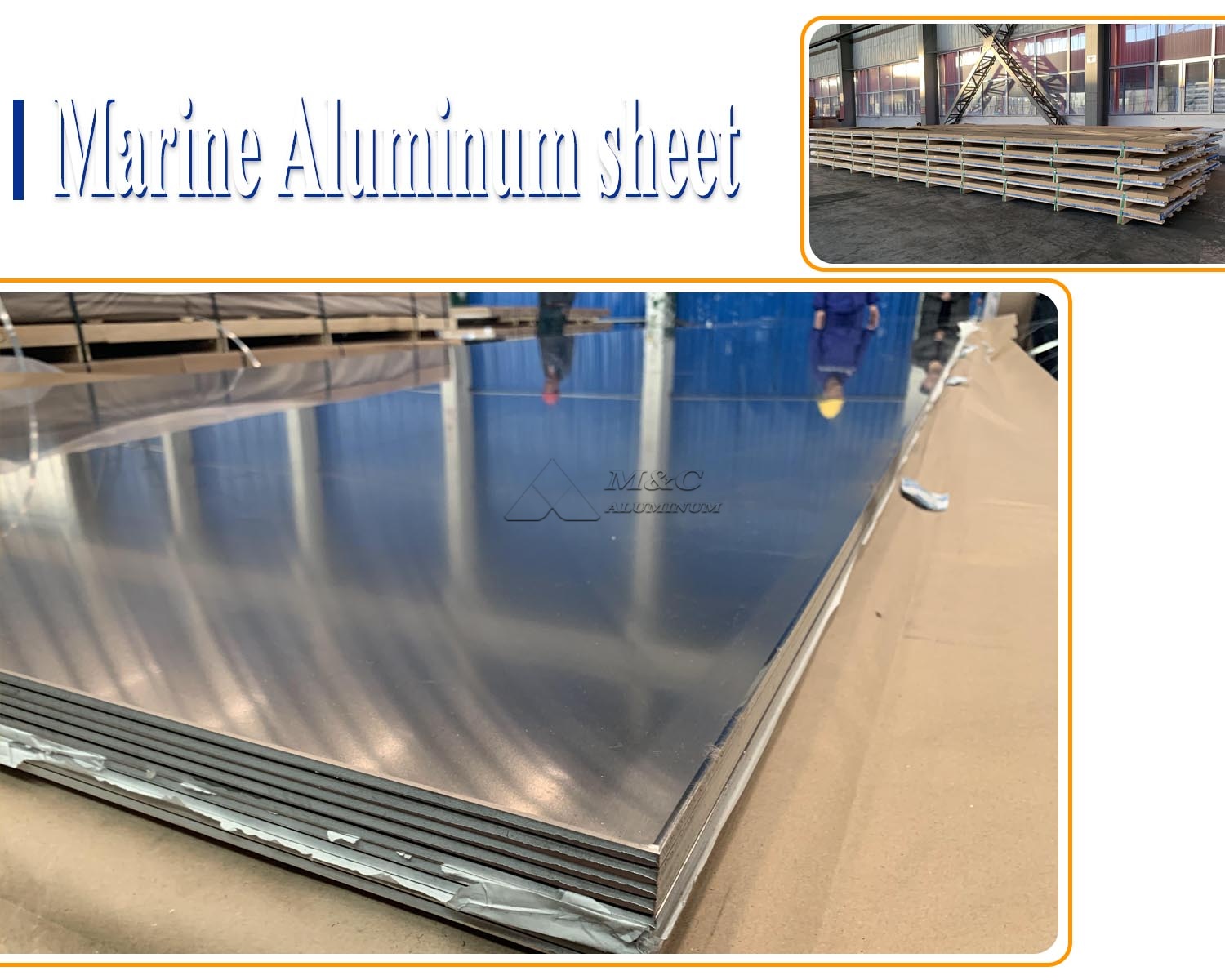
What Is Considered Marine Grade Aluminum Sheet?
Marine grade aluminum sheet generally refers to aluminum alloys selected for their resistance to seawater and humid, salt-containing environments. The term does not represent one universal specification. The required grade depends on whether the material will be used for hull plating, decks, superstructures, gangways, fuel tanks, interior structures, or decorative components.
In our production, the most common marine alloys are 5052, 5083, 5086, 5754, 5456, and 5059. These are primarily 5xxx series aluminum-magnesium alloys. Their corrosion resistance, weldability, strength level, and formability make them suitable for different marine fabrication requirements.
For example, 5052 is frequently specified for lighter-duty marine structures, panels, and formed components. 5083 and 5086 are more commonly selected for welded hull structures and applications requiring higher strength and better seawater corrosion resistance. Buyers comparing a 4x8 marine aluminum sheet price should therefore compare the alloy and temper before comparing the unit price.
Performance Advantages of 4×8 ft Marine-Grade Aluminum Plates
1.Standard dimensions facilitate processing: The 4×8 ft (approx. 1220×2440 mm) specification is commonly used in shipbuilding, making cutting, blanking, and transport convenient.
2.Seawater corrosion resistance: Marine aluminum alloys such as 5083 and 5086 offer excellent resistance to seawater corrosion.
3.High strength and low weight: Lower density compared to steel allows for effective reduction of hull structural weight.
4.Good weldability: Suitable for common aluminum welding processes such as MIG and TIG.
5.Good formability: Excellent plasticity meets the fabrication requirements for hull plating, decking, and cabin structures.
6.Excellent low-temperature performance: Certain 5xxx series marine aluminum alloys retain good toughness in low-temperature environments.
7.Long service life: Superior corrosion resistance and structural stability help reduce maintenance costs.
8.Wide range of applications: Suitable for structures such as hulls, decks, bulkheads, superstructures, fishing vessels, and high-speed boats.
Standard Technical Parameters for 4x8 Marine Aluminum Sheet
The following table shows commonly requested parameters. Final specifications should be confirmed against the applicable project standard, drawing, or classification requirement.
| Item | Common Specification | Notes |
|---|---|---|
| Standard sheet size | 1,219 x 2,438 mm | Equivalent to 4 ft x 8 ft |
| Thickness range | 1.0 to 6.0 mm for sheet | Heavier gauges may be supplied as plate |
| Common alloys | 5052, 5083, 5086, 5754, 5456, 5059 | Alloy selection affects cost and performance |
| Common tempers | H111, H112, H116, H321, H32 | Temper depends on alloy and end use |
| Density | Approx. 2.66 to 2.68 g/cm3 | Varies slightly by alloy |
| Surface | Mill finish, brushed, PVC protected | Surface protection adds processing cost |
| Thickness tolerance | According to agreed standard | Confirm before production for critical parts |
| Width and length tolerance | According to agreed standard | Tight tolerances may require extra processing |
| Inspection documents | Mill test certificate, EN 10204 3.1 where required | Additional certificates affect total cost |
| Optional testing | Ultrasonic test, corrosion test, mechanical test | Determined by contract or classification rules |
Main Factors Affecting the Cost of 4x8 Marine Grade Aluminum Sheet
1. Aluminum Alloy Grade
Alloy is one of the first cost variables. Aluminum-magnesium content, alloying control, melting practice, homogenization, rolling schedule, and quality inspection all influence manufacturing cost.
5052 marine aluminum sheet is generally a practical choice where good corrosion resistance and forming performance are needed without the higher strength requirements of hull structures. In contrast, 5083 aluminum sheet and 5086 aluminum plate typically involve more stringent production and quality controls. These alloys may have a higher conversion cost because they are often ordered with specific marine tempers such as H116 or H321.
For structural projects, we recommend evaluating the material according to the design load, welding method, corrosion environment, and classification requirements rather than selecting only by the lowest initial sheet price. Our 5083 Aluminum sheet is commonly specified where high-strength marine construction material is required.
2. Thickness and Sheet Weight
Thickness has a direct effect on the cost per sheet because it determines the metal weight. A 4x8 sheet has an area of approximately 2.973 square meters. Using an average density of 2.66 g/cm3, the estimated theoretical weight is shown below.
| Thickness | Approximate Weight per 4x8 Sheet | Typical Use |
|---|---|---|
| 1.5 mm | 11.9 kg | Covers, interior panels, light fabrication |
| 2.0 mm | 15.8 kg | Cabinets, panels, formed marine components |
| 2.5 mm | 19.8 kg | Small boat structures and deck components |
| 3.0 mm | 23.7 kg | General marine fabrication |
| 4.0 mm | 31.6 kg | Structural panels and reinforced sections |
| 5.0 mm | 39.6 kg | Hull and deck applications |
| 6.0 mm | 47.5 kg | Heavy-duty structural applications |
The theoretical weight is used for budgeting, but the invoiced weight is normally based on actual weighed material or contractual tolerances. Thicker sheets usually carry a higher cost per piece, while the cost per kilogram may vary according to rolling availability, yield, and order volume.
3. Temper and Mechanical Property Requirements
Temper specifies the material condition after rolling or strain hardening. It has a substantial effect on fabrication behavior and mechanical properties. Marine projects commonly request H111, H112, H116, H321, or H32 conditions.
H116 and H321 are frequently required for 5083 and 5086 applications exposed to seawater because these tempers are associated with improved resistance to exfoliation corrosion in suitable service conditions. Producing and verifying these tempers requires controlled rolling and testing. As a result, a 4x8 marine grade aluminum sheet in H116 may cost more than the same alloy in a general-purpose temper.
4. Certification and Inspection Scope
The base material cost does not always include project-specific documentation. A standard mill test certificate may be sufficient for general fabrication. Shipbuilding, offshore, and government projects may additionally require third-party inspection, ultrasonic testing, chemical analysis confirmation, mechanical test reports, or classification society approval.
When we receive a request for quotation, we identify certification requirements before scheduling production. This avoids a common purchasing issue: material may meet the alloy designation but lack the required inspection evidence. Documentation should be specified at the quotation stage because retroactive testing or re-certification can add time and cost.

5. Surface Condition and Value-Added Processing
Mill finish is the standard surface for most marine aluminum sheet applications. Additional operations increase the finished material cost, including:
PVC film protection for visible or scratch-sensitive surfaces.
Precision slitting or cut-to-length processing.
Tight flatness control for CNC cutting or panel fabrication.
Deburring and edge trimming.
Brushed or patterned surfaces for non-structural applications.
Custom sizes that reduce the buyer's scrap rate.
A standard 4x8 format is normally more economical than a non-standard sheet because production planning and material yield are more efficient. However, a custom width or length can reduce fabrication waste for high-volume projects, which may lower the total installed material cost.
How We Calculate Marine Aluminum Sheet Cost
Our factory quotation is based on a transparent manufacturing structure rather than a single generic 4x8 sheet price. The general calculation is:
Material cost = Actual sheet weight x aluminum base price + alloy conversion cost + processing cost + inspection and packing cost
Freight, insurance, export packaging, customs documentation, and destination charges are then considered according to the agreed Incoterm. For export orders, the same 4x8 marine grade aluminum sheet can have different delivered costs under EXW, FOB, CFR, or CIF terms.
The aluminum base price changes with the market. Therefore, a quotation should state its validity period. For large contracts or staged deliveries, we can discuss a pricing mechanism tied to an agreed aluminum market reference and conversion premium.
Selecting the Right Alloy for Cost Control
The lowest-cost alloy is not automatically the best economic option. Over-specifying a high-strength marine alloy can increase material cost unnecessarily, while under-specifying the alloy can create corrosion, welding, and service-life risks.
For formed marine panels, tanks, and light components, 5052 Aluminum Sheet is often an efficient option because of its favorable formability and corrosion resistance. For welded hull plating, decks, bulkheads, and offshore structures, 5083 or 5086 may be more appropriate when the engineering requirement calls for higher strength and marine corrosion performance.
We advise buyers to define the application first, then select the alloy, thickness, and temper. This approach makes it possible to control both purchase cost and long-term maintenance cost.
Information Needed for an Accurate Factory Quote
To provide an accurate cost of 4x8 marine grade aluminum sheet, please include the following details in your inquiry:
Alloy grade, such as 5052, 5083, 5086, or 5754.
Temper, such as H32, H111, H116, or H321.
Exact thickness, width, and length.
Required quantity in sheets, metric tons, or annual volume.
Surface requirement, including mill finish or protective film.
Technical standard and required certificates.
Intended application, especially if the sheet will be welded or exposed to seawater.
Delivery term and destination port or location.
With complete technical information, we can confirm production feasibility, material weight, packing method, lead time, and the most suitable commercial basis.
Conclusion
The cost of a 4x8 marine grade aluminum sheet is determined by material weight, alloy, temper, quality requirements, processing, and delivery conditions. A clear specification is essential for an accurate comparison. As a manufacturer, we supply marine aluminum sheet based on verified production parameters and project-specific inspection requirements, helping buyers obtain material that matches both the technical application and procurement budget.
Contact Us