
High Speed Armoring Machine Cable Armored Aluminum Strip
As a manufacturer of aluminum strip products, we produce cable armored aluminum strip for high speed armoring machines used in power cable, control cable, communication cable, and industrial cable production. Our aluminum strip is engineered for continuous wrapping processes where coil consistency, edge condition, flatness, and mechanical stability directly affect armoring efficiency.
Cable manufacturers require an aluminum alloy strip that can run smoothly at high line speeds without excessive coil vibration, edge cracking, telescoping, or unplanned machine stoppage. We control the full manufacturing process from aluminum coil selection and rolling to slitting, edge treatment, inspection, and export packaging. This enables us to supply aluminum strip for cable armor with specifications matched to different armoring equipment and cable structures.
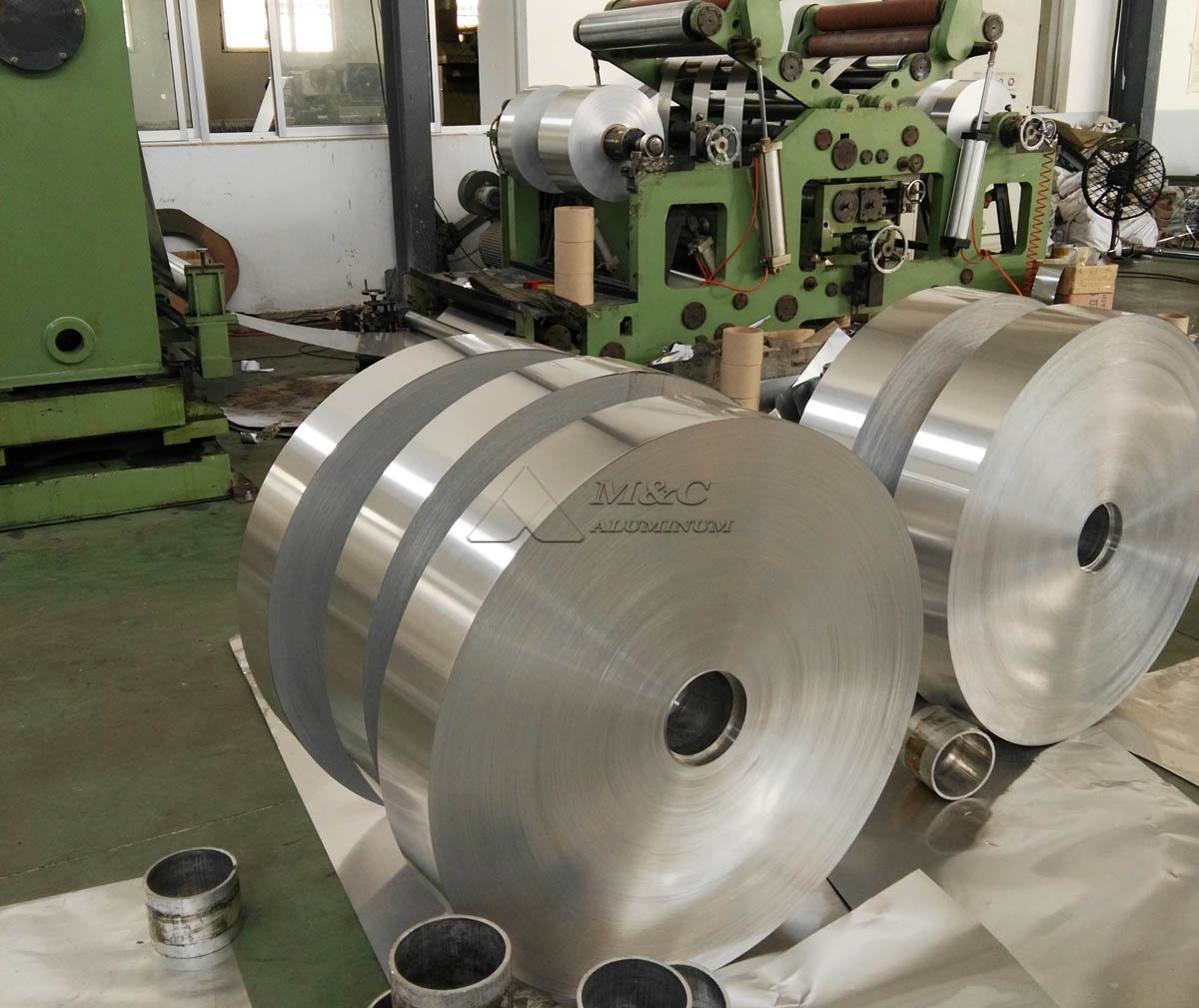
What Is Cable Armored Aluminum Strip?
Cable armored aluminum strip is a narrow rolled aluminum product used as a protective metallic layer around cable insulation, bedding, or inner sheath. During cable armoring, the strip is formed and helically wrapped around the cable core by an armoring machine. The finished aluminum armor provides mechanical protection while maintaining lower weight than conventional steel wire armor or steel tape armor.
Depending on cable design, aluminum strip armor can provide protection against external impact, compression, installation damage, and certain environmental conditions. It is commonly used in medium-voltage power cables, low-voltage distribution cables, instrumentation cables, mining cables, and utility transmission systems where weight reduction and corrosion resistance are important.
For high speed armoring machine operation, the aluminum strip must maintain uniform tension and stable shape throughout the coil. A strip with inconsistent thickness, poor slit edges, or uneven residual stress can cause feeding instability. Therefore, material quality must be assessed not only by alloy composition, but also by its process performance on the cable production line.
Aluminum Alloys for Cable Armoring Applications
We select aluminum alloys according to the mechanical requirements, corrosion exposure, conductivity needs, and forming conditions of each cable manufacturer. The most commonly used grades include 1060, 1070, 1100, 3003, and 5052 aluminum alloy strip.
The 1xxx series provides high aluminum purity, good corrosion resistance, and excellent formability. These grades are suitable where the armoring process requires easy bending and stable forming. The 3003 aluminum strip contains manganese, which improves strength while retaining favorable workability. It is widely selected for cable armor applications requiring improved mechanical performance compared with pure aluminum grades.
For more demanding environmental or structural requirements, 5052 aluminum strip can be considered. This magnesium-containing alloy offers higher strength and good corrosion resistance. The final alloy selection should be based on the cable standard, armor structure, customer processing equipment, and required finished cable performance.
Our Aluminum Strip production program supports customized alloy, temper, thickness, width, coil weight, and surface requirements for cable manufacturing customers.
Technical Parameters of Cable Armored Aluminum Strip
The following table shows typical production ranges. Final values can be adjusted according to the armoring machine, cable type, and applicable technical standard.
| Parameter | Typical Range | Notes |
|---|---|---|
| Alloy | 1060, 1070, 1100, 3003, 5052 | Selected according to strength and forming requirements |
| Temper | O, H14, H16, H18, H24 | O and H14 are common for forming applications |
| Thickness | 0.20 mm to 1.50 mm | Custom thickness available upon technical review |
| Width | 10 mm to 300 mm | Narrow slit strip for cable armoring lines |
| Thickness tolerance | According to agreed specification | Controlled through rolling and final inspection |
| Width tolerance | According to agreed specification | Suitable for stable strip guiding |
| Coil inner diameter | 300 mm, 400 mm, 500 mm, 505 mm, 610 mm | Matched to customer payoff equipment |
| Coil outer diameter | Up to 1,500 mm | Depends on width, thickness, and coil weight |
| Coil weight | 100 kg to 5,000 kg | Customized for handling and machine capacity |
| Surface condition | Mill finish, clean, dry, oil controlled | No heavy scratches or edge defects |
| Edge condition | Slit edge, deburred edge, rounded edge | Defined according to armoring speed and handling |
Key Requirements for High Speed Armoring Machines
High speed cable armoring introduces demands that may not be apparent in general aluminum strip applications. At elevated line speeds, small variations in strip geometry and coil winding quality can affect wrapping accuracy and machine efficiency.
Consistent Thickness and Width
Stable thickness supports uniform strip tension and predictable overlap during armoring. Width consistency is equally important because the strip must cover the cable circumference according to the required armor design. Our production process uses controlled rolling and precision slitting to reduce dimensional variation across the strip length and coil width.
Smooth, Controlled Edges
Cable armored aluminum strip must have edges suitable for continuous feeding and forming. Sharp burrs can damage cable layers, increase friction in guide components, or create safety concerns during handling. We inspect slit edges and can provide edge conditions based on the customer's forming process, including low-burr and deburred options.
Flatness and Coil Winding Quality
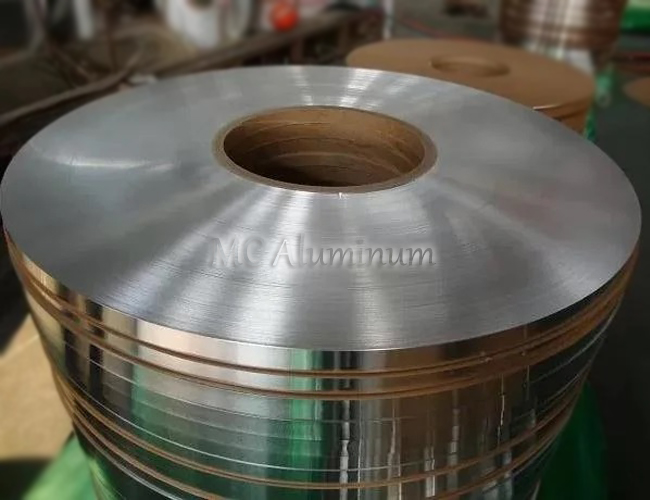
A high quality aluminum strip coil should unwind smoothly from the payoff unit. Poor flatness or internal stress can lead to wandering, buckling, or instability when the strip enters the armoring head. We maintain coil winding control to minimize telescoping and loose wraps. Coil build is reviewed to support efficient operation on high speed armoring machines.
Mechanical Stability During Forming
The strip must bend around the cable construction without cracking or excessive springback. Temper selection is critical. A soft temper may improve formability, while a harder temper may provide greater armor rigidity. Our technical team can recommend a suitable alloy-temper combination after reviewing strip dimensions, wrapping method, cable diameter, and required mechanical performance.
Manufacturing Process in Our Factory
Our cable armoring aluminum strip is produced through a controlled sequence of manufacturing and inspection steps. Raw aluminum coil is selected according to the requested alloy and chemical composition. The material is then rolled to the required thickness and processed to achieve the specified temper and mechanical properties.
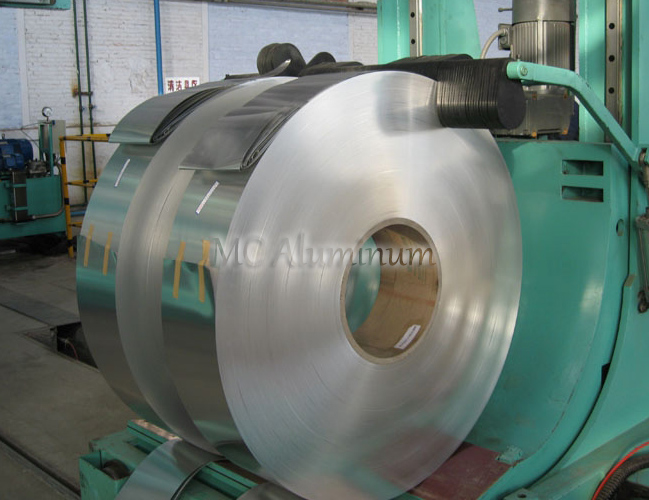
After rolling, coils are slit to the required width on precision slitting equipment. Slitting parameters are adjusted according to strip thickness, alloy condition, and edge requirement. During this stage, we monitor width, edge appearance, coil alignment, and winding tension.
The finished coils undergo quality inspection before packing. Typical checks include thickness measurement, width measurement, surface inspection, edge inspection, coil condition, and packaging verification. For customer projects requiring additional documentation, we can provide mill test certificates and dimensional inspection records according to the purchase agreement.
Why 3003 Aluminum Strip Is Commonly Used
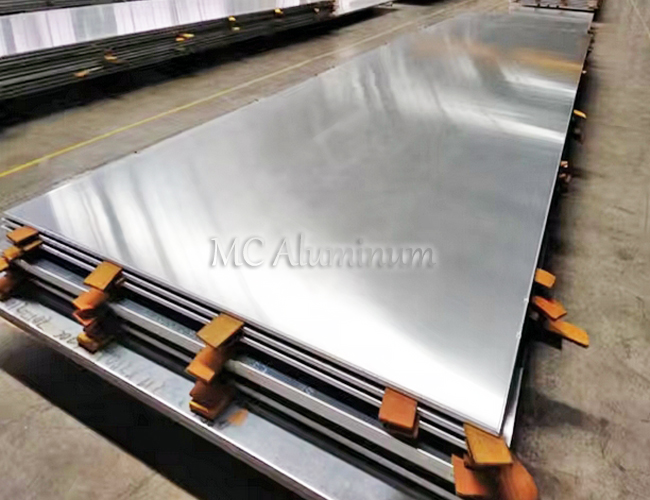
Among the available aluminum alloys, 3003 aluminum strip is frequently used for cable armor because it provides a practical balance of strength, corrosion resistance, and workability. The manganese addition improves strength compared with commercially pure aluminum while preserving good forming performance.
For cable manufacturers operating high speed lines, our 3003 Aluminium strip can be supplied in controlled tempers and narrow widths to support stable feeding. It is particularly suitable where the finished cable requires a stronger aluminum armor layer without the higher forming resistance associated with some harder alloys.
However, alloy selection should not be based on grade alone. The appropriate temper, thickness, edge finish, and coil size are equally important. We work with cable manufacturers to define these parameters before production, helping ensure compatibility with their armoring equipment.
Surface and Packaging Requirements
The surface of aluminum strip for cable armor should be clean, dry, and free from defects that can interfere with winding or reduce the visual quality of the finished cable. Our standard mill finish surface is suitable for most cable armoring applications. If a customer has specific requirements for oil level, surface cleanliness, or protective interleaving, these can be confirmed during order review.
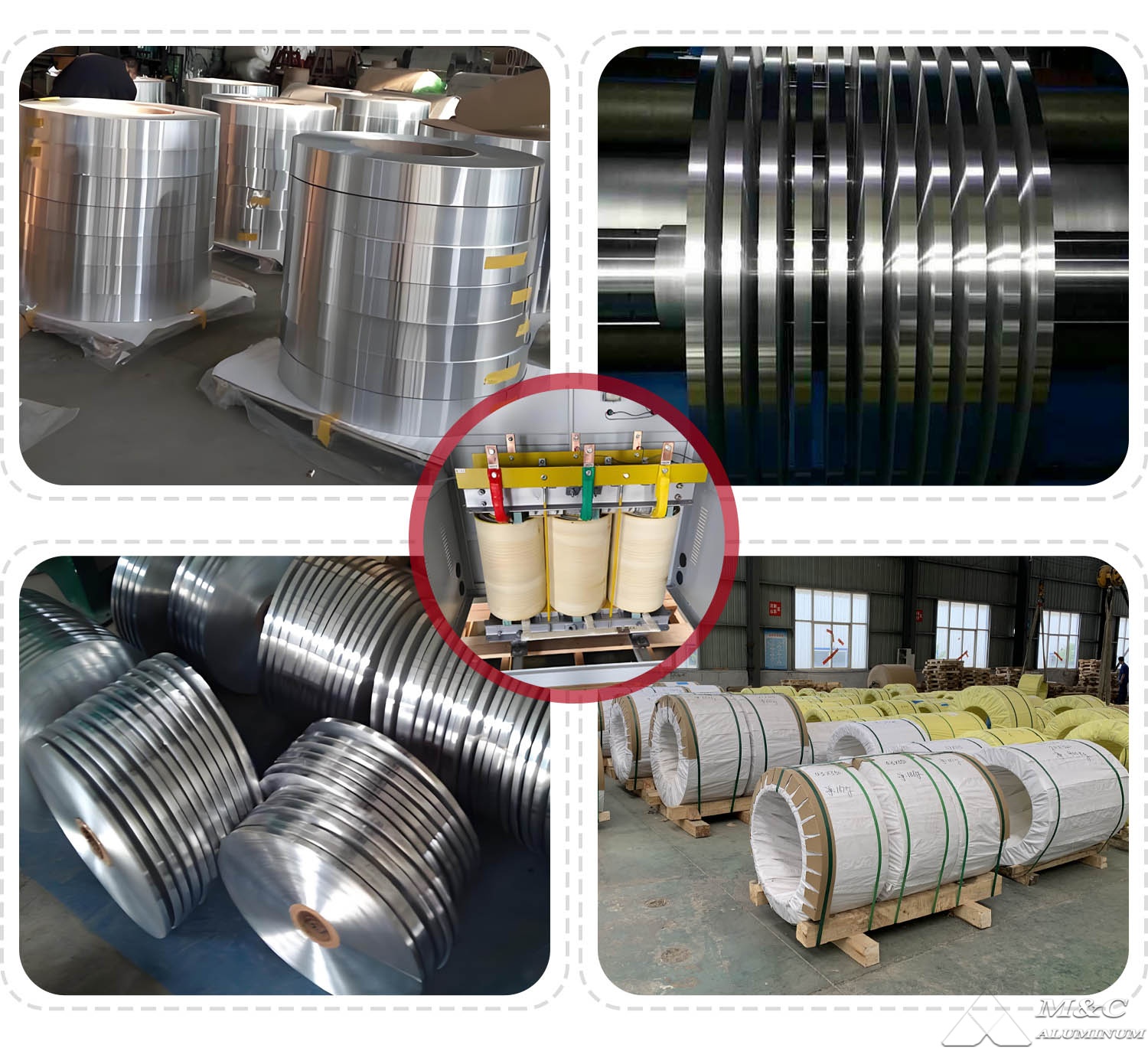
For export shipments, coils are protected using moisture-resistant wrapping materials and reinforced outer packaging. Depending on coil size and destination, packaging may include protective paper, plastic film, steel strapping, wooden pallets, wooden cases, or eye-to-wall positioning. Proper packing helps prevent coil damage, moisture exposure, and deformation during long-distance transportation.
Selecting the Right Aluminum Strip for Cable Armor
Before placing an order, cable manufacturers should provide several key details: alloy preference, thickness, width, temper, coil inner diameter, target coil weight, edge requirement, armoring machine speed, and finished cable application. If the cable standard specifies mechanical or corrosion resistance requirements, this information should also be included.
Our factory technical team evaluates these conditions and produces cable armored aluminum strip to the agreed specification. By controlling material selection, rolling, slitting, and coil preparation, we help customers maintain stable high speed armoring performance and consistent finished cable quality.
Conclusion
High speed armoring machine cable armored aluminum strip must combine accurate dimensions, reliable coil winding, smooth edges, appropriate temper, and consistent mechanical properties. These factors determine whether the strip can run efficiently through the armoring line and form a dependable protective cable layer.
As an aluminum strip manufacturer, we supply customized aluminum alloy strip for cable armor projects across a range of grades, widths, thicknesses, and coil configurations. Our production process is designed to support cable manufacturers that require stable material quality for continuous, high speed armoring operations.


Contact Us