
Pure Aluminum Strip Special for Transformer Winding
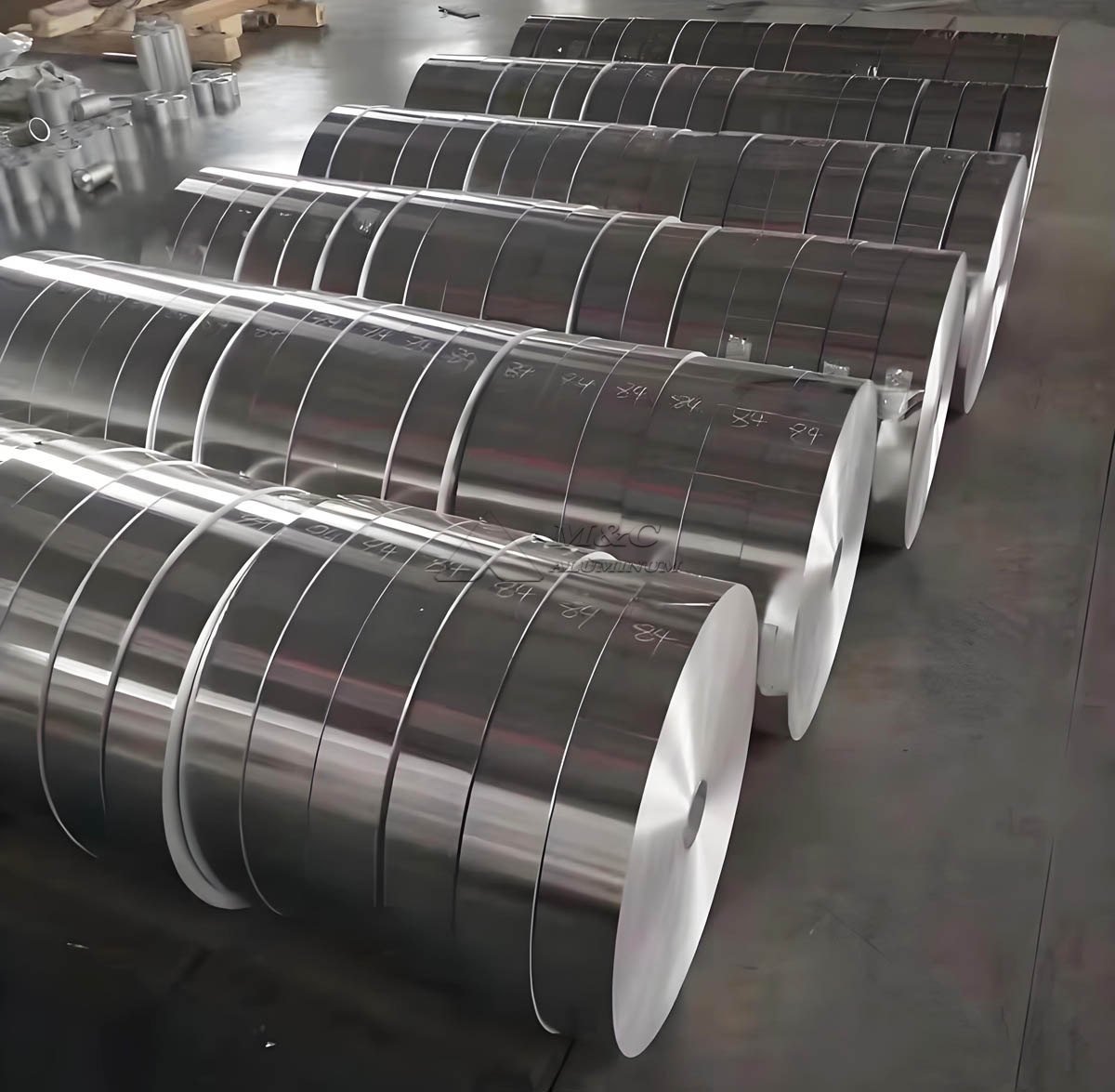
As an aluminum processing manufacturer, we produce pure aluminum strip special for transformer winding from controlled aluminum coil, precision slitting, surface cleaning, edge treatment, and final coil packing. The product is designed for oil-immersed transformers, dry-type transformers, distribution transformers, reactors, and other electrical winding applications where stable conductivity, uniform dimensions, and reliable winding performance are required.
Transformer winding is a demanding application for aluminum strip. The conductor is not only a current-carrying material, but also a mechanical component that must withstand winding tension, insulation pressure, thermal expansion, and long service cycles. For this reason, our production control focuses on chemical composition, conductivity, thickness tolerance, width tolerance, burr height, surface cleanliness, and coil flatness.
Manufacturing Position and Product Scope
We manufacture transformer aluminum strip in commonly specified pure aluminum grades, including 1050, 1060, 1070, and 1350. These alloys are selected for their high aluminum content, good electrical conductivity, stable formability, and suitability for continuous winding. The material can be supplied in soft temper, usually O temper, to support smooth winding and proper compaction with insulation paper or film.
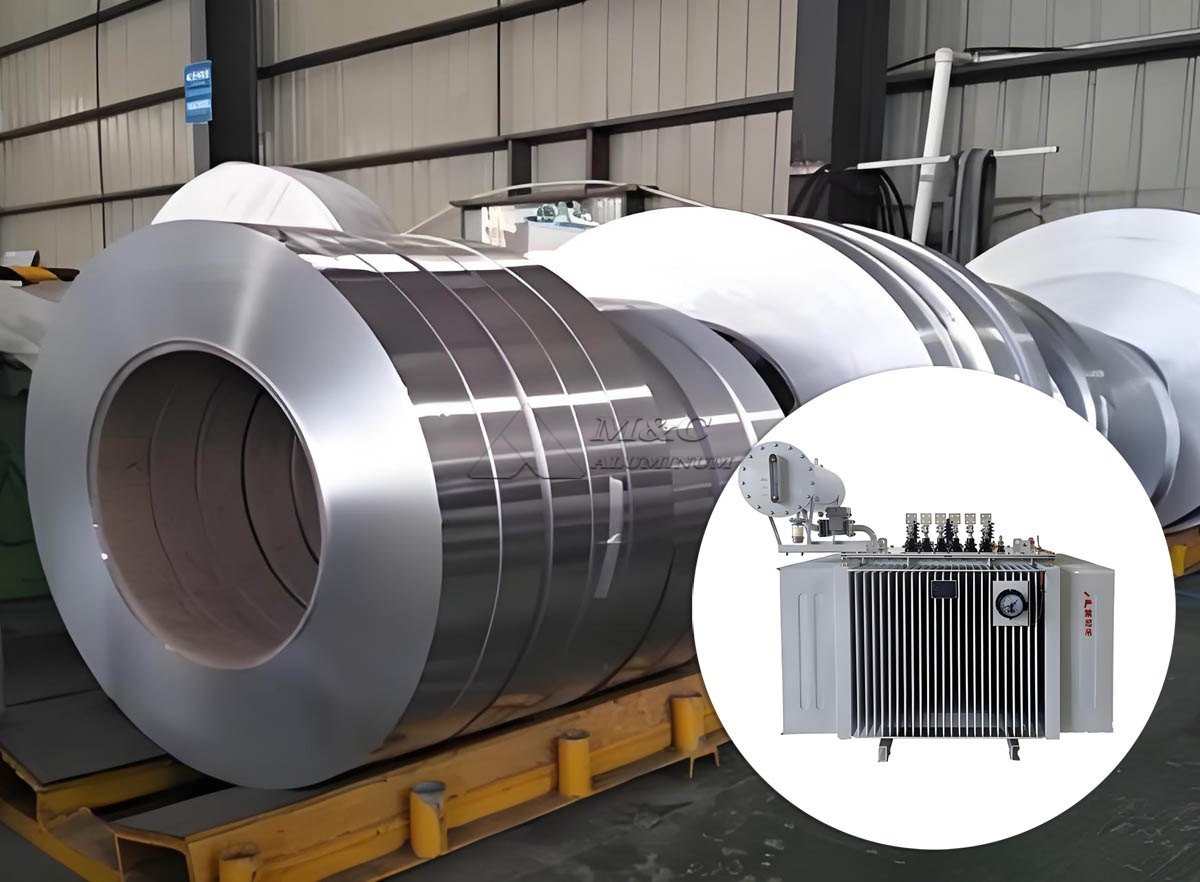
Our Transformer Aluminium Strip is processed according to customer drawings, transformer design requirements, and applicable international standards. Typical supply forms include narrow strip coils, wide strip coils, paper interleaved coils, and eye-to-wall or eye-to-sky packaging depending on transportation and handling requirements.
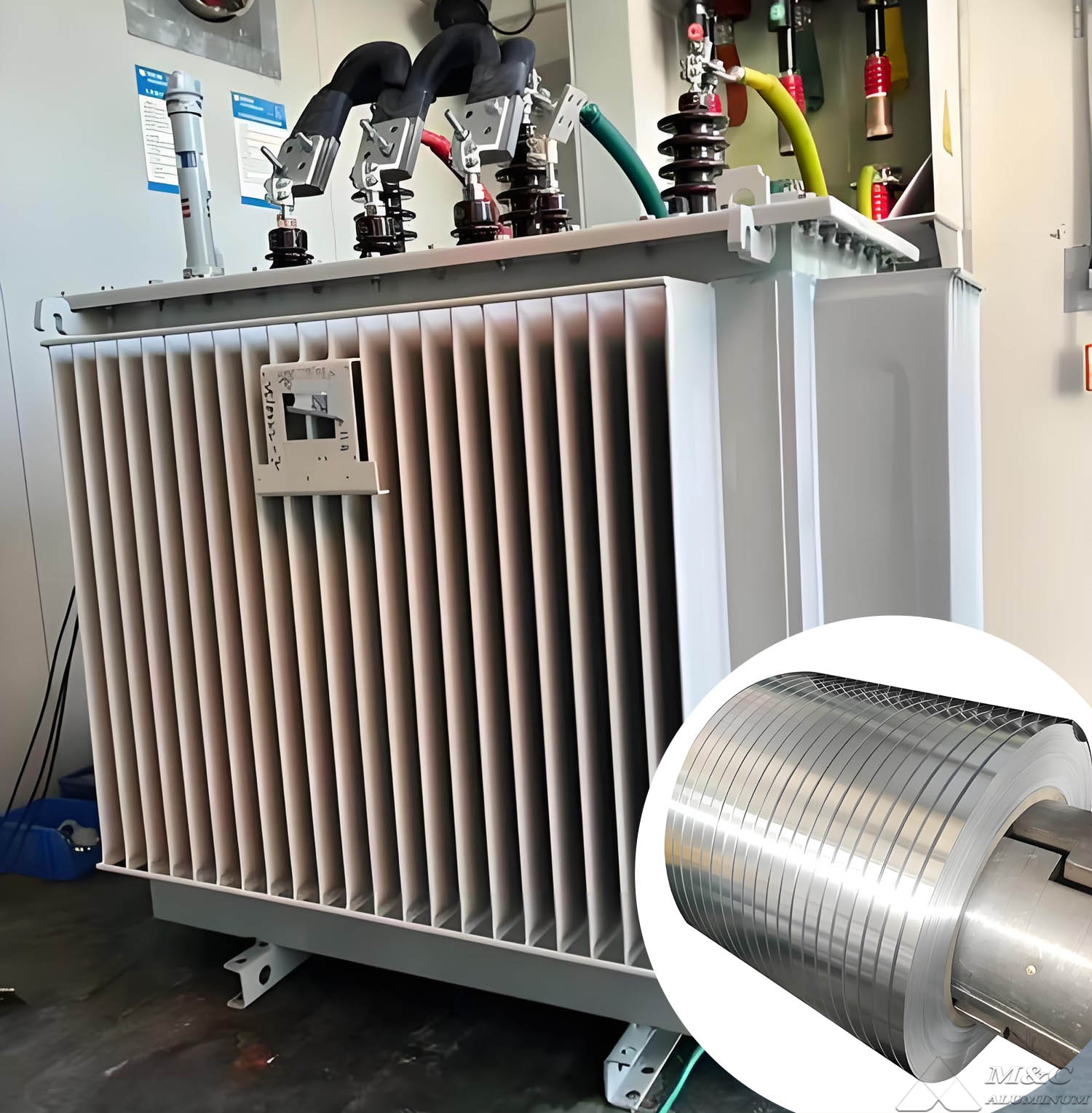
The product is suitable for medium and low voltage transformer windings where aluminum conductors are used instead of copper to reduce material weight and optimize cost. Compared with common industrial aluminum strip, aluminum strip for transformer winding requires more careful control of edges and surface condition because small burrs, scratches, or stains may affect insulation reliability during winding.
Why Pure Aluminum Strip Is Used in Transformer Windings
Pure aluminum strip offers a practical balance of electrical performance, weight, workability, and cost. In transformer winding, the conductor must provide stable current transmission while being easy to wind into compact coils. Pure aluminum alloys, especially 1050, 1060, 1070, and 1350, have high conductivity and low density, making them suitable for electrical winding designs.
The low density of aluminum helps reduce the total weight of transformer windings. This can be important for distribution transformers, compact dry-type transformers, and equipment installed in locations where handling or installation weight is a concern. Aluminum also has good thermal conductivity, which supports heat dissipation when the winding structure and insulation system are properly designed.
For winding production, soft temper pure aluminum strip can be bent and wound without cracking under normal operating conditions. The strip must maintain consistent thickness and width over the full coil length. If the dimensions fluctuate, the winding geometry may become uneven, leading to insulation gaps, poor compaction, or difficulty in assembly. This is why precision slitting and tension control are central steps in our manufacturing process.
Common Alloys for Transformer Aluminum Strip
The selection of alloy depends on transformer design, conductivity requirement, mechanical strength, and purchasing specification. We regularly manufacture 1050 aluminum strip, 1060 aluminum strip, 1070 aluminum strip, and 1350 aluminum strip for transformer winding.
1050 and 1060 aluminum strip are widely used due to their stable processing performance and economical balance. 1070 aluminum strip offers higher aluminum purity and improved conductivity. 1350 aluminum strip is a recognized electrical conductor grade and is often specified where electrical performance is a key design factor.
Performance Advantages of Pure Aluminum Strip for Transformer Windings
1. Excellent Electrical and Thermal Conductivity: Typically made from commercially pure aluminum (such as the 1050 or 1060 series), the material features very low resistivity, enabling stable current conduction and rapid dissipation of heat generated during winding operation.
2. Superior Machinability (Soft Texture): Subjected to rigorous annealing (O-temper), the aluminum strip possesses high plasticity; this ensures tight winding, minimizes spring-back, and provides an excellent fit.
3. Significant Weight Reduction and Cost-Efficiency: Compared to traditional copper windings, pure aluminum strip has a lower density, substantially reducing the transformer's overall weight. Additionally, the price of aluminum is far lower than that of copper, effectively lowering manufacturing costs.
4. Smooth Surface and High-Quality Edge Treatment (Rounded-Edge Aluminum Strip): The edges of transformer-grade aluminum strips undergo a special rounding process (deburring) to effectively prevent corona discharge caused by burrs during operation, thereby ensuring the safety of inter-layer insulation.
Technical Parameters
The following table shows general production ranges. Final specifications can be adjusted according to confirmed drawings, standards, and order requirements.
| Item | Typical Specification |
|---|---|
| Product name | Pure aluminum strip special for transformer winding |
| Alloy | 1050, 1060, 1070, 1350 |
| Temper | O, soft annealed |
| Thickness | 0.08 mm to 3.00 mm, customized |
| Width | 10 mm to 1600 mm, customized |
| Inner diameter | 150 mm, 200 mm, 300 mm, 405 mm, 500 mm, or as required |
| Outer diameter | According to coil weight and handling method |
| Conductivity | Typically 60 percent IACS or above, depending on alloy |
| Surface | Clean, bright, free from oil stain, oxidation, severe scratch, and inclusion |
| Edge condition | Slit edge, deburred edge available according to requirement |
| Burr control | Controlled according to thickness and customer winding requirement |
| Coil form | Strip coil, paper interleaved coil, eye-to-wall, eye-to-sky |
| Application | Oil-immersed transformer, dry-type transformer, reactor, electrical winding |
| Inspection | Chemical composition, dimension, surface, edge, mechanical property, conductivity |
Production Process in Our Factory
Our production process starts with alloy selection and coil preparation. Aluminum ingots or qualified upstream coil materials are checked according to chemical composition requirements. After rolling to the required gauge, the coil is annealed to achieve soft temper and stable mechanical properties. For transformer winding aluminum strip, annealing uniformity is important because inconsistent hardness can cause tension variation during winding.
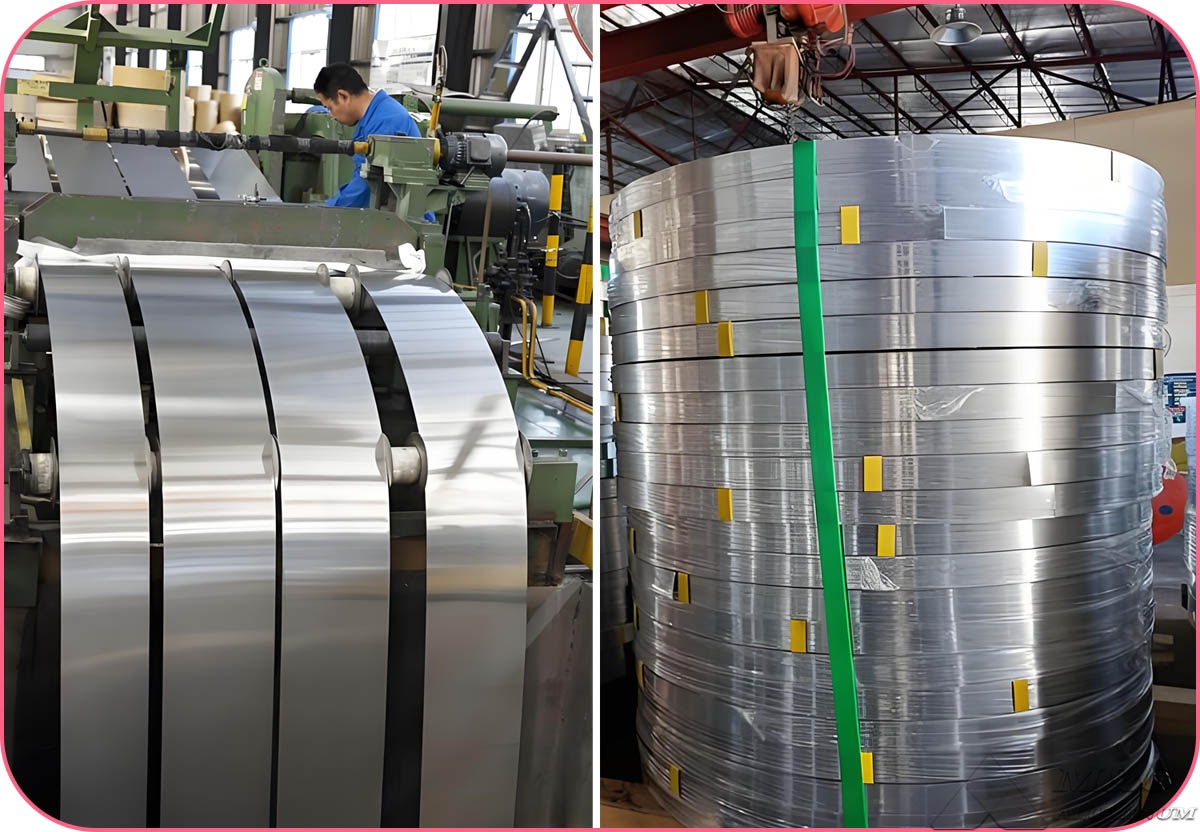
After annealing, the coil enters precision slitting. Slitting is one of the key processes for transformer aluminum strip because the edge quality directly affects insulation safety. We control blade clearance, slitting tension, cutting speed, and coil alignment to reduce edge wave, camber, and burr. For strict winding applications, edge deburring or additional edge treatment can be arranged according to customer requirements.
Surface quality is controlled through cleaning and inspection. The strip surface should be free from conductive particles, heavy oil residue, stains, dents, and serious scratches. A clean surface helps the insulation paper or film contact the conductor evenly. This is especially important in foil winding and layer winding structures.
Dimensional Accuracy and Edge Quality
Transformer winding requires long continuous strip with consistent width and thickness. Thickness deviation may influence conductor cross-sectional area, resistance, temperature rise, and winding size. Width deviation may affect insulation margins and winding alignment. Our process control includes online and offline measurement to verify that the aluminum strip meets the agreed tolerance range.
Edge quality receives special attention. Sharp burrs can cut insulation paper, polyester film, or other winding insulation materials. Excessive burrs may also create local electric field concentration or mechanical stress points. We therefore inspect edges during slitting and before packing. For customers using high-speed winding machines, stable edge condition can reduce machine stoppage and improve winding efficiency.
Camber and flatness are also important. If the strip has excessive camber, it may not track correctly during winding. If it has wave or uneven tension memory, it may create loose winding layers. Our slitting and recoiling process is designed to maintain stable coil shape and suitable winding tension.
Surface Requirements for Electrical Applications
The surface of pure aluminum strip special for transformer winding must be clean and uniform. In transformer production, the conductor is combined with insulation material and then formed into compact coils. Any foreign matter on the surface may create local defects. Oil residue can affect insulation adhesion or contaminate transformer oil. Deep scratches can reduce effective cross-section and produce stress concentration.
We manufacture and inspect the surface according to electrical conductor application requirements. Slight rolling marks may be acceptable if they do not affect insulation or conductivity, but heavy scratches, black lines, oxidation patches, inclusions, and visible contamination are controlled. When required, paper interleaving can be used to protect the surface during transportation and storage.
Alloy Selection Guidance
For general distribution transformers, 1050 and 1060 pure aluminum strip are frequently used because they provide good conductivity and stable production availability. For designs that require higher conductivity or specify an electrical conductor grade, 1070 or 1350 aluminum strip may be selected.
When choosing material, transformer manufacturers normally consider rated capacity, voltage level, winding method, thermal design, insulation system, and cost target. As a factory, we do not replace transformer design calculation, but we support customers with accurate material data, stable production tolerances, and sample evaluation before bulk order.
For related industrial strip requirements beyond transformer winding, our Aluminum Strip production line can also process different alloys, tempers, and dimensions for electrical, packaging, heat exchange, and general industrial uses.
Packaging and Coil Protection
Transformer aluminum strip is usually shipped in coil form. Proper packaging is necessary because surface damage, edge impact, moisture, or coil deformation can affect winding performance. We use moisture-proof wrapping, protective paper or film, edge guards, wooden pallets, and strong outer packaging according to export transportation conditions.
For narrow strip coils, each coil can be fixed to prevent movement during shipment. For wide strip coils, the package is designed to protect the coil eye, outer surface, and edges. Identification labels include alloy, temper, thickness, width, coil number, net weight, gross weight, and production batch information. Traceability is maintained from raw material to final shipment.
Quality Control and Inspection Items
Our inspection system covers incoming material, rolling condition, annealing result, slitting accuracy, surface quality, coil shape, and final packaging. Each production batch is checked according to the order specification. Common inspection items include chemical composition, mechanical properties, conductivity, thickness, width, burr condition, surface defects, and coil appearance.
Conductivity is an important index for transformer winding aluminum strip. Different alloys have different typical conductivity levels, and the final value is influenced by composition and processing condition. We provide test data according to agreed requirements when customers need material certificates. For critical orders, additional inspection can be arranged before shipment.
Quality control is not limited to final inspection. Process stability is more important than sorting finished products. Therefore, we monitor rolling reduction, annealing temperature, holding time, slitting tool condition, and recoiling tension. This helps reduce batch variation and supports consistent winding performance at the customer side.
Application in Oil-Immersed and Dry-Type Transformers
Pure aluminum strip is used in both oil-immersed and dry-type transformer windings. In oil-immersed transformers, the conductor must work reliably with insulation paper and transformer oil. Clean surface and smooth edges are essential to protect paper insulation. In dry-type transformers, the conductor may be combined with insulation film, resin systems, or pre-impregnated materials. Dimensional stability is important for coil forming and resin casting or impregnation.
Aluminum strip can be used in low voltage foil winding, layer winding, and other conductor structures depending on transformer design. The wide strip form can reduce the number of turns and improve winding productivity in certain designs. The final performance depends on coordinated design of conductor size, insulation thickness, cooling path, short-circuit strength, and temperature rise.
Ordering Information
To manufacture accurately, we recommend that customers provide alloy, temper, thickness, width, inner diameter, outer diameter or coil weight, edge requirement, surface requirement, packing method, and applicable standard. If the material is used on automatic winding equipment, it is useful to specify the maximum acceptable burr height, width tolerance, camber requirement, and coil orientation.
For new transformer projects, sample coils can be produced for winding trial after technical confirmation. This helps verify tracking performance, insulation compatibility, edge condition, and coil handling before large-scale procurement.
Conclusion
Pure aluminum strip special for transformer winding is a precision electrical conductor material. Its performance depends on alloy purity, conductivity, dimensional accuracy, edge quality, surface cleanliness, annealing stability, and packaging protection. As a manufacturer, we control these factors through rolling, annealing, slitting, inspection, and export packing processes.
By supplying 1050, 1060, 1070, and 1350 transformer aluminum strip with customized thickness, width, temper, and coil form, we support transformer producers that require consistent material for stable winding production. Our focus remains on practical manufacturing control, clear technical communication, and reliable batch-to-batch quality for international engineering applications.
Contact Us