
Smooth Edge Armored Aluminum Strip for Cable Winding (5052 / 5154)
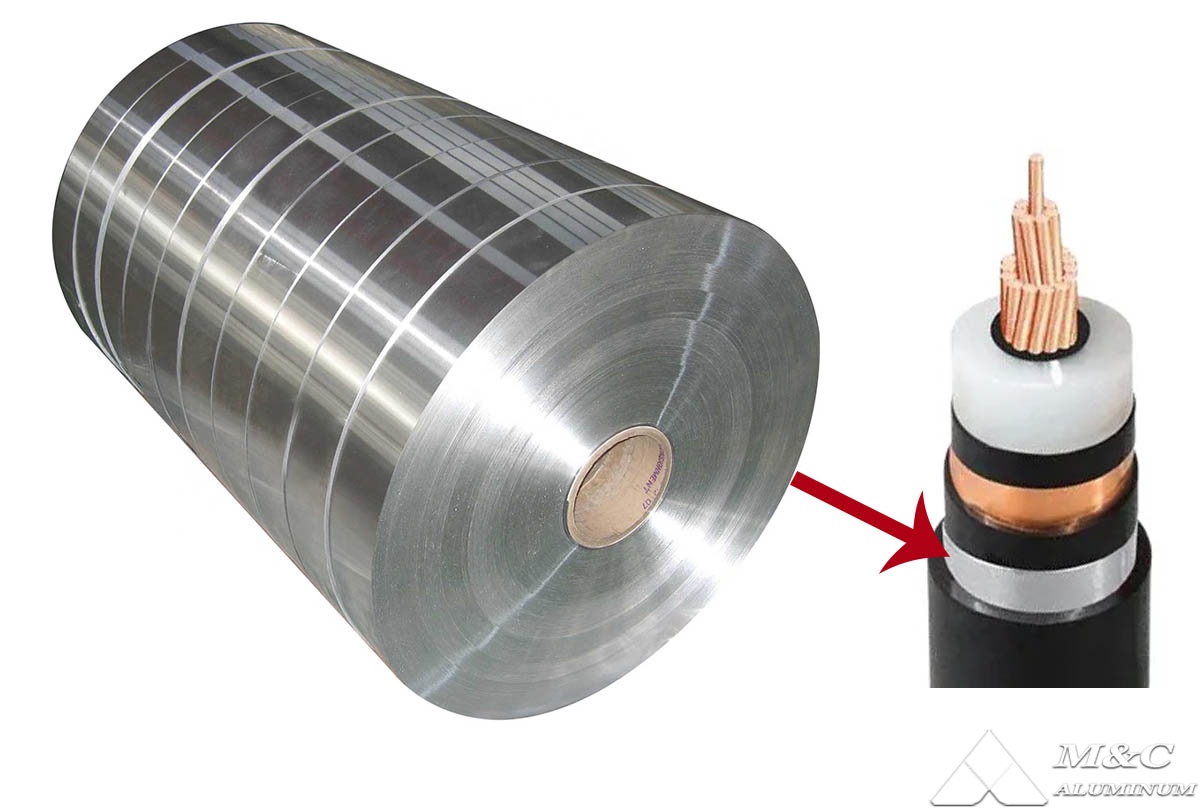
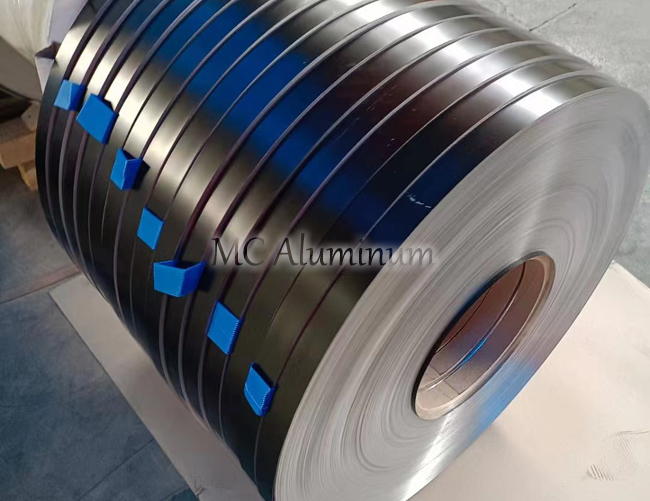
As a manufacturer of rolled aluminum products, we produce 5052 and 5154 smooth edge armored aluminum strip for cable winding applications requiring stable forming performance, controlled dimensions, and consistent coil quality. These alloys are widely used as metallic protective layers in power cables, control cables, communication cables, and other cable constructions where corrosion resistance and mechanical durability are important.
Cable armor and cable wrapping operations place specific demands on the aluminum strip. The material must unwind smoothly, maintain stable tension during high-speed winding, and form closely around the cable structure without edge cracking, excessive springback, or surface damage. For this reason, our production process focuses on alloy selection, rolling control, precision slitting, edge condition, and inspection of every finished coil.
Why 5052 and 5154 Are Used for Cable Armor
5052 and 5154 are aluminum-magnesium alloys with good corrosion resistance, moderate-to-high strength, and reliable cold-forming properties. Compared with commercially pure aluminum, these alloys offer better mechanical protection. Compared with heavier metallic armor materials, they help reduce cable weight while maintaining effective protection against handling damage, moisture exposure, and external mechanical stress.
5052 aluminum strip is commonly selected for cable winding where balanced strength, ductility, and corrosion resistance are required. It is suitable for applications involving conventional winding equipment and general industrial cable constructions. The alloy remains workable after rolling and slitting, enabling stable wrapping performance when the correct temper is selected.
5154 aluminum strip contains a higher magnesium level than 5052. It provides increased strength and is often specified for cable designs requiring a more robust aluminum armor layer. Its performance is particularly useful in installations exposed to marine atmospheres, humid industrial environments, and other corrosion-prone conditions.
Our factory evaluates the intended cable structure, required strip thickness, winding radius, and processing method before recommending the appropriate alloy and temper. This helps customers select a cable armor aluminum strip that matches their forming and protection requirements rather than relying only on nominal alloy designation.
Key Requirements for Smooth Edge Aluminum Strip
The edge of an armored aluminum strip has a direct influence on cable manufacturing efficiency and finished cable quality. Rough, burred, or cracked edges can damage insulation layers, create stress points during wrapping, and increase the risk of strip breakage on automated winding lines.
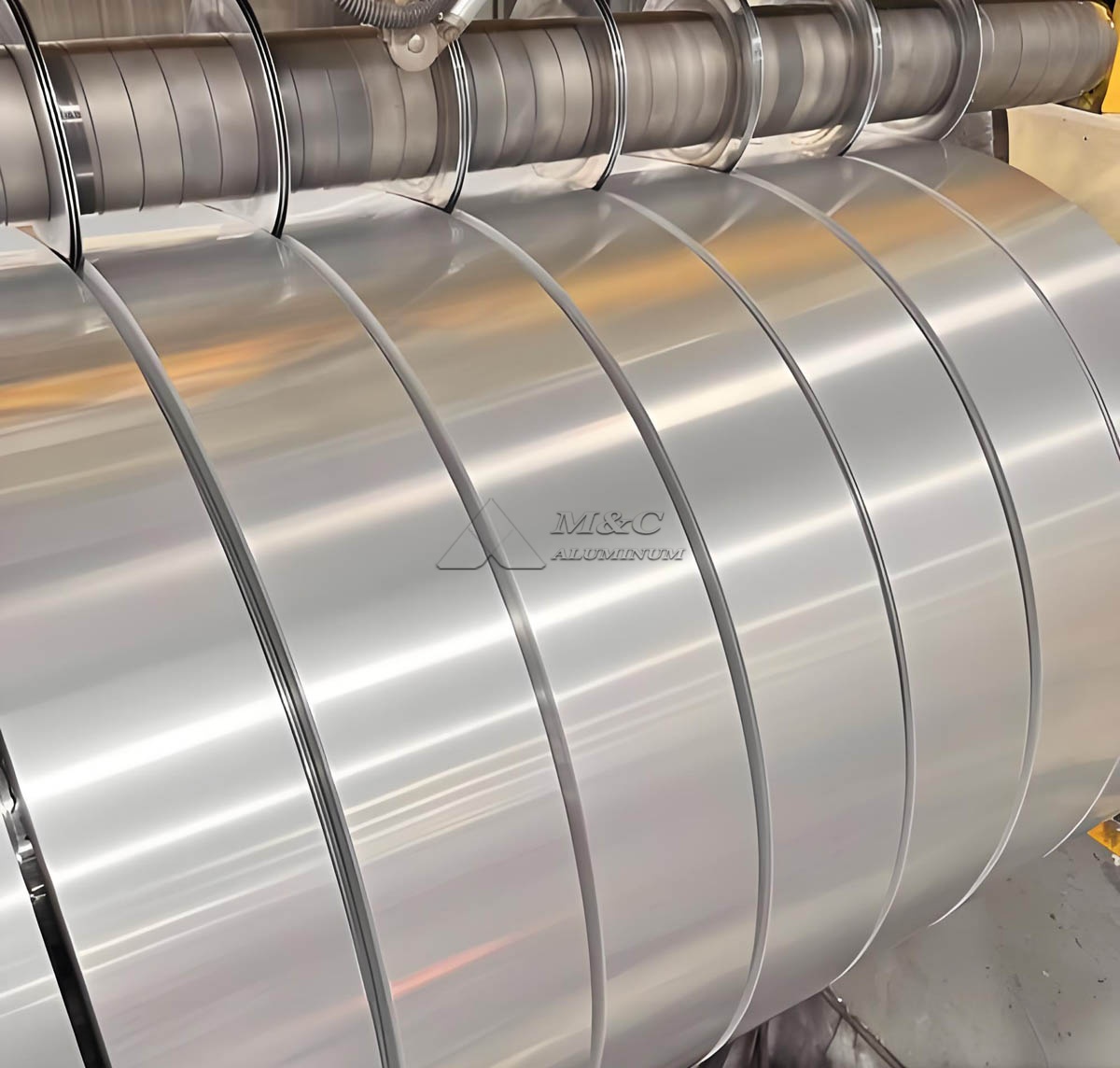
Our smooth edge slitting process is designed to provide a clean, uniform edge profile suitable for cable winding. Slitting tools, strip tension, line speed, and recoiling conditions are controlled according to alloy, gauge, and width. This process reduces burr formation and minimizes edge waviness, allowing the strip to pass through guide systems and forming rolls more consistently.
Important edge-related controls include:
Low-burr slit edges suitable for direct cable winding.
Stable strip width across the coil length.
Controlled camber to support centered winding.
Clean recoiling without telescoping or excessive coil looseness.
Edge inspection to identify cracks, knife marks, and deformation.
Protective packaging that prevents coil-edge impact during transport.
For customers requiring narrow-width materials, we can process precision Aluminum Strip coils according to agreed dimensional tolerances and delivery conditions. The required edge type can be discussed before production, especially for high-speed winding lines or sensitive insulation systems.
Technical Parameters of 5052 and 5154 Armored Aluminum Strip
The following table shows typical technical parameters for our 5052 and 5154 aluminum strip for cable winding. Final values, tolerances, and coil dimensions are confirmed according to the customer specification, applicable standard, and end-use process.
| Item | 5052 Armored Aluminum Strip | 5154 Armored Aluminum Strip |
|---|---|---|
| Alloy series | Aluminum-magnesium alloy | Aluminum-magnesium alloy |
| Main alloying element | Magnesium, 2.2-2.8 percent | Magnesium, 3.1-3.9 percent |
| Typical temper | O, H12, H14, H16, H18, H24 | O, H12, H14, H16, H18, H24 |
| Typical thickness range | 0.20-3.00 mm | 0.20-3.00 mm |
| Typical width range | 10-1,650 mm | 10-1,650 mm |
| Coil inner diameter | 150 mm, 300 mm, 400 mm, 500 mm, or customized | 150 mm, 300 mm, 400 mm, 500 mm, or customized |
| Surface finish | Mill finish, clean and dry | Mill finish, clean and dry |
| Edge condition | Smooth edge, trimmed edge, low-burr slit edge | Smooth edge, trimmed edge, low-burr slit edge |
| Corrosion resistance | Excellent in normal industrial and marine conditions | Excellent, particularly suitable for demanding environments |
| Formability | Good, depending on temper and thickness | Good, with higher strength than 5052 |
| Typical application | General cable armor and protective wrapping | Heavy-duty cable armor and corrosion-resistant cable structures |
Typical Mechanical Property Guidance
Mechanical properties vary with temper, thickness, and production route. The values below are for reference during initial material selection and should not replace an agreed technical specification.
| Alloy and Temper | Tensile Strength | Yield Strength | Elongation | Recommended Cable Use |
|---|---|---|---|---|
| 5052-O | 170-230 MPa | Minimum 65 MPa | Good | Deep forming and flexible cable wrapping |
| 5052-H14 | 210-260 MPa | Minimum 130 MPa | Moderate | General armored cable strip |
| 5052-H16/H18 | 230-290 MPa | Higher strength | Lower than O/H14 | Rigid protective wrapping applications |
| 5154-O | 190-260 MPa | Minimum 85 MPa | Good | Formable high-strength cable protection |
| 5154-H14 | 230-290 MPa | Minimum 145 MPa | Moderate | Cable armor requiring improved strength |
| 5154-H16/H18 | 250-330 MPa | Higher strength | Lower than O/H14 | Heavy-duty armored cable designs |
Manufacturing Process for Cable Winding Strip
Our manufacturing process begins with controlled aluminum alloy input and follows a production route suited to strip products for cable applications. Each stage is managed to maintain stable material properties and to support reliable conversion on the customer's winding equipment.
1. Alloy and Slab Preparation
We use 5052 and 5154 alloy material with composition control appropriate to aluminum-magnesium products. Chemical composition is verified to ensure the final strip has the expected strength, corrosion resistance, and processing behavior. The slab preparation stage establishes the basis for consistent rolling performance.
2. Hot Rolling and Cold Rolling
After hot rolling, the material is cold rolled to the required thickness. Rolling reduction, flatness, and surface condition are monitored throughout the process. For armored aluminum strip, thickness consistency is essential because variations can affect overlap, protection level, and winding tension.
3. Annealing and Temper Control
Annealing is performed when a softer temper or improved forming condition is required. For harder tempers, rolling reduction and stabilization are controlled to obtain the desired strength range. We select the temper according to whether the cable manufacturer prioritizes close forming, stiffness, impact resistance, or a balance of these properties.
4. Precision Slitting and Smooth Edge Finishing
Wide coils are slit into customer-specified widths on dedicated slitting equipment. Knife clearance, strip tension, and recoiling pressure are adjusted to achieve smooth edges and controlled burr levels. Our operators inspect the slit edge and coil build during production to reduce defects that could interfere with cable winding.
5. Final Inspection and Packing
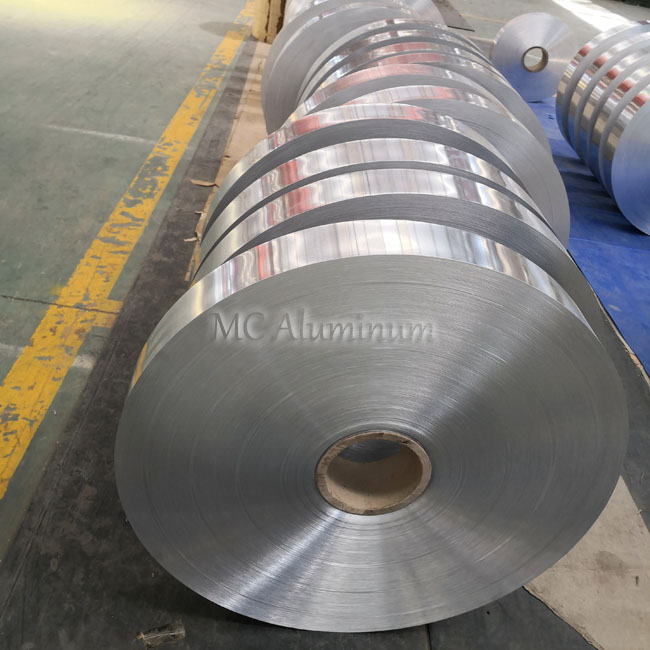
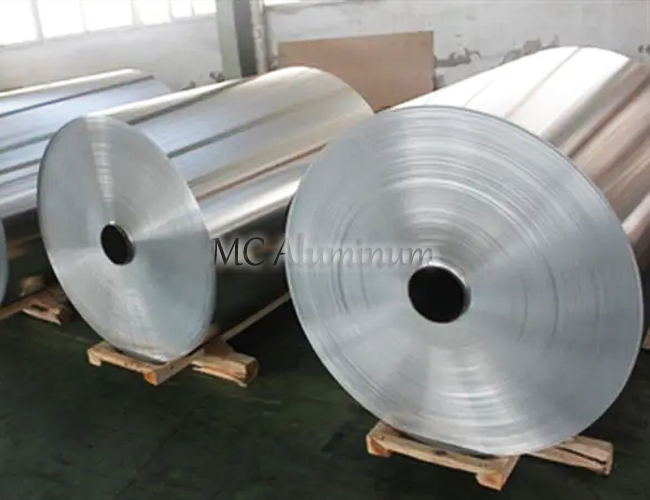
Before shipment, our quality team verifies key requirements such as thickness, width, coil weight, surface cleanliness, edge condition, and packaging integrity. Finished coils are protected with moisture-resistant wrapping, edge guards where required, and reinforced pallets or export-standard wooden supports for international transportation.
Selecting the Correct Temper and Dimensions
The most suitable 5052 or 5154 aluminum strip depends on the cable design and manufacturing method. A softer temper, such as O or H14, is generally appropriate when the strip must conform closely to a small cable diameter or complex cable profile. A harder temper may be more suitable when the cable requires increased stiffness and external protection.
Thickness selection is equally important. A thinner aluminum cable wrapping strip can reduce overall cable weight and improve flexibility. A thicker strip provides stronger mechanical protection but may require greater winding force and a larger bending radius. Our technical team can review the intended application, including cable diameter, overlap design, winding speed, and required armor performance, to propose practical coil specifications.
For projects involving electrical winding rather than cable armor, our Transformer Aluminium Strip range is available with specifications tailored to transformer conductor applications. Cable armor strip and transformer strip serve different functions, so alloy, temper, surface requirements, and edge expectations should be confirmed separately.
Quality Control for Armored Aluminum Strip
Cable manufacturers require repeatable material performance from coil to coil. Our inspection procedures are designed to identify deviations before delivery and to provide documentation when requested. Standard quality control items may include:
Chemical composition verification.
Thickness measurement across strip width.
Width and edge condition inspection.
Surface examination for scratches, oil stains, oxidation marks, and roll impressions.
Flatness and camber checks.
Mechanical property testing by agreed sampling plan.
Coil weight, inside diameter, and winding direction confirmation.
Packing inspection before container loading.
Where customer specifications require it, we can provide mill test certificates and additional inspection records. We recommend confirming the applicable standard, dimensional tolerances, temper, coil geometry, and packaging method before order release to ensure efficient production and installation.
Applications of 5052 and 5154 Cable Armor Strip
Our smooth edge armored aluminum strip is used in a range of cable constructions, including:
Medium-voltage and low-voltage power cables.
Control and instrumentation cables.
Communication and signal cables.
Marine and offshore cable systems.
Industrial cables used in chemical, mining, and infrastructure environments.
Cable products requiring lightweight metallic protective wrapping.
5052 is often selected for standard cable armor applications with demanding corrosion resistance and good formability. 5154 is often chosen when increased strength is required without sacrificing the corrosion resistance associated with aluminum-magnesium alloys.
Conclusion
Smooth edge 5052 and 5154 armored aluminum strip provides a reliable solution for cable manufacturers seeking controlled dimensions, consistent winding behavior, and durable metallic protection. As a factory, we manage the full production process from rolling and temper control through precision slitting, inspection, and export packing.
By defining the alloy, temper, thickness, width, edge condition, coil dimensions, and application environment at the start of a project, cable manufacturers can obtain aluminum strip that performs efficiently on their winding lines and supports the long-term reliability of the finished cable.


Contact Us