
What Are the Material Selection Requirements for 5083 Marine-Grade Aluminum Plate?
As a manufacturer of marine aluminum products, we understand that selecting a 5083 marine-grade aluminum plate is not simply a matter of choosing an alloy number and thickness. The material must match the vessel structure, operating environment, fabrication method, class requirements, and expected service life.
5083 aluminum is an Al-Mg-Mn alloy widely used in shipbuilding, offshore structures, LNG-related equipment, marine transportation, and corrosion-sensitive welded components. Its high magnesium content provides strong corrosion resistance in seawater environments, while its non-heat-treatable alloy system offers stable properties after welding. However, the actual performance of a marine aluminum plate depends on correct selection of temper, dimensions, surface condition, certification, and manufacturing controls.
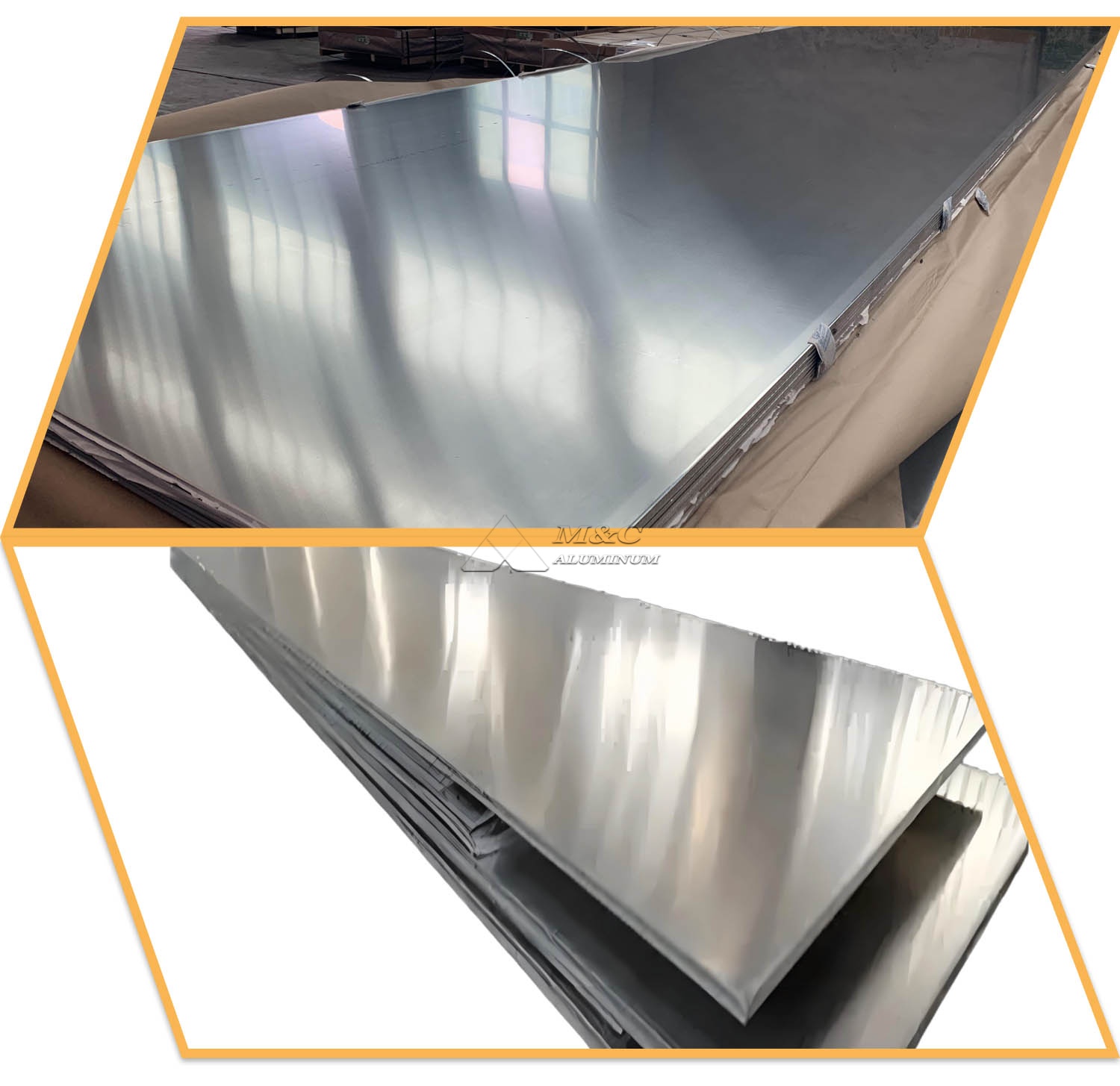
Why 5083 Aluminum Is Used for Marine Structures
5083 marine-grade aluminum plate is commonly specified for hull plating, decks, bulkheads, superstructures, wheelhouses, tanks, gangways, offshore modules, and internal structural components. Compared with general-purpose aluminum sheet, marine-grade 5083 requires closer control over chemical composition, rolling process, mechanical properties, and resistance to exfoliation corrosion.
The alloy is particularly suitable for welded structures because it retains a useful level of strength in the heat-affected zone. In marine fabrication, welding often determines the final structural performance more directly than the base-metal tensile strength alone. For this reason, material selection should consider both the supplied temper and the expected reduction in local strength after welding.
At our factory, we produce 5083 Aluminum sheet and plate according to the application-specific requirements provided by shipyards, marine fabricators, and engineering contractors. Material selection begins with the end-use condition rather than with a standard stock specification.
Core Material Selection Requirements
1. Confirm the Applicable Alloy Standard
The first requirement is to define the governing standard. Different projects may refer to ASTM, EN, ISO, or classification society requirements. Although all materials may be identified as 5083, their inspection scope, dimensional tolerances, temper designation, test frequency, and certification requirements can vary.
Common reference standards include ASTM B928/B928M for high-magnesium aluminum-alloy plate and sheet intended for marine service, EN 485 for wrought aluminum sheet and plate, and EN 573 for chemical composition. Projects may also require documentation accepted by classification societies such as DNV, ABS, LR, BV, CCS, or RINA.
Before production, our technical team confirms the required standard, delivery condition, test requirements, and certificate format. This prevents the use of a general industrial plate where a shipbuilding aluminum plate with additional corrosion-related controls is required.
2. Select the Correct Temper
Temper is one of the most important parameters when choosing a 5083 marine aluminum plate. The most common tempers are H111, H116, and H321.
H111 is suitable where moderate strength, formability, and stress relief are important. It is often used for formed or less highly stressed marine components.
H116 is a strain-hardened and stabilized temper designed for improved resistance to exfoliation corrosion in marine environments. It is frequently selected for hull and deck applications.
H321 is strain-hardened and stabilized with controlled processing to provide stable mechanical properties and corrosion performance. It is commonly specified for demanding structural applications.
For welded structures, the selection should not be based solely on the unwelded base-metal strength. Welding softens the area adjacent to the weld, and the design calculation should account for the heat-affected zone properties. Our factory can recommend an appropriate temper after reviewing the plate location, welding procedure, minimum design strength, and forming requirement.
Typical Technical Parameters for 5083 Marine Aluminum Plate
The following table presents typical values used for material selection. Final values must be confirmed against the applicable standard, temper, thickness range, and project specification.
| Parameter | Typical Requirement or Range | Selection Significance |
|---|---|---|
| Alloy designation | EN AW-5083 / AA 5083 | High-magnesium marine aluminum alloy |
| Magnesium, Mg | 4.0% to 4.9% | Supports strength and seawater corrosion resistance |
| Manganese, Mn | 0.4% to 1.0% | Improves strength and structural stability |
| Chromium, Cr | 0.05% to 0.25% | Supports corrosion resistance and grain structure control |
| Iron, Fe | 0.40% maximum | Excess content can affect ductility and corrosion behavior |
| Silicon, Si | 0.40% maximum | Controlled as an impurity element |
| Copper, Cu | 0.10% maximum | Low level supports marine corrosion resistance |
| Common tempers | H111, H116, H321 | Selected according to strength, corrosion, and fabrication needs |
| Typical tensile strength, H116/H321 | Approximately 275 to 350 MPa | Varies with thickness and applicable standard |
| Typical yield strength, H116/H321 | Approximately 125 to 240 MPa | Used in structural design calculations |
| Typical thickness range | 2 mm to 250 mm | Depends on mill capability and end-use application |
| Surface condition | Clean, smooth, oil-free, without harmful defects | Important for welding, coating, and appearance |
| Corrosion testing | As specified, often exfoliation corrosion related | Required for demanding marine service applications |
3. Match Plate Thickness to Structural Function
Thickness selection should be based on structural calculations, stiffener spacing, design pressure, local impact exposure, and welding distortion control. For example, hull side plating, bottom plating, decks, and bulkheads may require different thicknesses even within the same vessel.
Thicker 5083 aluminum plate can provide higher load-bearing capacity, but it also increases weight, material cost, welding input, and fabrication complexity. A plate that is thicker than necessary may create avoidable distortion during welding or make forming more difficult. Conversely, underspecified thickness may affect fatigue performance, local buckling resistance, or classification compliance.
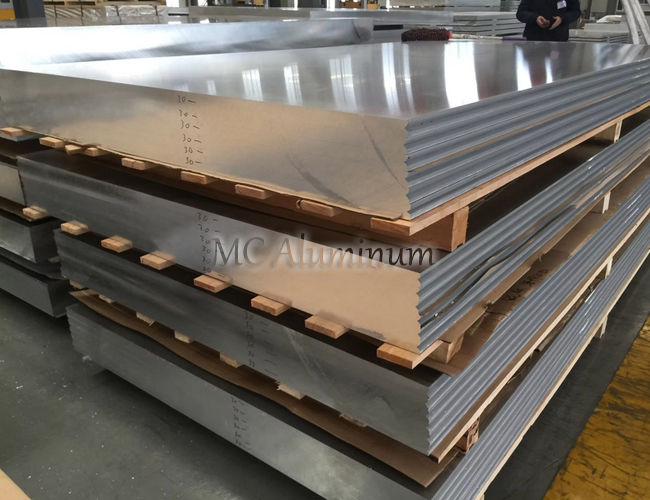
We manufacture marine aluminum plate in a range of thicknesses and widths, with dimensional control appropriate for downstream cutting, bending, welding, and machining. For wide panels and large welded assemblies, flatness and thickness consistency should be specified clearly at the inquiry stage.
4. Evaluate Seawater Corrosion Resistance
Marine service involves more than simple water exposure. The plate may face continuous immersion, splash zones, wet-dry cycling, salt spray, bilge water, industrial pollutants, and galvanic contact with other metals. 5083 aluminum offers excellent general resistance to seawater, but corrosion performance still depends on material quality and assembly design.
For high-risk applications, H116 or H321 temper is usually preferred because these tempers are associated with improved exfoliation corrosion resistance. The project specification may require ASTM G66 exfoliation corrosion testing or another specified corrosion assessment. Our quality process can include corrosion-related testing and traceable reporting when requested by the customer or classification authority.
Material selection should also consider the risk of galvanic corrosion. Aluminum plate should be electrically isolated where necessary from copper alloys, stainless steel, carbon steel, and other dissimilar metals in wet marine conditions. Coatings, sealants, insulating gaskets, and proper drainage design remain essential even when a corrosion-resistant aluminum alloy is selected.

5. Consider Welding Compatibility and Filler Metal
5083 marine-grade aluminum plate is commonly welded by MIG or TIG processes. The choice of filler wire, joint design, heat input, and welding sequence affects the final performance of the structure. ER5183 and ER5356 are frequently considered for welding 5xxx series marine alloys, subject to the approved welding procedure specification.
The base material must have a clean surface free from heavy oxide, moisture, lubricant residue, and embedded contamination. For this reason, our factory controls surface cleanliness throughout rolling, cutting, handling, packing, and shipment. Where plates will be welded without extensive surface preparation, customers should specify the required surface quality and permitted defect level.
For components exposed to elevated temperatures for extended periods, engineering review is important. High-magnesium 5xxx alloys can be susceptible to sensitization within certain temperature ranges, which may increase corrosion susceptibility. This issue is generally evaluated according to the operating temperature and exposure duration of the finished structure.
6. Specify Surface Quality and Edge Condition
Surface condition is not merely an appearance requirement. Scratches, dents, roll marks, oxide contamination, edge cracks, and surface inclusions can affect welding, coating adhesion, fatigue resistance, and visual quality. Marine applications often require a smooth, uniform surface that is free from defects harmful to subsequent processing.
We inspect 5083 aluminum sheet and plate for visible surface defects, dimensional conformity, flatness, and edge quality. Depending on the order, plates can be supplied with mill edges, trimmed edges, saw-cut edges, or customer-defined cutting formats. Precision cutting is particularly useful for shipbuilding kits, marine tank panels, and CNC-machined components.
7. Require Full Traceability and Certification
For marine projects, traceability should be maintained from the finished plate back to the production batch. Each plate or bundle should be identified with alloy, temper, size, heat or lot number, and relevant production information. The mill test certificate should report chemical composition, mechanical properties, dimensions, and the applicable standard.
When classification certification is required, it should be identified before production rather than after the material is completed. Our factory coordinates production planning, sampling, testing, marking, and documentation according to the agreed inspection scope. This is particularly important for ship hull structures, offshore platforms, pressure-related equipment, and export projects subject to third-party verification.
Selecting 5083 Versus Other Marine Aluminum Alloys
Although 5083 is a leading alloy for marine plate, it is not the only option. 5052 may be suitable for lighter-duty sheet applications requiring good formability and corrosion resistance. 5086 is also widely used in welded marine structures and may be selected where project standards or design practices specify it. For applications requiring a related option, our 5086 Aluminium Alloy Plate is available with marine-oriented production and inspection controls.
The final alloy selection should consider required strength, plate thickness, forming complexity, operating temperature, welding method, corrosion exposure, and regulatory requirements. A proper comparison should be based on the whole fabricated structure, not on nominal alloy strength alone.
Conclusion
The correct selection of 5083 marine-grade aluminum plate requires evaluation of the applicable standard, temper, thickness, corrosion resistance, weldability, surface quality, and certification requirements. H116 and H321 are often preferred for critical seawater-exposed structures, while H111 may be suitable where forming performance and moderate strength are the main priorities.
As a marine aluminum plate manufacturer, we support customers by producing 5083 material to defined engineering and inspection requirements. Early confirmation of the application, dimensions, temper, standard, and documentation scope helps ensure that the supplied plate performs reliably throughout fabrication and marine service.


Contact Us