
Why Use 5000 Series Aluminum for Marine Decks
Marine decks operate in one of the most demanding service environments for structural materials. They are exposed to salt spray, standing water, humidity, UV radiation, foot traffic, cargo movement, cleaning chemicals, and repeated mechanical loads. For vessel builders, offshore fabricators, and marine equipment manufacturers, deck materials must provide dependable corrosion resistance while supporting efficient fabrication and controlled lifecycle costs.
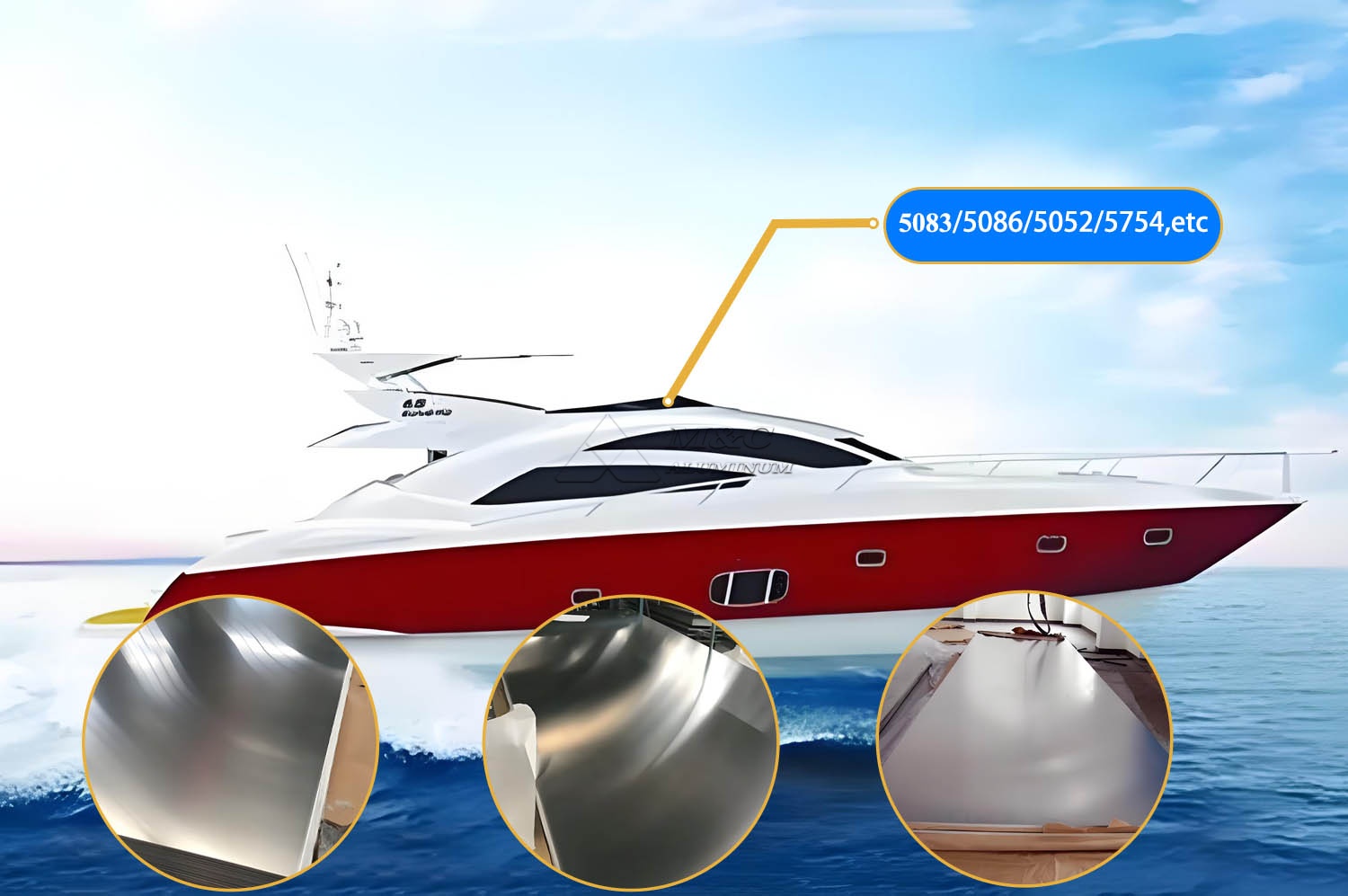
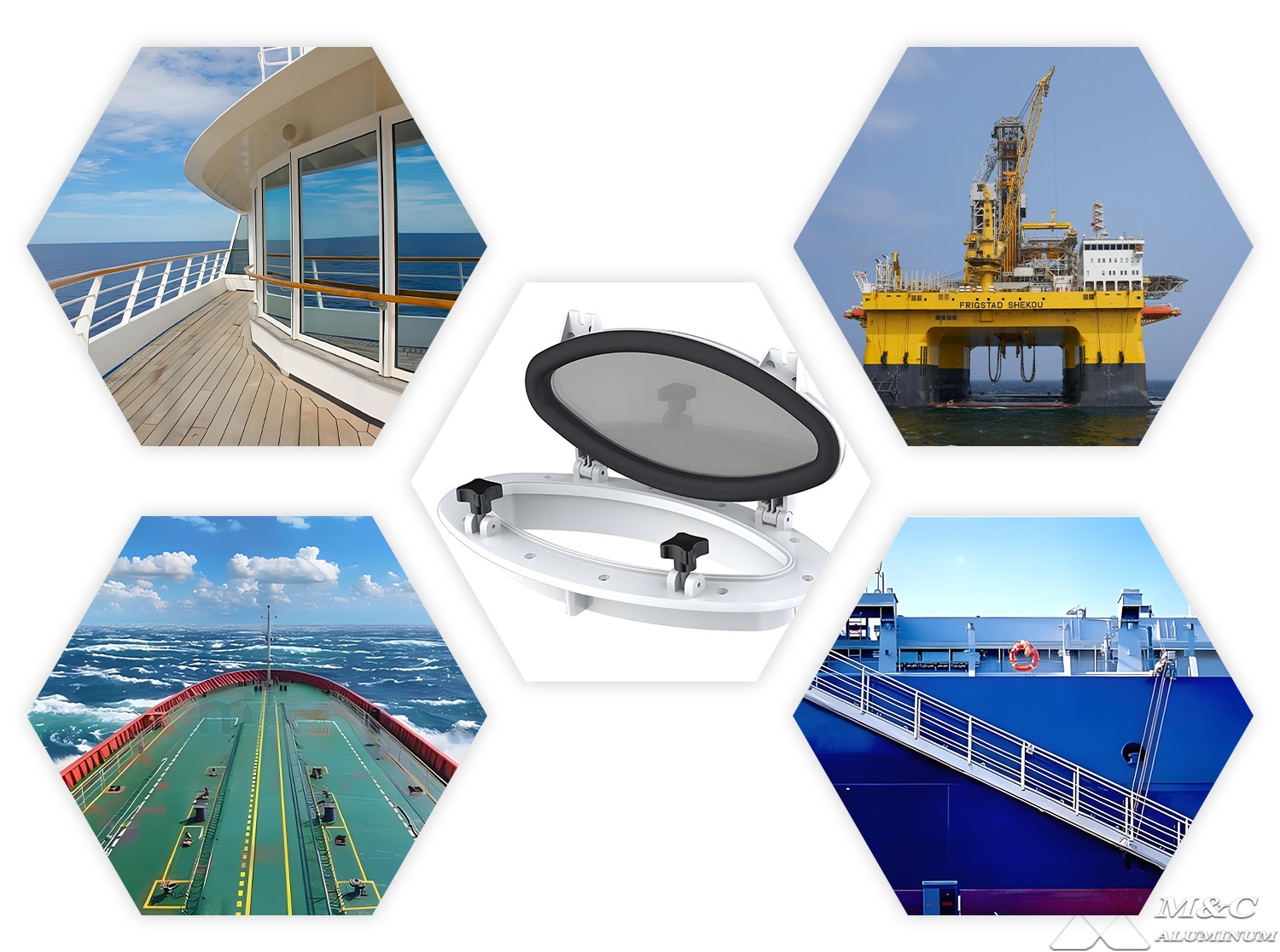
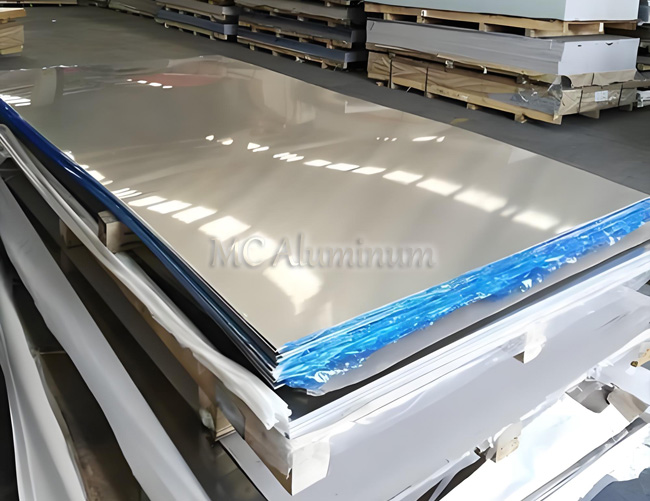
As a manufacturer of marine grade aluminum sheet and plate, we produce 5000 series aluminum for applications where seawater resistance, weldability, and practical strength are required. Alloys such as 5052, 5083, 5086, 5454, and 5754 are widely used for aluminum deck plate, gangways, workboat decks, passenger vessel flooring, offshore walkways, and superstructure components.
What Makes 5000 Series Aluminum Suitable for Marine Decks?
The 5000 series is an aluminum-magnesium alloy family. Magnesium is the principal alloying element and gives these materials their characteristic combination of corrosion resistance, medium-to-high strength, and good welding performance. Unlike many heat-treatable aluminum alloys, 5000 series grades obtain their strength mainly through solid-solution strengthening and strain hardening.
For marine deck construction, this alloy system provides several practical advantages:
Strong resistance to general corrosion in saltwater atmospheres and marine splash zones.
Good weldability with common marine welding processes.
Useful strength-to-weight ratio for reducing vessel deadweight.
Good formability for fabricated deck panels, covers, hatches, and walkways.
Compatibility with checker plate, tread plate, and plain sheet surfaces.
Reliable performance in humid and intermittently wet conditions when correctly selected and fabricated.
At our mill, marine aluminum sheet is manufactured with controlled chemistry, rolling schedules, flatness management, and surface inspection. These production controls are important because deck panels must not only meet nominal alloy requirements, but must also perform consistently during cutting, forming, welding, and final assembly.
Corrosion Resistance in Saltwater Environments
Corrosion resistance is usually the first reason engineers consider 5000 series aluminum for marine decks. The magnesium-bearing structure of these alloys supports the formation of a stable oxide film on the surface. When the surface is damaged, aluminum naturally reforms this protective film in normal atmospheric conditions.
Compared with ordinary steel deck materials, marine aluminum sheet does not require heavy paint systems simply to prevent red rust. Protective coatings may still be specified for appearance, anti-slip performance, chemical exposure, or compatibility with adjacent materials, but the base material itself has inherent corrosion resistance.
Alloys with higher magnesium content, especially 5083 and 5086, are commonly chosen for more demanding marine structures. They are well established for hull plating, deck panels, bulkheads, offshore components, and workboat structures. For lighter-duty deck coverings, interior wet areas, and non-structural applications, 5052 aluminum sheet can offer a balanced combination of corrosion resistance, forming performance, and cost control.
Corrosion resistance depends on more than the alloy designation. Good marine design must also consider water drainage, crevice prevention, isolation from dissimilar metals, weld quality, surface cleanliness, and suitable fastener selection. We recommend that deck assemblies avoid permanent water traps and use electrical isolation where aluminum is joined to steel, copper-containing alloys, or other dissimilar metals.
Reduced Weight Supports Vessel Efficiency
Aluminum has a density of approximately 2.66 to 2.68 g/cm3, which is about one-third that of carbon steel. This lower density makes 5000 series aluminum especially beneficial for marine decks located above the waterline, in superstructures, on fast vessels, and in lightweight work platforms.
Reducing deck weight can support several design objectives:
Lower vessel displacement.
Increased payload capacity where design rules permit.
Improved fuel efficiency or extended operating range.
Lower vertical center of gravity in selected designs.
Easier handling of deck panels during fabrication and maintenance.
Weight reduction should never be evaluated by density alone. The required plate thickness must be based on span, support spacing, concentrated loads, fatigue conditions, deflection criteria, and applicable marine standards. However, when properly engineered, aluminum deck plate can provide an efficient structural solution with substantially lower mass than a comparable steel deck system.
Excellent Weldability for Fabricated Deck Structures
Marine deck fabrication commonly involves MIG and TIG welding for joining sheet, plate, stiffeners, frames, drainage channels, and edge profiles. 5000 series aluminum is valued because it can be welded effectively using appropriate procedures and compatible filler metals.
5083 and 5086 are particularly suitable where welded strength and seawater resistance are essential. In many marine structures, the heat-affected zone near a weld becomes softer than the original strain-hardened base material. Designers should therefore calculate joint strength based on the expected post-weld condition rather than the parent-material temper alone.
Our manufacturing recommendation is to select material temper according to the fabrication route. For example, H116 and H321 tempers are frequently specified for marine plate because they are associated with improved resistance to exfoliation corrosion and stress corrosion cracking in relevant marine service conditions. H32 is widely used for 5052 aluminum sheet where moderate strength and good forming capability are needed.
During fabrication, welders should maintain clean surfaces, remove moisture and contaminants, use qualified filler wire, and control heat input. These practices help reduce porosity, distortion, and surface contamination in finished marine decks.
Typical 5000 Series Aluminum Grades for Deck Applications
The following table provides typical selection guidance. Final alloy and temper selection should be confirmed according to structural calculations, fabrication requirements, classification rules, and the operating environment.
| Alloy | Typical Temper | Approx. Magnesium Content | Typical Marine Deck Use | Main Selection Benefit |
|---|---|---|---|---|
| 5052 | H32, H34 | 2.2-2.8% | Deck covers, tread plate, interior wet decks, light-duty flooring | Good formability and corrosion resistance |
| 5754 | H111, H22, H32 | 2.6-3.6% | Vehicle and vessel flooring, walkways, fabricated deck components | Balanced strength and workability |
| 5083 | H111, H116, H321 | 4.0-4.9% | Structural decks, hull decks, offshore platforms, workboats | High strength and excellent seawater resistance |
| 5086 | H111, H116, H321 | 3.5-4.5% | Welded deck structures, hull plating, marine platforms | Strong welded performance and corrosion resistance |
| 5454 | H32, H34, H111 | 2.4-3.0% | Deck panels exposed to elevated temperatures or industrial atmospheres | Good corrosion resistance and stability |
For projects requiring high-strength structural plate, our 5083 Aluminum sheet is commonly supplied in marine-oriented tempers and can be processed to project-specific thickness, width, and length requirements. For formed deck covers and lightweight tread applications, 5052 Aluminum Sheet is often a practical option.
Surface Options for Safer Marine Decking
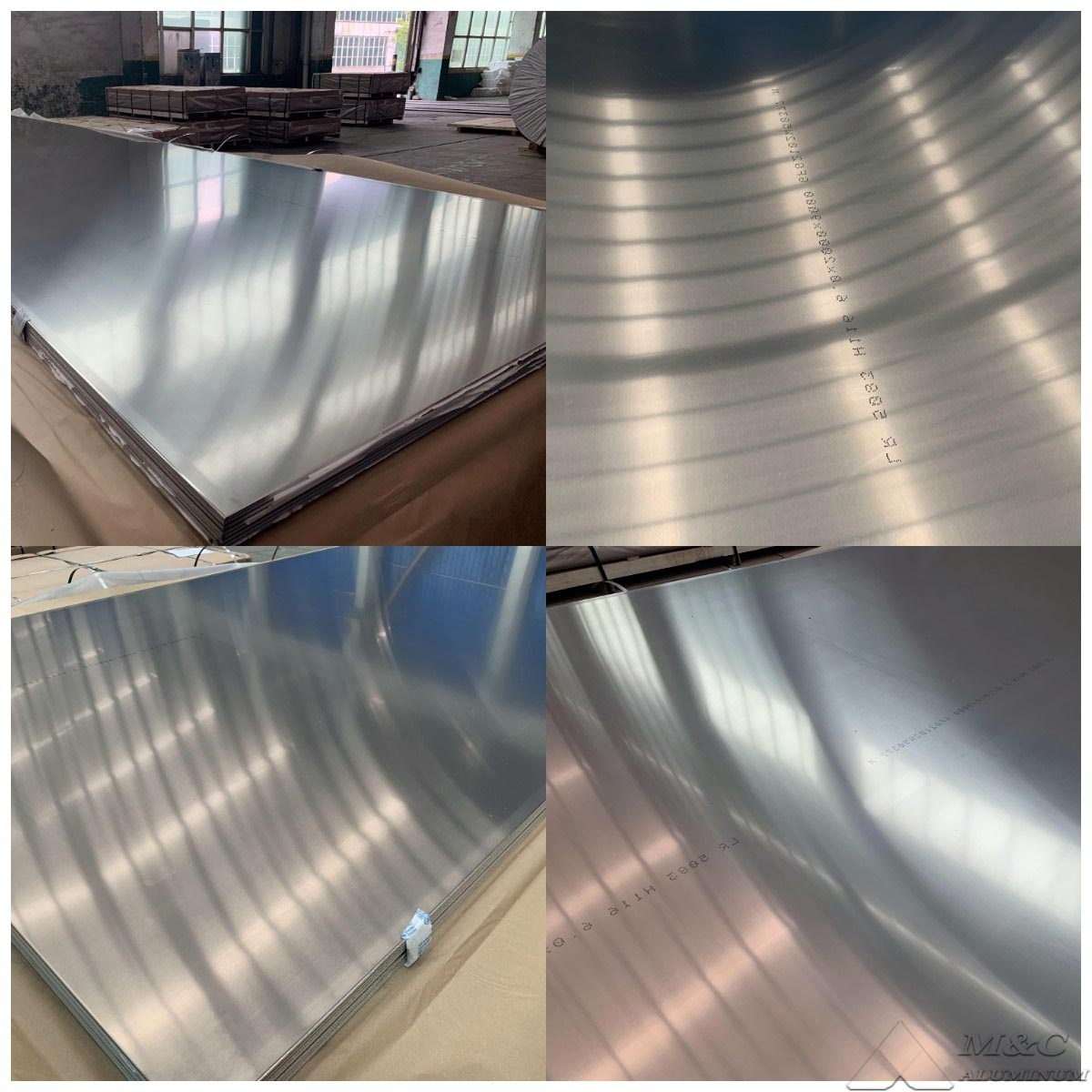
Deck safety is strongly influenced by surface condition. A smooth aluminum sheet may be suitable when a separate anti-slip coating, decking layer, or drainage surface is installed. However, many exposed marine walkways and access platforms require improved traction.
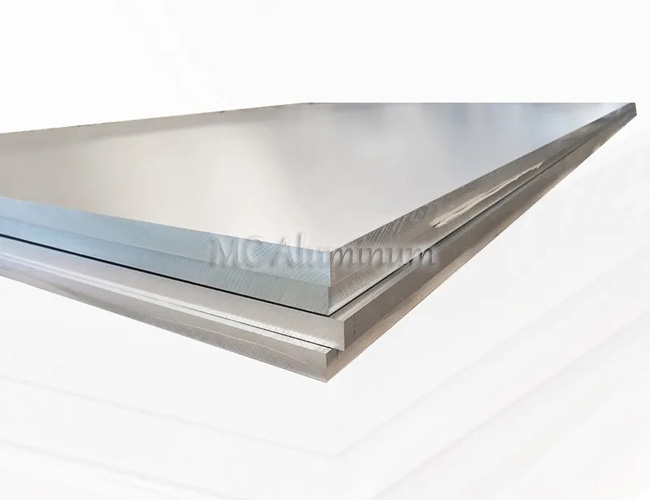
We manufacture and process aluminum deck plate in several surface configurations, including plain sheet, stucco embossed sheet, and tread plate patterns. Five-bar and diamond tread patterns are common choices for walkways, boarding steps, maintenance platforms, and utility decks. These raised patterns improve underfoot grip while maintaining the corrosion-resistant properties of the 5000 series alloy substrate.
Surface selection should account for cleaning requirements. Aggressive mechanical cleaning can damage coatings or create embedded contamination. For exposed aluminum surfaces, regular rinsing to remove salt deposits and the use of compatible cleaners can help maintain appearance and long-term performance.
Technical Parameters for Marine Aluminum Sheet and Plate
Our available production range depends on alloy, temper, dimensional requirements, and order quantity. The values below represent common supply capabilities for marine deck projects.
| Parameter | Typical Range or Option |
|---|---|
| Alloys | 5052, 5754, 5083, 5086, 5454, 5059, 5456 |
| Product form | Aluminum sheet, aluminum plate, tread plate, cut-to-length panels |
| Thickness | 1.0-200 mm, depending on alloy and product form |
| Standard widths | 1000 mm, 1250 mm, 1500 mm, 2000 mm, and customized widths |
| Standard lengths | 2000 mm to 12000 mm, or cut to drawing requirements |
| Common tempers | O, H111, H112, H116, H22, H32, H34, H321 |
| Surface finish | Mill finish, brushed, embossed, tread pattern, protective film on request |
| Typical standards | ASTM B928/B928M, EN 485, EN 573, project-specific specifications |
| Inspection options | Chemical composition, mechanical properties, dimensions, surface quality, ultrasonic testing where required |
For classification-related projects, we can coordinate material documentation and inspection requirements according to the purchaser's specification. Requirements should be confirmed before production, particularly when third-party certification, ultrasonic testing, restricted thickness tolerances, or special surface conditions are required.
Manufacturing Controls That Affect Deck Quality
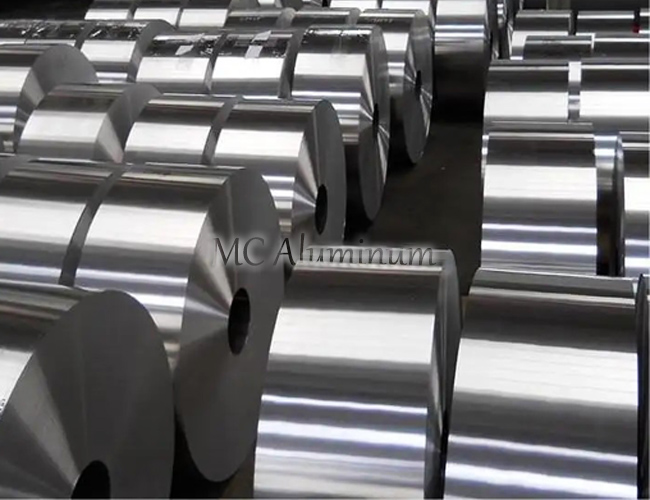
The performance of marine aluminum plate starts with manufacturing discipline. As a factory, we control raw material selection, alloy chemistry, homogenization, hot rolling, cold rolling where applicable, annealing or strain-hardening treatment, leveling, trimming, and final inspection.
For deck applications, we pay particular attention to:
Chemical composition control within the applicable alloy specification.
Stable mechanical properties across each production batch.
Flatness and dimensional accuracy for panel fabrication.
Surface inspection for scratches, roll marks, inclusions, stains, and other visible defects.
Edge quality suitable for cutting, welding, and forming.
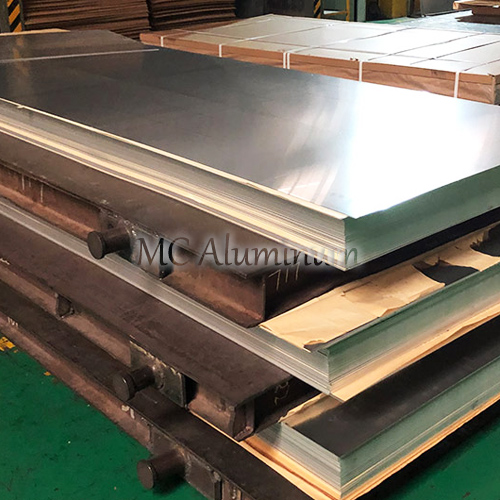
Protective packing for sea transportation and warehouse storage.
Wide marine deck panels may require customized lengths to reduce welding seams and material waste. Our production team can review panel layouts, nesting requirements, and dimensional tolerances before scheduling. This approach helps fabricators receive material better aligned with their cutting and assembly process.
Key Design Considerations Before Selecting an Alloy
Although 5000 series aluminum is highly suitable for marine decks, the correct grade should be selected case by case. Engineers should evaluate the structural load, required panel thickness, exposure zone, deck surface, welding plan, and expected maintenance practice.
5083 or 5086 is generally preferred for heavily loaded welded structures, high-speed vessels, offshore platforms, and seawater-exposed deck areas. 5052 and 5754 are often selected for formed panels, tread plate, light-to-medium-duty flooring, and deck components where extreme structural strength is not the primary requirement.
It is also important to avoid using unsuitable alloys in sustained high-temperature service. Long-term exposure to elevated temperatures can affect some high-magnesium 5000 series alloys. Where this condition exists, the material selection should be reviewed against the actual service temperature and applicable design code.
Conclusion
5000 series aluminum provides a practical material platform for marine decks because it combines seawater corrosion resistance, efficient welding performance, low weight, and adaptable fabrication properties. Grades such as 5052, 5083, 5086, and 5754 allow engineers to match material performance to deck loading, exposure conditions, and manufacturing methods.
As a marine aluminum sheet manufacturer, we supply 5000 series aluminum sheet, plate, and tread plate with controlled alloy composition, required tempers, customized dimensions, and inspection support. Selecting the correct alloy and temper at the beginning of a project helps improve fabrication efficiency, deck safety, and long-term service reliability.
Contact Us