
1070 / 1350 High-Conductivity Aluminum Strip for Transformer Windings
As an aluminum rolling and slitting manufacturer, we produce 1070 and 1350 high-conductivity aluminum strip for transformer windings, dry-type transformers, oil-immersed transformers, reactor coils, and related electrical equipment. Transformer winding material requires stable electrical conductivity, uniform mechanical performance, precise strip geometry, and clean edges that do not damage insulation paper or film during coil winding. These requirements are controlled from melting and casting to cold rolling, annealing, slitting, inspection, and export packaging.
For transformer manufacturers, the selection of aluminum winding strip is not only a material cost decision. It directly affects winding efficiency, load loss, temperature rise, insulation reliability, and long-term service stability. Our production focuses on 1070 aluminum strip and 1350 aluminum strip, two widely used high-purity grades for electrical applications. Both alloys offer excellent conductivity, good formability, low density, and consistent performance in transformer winding processes.
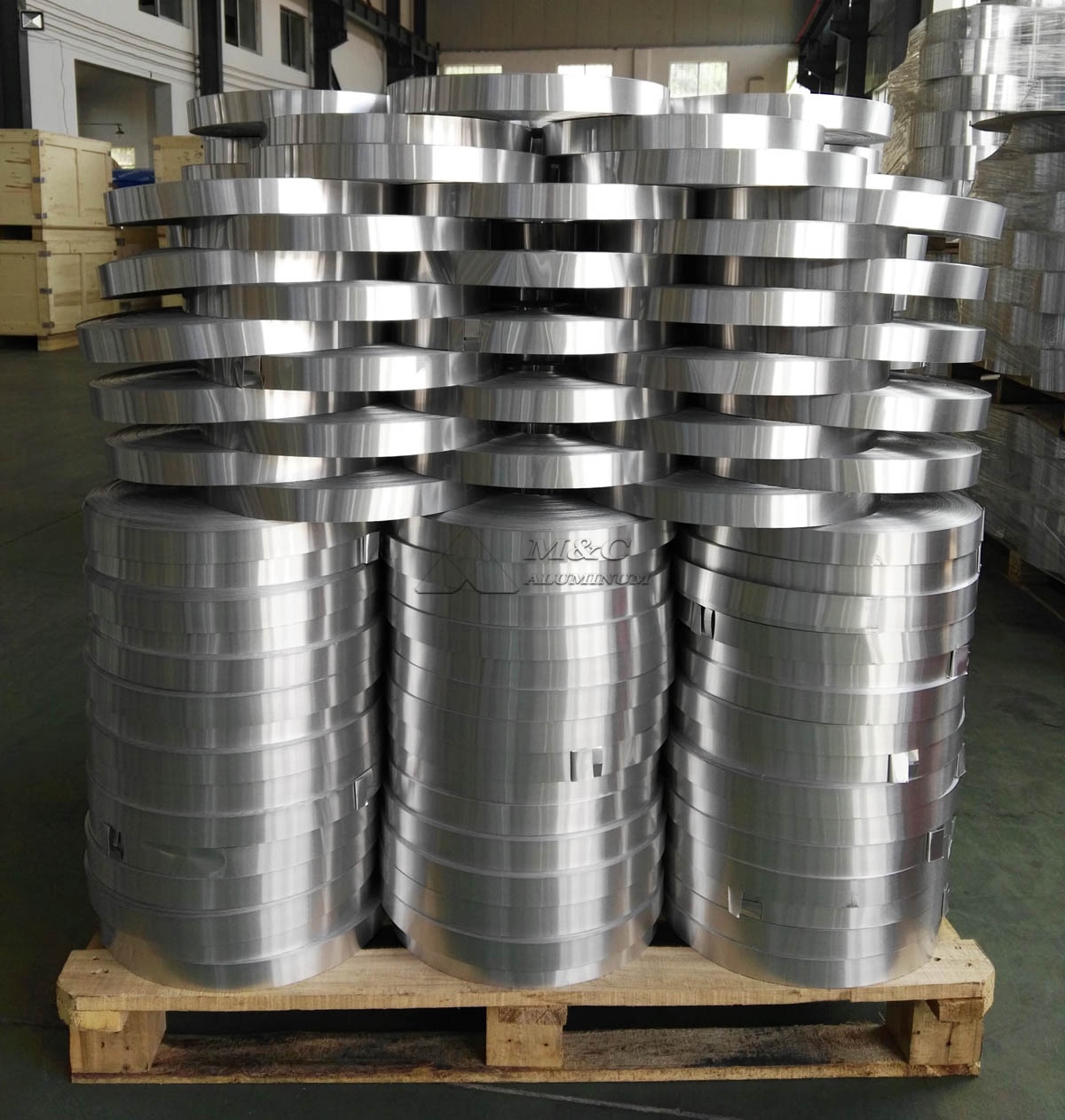
Why 1070 and 1350 Aluminum Strip Are Used in Transformer Windings
1070 and 1350 aluminum alloys are selected for transformer windings because of their high aluminum content and low impurity level. In electrical applications, impurity control is critical because elements such as silicon, iron, copper, and manganese can reduce conductivity when present above specified limits. By controlling chemical composition and process parameters, aluminum strip can achieve the balance required between conductivity and mechanical strength.
1070 aluminum strip is commonly used where high purity, good elongation, and stable conductivity are required. It is suitable for many distribution transformer windings and general electrical winding applications. 1350 aluminum strip is an electrical conductor grade recognized for high conductivity and stable performance in power equipment. It is frequently specified for transformer winding aluminum, bus conductors, and other electrical strip products.
Compared with copper, aluminum has lower density, which can reduce winding weight and help optimize transformer design. Although aluminum has lower conductivity than copper by volume, transformer design can compensate by using a proper cross-sectional area. For many applications, aluminum winding strip provides an efficient balance of cost, weight, conductivity, and manufacturability.
Factory Production Control for Transformer Aluminum Strip
We manufacture transformer aluminum strip through controlled rolling and finishing processes. The process starts with qualified aluminum ingot or cast coil, followed by homogenization or thermal processing as required by the alloy and final temper. Cold rolling is then used to achieve the target thickness and surface quality. Intermediate or final annealing is applied to control temper, elongation, and winding performance.
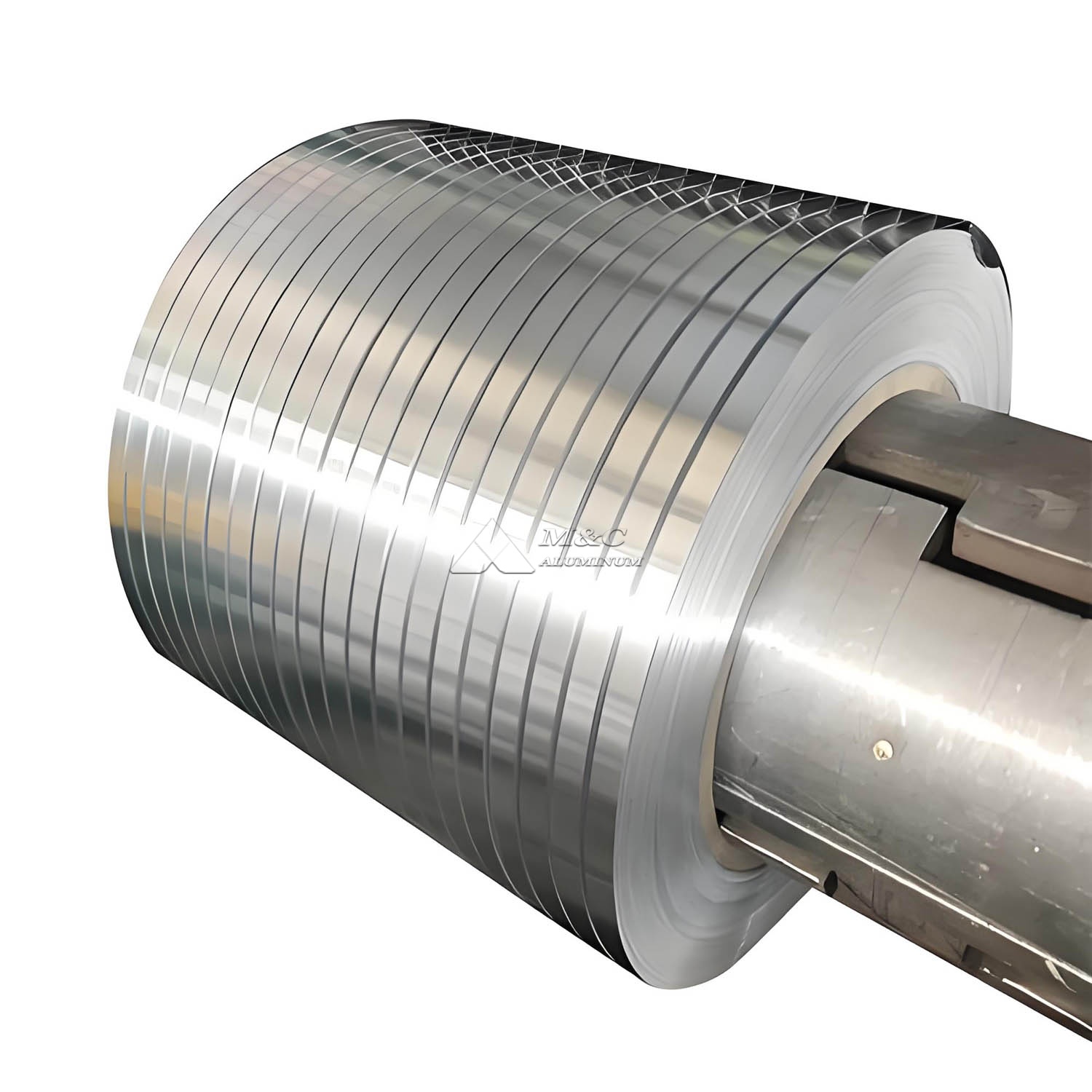
The slitting process is especially important for aluminum strip for transformer windings. Edge burr, camber, width tolerance, and coil tension must be controlled to ensure smooth winding on automatic or semi-automatic winding machines. Excessive burr may cut insulation material, while unstable strip tension may cause telescoping, loose coils, or uneven winding layers. Our slitting lines use appropriate tooling, controlled clearance, and online inspection to maintain stable edge quality.
For product selection, customers may refer to our dedicated Transformer Aluminium Strip product range, which covers different alloys, tempers, thicknesses, and widths for winding applications. We also supply broader Aluminum Strip specifications for electrical, industrial, and fabrication uses.
Typical Technical Parameters
The following table shows common factory supply ranges for 1070 and 1350 aluminum strip used in transformer windings. Final specifications can be adjusted according to the drawing, transformer design, insulation system, and winding machine requirements.
| Item | 1070 Aluminum Strip | 1350 Aluminum Strip | Notes |
|---|---|---|---|
| Alloy | 1070 | 1350 | High-purity aluminum grades |
| Aluminum content | 99.70% min | 99.50% min | Subject to applicable standard |
| Common temper | O, H12, H14, H16 | O, H12, H14, H16 | O temper is widely used for winding |
| Thickness range | 0.20 mm to 3.00 mm | 0.20 mm to 3.00 mm | Custom thickness available after review |
| Width range | 10 mm to 1250 mm | 10 mm to 1250 mm | Slit coil or wide strip |
| Conductivity | Typically 61% IACS or above | Typically 61% IACS or above | Depends on temper and composition control |
| Tensile strength | According to temper | According to temper | Tested per order requirement |
| Elongation | According to temper | According to temper | Important for winding formability |
| Edge condition | Slit edge, deburred edge available | Slit edge, deburred edge available | Burr control for insulation safety |
| Surface | Mill finish, clean and oil controlled | Mill finish, clean and oil controlled | No harmful stains or heavy oil residue |
| Inner diameter | 300 mm, 405 mm, 505 mm | 300 mm, 405 mm, 505 mm | Other IDs by agreement |
| Packaging | Eye-to-wall or eye-to-sky export packing | Eye-to-wall or eye-to-sky export packing | Moisture-proof and seaworthy |
Chemical Composition Reference
Chemical composition is the basis of conductivity stability. We test and control incoming and in-process material according to applicable standards and customer specifications.
| Alloy | Si | Fe | Cu | Mn | Mg | Zn | Ti | Al |
|---|---|---|---|---|---|---|---|---|
| 1070 | 0.20 max | 0.25 max | 0.04 max | 0.03 max | 0.03 max | 0.04 max | 0.03 max | 99.70 min |
| 1350 | 0.10 max | 0.40 max | 0.05 max | 0.01 max | 0.01 max | 0.05 max | 0.01 max | 99.50 min |
The values above are typical reference limits. Final acceptance criteria should be confirmed according to the purchase specification, applicable standard, and customer drawing.
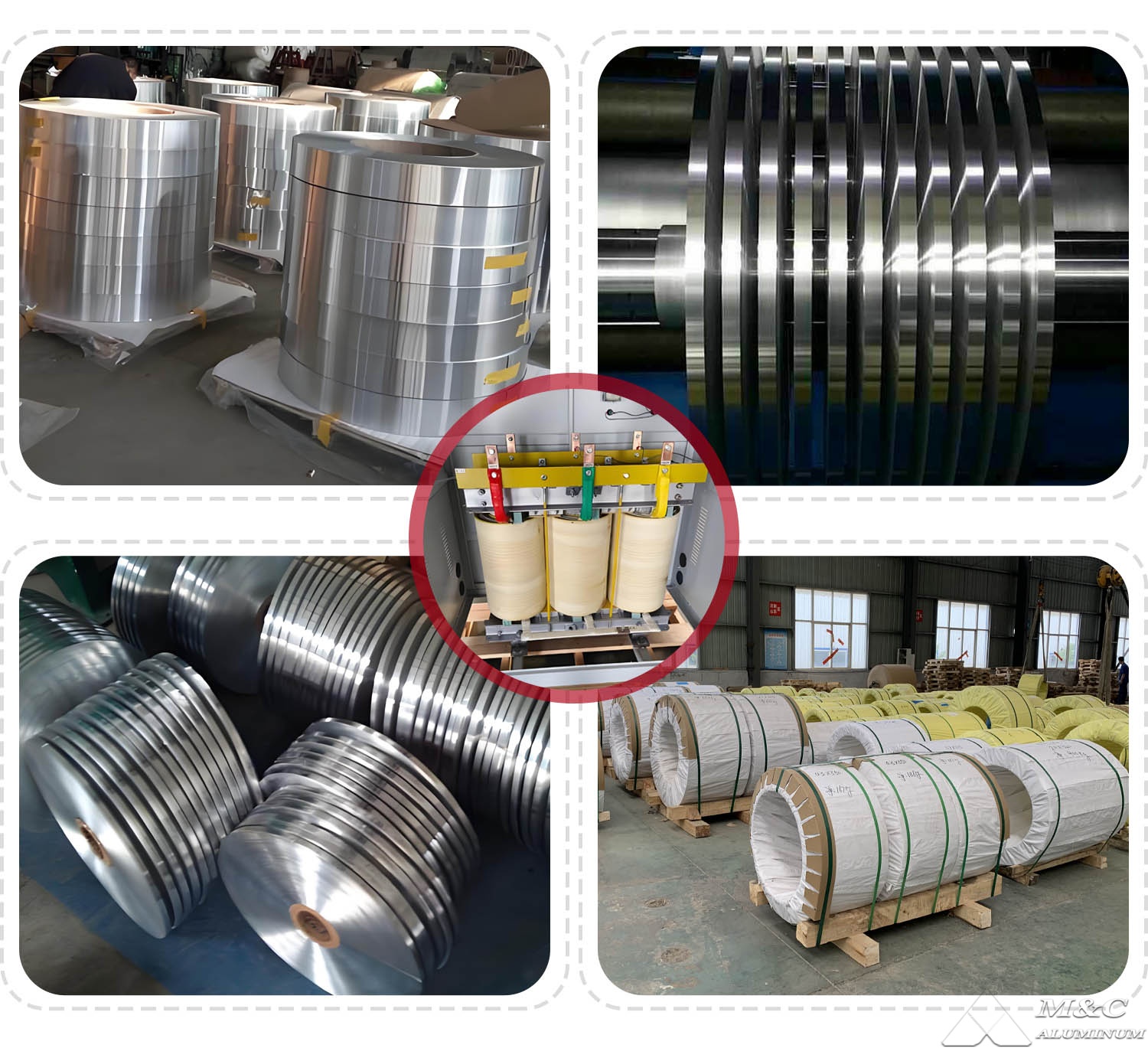
Key Quality Requirements for Winding Performance
Conductivity Consistency
For transformer winding aluminum, conductivity affects winding resistance and transformer loss. We monitor chemical composition, rolling reduction, and annealing parameters to maintain stable conductivity from coil to coil. Conductivity testing can be provided when required, and material traceability is maintained through production batches.
Thickness and Width Tolerance
Uniform thickness helps maintain predictable electrical resistance and winding dimensions. Stable width supports neat winding layers and proper insulation overlap. For transformer aluminum strip, tolerance control is achieved through precision rolling, calibrated measuring equipment, and controlled slitting processes.
Edge Burr and Edge Profile
Edge quality is a critical factor in transformer winding reliability. Sharp burrs or cracked edges may damage insulation paper, polyester film, or other dielectric materials. We control slitting knife condition, clearance, strip tension, and coil alignment to minimize burr height and maintain a smooth edge profile. Deburred or round-edge processing can be discussed for demanding winding conditions.
Surface Cleanliness
Surface contamination may affect insulation compatibility and winding cleanliness. Our aluminum strip for transformer windings is supplied with a clean mill finish and controlled oil level. The surface should be free from heavy oxidation, severe scratches, oil stains, black spots, and foreign particles that could influence winding or insulation performance.
Coil Shape and Winding Stability
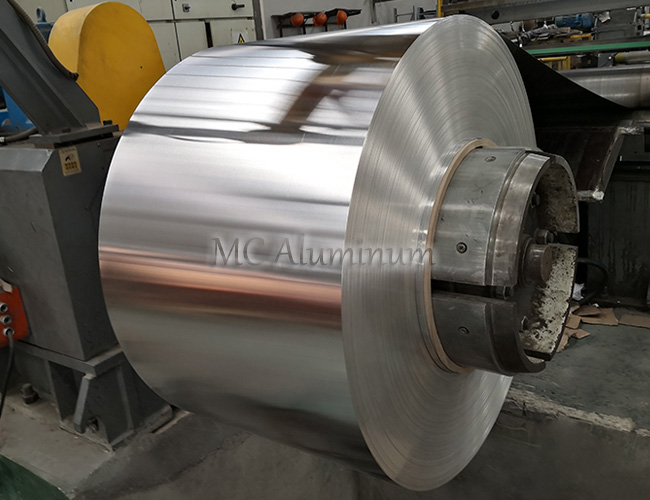
Good coil shape improves feeding stability and reduces downtime on winding equipment. We control coil tension during slitting and recoiling to reduce telescoping, loose winding, edge wave, and coil collapse. Proper inner diameter, coil weight, and packing orientation are selected according to customer handling and production requirements.
1070 vs 1350 Aluminum Strip: How to Select
Both 1070 and 1350 aluminum strip can be used for transformer windings, but selection depends on the electrical design, manufacturing standard, and procurement specification.
1070 aluminum strip is suitable for applications requiring high purity, good ductility, and reliable winding formability. It is often chosen for distribution transformers and electrical products where consistent performance and practical cost control are important.
1350 aluminum strip is widely recognized as an electrical conductor alloy. It is frequently selected where transformer designers specify conductor-grade aluminum with high conductivity and strict composition control. For projects with defined electrical standards or international specifications, 1350 may be preferred.
The final decision should consider required conductivity, tensile strength, elongation, winding radius, insulation system, short-circuit force, and transformer operating temperature. As a manufacturer, we can produce trial coils or confirm parameters based on drawings and technical datasheets before mass production.
Applications in Transformer Manufacturing
1070 and 1350 high-conductivity aluminum strip are mainly used in low-voltage and medium-voltage transformer windings. Typical applications include dry-type transformer windings, oil-immersed transformer windings, cast resin transformer coils, foil winding conductors, reactor windings, rectifier transformer conductors, and special electrical coils.
In foil winding transformers, aluminum strip is usually wound together with insulation material. Therefore, the winding strip must have stable flatness, suitable softness, and clean edges. In rectangular or layer winding designs, the strip width, thickness, and mechanical properties must match winding machine tension and insulation clearance requirements.
Inspection and Testing Before Shipment
Before shipment, each batch is inspected according to the agreed technical requirements. Our inspection system covers chemical composition, dimensional tolerance, mechanical properties, conductivity when specified, surface condition, edge quality, and coil appearance. Test records and certificates can be supplied with the shipment.
| Inspection Item | Method | Purpose |
|---|---|---|
| Chemical composition | Spectrometer analysis | Confirms alloy grade and impurity control |
| Thickness | Micrometer or gauge measurement | Ensures electrical and dimensional consistency |
| Width | Caliper or width measuring system | Confirms slitting accuracy |
| Tensile strength | Tensile testing machine | Verifies temper and mechanical properties |
| Elongation | Tensile test | Evaluates winding formability |
| Conductivity | Conductivity meter | Confirms electrical performance when required |
| Surface inspection | Visual and lighting inspection | Checks stains, scratches, marks, and cleanliness |
| Edge inspection | Visual and burr measurement | Reduces risk of insulation damage |
| Coil condition | Final coil inspection | Ensures proper winding, ID, OD, and packing |
Packaging for Export and Long-Distance Transport
Transformer aluminum strip must be protected from moisture, impact, and deformation during transport. We use moisture-proof paper or film, plastic wrapping, edge protection, steel or plastic straps, and wooden pallets or wooden cases as required. Eye-to-wall and eye-to-sky packaging can be selected based on coil size, unloading method, and customer warehouse conditions.
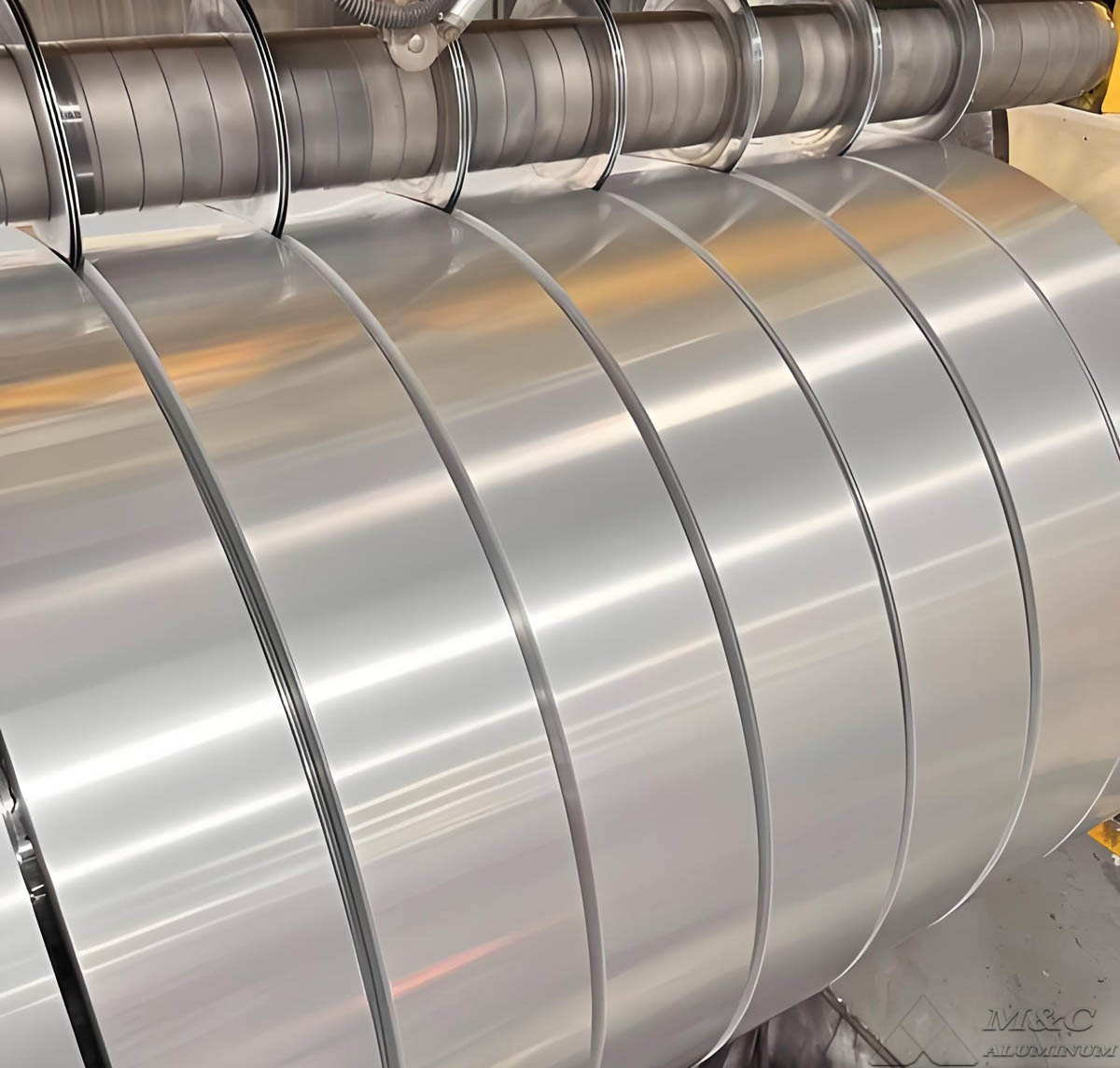
For sea shipment, seaworthy packaging is recommended. The package design considers coil weight, container loading, forklift handling, and long-distance vibration. Proper labeling includes alloy, temper, size, batch number, net weight, gross weight, and customer order information to support warehouse identification and production traceability.
Information Required for Quotation
To provide an accurate quotation and production proposal for 1070 or 1350 aluminum strip for transformer windings, we recommend that buyers provide the following information: alloy, temper, thickness, width, tolerance requirements, coil inner diameter, maximum coil weight, edge requirement, conductivity requirement, surface requirement, packaging method, applicable standard, and annual or batch quantity.
If the strip is used on an automatic foil winding machine, information about winding tension, insulation material, minimum bending radius, and preferred coil orientation is also useful. These details help us select suitable rolling and annealing parameters and reduce the risk of mismatch during production.
Manufacturing Focus
As a factory, our role is to supply stable, traceable, and process-compatible aluminum winding strip for transformer manufacturers. For 1070 and 1350 high-conductivity aluminum strip, we focus on composition control, conductivity stability, precise thickness and width tolerance, clean surface, low burr edge, and reliable export packaging. With controlled manufacturing and inspection, the material can support efficient winding, consistent transformer performance, and dependable long-term operation in electrical equipment.
Contact Us