
1100 Soft Temper Aluminum Foil for Deep Drawing
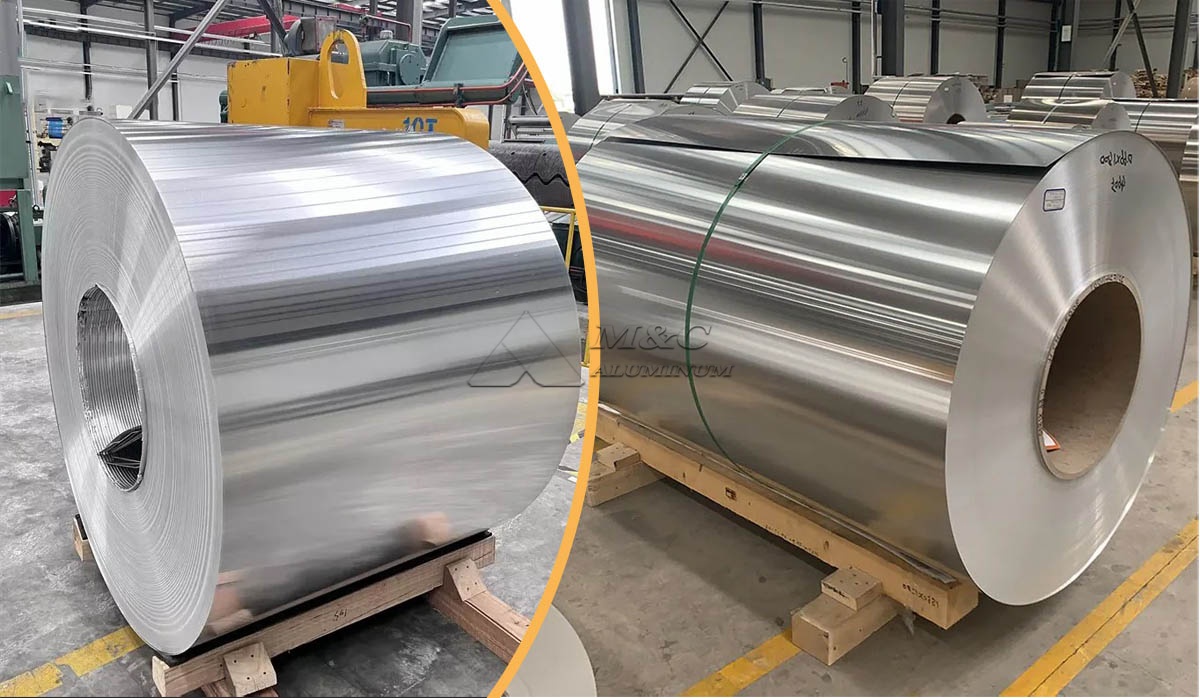
As a manufacturer of aluminum foil coils, we produce 1100 soft temper aluminum foil for deep drawing applications requiring high ductility, consistent surface quality, and stable processing performance. 1100 aluminum foil is a commercially pure aluminum material with a minimum aluminum content of 99.0 percent. In the O temper, it is fully annealed to provide the softness and elongation needed for drawing, pressing, stamping, embossing, and forming operations.
Deep drawing aluminum foil must perform reliably under tensile and compressive stresses during conversion. Material inconsistency can lead to edge cracking, wrinkling, earing, pinholes, surface scratches, or uneven wall thickness in the finished component. Our manufacturing process controls chemical composition, rolling reduction, intermediate annealing, final annealing, coil shape, and surface cleanliness to help customers achieve stable production results.
What Is 1100 Soft Temper Aluminum Foil?
1100 soft temper aluminum foil, commonly identified as 1100-O aluminum foil, is produced from aluminum alloy 1100 and supplied in a fully annealed condition. The O temper indicates that the material has been annealed after rolling, reducing residual stress and restoring maximum practical ductility.
Compared with harder tempers such as H14, H18, or H19, soft temper foil has lower strength but significantly improved formability. This balance is important for deep drawing processes in which the foil must flow smoothly into the die cavity without premature fracture. The material is particularly suitable when the final part requires rounded corners, shallow-to-medium drawn shapes, embossed patterns, or formed profiles.
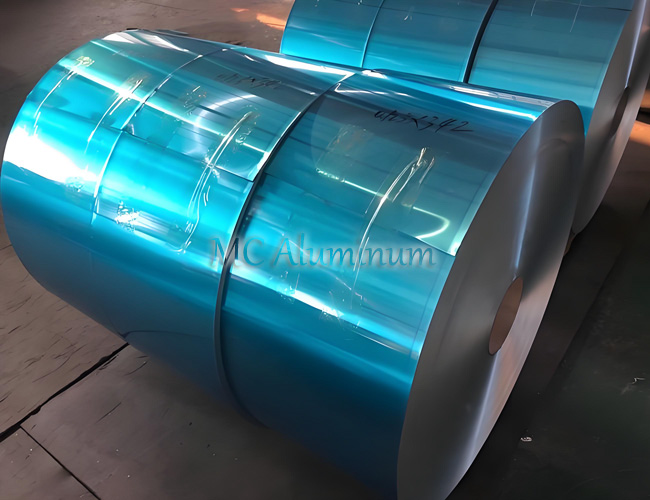
We supply 1100 Aluminum Foil in coil form for customers producing container components, lamp parts, decorative products, sealing elements, insulation accessories, and other drawn aluminum items. Final suitability depends on part geometry, thickness, lubrication, die design, drawing ratio, and press conditions.
Why 1100-O Aluminum Foil Is Suitable for Deep Drawing
The principal advantage of 1100-O aluminum foil is its excellent workability. The low-alloy composition and full annealing process provide a soft structure that can tolerate deformation more effectively than work-hardened foil.
Key performance characteristics include:
High elongation for controlled deformation during drawing and stamping.
Good surface finish for decorative, coated, laminated, or polished products.
Good thermal and electrical conductivity.
Strong corrosion resistance in normal atmospheric environments.
Low material density, supporting lightweight finished parts.
Good compatibility with painting, coating, bonding, embossing, and laminating processes.
Stable coil flatness and edge condition when manufactured under controlled rolling parameters.
For deep drawing, softness alone is not sufficient. Grain structure, tensile consistency, surface roughness, lubricant retention, and coil-to-coil stability also affect forming performance. We manage these variables through controlled annealing cycles and in-process quality inspection.
Chemical Composition of 1100 Aluminum Foil
Alloy 1100 is a commercially pure aluminum grade. Its chemical composition supports corrosion resistance, formability, and reliable processing behavior.
| Element | Typical Specification, % |
|---|---|
| Aluminum, Al | 99.00 minimum |
| Silicon + Iron, Si + Fe | 0.95 maximum |
| Copper, Cu | 0.05-0.20 |
| Manganese, Mn | 0.05 maximum |
| Zinc, Zn | 0.10 maximum |
| Other elements, each | 0.05 maximum |
| Other elements, total | 0.15 maximum |
The controlled impurity level is important for soft aluminum foil. Excessive inclusions or inconsistent composition can affect rolling quality, pinhole control, surface appearance, and drawability. Our production inspection includes composition verification and process traceability for each production batch.
Technical Parameters
We manufacture 1100 soft temper aluminum foil according to customer specifications and applicable international standards. The following table shows common supply ranges. Actual parameters can be adjusted based on end-use requirements.
| Parameter | Standard Supply Range | Notes |
|---|---|---|
| Alloy | 1100 | Commercially pure aluminum alloy |
| Temper | O, H0 | Fully annealed soft temper |
| Thickness | 0.040-0.200 mm | Other thicknesses available upon evaluation |
| Width | 100-1,650 mm | Slit widths available |
| Coil inner diameter | 150 mm, 300 mm, 505 mm | Customized to customer equipment |
| Coil outer diameter | Up to 1,400 mm | Subject to thickness and coil weight |
| Coil weight | 100-3,000 kg | Customized packing weight available |
| Tensile strength | Approx. 75-105 MPa | Depends on thickness and annealing condition |
| Elongation | Typically 20 percent minimum | Depends on test method and thickness |
| Surface | Mill finish, clean, smooth | Oil level can be controlled by application |
| Edge condition | Mill edge or slit edge | Burr control available for converting lines |
| Pinhole control | According to thickness and application | Evaluated by agreed inspection method |
Mechanical values are indicative rather than absolute design values. For critical deep drawing projects, we recommend confirming thickness tolerance, mechanical properties, grain condition, surface roughness, lubrication requirements, and acceptance criteria before mass production.
Manufacturing Process for Deep Drawing Aluminum Foil
Our 1100-O aluminum foil production begins with qualified aluminum ingot and controlled melting. After casting and homogenization, the material is hot rolled and cold rolled through multiple reductions to reach the required gauge. Intermediate annealing may be used to restore ductility and maintain stable rolling quality.
The final annealing stage is especially important for soft temper aluminum foil. We use controlled temperature profiles and holding times to obtain the intended O temper. This process helps reduce internal stress, improve elongation, and support consistent behavior during deep drawing.
After annealing, the foil is slit or rewound according to the required width, coil weight, and inner diameter. Final inspection includes thickness measurement, width verification, surface examination, edge inspection, coil shape checks, and packing confirmation. For projects with special forming requirements, we can align inspection items with customer drawings and technical agreements.
Surface Quality and Forming Reliability
Surface condition directly influences deep drawing performance. Scratches, roll marks, embedded particles, heavy oil residue, and edge damage can become more visible after drawing, polishing, coating, or anodizing. We maintain clean production conditions and monitor rolling surfaces to reduce defects that may affect downstream operations.
For deep drawing aluminum foil, customers commonly specify requirements related to:
Uniform surface appearance across the coil length.
No severe dents, creases, corrosion, or foreign inclusions.
Controlled rolling oil residue for the intended lubricant system.
Stable thickness profile across the strip width.
Clean slit edges with controlled burr direction and height.
Coil winding suitable for automated unwinding and press feeding.
The correct surface condition depends on the application. For example, foil intended for laminated products may require a different residual oil level from foil used for direct forming or coating. Our technical team reviews the intended conversion process before confirming production conditions.
Deep Drawing Process Considerations
Although 1100 soft temper aluminum foil offers good formability, successful deep drawing also depends on tooling and operating conditions. The following factors should be considered during product development:
| Process Factor | Influence on Forming Result |
|---|---|
| Drawing ratio | Higher ratios increase risk of thinning and tearing |
| Die radius | Small radii can concentrate stress and cause cracking |
| Blank holder force | Excessive force can tear material; low force may cause wrinkles |
| Lubrication | Reduces friction and supports smooth metal flow |
| Thickness tolerance | Affects repeatability and finished-part wall thickness |
| Tool surface condition | Worn or rough tools can scratch and damage foil |
| Feed direction | Can influence dimensional consistency and surface appearance |
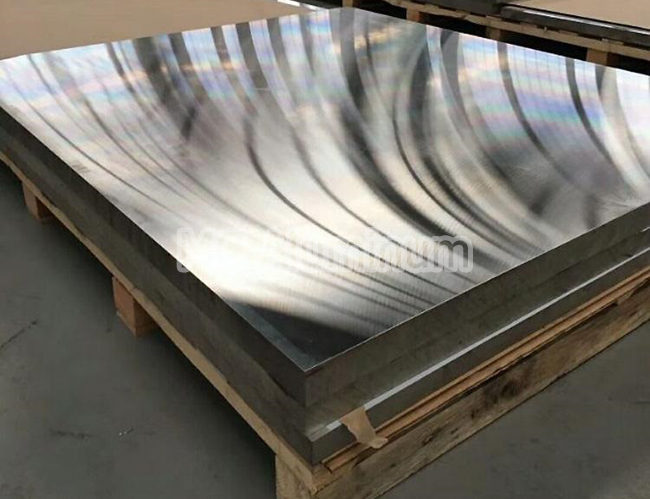
For demanding parts, sample trials are recommended before full-scale production. We can provide trial coils or sheets with agreed dimensions to support die testing and forming validation.
Typical Applications
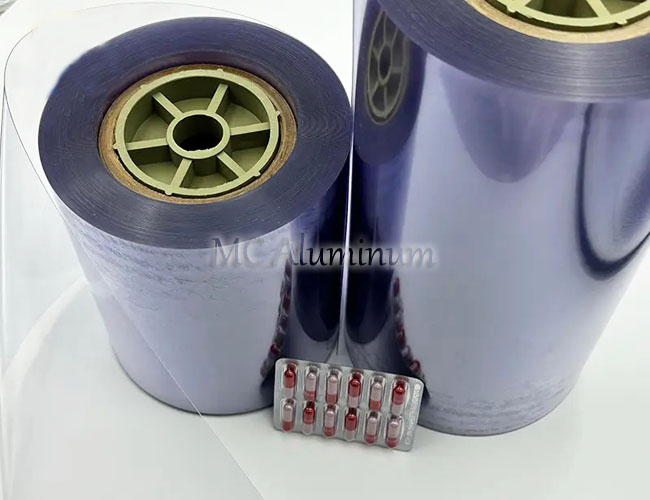
1100-O aluminum foil is used where a soft, corrosion-resistant, and readily formable aluminum material is required. Common applications include shallow drawn cups, decorative pressed components, lighting reflectors, insulation accessories, electronics shields, sealing parts, cosmetic packaging components, and formed household products.
It can also be processed through embossing, punching, laminating, coating, and adhesive bonding. Where higher strength is needed after forming, alternative alloys or tempers may be more appropriate. For applications requiring increased strength with good corrosion resistance, customers may also evaluate 3003 Aluminum Foil based on forming depth and final performance requirements.
Packaging and Export Control
We pack aluminum foil coils to protect the material from moisture, dust, impact, and deformation during international transportation. Standard export packing typically includes moisture-proof paper, protective film where required, reinforced wrapping, wooden pallets or wooden cases, and clear product identification labels.
Each coil can be marked with alloy, temper, thickness, width, net weight, gross weight, production batch, and customer reference information. This supports receiving inspection, warehouse management, and production traceability.
Specify Your 1100 Deep Drawing Foil Requirement
To select the correct 1100 soft temper aluminum foil for deep drawing, please provide the target thickness, width, coil inner diameter, coil weight, finished-part drawing depth, surface requirement, and planned processing method. Information on tooling, lubrication, coating, or lamination can also help us recommend suitable production controls.
As a manufacturer, we focus on delivering stable 1100-O aluminum foil coils that fit the practical requirements of forming operations. By aligning alloy condition, annealing state, dimensional tolerance, surface quality, and packaging with the intended application, we help customers establish a consistent and efficient deep drawing process.

Contact Us