
3003 Aluminum Foil for HVAC Fins
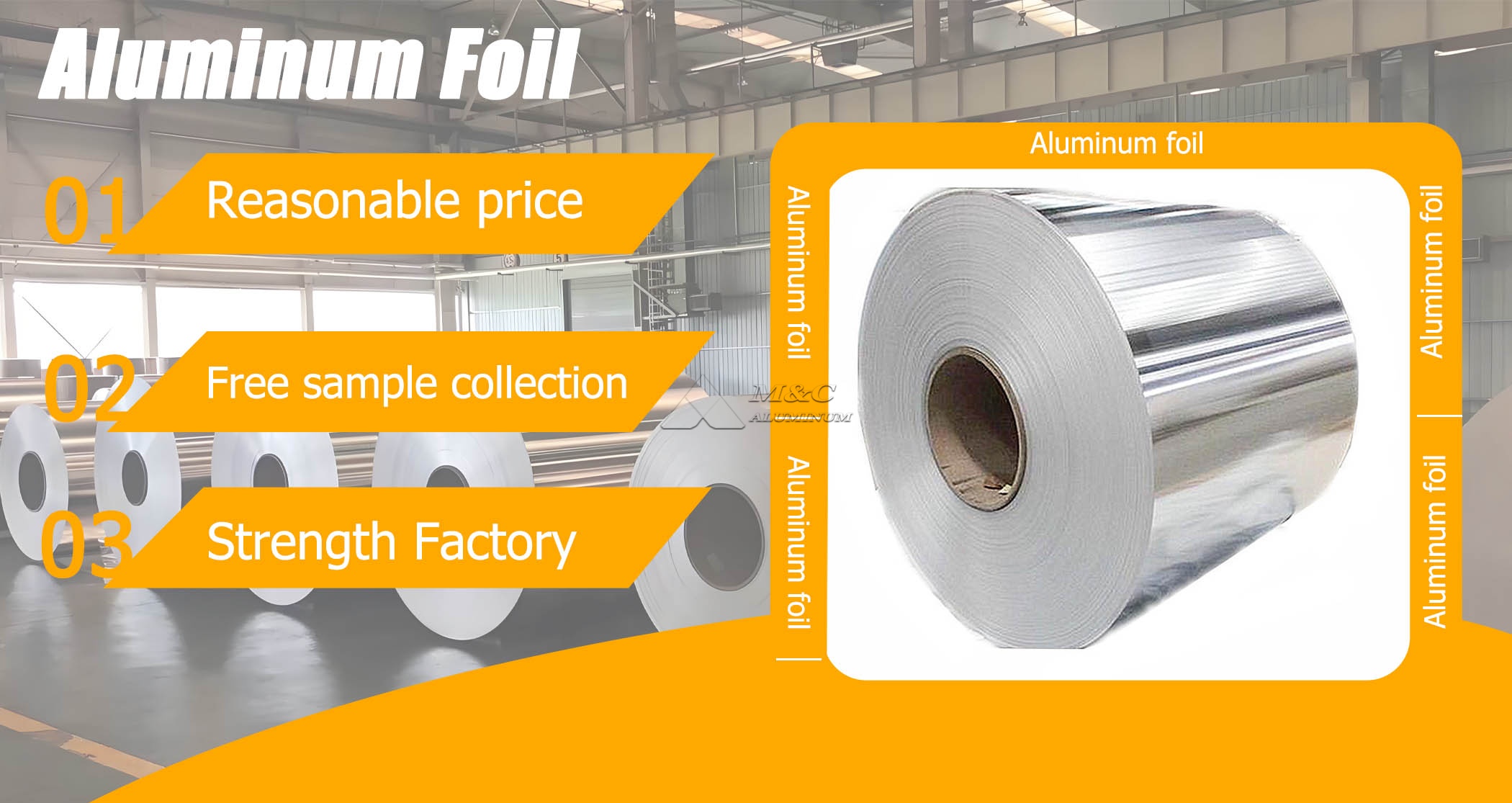
As a manufacturer of aluminum foil for heat-transfer applications, we produce 3003 aluminum foil for HVAC fins with controlled alloy composition, thickness consistency, surface cleanliness, and mechanical properties. This material is designed for the production of finned heat exchangers used in residential air conditioners, commercial HVAC systems, refrigeration equipment, dehumidifiers, and heat pump units.
3003 aluminum foil is an aluminum-manganese alloy material. Compared with commercially pure aluminum foil, it offers improved strength while retaining good formability, thermal conductivity, and corrosion resistance. These characteristics make it a practical option for fin forming processes where stable stamping performance and reliable downstream coating adhesion are required.
Why 3003 Aluminum Foil Is Used for HVAC Fins
HVAC fins enlarge the surface area of evaporators and condensers, allowing heat to transfer efficiently between refrigerant circuits and surrounding air. The fin material must be thin enough to support compact heat exchanger design, yet strong enough to withstand high-speed pressing, collar drawing, louver forming, tube expansion, and assembly operations.
Our 3003 aluminum foil for HVAC fins is manufactured to support these requirements. The manganese content in Alloy 3003 provides higher strength than 1100 aluminum while preserving the ductility needed for complex fin geometries. It is especially suitable for applications requiring a balance between press formability and finished-fin rigidity.
Key functional benefits include:
Good drawability for collar and louver formation.
Stable tensile strength and elongation for continuous fin press lines.
Good thermal conductivity for heat exchanger performance.
Resistance to normal atmospheric corrosion in HVAC service environments.
Compatibility with hydrophilic, anti-corrosion, and lubricating surface coatings.
Low thickness variation to support uniform die performance and consistent fin pitch.
For customers sourcing coil material for air conditioning equipment, our Aluminium Foil For Air Conditioner range can be supplied according to fin press requirements, coating systems, and packaging conditions.
Alloy Characteristics of 3003 HVAC Fin Foil
3003 is a non-heat-treatable aluminum alloy containing manganese as the principal alloying element. It is commonly selected where greater mechanical strength than pure aluminum is needed without significantly reducing workability.
The final performance of HVAC fin stock depends not only on the alloy designation, but also on temper, foil thickness, grain structure, rolling condition, surface treatment, and coil winding quality. During manufacturing, we control these factors from slab selection through hot rolling, cold rolling, annealing, slitting, and final inspection.
Typical Chemical Composition of 3003 Aluminum Alloy
| Element | Typical Requirement, wt.% |
|---|---|
| Silicon, Si | 0.60 max |
| Iron, Fe | 0.70 max |
| Copper, Cu | 0.05 to 0.20 |
| Manganese, Mn | 1.00 to 1.50 |
| Zinc, Zn | 0.10 max |
| Other elements, total | 0.15 max |
| Aluminum, Al | Balance |
The controlled manganese level is important for achieving the required strength profile. Our production team adjusts rolling reduction and annealing practice to match the customer's desired temper and fin-forming process.
Technical Parameters for 3003 Aluminum Foil for HVAC Fins
The following table shows common supply ranges. Final specifications can be agreed according to equipment design, fin tooling, coating method, and coil handling requirements.
| Parameter | Typical Supply Range |
|---|---|
| Alloy | 3003 |
| Temper | H14, H16, H18, H22, H24, O, custom temper |
| Thickness | 0.070 mm to 0.200 mm |
| Common fin thickness | 0.090 mm to 0.150 mm |
| Width | 100 mm to 1,300 mm |
| Coil inner diameter | 150 mm, 200 mm, 300 mm, 400 mm, 500 mm, or as agreed |
| Coil outer diameter | According to coil weight and handling requirements |
| Coil weight | 500 kg to 5,000 kg, subject to dimensions |
| Surface | Mill finish, degreased, hydrophilic coated, anti-corrosion coated |
| Flatness | Controlled for fin press processing |
| Edge condition | Trimmed edge, burr controlled |
| Oil condition | Dry or lightly lubricated as specified |
| Packing | Export seaworthy packing with moisture protection |
Mechanical properties are determined by thickness and temper. For HVAC fin applications, we confirm critical indicators such as tensile strength, elongation, hardness, thickness tolerance, and surface quality before shipment. If the foil will be processed on high-speed progressive dies, we recommend validating the material through a trial run using the customer's actual forming tools.
Surface Treatments for HVAC Heat Exchanger Fins
Bare 3003 aluminum foil can be used in selected dry and controlled indoor environments. However, coated fin foil is often preferred for air conditioner and refrigeration systems exposed to condensation, humid air, airborne contaminants, or coastal conditions.
Hydrophilic Coated Aluminum Foil
Hydrophilic coating improves water spreading behavior on the fin surface. Instead of forming larger droplets that may block airflow passages, condensate spreads into a thin water film and drains more efficiently. This can help reduce water bridging, improve air-side performance, and lower the risk of odor associated with retained moisture.
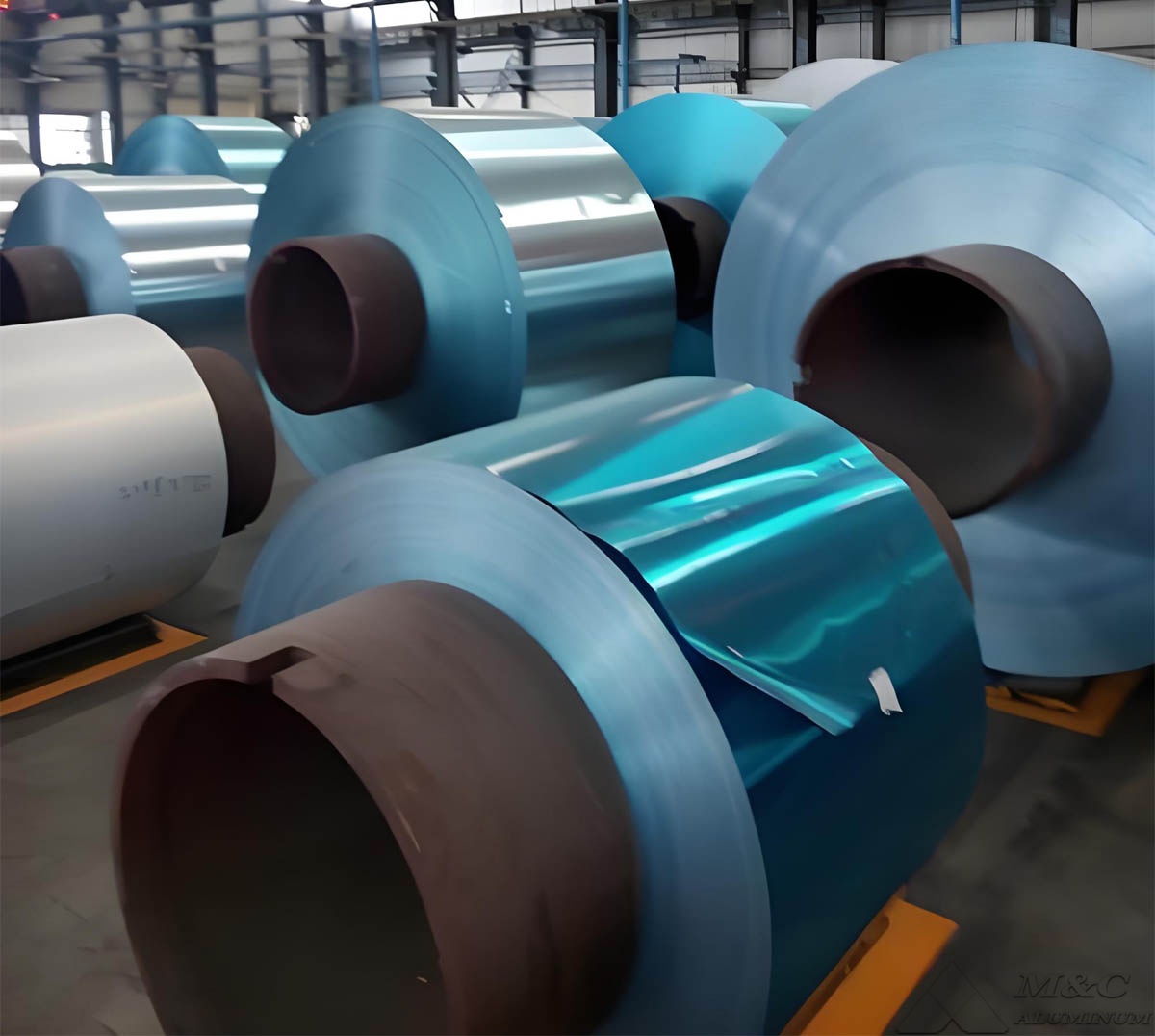
Our hydrophilic aluminum foil production includes surface cleaning, chemical pretreatment, coating application, controlled curing, and inspection of coating continuity. Coating color, coating weight, wettability, and corrosion performance can be specified based on the intended heat exchanger environment.
Anti-Corrosion and Functional Coatings
For demanding operating conditions, we can provide coated 3003 aluminum foil with enhanced corrosion resistance. Coating systems may be selected for evaporator fins, condenser fins, marine-influenced climates, industrial atmospheres, or refrigeration equipment exposed to repeated condensation cycles.
Typical coating requirements may include:
Hydrophilic performance.
Salt spray resistance.
Alkali resistance.
Good adhesion after fin forming.
Resistance to coating cracking at collars and louvers.
Compatibility with tube expansion and heat exchanger assembly.
The coating must remain stable during forming. Therefore, our quality control process evaluates both coated surface performance and forming behavior rather than assessing the coating only in its flat state.
Manufacturing Process and Process Control
As a 3003 aluminum foil manufacturer, we manage the production route from raw material selection to finished coil packing. This enables us to maintain traceability and control the variables that affect HVAC fin quality.
The typical manufacturing process includes:
Alloy melting and chemical composition control.
Casting and homogenization of aluminum stock.
Hot rolling to intermediate gauge.
Cold rolling to the target foil thickness.
Intermediate or final annealing to achieve the required temper.
Surface cleaning and coating, where specified.
Precision slitting and coil inspection.
Moisture-resistant export packing and labeling.
Thickness control is particularly important because even small variations can influence fin press settings, collar height, louver geometry, and coil yield. We use calibrated measurement systems to monitor thickness across the strip width and along the coil length. Edge quality is also inspected to minimize issues during unwinding and feeding.
For buyers requiring uncoated stock, our 3003 Aluminum Foil can be supplied in mill finish or surface conditions prepared for subsequent conversion and coating operations.
Quality Inspection for HVAC Fin Stock
Our inspection program is based on the functional requirements of heat exchanger manufacturing. Each order is checked against agreed specifications before release.
| Inspection Item | Purpose |
|---|---|
| Chemical composition | Confirms compliance with 3003 alloy requirements |
| Thickness measurement | Ensures stable fin forming and coil consistency |
| Width and edge inspection | Supports accurate feeding and slitting quality |
| Tensile testing | Verifies strength suitable for the selected temper |
| Elongation testing | Confirms formability for collars and louvers |
| Surface inspection | Detects scratches, oil marks, inclusions, and coating defects |
| Coating adhesion test | Confirms coating stability during processing |
| Wettability test | Evaluates hydrophilic performance where required |
| Coil geometry inspection | Checks winding, telescoping, and coil appearance |
We also pay attention to defects that can affect high-speed stamping, including pinholes, heavy edge burrs, loose winding, uneven coating, excessive residual oil, and surface contamination. Requirements for allowable defects should be established before production, particularly for automated HVAC fin lines.
Selecting the Right 3003 Foil Specification
When specifying 3003 aluminum foil for HVAC fins, buyers should provide the end application and processing information as clearly as possible. The appropriate material configuration depends on whether the foil will be used for evaporator fins, condenser fins, refrigerator fins, or other heat exchanger components.
The main selection factors include:
Required foil thickness and width.
Fin geometry, including louver design and collar depth.
Fin press speed and die condition.
Required temper and forming performance.
Bare, hydrophilic, or anti-corrosion coated surface.
Coil inner diameter, maximum coil weight, and line loading capacity.
Service environment, including humidity, salt exposure, and chemical contaminants.
Applicable technical standards and incoming inspection requirements.
A thinner foil can reduce material consumption and heat exchanger weight, but it must still maintain sufficient stiffness and processing stability. A harder temper may improve final fin rigidity, while a softer temper can support more demanding drawing operations. Our technical team reviews this balance with customers before confirming mass-production parameters.
Packaging and Export Supply
HVAC fin foil must remain dry, clean, and protected during storage and international transportation. We use export-oriented coil packaging that can include moisture barrier materials, desiccants, protective wrapping, steel or wooden supports, reinforced outer protection, and clear coil identification labels.
Each coil label can include alloy, temper, dimensions, net weight, batch number, production date, and customer reference information. This supports traceability at the heat exchanger plant and helps customers manage incoming material inspection.
Conclusion
3003 aluminum foil for HVAC fins provides a dependable combination of strength, formability, thermal performance, and coating compatibility. When produced with stable thickness, controlled temper, clean surfaces, and appropriate coil geometry, it supports efficient fin pressing and reliable heat exchanger assembly.
As a factory manufacturer, we supply 3003 HVAC fin foil in mill finish, hydrophilic coated, and anti-corrosion coated conditions. We work with equipment manufacturers and heat exchanger producers to define material specifications based on actual forming conditions, environmental requirements, and quality expectations.

Contact Us