
5 μm 1070 Aluminum Foil for Electrolytic Capacitor Applications
As a manufacturer of precision rolled aluminum products, we produce 5 μm 1070 aluminum foil for electrolytic capacitor applications where purity, thickness consistency, surface cleanliness, and winding reliability are critical. This ultra-thin capacitor aluminum foil is supplied as a substrate for downstream etching, formation, slitting, and capacitor element winding.
Electrolytic capacitor production requires more than a nominal foil thickness. Variations in gauge, surface condition, edge quality, or residual rolling oil can affect etching behavior, oxide formation, capacitance development, and the stability of high-speed winding processes. Our 1070 aluminum foil manufacturing process is designed to maintain controlled properties across the full coil length and width.
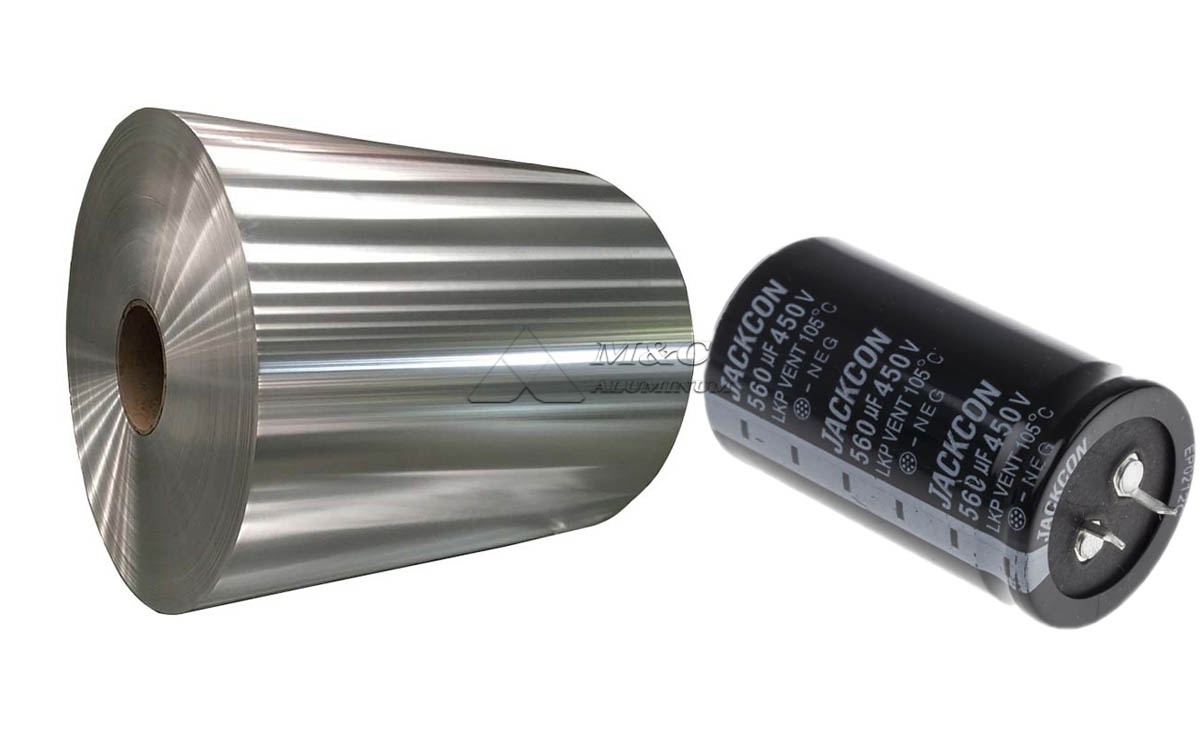
Why 1070 Aluminum Foil Is Used for Electrolytic Capacitors
1070 aluminum alloy is a commercially pure aluminum grade with an aluminum content of at least 99.7 percent. It offers high electrical conductivity, good corrosion resistance, stable chemical response during electrochemical processing, and excellent workability. These properties make 1070 aluminum foil suitable for selected electrolytic capacitor foil applications, particularly where the foil will be etched to increase its effective surface area.
In an aluminum electrolytic capacitor, aluminum foil functions as the base material for the anode or cathode structure. For anode applications, the foil is normally electrochemically etched and then formed to create a dielectric aluminum oxide layer. The quality of the original foil has a direct influence on etching uniformity and the consistency of the formed oxide film.
Our 5 μm 1070 aluminum foil is engineered for manufacturers that require lightweight, thin-gauge material with controlled roll geometry. At this thickness, process discipline is especially important because minor defects can become more significant during tensioning, slitting, chemical etching, and winding.
Performance Advantages of 5 μm 1070 Aluminum Foil for Electrolytic Capacitors
1. High-Purity Aluminum with Excellent Electrical Conductivity: With an aluminum content of no less than 99.7%, 1070 aluminum foil offers superior electrical conductivity, which helps reduce resistive losses in electrode materials.
2. Ultra-Thin 5 μm Thickness for Lightweight Design: This ultra-thin foil reduces the thickness of electrode materials, enhancing material utilization per unit volume and meeting the design requirements for miniaturized, highly integrated capacitors.
3. Superior Surface Quality: A smooth surface and uniform thickness facilitate stable execution of subsequent processes, including etching, formation, and electrode fabrication.
4. Excellent Electrochemical Etching Characteristics: The material is well-suited for electrochemical etching as required by capacitor designs; this process increases the effective surface area, thereby boosting the capacitance of the electrodes.
5. Good Processability and Winding Characteristics: Featuring excellent ductility and flexibility, the foil is ideal for precision slitting, continuous processing, and the winding operations used in capacitor manufacturing.
6. Consistent Material Quality: Uniform thickness and stable material properties contribute to higher quality in electrode fabrication and greater consistency across finished capacitor products.
Typical Technical Parameters
The following table presents commonly supplied parameters for 5 μm 1070 aluminum foil. Final specifications are confirmed according to the capacitor design, etching route, winding equipment, and agreed inspection standard.
| Item | Typical Specification | Remarks |
|---|---|---|
| Alloy | 1070 | Aluminum content not less than 99.7 percent |
| Temper | O, H18, or agreed condition | Selected according to downstream processing |
| Thickness | 0.005 mm, or 5 μm | Tight gauge control available by agreement |
| Thickness tolerance | Typically ±0.3 μm to ±0.5 μm | Depends on width, temper, and inspection method |
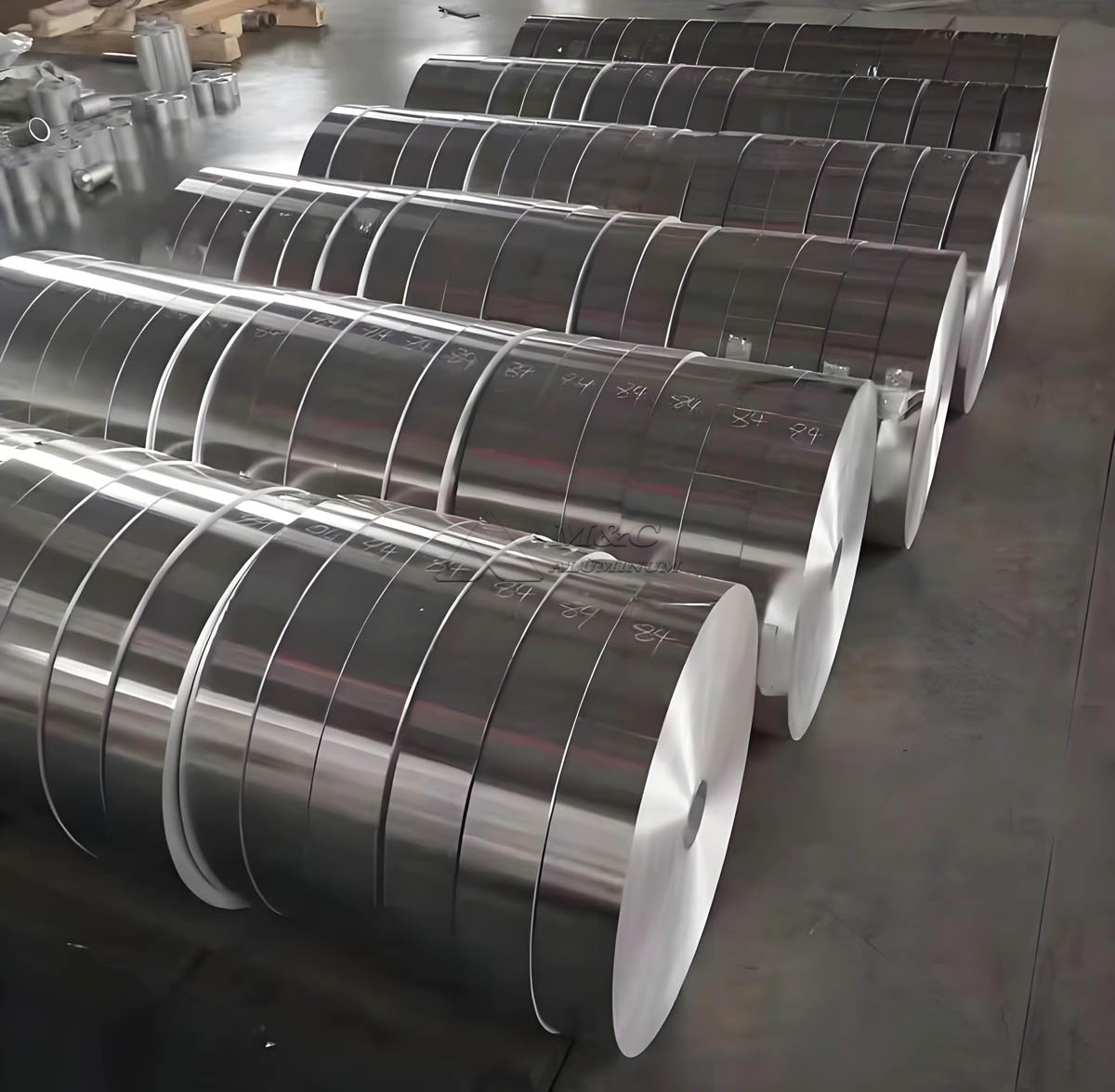
| Width | 20 mm to 1,250 mm | Slit coils and jumbo rolls available |
| Width tolerance | Typically ±0.2 mm to ±0.5 mm | Defined by slitting requirement |
| Coil inner diameter | 150 mm, 200 mm, 300 mm, 505 mm, or customized | Compatible with customer winding equipment |
| Coil outer diameter | Customized | Controlled by weight and handling limits |
| Surface finish | Mill finish, clean rolled surface | Free from visible oil stains and severe marks |
| Surface roughness | As agreed for etching process | Controlled to support uniform downstream treatment |
| Electrical conductivity | High conductivity characteristic of 1070 alloy | Important for capacitor current collection |
| Pinholes | Controlled according to agreed standard | Verified through inspection procedures |
| Edge condition | Burr-controlled, slit edge | Suitable for precision winding |
| Packaging | Moisture-resistant export packaging | Protects foil during transport and storage |
Manufacturing Process for 5 μm Capacitor Aluminum Foil
Our production of thin aluminum foil for capacitors begins with controlled melting and casting of 1070 alloy. Chemical composition is verified to ensure that impurity levels remain within the agreed alloy range. Since impurities can influence conductivity, corrosion behavior, and electrochemical response, composition control is an important part of raw material qualification.
The cast slab is homogenized, hot rolled, cold rolled, and progressively reduced to the required foil gauge. For 5 μm aluminum foil, the final rolling stages are performed under tightly managed tension, lubrication, and rolling-force conditions. These controls help minimize thickness variation and reduce the risk of wrinkles, edge cracks, chatter marks, and local gauge instability.
After rolling, the foil may be annealed to achieve the specified temper. Annealing parameters are controlled to balance softness, strength, elongation behavior, and rolling oil removal. Capacitor foil customers may require a particular temper based on whether the material will be etched, formed, laminated, slit, or directly wound.
We also provide Aluminum Foil in additional alloys and thickness ranges for industrial electrical, packaging, heat-transfer, and conversion applications. However, for electrolytic capacitor production, material selection should be based on the full electrochemical process rather than thickness alone.
Critical Quality Requirements for Capacitor Foil
For 5 μm 1070 aluminum foil, visual acceptance is only one part of quality control. We inspect and manage several characteristics that affect downstream capacitor manufacturing.
Thickness Uniformity
Stable gauge is essential because thickness variation can affect etching consistency and foil handling under tension. We use online thickness monitoring during rolling and conduct final verification through sampling and inspection records. For narrow slit coils, thickness stability is assessed across the strip width as well as along the coil length.
Surface Cleanliness
Residual rolling oil, particulate contamination, fingerprints, and foreign matter can interfere with chemical etching and oxide formation. Our finishing and packaging practices are designed to maintain a clean foil surface. Where customers have specific rolling oil residue limits or cleaning requirements, these conditions can be included in the technical agreement.
Surface Defects
Pinholes, scratches, dents, edge damage, wrinkles, and roll marks are monitored because ultra-thin foil is sensitive to localized defects. Acceptance criteria should be aligned with the intended application. Capacitor foil used for precision etching or high-speed winding generally requires stricter defect control than general-purpose industrial foil.
Coil Shape and Winding Quality
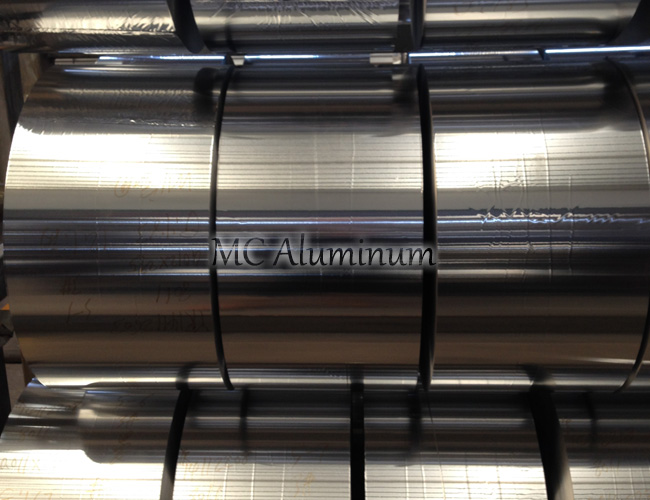
A well-formed coil supports stable unwinding, slitting, and capacitor element winding. We control coil tightness, telescoping, edge alignment, and splice management according to the supplied coil format. Each roll is packed to reduce the risk of deformation, oxidation, or moisture exposure during export transportation.
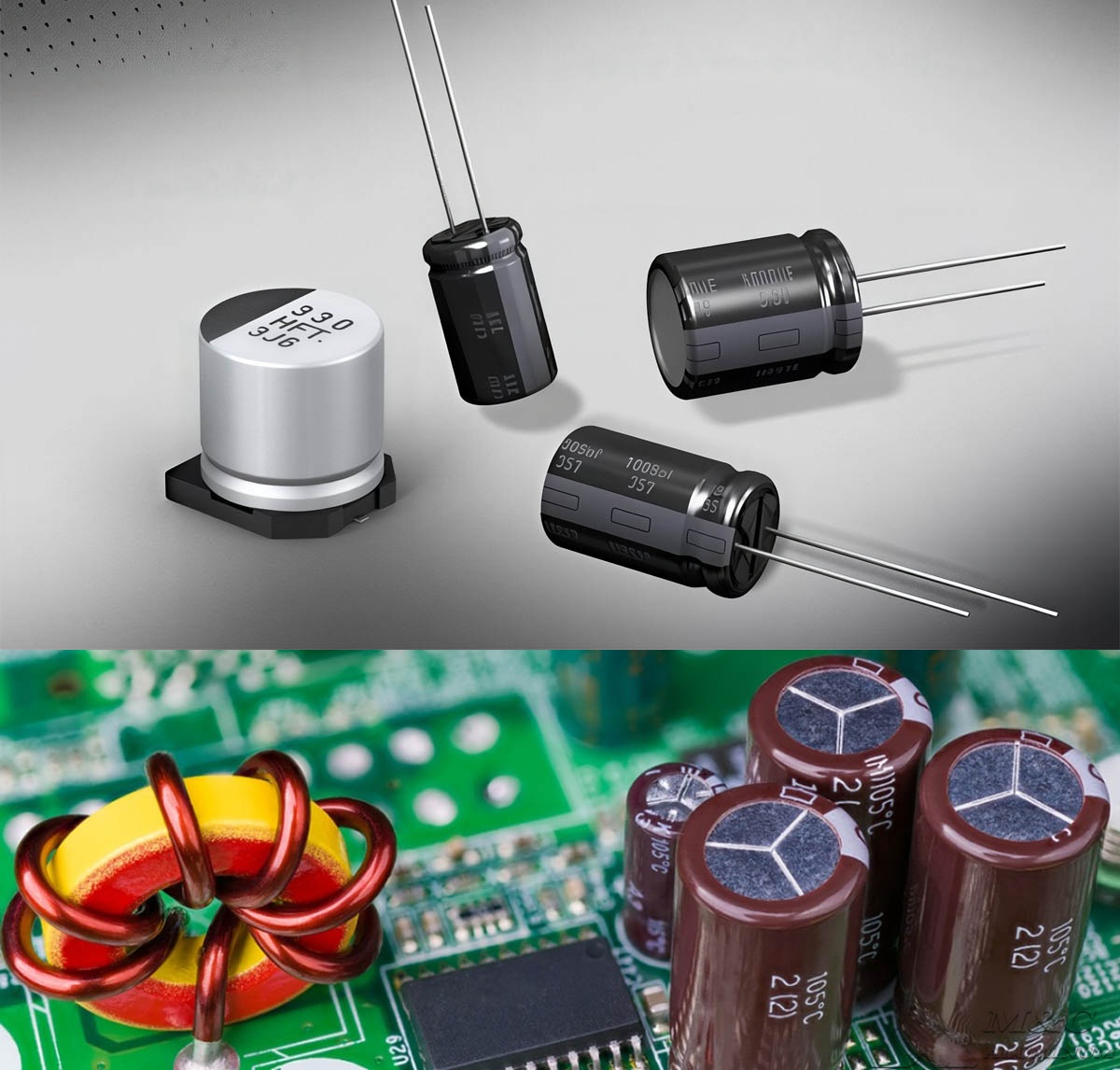
Performance in Electrolytic Capacitor Processing
The main role of 5 μm 1070 aluminum foil is to provide a thin and conductive aluminum base for subsequent processing. In a typical electrolytic capacitor production route, the foil may pass through cleaning, electrochemical etching, chemical treatment, formation, drying, slitting, and winding stages.
During etching, the aluminum surface is intentionally modified to create a larger effective surface area. This increased area supports higher capacitance within a compact component design. Uniform foil chemistry and a consistent surface condition help produce more predictable etching results across different coil sections.
During formation, a dielectric oxide layer is generated on the aluminum surface. Foil quality can influence the regularity of this layer and the consistency of electrical characteristics. While capacitor performance ultimately depends on the complete customer process, including electrolyte, formation voltage, separator material, and winding design, stable incoming foil reduces variation at the earliest stage.
For winding, 5 μm foil requires appropriate tension settings and handling equipment. Excessive tension can cause stretching or breakage, while insufficient tension may create loose winding and poor element geometry. We can supply coil dimensions and slit widths matched to the buyer's winding line requirements.
Selection Considerations Before Ordering
To specify electrolytic capacitor foil correctly, we recommend confirming the following points before production:
End use: Identify whether the foil is intended for anode, cathode, etched substrate, formed foil, or another electrical application.
Temper requirement: Confirm the required mechanical condition based on the etching and winding process.
Foil width and coil format: Provide slit width, coil inner diameter, maximum outer diameter, and preferred coil weight.
Thickness tolerance: Define the acceptable thickness range and the measurement method.
Surface requirements: State requirements for roughness, rolling oil residue, cleanliness, and defect limits.
Edge condition: Specify burr direction, burr height, and edge quality requirements for precision slitting.
Inspection documents: Determine whether chemical composition reports, dimensional inspection records, coil identification, or additional test reports are required.
For some projects, buyers also compare 1070 foil with other high-purity aluminum grades or with 1235 Aluminum Foil. The appropriate grade depends on electrical requirements, etching technology, supply specification, and the performance target of the finished capacitor.
Packaging and Export Supply
Our 5 μm 1070 aluminum foil is packed to preserve coil condition throughout international shipment. Standard export packaging may include protective interleaving, moisture-resistant wrapping, reinforced outer protection, palletization, and clear product labels. Coil labels can include alloy, temper, thickness, width, net weight, batch number, and production reference for traceability.
Because thin capacitor aluminum foil is vulnerable to moisture, compression damage, and edge impact, storage conditions should be controlled after delivery. We recommend keeping the material in a clean, dry warehouse, away from corrosive chemicals and direct exposure to water or condensation. Coils should remain sealed until they are ready for production.
Conclusion
Our 5 μm 1070 aluminum foil for electrolytic capacitor applications is manufactured with emphasis on chemical consistency, precision thickness control, clean surface condition, stable coil shape, and reliable processing performance. As a foil manufacturer, we work with capacitor producers to define the appropriate alloy condition, dimensions, tolerances, coil configuration, and inspection criteria for each project.
By aligning the foil specification with the etching, formation, and winding process, capacitor manufacturers can improve material consistency and reduce avoidable variation in downstream production.
Contact Us