
5052 Aluminum Strip for Cable Armor
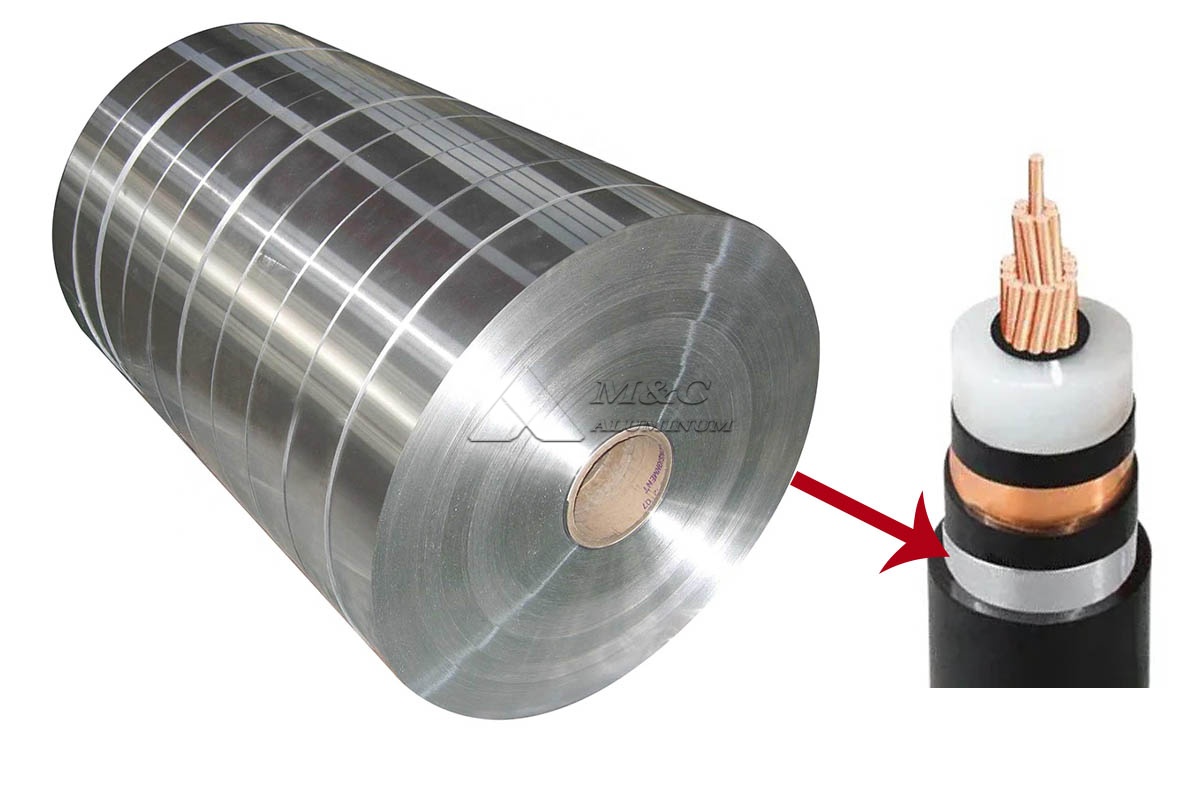
As a manufacturer of aluminum strip products, we produce 5052 aluminum strip for cable armor for cable makers that require stable mechanical performance, reliable corrosion resistance, and consistent dimensional accuracy. In armored cable construction, the aluminum strip functions as a protective metallic layer around the insulated core or bedding layer. This armor helps improve resistance to mechanical impact, compression, and environmental exposure while supporting efficient cable forming during continuous production.
For this application, alloy selection is important. Among common aluminum alloys used in cable protection systems, 5052 aluminum strip is widely valued for its combination of medium strength, good formability, and excellent corrosion resistance. These properties make it suitable for power cables, control cables, communication cables, and other industrial cable products used in humid, outdoor, or mildly corrosive environments.
Why 5052 Aluminum Strip Is Used for Cable Armor
5052 belongs to the Al-Mg alloy series. Compared with commercially pure aluminum strip, it offers higher strength while maintaining good bending and wrapping performance. In cable armoring lines, the strip must pass through forming, longitudinal wrapping, corrugation, or interlocking processes without unstable cracking or excessive springback. This is where 5052 aluminum strip for armored cables offers practical advantages.
The main benefits of 5052 alloy in cable armor include:
Good resistance to atmospheric corrosion and moisture exposure
Higher strength than 1xxx series aluminum strip
Stable performance in slitting and edge control
Good adaptability to forming and wrapping operations
Low density compared with steel armor materials
Suitable for applications where lighter cable construction is required
For cable manufacturers, these advantages translate into more stable processing, lower risk of armor layer damage during forming, and more consistent finished cable quality.
Our Manufacturing Approach for 5052 Cable Armor Strip
As a factory, we control production from raw material selection to hot rolling, cold rolling, annealing, slitting, and final inspection. For aluminum strip for cable armor, uniformity is more important than nominal chemistry alone. In practical use, cable producers pay close attention to tensile stability, elongation, burr control, camber, surface cleanliness, and coil winding quality. These factors directly affect downstream wrapping speed and armor integrity.
In our production process, we focus on the following points:
Alloy and Melt Control
We control magnesium content and impurity limits to maintain stable mechanical properties and corrosion resistance. Consistent melt treatment helps reduce inclusions that may affect slitting quality and surface performance.
Rolling and Thickness Precision
Cable armor requires narrow tolerance control. Uneven thickness can lead to unstable overlap, forming defects, or armor layer inconsistency. We use controlled rolling schedules to ensure thickness uniformity across the strip width and along the coil length.
Annealing and Temper Stability
Different cable constructions may require different hardness levels. We supply 5052 strip in suitable tempers such as O, H32, or H34 according to forming and strength requirements. For many cable armor applications, 5052 H32 aluminum strip is a common option because it balances strength and workability.
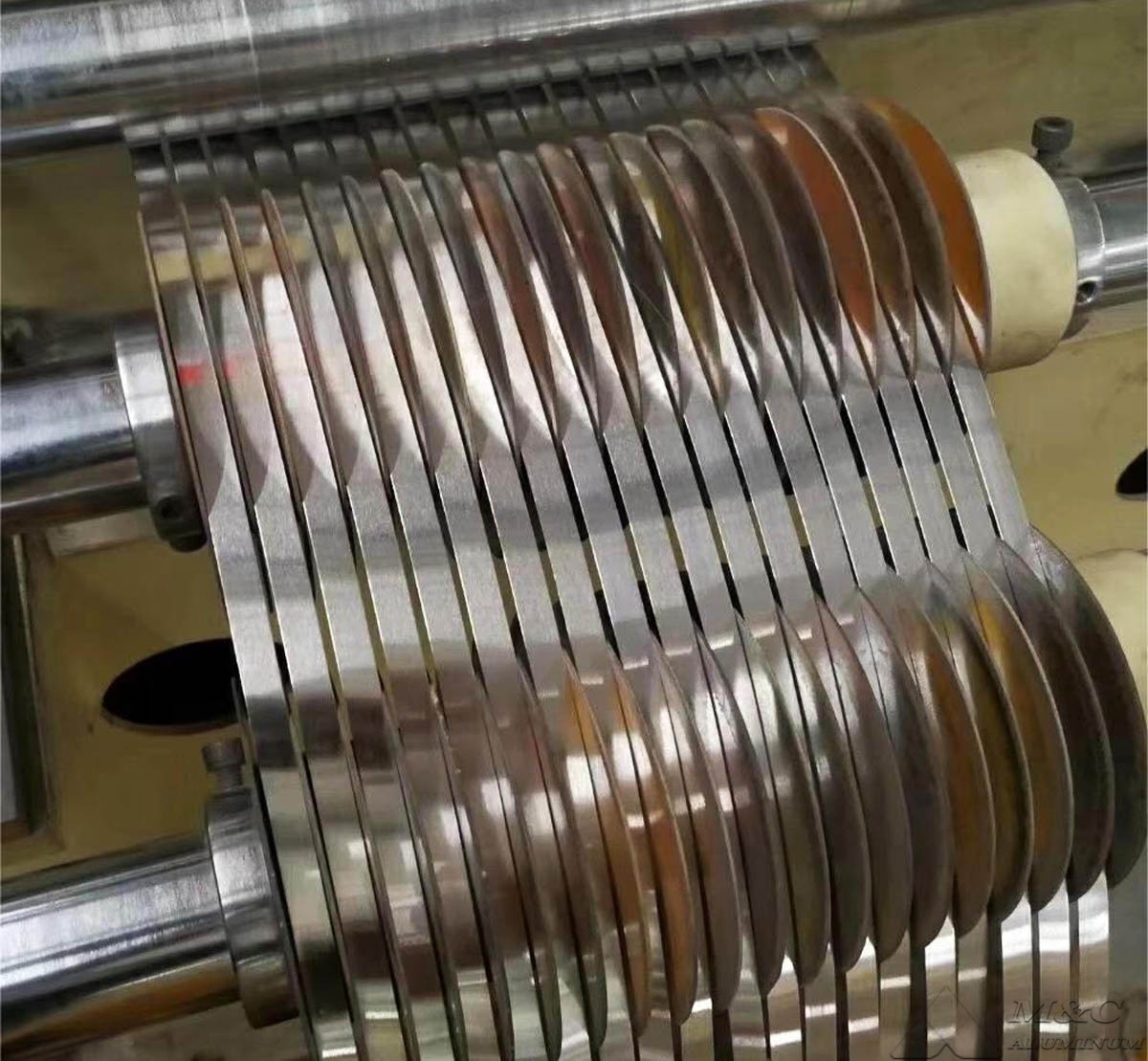
Precision Slitting
The quality of slit edge condition is critical in armored cable production. We control burr height, edge waviness, and coil telescoping to support high-speed cable processing. If the strip edge is unstable, it may damage insulation layers or affect armor coverage during wrapping.
Typical Technical Parameters
The exact specification of 5052 aluminum strip for cable armor depends on cable type, wrapping method, and customer processing equipment. The following table shows common supply ranges we manufacture.
| Item | Typical Specification |
|---|---|
| Alloy | 5052 |
| Temper | O, H32, H34 |
| Thickness | 0.10 mm - 2.00 mm |
| Width | 10 mm - 200 mm |
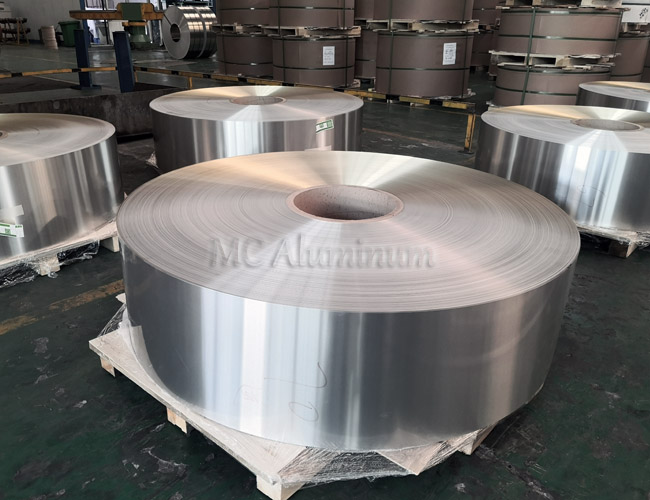
| Inner Diameter | 150 mm, 300 mm, 400 mm, 500 mm |
| Outer Diameter | According to coil weight and line requirement |
| Surface | Mill finish, clean, oil-controlled |
| Edge Condition | Slit edge, deburred as required |
| Tensile Strength | According to temper and agreed standard |
| Elongation | According to temper and agreed standard |
| Standard | ASTM, EN, GB, or customer technical agreement |
| Packaging | Export seaworthy wooden pallet or eye-to-wall |
Below is a reference table for the typical chemical composition of 5052 alloy.
| Element | Content, % |
|---|---|
| Magnesium, Mg | 2.2 - 2.8 |
| Chromium, Cr | 0.15 - 0.35 |
| Silicon, Si | 0.25 max |
| Iron, Fe | 0.40 max |
| Copper, Cu | 0.10 max |
| Manganese, Mn | 0.10 max |
| Zinc, Zn | 0.10 max |
| Aluminum, Al | Balance |
Reference mechanical properties vary by temper and thickness range.
| Temper | Tensile Strength | Yield Strength | Elongation |
|---|---|---|---|
| O | Approx. 170 - 215 MPa | Approx. 65 MPa min | Good |
| H32 | Approx. 210 - 260 MPa | Approx. 130 MPa min | Moderate to good |
| H34 | Approx. 230 - 280 MPa | Approx. 160 MPa min | Moderate |
The final values should be confirmed against the applicable standard and specific order requirements.
Performance Requirements in Cable Armor Applications
In our experience as a cable armor aluminum strip manufacturer, the material is not selected only by alloy name. The strip must match the cable design and production process. Several performance characteristics are especially important.
Corrosion Resistance
Cables used in outdoor, underground, marine-adjacent, or high-humidity conditions need an armor layer that can maintain integrity over time. Corrosion resistant aluminum strip in 5052 alloy performs well in these environments and is often preferred where weight reduction is also a design objective.
Formability
Armor strip may be longitudinally wrapped, folded, corrugated, or shaped into interlocking forms depending on cable structure. The material must withstand these operations without edge splitting or surface cracking. We adjust temper and process route according to the forming mode required by the customer.
Dimensional Consistency
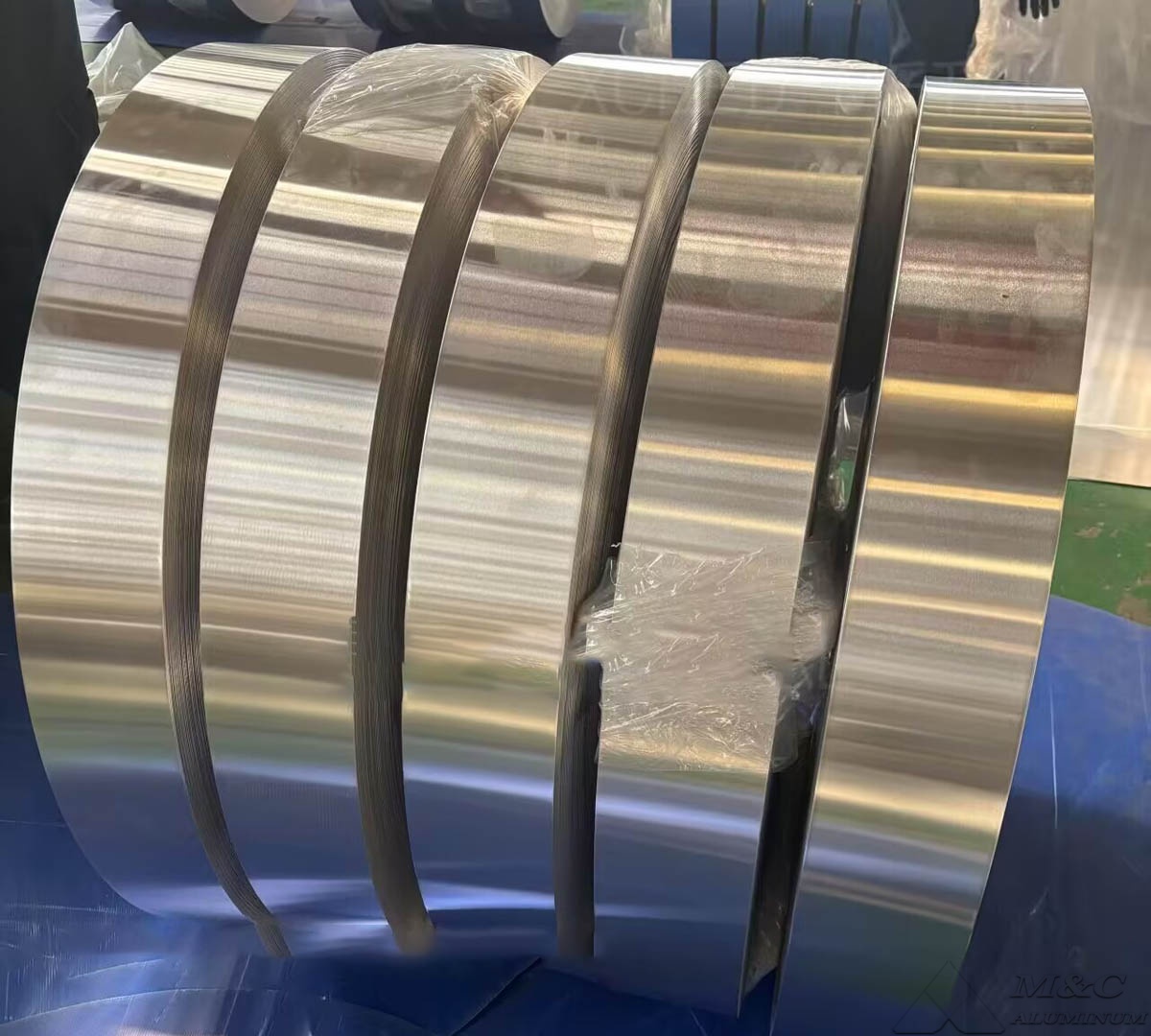
For automatic cable armoring lines, dimensional stability is essential. Tight width tolerance, manageable coil set, and low camber help maintain smooth feeding and uniform overlap during production.
Surface Quality
The strip surface should be clean and free from severe scratches, oil accumulation, oxidation spots, and embedded particles. Surface defects can influence the fit of the armor layer and may create processing issues in high-speed production.
Common Uses of 5052 Aluminum Strip in Cable Manufacturing
Our aluminum strip for armored cables is supplied to manufacturers producing:
Low and medium voltage power cables
Control cables
Instrument cables
Communication cables
Underground distribution cables
Industrial flexible armored cables
Cables for humid or corrosive service environments
In these products, 5052 alloy is often selected when the armor must provide a practical balance between protection, weight control, and corrosion resistance.
How We Control Quality in Production
As a manufacturing plant, we rely on process control and inspection data rather than generic product claims. For each batch of slit aluminum strip coil, we can conduct inspection according to the agreed standard and customer specification.
Our routine quality control typically includes:
Chemical composition verification
Thickness and width inspection
Mechanical property testing
Surface and edge inspection
Coil tightness and winding quality check
Burr and camber control
Packaging inspection before shipment
For customers with strict cable processing requirements, we can also coordinate additional checks on edge condition, coil direction, joint control, and packaging orientation to match production line needs.
Selection Advice for Buyers
When choosing 5052 aluminum strip for cable armor, buyers should confirm more than basic alloy and thickness. The following technical points should be clarified before order placement:
Required temper, such as O, H32, or H34
Cable wrapping method and forming radius
Thickness tolerance and width tolerance
Edge condition requirement
Coil size and maximum coil weight
Surface cleanliness standard
Applicable product standard or project specification
Packaging method for export and line loading
These details help ensure that the delivered strip matches the actual cable manufacturing process. As a factory, we prefer to confirm these parameters in advance so that production, slitting, and packaging are aligned with end use.
Supply Capability and Customization
We manufacture 5052 aluminum strip, aluminum strip for cable shielding, and related slit coil products in custom widths and tempers. Depending on the customer's cable design, we can arrange production for narrow-width strip, controlled inner diameter, and export packaging suitable for container shipment.
For long-term cable industry customers, consistency between batches is often more important than isolated sample performance. Our production scheduling and quality documentation are organized to support repeat orders with stable material performance.
Conclusion
5052 aluminum strip for cable armor is a practical material choice for cable manufacturers seeking good corrosion resistance, reliable forming behavior, and moderate strength in a lightweight aluminum alloy. For armored cable production, the key value lies not only in the alloy itself but also in stable thickness control, slit edge quality, temper consistency, and clean coil supply.
As a direct manufacturer, we produce 5052 cable armor strip with attention to rolling precision, annealing control, and slitting quality so that the material can perform consistently on cable production lines. If your project requires specific dimensions, temper conditions, or packaging standards, production can be arranged according to your technical requirements.
Contact Us