
How Much Is Transformer Aluminum Strip per Ton? (USD / Ton)
As a manufacturer of aluminum strip for electrical applications, we are often asked a direct question: how much is transformer aluminum strip per ton in USD? The practical answer is that the price is not a fixed catalog number. It is calculated from the aluminum ingot price, alloy grade, thickness, width, temper, tolerance level, surface quality, order quantity, packing method, and delivery term.
For common transformer winding materials such as 1050, 1060, 1070, 1100, 1350, and 3003 aluminum strip, a typical factory price is often quoted as the aluminum base price plus a processing charge. Depending on specification and market conditions, the final export price may commonly fall in a broad reference range of about USD 2,450 to USD 3,350 per metric ton on an FOB basis. This range is only for budgeting. A formal quotation must be based on the required specification and the aluminum market price on the quotation date.
What Is Transformer Aluminum Strip?
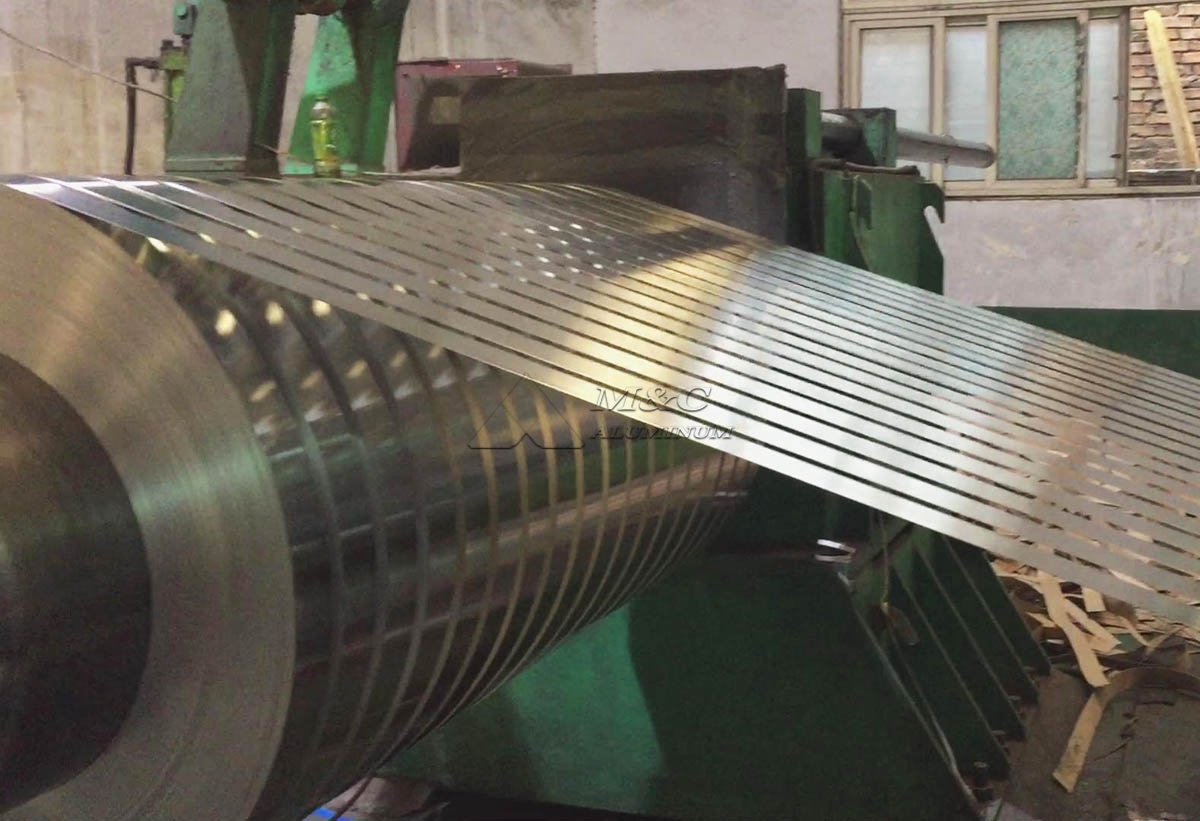
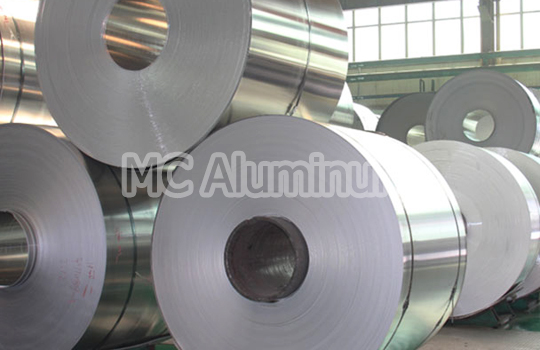
Transformer aluminum strip is a precision rolled aluminum product used for transformer winding, reactor winding, dry-type transformers, oil-immersed transformers, and related electrical equipment. Compared with ordinary commercial aluminum strip, transformer strip requires stable conductivity, controlled mechanical properties, clean surface, low burrs, uniform thickness, and good edge quality.
In our factory, transformer strip production is controlled through casting, hot rolling or cold rolling, intermediate annealing, finishing rolling, slitting, edge trimming, inspection, and moisture-proof packaging. The target is to supply coil material that can run smoothly on winding equipment and provide stable electrical performance in service.
For buyers evaluating different materials, our Transformer Aluminium Strip product range is designed for transformer winding applications where conductivity, dimensional accuracy, and surface cleanliness are critical.
Reference Price Range in USD per Ton
The following table gives a practical reference for international buyers. It is not a live market quotation, because aluminum prices change frequently. The range assumes standard export packing, normal commercial tolerance, and common transformer winding specifications.
| Alloy | Common Temper | Typical Application | Reference Factory Price, USD/Ton | Notes |
|---|---|---|---|---|
| 1050 | O, H12, H14 | General transformer winding | 2,450-3,050 | Good conductivity, cost-effective option |
| 1060 | O, H12, H14 | Distribution transformer winding | 2,480-3,100 | Widely used, stable supply, high aluminum purity |
| 1070 | O, H12 | Higher conductivity winding | 2,600-3,250 | Higher purity, usually higher premium |
| 1100 | O, H14 | Electrical and industrial winding | 2,500-3,120 | Good formability and corrosion resistance |
| 1350 | O, H12, H14 | Electrical conductor strip | 2,550-3,200 | Common conductor alloy for electrical use |
| 3003 | O, H14 | Special winding or structural use | 2,550-3,250 | Higher strength, lower conductivity than 1xxx alloys |
These values are intended to help with project estimation. If the strip requires very tight thickness tolerance, special edge treatment, paper interleaving, narrow width slitting, small order quantity, or urgent production, the processing fee will be higher.
How We Calculate Transformer Aluminum Strip Price
As a factory, our quotation is generally based on the following structure:
Transformer aluminum strip price = aluminum base price + processing fee + packing cost + logistics and export cost, adjusted by order terms.
The aluminum base price is normally linked to LME aluminum, regional primary aluminum prices, or another agreed benchmark. The processing fee covers rolling, annealing, slitting, inspection, quality control, and production loss. Packing and logistics are then added according to the delivery term, such as EXW, FOB, CFR, or CIF.
For example, if the aluminum base price is USD 2,350 per ton and the processing fee for a standard 1060-O transformer aluminum strip is USD 350 per ton, the basic factory value may be around USD 2,700 per ton before specific freight, insurance, and destination charges. If the specification requires narrow slitting, strict burr control, or special packaging, the final price may increase.
Key Technical Parameters Affecting Price
Transformer winding strip is a functional electrical material. Price differences are usually caused by technical requirements rather than only by alloy name. The table below lists common parameters that directly affect production cost and quotation.
| Parameter | Common Range or Requirement | Influence on Price |
|---|---|---|
| Alloy | 1050, 1060, 1070, 1100, 1350, 3003 | Higher purity alloys usually cost more |
| Temper | O, H12, H14, H16 | Annealing and mechanical property control affect cost |
| Thickness | 0.2-3.0 mm, customized | Very thin or very thick strip may increase rolling cost |
| Width | 10-1600 mm, customized | Narrow slitting increases processing loss and labor cost |
| Thickness tolerance | Common or precision tolerance | Tighter tolerance requires stricter rolling control |
| Width tolerance | Usually based on winding equipment needs | Precision slitting and edge control add cost |
| Conductivity | Typically specified by alloy and temper | Higher conductivity requirements may limit alloy selection |
| Surface | Clean, flat, oil-free, no serious scratches | Higher surface grade requires more inspection and control |
| Edge condition | Slit edge, trimmed edge, low burr | Low-burr edge processing increases cost |
| Coil ID | 150 mm, 300 mm, 405 mm, 505 mm, customized | Special coil ID may require dedicated packaging |
| Coil weight | 100-3000 kg per coil | Small coils increase unit handling and packing cost |
| Packing | Export wooden pallet or wooden case | Moisture-proof or reinforced packing adds cost |
Alloy Selection and Price Difference
The most common transformer aluminum strip alloys are 1060 and 1350. 1060 aluminum strip is widely used because it offers a good balance between conductivity, formability, availability, and price. 1350 aluminum strip is also commonly selected for electrical conductor applications, especially when customers follow electrical conductor material standards.
1070 aluminum strip generally has higher aluminum purity and better conductivity than 1060, so its price is usually higher. 3003 aluminum strip contains manganese and provides higher strength, but its conductivity is lower than 1xxx series aluminum. It is used only when the design requires its specific mechanical characteristics.
For customers who need general aluminum strip products in different alloys and tempers, our Aluminum Strip manufacturing capability covers both electrical and industrial applications.
Thickness, Width, and Tolerance
Thickness and width are major price factors. A standard width with normal tolerance can be produced efficiently, while very narrow transformer aluminum strip requires additional slitting time and causes more edge trim loss. For example, a 30 mm wide strip is usually more expensive per ton than a 300 mm wide strip of the same alloy and thickness, because the narrow strip requires more knife setup, more inspection, and more packaging work.
Thickness tolerance is also important. Transformer winding equipment requires stable material thickness to maintain consistent winding geometry. If the customer requires precision tolerance beyond normal mill practice, the rolling schedule must be controlled more strictly, and the production yield may decrease. This is why two inquiries for the same alloy can receive different prices.
Surface Quality and Edge Burr Control
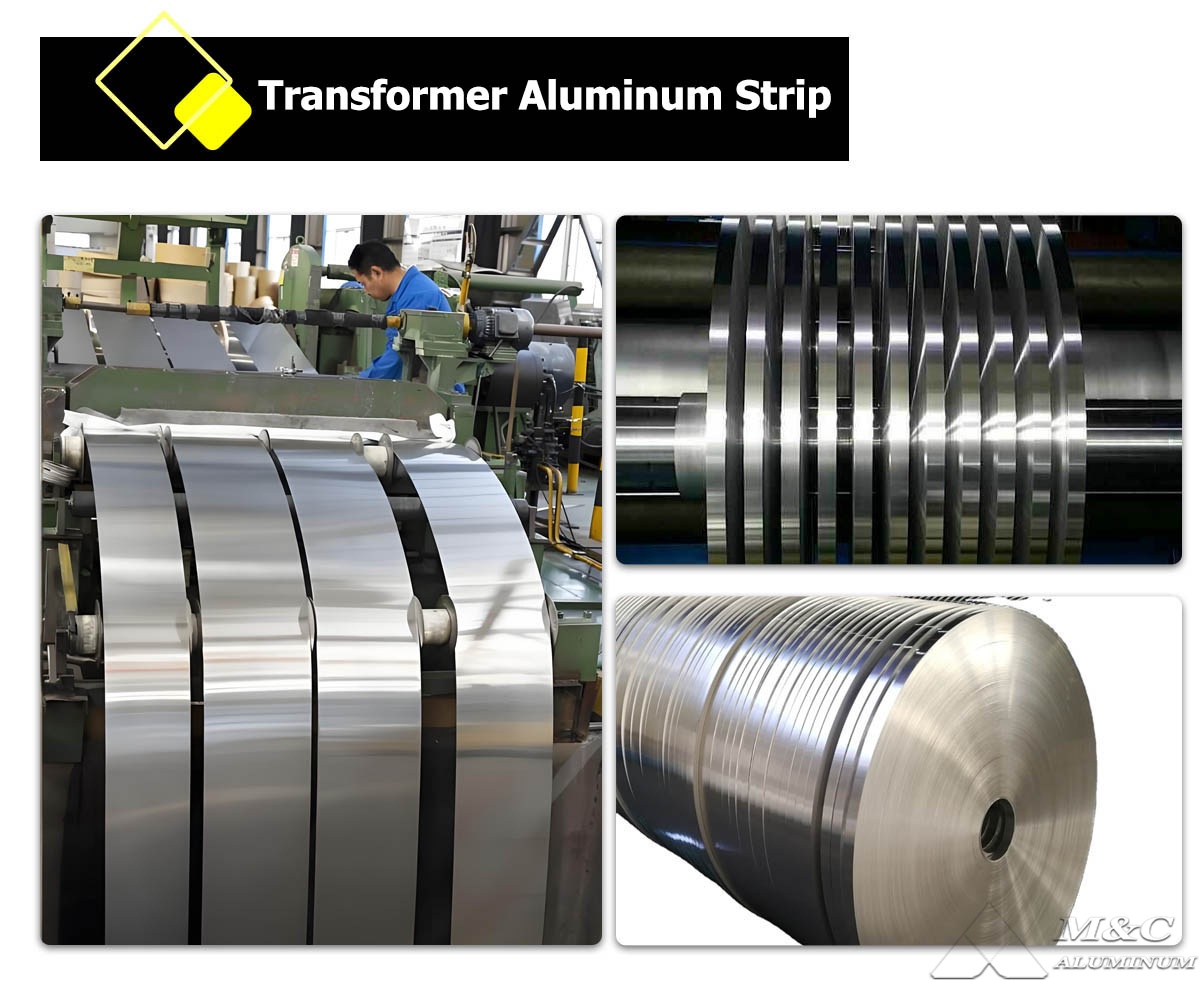
Transformer aluminum strip must be clean, smooth, and free from defects that can affect winding or insulation. Oil stains, heavy scratches, waves, and large burrs can create production problems for transformer manufacturers. For this reason, we inspect surface quality and edge condition during slitting and final packing.
Low-burr slitting is especially important for winding strip. If burr height is not controlled, it may damage insulation paper or film during winding. Requests for strict burr limits, rounded edge treatment, or special protective interleaving will increase production cost, but they help reduce downstream risk for transformer manufacturers.
Order Quantity and Coil Weight
Order quantity affects price per ton. Larger orders allow more efficient production planning, lower setup cost per ton, and more stable coil matching. Small trial orders, mixed specifications, or many narrow widths in one shipment may carry a higher processing fee.
Coil weight also matters. Large coils reduce handling and packing cost per ton, but they must match the customer's unwinding and winding equipment. Some transformer factories prefer small coils for easier handling, while others require large coils to reduce coil changes during production. We recommend confirming coil inner diameter, outer diameter, maximum coil weight, and winding direction before quotation.
Packing and Export Delivery Terms
Export packing is not a minor detail for transformer aluminum strip. The strip must be protected from moisture, impact, and deformation during sea freight and inland transport. Our standard export packing usually includes moisture-proof film, anti-rust protection where applicable, cardboard or plastic edge protection, wooden pallet or wooden case, and secure steel or plastic strapping.
The quoted price also depends on the trade term. EXW is the factory price without inland freight and export handling. FOB includes local transport and port charges to the loading port. CFR and CIF include ocean freight, and CIF also includes insurance. Because freight changes by route and season, buyers should specify the destination port when requesting a CFR or CIF price.
Typical Quotation Information Required
To provide an accurate transformer aluminum strip price per ton, we normally ask for the following information:
| Required Information | Example |
|---|---|
| Alloy | 1060, 1070, 1350, 3003 |
| Temper | O, H12, H14 |
| Thickness | 0.8 mm |
| Width | 120 mm |
| Quantity | 20 metric tons |
| Coil inner diameter | 300 mm or 405 mm |
| Maximum coil weight | 500 kg per coil |
| Tolerance requirement | Standard or special tolerance |
| Edge requirement | Slit edge, low burr, trimmed edge |
| Packing | Export wooden pallet or wooden case |
| Delivery term | FOB, CFR, CIF |
| Destination port | Required for freight quotation |
With this information, our engineering and sales teams can calculate the most realistic factory quotation and avoid later price adjustment caused by missing technical details.
Why a Very Low Price May Not Be Suitable
In transformer production, material stability is more important than the lowest nominal price. A price that is far below the normal market level may indicate unclear alloy composition, unstable tolerance, insufficient annealing control, poor edge quality, or inadequate export packing. These problems can lead to winding defects, production interruption, insulation damage, or higher scrap rate at the customer's plant.
As a manufacturer, we recommend comparing quotations based on complete specifications, not only USD per ton. A reliable quotation should clearly state alloy, temper, dimensions, tolerance, coil weight, packing, delivery term, and validity period. Mill test certificates and inspection standards should also be confirmed before shipment.
Conclusion
The price of transformer aluminum strip per ton is generally calculated from the aluminum base price plus a manufacturing and finishing charge. For standard transformer winding materials, the common reference range may be around USD 2,450 to USD 3,350 per metric ton, depending on alloy, temper, thickness, width, tolerance, edge quality, packing, quantity, and delivery term.
For an accurate quotation, please provide the complete technical specification instead of only asking for a general price per ton. As a factory, we can then evaluate rolling feasibility, slitting requirements, packaging method, and export cost, and provide a practical USD quotation for your transformer aluminum strip project.
Contact Us