
Battery Aluminum Foil Specifications
As a battery aluminum foil manufacturer, we produce rolled aluminum foil for lithium-ion battery cathode current collectors, energy storage cells, supercapacitors, and related electrochemical applications. Battery aluminum foil specifications must be controlled carefully because foil performance directly affects coating uniformity, electrical contact, cell resistance, processing stability, and final battery consistency.
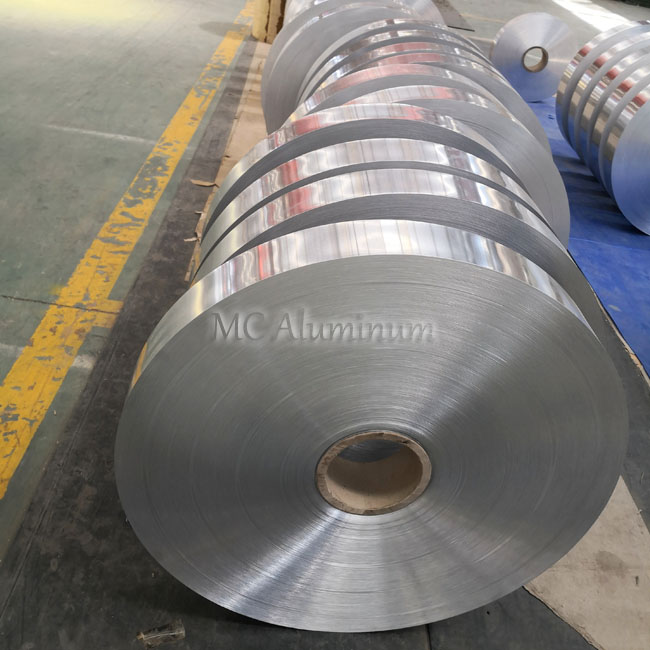
Unlike general-purpose household or packaging foil, lithium-ion battery aluminum foil is engineered for electrode manufacturing. The foil must maintain stable thickness, clean surface conditions, controlled mechanical properties, and reliable conductivity across the full coil length. Our production process includes alloy preparation, hot rolling, cold rolling, intermediate annealing, final rolling, slitting, inspection, and packaging according to customer requirements.
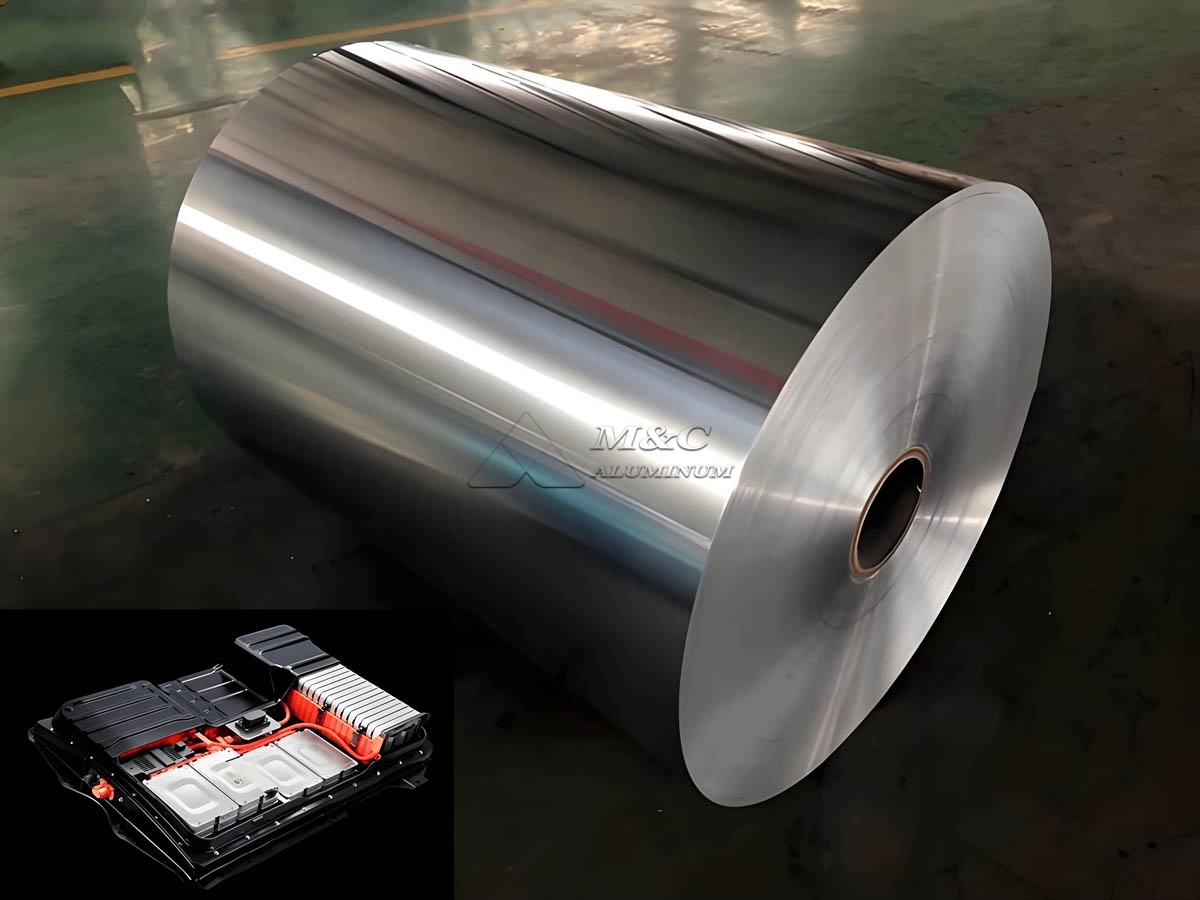
What Is Battery Aluminum Foil?
Battery aluminum foil is a thin rolled aluminum material used primarily as the positive electrode current collector in lithium-ion batteries. During electrode production, cathode active materials such as lithium iron phosphate, lithium nickel manganese cobalt oxide, or lithium cobalt oxide are coated onto one or both sides of the foil.
The aluminum foil provides an electrically conductive substrate and supports the electrode coating during calendaring, slitting, winding, stacking, and cell assembly. It must resist tearing during high-speed coating and maintain sufficient flatness for uniform slurry application.
Our battery cathode foil is supplied in plain aluminum foil and carbon coated aluminum foil forms. Plain foil is commonly used for standard cathode coating processes. Carbon coated foil is used where improved interface contact, lower contact resistance, or enhanced adhesion between the active material layer and current collector is required.
For general industrial foil requirements, customers may also review our Aluminum Foil product range. Battery-grade foil, however, requires more specific controls than conventional industrial foil.
Common Alloys for Battery Aluminum Foil
The alloy selection depends on battery chemistry, electrode design, foil thickness, coating method, and mechanical processing requirements. High-purity aluminum alloys are generally preferred because they provide good electrical conductivity, corrosion resistance, and rolling performance.
| Alloy | Typical Aluminum Content | Main Characteristics | Common Battery Application |
|---|---|---|---|
| 1050 | 99.50% minimum | Good conductivity, high purity, stable forming properties | Standard cathode current collector |
| 1060 | 99.60% minimum | High electrical conductivity and good rolling performance | Lithium-ion battery cathode foil |
| 1070 | 99.70% minimum | Higher purity and conductivity | High-performance battery applications |
| 1100 | 99.00% minimum | Good processability and corrosion resistance | General electrode foil applications |
| 1235 | 99.35% minimum | Excellent thin-gauge rolling capability | Thin battery aluminum foil and coated foil |
Among these grades, 1060 and 1235 aluminum foil are frequently selected for battery electrode applications. Our 1235 Aluminum Foil can be produced in thin gauges for customers requiring reliable thickness consistency and coil quality.
Standard Battery Aluminum Foil Specifications
Battery aluminum foil specifications are normally defined by thickness, width, alloy, temper, coil dimensions, surface quality, and mechanical properties. We customize these parameters according to the customer's coating line, electrode design, and finished cell format.
| Parameter | Typical Range | Notes |
|---|---|---|
| Alloy | 1050, 1060, 1070, 1100, 1235 | Selected according to conductivity and processing requirements |
| Temper | O, H18, H19 | O temper is common where higher ductility is required |
| Thickness | 10 to 25 microns | 12 to 20 microns is widely used for lithium-ion battery cathodes |
| Thickness tolerance | Typically +/- 0.5 to +/- 1.0 micron | Depends on nominal thickness and order specification |
| Width | 100 to 1,700 mm | Slit width can be customized for electrode production lines |
| Width tolerance | Typically +/- 0.5 mm | Tighter tolerance available for precision slitting |
| Coil inner diameter | 76 mm, 150 mm, 300 mm, 505 mm | Selected according to equipment requirements |
| Coil outer diameter | Up to approximately 1,000 mm | Controlled by coil weight and safe handling requirements |
| Coil weight | 50 to 500 kg or customized | Depends on width, thickness, and customer equipment |
| Surface condition | Oil-free or low residual rolling oil | Required for stable electrode coating adhesion |
| Pinholes | Controlled according to thickness and application | Inspection standards are agreed before production |
| Surface roughness | Customized by coating requirement | Affects slurry wetting and electrode adhesion |
The values above are typical production ranges. Final battery foil specifications should be confirmed through technical communication, approved samples, and purchase order requirements.
Thickness and Thickness Tolerance
Thickness is one of the most important battery aluminum foil specifications. A thinner foil can reduce inactive material weight and improve battery energy density. However, extremely thin foil requires higher rolling precision and greater care during coating, calendaring, and winding.
Common thicknesses include 12 microns, 13 microns, 15 microns, 16 microns, 18 microns, and 20 microns. For high-energy-density cells, 12 to 15 micron aluminum current collector foil may be selected. For applications requiring higher handling strength, 18 to 20 micron foil may provide better process stability.
We use online gauge control and final inspection procedures to maintain thickness uniformity across the coil width and length. Stable gauge control helps customers reduce coating weight variation, improve electrode consistency, and minimize production scrap.
Mechanical Properties and Temper Selection
Battery aluminum foil must balance strength and elongation. Foil that is too soft may wrinkle or stretch during high-speed processing. Foil that is too hard may crack at bends or create difficulties during winding and electrode forming.
| Temper | Typical Tensile Strength | Typical Elongation | Recommended Use |
|---|---|---|---|
| O | 60 to 100 MPa | 3% to 15% | Applications requiring ductility and forming stability |
| H18 | 120 to 170 MPa | 1% to 4% | High-strength foil for controlled processing lines |
| H19 | 140 to 190 MPa | 1% to 3% | Higher-strength applications requiring improved stiffness |
Actual tensile strength and elongation depend on alloy, thickness, rolling reduction, and annealing conditions. We provide material test certificates with agreed mechanical property ranges for production orders.
Surface Quality Requirements
The surface of battery aluminum foil has a direct influence on cathode slurry coating. Surface contamination, excessive rolling oil, scratches, dents, edge cracks, or uneven roughness can affect coating adhesion and electrode performance.
Our production control focuses on the following surface requirements:
Clean surface with controlled residual rolling oil.
No visible corrosion, oxidation stains, black lines, or foreign inclusions.
No folds, severe scratches, edge waves, telescoping, or loose winding.
Controlled roughness suitable for the customer's coating process.
Stable foil flatness to support uniform coating and drying.
Slit edges with limited burr formation and no continuous edge cracking.
For battery applications, surface cleanliness is especially important. Residual oil and contamination can reduce slurry wettability, cause coating defects, and increase electrode rejection rates. We can adjust cleaning, annealing, and packaging requirements based on the coating system used by the customer.
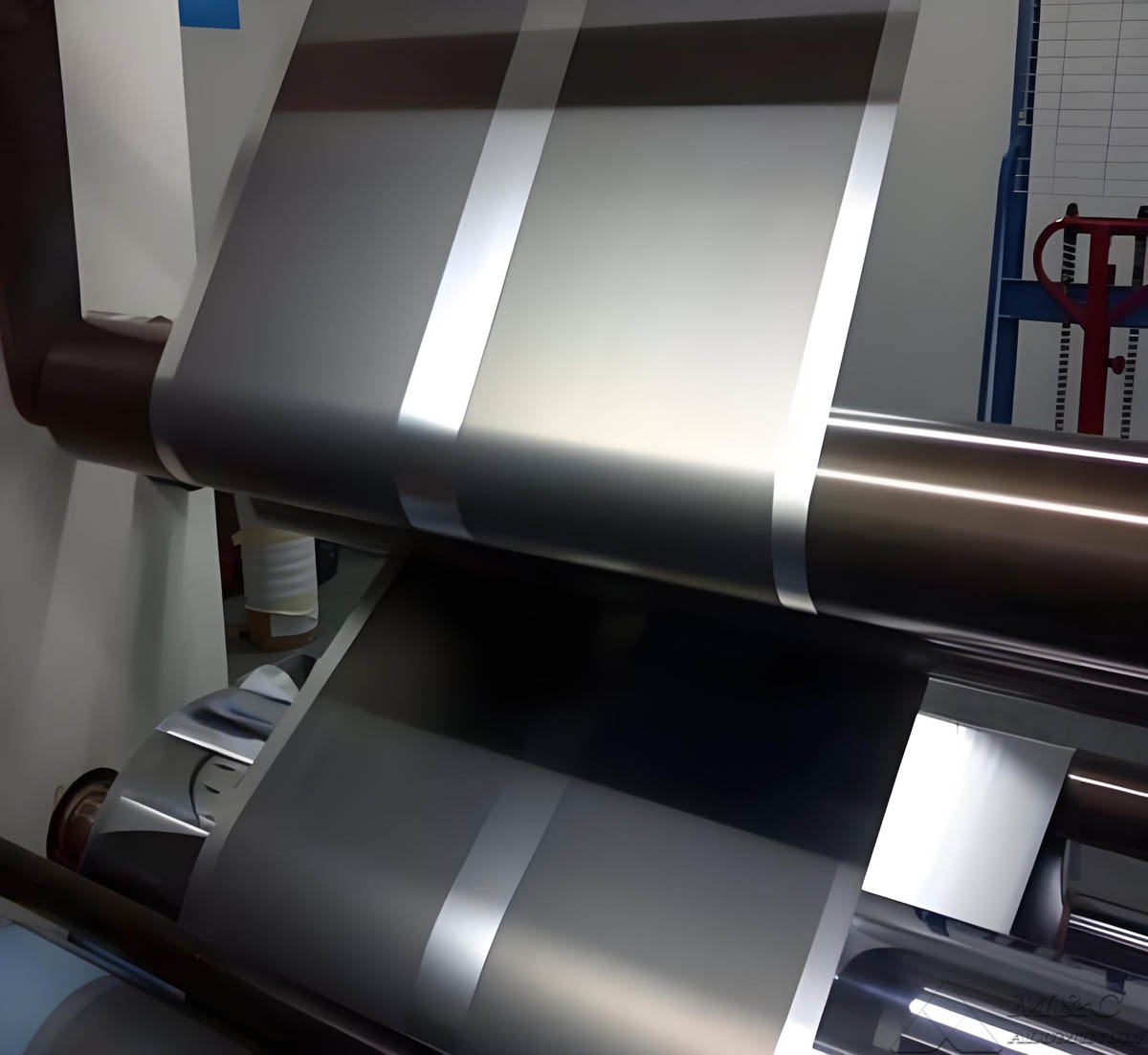
Carbon Coated Aluminum Foil Specifications
Carbon coated aluminum foil is produced by applying a conductive carbon layer to one or both sides of battery aluminum foil. The coating can improve electrical contact between the aluminum substrate and cathode active material layer. It may also support better coating adhesion and lower interface resistance in selected battery designs.
| Parameter | Typical Requirement | Notes |
|---|---|---|
| Base foil alloy | 1050, 1060, 1100, 1235 | Selected according to conductivity and thickness |
| Base foil thickness | 12 to 20 microns | Customized according to electrode design |
| Carbon coating side | Single side or double side | Based on active material coating configuration |
| Coating weight | Customized by customer specification | Controlled for consistency across the coil |
| Coating appearance | Uniform, continuous, defect-controlled | No severe streaks, bare areas, or agglomerates |
| Electrical performance | Low interface resistance | Verified according to agreed test method |
| Winding quality | Tight and stable coil | Important for transport and coating-line feeding |
Carbon coated aluminum foil should be evaluated together with the customer's active material, binder, solvent, coating weight, and calendering conditions. We recommend trial coils before mass production when a new electrode formulation is introduced.
Inspection and Quality Control
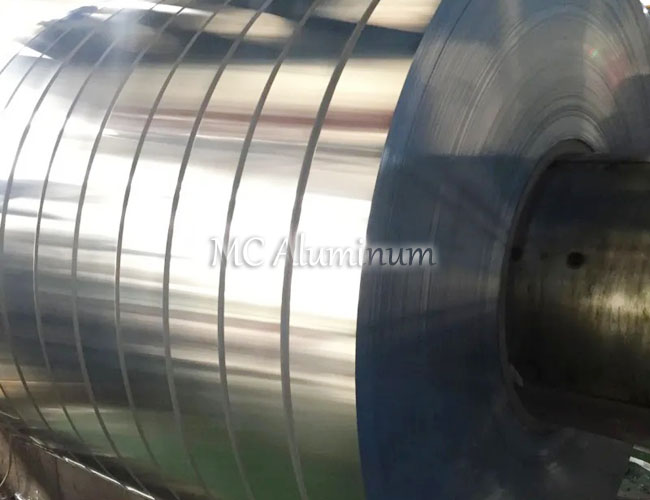
As a manufacturer, we inspect battery aluminum foil throughout the production process rather than relying only on final sampling. Incoming aluminum stock is checked for alloy composition and surface condition. During rolling, we monitor thickness, shape, and coil quality. After slitting, we inspect width, edge condition, coil alignment, and packaging integrity.
Typical inspection items include:
| Inspection Item | Inspection Purpose |
|---|---|
| Chemical composition | Confirms alloy compliance |
| Thickness measurement | Verifies gauge accuracy and uniformity |
| Width measurement | Confirms slit coil dimensional tolerance |
| Tensile strength and elongation | Verifies temper and mechanical stability |
| Surface inspection | Identifies scratches, stains, oil marks, and inclusions |
| Pinhole inspection | Confirms suitability for thin-gauge applications |
| Edge quality inspection | Controls burrs, cracks, and trimming defects |
| Coil shape inspection | Checks telescoping, loose winding, and edge alignment |
We can provide certificates of analysis, coil labels, packing lists, and inspection records according to contract requirements.
Packaging and Storage Recommendations
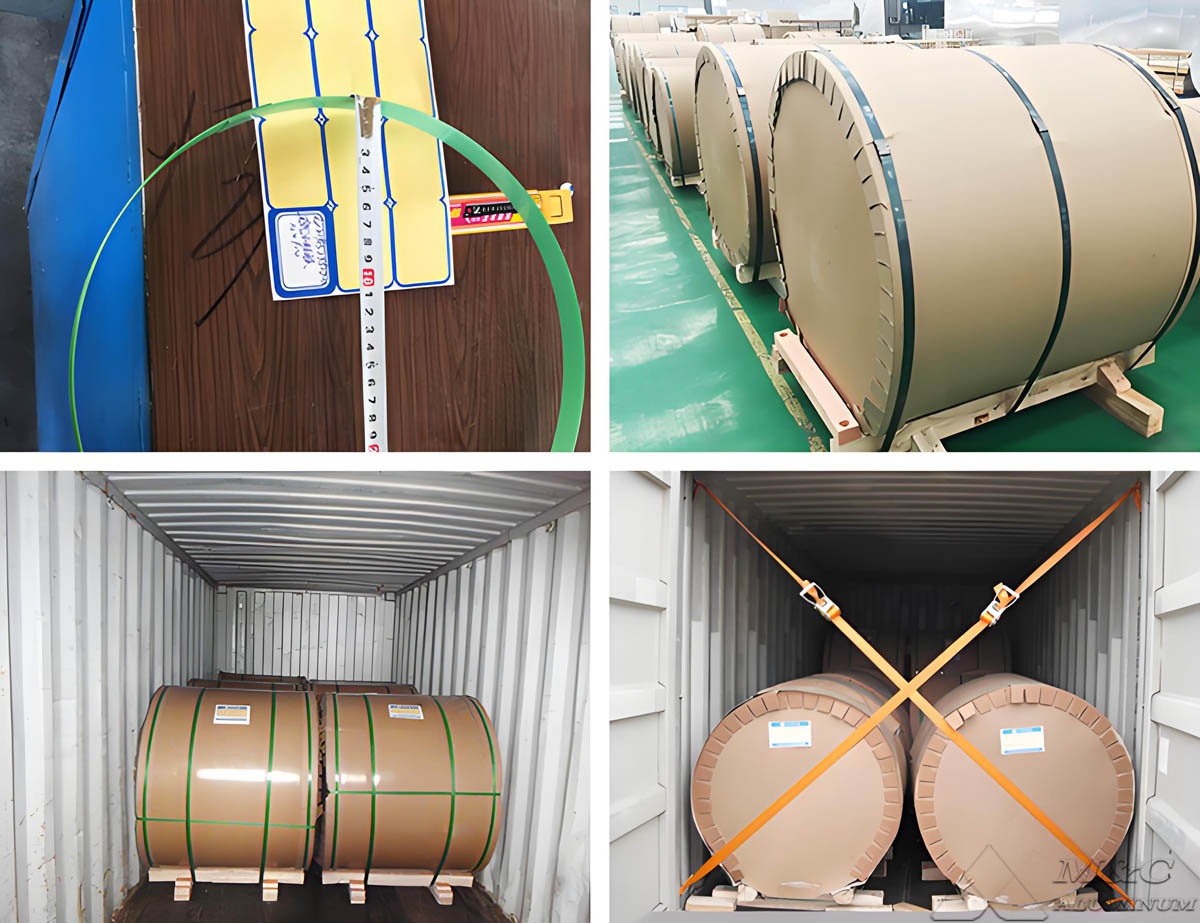
Battery aluminum foil is sensitive to moisture, dust, mechanical damage, and surface contamination. We pack finished coils with protective wrapping, moisture-resistant materials, edge protection, and export-grade wooden pallets or cases when required.
Coils should be stored in a clean, dry warehouse away from corrosive chemicals, condensation, and direct floor contact. Before use, customers should allow coils to reach workshop temperature while sealed when moving material from a cold storage area to a warmer production environment. This helps reduce the risk of surface condensation.
How to Specify Battery Aluminum Foil for an Inquiry
To receive an accurate quotation and technical recommendation, customers should provide the alloy, temper, thickness, width, coil inner diameter, preferred coil weight, application, surface requirement, and annual or monthly demand. For carbon coated aluminum foil, the required coating side, coating weight, electrical resistance target, and intended cathode material should also be included.
Our manufacturing team evaluates each battery aluminum foil specification against rolling feasibility, quality control requirements, and downstream electrode processing conditions. This approach helps ensure that the supplied foil is compatible with the customer's coating and battery production process.
Contact Us