
Cable Shielding Aluminum Alloy Strip Manufacturer
Cable Shielding Aluminum Alloy Strip Manufacturer
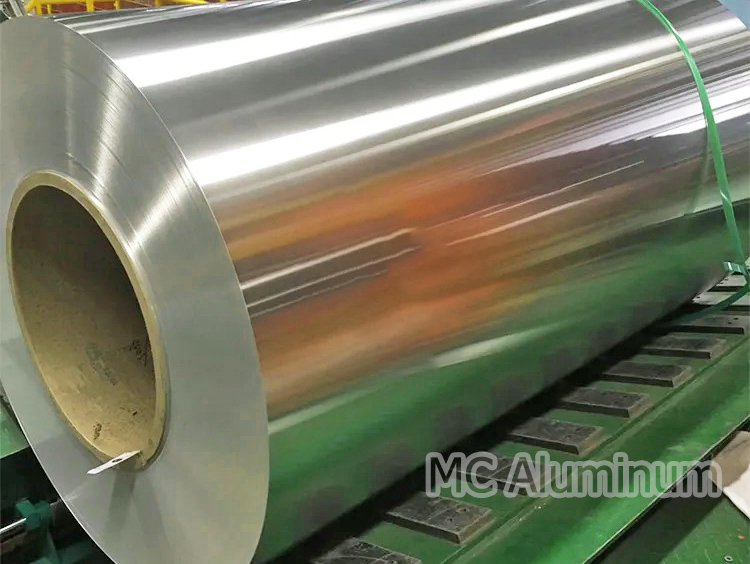
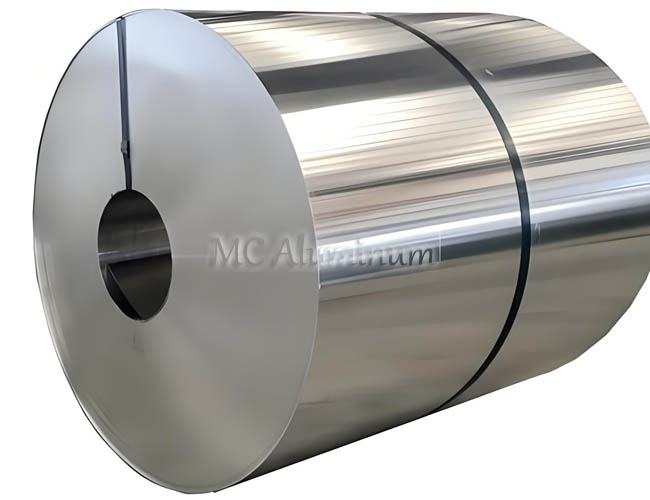
As an aluminum processing factory, we manufacture cable shielding aluminum alloy strip for power cables, communication cables, control cables, coaxial cables, and other shielded cable structures. Our production focuses on stable electrical performance, uniform thickness, clean surface quality, accurate slitting width, and reliable coil packaging for international cable manufacturers.
Cable shielding requires aluminum strip that can provide continuous metallic coverage around the conductor or insulation layer. Depending on the cable design, the strip may be applied longitudinally, helically, or as part of a laminated shielding structure. For these applications, the material must be easy to form, resistant to cracking during wrapping, and consistent in conductivity and mechanical properties.
We produce aluminum strip for cable shielding from selected aluminum coils, using controlled rolling, annealing, leveling, surface inspection, and precision slitting processes. As a manufacturer, we control the complete production route from raw material selection to finished coil packing, helping customers maintain stable cable production efficiency.
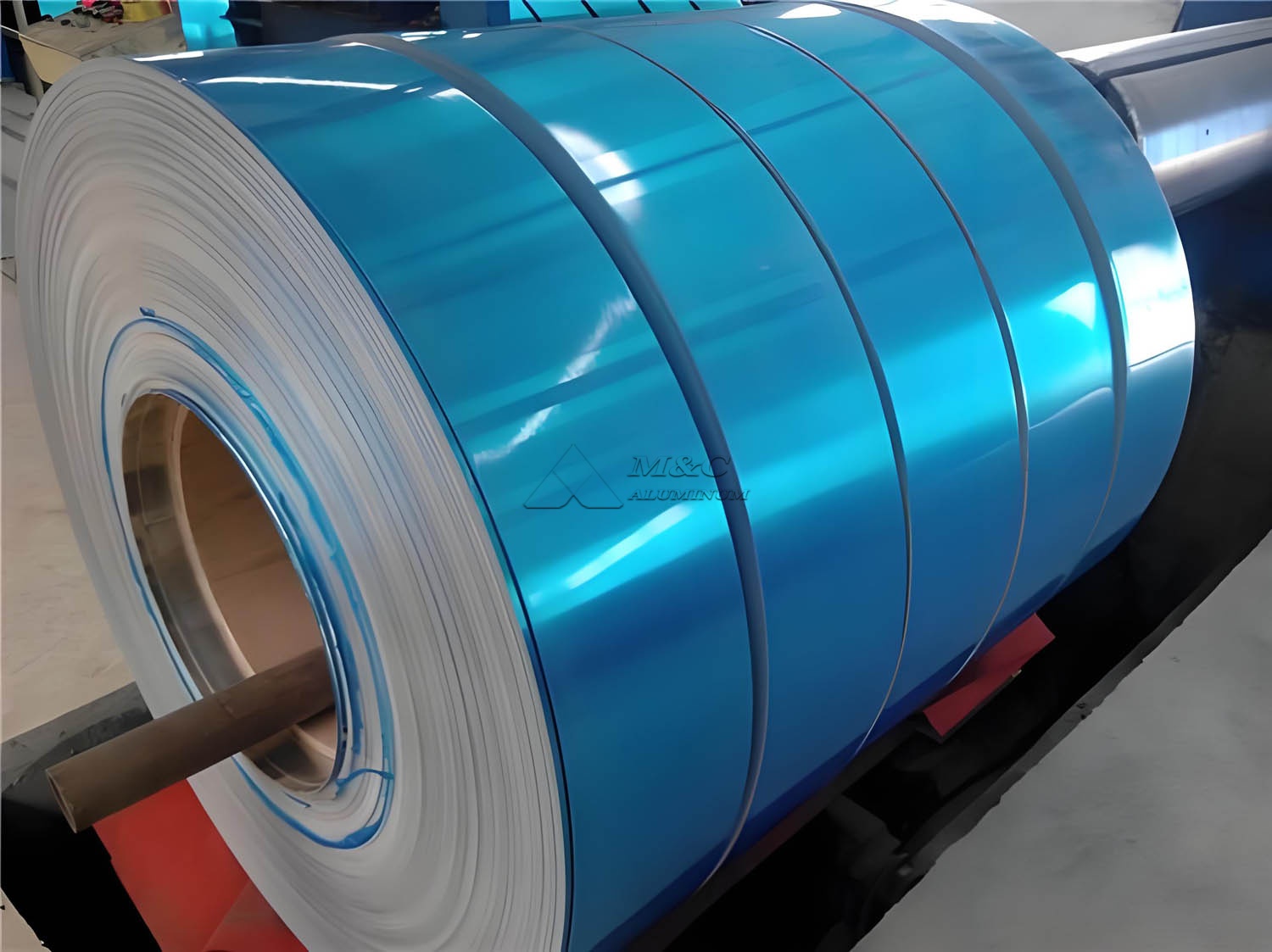
Role of Aluminum Alloy Strip in Cable Shielding
Aluminum alloy strip is widely used in cable shielding because it combines electrical conductivity, low weight, corrosion resistance, and good formability. In many cable structures, the aluminum strip works as a metallic barrier that helps reduce electromagnetic interference, provides grounding continuity, and improves the protection of the cable core.
Compared with heavier shielding materials, aluminum strip can reduce cable weight while maintaining reliable shielding performance. It is also suitable for continuous high-speed cable production lines because the strip can be supplied in large coils with stable width tolerance, edge condition, and coil tension.
For cable shielding, material stability is important. Minor changes in thickness, burr height, surface cleanliness, or tensile strength may affect wrapping quality, overlap control, or bonding performance in laminated structures. Our factory therefore treats cable shielding aluminum alloy strip as a precision product rather than a general-purpose metal strip.
Main Alloys for Cable Shielding Aluminum Strip
Different cable designs require different aluminum grades. We manufacture cable shielding aluminum alloy strip in commonly used commercial-purity and manganese alloy series, including 1050, 1060, 1070, 1100, and 3003. The final selection depends on the customer's conductivity requirement, mechanical strength, forming method, and bonding process.
1050 and 1060 aluminum strip are frequently used where higher electrical conductivity and soft forming behavior are required. 1100 offers good corrosion resistance and processability. 3003 aluminum strip provides higher strength than pure aluminum grades and is suitable for applications requiring better mechanical stability.
Our factory can also discuss customized alloy selection according to cable standards, equipment conditions, and end-use environments. For customers requiring related products, our Aluminum Strip production line also supports various industrial strip specifications beyond cable shielding applications.
Technical Parameters
The following table shows typical technical parameters for cable shielding aluminum alloy strip. Actual specifications can be produced according to customer drawings, cable standards, and order requirements.
| Item | Typical Specification | Notes |
|---|---|---|
| Alloy | 1050, 1060, 1070, 1100, 3003 | Other alloys available after technical review |
| Temper | O, H12, H14, H16, H18 | Selected according to wrapping and forming requirements |
| Thickness | 0.08 mm to 1.20 mm | Common cable shielding range, tighter control available |
| Width | 5 mm to 1600 mm | Slit width or full coil width available |
| Thickness tolerance | +/-0.005 mm to +/-0.03 mm | Depends on thickness range and order standard |
| Width tolerance | +/-0.05 mm to +/-0.30 mm | Precision slitting available for narrow strip |
| Inner diameter | 150 mm, 300 mm, 405 mm, 505 mm | Customized cores available |
| Outer diameter | Up to 1800 mm | According to coil weight and packing method |
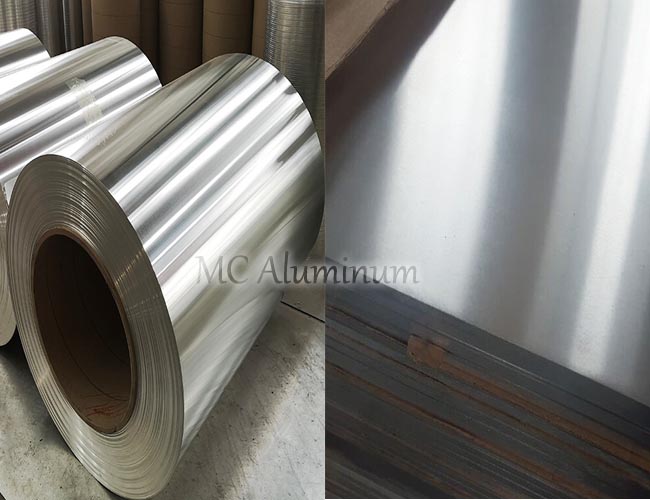
| Coil weight | 50 kg to 5000 kg | Small slit coils and jumbo coils available |
| Surface | Mill finish, degreased, dry surface | Clean surface for shielding and lamination use |
| Edge condition | Slit edge, deburred edge optional | Burr control according to cable line requirements |
| Conductivity | Alloy dependent | Higher conductivity for 1xxx series aluminum |
| Packaging | Eye to sky or eye to wall | Export seaworthy packing |
Manufacturing Process in Our Factory
Our production begins with qualified aluminum ingots or hot-rolled aluminum coil stock. Chemical composition is verified to ensure that the alloy meets the required standard. The material is then cold rolled to the target gauge through multiple passes. Rolling schedules are controlled to maintain thickness consistency and surface flatness.
Annealing is a key process for cable shielding aluminum strip, especially for O temper and soft temper products. Proper annealing improves ductility, reduces internal stress, and supports stable wrapping on cable production lines. For harder tempers, rolling reduction and process parameters are adjusted to obtain the required tensile strength and elongation.
After rolling and annealing, the coil is leveled and inspected. Surface defects such as oil stains, scratches, pits, black marks, and severe oxidation are controlled according to customer requirements. The final slitting process is performed using precision slitting equipment. We focus on burr height, edge straightness, width accuracy, and coil winding quality, because these factors directly influence cable line operation.
For very narrow shielding applications, our Thin aluminum strip production capability supports accurate slitting and stable coil build-up, reducing the risk of strip breakage or uneven feeding during cable manufacturing.
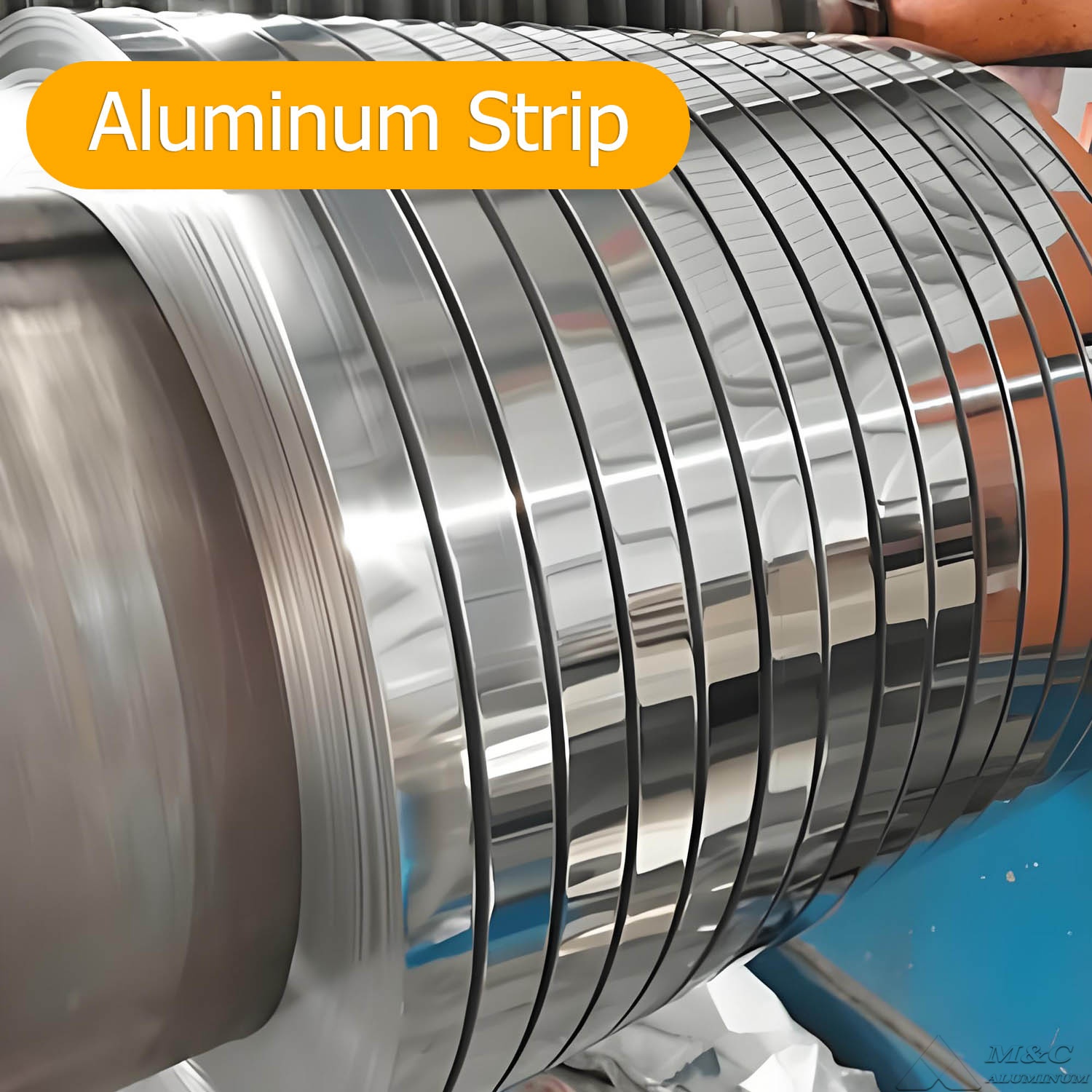
Surface Quality and Cleanliness Control
Cable shielding aluminum alloy strip should have a clean and uniform surface. The surface must be suitable for direct wrapping, adhesive lamination, or contact with other cable layers. Excessive rolling oil, powder, stains, or rough scratches may affect bonding, shielding continuity, and cable appearance.
Our factory controls surface cleanliness through process oil management, degreasing options, clean handling, and careful packing. For customers using aluminum plastic composite tape or bonded shielding structures, surface energy and cleanliness can be discussed before production. We recommend that customers provide lamination temperature, adhesive type, and cable line speed so that we can select the most suitable surface condition.
A smooth surface is also important for high-speed cable production. Uneven surfaces may create friction, unstable feeding, or poor overlap. We inspect coils visually and, when required, use measuring equipment to check surface condition, thickness, and shape.
Slitting Accuracy and Edge Quality
Precision slitting is one of the most important processes for aluminum cable shielding strip. Cable manufacturers often require narrow strip with consistent width and low burr. If burrs are too high, they may damage insulation layers, reduce cable reliability, or cause problems during wrapping. If width tolerance is unstable, cable overlap and shielding coverage may vary.
Our slitting lines are equipped to process thin aluminum strip with controlled tension and accurate blade clearance. We choose suitable knives, spacers, and slitting parameters according to alloy, thickness, temper, and width. During production, operators check strip width, edge quality, coil alignment, and winding tightness.
For cable shielding orders, we can provide slit coils with paper interleaving when required, although many cable applications prefer clean strip without interleaving for automatic feeding. Coil direction, ID, OD, and joint requirements should be confirmed before manufacturing.
Mechanical Properties and Conductivity Requirements
The mechanical properties of cable shielding aluminum alloy strip affect both forming performance and cable durability. Soft temper aluminum strip offers excellent flexibility and is suitable for tight wrapping or bending. Half-hard and hard tempers provide higher strength and better dimensional stability but require suitable cable line adjustment.
Electrical conductivity is mainly determined by alloy composition and temper. 1xxx series aluminum alloys generally provide higher conductivity than 3xxx series alloys. For shielding applications where conductivity is critical, 1050, 1060, and 1070 are common choices. For applications requiring a balance of strength and corrosion resistance, 3003 may be selected.
We can test tensile strength, elongation, hardness, and conductivity according to order requirements. Test reports can be supplied with shipment when requested. Our technical team can also support material selection based on customer cable structure and application environment.
Applications of Cable Shielding Aluminum Alloy Strip
Our cable shielding aluminum strip is used in several cable and wire products, including medium voltage power cables, low voltage power cables, communication cables, control cables, instrumentation cables, coaxial cables, data cables, and composite shielding tapes.
In power cables, aluminum strip may act as a metallic screen or moisture barrier, depending on cable design. In communication and data cables, it is used to reduce electromagnetic interference and support signal stability. In control and instrumentation cables, aluminum shielding helps protect signal transmission from external noise.
Because different cable standards may specify different shielding structures, we manufacture according to confirmed drawings and technical requirements. Customers are encouraged to provide thickness, width, alloy, temper, coil weight, ID, edge requirement, surface requirement, and applicable standard before placing an order.
Quality Inspection and Traceability
As a cable shielding aluminum alloy strip manufacturer, we maintain traceability from raw material to finished coil. Each production batch is recorded with alloy, cast number, rolling process, annealing condition, slitting details, inspection results, and packaging information.
Quality inspection may include chemical composition verification, thickness measurement, width measurement, surface inspection, burr inspection, tensile testing, elongation testing, conductivity testing, and coil appearance inspection. For export orders, we can provide mill test certificates, packing lists, commercial documents, and other required shipment documents.
Our quality control approach is practical and production-oriented. The purpose is not only to meet the written specification but also to help the customer's cable line run continuously and efficiently. Stable coil winding, clear labeling, and protected packaging are part of this quality system.
Packaging for Export Shipment
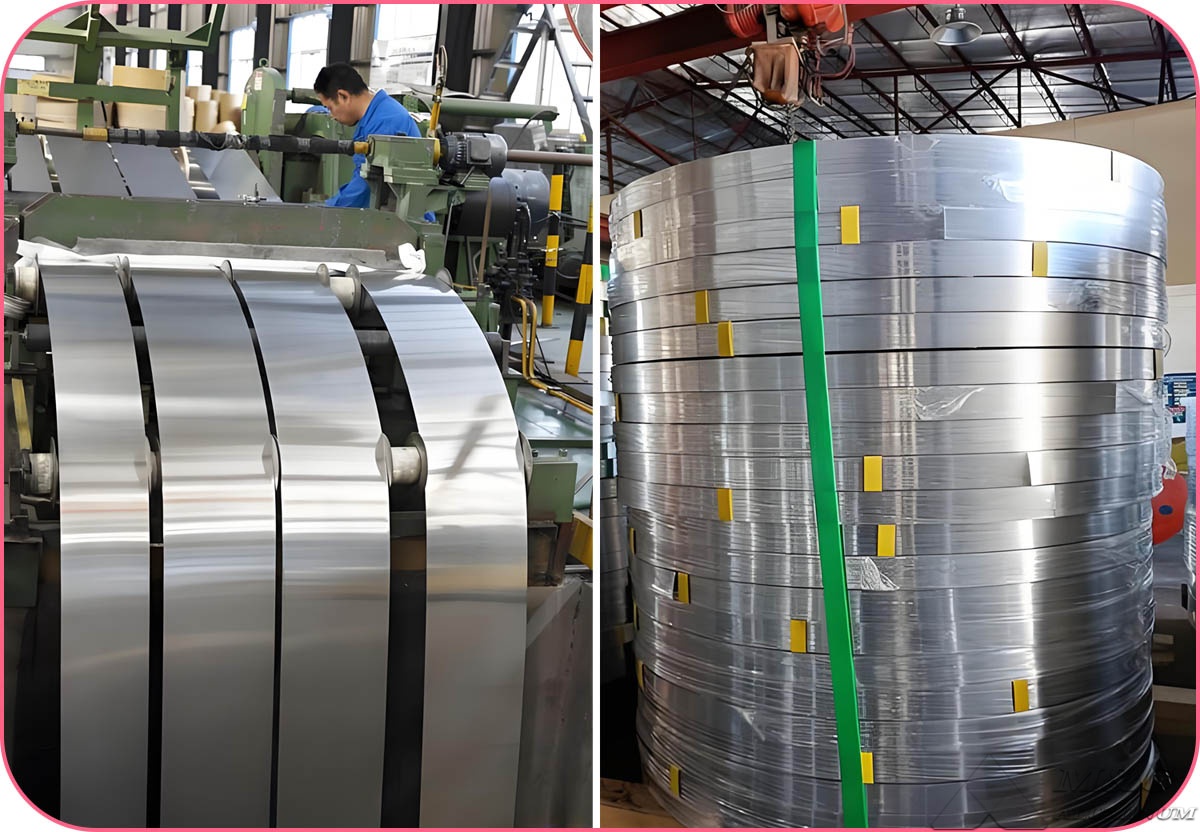
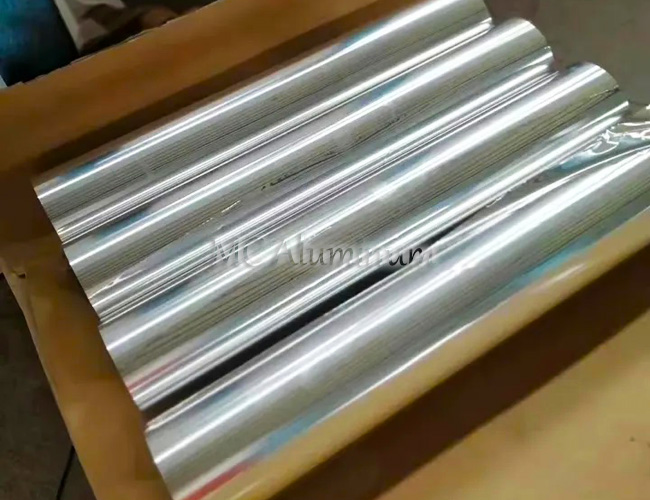
Cable shielding aluminum strip is sensitive to moisture, impact, and edge damage during transportation. We use export seaworthy packaging suitable for container shipment and long-distance logistics. Depending on coil size and customer preference, coils can be packed eye to sky or eye to wall.
Typical packaging includes moisture-proof film, protective paper, edge guards, steel or plastic strapping, wooden pallets or wooden cases, and clear external labels. For narrow slit coils, separators and reinforced packaging can be used to prevent edge collision and coil deformation. Container loading plans are arranged according to coil weight, pallet size, and destination requirements.
Before shipment, we confirm product labels, alloy, temper, size, net weight, gross weight, batch number, and customer order information. Proper packaging reduces handling risk and helps customers receive aluminum cable shielding strip in usable condition.
Custom Production and Order Information
We manufacture cable shielding aluminum alloy strip according to customer specifications. To prepare an accurate quotation and production plan, we normally require alloy, temper, thickness, width, tolerance, coil ID, coil weight, surface condition, edge requirement, annual usage, destination port, and any special testing requirement.
If the customer is developing a new cable product, sample coils can be discussed for production line testing. Feedback from the trial, including forming behavior, edge performance, bonding result, and shielding effect, helps us adjust temper, surface condition, and coil specification before mass production.
Our factory serves cable manufacturers, transformer material users, electrical equipment producers, and industrial aluminum strip buyers. We focus on stable manufacturing capability, consistent technical communication, and reliable export delivery rather than short-term trading supply.
Conclusion
Cable shielding aluminum alloy strip is a functional material that must meet electrical, mechanical, dimensional, and surface requirements at the same time. As a manufacturer, we control alloy selection, rolling, annealing, slitting, inspection, and export packing within our production system.
For cable manufacturers seeking aluminum strip for cable shielding, aluminum cable shielding strip, 1050 aluminum strip, 1060 aluminum strip, or precision thin aluminum strip, we can produce according to detailed technical requirements and support long-term supply with consistent quality. By matching material properties with cable structure and production conditions, we help customers obtain stable shielding performance and efficient cable manufacturing.
Contact Us