
Cold-Rolled Aluminum Strip for Cable Armoring
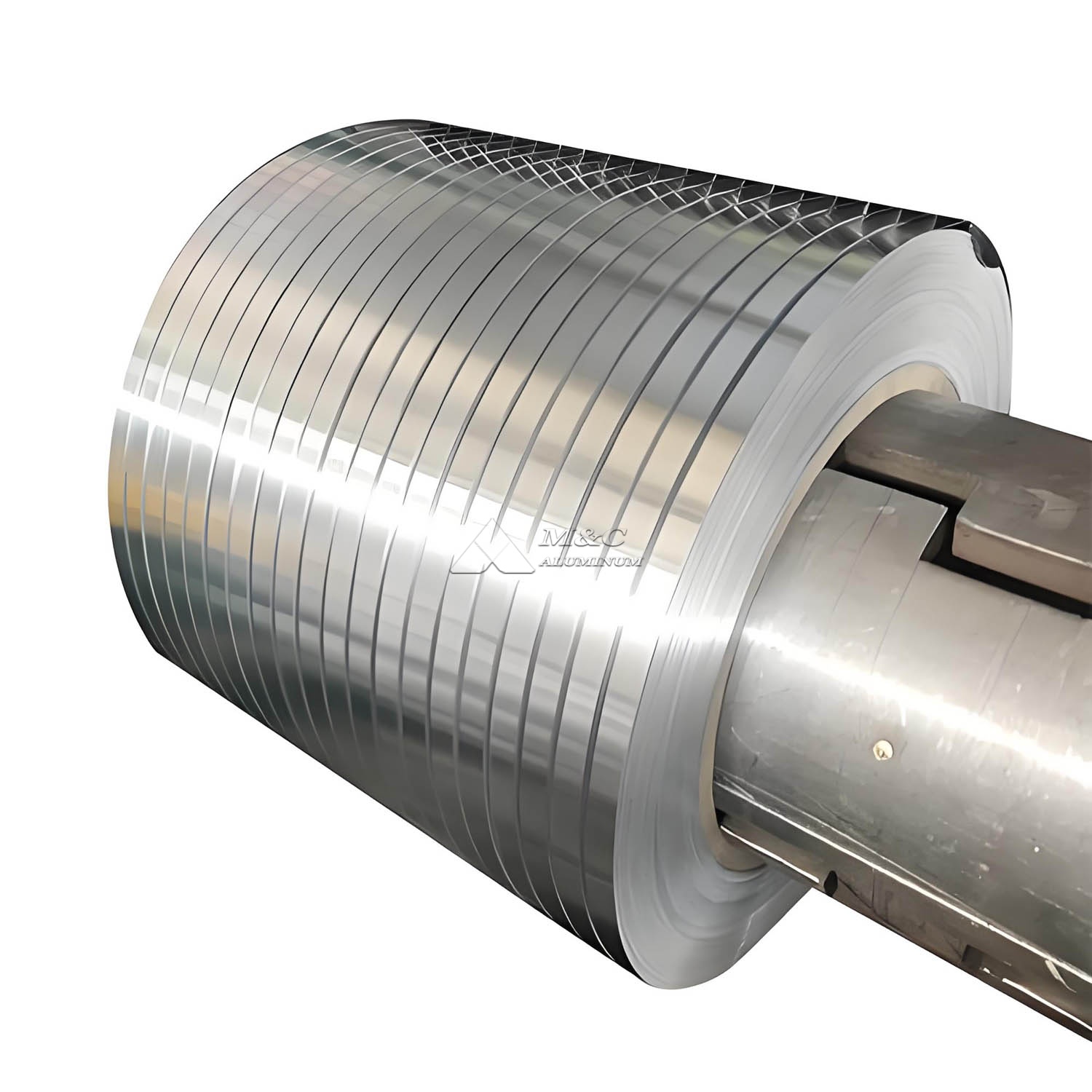
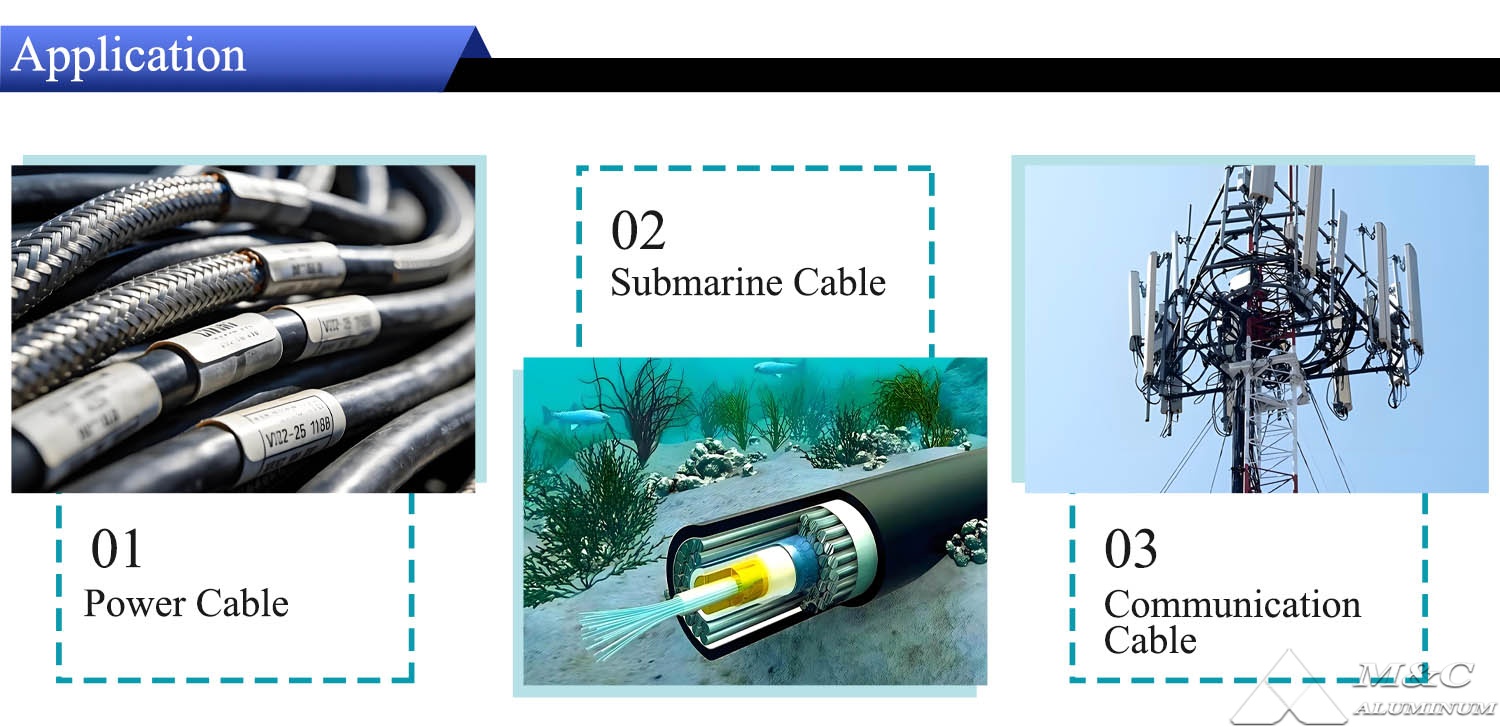
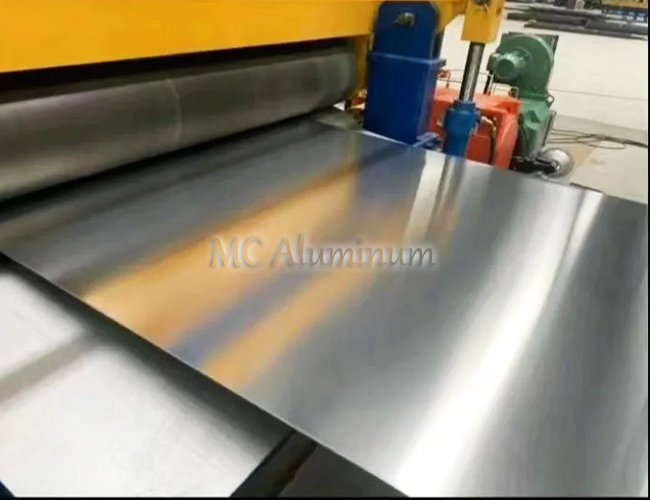
As an aluminum rolling manufacturer, we produce cold-rolled aluminum strip for cable armoring used in power cables, control cables, communication cables, optical fiber cables, and other protected cable structures. The strip is supplied in coil form for continuous armoring lines, where dimensional stability, surface cleanliness, burr control, and mechanical consistency directly affect production efficiency and cable performance.
Cable armoring requires a metallic layer that can improve mechanical protection without adding excessive weight. Compared with steel tape, aluminum strip offers lower density, good corrosion resistance, non-magnetic properties, and easier processing in many cable designs. For cable manufacturers serving power transmission, infrastructure, railway, marine, and industrial markets, a stable aluminum strip for armored cable helps maintain sheath quality, reduce line interruptions, and meet project specifications.
Manufacturing Focus for Cable Armoring Applications
Our production of cold-rolled aluminum strip starts from controlled aluminum coil stock and follows rolling, intermediate annealing when required, precision slitting, edge conditioning, coil winding, inspection, and export packing. Each step is managed according to the final application of the material. Cable armoring strip is not only a rolled aluminum product; it is a process-sensitive input for continuous cable manufacturing.
In an armoring line, the strip may be helically wrapped, longitudinally applied, corrugated, or formed depending on cable design. The material must bend smoothly and remain stable during high-speed operation. Uneven thickness, poor flatness, excessive burrs, oil stains, or loose winding can cause overlap instability, sheath defects, tool wear, or unexpected downtime. For this reason, we control both metallurgical properties and coil presentation.
For buyers comparing Aluminum Strip products for cable manufacturing, the most important factors are alloy selection, temper, thickness tolerance, width tolerance, edge quality, surface condition, coil inner diameter, and packing strength. We confirm these parameters before production so that the strip matches the customer armoring equipment and cable specification.
Suitable Alloys and Tempers
Common alloys for aluminum cable armoring strip include 1050, 1060, 1100, 3003, and other customized grades. High-purity 1050 and 1060 aluminum strip provide excellent formability, good electrical conductivity, and reliable corrosion resistance. These grades are widely used where the armoring layer needs good flexibility and clean forming behavior. 1100 aluminum strip is also used in similar applications due to its workability and stable performance.
3003 aluminum strip offers higher strength than pure aluminum grades because of its manganese content. It is selected when the cable design requires improved mechanical resistance while maintaining good corrosion performance and formability. For customers requiring a balance between strength and processability, 3003 Aluminium strip can be supplied according to specified thickness, width, and temper.
Temper selection depends on the cable structure and forming process. O temper offers maximum softness and is suitable for applications requiring deep bending or easy wrapping. H12 and H14 provide moderate strength with acceptable ductility. H16 or other harder tempers may be selected for stronger protection, but forming capability must be verified with the armoring equipment. Our technical team reviews the requested cable design, strip path, and forming method before recommending a final temper.
Technical Parameters
The following table lists typical specifications for cold-rolled aluminum strip for cable armoring. Final values can be adjusted according to project standards, cable type, and equipment requirements.
| Item | Typical Specification |
|---|---|
| Product name | Cold-rolled aluminum strip for cable armoring |
| Alloy | 1050, 1060, 1100, 3003, customized grades on request |
| Temper | O, H12, H14, H16, H18, subject to application review |
| Thickness range | 0.20 mm to 2.00 mm, common cable grades available |
| Width range | 10 mm to 600 mm, precision slit to order |
| Thickness tolerance | According to EN, ASTM, GB, or customer agreement |
| Width tolerance | Typically +/-0.10 mm to +/-0.50 mm depending on width |
| Edge condition | Slit edge, deburred edge, round edge optional where applicable |
| Surface finish | Mill finish, clean surface, free from harmful oil, stains, cracks, and heavy scratches |
| Coil inner diameter | 150 mm, 200 mm, 300 mm, 400 mm, 500 mm, or customized |
| Coil outer diameter | According to line capacity and packing requirements |
| Coil weight | Small, medium, or jumbo coils based on customer handling equipment |
| Standard reference | ASTM B209, EN 485, EN 573, EN 546, GB/T standards, or agreed specifications |
| Packaging | Eye-to-wall or eye-to-sky export packing with moisture protection |
| Application | Armoring, shielding, sheathing, wrapping, and mechanical protection of cables |
Thickness, Width, and Tolerance Control
For cable armoring, thickness consistency is essential. If the strip is too thick in some sections, forming pressure may increase and the cable diameter may become unstable. If it is too thin, mechanical protection may be reduced and overlap quality may be affected. We use controlled cold rolling passes and online or offline measurement to maintain the required gauge accuracy.
Width tolerance is equally important. Narrow width variation can change the overlap ratio during helical wrapping. Excessive variation may produce gaps, excessive overlap, or uneven cable roundness. Our slitting lines are configured for clean, repeatable width control. Before production, we confirm the target width, tolerance, edge type, and winding direction according to the customer cable line.
For thin aluminum strip used in communication cable or optical cable armoring, stable winding tension and burr control are particularly important. For thicker aluminum cable armoring strip used in power cable protection, coil weight, edge safety, and forming behavior are often the main concerns. We adjust production and inspection priorities according to these end-use differences.
Surface Quality and Cleanliness
A clean surface helps improve cable production reliability. Surface defects such as heavy scratches, oxide buildup, embedded particles, water marks, excessive rolling oil, or black stains may affect adhesion with polymer layers, increase friction in forming tools, or reduce the visual quality of the cable cross-section. Our production process includes surface inspection and controlled handling to reduce contamination.
Cold-rolled aluminum strip for cable armoring is generally supplied with a mill finish. The surface should be smooth, uniform, and suitable for continuous wrapping or forming. Light rolling lines may be acceptable when they do not affect application performance, but cracks, peeling, severe dents, corrosion, and other harmful defects are not acceptable. If the customer has special requirements for degreasing, passivation, coating compatibility, or surface roughness, these can be reviewed before order confirmation.
Edge Quality and Burr Management
Edge quality is one of the most practical factors in cable armoring production. A sharp burr can damage insulation, outer sheath materials, operator gloves, or forming tools. Burrs can also create irregular overlap and reduce wrapping stability. We control slitting blade condition, clearance, strip tension, and rewinding alignment to reduce burr height and edge deformation.
Different cable designs require different edge conditions. A normal slit edge is suitable for many applications. For more sensitive structures, deburred or rounded edge aluminum strip may be requested. We recommend that buyers specify the maximum acceptable burr direction and burr height, especially when the aluminum strip contacts insulation or polymer layers directly.
Mechanical Performance in Armored Cable Structures
The function of aluminum strip in cable armoring is to provide mechanical protection, improve crush resistance, support moisture barrier structures in some designs, and contribute to the overall integrity of the cable. The required tensile strength and elongation depend on alloy and temper. Softer tempers support easier forming, while harder tempers improve resistance to deformation.
For helically wrapped cable armoring, elongation and bending performance are important. The strip must follow the cable core without edge cracking or spring-back problems. For longitudinally applied strip, flatness and yield behavior become more critical. For corrugated or interlocked designs, the strip should offer stable forming response and consistent thickness across the width.
Our mill test certificate can include chemical composition and mechanical properties based on the ordered standard. When required, we can also coordinate additional tests such as tensile testing, elongation verification, hardness testing, surface inspection, and dimensional reports.
Coil Winding and Packaging for Export Cable Plants
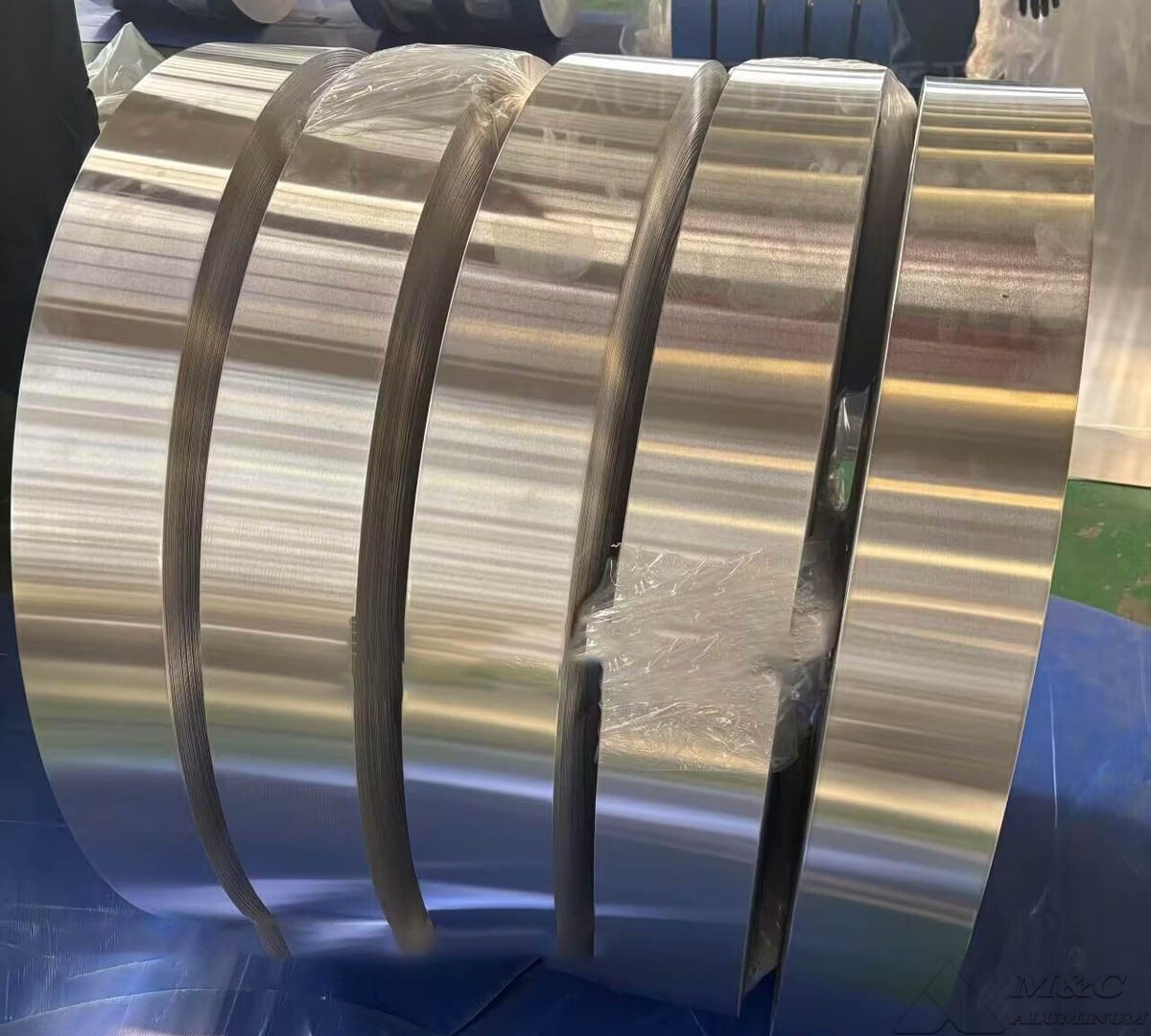
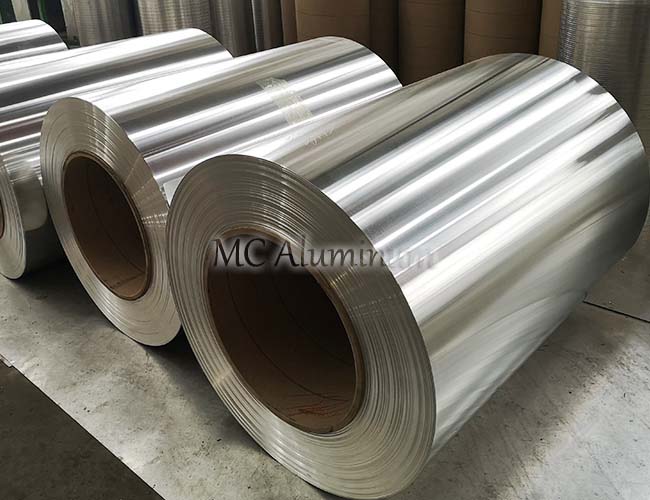
Even when the strip itself meets the technical standard, poor coil winding can cause production difficulties. Loose coils, telescoping, edge wave, collapsed cores, and uneven tension may interrupt automatic feeding systems. We control winding tension and coil shape during slitting and finishing. Coils are supplied with suitable inner diameters according to customer uncoilers.
Export packaging is designed to protect the aluminum strip during long-distance transport. Standard packing includes moisture-proof wrapping, protective film, edge protection, desiccant when needed, wooden pallets or cases, and secure steel or plastic strapping. The packing method can be eye-to-wall or eye-to-sky depending on coil size, container loading plan, and customer handling conditions.
Quality Control Before Shipment
Our inspection process covers raw material verification, rolling process control, annealing records when applicable, thickness measurement, width measurement, surface inspection, edge inspection, coil appearance, and packing confirmation. Production records are maintained for traceability. Each batch can be linked to heat information, rolling route, slitting data, and inspection results.
Before shipment, we check that labels, packing lists, certificates, and coil markings correspond to the purchase order. For international cable manufacturers, clear documentation reduces receiving delays and supports internal quality approval. We can prepare documents according to typical export requirements, including mill test certificates, commercial invoice, packing list, certificate of origin when applicable, and other agreed documents.
Selection Guidelines for Buyers
When specifying cold-rolled aluminum strip for cable armoring, buyers should provide the cable type, applicable standard, alloy, temper, thickness, width, tolerance, coil inner diameter, maximum coil weight, edge requirement, surface requirement, and annual or project quantity. If the current material has caused production issues, such as burr damage, strip breakage, poor overlap, or unstable coil unwinding, these details should also be shared.
For new cable projects, we recommend sample testing before mass production. Sample coils allow the cable plant to confirm forming behavior, line speed, overlap stability, surface compatibility, and final cable appearance. After approval, we can lock the production route to support consistent supply for repeated orders.
Manufacturer Supply Capability
As a factory, our role is to manufacture aluminum strip that fits the technical and operational requirements of cable producers. We do not treat cable armoring strip as a general commodity item. Instead, we control alloy, temper, gauge, width, surface, edge, and coil condition according to the final cable application.
Cold-rolled aluminum strip for cable armoring is used in demanding production environments where stable material quality influences both efficiency and finished cable reliability. With controlled rolling, precision slitting, practical packaging, and export documentation, we support cable manufacturers requiring consistent aluminum strip for armored cable, aluminum tape for cable sheath, and aluminum cable armoring strip in regular industrial supply.
Contact Us