
Comparing 5052 and 3003 Cable Armored Aluminum Strip
As a manufacturer of aluminum strip for cable armoring, we produce both 5052 and 3003 aluminum alloys for applications requiring controlled mechanical protection, corrosion resistance, forming stability, and consistent coil quality. Although these alloys are both widely used in aluminum cable armor systems, they differ significantly in chemical composition, strength level, work-hardening response, and suitability for specific cable constructions.
The choice between 5052 cable armored aluminum strip and 3003 cable armored aluminum strip should not be based on alloy designation alone. Cable manufacturers need to evaluate strip thickness, temper, cable diameter, wrapping method, environmental exposure, installation stress, and applicable cable standards. Our production process is designed to control these variables from ingot selection through rolling, slitting, edge finishing, inspection, and packaging.
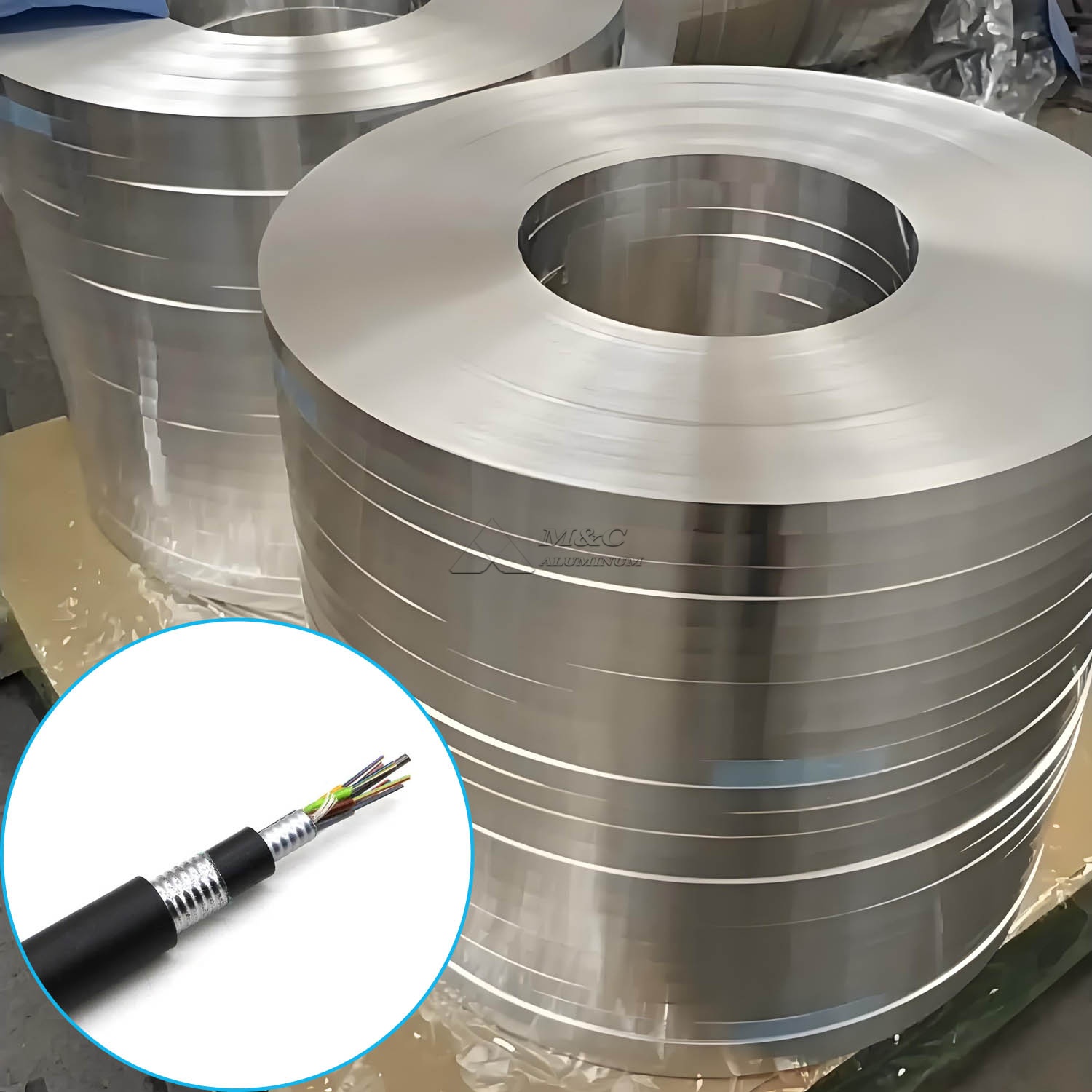
The Role of Aluminum Strip in Cable Armoring
Aluminum strip is used in cable armoring to provide a protective metallic layer around insulated cable components. Depending on cable design, the armor layer may improve resistance to mechanical impact, compression, abrasion, handling damage, and environmental exposure. Aluminum armor is particularly relevant where lower weight is preferred over steel armor and where corrosion resistance is an important project requirement.
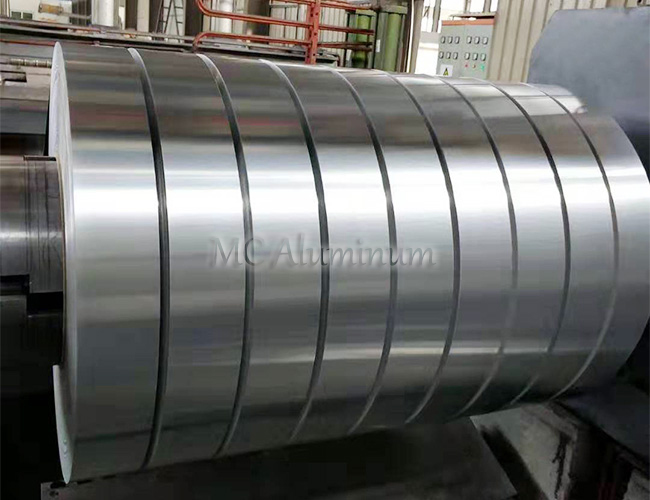
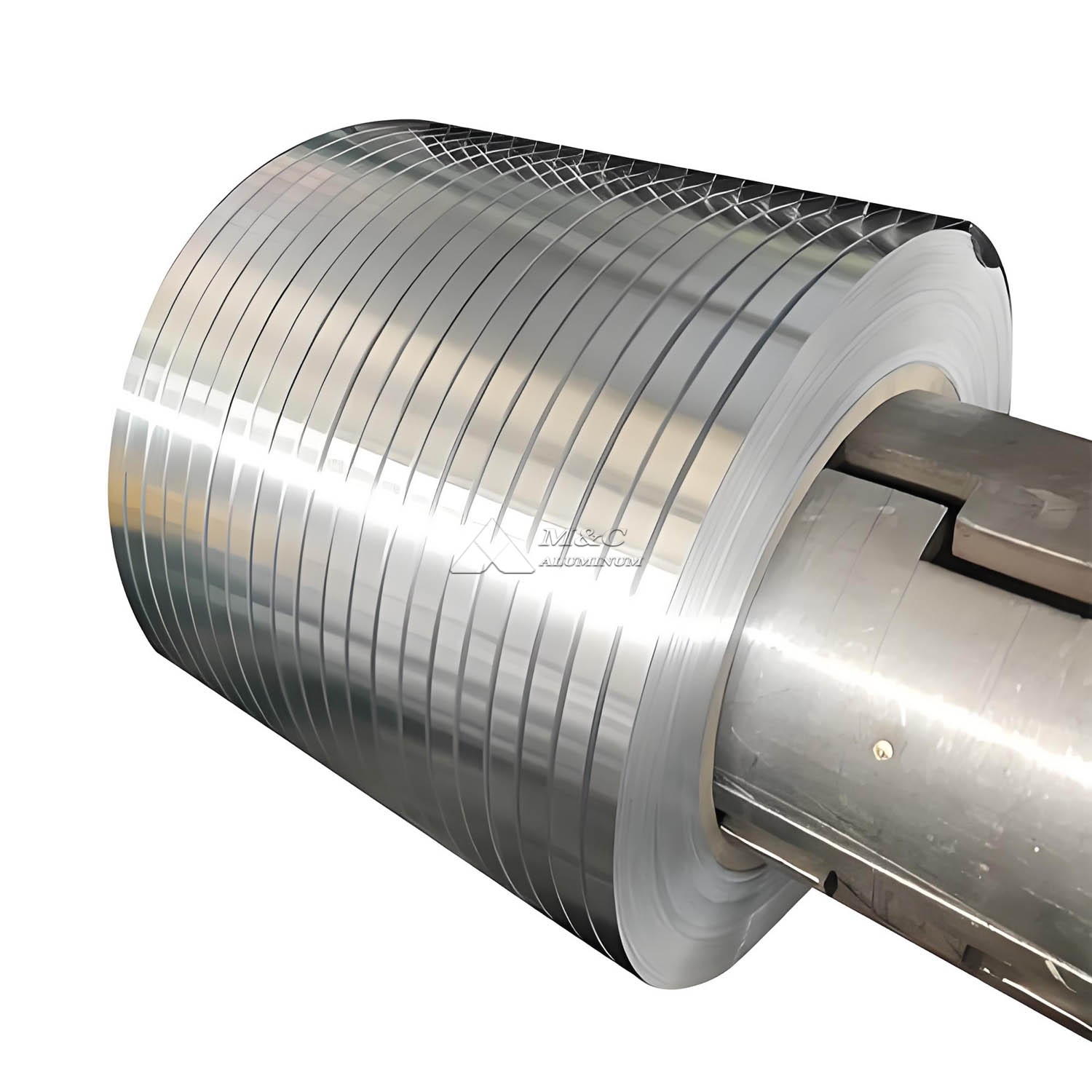
Cable armored aluminum strip is commonly supplied in narrow slit coils. The strip is wrapped helically or applied longitudinally around the cable assembly, depending on equipment design and the required armor configuration. For this reason, stable width tolerance, suitable elongation, smooth edges, uniform mechanical properties, and reliable coil winding are essential.
We manufacture Aluminum Strip for cable-related applications with controlled surface condition and slit-edge quality. Our technical team can recommend an alloy and temper according to the armor design, not simply according to nominal thickness.
Basic Difference Between 5052 and 3003 Aluminum Alloys
The fundamental difference is their main alloying element. Alloy 3003 is primarily manganese-alloyed aluminum, while alloy 5052 is primarily magnesium-alloyed aluminum with a controlled chromium addition. This compositional difference gives 5052 generally higher strength and better resistance to marine or industrial corrosion, while 3003 offers excellent formability and a cost-effective balance of strength and workability.
3003 is a non-heat-treatable aluminum alloy known for good forming performance. It is frequently selected for cable armoring where the strip must wrap smoothly around the cable without excessive springback or risk of cracking.
5052 is also non-heat-treatable, but it develops higher strength through cold working. It is commonly selected when cable armor requires greater resistance to deformation, improved durability during handling, or stronger performance in corrosive operating environments.
Chemical Composition Comparison
The chemical composition of the alloy directly affects strength, corrosion behavior, and forming characteristics. The following values represent commonly specified composition ranges. Final requirements should be confirmed against the applicable material standard and customer specification.
| Element | 3003 Aluminum Alloy | 5052 Aluminum Alloy |
|---|---|---|
| Aluminum | Balance | Balance |
| Manganese | 1.0-1.5% | 0.0-0.1% |
| Magnesium | Maximum 0.05% | 2.2-2.8% |
| Chromium | Maximum 0.1% | 0.15-0.35% |
| Copper | 0.05-0.20% | Maximum 0.10% |
| Silicon | Maximum 0.60% | Maximum 0.25% |
| Iron | Maximum 0.70% | Maximum 0.40% |
The manganese content in 3003 improves strength over pure aluminum while retaining high ductility. In 5052, magnesium provides a more substantial increase in strength and corrosion resistance. Chromium contributes to the alloy's structural stability and resistance to stress-related degradation in demanding service conditions.
Mechanical Property Comparison for Cable Armor Strip
Mechanical properties depend on strip thickness, final temper, and production route. For cable armor applications, 3003 is often supplied in H14, H16, or similar tempers, while 5052 is commonly supplied in H32, H34, or other project-specific tempers.
| Property | 3003 Cable Armored Aluminum Strip | 5052 Cable Armored Aluminum Strip |
|---|---|---|
| Typical strength level | Medium | Medium to high |
| Formability | Excellent | Good to excellent |
| Resistance to springback | Good | Moderate, depending on temper |
| Corrosion resistance | Good | Very good to excellent |
| Resistance to deformation | Good | Better than 3003 |
| Suitability for tight wrapping | Excellent | Good with proper temper selection |
| Relative material cost | Generally lower | Generally higher |
| Typical temper options | H14, H16, H18 | H32, H34, H36 |
In practical cable armoring, 3003 is often preferred for smooth wrapping performance and economical production. 5052 is usually selected when the cable will experience more severe installation conditions, moisture exposure, industrial atmosphere, or mechanical loading.
When to Choose 3003 Cable Armored Aluminum Strip
3003 cable armored aluminum strip is a practical choice for general cable armor production where excellent workability is the main requirement. Its manganese-based composition supports stable slitting and wrapping while offering sufficient strength for many standard cable designs.
We commonly recommend 3003 when the cable manufacturer requires the following characteristics:
Good ductility for helical wrapping around smaller cable diameters.
Smooth forming with low risk of edge cracking.
Consistent strip behavior on high-speed armoring equipment.
Economical material selection for standard indoor or general-purpose cable applications.
Moderate mechanical protection combined with reliable corrosion resistance.
For projects requiring a balanced combination of price, formability, and stable production performance, our 3003 Aluminium strip can be slit to the width, coil weight, temper, and edge condition required by cable manufacturers.
3003 is particularly suitable where the armor strip must conform closely to cable layers without introducing excessive residual stress. Its forming characteristics can help reduce operational interruptions caused by cracking, irregular overlap, or coil instability during the armoring process.
When to Choose 5052 Cable Armored Aluminum Strip
5052 cable armored aluminum strip is generally the stronger option. Its magnesium content provides better resistance to denting, deformation, and environmental corrosion than 3003 under comparable conditions. It is appropriate for cable systems that require a more durable armor layer without the weight penalty associated with steel armor.
We recommend considering 5052 when the cable design involves:
Higher mechanical protection requirements.
Outdoor installation or humid operating conditions.
Coastal, marine, or industrial environments.
Increased resistance to handling damage during transportation and installation.
A need for higher strip strength at a given thickness.
Because 5052 has higher strength, temper selection is especially important. An excessively hard temper may increase springback during wrapping or make the strip less suitable for very tight cable diameters. Our manufacturing process therefore matches the temper to the customer's cable geometry, armor equipment, and forming requirements.
Manufacturing Controls That Affect Cable Armoring Performance
Alloy selection is important, but production quality has an equally direct influence on cable armoring efficiency. As a factory, we control key processing stages to help cable manufacturers maintain stable output.
Thickness and Width Tolerance
Uniform thickness supports predictable overlap and consistent armor coverage. Precise slitting width is necessary to prevent gaps, excessive overlap, or unstable strip tracking during cable production. We inspect thickness and width at defined intervals throughout the coil.
Edge Quality
Cable armor strip requires clean slit edges. Burrs, rolled edges, or sharp irregularities can damage insulation layers, interfere with wrapping equipment, or create handling risks. We use controlled slitting parameters and inspect edge condition before packing.
Surface Condition
The strip surface should be free from oil accumulation, scratches, embedded particles, and corrosion stains that could affect further processing. Depending on customer requirements, we supply mill finish material with a clean, uniform appearance suitable for cable armoring operations.
Coil Winding and Packaging
A properly wound coil ensures stable feeding on armoring lines. Our coils are produced with controlled tension and protected using moisture-resistant packaging when required for export shipment. Coil inner diameter, outer diameter, and unit weight can be adjusted to suit equipment capacity.
Typical Supply Parameters
The following table shows common supply ranges for aluminum strip used in cable armor. Customized dimensions and packaging can be discussed based on production feasibility and order quantity.
| Parameter | Typical Range or Option |
|---|---|
| Alloy | 3003, 5052 |
| Temper | H14, H16, H18, H32, H34, H36 |
| Thickness | 0.20-1.50 mm |
| Width | 10-300 mm |
| Surface | Mill finish, clean and dry |
| Edge condition | Slit edge, deburred as required |
| Coil inner diameter | 150 mm, 200 mm, 300 mm, 400 mm, or customized |
| Coil weight | Customized according to armoring equipment |
| Inspection | Thickness, width, surface, edge, coil winding, mechanical properties |
Selecting the Correct Alloy for Your Cable Project
The selection of 5052 or 3003 cable armored aluminum strip should be based on the actual cable structure and service environment. For standard cable armor requiring efficient forming and controlled cost, 3003 is often the suitable option. For more demanding conditions involving increased mechanical stress or corrosion exposure, 5052 can provide additional performance margin.
Before production, we recommend confirming the following points: cable outer diameter, armor method, strip thickness, required temper, operating environment, corrosion expectations, applicable cable standard, coil dimensions, and mechanical property limits. These details allow us to produce aluminum strip that runs consistently on the customer's armoring line.
Conclusion
Both 3003 and 5052 are reliable choices for cable armored aluminum strip, but they serve different priorities. Alloy 3003 offers excellent formability, stable processing, and cost efficiency. Alloy 5052 offers higher strength and improved corrosion resistance for more demanding cable applications.
As an aluminum strip manufacturer, we support cable producers with alloy selection, temper matching, precision slitting, controlled edge quality, and export-ready coil packaging. The correct material is not simply the strongest alloy, but the alloy and temper combination that delivers stable armoring performance throughout cable production and service.


Contact Us