
1060-O / HO Transformer Aluminum Strip / Foil
As a dedicated aluminum rolling and finishing manufacturer, we produce 1060-O/HO transformer aluminum strip and aluminum foil for transformer winding, conductor wrapping, and related electrical applications where conductivity, formability, and process stability are critical. Our production is organized from melt and casting through hot rolling, cold rolling, intermediate annealing, slitting, and final annealing, enabling tight control of chemistry, temper, thickness uniformity, and surface cleanliness.
In transformer manufacturing, the conductor material must perform reliably through slitting, edge conditioning, winding, insulation insertion, and impregnation. For this reason, we focus on the practical parameters that affect winding yield: consistent O/HO temper, low burr, stable elongation, low residual stress, and packaging that protects coil edges and surfaces during long-distance export logistics.
Product Definition: 1060-O/HO for Transformer Winding
1060 aluminum is a commercially pure aluminum grade with very high aluminum content, commonly selected for electrical conductors due to its favorable combination of electrical conductivity, corrosion resistance, and excellent workability.
1060-O and 1060-HO are commonly used designations in the market for the fully annealed temper. In transformer applications, this temper supports stable winding and reduces springback.
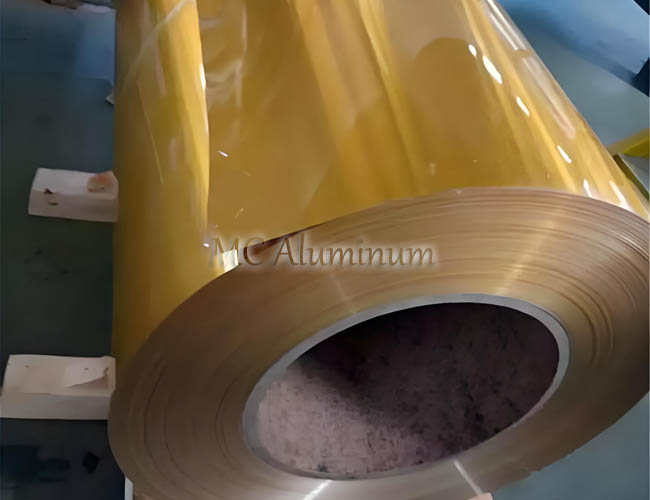
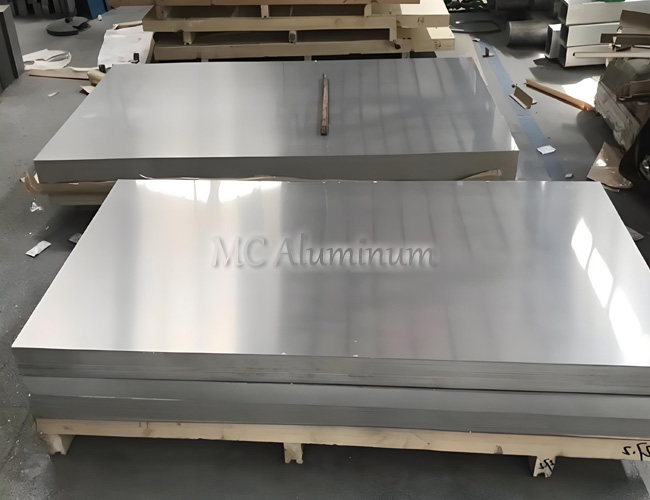
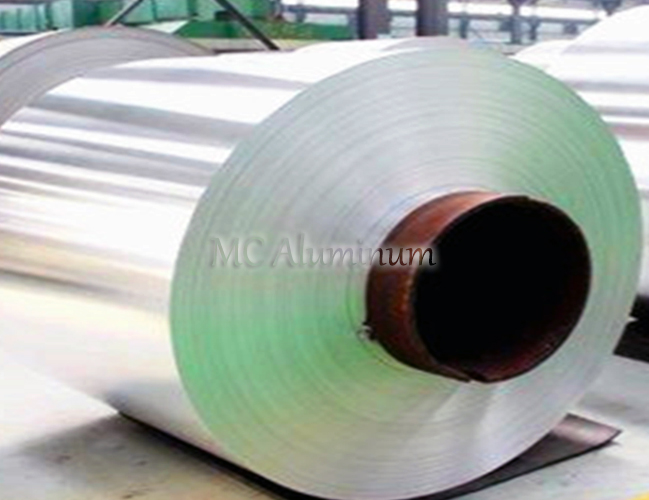
We supply material as aluminum strip (wider gauges for conductor strip) and aluminum foil (thin gauges for wrapping and layered winding designs), delivered in coil form.
Typical customer use cases include:
Distribution transformer LV and HV windings using aluminum strip conductors.
Foil-wound transformers using aluminum foil as the winding conductor.
Electrical conductive layers where stable anneal and clean surface are required.
Why 1060-O/HO is Specified by Transformer Factories
High conductivity with stable processability
Transformer designers often balance conductor cross-section, temperature rise, and cost. 1060-O/HO transformer aluminum strip/foil is frequently selected when high purity and consistent conductivity are required, while the annealed temper ensures the conductor conforms smoothly during winding.
Formability for winding and edge performance
Annealed 1060 is tolerant to bending and forming, supporting:
Reduced cracking risk at small radii.
Lower winding tension variability.
Better conformity in multilayer windings.
Surface cleanliness for insulation systems
Surface quality affects insulation adhesion and dielectric reliability. We manage rolling oil selection, cleaning practice, and final inspection to reduce risks such as embedded particles, oil stains, and scratches that can imprint into insulation.
Manufacturing Control (From Melt to Slit Coil)
Our transformer aluminum strip and aluminum foil manufacturing process includes:
Melting and alloying: chemistry control for 1060; impurity management supports consistent conductivity and surface behavior.
Casting: controlled slab quality for rolling stability.
Hot rolling: gauge reduction and grain refinement.
Cold rolling: thickness precision and surface finish control.
Annealing to O/H0: final temper set with monitored time-temperature profiles for consistent softness and reduced residual stress.
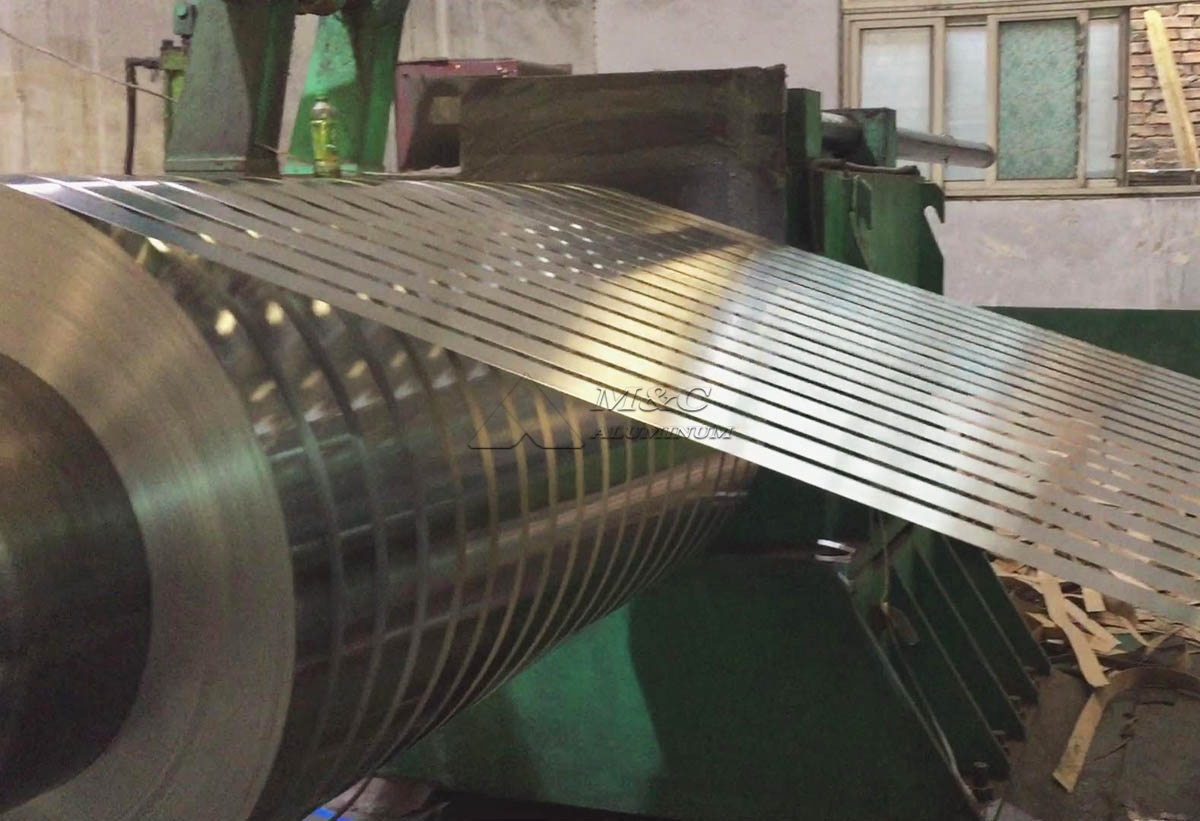
Slitting and edge control: burr management and edge straightness for winding performance.
Coil packaging: moisture protection, edge protection, and export-ready crating as specified.
This integrated route enables consistent batch-to-batch performance, especially important for transformer factories running automated winding lines.
Technical Parameters (Typical Supply Range)
The following table lists typical technical parameters for our 1060-O/HO transformer aluminum strip/foil. Final values can be aligned to the applicable standard and the customer drawing/specification.
| Item | 1060-O/HO Transformer Aluminum Strip | 1060-O/H0 Transformer Aluminum Foil |
|---|---|---|
| Alloy | 1060 | 1060 |
| Temper | O (HO) fully annealed | O (H0) fully annealed |
| Thickness range | 0.20 to 3.00 mm | 0.03 to 0.20 mm |
| Width range | 10 to 1250 mm (slit to size) | 10 to 1250 mm (slit to size) |
| Inner diameter (ID) | 150, 300, 505 mm (common options) | 150, 300, 505 mm (common options) |
| Outer diameter (OD) | Per weight and handling limits | Per weight and handling limits |
| Edge condition | Slit edge, deburred per request | Slit edge, controlled burr |
| Surface finish | Mill finish, clean and uniform | Mill finish, clean and uniform |
| Electrical conductivity | Typical high conductivity for 1060; target per spec | Typical high conductivity for 1060; target per spec |
| Tensile properties | Controlled to annealed temper requirements; per agreed standard | Controlled to annealed temper requirements; per agreed standard |
| Flatness | Controlled for winding suitability | Controlled for winding suitability |
| Packaging | Export seaworthy, moisture barrier, edge protectors | Export seaworthy, moisture barrier, edge protectors |
Notes:
For critical winding lines, customers often specify limits on burr height, camber, and flatness. We can confirm capability after reviewing coil width and thickness.
If your design uses foil winding, please specify whether you require interleaf paper compatibility or any additional surface cleanliness limits.
chemical composition(%)
| Alloy | Si | Fe | Cu | Mn | Mg | Cr | Zn | Ti | Other:Each | Other:Total | Al |
| 1060 | 0.25 | 0.40 | 0.05 | 0.03 | 0.03 | - | 0.05 | 0.03 | 0.03 | - | remainder |
Key Advantages of 1060 Aluminum Strip in Transformer Windings
1.High Conductivity: 1060 aluminum strip has a conductivity second only to copper, but its density is only 1/3 that of copper. For the same conductivity, aluminum-winded transformers are lighter, offering a significant cost advantage.
2.Excellent Flexibility (O-state): Fully annealed aluminum strip is extremely flexible with high elongation, facilitating tight coil winding on a winding machine and reducing the likelihood of springback.
3.Surface Cleanliness: Transformer-specific aluminum strip requires a surface free of oil, scratches, and oxidation to ensure a tight bond between the insulating varnish or paper and the aluminum strip.
4.Burr-Free Edges: This is the most critical technical indicator. Excessive burrs can easily puncture the insulation layer, causing a short circuit. High-quality transformer aluminum strip must undergo precise longitudinal cutting to ensure smooth edges.
Dimensional Tolerances and Coil Quality for Winding
In transformer production, dimensional stability affects both electrical design and manufacturing efficiency. We control and verify key items including:
Thickness consistency: supports predictable conductor cross-section and reduces winding tension fluctuations.
Width accuracy: critical for winding pack geometry, insulation clearance, and final assembly fit.
Edge burr and edge damage: burr can cut insulation paper or film; we apply slitting control and inspection to minimize this risk.
Camber and edge wave: reduced camber improves alignment during high-speed winding and decreases scrap.
Surface Requirements for Transformer Aluminum Strip/Foil
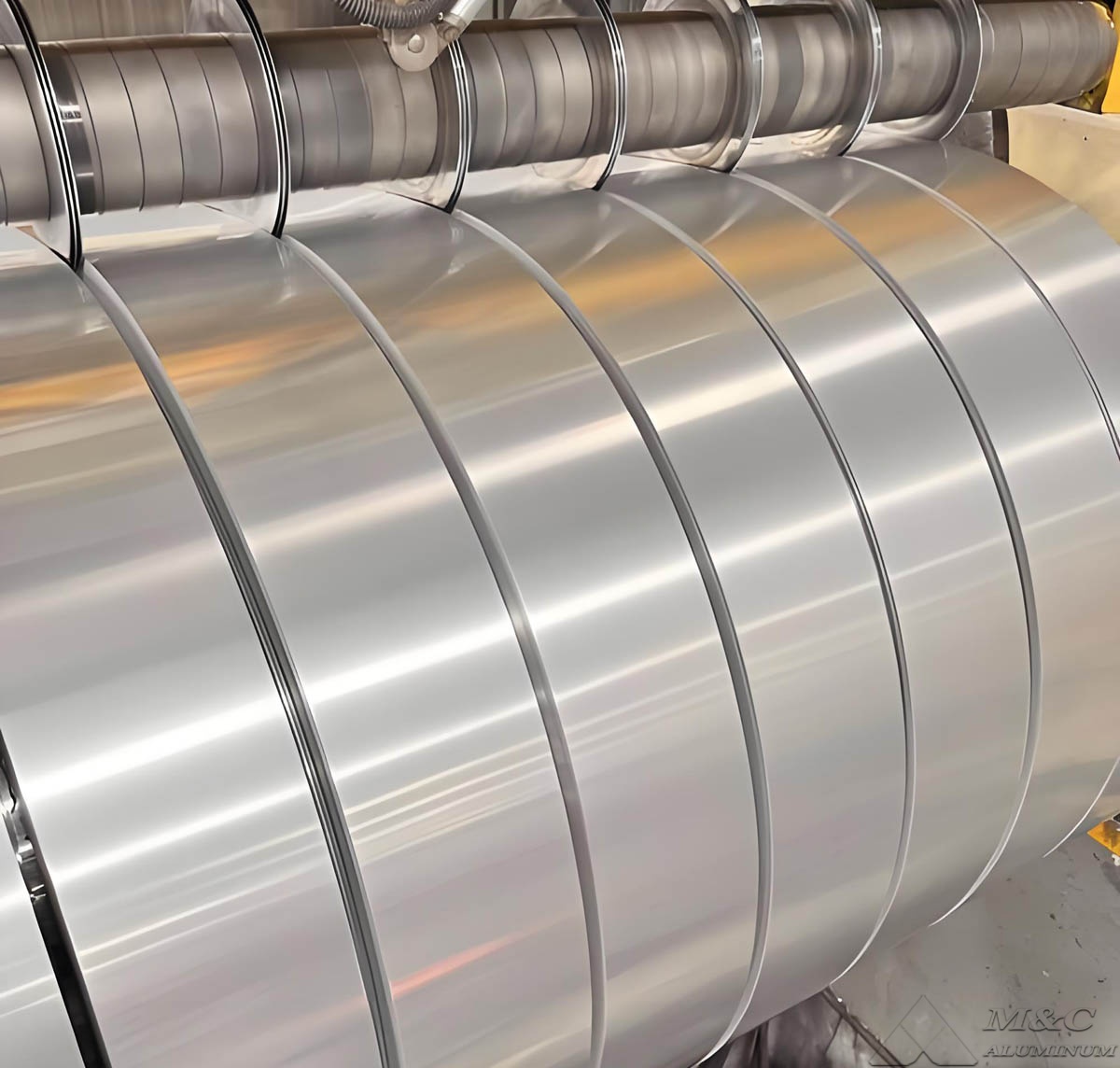
Transformer winding materials interact directly with insulation systems. For that reason, we focus on surface attributes that customers can measure and validate:
Low oil residue: supports insulation bonding and reduces contamination risk during impregnation.
No severe scratches, dents, or roll marks: prevents stress points and insulation damage.
Controlled oxide and uniform appearance: supports consistent electrical and mechanical behavior.
If your process includes ultrasonic cleaning, solvent wiping, or specific insulation lamination steps, we can align our rolling and annealing route accordingly.
Typical Applications
1) Transformer winding aluminum strip
Aluminum strip is widely used as conductor in distribution transformers. In O/HO temper, it winds smoothly and helps reduce springback. Customers typically specify:
Thickness based on current rating and thermal design.
Width aligned to winding design and insulation margins.
Coil ID/OD adapted to winding equipment.
2) Foil-wound transformers (aluminum foil winding)
1060 H0 aluminum foil is used for foil windings where a broad, thin conductor is layered with insulation. Key considerations include:
High thickness uniformity and flatness.
Clean surface to protect dielectric integrity.
Stable anneal to avoid tension instability.
3) Electrical grade aluminum coil for downstream slitting
Some transformer factories or service centers buy 1060 aluminum coil for transformer and slit in-house. For these projects, we emphasize coil shape, stable temper, and packaging that protects the master coil edges.
Standards, Inspection, and Traceability
We manufacture to commonly used international practices and can support customer-specified standards for chemical composition and mechanical properties, along with agreed inspection plans.
Our typical documentation and controls include:
Heat and coil traceability.
Dimensional inspection records for thickness and width.
Mechanical testing aligned to temper requirements when specified.
Visual surface inspection under controlled lighting.
For export orders, we can provide standard shipping documentation and inspection certificates per contract requirements.
Ordering Guidance (Information We Need to Quote and Produce)
To ensure the correct transformer winding aluminum strip or electrical grade aluminum foil, please provide:
Alloy and temper: 1060-O/HO.
Product form: strip or foil.
Thickness, width, and tolerance requirements.
Coil ID, maximum OD, and single coil weight limit.
Edge requirements: standard slit edge or defined burr limit.
Surface requirements: general mill finish or defined cleanliness criteria.
Quantity and delivery terms.
Application notes: foil winding, strip winding, insulation type, winding speed, or any special handling constraints.
This information allows us to set the correct rolling schedule, annealing route, and slitting configuration, and to confirm capability on flatness and edge quality.
Packaging and Export Logistics
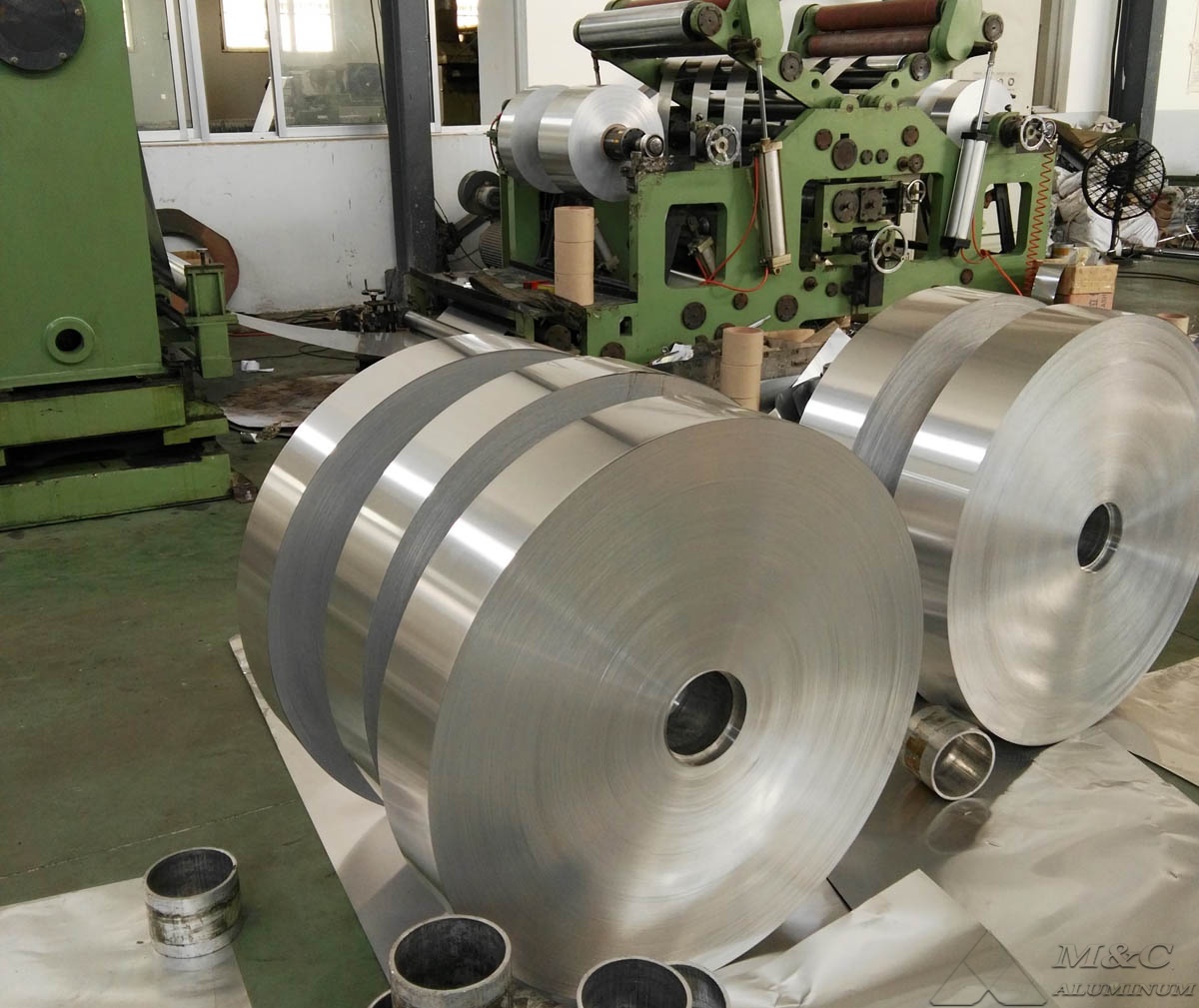
Because aluminum strip and foil coils are sensitive to moisture and edge impact, our export packaging is designed to maintain coil integrity:
Moisture barrier wrap and desiccant options.
Edge protectors and reinforced coil eye protection.
Seaworthy pallets or wooden cases per shipment mode.
Clear coil labels with alloy, temper, size, net weight, and trace code.
Summary
Our 1060-O/HO transformer aluminum strip/foil is manufactured in-house with controlled melting, rolling, annealing, and slitting to support transformer winding performance. By focusing on annealed temper stability, thickness and width control, clean surface quality, and export-grade packaging, we provide conductor material suitable for both strip-wound and foil-wound transformer designs.
If you share your required thickness, width, coil ID, and winding application, we will confirm the recommended supply range, inspection items, and packaging method for your production line.
Contact Us