
3003 Aluminum Foil in Heat Exchangers
As an aluminum foil manufacturer, we supply 3003 aluminum foil for heat exchangers used in HVAC systems, automotive thermal management, refrigeration units, industrial cooling equipment, and ventilation assemblies. In these applications, aluminum foil is not only a thin metal material. It is a functional component that must support heat transfer efficiency, stable forming performance, corrosion resistance, and consistent downstream processing.
3003 aluminum foil is one of the most widely used aluminum manganese alloy foils for heat exchanger fins and related components. Compared with pure aluminum grades, 3003 offers higher mechanical strength while maintaining good thermal conductivity and excellent formability. For manufacturers of air conditioner evaporators, condensers, radiator fins, and compact heat exchangers, stable foil quality directly affects fin forming, brazing compatibility, coating adhesion, and long term service performance.
Why 3003 Aluminum Foil Is Used in Heat Exchangers
3003 aluminum foil belongs to the Al-Mn alloy series. Manganese improves strength and corrosion resistance without seriously reducing workability. This balance is important for heat exchanger production, where foil is often processed through high speed fin presses, corrugation machines, stamping equipment, coating lines, or brazing preparation systems.
In heat exchangers, the foil surface area is expanded into fins, waves, louvers, or other geometries. The material must withstand deformation without cracking, tearing, or unstable springback. 3003 aluminum foil provides reliable plasticity in soft and semi-hard tempers, making it suitable for common fin structures. It also maintains good dimensional stability when supplied with tight thickness tolerance and controlled surface condition.
From our factory production perspective, the key advantage of 3003 aluminum foil is its balanced performance. It is strong enough for thin gauge fin stock, formable enough for complex fin patterns, and economical enough for large scale heat exchanger manufacturing.
Main Heat Exchanger Applications
3003 aluminum foil for heat exchangers is used across several industries. The required temper, thickness, surface treatment, and mechanical values may vary according to the final equipment design.
Typical applications include:
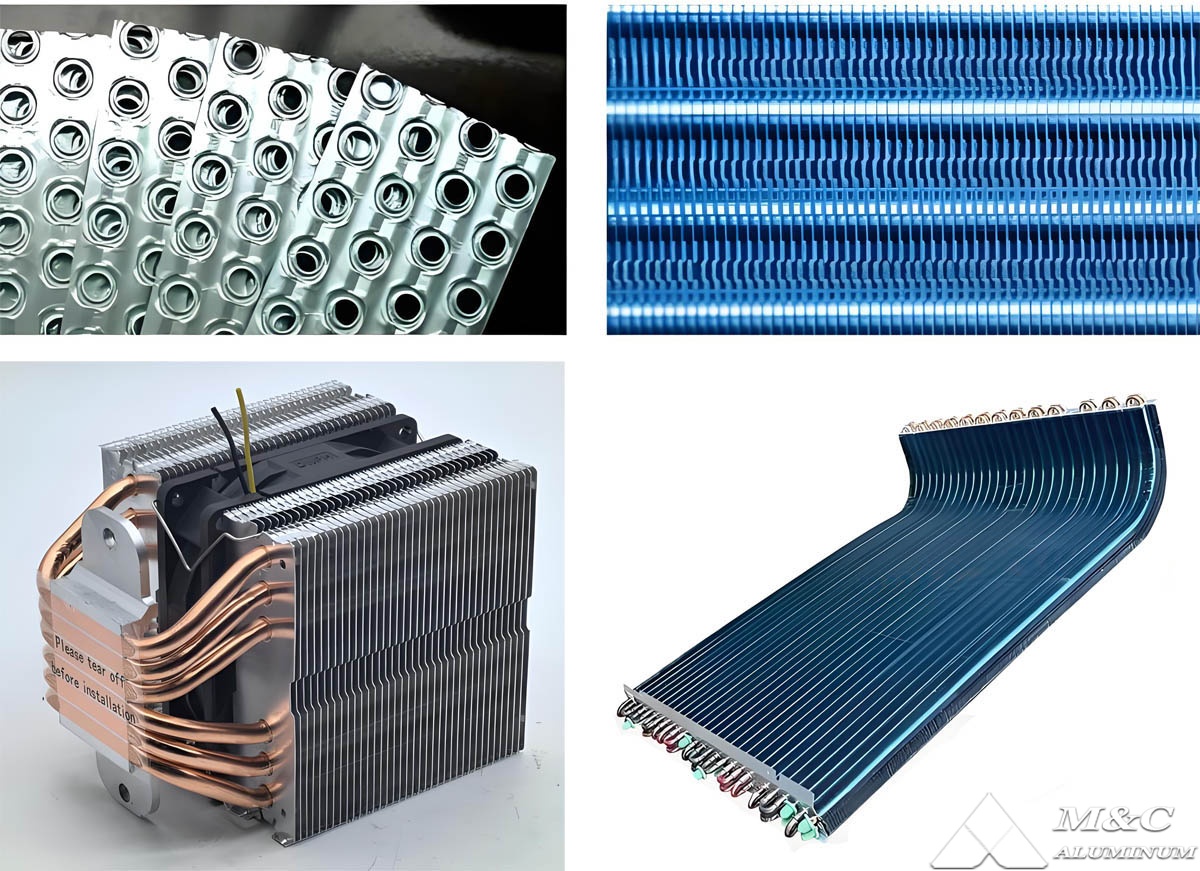
Air conditioner evaporator fins
Air conditioner condenser fins
Refrigeration heat exchanger fins
Automotive radiator and heater core fins
Intercooler and oil cooler fins
Ventilation and industrial cooling fins
Coated hydrophilic fin stock for HVAC systems
For HVAC applications, plain 3003 foil or coated aluminum foil may be selected depending on drainage, corrosion, and air flow requirements. For fin stock that requires improved condensate drainage, hydrophilic coating can be applied on one or both sides. Our production system can support base foil for coating lines as well as finished Aluminium Foil For Air Conditioner based on customer specifications.
Technical Parameters of 3003 Aluminum Foil
The following table shows common technical parameters for 3003 aluminum foil used in heat exchangers. Exact values can be adjusted according to customer drawings, equipment requirements, and applicable standards.
| Item | Typical Specification |
|---|---|
| Alloy | 3003 |
| Temper | O, H12, H14, H16, H18, H22, H24 |
| Thickness range | 0.03 mm to 0.20 mm, customized by application |
| Width range | 100 mm to 1600 mm, slit to order |
| Inner diameter | 76 mm, 152 mm, 300 mm, 405 mm, or as required |
| Outer diameter | According to coil weight and equipment limits |
| Surface | Mill finish, degreased, coated, hydrophilic treated, corrosion resistant treated |
| Thickness tolerance | Controlled according to order standard or customer drawing |
| Width tolerance | Precision slit edge available for high speed fin machines |
| Tensile strength | Depends on temper and thickness |
| Elongation | Depends on temper, gauge, and final forming requirement |
| Edge quality | Trimmed edge, burr controlled, no severe wave or crack |
| Standard reference | ASTM B479, EN 546, GB/T standards, or agreed technical specification |
Chemical Composition and Alloy Characteristics
The chemical composition of 3003 aluminum foil is controlled to ensure stable mechanical properties and corrosion resistance. As a manufacturer, we monitor alloying elements from melting to final rolling so that each coil meets the required specification.
| Element | Typical Content Range |
|---|---|
| Al | Balance |
| Mn | 1.0% to 1.5% |
| Fe | Max. 0.7% |
| Si | Max. 0.6% |
| Cu | 0.05% to 0.20% |
| Zn | Max. 0.10% |
| Other single | Max. 0.05% |
| Other total | Max. 0.15% |
Manganese is the primary strengthening element in 3003 aluminum alloy. It improves the strength level compared with 1100 aluminum foil while maintaining good ductility. This makes 3003 suitable for aluminum heat exchanger foil that must be thinner and more efficient without losing processing stability.
Temper Selection for Heat Exchanger Foil
Temper selection is one of the most important decisions when specifying 3003 aluminum foil in heat exchangers. Different fin designs and production lines require different combinations of strength, elongation, hardness, and springback.
3003-O aluminum foil is suitable when maximum formability is required. It is often used for deep forming or complex deformation processes. 3003-H14 and 3003-H16 aluminum foil provide higher strength and better shape retention, making them common choices for fin stock that must maintain louver angle and fin geometry. 3003-H18 offers higher hardness and is used when forming demand is less severe but stiffness is important.
For coated heat exchanger fins, base foil temper must also match the coating and drying process. Excessive hardness may reduce fin forming performance, while overly soft material may cause deformation during winding, unwinding, or press feeding. Our technical team evaluates customer fin pitch, fin height, louver design, and machine speed before recommending a temper.
Thickness and Tolerance Control
Heat exchanger efficiency is closely related to foil thickness. Thinner foil can increase heat transfer surface area and reduce material weight, but it also requires higher control of strength, flatness, and surface quality. For high speed fin forming, even small thickness variations can cause feeding instability, fin height deviation, or tool wear.
In our rolling process, 3003 aluminum foil is produced through controlled hot rolling, cold rolling, intermediate annealing when required, foil rolling, slitting, and final inspection. Thickness is monitored continuously, and coils are sampled for mechanical testing. For customers using automatic fin presses, we focus on stable gauge distribution from coil head to tail and across the width.
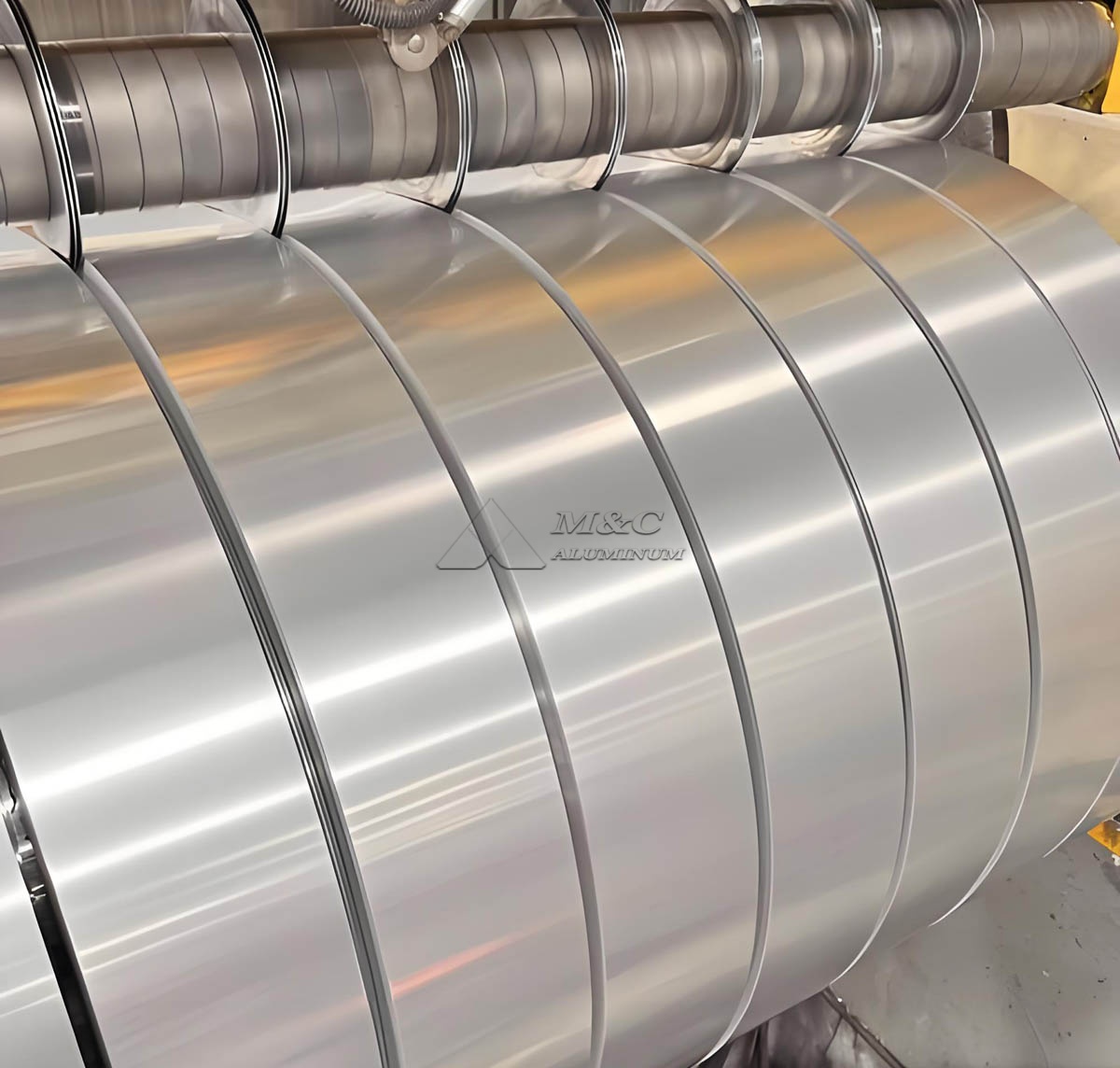
Our 3003 Aluminum Foil can be supplied in narrow slit coils or wide master coils, depending on the customer production route. Precision slitting helps reduce burrs and edge cracks, which are important factors for preventing foil breakage during high speed processing.
Surface Quality Requirements
Surface quality is critical for aluminum foil for heat exchangers. Defects such as oil stains, pinholes, scratches, black spots, roll marks, oxidation, and uneven coating can influence heat transfer performance, corrosion resistance, and downstream bonding.
For plain fin stock, the surface must be clean and uniform. For coated foil, surface cleanliness affects coating adhesion and hydrophilic performance. A stable surface condition also supports consistent brazing preparation when the foil is used with compatible heat exchanger structures.
Factory inspection normally includes visual inspection, surface tension or cleanliness evaluation when required, thickness testing, mechanical property testing, and coil appearance inspection. We also control winding tension to prevent telescoping, loose winding, excessive coil deformation, and interlayer abrasion.
Hydrophilic and Corrosion Resistant Treatment
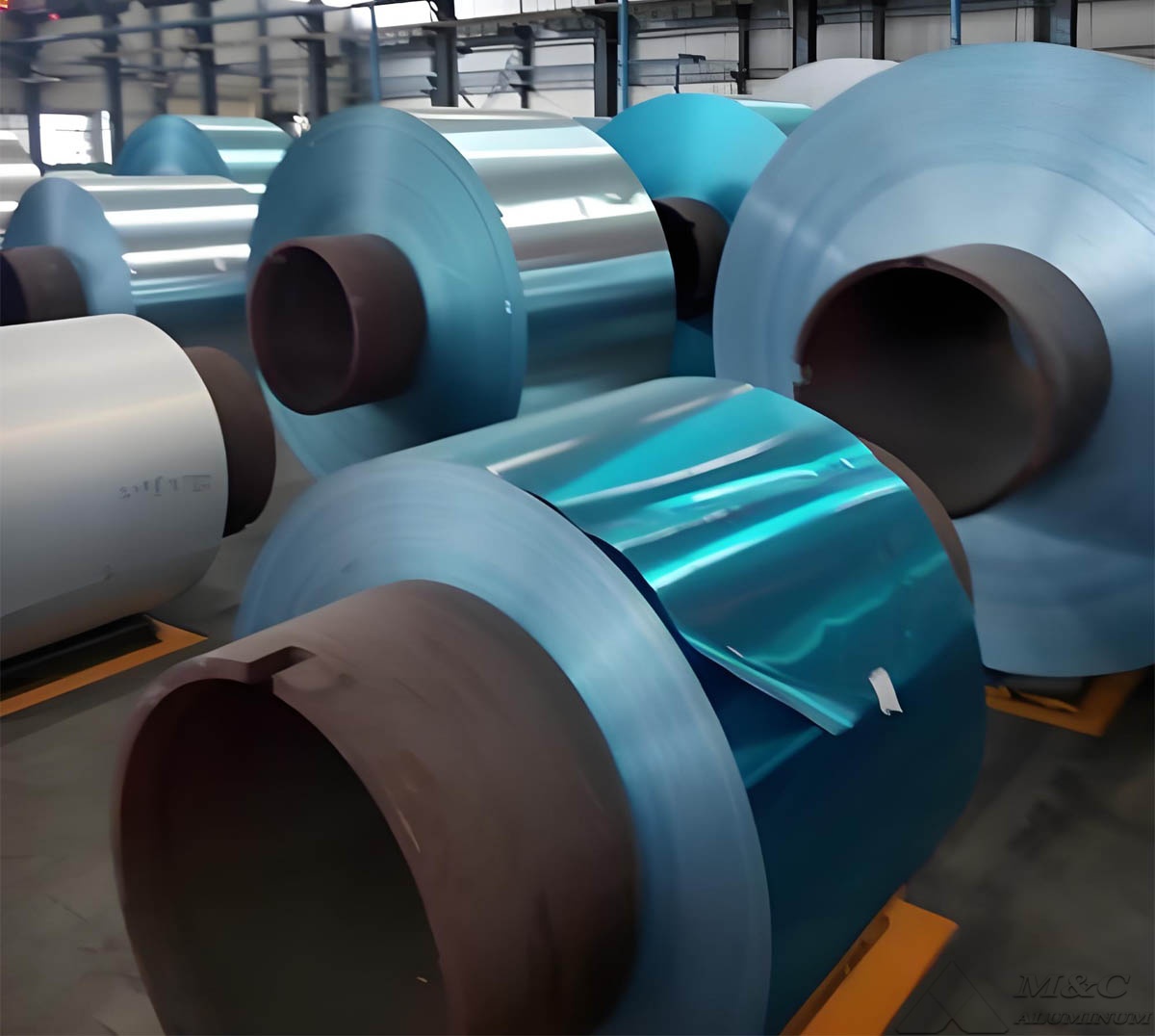
In air conditioning systems, condensate water forms on evaporator fins. If water droplets remain between fins, air flow resistance increases and heat exchange efficiency decreases. Hydrophilic aluminum foil helps water spread into a thin film and drain more quickly. This is why hydrophilic 3003 aluminum foil is widely used in HVAC heat exchangers.
A hydrophilic coating may also improve anti-corrosion performance depending on the coating system. For environments with high humidity, salt exposure, or industrial atmosphere, corrosion resistant coated foil may be specified. The coating should have uniform thickness, stable adhesion, suitable heat resistance, and no obvious color difference that affects product acceptance.
As a manufacturer, we control both base foil quality and coating process parameters. This includes pretreatment, coating viscosity, oven temperature, line speed, curing condition, and final winding. For international buyers, we can provide technical data such as coating weight, contact angle, salt spray test requirements, and adhesion test results when specified in the order.
Manufacturing Control in Our Factory
Stable 3003 aluminum foil production depends on strict process control. From raw material selection to finished coil packaging, each stage affects final heat exchanger performance.
Our manufacturing control includes:
Alloy composition control during melting and casting
Homogenization and rolling schedule management
Cold rolling reduction control for target mechanical properties
Annealing process control for O and H temper products
Foil rolling with gauge monitoring and surface protection
Precision slitting with burr and edge quality inspection
Coil winding tension control
Final inspection before packing and shipment
We understand that heat exchanger manufacturers require repeatability from batch to batch. Therefore, we retain production records and inspection data for traceability. For long term supply projects, we can establish agreed internal control limits to support consistent performance on customer production lines.
Packaging and Export Considerations
Aluminum foil for heat exchangers is sensitive to moisture, impact, and edge damage during storage and transportation. Proper packaging is necessary, especially for export shipments by sea.
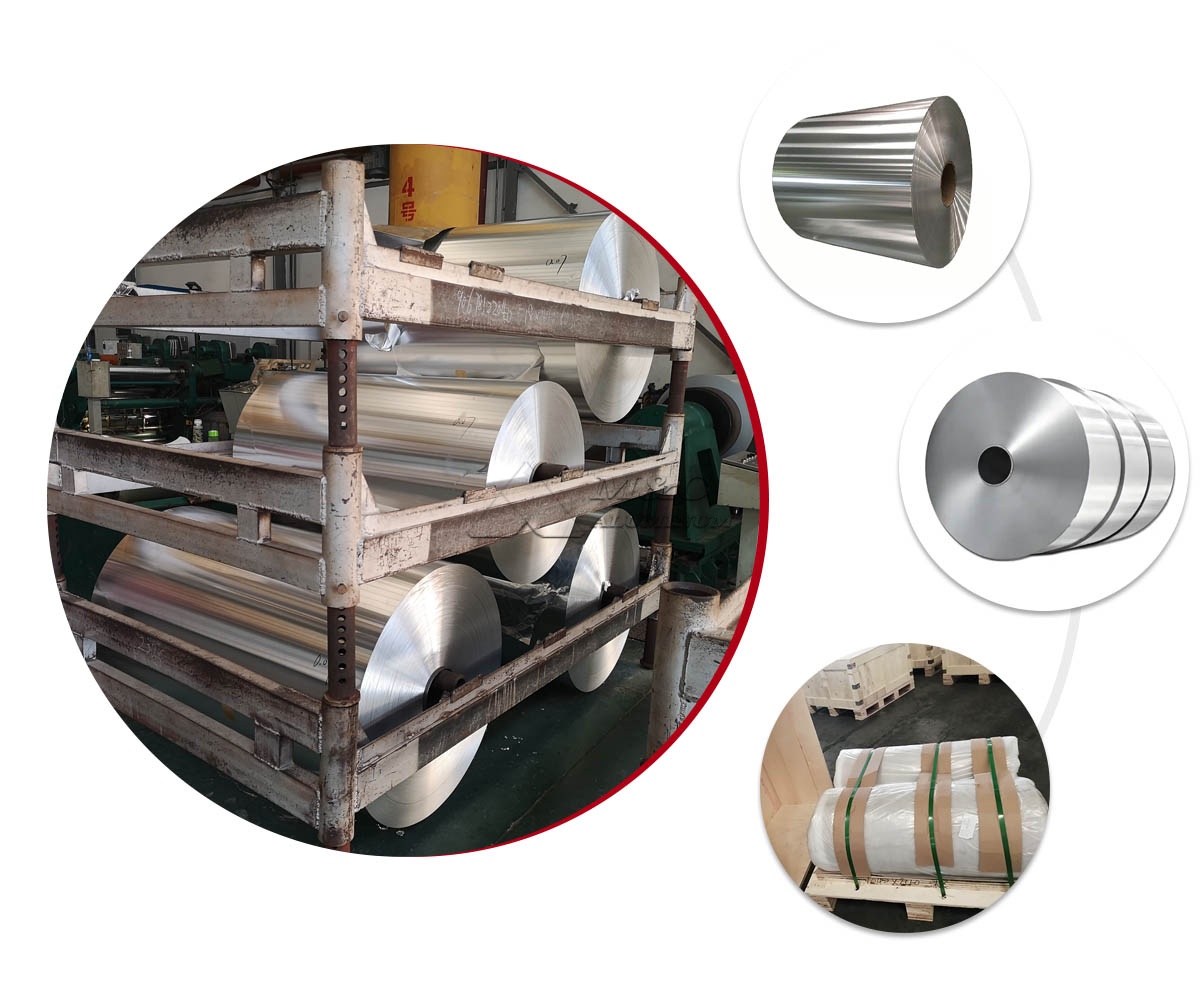
Our standard export packaging includes moisture proof wrapping, protective film or paper, edge protection, desiccant when required, wooden cases or pallets, and secure coil positioning. Coil direction, label information, alloy, temper, thickness, width, coil number, net weight, and gross weight are marked according to order requirements.
For customers with automatic unwinding equipment, packaging direction and core specification should be confirmed before production. Correct coil orientation reduces handling time and helps prevent installation errors at the heat exchanger manufacturing site.
How to Specify 3003 Aluminum Foil for Heat Exchangers
To ensure accurate production and quotation, buyers should provide complete technical information. Important details include alloy, temper, thickness, width, coil inner diameter, maximum outer diameter, coil weight, surface requirement, coating requirement, mechanical property targets, tolerance standard, and intended application.
If the foil is used for fin forming, it is helpful to provide fin type, fin height, fin pitch, louver design, and machine speed. If the foil is coated, contact angle, coating weight, salt spray requirement, and color requirement should be specified. Clear technical communication reduces trial time and supports stable mass production.
Conclusion
3003 aluminum foil is a practical and proven material for heat exchanger applications because it combines good thermal conductivity, reliable formability, improved strength, and corrosion resistance. For air conditioner fins, refrigeration fins, automotive cooling components, and industrial heat exchangers, the final performance depends not only on alloy selection but also on temper control, gauge accuracy, surface quality, coating stability, and packaging protection.
As a factory manufacturer, we focus on producing 3003 aluminum foil that meets engineering requirements and supports consistent downstream processing. By controlling alloy composition, rolling process, annealing, slitting, surface treatment, and final inspection, we help heat exchanger manufacturers obtain stable material for efficient and reliable production.
Contact Us